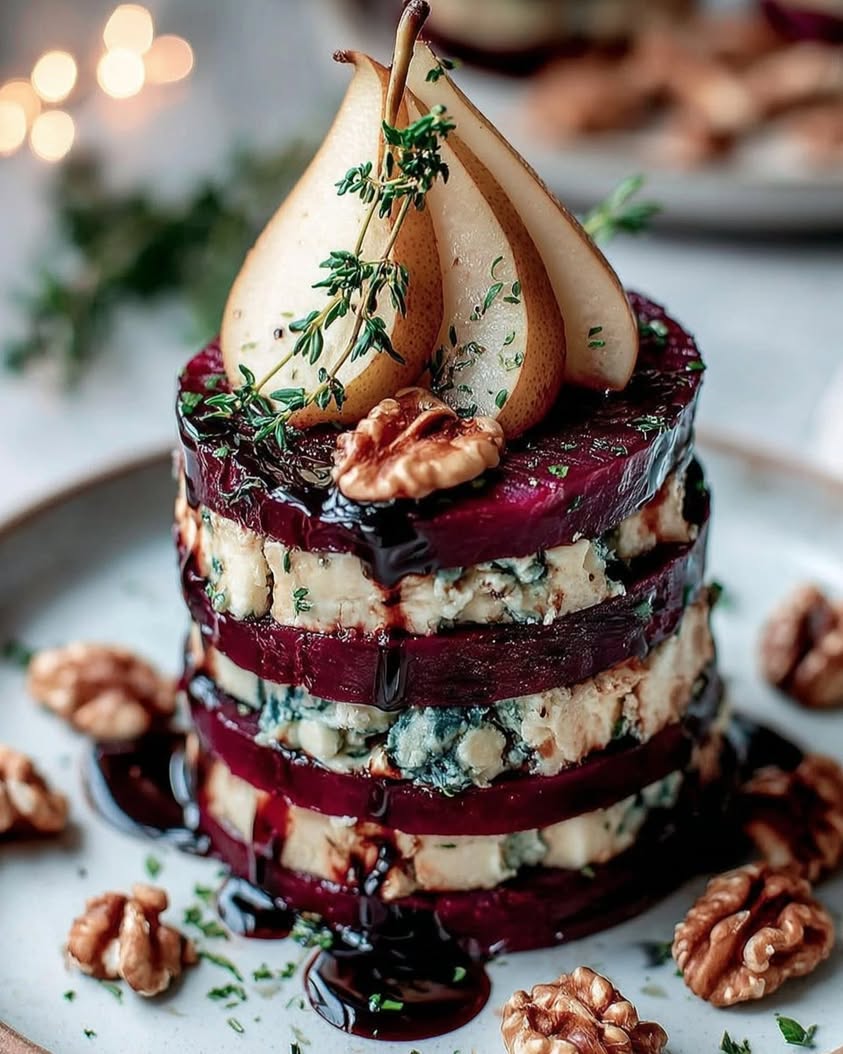
If you are searching for an elegant yet surprisingly simple appetizer that delivers a symphony of flavors, look no further than the Roasted Beet Blue Cheese Towers with Pear and Balsamic Glaze Recipe. This dish combines earthy roasted beets, creamy and tangy blue cheese, sweet and crisp pears, and a rich, sweet-tart balsamic glaze. It is a perfect starter for a dinner party or a sophisticated addition to a holiday table. The visual appeal is immediate and stunning, featuring vibrant jewel-toned beets layered with snowy cheese and pale pear, all finished with a glossy dark glaze. The taste is an unforgettable balance of sweet, savory, tangy, and creamy elements that will impress your guests.
This Roasted Beet Blue Cheese Towers with Pear and Balsamic Glaze Recipe is more than just a pretty plate. It is a masterclass in flavor pairing and textural contrast. The natural sweetness of the roasted beets and ripe pears mellows the assertive punch of the blue cheese. The balsamic glaze adds a sophisticated, slightly acidic finish that ties everything together. Each bite offers a different experience, from the tender beet to the crisp pear and the crumbly, rich cheese. This appetizer is also naturally gluten-free and can easily be adapted for various dietary needs, making it a versatile choice for any host. It requires no complicated cooking techniques, just careful roasting and simple assembly, guaranteeing success even for novice cooks.
Furthermore, this Roasted Beet Blue Cheese Towers with Pear and Balsamic Glaze Recipe is a celebration of seasonal ingredients, particularly in the fall and winter when beets and pears are at their peak. The deep, earthy flavor of the beets is enhanced by roasting, which concentrates their natural sugars. The pears provide a fresh, juicy counterpoint, while the blue cheese adds a luxurious, creamy texture. The final drizzle of balsamic glaze is not just a garnish; it is a crucial element that elevates the entire dish, providing a burst of acidity and sweetness that balances the richness of the cheese. This recipe is a true crowd-pleaser, appealing to both adventurous eaters and those who prefer classic, comforting flavors.
Roasted Beet Blue Cheese Towers with Pear and Balsamic Glaze Recipe: Quick Recipe Highlights
The flavor profile of this dish is a remarkable contrast of sweet, tangy, and savory notes. The earthy sweetness of roasted beets and the juicy sweetness of ripe pears are perfectly offset by the sharp, salty, and creamy blue cheese. The balsamic glaze contributes a complex sweet-and-sour finish that unifies all the elements.
Regarding texture, the Roasted Beet Blue Cheese Towers with Pear and Balsamic Glaze Recipe offers a delightful interplay of sensations. The beets are tender and dense, the pear slices provide a crisp, refreshing snap, and the blue cheese is crumbly yet creamy. This combination ensures every mouthful is interesting and satisfying.
The primary aromatic notes are derived from the roasting process, which caramelizes the beets and brings out their deep, earthy scent. The floral, subtle sweetness of the pears and the pungent, funky aroma of the blue cheese create a complex and inviting olfactory experience. The balsamic glaze adds a sweet, vinegary smell that completes the bouquet.
From a visual standpoint, these towers are exceptionally striking. The deep ruby red and golden yellow of the beets contrast beautifully with the stark white of the cheese and the pale, creamy flesh of the pear. The dark, glossy balsamic glaze drizzled over the top creates a final layer of elegance that makes this appetizer look like it came from a high-end restaurant.
The skill level needed for this recipe is perfect for beginners and experienced cooks alike. The primary challenges involve properly roasting the beets until tender and assembling the towers without them toppling. However, with a sharp knife and a little patience, anyone can master the assembly process.
The special equipment required is minimal and common to most kitchens. You will need a baking sheet for roasting the beets, a sharp chef’s knife for slicing the vegetables and fruit, and a small fine-mesh sieve for crumbling the blue cheese. A pastry brush for the glaze and a serving platter are also useful.
Recipe Overview
The difficulty level is rated as easy. This is because the Roasted Beet Blue Cheese Towers with Pear and Balsamic Glaze Recipe involves straightforward steps: roasting beets, slicing pears, crumbling cheese, and assembling the layers. There are no complex cooking techniques like making a sauce from scratch or tempering eggs. The most time-consuming part is roasting the beets, which is mostly hands-off. Therefore, this recipe is highly accessible to anyone who can follow basic instructions.
This dish falls under the categories of appetizer, starter, and salad. It is a perfect first course for a formal dinner, a stunning addition to a brunch buffet, or a light lunch when paired with a simple side salad. Its elegant presentation makes it ideal for holiday celebrations, cocktail parties, or romantic dinners. The components are also excellent for a grazing board.
While not tied to a single specific cuisine, the Roasted Beet Blue Cheese Towers with Pear and Balsamic Glaze Recipe draws inspiration from modern European and American culinary traditions. The combination of roasted beets and blue cheese is classic in French and Italian cooking, while the use of balsamic glaze is a nod to Italian culinary flair. The tower format is a popular contemporary plating trend that emphasizes visual height and deconstructed elegance.
The cost for this recipe is generally moderate and very reasonable. Beets are an inexpensive root vegetable, and pears are typically affordable when in season. The blue cheese can vary in price, but using a good-quality domestic or imported cheese like Gorgonzola or Roquefort will enhance the flavor. The balsamic glaze is also relatively inexpensive to buy or make at home. Overall, you can create a high-end appetizer without a high-end budget.
The best season for this recipe is undoubtedly autumn and early winter. This is when beets are at their sweetest and most flavorful, and pears like Bosc or Anjou are in peak season. The warm, earthy flavors of the roasted beets and the cozy richness of the blue cheese feel particularly appropriate for cooler weather. However, you can find good-quality beets and pears year-round, making this a viable option for any season with minor adjustments.
This dish is perfect for a variety of occasions. It is an elegant starter for Thanksgiving, Christmas, or New Year’s Eve dinner. It is also a fantastic choice for a bridal shower, baby shower, or any special celebration where you want to impress your guests. Furthermore, it is a wonderful addition to a wine-tasting party, as the flavors pair exceptionally well with a range of wines, from crisp whites to light reds.
Why You will Love This Recipe
First and foremost, you will love the incredible taste and texture combination. The sweet, earthy beets and juicy pears create a wonderful natural sweetness that perfectly balances the sharp, salty, and creamy blue cheese. The balsamic glaze adds a final layer of complexity with its sweet-tart finish. Each bite is a journey of flavors, from the initial burst of fruit to the creamy, lingering finish of the cheese. The crisp pear against the tender beet and crumbly cheese makes this a texturally exciting dish that never feels boring.
Furthermore, the convenience and preparation benefits are significant. This Roasted Beet Blue Cheese Towers with Pear and Balsamic Glaze Recipe is surprisingly simple to put together. Most of the work involves roasting the beets, which is an unattended cooking process. You can do this step a day or two in advance, making the final assembly incredibly quick. There is minimal chopping and no last-minute cooking. This makes it a perfect stress-free appetizer for entertaining, as you can spend more time with your guests and less time in the kitchen.
Beyond its deliciousness and ease, this recipe offers notable nutritional advantages. Beets are a powerhouse of nutrients, packed with fiber, folate, manganese, and nitrates, which are known to support healthy blood pressure. Pears are an excellent source of dietary fiber and vitamin C. While blue cheese is high in fat, it also provides calcium and protein. When eaten in moderation as an appetizer, this dish is a relatively healthy way to start a meal, offering a good dose of vitamins and minerals without being overly heavy.
The social and entertaining value of this recipe is immense. Serving these beautiful towers immediately elevates your gathering. They look professional and sophisticated, creating a sense of occasion and delight. Guests are often impressed and curious about how they are made, which spark conversation. Because they are easy to pick up and eat, they are perfect for cocktail parties or standing receptions. They are also fantastic for a seated dinner, as they make a stunning first impression on the plate.
Finally, this recipe is remarkably cost-effective and uses accessible ingredients. Beets, pears, and even good-quality blue cheese are generally affordable and available at most grocery stores. You do not need any exotic or hard-to-find items. This makes it an excellent choice for home cooks on a budget who still want to create an impressive dish. The recipe is also very forgiving; you can easily substitute different types of beets (golden, chioggia) or pears, or use a different type of blue cheese based on what you have on hand. This flexibility makes it a reliable recipe that works every time.
Historical Background and Cultural Significance
The combination of beets and blue cheese has a long and storied history in European cuisine, particularly in France and Italy. In France, the classic pairing of beetroot and Roquefort cheese appears in salads and as a simple appetizer. Roquefort, a famous blue cheese from the south of France, has been produced for centuries, and its salty, tangy flavor has historically been used to complement the sweetness of roasted vegetables. Similarly, in Italy, the use of Gorgonzola, another aged blue cheese, pairs beautifully with roasted beets and balsamic vinegar, a staple of the Emilia-Romagna region. This established classic combination is the cornerstone of our modern tower recipe.
The cultural importance of this dish lies in its celebration of balanced flavor profiles. In many Western culinary traditions, the contrast between sweet and savory is a hallmark of well-constructed dishes. The earthy sweetness of the beet is perfectly tempered by the umami-rich, salty blue cheese. The addition of pears introduces a fresh, fruity sweetness that is popular in many autumn and winter dishes across Europe and North America. This dish represents a modern interpretation of a timeless flavor pairing that has been enjoyed for centuries in various forms, from simple salads to complex composed dishes.
The evolution of this specific recipe, the Roasted Beet Blue Cheese Towers with Pear and Balsamic Glaze Recipe, is a product of modern plating and culinary creativity. The “tower” or “stack” presentation became popular in the late 20th and early 21st centuries as a way to add verticality and drama to a dish. This technique transforms a simple salad or appetizer into a visually stunning centerpiece. It demonstrates a trend in modern gastronomy where presentation is as important as flavor. By layering the ingredients into a tall, stable structure, the cook creates an immediate visual impact that elevates the entire dining experience.
Regional variations of this dish are abundant. In the American South, you might find pecans or walnuts added for crunch, or a honey-balsamic glaze replacing the traditional version. In parts of Germany, beets are often pickled, adding a sour note, and the towers might be served with a side of quark or fresh farmer’s cheese instead of blue cheese. In the Pacific Northwest, where pears are abundant, the dish often features local blue cheese from Oregon or Washington. Some variations in California incorporate goat cheese for a milder, tangier flavor or add arugula for a peppery bite. These regional adaptations show the incredible versatility of the core concept.
Ingredient Deep Dive
Beets
Beets, also known as beetroot, have been cultivated for thousands of years, with origins tracing back to the Mediterranean region. They were initially grown for their leaves, which were used as a leafy green, and it was only later that the root became a popular food source. In many cultures, beets are a traditional winter vegetable, valued for their long storage life and their ability to provide essential nutrients during colder months. Their deep red color has historically been associated with health and vitality, and they are a staple in Eastern European cuisines, most famously in borscht. The earthy flavor that many people associate with beets comes from a compound called geosmin, which is also responsible for the smell of fresh rain on soil.
Nutritionally, beets are a true superfood. They are low in calories but incredibly rich in essential nutrients. They are an excellent source of folate (vitamin B9), which is crucial for cell growth and function, and manganese, which is important for bone health and metabolism. Beets are also one of the richest dietary sources of nitrates, which your body converts into nitric oxide. This compound helps relax and widen blood vessels, improving blood flow and potentially lowering blood pressure. This has made beet juice a popular performance-enhancing drink for athletes. Additionally, they contain betalains, powerful antioxidants that have anti-inflammatory properties. When selecting beets, look for firm, smooth roots with fresh, unwilted greens if attached. They should be heavy for their size and free of soft spots or wrinkles. Store them in the refrigerator in a plastic bag for up to two weeks, removing the greens first to prevent them from drawing moisture from the root. For substitution in this recipe, you can use golden beets for a sweeter, milder flavor and a beautiful yellow color, or Chioggia beets for a striking candy-stripe pattern.
Blue Cheese
Blue cheese is a general category for cheeses that have had cultures of the mold Penicillium added, creating distinctive blue or blue-green veins. Its history is often tied to tales of cheese being left in caves, where it naturally developed mold. Famous varieties include Roquefort from France, Gorgonzola from Italy, Stilton from England, and Maytag from the United States. Each has its own unique flavor profile, from the creamy, milder tang of Gorgonzola dolce to the sharp, salty intensity of Roquefort. The mold not only adds visual character but also contributes to the cheese’s signature pungent, earthy, and slightly spicy flavor. The cultural significance of blue cheese is immense; it is considered a delicacy in many parts of the world and is often used to add a bold, umami-rich element to salads, pastas, and sauces.
Nutritionally, blue cheese is a concentrated source of calcium and protein, making it a bone-healthy addition to a diet. It also contains probiotics, which are beneficial for gut health, though the amount can vary. It is relatively high in fat and sodium, so moderation is key. When selecting blue cheese, look for a block or wedge that is moist and creamy, not dry or crumbly (unless it is a dry variety like some Stiltons). The veins should be clearly visible and evenly distributed. The aroma should be pungent but not overwhelmingly ammoniated. Store it tightly wrapped in wax paper or plastic wrap in the refrigerator. For the Roasted Beet Blue Cheese Towers with Pear and Balsamic Glaze Recipe, a good quality Gorgonzola piccante or a creamy Roquefort works beautifully. If you want a milder flavor, a creamy Gorgonzola dolce is an excellent choice. For a dairy-free adaptation, you can use a high-quality vegan blue cheese alternative made from cashews or almonds.
Pears
Pears have been cultivated for over 3,000 years, believed to have originated in the Caucasus region of Asia. They were highly prized by the ancient Romans and Greeks and later became a symbol of immortality and affection in Chinese culture. Today, thousands of pear varieties exist, with the most common for eating being Bartlett, Bosc, Anjou, and Comice. In the context of this recipe, pears provide a critical sweet and juicy counterpoint to the earthy beets and salty cheese. Their crisp texture adds a refreshing crunch that prevents the dish from feeling heavy. The subtle floral sweetness of a ripe pear also harmonizes beautifully with the balsamic glaze.
Nutritionally, pears are an excellent source of dietary fiber, especially when consumed with the skin on. One medium pear provides about 5-6 grams of fiber, which is great for digestive health and promoting satiety. They are also a good source of vitamin C and copper. When selecting pears for this recipe, look for ones that are firm but yield slightly to gentle pressure near the stem, indicating ripeness. Avoid pears with bruises or soft spots. Bosc pears are an ideal choice because of their firm, dense flesh that holds up well to slicing and doesn’t become mushy easily. Anjou pears are also a good option. Store unripe pears at room temperature until they ripen, then move them to the refrigerator to extend their shelf life for a few more days. The best substitution is a crisp apple, like a Honeycrisp or Fuji, which will provide a similar sweet crunch.
Balsamic Glaze
Balsamic glaze, also known as balsamic reduction, is a thick, syrupy sauce made by simmering balsamic vinegar (often with added sugar) until it reduces and becomes concentrated. Traditional balsamic vinegar comes from the Modena and Reggio Emilia regions of Italy and is aged for years in wooden barrels, becoming naturally sweet and syrupy. The glaze captures this concentrated flavor, offering a complex balance of sweet, sour, and tangy notes. In this Roasted Beet Blue Cheese Towers with Pear and Balsamic Glaze Recipe, the glaze is not just a garnish; it is a vital flavor bridge. Its acidity cuts through the richness of the blue cheese, while its sweetness enhances the natural sugars in the beets and pears. The dark, glossy appearance also adds a final touch of elegance to the presentation.
Nutritionally, balsamic glaze is a source of simple sugars and has a negligible amount of nutrients. However, because it is used sparingly, its impact on the overall health of the dish is minimal. When selecting a balsamic glaze, you can buy it pre-made from most grocery stores, which is convenient. However, you must check the label for added sugar or corn syrup. For the best flavor, making your own glaze at home is simple and allows you to control the ingredients. To make it, combine one cup of good quality balsamic vinegar with two tablespoons of brown sugar or honey in a saucepan, bring to a simmer, and reduce until it coats the back of a spoon (about 10-15 minutes). It will thicken further as it cools. For substitution, you can use a high-quality, aged balsamic vinegar (it will be syrupy but not as thick), or even a pomegranate molasses for a different but complementary sweetness. A quick and easy alternative is to simply whisk a little honey or brown sugar into good balsamic vinegar until dissolved.
Common Mistakes to Avoid
- Not roasting the beets thoroughly is a frequent error. Undercooked beets are hard and have a bitter, earthy taste instead of the sweet, tender texture you want. Roast them until they can be easily pierced with a fork, which can take up to an hour depending on size.
- Using low-quality blue cheese is a mistake that diminishes the entire dish. A bland, rubbery blue cheese will not provide the same complex, tangy flavor as a high-quality, creamy cheese. Invest in a good Gorgonzola, Roquefort, or Stilton for the best results.
- Oversalting the dish is easy to do because blue cheese is naturally very salty. Do not add extra salt to the beets or other components unless absolutely necessary. The cheese and balsamic glaze provide ample seasoning.
- Assembling the towers on a wet or unstable surface can cause them to slide and fall apart. Make sure your serving plate or board is completely dry. A damp plate will soak the bottom beet layer, making it unstable.
- Slicing the beets unevenly leads to wobbly towers. Use a sharp knife or a mandoline to ensure uniform thickness for each beet slice. This creates a stable foundation for the layers above.
- Using pears that are too soft or overripe will result in mushy, crumbling layers. The pear should be ripe but firm enough to hold its shape when sliced and stacked. A Bosc or Anjou pear is ideal.
- Forgetting to cool the beets completely before assembly is a common pitfall. Warm beets will soften the blue cheese and cause the glaze to run off. Allow the beets to cool to room temperature or refrigerate them for at least 30 minutes.
- Skipping the step of toasting nuts if you are adding them can lead to a duller flavor. Toasting walnuts or pecans for just a few minutes in a dry pan releases their essential oils and intensifies their nutty flavor, enhancing the dish.
Essential Techniques
Roasting Beets
Roasting beets is the single most important technique for this recipe because it transforms their texture and flavor. The dry heat of the oven caramelizes the natural sugars in the beet, intensifying its sweetness and creating a rich, earthy flavor that is far superior to boiling or steaming. To master this, wash the beets thoroughly, leaving about an inch of the root and stem intact to prevent them from bleeding too much color. Wrap each beet individually in aluminum foil with a drizzle of olive oil and a pinch of salt. Roast at 400F for 45-60 minutes, or until a fork slides in with little resistance. A common pitfall is under-roasting; the beets should be very tender, not crunchy at the center. A good visual cue is that the skin will start to wrinkle and pull away from the flesh. Once done, let them cool just enough to handle, then use a paper towel to rub off the skins, which will slip off easily.
Assembling the Towers
Assembling the towers requires precision and patience to ensure they stand tall and look beautiful. This technique is crucial for the visual impact of the Roasted Beet Blue Cheese Towers with Pear and Balsamic Glaze Recipe. Start by ensuring all your components are dry and at room temperature. Place a large beet slice on your serving plate as the base. This foundational slice must be thick and flat. Next, add a generous layer of crumbled blue cheese on top of the beet. Press it down gently to create a stable platform for the next layer. Follow with a pear slice, then another layer of cheese, and another beet slice. Continue this pattern, ending with a pear slice on top. You can build towers with 3-4 layers. A common pitfall is making the layers too tall or using slices that are too thin, which makes the tower unstable. A visual cue for success is that the tower should stand straight on its own, without leaning. If you are moving it, use a spatula to lift it carefully.
Making Balsamic Glaze (if making from scratch)
Making your own balsamic glaze is a simple technique that gives you control over the final flavor. It is essentially a reduction process that concentrates the vinegar’s sweetness and acidity. Combine one cup of good-quality balsamic vinegar with two tablespoons of brown sugar or honey in a small saucepan. Bring it to a gentle simmer over medium heat, then reduce the heat to low. The key is to simmer, not boil, to prevent the sugar from burning. Stir occasionally and let it reduce until it coats the back of a spoon, about 10-15 minutes. A common pitfall is reducing it too much; it will continue to thicken as it cools, so remove it from the heat while it is still slightly liquid. A good visual cue is that the glaze will leave a clear, syrupy trail when you run a finger across the back of the spoon. Once done, let it cool completely before drizzling over the towers.
Pro Tips for Perfect Roasted Beet Blue Cheese Towers with Pear and Balsamic Glaze Recipe
For the most stable towers, use a mandoline slicer to get perfectly uniform slices of beets and pears. This ensures even layers and prevents wobbly structures.
To prevent the blue cheese from bleeding its color into the other layers, crumble it gently with your fingers just before assembly. Keep the pieces a bit chunky for better texture and less staining.
If you want to make an even stronger visual impact, use a mix of red and golden beets. The contrasting colors of the layers will create a truly stunning appetizer that looks incredible on any table.
Always let the roasted beets cool completely before you peel and slice them. This prevents them from becoming mushy and helps them hold their shape beautifully during assembly.
For an extra layer of flavor, toss the pear slices in a small amount of lemon juice. This not only prevents them from browning but also adds a bright, acidic note that cuts through the richness of the cheese.
Drizzle the balsamic glaze just before serving. If you add it too early, the towers can become soggy as the glaze soaks into the beets and pears. A fresh drizzle moments before serving ensures the perfect texture.
To make the towers even more impressive, garnish each one with a small sprig of fresh thyme or a few toasted walnuts. This adds a pop of green color that contrasts beautifully with the deep red and white layers.
If you are nervous about the towers falling over, you can build them closer together on the platter so they support each other slightly, or even serve them as a deconstructed salad on individual plates, which is just as delicious.
Variations and Adaptations
Regional variations of this Roasted Beet Blue Cheese Towers with Pear and Balsamic Glaze Recipe are endless. For a Mediterranean twist, replace the blue cheese with creamy feta cheese and add a sprinkle of dried oregano and a few kalamata olives on top. For a French-inspired version, use a soft goat cheese instead of blue cheese and garnish with fresh chives or tarragon. In the American Southwest, crumbled cotija cheese and a drizzle of honey-lime dressing could replace the blue cheese and balsamic glaze, offering a salty-sweet profile with a citrusy kick. You could also add a sprinkle of chili powder or cayenne pepper for a subtle heat that contrasts with the sweet beets and pears.
Seasonal adaptations can make this dish a year-round favorite. In the spring, you can pair roasted beets with fresh strawberries instead of pears, using a strawberry-balsamic glaze. The sweetness of the berries is a perfect match for the beets and cheese. In the summer, try using fresh figs and a honey-thyme glaze. The figs offer a honeyed sweetness and a unique texture. For a winter version, roast the pears alongside the beets for a deeper, caramelized flavor, and use a spiced balsamic glaze with a hint of cinnamon and star anise. Adding pomegranate seeds in the fall provides a beautiful jewel-toned garnish and a burst of tartness.
Dietary modifications are straightforward. To make this dish dairy-free and vegan, use a high-quality vegan blue cheese alternative made from cashews or almonds. These products have greatly improved in flavor and texture. You can also use a simple vinaigrette made from olive oil and lemon juice instead of the blue cheese for a fresh, lighter option. For a gluten-free version, the recipe is naturally safe as long as you ensure your balsamic glaze is certified gluten-free (most are, but it is always good to check). For a low-carb or keto adaptation, reduce the amount of pear or omit it altogether, replacing it with slices of crisp jicama or cucumber for a similar texture without the sugar.
Flavor variations can completely transform the character of the dish. For a spicier version, add a thin slice of fresh jalapeno or a sprinkle of red pepper flakes between the layers. For a sweeter and nuttier profile, add a layer of roasted walnut or pecan pieces. To bring an herby freshness, fold finely chopped fresh chives, parsley, or dill into the crumbled blue cheese. You could also use a different type of cheese entirely; a creamy Gorgonzola dolce gives a milder, sweeter flavor, while a sharp, aged Gouda offers a different kind of savory depth.
Texture modifications can be made to suit your preferences. If you want more crunch, add a layer of toasted pepitas (pumpkin seeds) or sunflower seeds. For a softer, more decadent texture, use a creamy blue cheese spread instead of crumbled cheese. You can also roast the pears slightly to soften them, or grill the pear slices for a smoky char. If you prefer a smoother finish, substitute the crumbled cheese with a blue cheese dressing or a thick, creamy yogurt sauce.
Presentation alternatives offer new ways to enjoy these flavors. Instead of towers, you can serve this as a composed salad on a large platter, layering the beets, pears, and cheese in a beautiful pattern and drizzling the glaze on top. You can also make smaller, bite-sized versions using cookie cutters. Press the beet slices into a star or holiday shape, then top with pear and cheese for a perfect party appetizer. Another idea is to serve the components in individual small jars or glasses for a deconstructed, rustic look that is still elegant.
Serving and Presentation Guide
Plating techniques are crucial for making these towers look their best. For a clean, modern presentation, place each tower in the center of a small, individual plate. Use a wide, flat spatula to transfer the assembled tower. Leave a clean border around the plate to emphasize the tower. For a more rustic, family-style presentation, arrange all the towers close together on a large wooden board or slate platter. Garnish the empty spaces on the plate with a few scattered crumbles of cheese, small piles of toasted nuts, and a few fresh herbs. The key is to create a balanced and visually appealing composition that draws the eye to the towers.
Garnishing ideas can elevate the dish from simple to spectacular. A fresh herb like thyme, chives, or parsley adds a pop of green and a pleasant aroma. Finely chopped chives sprinkled over the top before the glaze add a delicate, oniony flavor. Crumble a little extra blue cheese right before serving for a fresh, textured look. A few toasted walnuts or pecans placed strategically around the base of the tower add crunch and visual interest. A very light dusting of flaky sea salt, like Maldon, can enhance all the flavors, especially if your blue cheese is mild.
Traditional accompaniments for this dish are simple and often involve fresh greens. A small handful of arugula or watercress dressed in a simple lemon vinaigrette makes an excellent base for the tower. The peppery bite of the arugula complements the sweetness of the beets and pears. Other traditional accompaniments include thin slices of crusty baguette or a few crispy crostini. The bread is perfect for soaking up any leftover balsamic glaze and cheese crumbles. A small scoop of a light, tangy goat cheese mousse on the side is also a wonderful addition.
Modern serving suggestions include turning this dish into a main course. Serve the tower on a bed of hearty grains like farro or quinoa, which will soak up the flavors. You can also serve it over a bed of mixed greens with a side of grilled chicken or salmon for a complete, balanced meal. For a brunch, serve a smaller version of the tower with a poached egg on top. The runny yolk adds richness and elegance. For a cocktail party, make mini towers on small crackers or endive leaves for easy, one-bite hors d’oeuvres.
Temperature considerations are very important. The towers are best served at room temperature. This allows the flavors of the roasted beets, pears, and blue cheese to fully express themselves. Chilling the towers dulls the flavors and makes the cheese hard. Therefore, you should assemble the towers about 30 minutes to an hour before you plan to serve them and let them sit at room temperature. The balsamic glaze should also be at room temperature for the easiest and most even drizzle.
Portion control tips are helpful for planning. A single tower makes a satisfying appetizer for one person. If you are serving a large platter for a buffet, allow for about 1.5 to 2 towers per person, depending on what else you are serving. Each tower is quite filling due to the cheese and beets. If you are serving a multi-course meal, one tower per person is sufficient. For a main course, you may want to serve two towers per person, perhaps with a side of crusty bread and a salad.
Wine and Beverage Pairing
Wine pairings for this Roasted Beet Blue Cheese Towers with Pear and Balsamic Glaze Recipe are wonderfully varied. The earthy sweetness of the beets and the pungent saltiness of the blue cheese call for wines that can handle both complexity and richness. A classic pairing is with a crisp, aromatic white wine like a Riesling. A dry or off-dry Riesling from Germany or the Finger Lakes will have enough acidity to cut through the cheese and enough fruitiness to complement the pears and beets. Another excellent white choice is a Vermentino from Italy, which has a pleasant salinity and herbal notes. For red wine lovers, a lighter-bodied red like a Pinot Noir from Oregon or Burgundy is a fantastic match. Its bright red fruit flavors and earthy undertones will not overpower the delicate ingredients. For a bolder red, a Zinfandel with its jammy fruit can be a fun, sweet contrast to the tangy cheese.
Non-alcoholic alternatives are equally delicious and can be just as sophisticated. A sparkling water with a splash of pure pomegranate or cranberry juice is a fantastic choice. The tartness of the juice mimics the acidity of the balsamic glaze and the wine. A crisp, unsweetened iced tea with a twist of lemon or a sprig of fresh mint is also a wonderful palate cleanser. For a more complex flavor, a ginger beer or a non-alcoholic mulled apple cider is perfect for fall and winter. The spice of the ginger and the sweetness of the cider will harmonize beautifully with the flavors in the dish.
Coffee and tea pairings can also be very successful. A rich, dark roast coffee with low acidity can be an interesting choice, especially if you are serving this dish as part of a brunch or a late afternoon gathering. The bitterness of the coffee can cut through the creaminess of the cheese. For tea, a robust, slightly smoky Earl Grey Print
Roasted Beet Blue Cheese Towers with Pear & Balsamic Glaze
- Total Time: 1 hour 20 minutes
- Yield: 4
Description
Elegant and vibrant towers of roasted beets layered with creamy blue cheese, fresh pear slices, and a tangy balsamic glaze, perfect for a stunning appetizer or light lunch.
Ingredients
- 4 medium beets, scrubbed and tops removed
- 2 tablespoons olive oil
- Salt and pepper to taste
- 4 ounces blue cheese, crumbled
- 1 firm ripe pear, thinly sliced
- 1/4 cup balsamic vinegar
- 1 tablespoon honey
- 2 tablespoons chopped walnuts (optional)
- Fresh arugula or microgreens for garnish
Instructions
- Preheat oven to 400°F (200°C). Wrap each beet in aluminum foil and roast for 45-60 minutes until tender when pierced with a fork. Let cool, then peel and slice into 1/4-inch thick rounds.
- In a small saucepan, combine balsamic vinegar and honey. Bring to a simmer over medium heat, then reduce to low and cook until thickened, about 5-7 minutes, stirring occasionally. Set aside to cool.
- To assemble the towers, place a beet slice on a serving plate. Top with a slice of pear, then a layer of crumbled blue cheese. Repeat layers until desired height is reached, ending with a beet slice.
- Drizzle each tower with the balsamic glaze and sprinkle with chopped walnuts if using. Garnish with a small handful of arugula or microgreens.
- Serve immediately or refrigerate for up to 2 hours before serving.
Notes
You can customize the seasonings to taste. For a milder cheese, substitute goat cheese or feta. To save time, use pre-cooked beets from the grocery store.
- Prep Time: 20 minutes
- Cook Time: 1 hour
- Method: Appetizer
- Cuisine: American