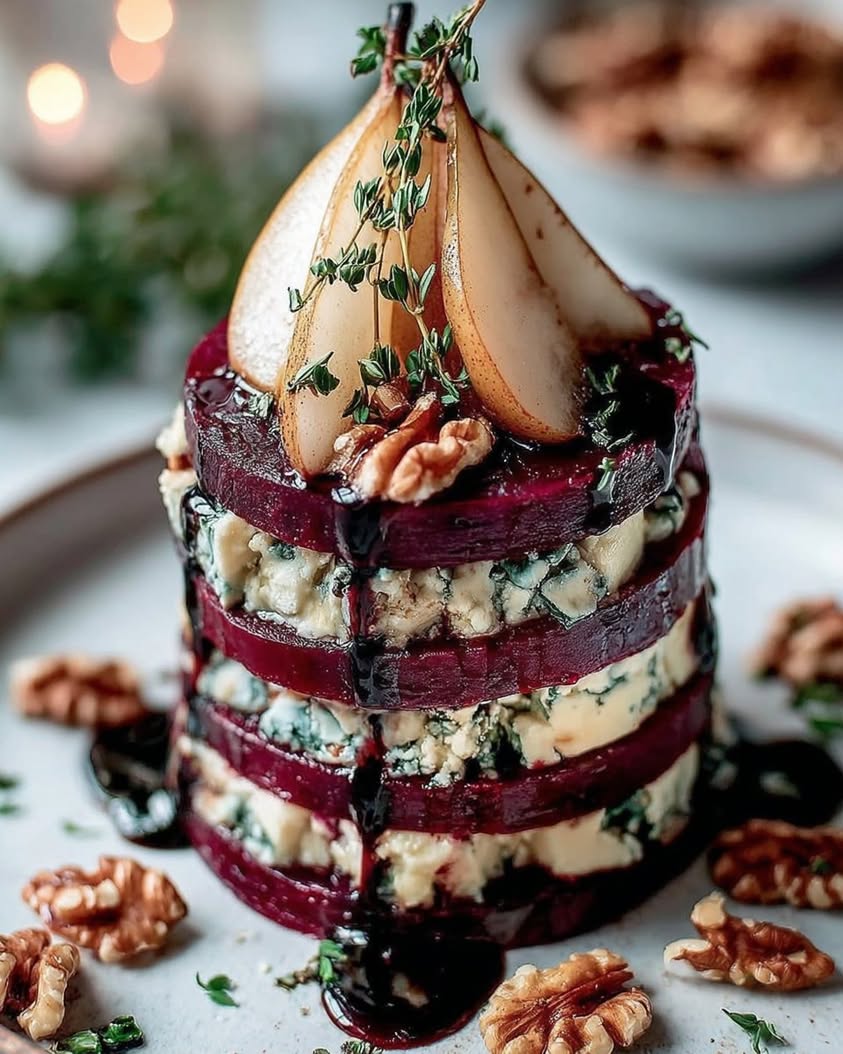
Roasted Beet and Blue Cheese Towers with Pear Balsamic Glaze: An Elegant Appetizer
Imagine a dish that looks like a miniature work of art and tastes like a symphony of sweet, savory, and tangy notes. Consequently, these Roasted Beet and Blue Cheese Towers with Pear Balsamic Glaze deliver exactly that experience. Moreover, they transform humble root vegetables into a stunning centerpiece for any special occasion. Ultimately, each bite offers a perfect balance of earthy roasted beets, creamy blue cheese, crisp pear, and a sweet-tart glaze.
This recipe elevates simple ingredients through thoughtful layering and presentation. For instance, the deep crimson of the beets contrasts beautifully with the white cheese and pale green pear. Furthermore, the rich, funky flavor of the blue cheese mellows against the natural sugar of the roasted beets. Meanwhile, the balsamic reduction adds a glossy, sophisticated finish that ties every element together. Therefore, this dish proves that impressive appetizers do not require complicated techniques, just quality components.
Ultimately, these towers are a conversation starter. They showcase how vegetarian dishes can be both hearty and refined. Additionally, they cater to a wide range of palates by balancing bold and subtle flavors. Whether you host a holiday dinner or an intimate gathering, this recipe promises to impress your guests visually and gastronomically. In essence, it is a celebration of texture, color, and taste on a single plate.
Quick Recipe Highlights
- Flavor Profile: These towers masterfully combine earthy sweetness from roasted beets with the sharp, tangy punch of blue cheese. Subsequently, fresh pear adds a bright, juicy counterpoint, while a reduced balsamic glaze introduces a complex sweet-and-sour acidity that binds all the flavors.
- Texture: You experience a wonderful contrast between the tender, dense flesh of the roasted beets and the creamy, crumbly blue cheese. Meanwhile, the fresh pear provides a satisfying crispness, and the reduced glaze adds a sticky, luxurious mouthfeel that coats each layer.
- Aroma: As the beets roast, they release a deep, earthy, and subtly sweet fragrance. Upon assembly, the pungent, sharp aroma of the blue cheese mingles with the fresh, floral scent of the pear. Finally, the warm balsamic reduction adds notes of dark fruit and caramel.
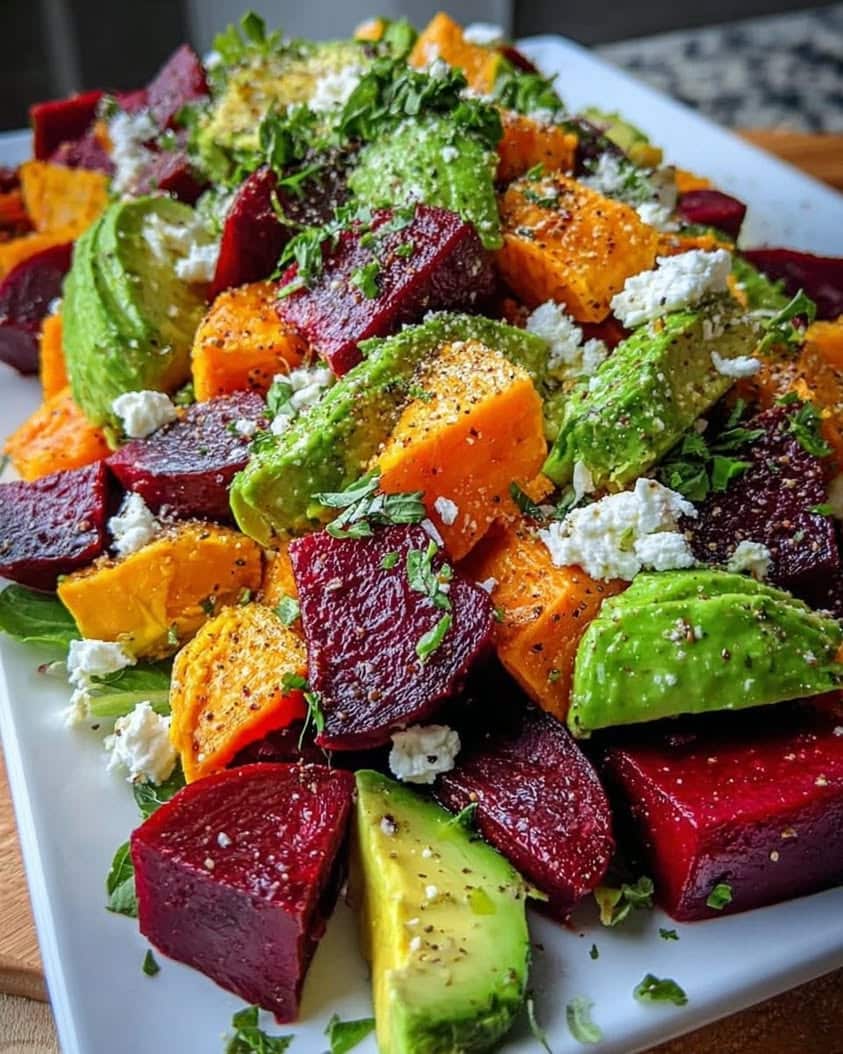
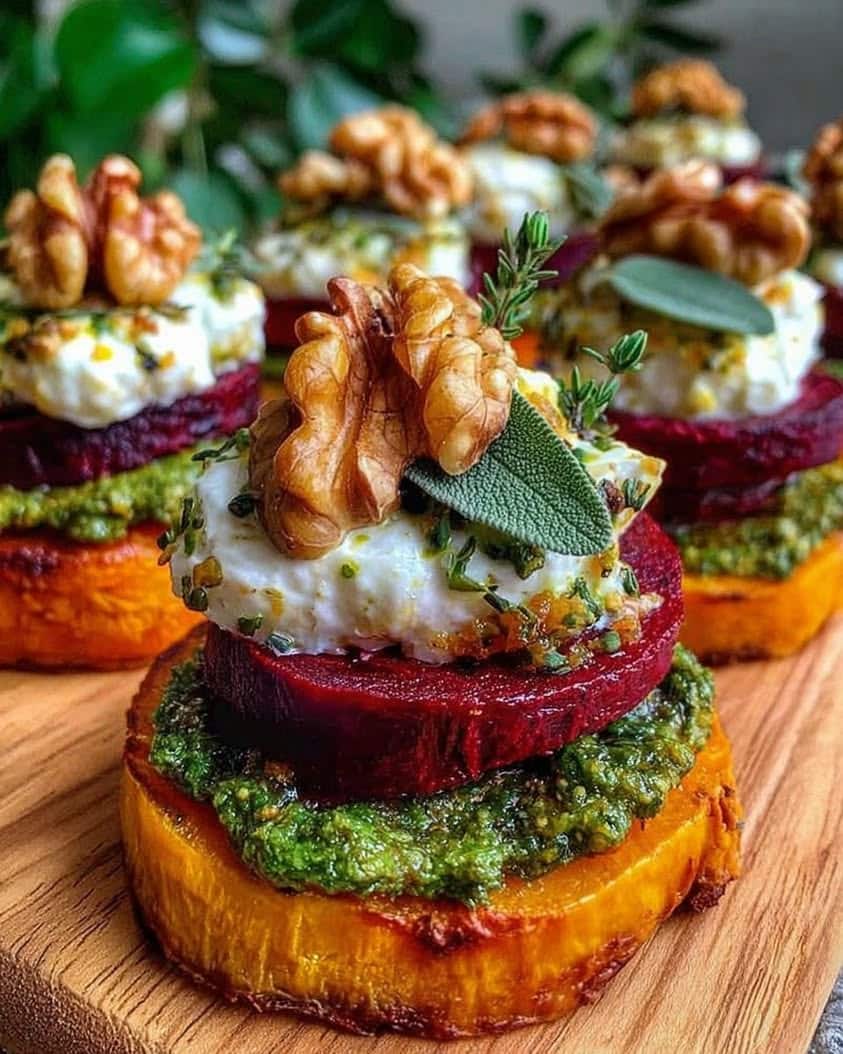
- Visual Appeal: The presentation is strikingly elegant, featuring vibrant vertical stacks. The jewel-toned red beets create a bold base, beautifully offset by the white cheese and the pale, almost translucent slices of pear. A drizzle of the dark balsamic glaze adds dramatic flair and a professional finish.
- Skill Level Needed: This is an intermediate-friendly recipe. While the techniques are simple, success relies on careful roasting, patient reduction of the glaze, and a steady hand for assembly. Therefore, it is perfect for home cooks looking to build their presentation skills.
- Special Equipment: You will need a good chef’s knife, a sturdy vegetable peeler, a baking sheet, and parchment paper. Additionally, a small saucepan for the glaze and a round cookie cutter or mold for shaping the towers are essential for achieving the classic stacked look.
Recipe Overview
- Difficulty Level: We rate this recipe as medium difficulty. The individual steps are straightforward, but coordinating the roasting, reducing, and assembly requires some planning. Furthermore, handling the beets without staining everything and achieving clean, stable stacks demands a bit of finesse and patience from the cook.
- Category: This dish falls squarely into the appetizer or starter category. It is also an excellent choice for a light lunch or as part of a vegetarian tasting menu. Moreover, its elegant presentation makes it suitable for celebratory meals and special event catering.
- Cuisine: While not tied to one specific tradition, the dish draws inspiration from modern American and European bistro cuisine. It utilizes classic pairings like beets and goat cheese but substitutes the more robust blue cheese. The use of a balsamic glaze is a hallmark of contemporary Italian-inspired cooking.
- Cost: The cost is moderately low to average. Beets and pears are typically affordable, especially in season. The primary cost driver is the quality of the blue cheese and balsamic vinegar. Fortunately, a small amount of good cheese and vinegar goes a long way in this recipe.
- Season: This recipe shines in the fall and winter. During these seasons, beets and pears are at their peak of flavor and sweetness. Conversely, the hearty, earthy qualities of the dish are perfectly suited to cooler weather dining.
- Occasion: It is ideal for dinner parties, holiday celebrations like Christmas or Thanksgiving, and romantic meals. Additionally, it works wonderfully for a sophisticated brunch or as a standout dish at a potluck where you want to showcase your culinary creativity.
Why You’ll Love This Recipe
First and foremost, the taste and texture appeal is undeniable. Each component brings a distinct character that harmonizes on the plate. The sweet, earthy base of the beet plays against the salty, funky cheese. Then, the crisp pear cuts through the richness, and the glaze adds a final note of tangy sweetness. Consequently, every forkful is a complex and satisfying experience that delights the senses and keeps you coming back for another bite.
From a convenience standpoint, this recipe offers significant preparation benefits. You can roast the beets and prepare the glaze a full day in advance. This make-ahead flexibility drastically reduces your stress on the day of an event. Furthermore, assembly is quick once the components are ready. Therefore, you can spend less time in the kitchen and more time with your guests, presenting a dish that looks like you spent hours meticulously crafting it.
Nutritionally, these Roasted Beet and Blue Cheese Towers pack a powerful punch. Beets are an excellent source of fiber, folate, and immune-boosting vitamin C. They also contain nitrates that can support healthy blood pressure. Blue cheese provides calcium and protein, while the pear adds additional fiber and vitamin K. So, while this dish feels indulgent, it is built on a foundation of wholesome, nutrient-dense ingredients that contribute to a balanced diet.
The social and entertaining value of this dish is exceptionally high. Its stunning visual presentation immediately signals to guests that this is a special occasion. The towers are individual servings, which feels personal and thoughtful. Moreover, the combination of flavors is sophisticated enough to impress food-loving friends but approachable enough for everyone to enjoy. It is a guaranteed conversation starter that elevates the entire dining experience.
Finally, this recipe is cost-effective and accessible. You do not need expensive or exotic ingredients to create something extraordinary. With a few beets, a pear, a small wedge of cheese, and some balsamic vinegar, you can prepare a restaurant-quality appetizer at home. This accessibility empowers home cooks to create memorable meals without breaking the bank, proving that elegance often lies in simplicity and technique rather than in lavish spending.
Historical Background and Cultural Significance
The story of pairing beets with cheese has deep roots in Eastern European cuisine. For centuries, beets were a staple crop due to their hardiness and long storage life. Meanwhile, fermented dairy products like sour cream and fresh cheeses were common. Consequently, dishes like borscht, topped with a dollop of sour cream, established the foundational flavor combination. This historical pairing evolved over time, with modern chefs exploring different cheese varieties to complement the beet’s unique sweetness.
Culturally, beets hold significant importance across many regions. In Russia and Ukraine, they are the heart of the national soup, borscht. In the American South, pickled beets are a classic side dish. The act of roasting beets, however, highlights their natural sugar content, a technique celebrated in modern farm-to-table movements. This recipe bridges old-world sustenance with new-world presentation, transforming a peasant vegetable into a centerpiece of culinary artistry.
The evolution of this specific recipe mirrors trends in contemporary appetizer design. The move from salads to vertical presentations or “towers” gained popularity in the 1990s and early 2000s in upscale restaurants. It was a way to showcase precision and care on the plate. The addition of a balsamic glaze, a reduction technique borrowed from Italian kitchens, adds a glossy, professional finish. Therefore, this dish is a product of global culinary fusion, blending techniques and pairings from different traditions into a cohesive, elegant whole.
Regional variations of this concept abound. In France, you might find a similar stack with goat cheese and a honey drizzle. In the Nordic countries, a pickled beet might be used with a sharp, hard cheese. Some modern variations incorporate candied walnuts for crunch or microgreens for a peppery finish. The core idea remains: celebrating the beet’s versatility and finding the perfect creamy, tangy counterpart to balance its earthy sweetness. This recipe invites you to be part of that ongoing culinary conversation.
Ingredient Deep Dive
Beets: These vibrant root vegetables have been cultivated since ancient times, originally for their leafy greens. The Romans later bred them for their swollen roots. Nutritionally, they are powerhouses of folate, manganese, and dietary nitrates, which can improve blood flow. For the best results, choose firm, smooth beets with vibrant greens still attached if possible. Store them unwashed in the refrigerator’s crisper drawer. You can substitute golden beets for a different color or pre-cooked vacuum-packed beets for a major time saver, though roasting fresh always yields superior flavor.
Blue Cheese: This category of cheese, veined with Penicillium cultures, has a history dating back to the 7th century. Legend places its discovery in the caves of Roquefort, France. It provides a significant amount of calcium, protein, and beneficial bacteria. When selecting, look for a cheese that is moist but not leaking, with a pungent but not ammoniac aroma. Wrap it tightly in wax paper and then foil before refrigerating. For substitutions, a creamy goat cheese (chèvre) offers a tangy but less funky alternative, while a firm aged gouda can provide saltiness without the blue mold.
Pear: A fruit symbolizing immortality in ancient Chinese culture, pears have been enjoyed for thousands of years. They are an excellent source of fiber and vitamin C. For this recipe, choose a firm, slightly underripe pear like Bosc or Anjou, which will hold its shape when sliced and provide a crisp texture. Allow pears to ripen at room temperature, then refrigerate to slow the process. In a pinch, a crisp apple like Fuji or Honeycrisp can work as a substitute, offering a similar juicy crunch and slight tartness.
Balsamic Vinegar: True traditional balsamic vinegar (Aceto Balsamico Tradizionale) is a protected product from Modena or Reggio Emilia, Italy, aged for a minimum of 12 years. The more common commercial variety is still a wonderful ingredient. It contains antioxidants from the grape must. Always opt for a bottle labeled “Aceto Balsamico di Modena” IGP for quality. Store it in a cool, dark place. Reducing it concentrates its natural sugars and acidity. If you need a substitute, a mix of red wine vinegar and a teaspoon of honey or maple syrup can mimic the sweet-tart profile in a glaze.
Common Mistakes to Avoid
- Overcooking the Beets: Over-roasted beets become mushy and difficult to slice cleanly. They also lose their vibrant color and can taste overly sweet. To avoid this, test for doneness with a paring knife; it should slide in with just a little resistance.
- Using a Soft, Overripe Pear: A mushy pear will not provide the necessary structural integrity or pleasant crunch. It can also make the tower soggy. Always select a pear that is firm to the touch at the stem end for the best texture.
- Not Reducing the Glaze Enough: A glaze that is too thin will run off the tower and pool on the plate, making a mess. Conversely, reducing it too much can make it hard and sticky. Aim for a syrup that coats the back of a spoon.
- Skipping the Peeling Step for Beets: The skin of roasted beets, while edible, can be tough and earthy. Peeling them after roasting ensures a velvety, smooth texture in every bite and a more refined presentation.
- Assembling Towers Too Far in Advance: If assembled more than 30 minutes before serving, the beet’s moisture can soften the pear and cause the tower to slump. For best results, prepare components ahead but assemble just before serving.
- Cutting Beet Slices of Uneven Thickness: Inconsistent slices make for wobbly, unstable towers. Use a sharp knife and take your time to cut uniform rounds, about 1/3 to 1/2 inch thick, for the most professional look.
- Not Tasting the Blue Cheese First: Blue cheeses vary wildly in saltiness and pungency. Taste your cheese before seasoning the dish. You may find you need little to no additional salt, preventing an overly salty final product.
- Using a Dull Knife to Slice the Pear: A dull knife will crush the delicate flesh of the pear, causing it to bruise and release too much juice. A sharp blade ensures clean, crisp slices that look beautiful and hold their shape.
Essential Techniques
Roasting Beets to Perfection: This technique is crucial for concentrating the beet’s natural sugars and achieving a tender, non-watery texture. First, wrap cleaned beets individually in foil with a drizzle of oil to create a steam pocket that cooks them evenly. Roast until a knife meets slight resistance. Subsequently, allow them to cool in the foil; the steam makes peeling effortless. The common pitfall is under-roasting, which leaves a hard, fibrous center. A visual cue for success is skin that wrinkles and pulls away slightly from the flesh.
Reducing a Balsamic Glaze: Reduction intensifies flavor and creates a luxurious, syrupy consistency. Pour vinegar into a saucepan and simmer gently over medium-low heat. Stir occasionally as it reduces by about half. Watch for the bubbles to become slower and more syrupy. The key mistake is boiling too rapidly, which can burn the sugars and create a bitter taste. The perfect glaze will coat the back of a spoon and leave a clean line when you run your finger through it.
Layering and Stacking: This technique transforms separate ingredients into an elegant presentation. Use a ring mold or cookie cutter as a guide on your plate. Place the largest beet round at the bottom, then carefully add cheese, pear, and repeat. Gently press down with the back of a spoon to compact the layers slightly before removing the mold. The main challenge is over-packing, which can squeeze out juices and make the tower dense. Success is a stable, freestanding tower with distinct, visible layers.
Pro Tips for Perfect Roasted Beet and Blue Cheese Towers
Wear disposable gloves when handling the roasted beets. This simple trick prevents your hands from being stained pink for days and keeps the presentation clean.
Chill your roasted beets before slicing. A cold beet is much firmer and easier to cut into neat, uniform rounds without crumbling.
Use a small offset spatula or butter knife to spread the blue cheese. This gives you more control than a spoon and allows for an even, thin layer that won’t overwhelm the other flavors.
If your pear browns after slicing, a quick dip in a mixture of water and lemon juice can prevent oxidation. However, pat the slices very dry afterward to avoid adding extra moisture to the tower.
For a more stable base, consider placing the tower on a small round of toasted baguette or a crispy potato galette. This adds another textural element and prevents slipping.
Garnish with something green just before serving. A single small leaf of watercress, a sprinkle of chives, or a few microgreens adds a fresh color contrast and a hint of pepperiness.
Warm your serving plates slightly. A warm plate will take the chill off the refrigerated components, allowing the full aroma and flavor of the cheese and glaze to blossom immediately.
Variations and Adaptations
Regional Variations: Explore global twists on this concept. For a French-inspired version, use a log of creamy goat cheese and a drizzle of lavender honey. A Nordic take might feature pickled beets, a sharp aged Havarti, and a garnish of fresh dill. An Italian rendition could include a layer of finely chopped walnuts and a garnish of fresh basil.
Seasonal Adaptations: Adapt the components to what is fresh. In spring, use tender baby beets and substitute the pear for thinly sliced strawberries. During summer, try grilled beet slices and a peach or nectarine. In deep winter, incorporate a layer of warmly spiced, roasted walnuts for added richness and crunch.
Dietary Modifications: For a vegan tower, replace the blue cheese with a cashew-based cheese spread or a thick, tangy coconut yogurt. A gluten-free adaptation is inherently simple, as the core recipe contains no gluten. For a nutty crunch without dairy, consider a layer of mashed avocado seasoned with lemon and salt.
Flavor Variations: Infuse the balsamic reduction with fresh herbs like rosemary or thyme while it simmers. Alternatively, mix a teaspoon of orange zest into the blue cheese for a citrus note. For a sweeter profile, sprinkle a tiny bit of brown sugar on the beet slices before roasting.
Texture Modifications: Add crunch with a thin layer of toasted and chopped pecans or hazelnuts between the cheese and pear. For a smoother experience, you can puree the roasted beets with a touch of cream cheese to create a mousse-like layer instead of solid slices.
Presentation Alternatives: If you lack a ring mold, simply shingle the beet and pear slices on a plate and crumble the blue cheese over the top. Alternatively, deconstruct the tower into a composed salad, tossing cubed components in the glaze and presenting them in a wide, shallow bowl.
Serving and Presentation Guide
Plating Techniques: The classic presentation uses a ring mold to create a perfect cylinder in the center of a white or neutral-colored plate. This minimalist approach lets the vibrant colors shine. For a more rustic look, forego the mold and create a casual stack by hand, slightly offsetting the layers. Always ensure the plate is clean; any dripped glaze should be intentional and artistic.
Garnishing Ideas: A final drizzle of the reduced balsamic glaze over and around the tower is essential. Then, add a final touch of freshness and color. Excellent options include a single small edible flower, a few fronds of fresh dill, a sprinkle of pink peppercorns, or a light dusting of finely grated orange zest.
Traditional Accompaniments: These towers are substantial enough to stand alone as an appetizer. However, a simple side of lightly dressed baby arugula or watercress salad complements the richness beautifully. A slice of crusty, warm bread is also welcome for guests to mop up any extra glaze and cheese left on the plate.
Modern Serving Suggestions: For a cocktail party, create miniature versions using a small round cutter and serve them as one-bite canapés on individual spoons or small plates. Alternatively, present a large, family-style tower on a wooden board for guests to slice themselves, fostering a communal dining experience.
Temperature Considerations: Serve the towers at a cool room temperature. The beets and cheese should be chilled from storage, but not ice-cold, as cold mutes flavor. Let them sit out for 10-15 minutes after assembly. The pear should be crisp and cool, and the glaze can be slightly warm or at room temperature.
Portion Control Tips: This recipe yields four generous appetizer portions. For a larger party, you can easily scale it up. Remember that each tower is rich and flavorful; a single tower per person is typically sufficient as a starter course. If serving as part of a larger tasting menu, you can make smaller, bite-sized versions.
Wine and Beverage Pairing
Wine Pairings: The earthy beets and pungent blue cheese create an exciting pairing challenge. A classic choice is a medium-bodied red with good acidity, like a Pinot Noir or a French Beaujolais. Their red fruit notes complement the beet’s sweetness while cutting through the cheese’s fat. Alternatively, a rich, off-dry white wine like a German Riesling or a Vouvray provides a stunning contrast. Their sweetness balances the saltiness, and their acidity cleanses the palate.
Non-Alcoholic Alternatives: Sparkling water with a twist of lemon or lime is always a refreshing palate cleanser. For something more special, try a tart cherry juice spritzer or a ginger beer. The spice of ginger pairs wonderfully with the earthiness of the beets. A cold-brewed hibiscus tea (agua de jamaica) offers a beautiful ruby color and a tart, cranberry-like flavor that mirrors the dish’s profile.
Coffee and Tea Pairings: While not a typical pairing for an appetizer, if serving these towers for a brunch, a light-roast coffee with bright, fruity notes can work well. For tea, consider a smoky Lapsang Souchong, whose intense flavor can stand up to the blue cheese, or a delicate white tea that won’t overpower the pear’s subtlety.
Temperature Considerations: Serve white wines and sparkling beverages well-chilled, between 45-50°F. Red wines should be served slightly cooler than room temperature, around 55-60°F, to keep their acidity perceptible. Non-alcoholic spritzers should be ice-cold to provide the most refreshing counterpoint to the rich towers.
Serving Suggestions: Always offer water alongside any beverage pairing. Encourage guests to take a sip of water between bites to fully reset their palate and appreciate the complex interplay of flavors in each component of the Roasted Beet and Blue Cheese Towers.
Storage and Shelf Life
Storage Methods: Store the individual components separately for the best quality. Keep peeled, roasted beets in an airtight container in the refrigerator for up to 4 days. Store the balsamic glaze in a small jar at room temperature. Refrigerate the blue cheese in its original wrapping and the whole, uncut pear in the crisper drawer.
Temperature Requirements: All components except the glaze require refrigeration at or below 40°F. The glaze, once reduced, is shelf-stable due to its sugar and acid content, but refrigeration can help it last for months without any quality loss.
Container Recommendations: Use glass containers for the beets and glaze to prevent staining and odor absorption. Place a piece of parchment paper directly on the surface of the glaze before sealing to prevent a skin from forming.
Signs of Spoilage: Discard beets if they become slimy, develop an off odor, or grow mold. The blue cheese may develop new, unusual mold colors (beyond blue/green) or become excessively dry and crumbly. The pear will become mushy and brown.
Reheating Instructions: There is no need to reheat the assembled towers. However, if you wish to serve the beet slices warm, you can briefly warm them in a microwave for 10-15 seconds or in a 300°F oven for 5 minutes before assembling. Do not heat the cheese or pear.
Freezing Guidelines: Freezing is not recommended for the assembled towers or the individual pear component, as texture will be destroyed. You can freeze roasted, peeled beets for up to 3 months in a freezer bag, though they may be slightly softer upon thawing.
Make Ahead Strategies
Prep Timeline: You can complete nearly all of this recipe 1-2 days in advance. Roast and peel the beets on day one. Prepare the balsamic reduction and let it cool. Even slice the pear a few hours ahead, storing the slices submerged in cold water with a squeeze of lemon to prevent browning.
Storage Between Steps: After roasting and peeling, pat the beets dry and store them whole in a container. Slice them just before assembly to prevent moisture loss. Keep the reduced glaze at room temperature in a sealed jar. Crumble or slice the blue cheese and keep it wrapped in the fridge.
Quality Impact Assessment: Making components ahead has minimal negative impact and can even improve flavor, as the beets’ sweetness concentrates when chilled. The only element that must be absolutely fresh is the final assembly to ensure structural integrity and the crisp texture of the pear.
Assembly Tips: On the day of serving, have all your chilled components ready. Dry the pear slices thoroughly with a paper towel. Use your mold and assemble each tower directly on the serving plate. This streamlined process takes only minutes, leaving you free to attend to other dishes or guests.
Reheating Guidelines: As mentioned, reheating is not typical. If you pre-assembled (not recommended), do not microwave, as it will melt the cheese and wilt the pear. The dish is designed to be enjoyed at a cool temperature.
Fresh Element Additions: The final garnish of fresh herbs or greens should always be added just before serving to maintain their vibrant color and delicate texture. Drizzle the glaze over the assembled towers immediately before presenting them at the table.
Scaling Instructions
Halving the Recipe: Halving this recipe for two people is straightforward. Use one medium-large beet, half a pear, and about 2 ounces of blue cheese. The balsamic glaze can still be made with 1/2 cup of vinegar; you will simply have extra, which is wonderful on salads or roasted vegetables.
Doubling or Tripling: For a party, doubling or tripling works well. Use multiple baking sheets for the beets, ensuring they are in a single layer and not crowded. Use a wider, shallow pan for reducing a larger volume of balsamic vinegar to help it reduce efficiently. Consider preparing an assembly line with multiple ring molds to speed up the plating process.
Equipment Adjustments: When scaling up, you may need additional ring molds or cookie cutters. If you only have one, assemble towers in batches, keeping the completed ones in a cool place while you finish the rest. Ensure you have enough serving plates that match for a cohesive presentation.
Timing Modifications: Roasting time for beets may increase slightly if you crowd the oven with multiple trays. Rotate the trays halfway through cooking. The balsamic reduction will take longer to reach the syrupy stage when making a larger batch; be patient and maintain a gentle simmer.
Storage Considerations: When making a large batch, the prepped components will take up more refrigerator space. Plan ahead and use large, flat containers for beet slices to prevent them from crushing under their own weight. Keep the sliced pears in separate containers with acidulated water.
Nutritional Deep Dive
Macro Breakdown: One serving of these Roasted Beet and Blue Cheese Towers provides a balance of macronutrients. The beets and pear contribute complex carbohydrates and dietary fiber, which aid digestion and provide sustained energy. The blue cheese offers a moderate amount of protein and a higher proportion of fat, primarily saturated, which contributes to the feeling of fullness and carries the fat-soluble flavors.
Micronutrient Analysis: This dish is particularly rich in specific micronutrients. Beets are an excellent source of folate (vitamin B9), crucial for cell growth and metabolism, and manganese, important for bone health. The blue cheese provides a significant amount of calcium and phosphorus for strong bones, as well as vitamin B12. The pear adds a dose of vitamin C and vitamin K.
Health Benefits: The dietary nitrates in beets may help lower blood pressure and improve athletic performance by enhancing blood flow. The fiber from both the beets and pear supports gut health and cholesterol management. The probiotics in blue cheese can contribute to a healthy gut microbiome, though it should be consumed in moderation due to its sodium and saturated fat content.
Dietary Considerations: This recipe is naturally gluten-free. It is vegetarian but not vegan due to the cheese. Those on a low-sodium diet should be mindful, as blue cheese can be quite salty. Individuals with histamine intolerance may need to avoid aged cheeses like blue cheese.
Portion Analysis: As an appetizer, one tower is a satisfying portion that won’t ruin your appetite for the main course. It provides a mix of nutrients to start your meal. If serving as a light main course, consider adding a side salad or a slice of whole-grain bread to create a more complete meal with additional fiber and protein.
Weight Management Tips: For a lighter version, you can reduce the amount of blue cheese by half and replace it with a smear of low-fat Greek yogurt mixed with herbs. You can also increase the ratio of pear to beet for more volume with fewer calories. The balsamic glaze is low in calories but high in flavor, making it an excellent, guilt-free way to add sweetness.
Dietary Adaptations
Gluten-Free: This recipe is inherently gluten-free, as none of the core ingredients contain gluten. Always double-check the label on your balsamic vinegar, as very rare, low-quality brands might use additives containing gluten, but this is exceedingly uncommon.
Dairy-Free/Vegan: To make vegan Roasted Beet Towers, replace the blue cheese. A fantastic substitute is a thick, cultured cashew cheese or a store-bought vegan feta or goat-style cheese. Another option is a layer of seasoned avocado mash or a white bean puree flavored with miso paste and lemon juice to mimic umami and tang.
Low-Carb/Keto: The primary sources of carbohydrates in this dish are the beets and pear. For a keto adaptation, significantly reduce the amount of beet used, making a thinner base layer. Replace the pear with thinly sliced radish or cucumber for crunch. Ensure the balsamic glaze is used very sparingly, as it is concentrated sugar.
Paleo: Omit the blue cheese, as dairy is not Paleo-compliant. Use a layer of mashed avocado or a dollop of homemade mayonnaise instead. Confirm that your balsamic vinegar does not contain caramel color or other additives; a reduction of pure vinegar is acceptable on a Paleo diet in moderation.
Low-FODMAP: Beets are low-FODMAP in servings of about 2 medium slices, which this recipe adheres to. However, pear is high in fructose and polyols. Substitute the pear with slices of orange (mandarin segments are low-FODMAP) or a small amount of diced pineapple. Blue cheese is typically low-FODMAP in 40g servings, so measure carefully.
Nut-Free: The standard recipe is nut-free. Be cautious if using a store-bought vegan cheese substitute, as many are made from nuts like cashews. Opt for a soy or coconut-based alternative if nut allergies are a concern.
Troubleshooting Guide
Towers Are Wobbly or Collapsing: This usually indicates uneven slicing or overly thick, slippery layers. Ensure your beet rounds are flat and of uniform thickness. Pat the beet and pear slices very dry before assembling. Press each layer down gently but firmly within the mold to eliminate air pockets and create a stable stack.
Glaze Is Too Thin or Too Thick: If your glaze is runny, return it to the saucepan and continue simmering until it reduces further. If it has become too thick and sticky to drizzle, simply reheat it gently with a teaspoon of warm water to loosen it to the desired consistency.
Beets Stained Everything Pink: Prevention is key: use gloves and a dedicated cutting board. If stains occur on surfaces, a paste of baking soda and water can help lift them. For fabric, treat immediately with cold water and soap; avoid hot water, which sets the stain.
Dish Tastes Too Earthy: The earthy flavor of beets can be pronounced for some palates. To mellow it, try roasting the beets with a few whole garlic cloves in the foil packet. The garlic will sweeten and perfume the beets. You can also add a tiny pinch of ground cloves to the cheese layer, which complements the earthiness.
Blue Cheese Overpowers Other Flavors: If your cheese is exceptionally strong, use less of it. Crumble it finely so it distributes more evenly rather than clumping. Alternatively, mix it with an equal part of cream cheese or mascarpone to soften its pungency while maintaining the characteristic blue cheese flavor.
Pear Slices Turn Brown Before Serving: Browning (oxidation) is natural but unappealing. To prevent it, slice the pear at the last possible moment. If you must slice ahead, submerge the slices in a bowl of cold water mixed with the juice of half a lemon for no more than 30 minutes, then pat completely dry.
Recipe Success Stories
Community feedback on this Roasted Beet and Blue Cheese Towers recipe has been overwhelmingly positive. Many home cooks report that it has become their “secret weapon” for impressing guests at dinner parties. One reader shared that she served these at a holiday gathering where several guests were vegetarian, and they were the first appetizer to disappear from the table. Another mentioned that the make-ahead tips were a lifesaver, allowing Print
Roasted Beet Blue Cheese Towers with Pear & Balsamic Glaze
- Total Time: 45 minutes
- Yield: 4
Description
Elegant, layered stacks of roasted beets, creamy blue cheese, and fresh pear slices, drizzled with a sweet-tangy balsamic glaze for a stunning appetizer or light meal.
Ingredients
- 3 medium beets (red or golden), peeled and sliced into 1/4-inch rounds
- 1 ripe pear, cored and thinly sliced
- 4 oz blue cheese, crumbled
- 1/2 cup balsamic vinegar
- 2 tbsp honey
- 2 tbsp olive oil
- Salt and black pepper to taste
- Fresh arugula for serving
- Optional: chopped walnuts for garnish
Instructions
- Preheat oven to 400°F (200°C). Toss beet slices with olive oil, salt, and pepper, then arrange on a baking sheet. Roast for 25-30 minutes until tender. Let cool.
- While beets roast, simmer balsamic vinegar and honey in a small saucepan over medium heat until reduced by half and syrupy, about 10 minutes. Set aside to cool.
- On a serving plate, layer a beet slice, a few pear slices, and a sprinkle of blue cheese. Repeat to form 2-3 layers per tower, ending with cheese.
- Drizzle towers with balsamic glaze, garnish with arugula and optional walnuts. Serve immediately.
Notes
You can customize the seasonings to taste.
- Prep Time: 15 minutes
- Cook Time: 30 minutes
- Method: Appetizer
- Cuisine: American