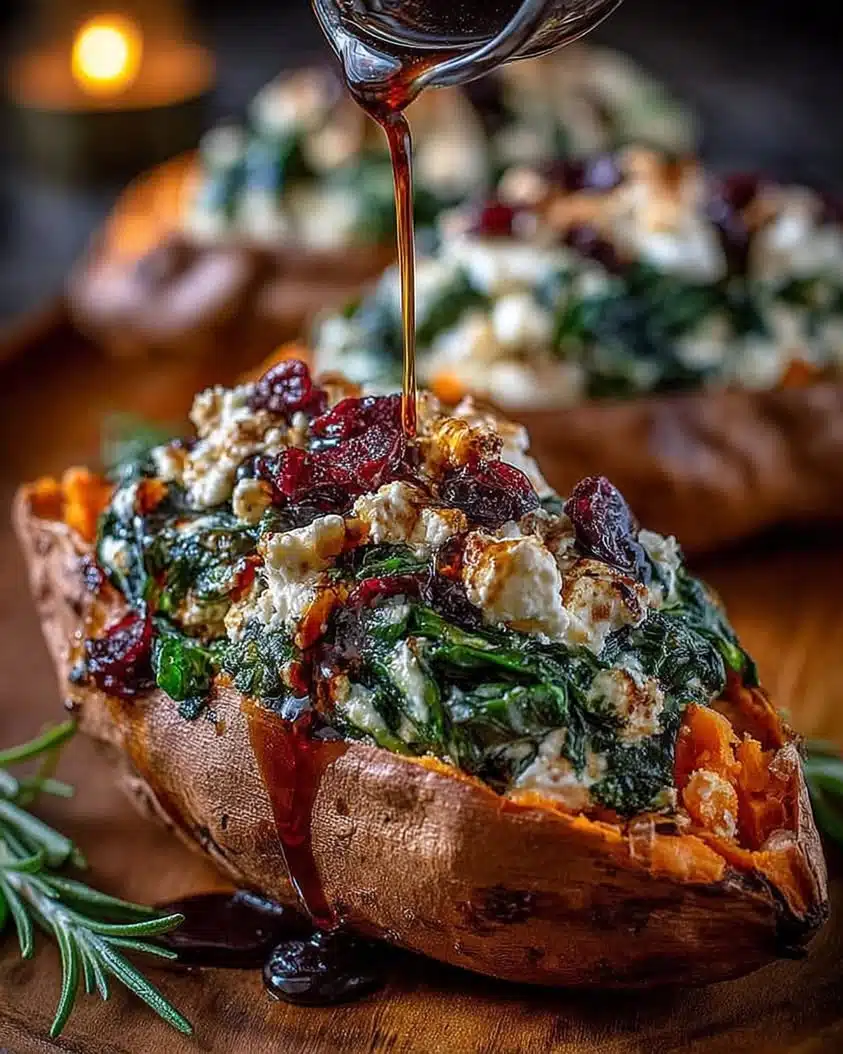
Creamy Ricotta & Spinach Stuffed Sweet Potatoes with Balsamic Cranberry Glaze: A Showstopping Vegetarian Main
These Creamy Ricotta & Spinach Stuffed Sweet Potatoes with Balsamic Cranberry Glaze turn a humble root vegetable into a stunning centerpiece that earns a spot on both weeknight tables and holiday spreads. Picture this: tender sweet potatoes roasted until their natural sugars caramelize, split open and piled high with a fluffy ricotta and spinach filling, then finished with a glossy balsamic cranberry glaze that shimmers in the light. The combination of creamy, savory, and tangy-sweet flavors creates a dish that feels indulgent yet remains wholesome and satisfying. Every bite delivers a little contrast, from the soft, custardy interior of the potato to the bright pop of cranberries in the glaze. If you have been searching for a vegetarian main dish that impresses without stress, these Creamy Ricotta & Spinach Stuffed Sweet Potatoes with Balsamic Cranberry Glaze deserve a permanent place in your recipe rotation. They look elegant, taste rich, and come together with simple ingredients you can find at any grocery store.
What makes this recipe truly special is how it balances everyday simplicity with special-occasion polish. You roast the sweet potatoes whole, so the oven does most of the work while you prepare the ricotta and spinach filling and simmer the balsamic cranberry glaze on the stovetop. The filling comes together in minutes with creamy ricotta, sautéed spinach, garlic, and a hint of nutmeg. Meanwhile, the glaze reduces balsamic vinegar, honey, and fresh cranberries into a syrupy, jewel-toned sauce that tastes far more complex than its short ingredient list suggests. This is the kind of dish that makes people ask for the recipe before they even finish their first bite. Because these Creamy Ricotta & Spinach Stuffed Sweet Potatoes with Balsamic Cranberry Glaze rely on pantry staples and fresh produce, they also fit comfortably into a budget-conscious meal plan. Whether you serve them for a cozy Sunday dinner or a festive holiday gathering, they deliver big flavor and beautiful presentation with minimal fuss.
Beyond taste, these stuffed sweet potatoes offer real nutritional value. Sweet potatoes bring fiber, vitamin A, and potassium to the plate, while ricotta adds protein and calcium, and spinach contributes iron and antioxidants. The balsamic cranberry glaze uses just a touch of sweetener, so the dish stays balanced rather than cloying. This recipe also suits a wide range of eaters, because you can easily adapt the filling or glaze to fit different dietary needs. Parents appreciate how kid-friendly the creamy filling is, and hosts love that the dish holds up well when made ahead. In short, these Creamy Ricotta & Spinach Stuffed Sweet Potatoes with Balsamic Cranberry Glaze work hard for you on every front: flavor, nutrition, presentation, and convenience. Let’s walk through everything you need to know to make them perfectly at home.
Quick Recipe Highlights
- Flavor Profile: Expect a rich, creamy, and mildly tangy ricotta filling layered over sweet, caramelized potato. The balsamic cranberry glaze adds a bright, tart-sweet finish that cuts through the richness beautifully. Together, these elements create a balanced, memorable flavor experience.
- Texture: The sweet potato interior turns soft and custardy after roasting, while the ricotta filling stays light and fluffy. The glaze brings a glossy, syrupy texture, and a sprinkle of toasted nuts or seeds would add a satisfying crunch if you like.
- Aroma: Garlic and sautéed spinach fill the kitchen with a savory, comforting scent as they cook. The balsamic glaze releases a sweet-tart aroma, and the roasted sweet potatoes bring warm, earthy notes that make the whole dish feel inviting.
- Visual Appeal: Deep orange sweet potatoes contrast beautifully with the white ricotta filling and the ruby-red cranberry glaze. Drizzled over the top, the glaze looks like a glossy ribbon, making the dish look restaurant-worthy on any table.
- Skill Level Needed: This recipe suits cooks of nearly any experience level. The steps are straightforward, and the oven handles the hardest part. You only need basic knife skills and the ability to simmer a sauce.
- Special Equipment: You need a sturdy sheet pan, a skillet for the spinach filling, and a small saucepan for the glaze. A microplane or zester helps if you add citrus, and an instant-read thermometer ensures the potatoes roast evenly.
Recipe Overview
- Difficulty Level: I rate this recipe as easy to moderate because it involves three simple components: roasted potatoes, a stovetop filling, and a quick glaze. None of the techniques require advanced skill, though you should watch the balsamic glaze closely so it does not over-reduce. Overall, the process stays relaxed and forgiving, which makes it great for both beginners and busy cooks.
- Category: This dish works as a vegetarian main course, a hearty side dish, or a brunch centerpiece. It also fits well into holiday menus as a meatless alternative. Because it satisfies on its own, you can serve it without any protein on the side.
- Cuisine: The recipe draws on American comfort food traditions and Mediterranean flavors. Ricotta and spinach recall Italian cooking, while sweet potatoes and cranberries feel distinctly North American. The balsamic glaze ties these influences together with a modern, contemporary touch that feels right at home in U.S. kitchens.
- Cost: The ingredients stay affordable, especially when you buy sweet potatoes and fresh cranberries in season. Ricotta costs little, and spinach, garlic, and balsamic vinegar are pantry staples. A rough estimate puts the total cost at about two to three dollars per serving.
- Season: Fall and winter suit this dish best because sweet potatoes and cranberries peak during those months. That said, you can make it year-round with frozen cranberries. The warm, cozy flavors feel especially welcome during cooler weather and holiday gatherings.
- Occasion: Serve these stuffed sweet potatoes for Thanksgiving, Christmas, or a cozy dinner party. They also work for meal prep lunches or a casual weekend supper. Because they present so beautifully, they fit both festive and everyday occasions.
Why You’ll Love This Recipe
The taste and texture of these Creamy Ricotta & Spinach Stuffed Sweet Potatoes with Balsamic Cranberry Glaze deliver pure comfort with a sophisticated twist. The roasted sweet potato becomes silky and sweet, almost like a custard, and the ricotta filling adds a light, airy creaminess that never feels heavy. Then the balsamic cranberry glaze brings a tangy, fruity brightness that balances everything. Each component plays a role, and together they create a harmony of flavors that keeps you coming back for another bite. Whether you are feeding picky eaters or discerning guests, this flavor combination wins people over quickly.
Convenience and preparation benefits make this recipe a weeknight hero. You roast the potatoes whole, which means no peeling, chopping, or babysitting. While they roast, you sauté the spinach, mix the filling, and simmer the glaze, all in under thirty minutes of active work. The components also hold well, so you can prepare them ahead and assemble at the last minute. Cleanup stays manageable too, since the whole dish uses one sheet pan, one skillet, and one saucepan. For busy households, that kind of efficiency matters just as much as great taste.
Nutritional advantages give this dish broad appeal. Sweet potatoes provide slow-digesting carbohydrates, fiber, and a hefty dose of vitamin A. Ricotta contributes protein and calcium, and spinach adds iron, folate, and antioxidants. The cranberry glaze offers vitamin C and a pleasant tartness without relying on heavy cream or excessive sugar. As a result, you get a satisfying vegetarian meal that supports a balanced diet. It also fits naturally into many eating styles, and you can adjust it for specific dietary needs without losing the magic.
Social and entertaining value sets these stuffed sweet potatoes apart. They look stunning on a platter, with their bright orange flesh, white filling, and ruby-red glaze, so guests always notice them. Because they feel special yet require modest effort, they free you to focus on your company instead of the kitchen. They also suit buffet-style serving and hold up well at room temperature for a while. Hosts love a dish that impresses without demanding last-minute frenzy, and this one delivers exactly that.
Cost-effectiveness and accessibility round out the list of reasons to love this recipe. The ingredients stay inexpensive and easy to find, even in smaller grocery stores. You probably already have olive oil, garlic, balsamic vinegar, and honey in your pantry. Seasonal produce helps keep costs low, and the dish uses no rare or specialty items. You can feed four people generously for a fraction of what a restaurant meal would cost, and leftovers reheat beautifully the next day. That combination of affordability, ease, and flavor makes these Creamy Ricotta & Spinach Stuffed Sweet Potatoes with Balsamic Cranberry Glaze a recipe you will return to again and again.
Historical Background and Cultural Significance
The origin story of this dish reflects a modern American approach to cooking, one that blends traditions rather than tracing to a single source. Stuffed sweet potatoes have long appeared in Southern cooking, where home cooks roasted the vegetable and filled it with whatever the pantry offered. Meanwhile, ricotta and spinach fillings come from Italian culinary tradition, where they star in lasagna, ravioli, and calzones. This recipe merges those influences into a single contemporary dish. The balsamic cranberry glaze adds a newer element, one that reflects the rising popularity of reduced balsamic sauces in American kitchens over the past two decades.
Cultural importance shows up in how the dish bridges comfort food and health-conscious eating. Sweet potatoes hold a cherished place in American food culture, especially in the South, and they carry associations with harvest and holiday tables. Cranberries, too, tie strongly to North American traditions, particularly the Thanksgiving meal. By pairing these ingredients with Italian ricotta, the recipe honors multiple food cultures at once. It also reflects a broader shift toward vegetable-forward mains, where produce takes center stage rather than serving as a side note. Home cooks today want dishes that feel both nostalgic and fresh, and this recipe answers that call.
The evolution of the recipe follows the growing interest in vegetarian main dishes and plant-forward cooking. Years ago, a vegetable-based entrée often meant pasta or a simple salad, but home cooks now seek hearty, satisfying options that stand on their own. Stuffed vegetables became a popular solution because they feel substantial and complete. At the same time, balsamic reductions moved from restaurant menus into home kitchens, making glazes like this one easy to prepare. Social media and food blogs accelerated these trends, and recipes like this one spread quickly among home cooks looking for impressive yet approachable meals.
Regional variations appear in many forms across the United States. In the South, cooks might add pecans or a dash of cinnamon to the filling. In New England, the cranberry glaze feels especially at home, and some cooks fold fresh orange zest into it. Italian-American households might add a little Parmesan to the ricotta for extra savoriness. On the West Coast, cooks often lean into fresh herbs like thyme or sage. Each region brings its own accent to the dish, yet the core combination remains recognizable and beloved. That flexibility keeps the recipe relevant across households and generations.
Ingredient Deep Dive
Sweet potatoes form the foundation of this dish, and they carry deep cultural significance in the Americas, where they have been cultivated for thousands of years. Indigenous peoples across Central and South America grew sweet potatoes long before European contact, and the vegetable later spread across the globe through trade routes. Nutritionally, sweet potatoes shine because they deliver beta-carotene, fiber, potassium, and vitamin C in a single package. When selecting sweet potatoes, look for firm, unblemished skin and avoid any soft spots or sprouts. Store them in a cool, dark, dry place rather than the refrigerator, where cold temperatures can damage their texture. If you need a substitute, butternut squash or acorn squash work well, though the cooking time will differ.
Ricotta brings the creamy heart of the filling, and this Italian cheese has a long history stretching back to ancient Rome. Its name means re-cooked, referring to the process of heating whey to create the cheese. Nutritionally, ricotta offers protein, calcium, and relatively low fat compared to many other cheeses. Choose fresh ricotta with a clean, milky aroma and a smooth texture; avoid any that looks watery or smells sour. Store it tightly covered in the refrigerator and use it within about a week of opening. For substitutions, cottage cheese blended until smooth works well, and dairy-free ricotta offers a solid plant-based alternative.
Spinach adds color, nutrients, and a mild earthy flavor to the filling. This leafy green originated in ancient Persia and traveled along trade routes to Europe and beyond, eventually becoming a staple in many cuisines. Spinach delivers iron, folate, vitamin K, and antioxidants, which makes it a nutritional powerhouse. Select fresh spinach with crisp, dark green leaves and avoid any that looks wilted or slimy. Store it in a sealed container in the refrigerator and wash it thoroughly before cooking. If you prefer, frozen spinach works well too; simply thaw and squeeze out the excess moisture. Kale or Swiss chard can substitute in equal amounts.
Cranberries give the glaze its tart, bright character and its festive color. These native North American berries have long been harvested by Indigenous communities, who used them for food, medicine, and dye. Nutritionally, cranberries provide vitamin C, fiber, and antioxidants, though the glaze uses them in modest amounts. Choose firm, plump berries with shiny skin, and discard any that look shriveled or soft. Store fresh cranberries in the refrigerator for several weeks or freeze them for longer storage. Frozen cranberries work perfectly in this recipe, so you can make the glaze year-round.
Balsamic vinegar creates the backbone of the glaze, contributing depth, acidity, and natural sweetness. This Italian vinegar has been produced for centuries, and traditional versions age in wooden barrels for years. Nutritionally, balsamic vinegar adds flavor without fat and contains minimal calories. Select a mid-range balsamic vinegar that tastes balanced, since cheap versions can taste harsh and expensive ones may feel wasted in a reduction. Store it in a cool, dark cupboard away from heat. In a pinch, red wine vinegar with a pinch of sugar makes a workable substitute.
Common Mistakes to Avoid
- Under-roasting the sweet potatoes: Firm potatoes make for a dry, stringy filling experience. Roast them until a knife slides in with no resistance at all. If you rush this step, the final dish loses its creamy texture.
- Adding wet spinach to the filling: Excess moisture turns the ricotta filling soupy. Squeeze cooked spinach thoroughly in a clean towel before mixing. This step takes a minute but protects the filling’s fluffy texture.
- Over-reducing the balsamic glaze: The glaze thickens quickly once it cools, so stop cooking while it still looks slightly thin. Otherwise, it hardens into a sticky candy-like texture. Pull it off the heat early and let it rest.
- Under-seasoning the ricotta: Ricotta tastes mild on its own, so it needs salt, pepper, and aromatics to shine. Taste the filling before stuffing the potatoes and adjust as needed. A pinch of nutmeg also lifts the flavor beautifully.
- Cutting the potatoes too early: Sweet potatoes need to cool slightly after roasting so they hold their shape. If you split them immediately, they may fall apart. Wait about ten minutes before slicing and fluffing.
- Skimping on the fluffing step: Fluffing the potato interior with a fork creates pockets that hold the filling. Skip this step and the stuffing sits on top rather than integrating. Take a few extra seconds to fluff properly.
- Using cold ricotta straight from the fridge: Cold ricotta stays lumpy and does not blend smoothly with the spinach. Let it sit at room temperature for fifteen minutes first. This simple step yields a lighter, silkier filling.
- Crowding the pan: Potatoes need space for air to circulate and skin to crisp. Use a large sheet pan and leave gaps between them. If needed, roast in batches or use two pans.
- Forgetting to pierce the potatoes: Sweet potatoes can burst in the oven if steam cannot escape. Poke each one several times with a fork before roasting. This small precaution keeps your oven clean and your potatoes intact.
- Making the glaze too far ahead: The glaze firms up as it sits, so it may need a splash of water to loosen. Reheat it gently over low heat and stir until it flows. For best results, make it shortly before serving.
Essential Techniques
Roasting whole sweet potatoes develops their natural sweetness and creates a creamy interior, and this technique matters more than any other step in the recipe. The dry heat of the oven converts starches into sugars through caramelization, which deepens flavor. To master this technique, preheat your oven fully, place the potatoes on a sheet pan, and roast at 400 degrees Fahrenheit until a knife glides through easily, usually fifty to sixty minutes depending on size. Avoid wrapping them in foil, which steams rather than roasts them. The visual cue for success is skin that looks slightly wrinkled and a potato that gives under gentle pressure.
Sautéing spinach properly keeps the filling from turning watery or bitter. The goal is to wilt the leaves quickly over medium heat while preserving their bright color and mild flavor. To master this technique, heat olive oil and garlic briefly, then add the spinach in batches and toss until just wilted. Avoid overcooking, which turns the leaves dark and mushy. A common pitfall involves adding too much spinach at once, which lowers the pan temperature and steams the leaves. The visual cue for success is vibrant green, tender leaves that have shrunk considerably but still look fresh.
Reducing balsamic vinegar into a glaze requires attention and a gentle hand. This technique concentrates flavor and creates a syrupy texture that clings to the potatoes. To master it, combine balsamic vinegar, honey, and cranberries in a small saucepan and simmer over medium-low heat, stirring often. Watch for bubbles that grow larger and slower as the liquid thickens. A common pitfall is walking away, since the glaze can scorch in seconds. The visual cue for success is a sauce that coats the back of a spoon and drips slowly, like warm honey.
Filling the potatoes evenly ensures every serving looks and tastes balanced. This step seems simple, but technique affects both presentation and eating experience. To master it, split each potato lengthwise and fluff the interior with a fork before spooning in the ricotta mixture. Leave a slight rim of potato visible for a rustic look, or pipe the filling for a polished finish. The main pitfall is overfilling, which causes the topping to spill and pool. The visual cue for success is a generous mound that sits neatly atop the potato without overflowing.
Pro Tips for Perfect Creamy Ricotta & Spinach Stuffed Sweet Potatoes with Balsamic Cranberry Glaze
Choose sweet potatoes of similar size so they roast at the same rate. Uniformity prevents the frustration of one potato turning mushy while another stays firm. Look for medium potatoes, roughly eight to ten ounces each, for the best results.
Roast the potatoes on parchment paper for effortless cleanup and easy release. Parchment also prevents sticking and keeps the skins intact. This small step saves scrubbing time later.
Let the ricotta come to room temperature before mixing the filling. Warm ricotta blends more smoothly and creates a lighter texture. A few minutes on the counter makes a noticeable difference.
Season the filling in layers rather than all at once. Salt the spinach while it cooks, then season the ricotta mixture, then taste again before stuffing. Layered seasoning builds depth and prevents flat flavors.
Make the glaze in a wide saucepan rather than a narrow one. A wider surface allows faster, more even evaporation and reduces splattering. You also gain better control over the reduction.
Add the cranberries in two stages for layered texture. Simmer half of them until they break down into the sauce, then stir in the rest near the end so they stay whole and bright. This trick adds both body and visual interest.
Warm the serving plates before plating, especially in cooler months. Warm plates keep the dish hot longer and make the presentation feel more thoughtful. A quick rinse under hot water and a towel dry does the trick.
Finish the dish with a small pinch of flaky salt just before serving. The salt brings out the sweetness of the potato and the tartness of the cranberries. This final touch elevates the whole plate.
Variations and Adaptations
Regional variations allow you to tailor the dish to local flavors and family traditions. In the South, cooks often add toasted pecans and a pinch of cinnamon to the ricotta filling for warmth. In New England, a little orange zest in the cranberry glaze echoes classic holiday flavors. Italian-American households sometimes fold grated Parmesan into the filling for a savory edge. On the West Coast, fresh thyme or sage in the spinach mixture adds an herbal note that pairs well with the balsamic glaze.
Seasonal adaptations keep the recipe fresh throughout the year. In fall, serve it with roasted apples or a sprinkle of toasted pumpkin seeds. During summer, swap the cranberry glaze for a fresh tomato and basil relish, or use a lemon-balsamic glaze instead. In spring, fold fresh peas or asparagus tips into the ricotta filling for a lighter character. Winter calls for the full, cozy version with extra cranberries and a drizzle of honey.
Dietary modifications make the recipe flexible for different eating styles. For a vegan version, use dairy-free ricotta and maple syrup instead of honey in the glaze. To make it gluten-free, simply verify that your balsamic vinegar contains no additives, since the recipe otherwise uses no gluten. For a low-carb approach, serve the ricotta filling over roasted zucchini boats rather than sweet potatoes. Each swap preserves the spirit of the dish while meeting specific needs.
Flavor variations let you explore new taste profiles with minimal effort. Add a teaspoon of curry powder to the ricotta filling for a warm, spiced version. Stir a little Dijon mustard into the glaze for extra tang. Fold chopped sun-dried tomatoes into the filling for a Mediterranean twist, or add a pinch of red pepper flakes for gentle heat. Each variation takes just one ingredient and changes the dish’s personality.
Texture modifications help you customize the eating experience. Add toasted walnuts, almonds, or pepitas for crunch on top. Stir a spoonful of breadcrumbs into the ricotta for a heartier filling. For a lighter texture, whip the ricotta in a food processor before folding in the spinach. These small changes make the dish feel new without altering the core recipe.
Presentation alternatives suit different occasions and skill levels. Pipe the ricotta filling with a star tip for a polished, restaurant-style look. Serve the potatoes halved crosswise as smaller bites for a party platter. For a family-style presentation, arrange the stuffed potatoes on a warm platter and drizzle the entire dish with glaze at the table. Each approach changes the visual impact while keeping the flavors intact.
Serving and Presentation Guide
Plating techniques make a real difference in how this dish lands on the table. Place each stuffed potato slightly off-center on a wide, shallow bowl or plate, then drizzle the glaze in a zigzag pattern over the top. Leave some white filling exposed for contrast, and let a little glaze pool on the plate. This style feels modern and intentional without requiring fancy tools. A simple white plate makes the orange, white, and red colors pop beautifully.
Garnishing ideas add the finishing flourish that turns a home-cooked dish into something memorable. Scatter a few whole glazed cranberries over each potato for color and texture. A sprinkle of fresh thyme or microgreens adds a green accent that brightens the plate. Toasted nuts or seeds bring crunch, while a light dusting of cracked black pepper adds visual interest. Keep garnishes simple so the main components remain the star.
Traditional accompaniments round out the meal and echo the recipe’s roots. A simple green salad with a light vinaigrette balances the richness of the ricotta. Crusty bread helps soak up any extra glaze, and roasted Brussels sprouts or green beans add color and substance. For a holiday table, pair the potatoes with classic sides like cranberry sauce and a wild rice pilaf. These familiar flavors make the dish feel right at home.
Modern serving suggestions offer fresh ways to enjoy the recipe. Serve the stuffed potatoes over a bed of arugula for a light, peppery contrast. Add a dollop of whipped goat cheese on top for extra tang, or finish with a drizzle of chili oil for gentle heat. For a brunch spread, pair them with poached eggs and a side of fruit. These contemporary touches keep the dish feeling current and adaptable.
Temperature considerations affect both flavor and safety. Serve the potatoes hot from the oven, when the ricotta filling is soft and the glaze flows easily. If you make them ahead, reheat gently at 350 degrees Fahrenheit until warmed through, then add a fresh drizzle of glaze. Avoid reheating at high heat, which can dry out the filling and tighten the glaze. Room-temperature serving works for buffets, but keep the dish out no longer than two hours.
Portion control tips help you plan for different appetites and occasions. One medium stuffed potato serves as a light main for most adults, while two make a hearty meal. For a buffet or potluck, cut each potato in half and serve as smaller portions. When serving as a side dish, count on half a potato per person. These guidelines keep your planning simple and reduce waste.
Wine and Beverage Pairing
Wine pairings can elevate this dish from delicious to unforgettable. A crisp white wine like Sauvignon Blanc cuts through the creamy ricotta and complements the tangy glaze. For a richer option, an unoaked Chardonnay brings body without overpowering the delicate spinach flavor. A dry rosé works beautifully too, offering red-fruit notes that echo the cranberries. If you prefer red wine, choose a light Pinot Noir with bright acidity rather than a heavy, tannic red.
Non-alcoholic alternatives keep the pairing inclusive and refreshing. Sparkling water with a splash of cranberry juice and lime echoes the glaze’s flavors without added sugar. An iced hibiscus tea brings tartness and a striking color that matches the dish. For something cozy, a warm apple cider with a cinnamon stick complements the roasted sweet potato notes. These options feel festive and pair well with the food.
Coffee and tea pairings may seem unusual for dinner, but they can work beautifully after the meal or at brunch. A light black tea like Darjeeling offers gentle astringency that cleanses the palate. For a brunch spread, a medium-roast coffee with notes of caramel and citrus pairs surprisingly well with the sweet potato and glaze. Herbal teas like rooibos add warmth without caffeine.
Temperature considerations matter for beverage service. Serve white wines and rosé well chilled, around 45 to 50 degrees Fahrenheit, to preserve their crispness. Red wines taste best slightly below room temperature, around 60 to 65 degrees. For non-alcoholic options, serve sparkling drinks cold and warm drinks hot but not scalding. Matching temperatures to the dish keeps the pairing balanced.
Serving suggestions make the beverage experience feel intentional. Offer a small tasting pour before dinner so guests can choose their favorite. Set out pretty glassware and a small pitcher for self-service at buffets. For holidays, a signature mocktail with cranberry and rosemary feels festive and ties visually to the glaze. Thoughtful beverage service rounds out the meal and makes guests feel cared for.
Storage and Shelf Life
Storage methods determine how well leftovers hold up, and this dish stores quite well when handled properly. Keep the stuffed potatoes and glaze in separate containers so the potatoes do not become soggy. Airtight containers work best for both components. Store everything in the refrigerator within two hours of cooking. Proper storage keeps the dish fresh for several days.
Temperature requirements matter for food safety and quality. Keep the stuffed potatoes refrigerated at 40 degrees Fahrenheit or below. The glaze can stay in the refrigerator for up to a week, while the potatoes and filling last three to four days. Avoid leaving the dish at room temperature for extended periods, especially in warm weather.
Container recommendations help preserve texture and flavor. Use shallow, airtight containers for the potatoes so they do not get crushed. Glass containers work well for the glaze because they resist staining and let you see the contents. Label containers with dates so you remember when you made them. These small habits reduce waste and keep your refrigerator organized.
Signs of spoilage help you know when to discard leftovers. Watch for off smells, slimy textures, or visible mold on the filling or potatoes. The glaze should smell sweet and tangy, not sour or fermented. If anything looks or smells questionable, throw it out. Food safety always comes first.
Reheating instructions preserve the dish’s quality. Reheat the potatoes in a 350-degree-Fahrenheit oven for about fifteen minutes, until warmed through. Add a fresh drizzle of glaze after reheating so the sauce stays glossy. Avoid microwaving the potatoes whole, since this can make the filling rubbery. If you must use a microwave, reheat in short intervals and check often.
Freezing guidelines apply to the components separately for best results. Freeze the ricotta filling in a sealed container for up to two months, though the texture may loosen slightly after thawing. The glaze freezes beautifully in small jars or ice cube trays. Whole roasted sweet potatoes freeze well too, but the stuffed version does not, since the filling can become watery. Thaw frozen components in the refrigerator overnight before reheating.
Make Ahead Strategies
A prep timeline keeps the cooking process calm and organized, especially for holidays. Roast the sweet potatoes up to two days ahead and store them whole in the refrigerator. Make the ricotta filling up to one day ahead and keep it covered in the fridge. Prepare the glaze up to three days ahead and reheat gently with a splash of water. This staggered approach lets you assemble the dish in minutes.
Storage between steps protects quality and flavor. Wrap cooled roasted potatoes tightly in foil or place them in an airtight container. Store the filling separately so the spinach stays fresh and the ricotta does not absorb other flavors. Keep the glaze in a sealed jar, and add a little water when reheating to restore its pourable consistency. Each component holds well on its own.
Quality impact assessment helps you decide which steps to do ahead. Roasted potatoes actually improve slightly overnight, since the flavors deepen. The ricotta filling stays fresh for a day but loses a bit of lightness after two. The glaze holds up beautifully for days. Prioritize making the glaze and roasting the potatoes ahead, and mix the filling the day you plan to serve.
Assembly tips streamline the final steps. Reheat the potatoes in the oven while you warm the filling gently in a skillet and loosen the glaze on the stovetop. Stuff the potatoes and drizzle the glaze right before serving. This sequence keeps everything hot and fresh, and you will not feel rushed.
Reheating guidelines keep the final dish tasting freshly made. Reheat the stuffed potatoes in a 350-degree-Fahrenheit oven for twelve to fifteen minutes. Warm the glaze over low heat until it flows. Avoid high heat, which dries out the ricotta and scorches the sugars in the glaze. Gentle reheating preserves texture and flavor.
Fresh element additions brighten make-ahead dishes. Add freshly chopped herbs, a squeeze of lemon, or a handful of toasted nuts right before serving. A fresh drizzle of glaze also restores a just-made look. These small touches erase any sign that the dish was prepared in advance.
Scaling Instructions
Halving the recipe works well for smaller households. Use two medium sweet potatoes and reduce the filling and glaze by half. Keep the same oven temperature and check the potatoes a few minutes earlier, since smaller batches can roast faster. Store leftover components separately and use them within a few days.
Doubling or tripling suits holiday gatherings and large families. Use two sheet pans and rotate them halfway through roasting for even cooking. Make the filling in a large bowl and the glaze in a wider saucepan, allowing extra time for reduction. When scaling, taste and adjust seasoning at each step, since doubling does not always mean doubling the salt.
Equipment adjustments matter when you scale. Larger batches require bigger pans or multiple batches, and overcrowding the oven slows roasting. If you double the glaze, use a wider saucepan rather than a taller one to encourage evaporation. Keep a close eye on timing, because larger volumes take longer.
Timing modifications keep scaled recipes on track. Doubling the recipe may add ten to fifteen minutes to the total time, particularly for roasting and reduction. Plan your schedule with buffer time for larger batches, especially around holidays. Starting earlier prevents last-minute stress.
Storage considerations change with volume. Larger batches require more containers, so gather them before you start cooking. Label everything with dates, and freeze extra portions for future meals. If you scale up for a party, store leftovers promptly and share with guests to avoid waste.
Nutritional Deep Dive
The macro breakdown of this Print
Creamy Ricotta & Spinach Stuffed Sweet Potatoes with Balsamic Cranberry Glaze
- Total Time: 75 minutes
- Yield: 4
Description
A delicious and healthy vegetarian main dish featuring roasted sweet potatoes stuffed with a creamy ricotta and spinach mixture, topped with a sweet and tangy balsamic cranberry glaze.
Ingredients
- 4 medium sweet potatoes, scrubbed
- 1 tablespoon olive oil
- 1 cup ricotta cheese
- 1 cup fresh spinach, chopped
- 1/4 cup grated Parmesan cheese
- 1 clove garlic, minced
- 1/2 teaspoon salt
- 1/4 teaspoon black pepper
- 1/2 cup cranberry sauce
- 2 tablespoons balsamic vinegar
- 1 tablespoon honey
- 1/4 cup chopped walnuts (optional)
Instructions
- Preheat oven to 400°F (200°C). Prick sweet potatoes with a fork, rub with olive oil, and place on a baking sheet. Bake for 45-60 minutes, until tender.
- In a bowl, mix ricotta, spinach, Parmesan, garlic, salt, and pepper. Set aside.
- In a small saucepan, combine cranberry sauce, balsamic vinegar, and honey. Cook over low heat, stirring, until smooth and slightly thickened, about 5 minutes.
- Once sweet potatoes are cool enough to handle, slice them open lengthwise and fluff the insides with a fork. Stuff each with the ricotta-spinach mixture.
- Drizzle with balsamic cranberry glaze and sprinkle with walnuts, if using. Serve warm.
Notes
You can customize the seasonings to taste.
- Prep Time: 15 minutes
- Cook Time: 60 minutes
- Method: Main
- Cuisine: American