Mediterranean Lemon Chicken with Artichokes & Olives: A Bright, Briny One-Pan Dinner
This Mediterranean Lemon Chicken with Artichokes & Olives recipe brings the sunny flavors of the Greek islands straight to your weeknight table. Imagine golden-seared chicken thighs swimming in a glossy pan sauce that balances bright lemon, salty olives, and tender artichoke hearts. Because the dish relies on pantry staples and one skillet, it delivers restaurant-quality flavor without restaurant-level effort. Moreover, the entire meal comes together in under an hour, which makes it a realistic option for busy evenings.
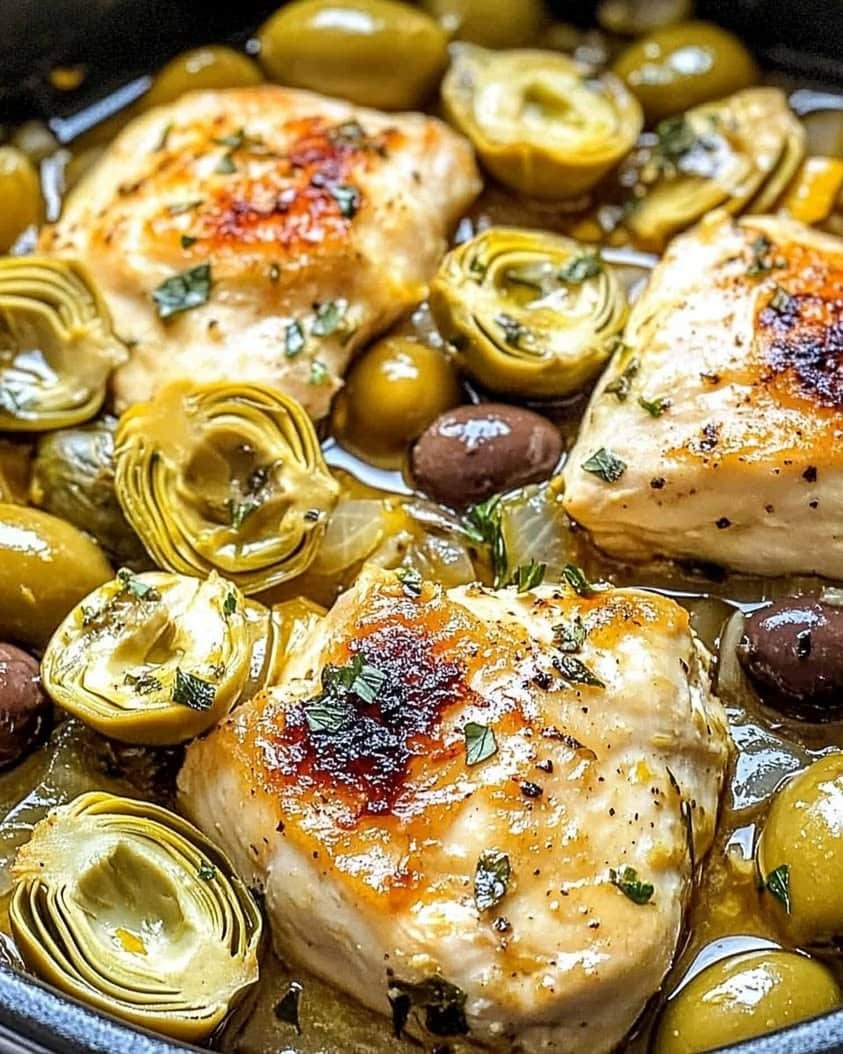
When you bite into this Mediterranean Lemon Chicken with Artichokes & Olives, you first taste the caramelized edges of the chicken, then the tangy lemon sauce, and finally the briny pop of Kalamata olives. Meanwhile, the artichoke hearts soak up all that garlicky goodness and turn silky and rich. Consequently, every forkful feels layered and complete. In addition, the recipe uses simple techniques that even beginner cooks can master on the first try.
Furthermore, this Mediterranean Lemon Chicken with Artichokes & Olives recipe fits a wide range of eating styles because it is naturally gluten-free and low-carb. You can serve it over rice, couscous, or cauliflower rice depending on your goals. Likewise, the leftovers taste even better the next day, since the flavors deepen overnight. Therefore, this dish earns a permanent spot in your dinner rotation for both taste and practicality.
Quick Recipe Highlights
- Flavor Profile: The sauce balances bright citrus, savory garlic, and briny olive notes. Meanwhile, the artichokes add a gentle vegetal sweetness that rounds everything out.
- Texture: The chicken develops a crisp golden crust while staying juicy inside. In addition, the artichoke hearts turn tender and the olives give a pleasant bite.
- Aroma: Garlic and lemon fill the kitchen as the chicken sears. Furthermore, oregano and thyme add a warm herbal background that smells distinctly Mediterranean.
- Visual Appeal: Golden chicken contrasts beautifully with green artichokes and dark olives. Moreover, a sprinkle of fresh parsley and lemon slices makes the pan look vibrant.
- Skill Level Needed: This recipe suits beginners because it uses straightforward searing and simmering. However, cooks of any level can refine the sauce with small adjustments.
- Special Equipment: You need one large oven-safe skillet with a lid. Additionally, a pair of tongs and a wooden spoon handle all the stirring and flipping.
Recipe Overview
- Difficulty Level: This dish lands firmly in the easy category. The steps are few, and the sauce builds itself in the pan. Furthermore, the recipe forgives small timing mistakes, so new cooks can relax. As a result, it works well as a first “impressive” dinner.
- Category: This recipe works as a main course for dinner. In addition, you can serve it for a weekend lunch or a holiday table. Moreover, it doubles as meal prep for the week.
- Cuisine: The flavors draw from Greek and coastal Mediterranean cooking. Specifically, the combination of lemon, oregano, olives, and artichokes echoes dishes from Greece, southern Italy, and Provence. Meanwhile, the one-pan method reflects modern home cooking that borrows freely across the region.
- Cost: The ingredients total roughly 15 to 20 dollars for four servings at typical U.S. grocery prices. Chicken thighs cost less than breasts, and jarred artichokes and olives last for months. Consequently, the dish delivers excellent value per plate.
- Season: You can make this recipe year-round because it relies on pantry items plus fresh lemons and garlic. However, it shines brightest in spring and summer when light, bright flavors feel most welcome. In addition, the citrus pairs well with cooler months when you crave sunshine on a plate.
- Occasion: This dish suits casual family dinners and relaxed dinner parties equally well. Furthermore, its one-pan presentation looks impressive on the table. Meanwhile, the simple cleanup makes it a smart pick for weeknights.
Why You’ll Love This Recipe
The taste and texture of this Mediterranean Lemon Chicken with Artichokes & Olives recipe hit multiple notes at once. First, the chicken browns deeply in olive oil, which creates a savory crust full of flavor. Then the lemon juice deglazes the pan and lifts every browned bit into the sauce. Meanwhile, the olives and artichokes add contrasting salinity and sweetness. Consequently, the final dish tastes complex even though the method stays simple.
Convenience defines this recipe as much as flavor does. Specifically, you use one skillet from start to finish, so cleanup takes minutes. In addition, the prep work involves basic chopping and measuring that takes about fifteen minutes. Furthermore, the recipe uses jarred artichoke hearts and pitted olives, which saves substantial time. As a result, dinner lands on the table in under an hour with minimal fuss.
Nutritionally, this Mediterranean Lemon Chicken with Artichokes & Olives recipe delivers impressive benefits. Chicken thighs provide high-quality protein and iron, while olive oil supplies heart-healthy monounsaturated fats. Moreover, artichoke hearts add fiber and antioxidants, and olives contribute vitamin E and polyphenols. Because the recipe skips cream and butter, the sauce stays light. Therefore, you get a rich-tasting meal that supports balanced eating.
Socially, this dish works beautifully for entertaining because it looks and smells spectacular. You can bring the skillet straight to the table and let guests serve themselves. In addition, the recipe scales easily for larger groups, and the active cooking time stays low. Meanwhile, the Mediterranean theme invites conversation and pairs with simple sides. Thus, hosts enjoy the party instead of hovering over the stove.
Finally, cost-effectiveness makes this Mediterranean Lemon Chicken with Artichokes & Olives recipe a practical choice. Chicken thighs rank among the most affordable proteins at the butcher counter. Likewise, jarred artichokes, canned olives, and dried oregano cost little per serving. Furthermore, the recipe uses pantry staples you likely already own. Consequently, you can feed four people well for the price of a single takeout order.
Historical Background and Cultural Significance
The origins of this Mediterranean Lemon Chicken with Artichokes & Olives recipe trace to the coastal kitchens of Greece and southern Italy. For centuries, cooks in these regions have paired lemon with olive oil as a fundamental flavor base. In addition, the olive harvest shaped local cuisines, so brined olives appeared in everyday cooking. Meanwhile, artichokes grew wild along the Mediterranean basin and became a prized spring vegetable.
Culturally, lemons carried symbolic weight across the Mediterranean world. Many households kept lemon trees as a sign of hospitality, and cooks used the fruit to brighten both meat and vegetable dishes. Moreover, the combination of lemon and oregano reflects the Greek practice of seasoning roast meats and potatoes. Therefore, this recipe carries a genuine connection to home cooking traditions rather than restaurant invention.
The recipe evolved through trade and migration. As Greek and Italian families settled in the United States, they adapted old-world dishes to American pantries. Accordingly, jarred artichoke hearts replaced fresh ones, and dried oregano became standard. In addition, the one-pan chicken braise emerged as a practical update, since home cooks value speed and easy cleanup. Consequently, the modern version honors tradition while fitting contemporary life.
Regional variations abound across the Mediterranean. For instance, Greek cooks often add dill and fresh lemon slices, while Italian versions may include white wine and capers. Furthermore, some coastal communities use preserved lemons for a deeper, more intense citrus flavor. Meanwhile, North African cooks might add a pinch of cumin or smoked paprika. Each version keeps the same soul: bright citrus, briny olives, and tender chicken.
Ingredient Deep Dive
Chicken thighs anchor the dish with richness and flavor. Dark meat holds moisture better than breast meat, so it survives the braise without drying out. Historically, Mediterranean cooks favored whole chickens and used dark cuts for braised dishes. Nutritionally, thighs supply protein, iron, and zinc, and they cost less per pound than breast meat. Choose bone-in, skin-on thighs for the juiciest result; look for firm meat with fresh color. You can substitute boneless thighs, though reduce the cook time, or use chicken breasts with careful temperature monitoring.
Lemons bring the defining brightness to this Mediterranean Lemon Chicken with Artichokes & Olives recipe. The fruit originated in Asia and spread through the Mediterranean via trade routes centuries ago. Today, lemons supply vitamin C and antioxidants, and their acid cuts through the richness of chicken skin. Select lemons that feel heavy for their size with thin, glossy skin. Store them in the refrigerator crisper drawer for up to three weeks, and substitute bottled juice only in emergencies.
Artichoke hearts add meaty texture and gentle sweetness. Mediterranean cultures prized artichokes since ancient Roman times, when they appeared at lavish feasts. The hearts contain fiber and antioxidants, and they absorb surrounding flavors beautifully. When buying jarred or canned hearts, choose ones packed in water or brine rather than heavy oil. Rinse them to remove excess salt, and store leftovers in an airtight container in the refrigerator. In a pinch, frozen artichoke hearts work well.
Kalamata olives deliver the briny punch that defines this dish. Greece has cultivated Kalamata olives for centuries, and the name comes from the city of Kalamata in the Peloponnese. These olives provide healthy fats and vitamin E, and their deep purple color signals ripeness. Choose olives that look plump and glossy, and avoid any with white film. Store them in brine in the refrigerator, and substitute Castelvetrano or Niçoise olives if needed.
Garlic forms the aromatic backbone of the sauce. Mediterranean cooks have used garlic since antiquity for both flavor and preservation. The cloves offer antibacterial compounds and intense savory depth. Pick heads that feel firm and heavy with tight, unbroken skin. Store garlic in a cool, dark spot with airflow, never in the refrigerator. Also, fresh garlic beats jarred paste, though pre-peeled cloves save time on busy nights.
Common Mistakes to Avoid
- Crowding the pan prevents proper browning. When chicken pieces touch each other, they steam instead of sear. Therefore, work in batches or use a larger skillet so each piece gets direct contact with the hot surface.
- Skipping the pat-dry step leaves skin wet and prevents crisping. Moisture creates steam, which blocks browning. Consequently, always dry the chicken thoroughly with paper towels before seasoning.
- Using fresh artichokes without prep work leads to tough, fibrous hearts. Fresh artichokes require trimming and parboiling, which adds significant time. Instead, use jarred or canned hearts for this recipe and keep the effort low.
- Adding lemon juice too early makes the sauce bitter. The acid also slows browning if added at the start. Therefore, add lemon juice near the end of cooking so it stays fresh and bright.
- Overcrowding the sauce with olives overwhelms the dish. High salt levels from the olives and artichokes add up fast. Accordingly, taste before adding extra salt, and use the amounts listed.
- Undercooking the chicken creates rubbery texture, while overcooking dries it out. Use a thermometer and pull the chicken at 175 degrees Fahrenheit for thighs. Then let it rest so juices redistribute.
- Ignoring the fond wastes flavor. The browned bits on the pan bottom hold concentrated taste. Therefore, deglaze properly with lemon juice or broth and scrape everything into the sauce.
- Storing leftovers in the pan traps steam and makes the chicken soggy. Transfer the food to airtight containers. In addition, keep the sauce separate for crisper reheating.
- Substituting dried lemon peel for fresh juice flattens the flavor. Fresh juice provides acidity and aroma that dried peel cannot match. Consequently, keep fresh lemons on hand for this recipe.
- Using low-quality olive oil masks flavor. A fresh, fruity extra virgin olive oil adds character. In contrast, rancid or bland oil dulls the whole dish.
Essential Techniques
Searing creates the flavor foundation of this Mediterranean Lemon Chicken with Artichokes & Olives recipe. When meat hits a hot pan, the Maillard reaction browns the surface and builds hundreds of flavor compounds. Heat your skillet until a drop of oil shimmers, then lay the chicken skin-side down. Resist moving the pieces for several minutes so the crust forms. Visual cue: the edges turn deep golden and release naturally from the pan.
Deglazing lifts the browned bits back into the sauce. After removing the chicken, pour broth or lemon juice into the hot pan and scrape with a wooden spoon. The liquid dissolves the fond, which carries intense flavor. Common pitfall: using too little liquid, which burns before dissolving. Visual cue: the pan bottom looks clean and the liquid turns golden brown.
Braising combines dry heat and moist heat for tender meat. You sear first, then simmer with liquid in a covered pan. This method keeps dark meat juicy while flavors mingle. Maintain a gentle simmer rather than a rolling boil so the meat stays tender. Visual cue: small bubbles break the surface steadily, and the liquid reduces slowly.
Balancing flavors finalizes the sauce. Taste at the end and adjust with lemon for brightness, salt for depth, or a pinch of sugar to tame sharpness. Professional cooks taste repeatedly and adjust in small increments. The goal is harmony, where no single element dominates. Visual cue: the sauce coats a spoon thinly and looks glossy, not watery.
Pro Tips for Perfect Results
- Season the chicken at least 30 minutes before cooking so salt penetrates the meat. Moreover, dry skin helps the salt adhere and deepens flavor.
- Use a skillet that holds 4 quart capacity and can transfer to the oven. In addition, oven-safe handles prevent accidents and simplify the finish.
- Warm the artichoke hearts in the sauce for the last five minutes so they absorb flavor. However, avoid stirring vigorously, which breaks them apart.
- Finish with a squeeze of fresh lemon off the heat to preserve aroma. Furthermore, add a few paper-thin lemon slices as a bright garnish.
- Crush the olives lightly with the side of a knife to release their flavor. Similarly, roughly chop garlic for the best release of oils.
- Rest the chicken for five minutes before serving so juices stay in the meat. Consequently, the final plate tastes juicier and more savory.
- Keep the sauce at a gentle simmer rather than a fast boil. As a result, the chicken stays tender and the sauce thickens without separating.
- Sprinkle fresh parsley or dill at the end for color and freshness. Additionally, a tiny amount of lemon zest brightens the garnish.
Variations and Adaptations
Regional variations give this Mediterranean Lemon Chicken with Artichokes & Olives recipe exciting flexibility. Greek cooks often add fresh dill and a splash of white wine for a brighter finish. Italian versions may include capers and a pinch of red pepper flakes for heat. Meanwhile, Provençal cooks might add herbes de Provence and Niçoise olives. Each tweak stays true to the coastal spirit of the dish.
Seasonal adaptations let you enjoy the recipe all year. In summer, add cherry tomatoes and fresh basil for a lighter feel. During cooler months, increase the oregano and add a pinch of smoked paprika for warmth. Furthermore, spring invites fresh artichokes if you feel ambitious and have prep time. Conversely, winter versions pair beautifully with root vegetables added to the pan.
Dietary modifications expand who can enjoy the dish. Because the recipe is naturally gluten-free, no changes are needed there. For dairy-free and lactose-free eaters, the recipe already qualifies. However, low-sodium diets benefit from rinsing olives and artichokes well. Vegetarians can swap chicken for chickpeas and mushrooms, though flavor intensity changes.
Flavor variations range from smoky to herby. Add harissa for a North African twist, or stir in a spoonful of Dijon mustard for tang. Furthermore, preserved lemon delivers a deeper, saltier citrus bite. Meanwhile, a handful of chopped sun-dried tomatoes adds sweetness and umami. Simply adjust salt levels to compensate for each addition.
Texture and presentation alternatives keep the dish fresh. For extra crunch, scatter toasted almonds or pine nuts before serving. Alternatively, serve the chicken over orzo to soak up the sauce. Otherwise, keep it low-carb with cauliflower rice or a crisp green salad. Each option changes the eating experience while preserving the core flavors.
Serving and Presentation Guide
Plating starts with a wide, shallow bowl or a warm platter. Arrange the chicken in a single layer, then spoon the artichokes and olives over the top. Pour the pan sauce slowly so it pools around the edges. This technique makes the dish look intentional and restaurant-worthy. Moreover, a plain white or neutral plate lets the golden and green colors stand out.
Garnishing ideas elevate the presentation with minimal effort. Fresh parsley, dill, or mint add color and aroma. Thin lemon slices layered across the chicken give a bright visual accent. In addition, a light drizzle of olive oil and a crack of black pepper finish the look. Avoid heavy sauces on top, which hide the dish’s colors.
Traditional accompaniments include crusty bread and a simple rice pilaf. Greek cooks often serve lemon chicken with roasted potatoes or orzo. Furthermore, a cucumber and tomato salad with feta provides a fresh counterpoint. Meanwhile, warm pita bread helps soak up every drop of sauce.
Modern serving suggestions fit contemporary lifestyles. For a low-carb plate, serve the chicken over cauliflower rice or zucchini noodles. Alternatively, spoon it over farro for a hearty grain bowl. In addition, a green salad with a light vinaigrette balances the richness. Either way, portion two thighs per guest with a generous spoonful of sauce.
Temperature and portion control matter for the best experience. Serve the dish hot, straight from the stovetop, for the brightest flavors. However, it also tastes excellent at warm room temperature for buffets. Portion sizes of about 6 ounces of chicken plus sides serve adults well. Consequently, four servings come from two pounds of thighs.
Wine and Beverage Pairing
Wine pairings for this Mediterranean Lemon Chicken with Artichokes & Olives recipe favor crisp, acidic whites. A Greek Assyrtiko offers mineral notes that match the lemon and olives beautifully. Likewise, a dry Sauvignon Blanc brings citrus flavors that echo the sauce. Meanwhile, Vermentino provides a Mediterranean herbal edge that complements oregano and thyme.
Red wine lovers can enjoy a light-bodied red with this dish. A Pinot Noir or a Greek Xinomavro pairs well without overpowering the delicate artichokes. However, avoid heavy tannic reds, which clash with artichokes and amplify bitterness. In addition, slightly chill light reds to around 60 degrees for the best balance.
Non-alcoholic alternatives work just as well. Sparkling water with lemon and a sprig of oregano feels festive and Mediterranean. In addition, a light iced tea with mint refreshes the palate between bites. Otherwise, a lemonade made with fresh juice mirrors the sauce and pleases kids and adults alike.
Temperature considerations improve each sip. Serve whites chilled between 45 and 50 degrees, and let them sit briefly in the glass to open. Red wines taste best slightly cool rather than at full room temperature. Consequently, small temperature adjustments make the pairing noticeably better.
Storage and Shelf Life
Storage starts with cooling the food quickly. Transfer leftovers to shallow airtight containers within two hours of cooking. Pour the sauce over the chicken, or store it separately for firmer texture. Then refrigerate at 40 degrees Fahrenheit or below. Under these conditions, the dish keeps for three to four days.
Temperature requirements matter for safety. Keep the refrigerator below 40 degrees, and reheat leftovers to 165 degrees before serving. Furthermore, never leave the dish at room temperature longer than two hours. In hot weather, cut that window to one hour. Following these rules protects both flavor and health.
Container recommendations favor glass or high-quality plastic. Glass resists staining from olive oil and lemon and reheats evenly. In addition, shallow containers cool faster than deep ones. Use a separate small jar for extra sauce so components stay fresh.
Signs of spoilage include sour smells, cloudy sauce, and slimy textures. If the chicken smells off or the sauce looks foamy, discard it. Moreover, mold on the artichokes means the whole batch should go. When in doubt, throw it out rather than risk illness.
Reheating instructions preserve texture. Warm portions gently on the stovetop over medium-low heat with a splash of broth. Alternatively, microwave in 30-second bursts and stir between them. However, avoid high heat, which toughens chicken. For best results, reheat only what you plan to eat.
Freezing guidelines extend shelf life to three months. Freeze the chicken and sauce together in freezer-safe containers, leaving headroom for expansion. Thaw overnight in the refrigerator before reheating. Consequently, the texture stays pleasant, though the artichokes soften slightly.
Make Ahead Strategies
Prep work offers the biggest time savings with this Mediterranean Lemon Chicken with Artichokes & Olives recipe. Wash and dry the chicken up to a day ahead and refrigerate it uncovered. In addition, chop garlic, measure olives, and drain artichokes the night before. Moreover, combine the dried herbs in a small dish for quick access.
Storage between steps keeps components fresh. Store prepped ingredients in separate containers so textures stay intact. Furthermore, keep raw chicken away from olives and artichokes to prevent cross-contamination. Label containers with dates for easy tracking.
Quality impact stays low for most steps, which makes this dish friendly to advance work. Chicken benefits from early seasoning, so pre-salting improves flavor. However, hold the fresh lemon juice until cooking, since it loses brightness over time. Similarly, add fresh herbs at the end for peak aroma.
Assembly tips streamline the final cook. Set out all prepped ingredients before turning on the heat. Then the cooking moves quickly and smoothly, with no scrambling for forgotten items. This mise en place habit helps even experienced cooks.
Fresh element additions keep leftovers lively. Add fresh parsley, lemon wedges, or a drizzle of new olive oil after reheating. Furthermore, a handful of baby spinach stirred into hot sauce brings freshness. These small touches revive day-old portions.
Scaling Instructions
Halving the recipe works easily for smaller households. Use one pound of chicken and reduce the sauce ingredients proportionally. Keep the skillet the same size so the chicken still browns well. However, cooking time stays similar for thighs, so check temperature rather than relying on the clock.
Doubling or tripling requires adjustments. Use two skillets or brown the chicken in batches to avoid crowding. In addition, increase the sauce volume and simmer a bit longer to reduce it properly. Importantly, season in stages and taste as you go, since salt from olives and artichokes multiplies quickly.
Equipment adjustments matter at larger volumes. A roasting pan on the stovetop holds more chicken, and an oven finish ensures even cooking. Furthermore, a large Dutch oven works well for triple batches. Use a thermometer to confirm doneness when cooking in bulk.
Timing modifications keep quality high. Larger batches need more searing time per batch, so plan extra minutes. However, the braise time stays roughly the same. As a result, total time increases mainly from batch searing.
Storage considerations grow with batch size. Divide leftovers into several smaller containers so they cool fast. In addition, freeze portions you will not eat within four days. This approach keeps every serving fresh.
Nutritional Deep Dive
The macro breakdown of this Mediterranean Lemon Chicken with Artichokes & Olives recipe supports balanced meals. Each serving provides roughly 380 to 420 calories, with about 30 grams of protein from chicken. In addition, fat counts around 24 grams, mostly from olive oil and chicken skin. Carbohydrates stay low at about 10 grams, with 4 grams of fiber. Consequently, the dish fits low-carb and moderate-fat plans.
Micronutrient analysis reveals notable strengths. Chicken thighs supply iron, zinc, and B vitamins, while olives add vitamin E. Artichoke hearts contribute vitamin C, folate, and potassium, and lemons provide vitamin C. Furthermore, olive oil delivers polyphenols tied to heart health. Together, the ingredients cover a range of essential nutrients.
Health benefits connect to the Mediterranean diet pattern. That pattern associates with heart health, lower inflammation, and improved metabolic markers. Because this recipe emphasizes olive oil, vegetables, and lean protein, it aligns well with those findings. Moreover, the lemon juice and garlic add flavor without excess sodium.
Dietary considerations include sodium and allergens. Olives and artichokes carry salt, so rinsing reduces sodium by a meaningful amount. The recipe contains no gluten, dairy, or nuts, which simplifies allergen planning. However, anyone on a strict low-sodium diet should measure portions carefully.
Portion analysis helps with goals. A serving of two thighs with sauce delivers satisfying protein and fat. Therefore, pair it with vegetables for volume and fiber. In addition, those watching calories can remove the skin to cut roughly 60 calories per thigh.
Weight management tips center on balance. The protein keeps you full, and the fiber from artichokes aids satiety. Furthermore, serving with non-starchy vegetables adds bulk without many calories. Consequently, the dish supports weight goals without feeling restrictive.
Dietary Adaptations
Gluten-free eating requires no changes because the recipe uses no flour or grains. However, check labels on olives and artichokes, since some brands add additives. In addition, verify broth labels for gluten. Serve over gluten-free grains to keep the plate safe.
Dairy-free eaters also need zero modifications. The recipe contains no butter, milk, or cheese. Furthermore, the olive oil provides richness and mouthfeel. As a result, the dish suits lactose intolerance and milk allergies naturally.
Vegan adaptation requires swaps. Replace chicken with extra-firm tofu or chickpeas and mushrooms. In addition, add a pinch of smoked paprika for depth. However, adjust cooking times, since plant proteins cook faster and absorb sauce differently.
Low-carb and keto versions keep the recipe nearly intact. Serve with cauliflower rice or a green salad instead of grains. In addition, keep the skin on for fat and flavor. Consequently, net carbs stay under 12 grams per serving.
Paleo eaters should skip the jarred artichokes if they contain additives. Instead, use frozen artichoke hearts with clean labels. Moreover, confirm olives come packed in water and salt only. With these swaps, the dish fits paleo guidelines.
Low-FODMAP adaptation needs care with garlic. Replace garlic with garlic-infused oil, which carries flavor without the fructans. In addition, limit artichoke portions, since they contain FODMAPs. Consequently, small adjustments keep the dish comfortable for sensitive stomachs.
Troubleshooting Guide
Texture issues often trace to heat and moisture. If the chicken skin turns soft, the pan was not hot enough or the pieces were wet. Pat the skin dry and sear at medium-high heat until golden. Furthermore, finish uncovered so steam escapes and the crust stays crisp.
Flavor balance problems respond to small fixes. If the sauce tastes flat, add lemon juice and a pinch of salt. In contrast, if it tastes too sour, add a pinch of sugar or extra olive oil. Moreover, if it tastes too salty, add unsalted broth and reduce briefly.
Temperature problems include uneven cooking. Thighs vary in size, so flatten thick ones slightly with a mallet. In addition, rotate the pan halfway through cooking. However, avoid opening the lid often, which drops the heat.
Equipment challenges arise with thin skillets. Thin pans develop hot spots and burn the fond. Therefore, use a heavy skillet or Dutch oven for even heat. In addition, avoid nonstick pans at high heat, since they brown poorly.
Ingredient substitutions require taste adjustments. If you swap Kalamata olives for milder olives, add a pinch of salt. Likewise, if you use frozen artichokes, drain them well, since extra water thins the sauce. As a result, adjust seasoning at the end.
Timing concerns usually mean the sauce needs reduction. If the sauce looks thin, simmer uncovered for five minutes. Conversely, if it thickens too much, stir in broth a spoonful at a time. Furthermore, rest the chicken to keep it juicy while the sauce finishes.
Recipe Success Stories
Community feedback for this Mediterranean Lemon Chicken with Artichokes & Olives recipe has been overwhelmingly positive. Many home cooks report making it on repeat within a single month. Furthermore, readers praise how the recipe works on the first attempt. In addition, several note that picky eaters cleaned their plates, which rarely happens.
Variation successes include a reader who added sun-dried tomatoes and reduced the lemon slightly. Another cooked the dish with preserved lemons and reported deeper flavor. Meanwhile, one family swapped chicken for salmon and adjusted the timing. All these adaptations kept the spirit of the original dish intact.
Adaptation stories highlight weeknight practicality. Busy parents report prepping everything on Sunday and cooking on Wednesday in 35 minutes. In addition, a reader with a small kitchen loves the one-pan cleanup. Consequently, the recipe earns loyalty for convenience as much as taste.
Reader suggestions improved the recipe over time. One cook recommended rinsing the artichokes to control salt, which made a noticeable difference. Another suggested adding the olives late so they stay firm. Moreover, a reader proposed a pinch of red pepper flakes, which many now consider essential.
Photography tips from readers help others share the dish. Natural light near a window makes the green olives and golden chicken pop. In addition, spooning extra sauce over the chicken adds gloss. Furthermore, a sprig of fresh dill and a lemon wedge complete the shot.
Frequently Asked Questions
Can I use chicken breasts instead of thighs in this Mediterranean Lemon Chicken with Artichokes & Olives recipe?
Yes, you can substitute boneless chicken breasts, though they dry out faster. Sear them until golden, then simmer for only 10 to 15 minutes. Furthermore, pull them at 165 degrees and rest before slicing. The sauce stays the same, so flavor remains excellent.
Do I need to rinse the artichoke hearts and olives?
Rinsing removes excess salt and improves the final balance. Many jarred artichokes sit in salty brine, and olives carry plenty of sodium. Therefore, a quick rinse makes the dish taste fresher and less aggressive. Just drain well so the sauce does not turn watery.
Can I use fresh artichokes instead of jarred?
Yes, but plan extra time for trimming and parboiling. Fresh artichokes require removing outer leaves and the choke, which takes practice. In addition, boil the hearts for 10 to 15 minutes before adding them. For weeknights, jarred or frozen hearts remain the practical choice.
What can I serve with this chicken to keep it low-carb?
Serve it over cauliflower rice, zucchini noodles, or roasted vegetables. A simple cucumber and tomato salad with olive oil adds freshness. Furthermore, mashed cauliflower mimics the feel of potatoes. These options keep carbs low without sacrificing satisfaction.
How long do leftovers last in the refrigerator?
Leftovers keep for three to four days in airtight containers. Store them below 40 degrees and reheat to 165 degrees. Moreover, keep the sauce separate if you want firmer chicken. Beyond four days, freeze the portions instead.
Can I freeze this Mediterranean Lemon Chicken with Artichokes & Olives recipe?
Yes, freezer storage works well for up to three months. Freeze chicken and sauce together in freezer-safe containers. However, the artichokes may soften after thawing, which affects texture slightly. Thaw overnight in the refrigerator for best results.
Why did my sauce turn bitter?
Bitterness usually comes from adding lemon juice too early or burning the garlic. Garlic burns quickly in hot oil, so add it later and lower the heat. In addition, keep lemon juice for the final minutes. These changes preserve bright, clean flavor.
Is this dish spicy?
The base recipe has no heat, so it suits all palates. However, you can add red pepper flakes or harissa for warmth. Furthermore, a pinch goes a long way with the briny ingredients. Taste before adding more.
Can I make this recipe in a slow cooker?
Yes, though browning the chicken first improves flavor significantly. Sear the thighs, then add all ingredients except fresh lemon to the slow cooker. Cook on low for five to six hours, then stir in lemon juice at the end. Finally, adjust salt and serve.
What type of olives work best here?
Kalamata olives offer the classic flavor for Mediterranean cooking. Castelvetrano olives taste milder and buttery,
Print
Mediterranean Lemon Chicken with Artichokes & Olives
- Total Time: 45 minutes
- Yield: 4
Description
A vibrant and flavorful one-pan dish featuring tender chicken breasts simmered with tangy artichoke hearts, briny olives, and a bright lemon sauce.
Ingredients
- 4 boneless, skinless chicken breasts (about 1.5 lbs)
- Salt and pepper, to taste
- 2 tablespoons olive oil
- 1 medium onion, thinly sliced
- 3 cloves garlic, minced
- 1 (14 oz) can artichoke hearts, drained and quartered
- 1/2 cup Kalamata olives, pitted and halved
- 1/2 cup chicken broth
- 1/4 cup fresh lemon juice (about 2 lemons)
- 1 teaspoon dried oregano
- 1/2 teaspoon dried thyme
- 1/4 teaspoon red pepper flakes (optional)
- 2 tablespoons chopped fresh parsley, for garnish
- Lemon slices, for serving
Instructions
- Season chicken breasts with salt and pepper. Heat olive oil in a large skillet over medium-high heat. Add chicken and cook until golden brown on both sides, about 5-6 minutes per side. Remove chicken from skillet and set aside.
- In the same skillet, add onion and cook until softened, about 3 minutes. Add garlic and cook for 30 seconds until fragrant.
- Stir in artichoke hearts, olives, chicken broth, lemon juice, oregano, thyme, and red pepper flakes. Bring to a simmer.
- Return chicken to the skillet, nestling it into the sauce. Reduce heat to low, cover, and simmer until chicken is cooked through, about 10-15 minutes.
- Garnish with fresh parsley and serve with lemon slices.
Notes
You can customize the seasonings to taste.
- Prep Time: 15 minutes
- Cook Time: 30 minutes
- Method: Main
- Cuisine: Mediterranean