Ricotta and Lemon Zest Ravioli with Burst Tomatoes and Burrata: A Bright, Creamy Pasta Dream
Ricotta and Lemon Zest Ravioli with Burst Tomatoes and Burrata brings a restaurant-quality pasta dish straight to your home kitchen. This recipe combines silky homemade ravioli filling with the sweet pop of roasted cherry tomatoes and the luxurious creaminess of fresh burrata cheese. Therefore, you get a meal that feels elegant yet remains surprisingly approachable for a weekend dinner. The bright lemon zest cuts through the rich ricotta, while the burst tomatoes add a jammy sweetness that balances every bite.
Furthermore, this Ricotta and Lemon Zest Ravioli with Burst Tomatoes and Burrata recipe celebrates simple Italian cooking at its finest. You only need a handful of fresh ingredients to create something truly memorable. The pasta dough comes together with flour and eggs, and the filling requires just three components. Meanwhile, the sauce develops deep flavor from slow-roasting tomatoes until they blister and release their juices. As a result, the final dish tastes like summer on a plate, even if you make it in the middle of winter.
Additionally, this dish shines because of its contrasting textures and temperatures. The warm ravioli pillows give way to a cool, creamy center of burrata that melts slightly against the hot pasta. The burst tomatoes provide little pockets of intense sweetness, and the lemon zest adds a floral, citrusy lift. Consequently, every forkful delivers a new sensation. Whether you serve this for a romantic date night or a family Sunday supper, the Ricotta and Lemon Zest Ravioli with Burst Tomatoes and Burrata will impress everyone at the table.
Quick Recipe Highlights
- Flavor Profile: This dish balances creamy, tangy ricotta with bright lemon zest and sweet, roasted tomatoes. The burrata adds a buttery richness that ties everything together. Meanwhile, a pinch of red pepper flakes gives a subtle background heat.
- Texture: The homemade ravioli offers a tender, pillowy bite that contrasts beautifully with the jammy burst tomatoes. Additionally, the burrata provides a soft, spreadable creaminess. The pasta edges stay slightly firm, which adds pleasant chew.
- Aroma: Fresh basil and lemon zest perfume the kitchen as the tomatoes roast. The scent of garlic simmering in olive oil deepens the anticipation. Furthermore, the nutty aroma of freshly grated Parmesan enhances the overall experience.
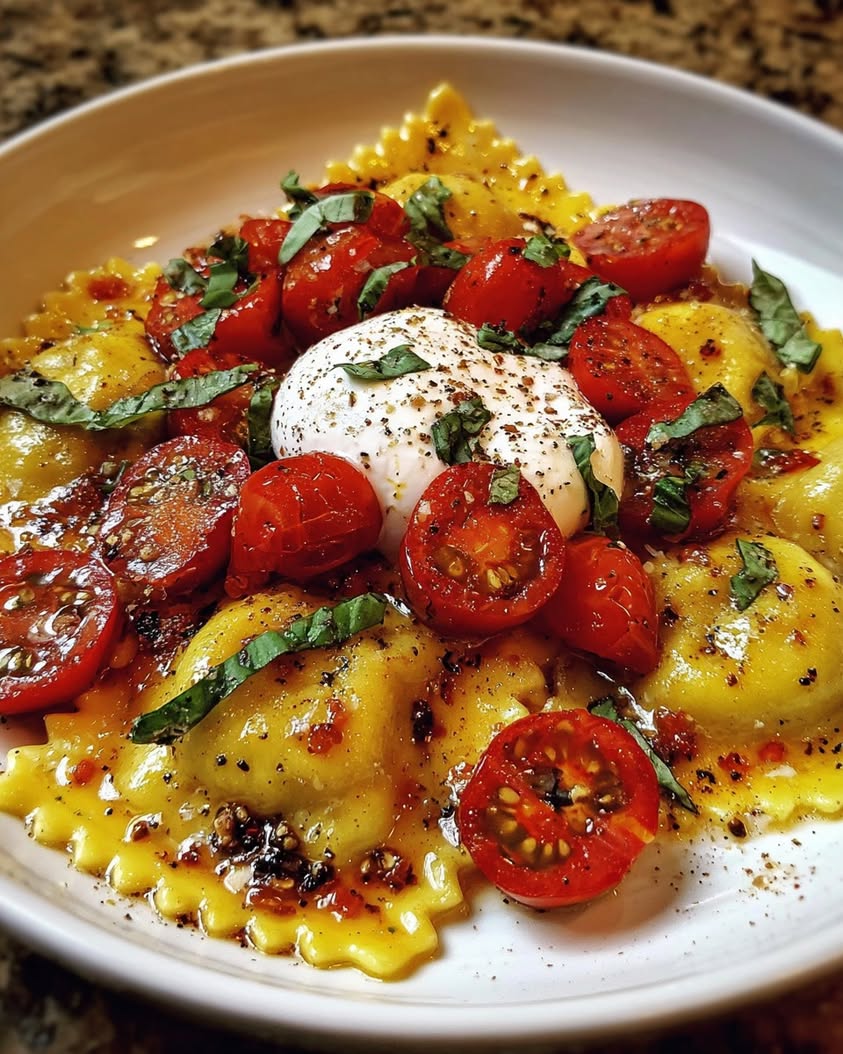
- Visual Appeal: Golden pasta parcels sit nestled among vibrant red and orange tomatoes. The burrata, torn into rustic pieces, drapes over the top like a creamy cloud. A final shower of fresh basil and lemon zest adds bright green and yellow accents.
- Skill Level Needed: You should feel comfortable making a simple pasta dough and rolling it thin. However, the filling and sauce require minimal technique. Therefore, a confident home cook can master this recipe after one or two tries.
- Special Equipment: A pasta machine helps achieve uniformly thin sheets, though a rolling pin works in a pinch. You also need a ravioli stamp or a sharp knife and fork for sealing. A large rimmed baking sheet and a wide skillet round out the essentials.
Recipe Overview
- Difficulty Level: This Ricotta and Lemon Zest Ravioli with Burst Tomatoes and Burrata lands squarely at the intermediate level. Making pasta dough from scratch requires some practice, but the process is forgiving. Furthermore, the filling comes together in minutes with a simple stir. The sauce essentially cooks itself in the oven, so you can focus on the pasta.
- Category: This dish works beautifully as a main course for lunch or dinner. Additionally, you can serve smaller portions as a first course before a larger meal. It also makes a stunning contribution to a potluck or holiday table.
- Cuisine: The recipe draws direct inspiration from Italian culinary traditions, particularly from regions like Emilia-Romagna and Puglia. Ricotta-filled pasta appears throughout Italy, while burrata originated in Andria. The combination of tomatoes and basil reflects classic Italian summer cooking. Consequently, this dish honors Old World techniques while embracing modern presentation.
- Cost: Expect to spend roughly eighteen to twenty-four dollars to serve four people. The ricotta and burrata represent the largest expense, though fresh pasta ingredients remain inexpensive. However, buying pre-made ravioli sheets can reduce both cost and time.
- Season: Summer offers peak flavor for this dish because cherry tomatoes reach their sweetest point. Nevertheless, high-quality canned or greenhouse tomatoes work well year-round. The bright lemon and fresh basil make this recipe feel especially welcome during spring and early fall.
- Occasion: This Ricotta and Lemon Zest Ravioli with Burst Tomatoes and Burrata suits romantic dinners, anniversaries, and dinner parties. Additionally, it makes a lovely Easter or Mother’s Day centerpiece. For a casual gathering, pair it with a simple green salad and crusty bread.
Why You’ll Love This Recipe
First, the taste and texture of this dish create pure magic in your mouth. The ricotta filling stays light and fluffy because you drain it well before mixing. Meanwhile, the lemon zest brightens every bite with a clean, citrusy note. The burst tomatoes deliver concentrated sweetness that complements the creamy cheese. Furthermore, the burrata adds a cool, buttery finish that makes each serving feel indulgent. You will appreciate how the textures range from pillowy pasta to jammy tomatoes to silky cream.
Second, the convenience factor makes this recipe a weeknight hero with a little planning. You can prepare the pasta dough and filling up to two days ahead. Additionally, the tomatoes roast in the oven with almost no hands-on effort. While the tomatoes burst, you simply boil the ravioli for three to four minutes. Consequently, the final assembly takes less than five minutes. This streamlined workflow means you can serve a stunning meal without spending hours in the kitchen.
Third, the nutritional advantages give you reason to feel good about this recipe. Ricotta provides a solid dose of protein and calcium, while tomatoes deliver lycopene and vitamin C. The olive oil contributes healthy monounsaturated fats, and the eggs in the pasta dough add additional protein. Furthermore, fresh basil offers antioxidants and a burst of flavor without extra calories. Although burrata contains fat, a little goes a long way in terms of satisfaction.
Fourth, the social and entertaining value of this Ricotta and Lemon Zest Ravioli with Burst Tomatoes and Burrata cannot be overstated. Few dishes impress guests like handmade ravioli, and the vibrant colors make a gorgeous centerpiece. You can plate individual portions for a formal dinner or set a large platter in the middle for family-style sharing. Moreover, the recipe accommodates dietary preferences with easy swaps. As a result, you can please a crowd without making separate meals.
Fifth, the cost-effectiveness and accessibility keep this recipe in your regular rotation. Compared to buying fresh ravioli at a specialty shop, making your own costs a fraction of the price. The ingredients remain easy to find at any grocery store, and you likely already have flour, eggs, and olive oil. Additionally, the recipe scales up or down with simple math. Consequently, you can feed two people or eight people without stress or waste.
Historical Background and Cultural Significance
The origin story of ravioli stretches back to medieval Italy, where cooks stuffed pasta with various fillings. However, the specific combination of ricotta and lemon zest reflects the resourcefulness of Italian home cooks. In regions like Tuscany and Emilia-Romagna, shepherds made ricotta from leftover whey after cheesemaking. Consequently, they created fillings that celebrated this fresh, humble cheese. Over time, cooks added citrus zest to brighten the flavor, especially during winter months when fresh herbs were scarce.
Cultural importance surrounds this dish because it represents the Italian philosophy of simplicity and quality. Italians believe that a few excellent ingredients outperform a long list of mediocre ones. Therefore, ricotta, lemon, tomatoes, and burrata each contribute distinct character without overwhelming the palate. Furthermore, the dish embodies the concept of cucina povera, or peasant cooking, which transforms basic staples into something extraordinary. This tradition continues to influence chefs around the world today.
The evolution of this recipe shows how Italian cuisine adapts across generations and borders. In the United States, Italian-American cooks embraced ravioli as a Sunday tradition, often serving it with heavy tomato sauce. However, modern cooks now favor lighter preparations that let fresh ingredients shine. The addition of burrata, which gained popularity in America during the 2010s, reflects this shift. Consequently, the dish you make today blends Old World technique with New World creativity.
Regional variations abound when it comes to ricotta ravioli. In Sardinia, cooks sometimes add saffron to the filling for a golden hue and floral note. Meanwhile, in Liguria, they incorporate fresh marjoram or thyme instead of lemon zest. Down in Puglia, burrata appears frequently on antipasto platters, though pairing it with warm pasta has become a modern signature. Therefore, you can feel free to adapt this Ricotta and Lemon Zest Ravioli with Burst Tomatoes and Burrata to reflect your own regional tastes.
Ingredient Deep Dive
Ricotta plays the starring role in the filling, and its cultural significance reaches back to ancient Rome. Farmers made ricotta by reheating whey left over from cheese production, which explains its name meaning re-cooked. Nutritionally, ricotta offers protein, calcium, and vitamin A with relatively low fat compared to other cheeses. When selecting ricotta, look for brands that list simply milk, salt, and cultures without gums or stabilizers. Store ricotta in an airtight container in the refrigerator for up to five days. If you cannot find whole-milk ricotta, you can substitute cottage cheese that you blend until smooth, though the flavor will differ slightly.
Lemon zest contributes a floral, citrusy punch that lifts the ricotta from heavy to heavenly. Historically, citrus fruits arrived in Italy via Arab traders, and Italians quickly incorporated zest into both sweet and savory dishes. Zest contains concentrated oils that provide vitamin C and antioxidants. Choose organic lemons when possible because you consume the outer peel directly. Store lemons in the refrigerator crisper drawer for up to two weeks, and zest them only when needed for maximum aroma. If you lack fresh lemons, you can substitute a quarter teaspoon of pure lemon extract, though the result will taste less vibrant.
Cherry tomatoes form the heart of the sauce, and their cultural significance in Italian cooking cannot be overstated. Tomatoes arrived in Europe from the Americas in the sixteenth century, and Italians initially grew them as ornamental plants. Later, they discovered how beautifully tomatoes pair with olive oil, garlic, and basil. Cherry tomatoes deliver vitamin C, potassium, and the antioxidant lycopene. Select tomatoes that feel heavy for their size and smell sweet at the stem. Store them at room temperature away from direct sunlight, and never refrigerate them because cold destroys their flavor. If cherry tomatoes are out of season, grape tomatoes or drained canned San Marzano tomatoes work as substitutes.
Burrata brings a luxurious creaminess that transforms this dish from simple to spectacular. Artisans in Andria, Puglia, created burrata in the early twentieth century as a way to use leftover mozzarella curds. The outer shell consists of solid mozzarella, while the inside holds stracciatella, or shreds of mozzarella mixed with cream. Nutritionally, burrata provides protein and calcium along with higher fat than fresh mozzarella. When buying burrata, look for a firm outer shell and a slightly soft feel, and check the sell-by date carefully. Store burrata in its original liquid in the refrigerator for up to three days. If burrata is unavailable, substitute fresh mozzarella torn into pieces and drizzle with heavy cream for a similar effect.
Fresh basil adds aromatic complexity and a pop of green color to the final plate. Basil originated in India and Southeast Asia before spreading to the Mediterranean through trade routes. It contains antioxidants and anti-inflammatory compounds that support overall health. Choose basil with bright, unblemished leaves and a strong peppery scent. Store basil stems in a glass of water at room temperature, covered loosely with a plastic bag, for up to a week. If fresh basil is scarce, you can substitute a teaspoon of pesto thinned with olive oil, though the texture will change.
Common Mistakes to Avoid
- Using wet ricotta leads to soggy ravioli that burst during boiling. Therefore, drain ricotta in a fine-mesh strainer for at least thirty minutes before mixing. You can also press it gently with paper towels to remove excess moisture.
- Rolling pasta dough too thick creates chewy, dense ravioli that overpower the filling. Aim for a sheet thin enough to see your hand through it. If you lack a pasta machine, roll dough on a lightly floured surface until nearly translucent.
- Overfilling the ravioli causes them to explode in the pot and lose their shape. Use only one teaspoon of filling per two-inch square. Consequently, you will achieve a better seal and a more balanced bite.
- Sealing edges with dry fingers allows air pockets to form and prevents proper adhesion. Brush the pasta edges with water or egg wash before pressing firmly. Furthermore, press out any trapped air before crimping the edges with a fork.
- Boiling ravioli in a rolling cauldron tears delicate pasta sheets. Instead, lower the heat to a gentle simmer and stir once to prevent sticking. Additionally, cook only eight to ten ravioli at a time to avoid overcrowding.
- Roasting tomatoes at too high a temperature burns the skins before the insides soften. Keep the oven at four hundred degrees Fahrenheit and toss tomatoes with olive oil and salt. They should burst and release juices after eighteen to twenty minutes.
- Skipping the resting time for pasta dough results in tough, elastic sheets that shrink back. Wrap dough in plastic and rest for thirty minutes at room temperature. This allows gluten to relax, which makes rolling much easier.
- Adding cold burrata directly from the refrigerator mutes its creamy texture. Let burrata sit at room temperature for fifteen minutes before serving. Consequently, it will spread beautifully over the hot ravioli.
- Underseasoning the filling creates a flat, uninspired dish. Taste the ricotta mixture before filling the pasta and adjust salt and lemon zest as needed. Remember that cold filling tastes less salty than warm filling, so season slightly more aggressively than you think necessary.
- Discarding pasta scraps wastes good dough and leaves you short on ravioli. Gather scraps, knead them into a ball, and re-roll after a brief rest. You can also cut scraps into noodles for another meal.
Essential Techniques
Making fresh pasta dough by hand or in a food processor forms the foundation of this recipe. The technique matters because proper dough development creates a supple, elastic sheet that rolls thin without tearing. To master it, combine two cups of flour with three eggs and a pinch of salt, then knead for eight to ten minutes until smooth. The dough should feel tacky but not sticky, and it should spring back when poked. Common pitfalls include adding too much flour, which makes the dough dry, or under-kneading, which leaves it tough. You will know the dough is ready when it looks smooth and silky and a fingerprint slowly disappears.
Rolling pasta sheets evenly ensures that every ravioli cooks at the same rate. This technique matters because thick spots remain chewy while thin spots dissolve in the boiling water. To master even rolling, start with the widest setting on your pasta machine and pass the dough through three times, folding it into thirds between passes. Then gradually narrow the setting until you reach the second-to-last notch. Common pitfalls include skipping the folding step, which prevents proper gluten development, and rolling pieces that are too wide for the machine. Visual cues for success include a sheet that drapes softly over your hand and shows a faint outline of your fingers when held up to light.
Sealing ravioli properly prevents filling from leaking and keeps the pasta intact during cooking. This technique matters because a poor seal ruins the presentation and wastes your hard work. To master sealing, place a teaspoon of filling in the center of each square, brush the edges with water, and press firmly with your fingers before crimping with a fork. Common pitfalls include using too much filling, which prevents a tight seal, and forgetting to press out air bubbles. Visual cues for success include a visible indent around the filling and edges that look uniformly pressed with no gaps.
Bursting tomatoes in the oven concentrates their sugars and creates a jammy sauce without extra work. This technique matters because high heat breaks down cell walls and releases natural pectin, which thickens the juices. To master burst tomatoes, toss cherry tomatoes with olive oil, garlic, salt, and red pepper flakes, then roast at four hundred degrees Fahrenheit for eighteen to twenty minutes. Common pitfalls include crowding the pan, which steams instead of roasts, and under-salting, which leaves the sauce flat. Visual cues for success include wrinkled skins, bubbling juices, and a few charred spots on the tomatoes.
Pro Tips for Perfect Ricotta and Lemon Zest Ravioli with Burst Tomatoes and Burrata
First, drain your ricotta overnight in the refrigerator for the driest possible filling. Place it in a fine-mesh strainer over a bowl, cover with plastic wrap, and let gravity do the work. This step prevents soggy ravioli and concentrates the cheese flavor.
Second, zest your lemons directly into the ricotta mixture to capture the essential oils. Those oils carry the brightest flavor, and they dissipate quickly once the zest hits the air. Therefore, zest just before mixing for maximum citrus impact.
Third, add a pinch of nutmeg to the ricotta filling for warmth and depth. Nutmeg complements both dairy and citrus, and it adds a subtle earthy note that guests cannot quite identify. A little goes a long way, so start with one-eighth of a teaspoon.
Fourth, chill your filled ravioli on a parchment-lined baking sheet for thirty minutes before boiling. This brief rest helps the pasta seal and prevents the filling from spilling out. Furthermore, cold ravioli hold their shape better in the water.
Fifth, reserve a half cup of pasta cooking water before draining the ravioli. The starchy water helps loosen the tomato sauce and coats the pasta evenly. Add it by the tablespoon until the sauce reaches a glossy consistency.
Sixth, tear the burrata over the hot ravioli at the very last second before serving. The heat gently softens the cheese without melting it completely. Consequently, you get a contrast of warm pasta and cool, creamy burrata.
Seventh, finish with a drizzle of high-quality extra-virgin olive oil and a squeeze of fresh lemon juice. These final touches brighten the entire dish and tie the flavors together. Additionally, they add a glossy sheen that makes the presentation pop.
Eighth, warm your serving plates or bowls before plating the ravioli. Warm plates keep the pasta hot while you garnish and bring the dish to the table. A quick thirty-second spin in the microwave or a rinse under hot water does the trick.
Variations and Adaptations
Regional variations of this dish reflect Italy’s diverse culinary landscape. In northern Italy, cooks might substitute ricotta with mascarpone for an even richer filling. Meanwhile, southern Italian versions often add a tablespoon of finely chopped prosciutto to the ricotta for savory depth. Sicilian cooks sometimes incorporate orange zest alongside lemon for a sweeter, more complex citrus profile. Therefore, you can adapt this Ricotta and Lemon Zest Ravioli with Burst Tomatoes and Burrata to reflect any region you love.
Seasonal adaptations keep this recipe relevant all year long. In spring, replace burst tomatoes with blanched asparagus tips and fresh peas for a greener, lighter sauce. During autumn, roasted butternut squash cubes and sage brown butter create a cozy, warming variation. Winter calls for slow-roasted Roma tomatoes and a sprinkle of crushed red pepper to chase away the chill. Consequently, you never tire of this dish because it changes with the calendar.
Dietary modifications allow nearly everyone to enjoy this recipe. For a gluten-free version, use a gluten-free flour blend designed for pasta, such as a mix of white rice flour and tapioca starch. Dairy-free cooks can substitute firm tofu blended with lemon juice and nutritional yeast for the ricotta, and omit the burrata entirely. Vegan versions benefit from cashew cream in place of burrata and a flax egg in the pasta dough. Therefore, you can serve this dish to guests with various dietary needs without stress.
Flavor variations let you customize the dish to your mood. Add a teaspoon of smoked paprika to the tomato roasting pan for a subtle smoky note. Alternatively, stir chopped sun-dried tomatoes into the ricotta filling for concentrated umami. A handful of toasted pine nuts scattered on top adds crunch and nutty richness. Furthermore, a drizzle of chili oil gives the dish a gentle kick that pairs beautifully with the creamy burrata.
Texture modifications can transform the eating experience. For a crunchier dish, toast panko breadcrumbs in olive oil and sprinkle them over the burrata. If you prefer a silkier sauce, blend half the burst tomatoes with a splash of cream before tossing with the pasta. Additionally, swapping ravioli for tortellini changes the shape and the filling-to-pasta ratio. Consequently, you can keep the same flavor profile while enjoying a completely different mouthfeel.
Presentation alternatives suit different occasions and skill levels. For a rustic family-style meal, pile ravioli on a large platter and spoon tomatoes and burrata over the top. For an elegant dinner party, plate four ravioli per person and arrange tomatoes and burrata artfully with tweezers. You can also serve the ravioli in shallow bowls with extra sauce for dipping crusty bread. Therefore, the same recipe works for casual and formal settings alike.
Serving and Presentation Guide
Plating techniques matter because we eat with our eyes first. Start by spooning a pool of burst tomato sauce onto the center of a warm shallow bowl. Arrange four to five ravioli on top, slightly overlapping, then spoon more tomatoes around the edges. Tear burrata into rustic pieces and place one piece gently on top of the ravioli. Consequently, the presentation looks intentional yet effortless.
Garnishing ideas elevate the visual appeal without adding much work. Scatter fresh basil leaves, torn rather than chopped, over the burrata for a pop of green. Add a fine grating of lemon zest for brightness and a sprinkle of flaky sea salt for texture. A drizzle of aged balsamic vinegar adds dark, glossy contrast. Furthermore, a few toasted pine nuts or crushed pistachios provide visual interest and crunch.
Traditional accompaniments include a simple green salad dressed with lemon vinaigrette and a basket of crusty Italian bread. The bread helps sop up every last bit of tomato sauce and burrata cream. A glass of chilled white wine, such as Pinot Grigio or Vermentino, complements the citrus and dairy notes. Additionally, a small dish of grated Parmesan lets guests customize their own portions.
Modern serving suggestions lean toward bold, minimalist presentations. Try plating individual ravioli in a single layer on a large white plate, with tomatoes and burrata arranged in a line down the center. Alternatively, serve the dish in small mason jars for a picnic or buffet. You can also turn the recipe into a pasta salad by chilling the ravioli and tossing them with burst tomatoes, burrata, and a lemon vinaigrette. Therefore, this dish adapts to any modern table.
Temperature considerations ensure the best eating experience. Serve the ravioli hot, but let the burrata come to room temperature first. The contrast between warm pasta and cool cheese creates a delightful sensation. However, avoid serving the dish piping hot because extreme heat can cause the burrata to melt into a puddle. Aim for warm, not scalding, and let guests enjoy the interplay of temperatures.
Portion control tips help you plan for different appetites. Four to five ravioli per person works well as a main course, while two to three suffices for a first course. If you serve the dish alongside a heavy appetizer, reduce the portion accordingly. Additionally, you can stretch the recipe by adding a side of garlic bread or a grain salad. Consequently, you can feed a crowd without doubling the pasta.
Wine and Beverage Pairing
Wine pairings for this Ricotta and Lemon Zest Ravioli with Burst Tomatoes and Burrata focus on crisp, acidic whites that cut through the richness. A dry Vermentino from Sardinia offers citrus and almond notes that mirror the lemon zest. Alternatively, a glass of Greco di Tufo from Campania brings minerality and a slight bitter finish that balances the creamy burrata. If you prefer red, choose a light-bodied Chianti or Barbera with low tannins. Consequently, the wine enhances rather than overpowers the food.
Non-alcoholic alternatives include sparkling water with a squeeze of fresh lemon and a sprig of basil. This simple drink refreshes the palate between bites and echoes the citrus in the dish. Additionally, a glass of chilled unsweetened hibiscus tea provides tartness that complements the tomatoes. For something creamier, try a homemade lemonade with muddled mint. Therefore, everyone at the table can enjoy a thoughtful pairing.
Coffee and tea pairings might seem unusual for pasta, but they work beautifully here. A light-bodied green tea, such as sencha, offers grassy notes that harmonize with basil and lemon. Meanwhile, a cold brew coffee with a splash of oat milk brings out the roasted notes in the burst tomatoes. If you serve espresso after the meal, choose a medium roast to avoid overwhelming the palate. Consequently, you can extend the dining experience beyond the main course.
Temperature considerations apply to beverages as well. Serve white wines well-chilled at around fifty degrees Fahrenheit, and red wines slightly cooler than room temperature. Non-alcoholic drinks should be ice-cold for maximum refreshment. Coffee and tea should be hot but not boiling, which can scorch the tongue. Therefore, pay attention to beverage temperatures to keep the meal balanced.
Serving suggestions include offering a small pitcher of lemon water on the table for guests to refresh their glasses. You can also set out a tray with several wine options so guests can choose their own adventure. For a festive touch, garnish wine glasses with a thin lemon twist. Additionally, provide coasters and napkins that match the rustic elegance of the dish. Consequently, the beverage service feels as thoughtful as the food.
Storage and Shelf Life
Storage methods for this Ricotta and Lemon Zest Ravioli with Burst Tomatoes and Burrata require separation of components for best results. Store uncooked ravioli in a single layer on a parchment-lined baking sheet, then transfer to an airtight container once frozen. Cooked ravioli keeps in the refrigerator for up to three days, but the texture suffers after the first day. Burst tomatoes store beautifully in a glass jar with their juices for up to five days. Burrata, however, tastes best fresh and should not be stored once opened for more than two days.
Temperature requirements matter because dairy and eggs spoil quickly at room temperature. Always refrigerate cooked ravioli within two hours of cooking. Keep uncooked ravioli in the refrigerator for up to twenty-four hours before boiling, or freeze for longer storage. Burst tomatoes can sit at room temperature for two hours during serving, but return them to the refrigerator afterward. Consequently, you avoid food safety issues while preserving flavor.
Container recommendations include glass or rigid plastic containers with tight-fitting lids. Avoid flimsy plastic bags for cooked ravioli because they crush the delicate pasta. For uncooked ravioli, use a freezer-safe container with parchment between layers. Burst tomatoes store well in mason jars, which also make for attractive refrigerator organization. Therefore, invest in a few good containers to keep leftovers fresh.
Signs of spoilage in cooked ravioli include a sour smell, slimy texture, or visible mold. Burst tomatoes develop an off odor or fizzy bubbles when they ferment. Burrata turns yellow and releases a sour liquid when it goes bad. If you notice any of these signs, discard the food immediately. Consequently, you protect yourself and your family from foodborne illness.
Reheating instructions for cooked ravioli require gentle heat to avoid toughening the pasta. Place ravioli in a skillet with a splash of water, cover, and warm over low heat for three to four minutes. Alternatively, microwave in a covered bowl with a damp paper towel for one to two minutes. Burst tomatoes reheat beautifully in the same skillet or in the oven at three hundred fifty degrees Fahrenheit. Add fresh burrata only after reheating because heat ruins its delicate texture.
Freezing guidelines for uncooked ravioli allow you to enjoy this dish months later. Freeze ravioli in a single layer on a baking sheet for two hours, then transfer to a freezer bag. They keep for up to three months without losing quality. Cook frozen ravioli directly in boiling water, adding one to two extra minutes to the cooking time. Burst tomatoes also freeze well in their juices for up to six months. Consequently, you can make a double batch and save half for a busy weeknight.
Make Ahead Strategies
Prep timeline for this Ricotta and Lemon Zest Ravioli with Burst Tomatoes and Burrata can span two days for stress-free entertaining. On day one, make the pasta dough, wrap it tightly, and refrigerate. Also drain the ricotta and mix the filling, then store it in an airtight container. On day two, roll, fill, and cut the ravioli, then refrigerate them on a baking sheet. Roast the tomatoes while you boil the pasta. Consequently, the final assembly takes only minutes.
Storage between steps requires careful wrapping to prevent drying and skin formation. Pasta dough should sit in plastic wrap pressed directly against the surface. Ricotta filling needs a tight lid to keep out odors and moisture. Filled ravioli should stay covered with a damp kitchen towel if you plan to cook them within an hour. For longer storage, refrigerate them in a single layer with parchment between layers. Therefore, each component stays fresh until you need it.
Quality impact assessment reveals that some steps tolerate advance preparation better than others. Pasta dough actually improves after a day of rest because gluten relaxes. Ricotta filling tastes best within two days, after which the lemon zest loses brightness. Filled ravioli hold well for twenty-four hours in the refrigerator, but the pasta may absorb moisture from the filling over time. Burst tomatoes taste even better the next day as flavors meld. Consequently, plan to make the sauce ahead but assemble the ravioli close to serving time.
Assembly tips for make-ahead success include keeping everything cold until the final moment. Remove the ravioli from the refrigerator only when the water comes to a boil. Warm the serving plates while the pasta cooks. Tear the burrata just before plating so it stays creamy and cool. Furthermore, have all garnishes ready in small bowls for quick finishing. Therefore, you can plate the dish in under two minutes.
Reheating guidelines for make-ahead ravioli differ from reheating leftovers. If you assembled the ravioli a day ahead and refrigerated them, boil them directly from cold for four to five minutes. Do not let them sit at room temperature, which makes them sticky and prone to tearing. Reheat the burst tomatoes in a skillet over medium heat until they simmer. Add fresh burrata and basil after reheating. Consequently, the dish tastes freshly made.
Fresh element additions keep make-ahead meals from tasting stale. Always add fresh lemon zest, torn basil, and burrata at the last minute. A drizzle of new olive oil and a squeeze of fresh lemon juice revive the flavors. If you made the pasta dough more than two days ahead, let it sit at room temperature for thirty minutes before rolling. Therefore, you preserve the bright, vibrant character of the recipe.
Scaling Instructions
Halving the recipe for Ricotta and Lemon Zest Ravioli with Burst Tomatoes and Burrata works easily because most ingredients divide neatly. Use one cup of flour, one large egg, and a half teaspoon of olive oil for the pasta. For the filling, use one cup of drained ricotta, one teaspoon of lemon zest, and a quarter cup of grated Parmesan. Roast one pint of cherry tomatoes with one clove of garlic. You will need only one ball of burrata. Consequently, you can serve two people without leftovers.
Doubling or tripling the recipe requires attention to equipment capacity and timing. Make pasta dough in two or three separate batches to avoid overworking your mixer. Roll and fill ravioli in batches, keeping finished pieces covered in the refrigerator. Use two large baking sheets for roasting tomatoes, and increase the oven time by five minutes. Boil ravioli in two pots to prevent overcrowding. Therefore, you can feed eight to twelve guests without chaos.
Equipment adjustments for larger batches include using a stand mixer with a dough hook for pasta. A second pasta machine helps speed up rolling, though you can also roll by hand. Use a large stockpot for boiling and a wide skillet for tossing. If you lack enough baking sheets, line your counter with parchment paper and work in shifts. Consequently, you avoid bottlenecks and keep the process enjoyable.
Timing modifications for scaled recipes follow a simple rule: add ten to fifteen percent more time for each doubling. Pasta dough needs a longer rest after mixing because the larger mass retains heat. Roasting tomatoes takes longer when the pan is crowded, so use two pans instead of one. Boiling water for a larger pot takes more time, so start heating it early. Therefore, plan ahead and stay patient.
Storage considerations for scaled batches require extra containers and freezer space. If you triple the recipe, freeze half the uncooked ravioli for later. Store burst tomatoes in multiple jars so you Print
Ricotta and Lemon Zest Ravioli with Burst Tomatoes and Burrata
- Total Time: 1 hour 15 minutes
- Yield: 4
Description
Delicate homemade ravioli filled with creamy ricotta and bright lemon zest, served with burst cherry tomatoes and topped with creamy burrata.
Ingredients
- For the pasta dough: 2 cups all-purpose flour
- 3 large eggs
- 1 tablespoon olive oil
- For the filling: 1 cup whole-milk ricotta
- 1/2 cup grated Parmesan cheese
- 1 large egg
- Zest of 1 lemon
- 1/2 teaspoon salt
- 1/4 teaspoon black pepper
- For the sauce: 2 cups cherry tomatoes
- 2 tablespoons olive oil
- 2 cloves garlic, minced
- 1/4 teaspoon red pepper flakes
- Salt and pepper to taste
- For serving: 8 ounces burrata cheese
- Fresh basil leaves, torn
- Extra olive oil for drizzling
Instructions
- Make the pasta dough: On a clean surface, mound the flour and make a well. Add eggs and olive oil to the well. Gradually incorporate flour into the eggs until a dough forms. Knead for 8-10 minutes until smooth and elastic. Wrap in plastic and let rest at room temperature for 30 minutes.
- Prepare the filling: In a bowl, combine ricotta, Parmesan, egg, lemon zest, salt, and pepper. Mix well. Cover and refrigerate until ready to use.
- Make the sauce: In a large skillet, heat olive oil over medium heat. Add garlic and red pepper flakes, cook for 30 seconds. Add cherry tomatoes and cook until they burst and release their juices, about 8-10 minutes. Season with salt and pepper. Keep warm.
- Roll out the pasta: Divide dough into 4 pieces. Using a pasta machine or rolling pin, roll each piece into thin sheets, about 1/16-inch thick. If using a machine, start at the widest setting and gradually reduce to the second-to-last setting.
- Assemble the ravioli: Lay one pasta sheet on a floured surface. Place teaspoon-sized dollops of filling about 2 inches apart. Brush water around each dollop. Cover with another pasta sheet, pressing out air and sealing around each filling. Cut into squares with a knife or ravioli cutter. Repeat with remaining dough and filling.
- Cook the ravioli: Bring a large pot of salted water to a boil. Cook ravioli in batches for 3-4 minutes, until they float. Remove with a slotted spoon and transfer to the skillet with the sauce. Toss gently.
- Serve: Divide ravioli among plates, spoon sauce over. Tear burrata into pieces and place on top. Garnish with fresh basil and drizzle with olive oil. Serve immediately.
Notes
You can customize the seasonings to taste.
- Prep Time: 45 minutes
- Cook Time: 30 minutes
- Method: Main
- Cuisine: Italian