Spring Ravioli with Asparagus, Tomatoes, and Fresh Herbs: A Lighter Pasta for Warmer Days
This vibrant Spring Ravioli with Asparagus, Tomatoes, and Fresh Herbs is a celebration on a plate. It perfectly captures the essence of the season with minimal effort. The recipe transforms simple store-bought cheese ravioli into a stunning, restaurant-quality meal in under thirty minutes. Consequently, it’s the ideal solution for a busy weeknight that still feels special.
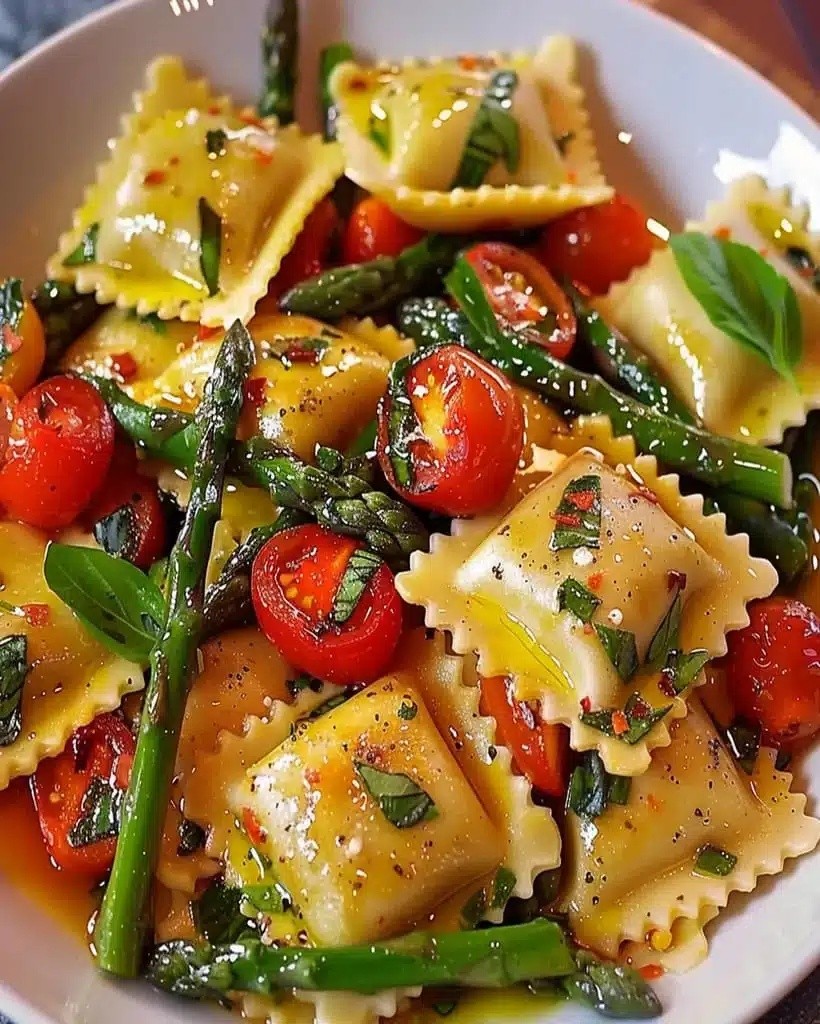
Imagine tender pasta pillows bathed in a light, garlic-infused sauce bursting with the sweet acidity of cherry tomatoes. Next, crisp-tender asparagus spears add a satisfying snap and a beautiful green hue. Finally, a generous shower of fresh basil and parsley ties everything together with a fragrant, herbal finish. This dish is a masterclass in balancing textures and bright, clean flavors. Ultimately, it proves that impressive dinners don’t require hours in the kitchen.
The beauty of this Spring Ravioli with Asparagus, Tomatoes, and Fresh Herbs lies in its adaptability. You can use any fresh ravioli you love, from classic ricotta to a more adventurous mushroom filling. Similarly, the herb mix is flexible based on what’s growing in your garden or available at the market. This recipe is less about strict rules and more about showcasing the best produce of the moment. Therefore, it invites you to cook with the seasons and your personal taste.
Quick Recipe Highlights
- Flavor Profile: This dish offers a beautiful harmony of flavors. Sweet, burst cherry tomatoes contrast with the savory, garlicky olive oil base. The fresh herbs provide a bright, aromatic top note that makes every bite sing.
- Texture: You get a wonderful play of textures here. The soft, creamy ravioli contrasts with the crisp-tender bite of the asparagus. The tomatoes soften but maintain their shape, adding little juicy bursts throughout the dish.
- Aroma: As it cooks, the kitchen fills with the irresistible scent of sautéing garlic and the earthy fragrance of asparagus. The final addition of fresh basil and parsley releases their essential oils, creating an incredibly inviting and fresh aroma.
- Visual Appeal: This plate is a feast for the eyes with its vibrant color palette. The red of the tomatoes, green of the asparagus and herbs, and white of the ravioli and cheese create a stunning, Instagram-worthy presentation that looks as good as it tastes.
- Skill Level Needed: This is a fantastic recipe for cooks of all levels. It requires only basic sautéing and boiling skills. The process is straightforward and forgiving, making it perfect for beginners or anyone seeking a stress-free cooking experience.
- Special Equipment: You need only standard kitchen equipment: a large pot for boiling pasta, a large skillet for the sauce, and basic utensils. No fancy gadgets are required, which makes this recipe accessible to everyone.
Recipe Overview
- Difficulty Level: We rate this Spring Ravioli with Asparagus, Tomatoes, and Fresh Herbs as “Easy” for several reasons. The steps are sequential and simple: boil pasta, sauté vegetables, and combine. There’s no complex knife work or advanced techniques like making pasta from scratch. The timing is also very manageable, with most components cooking in about the same time frame.
- Category: This dish fits beautifully into multiple meal categories. It’s a fantastic main course for a light lunch or dinner. Additionally, it can serve as a substantial side dish for a larger spring feast, perhaps alongside grilled chicken or fish. It’s versatile enough for any meal occasion.
- Cuisine: While ravioli is deeply rooted in Italian cuisine, this preparation has a modern, California-inspired twist. It focuses on fresh, seasonal vegetables and a light sauce rather than a heavy, cream-based one. The result is a fusion dish that honors Italian pasta traditions while embracing a lighter, produce-forward cooking philosophy.
- Cost: This is a very cost-effective meal, especially when asparagus and tomatoes are in season. Store-bought ravioli is the main investment, while the vegetables and herbs are relatively inexpensive. You can easily feed a family of four for less than the cost of takeout, making it a smart choice for your budget.
- Season: This recipe is absolutely perfect for spring and early summer. That’s when asparagus is at its peak sweetness and tomatoes, though not yet at summer’s height, are flavorful. The light, fresh profile of the dish aligns perfectly with warmer weather and the desire for meals that are satisfying but not heavy.
- Occasion: This Spring Ravioli with Asparagus, Tomatoes, and Fresh Herbs is wonderfully versatile for occasions. It’s quick enough for a casual Tuesday night dinner yet elegant enough for a weekend date night at home or a small dinner party with friends. Its beautiful presentation makes it feel like a celebratory meal.
Why You’ll Love This Recipe
First and foremost, the taste and texture appeal is immediate and undeniable. Each forkful delivers a symphony of sensations. You experience the creamy interior of the ravioli, the juicy pop of tomato, the satisfying crunch of asparagus, and the fragrant finish of herbs. This combination is incredibly moreish and satisfying. The garlic-infused olive oil acts as a simple yet profound sauce that coats every element without weighing them down. Consequently, you feel happily full but never sluggish after eating.
Furthermore, the convenience and preparation benefits are a major win for any home cook. The entire meal comes together in one pot for the pasta and one skillet for the sauce, meaning cleanup is a breeze. The active cooking time is minimal, and the steps are virtually foolproof. You can easily multitask by boiling the water for the ravioli while you start the vegetable sauté. This efficient workflow makes getting a gorgeous dinner on the table feel effortless and stress-free.
From a nutritional standpoint, this dish offers significant advantages over heavier pasta recipes. Asparagus is a fantastic source of fiber, folate, and vitamins A, C, and K. Tomatoes provide lycopene and vitamin C. Using a light olive oil sauce instead of a cream-based one reduces saturated fat content. By incorporating these vibrant vegetables, you’re boosting the meal’s vitamin and antioxidant profile dramatically. It’s a delicious way to eat your veggies without feeling like you’re on a diet.
Moreover, the social and entertaining value of this Spring Ravioli with Asparagus, Tomatoes, and Fresh Herbs is high. It’s a visually impressive dish that will garner compliments from guests. Because it cooks so quickly, you can spend less time in the kitchen and more time with your company. You can easily double the recipe for a crowd without complicating the process. Serving a meal that looks and tastes this good makes you feel like a confident and generous host.
Finally, the cost-effectiveness and accessibility of the ingredients make this a repeat-worthy recipe. You likely have garlic, olive oil, salt, and pepper in your pantry already. The remaining ingredients are fresh but common. When asparagus is in season, it’s very affordable. Using quality store-bought ravioli saves hours of labor but still feels special. This approach makes gourmet-tasting, seasonal cooking accessible to anyone, regardless of their schedule or expertise.
Historical Background and Cultural Significance
Ravioli’s origin story is somewhat shrouded in the mists of Italian culinary history. Food historians believe stuffed pasta forms like ravioli likely originated in the Middle Ages, possibly in the regions of Liguria or Lombardy. Early references appear in 14th-century manuscripts from the Republic of Venice. Initially, these stuffed pasta pockets were a practical way to stretch expensive or scarce ingredients, like meat and cheese, by enclosing them in a simple dough. They were often served in broth as a hearty, nourishing meal.
The cultural importance of ravioli in Italy cannot be overstated. It is a cornerstone of regional Italian cuisine, with every area boasting its own signature version. For example, in Genoa, ravioli is often filled with preboggion, a mix of wild greens. In contrast, Roman ravioli might feature ricotta and spinach. These variations tell the story of local agriculture and tradition. Ravioli is deeply tied to family and celebration, frequently appearing on holiday tables, especially during Easter and Christmas feasts.
The evolution of the recipe for dishes like our Spring Ravioli with Asparagus, Tomatoes, and Fresh Herbs reflects broader culinary trends. Traditionally, ravioli was served simply, with a butter and sage sauce or a light tomato sauce. The modern approach, which pairs pasta with seasonal sautéed vegetables in a light emulsion, is a more recent development. This style emphasizes the vegetables as co-stars rather than just a side, aligning with contemporary desires for lighter, vegetable-forward meals that are still comforting.
Regarding regional variations, the concept of pairing pasta with spring vegetables is celebrated across Italy. In Primavera dishes, you see similar philosophies. Our recipe is a simplified, weeknight-friendly take on this celebration of spring’s bounty. It borrows the Italian respect for quality ingredients and simple preparation but executes it in a way that fits a modern, global kitchen. It’s a testament to how classic dishes can evolve while still honoring their roots.
Ingredient Deep Dive
Let’s start with Cheese Ravioli. Ravioli represents the ingenious Italian tradition of encasing precious fillings in pasta. Culturally, it symbolizes resourcefulness and celebration. Nutritionally, it provides protein from the cheese and carbohydrates from the pasta for energy. When selecting, look for fresh ravioli in the refrigerated section for the best texture; avoid frozen if possible for this quick-cooking dish. For storage, keep refrigerated and use by the date on the package. For substitutions, any fresh stuffed pasta works—tortellini, agnolotti, or even gnocchi in a pinch.
Asparagus is a vegetable steeped in history, prized by ancient Greeks and Romans for its flavor and perceived medicinal qualities. It signals the arrival of spring. Nutritionally, it’s a powerhouse: low in calories, high in fiber, folate, and vitamins A, C, and K, which support everything from digestion to bone health. Select firm, bright green spears with tight, compact tips. Store them upright in a jar with an inch of water in the fridge, loosely covered with a bag. If unavailable, green beans or snap peas make a good crunchy substitute.
Cherry Tomatoes bring a burst of sweetness and color. Tomatoes, originally from the Americas, were initially met with suspicion in Europe before becoming a cornerstone of Mediterranean cooking. They are rich in lycopene, an antioxidant linked to heart health, and vitamin C. Choose tomatoes that are firm, deeply colored, and fragrant. Store them at room temperature until ripe, never in the fridge, as cold temperatures degrade their flavor and texture. For a substitution, sun-dried tomatoes (chopped) or diced ripe Roma tomatoes can be used, adjusting cooking time slightly.
Fresh Garlic is the aromatic foundation of countless cuisines. Historically, it has been used for both culinary and medicinal purposes for thousands of years. It contains allicin, a compound with potential anti-inflammatory and immune-boosting properties. Select firm, plump heads with tight, papery skin. Store in a cool, dark, dry place with good air circulation. Do not refrigerate. If you must substitute, a quarter teaspoon of garlic powder can stand in for one fresh clove, though the flavor will be less complex.
Fresh Basil and Parsley are the herbal soul of this dish. Basil is deeply associated with Italian cuisine and summer, while parsley is a versatile, bright garnish used globally. Basil offers antioxidants and anti-inflammatory properties; parsley is rich in vitamins K, C, and A. Choose vibrant, perky leaves without wilting or dark spots. Store basil like a bouquet in a glass of water on the counter; store parsley wrapped in a damp paper towel in the fridge. If substituting, other soft herbs like mint, chives, or oregano can work in a blend.
Common Mistakes to Avoid
- Overcooking the Ravioli: This is the most common pitfall. Fresh ravioli cooks very quickly, often in 3-4 minutes. Following the package instructions is crucial. Overcooked ravioli becomes mushy and can burst open, losing its filling into the water. Always taste a minute before the timer goes off.
- Not Prepping the Asparagus Correctly: The woody ends of asparagus are tough and unpleasant to eat. Simply bending each spear until it snaps naturally removes the tough part. Skipping this step results in a stringy, chewy texture that ruins the dish’s delicate balance.
- Crowding the Skillet: If you add all the asparagus and tomatoes at once to a small skillet, they will steam instead of sauté. Steaming makes the asparagus soggy and prevents the tomatoes from getting those delicious caramelized spots. Use a large skillet to ensure everything has space.
- Burning the Garlic: Garlic burns in a flash and turns bitter, which can ruin the entire sauce. Add it to the oil only when the oil is warm, not smoking hot, and stir constantly. The moment it becomes fragrant (after about 30-60 seconds), immediately add the vegetables to stop the cooking.
- Adding Herbs Too Early: Delicate fresh herbs like basil and parsley lose their vibrant color and fresh flavor if cooked for too long. They should always be a final addition, stirred in just before serving or even used as a garnish on the plate. This preserves their aroma and bright green color.
- Skipping the Pasta Water: The starchy, salted water the ravioli cooks in is liquid gold for your sauce. It helps the olive oil and vegetable juices emulsify into a light, clingy sauce that coats the pasta. Draining your ravioli and not reserving a cup of water is a missed opportunity for a better sauce.
- Underseasoning: This dish relies on proper seasoning to make the natural flavors pop. Season in layers: salt the pasta water generously, season the vegetables as they sauté, and always do a final taste and season at the end. Remember, the ravioli filling and cheese also add salt.
- Using Pre-Grated Parmesan: Pre-grated cheese often contains anti-caking agents that prevent it from melting smoothly. For the best flavor and texture, buy a block of Parmigiano-Reggiano or Grana Padano and grate it fresh yourself just before serving. The difference in taste and meltability is significant.
Essential Techniques
The first essential technique is properly salting your pasta water. This is critical because it’s your only chance to season the pasta itself from the inside out. The water should taste like the sea. This foundational seasoning ensures the ravioli is flavorful, not bland. A common pitfall is being too timid with the salt. Use about one to two tablespoons of kosher salt for a large pot of water. The visual cue is seeing the salt fully dissolved before adding the pasta.
Next, mastering the sauté is key. Sautéing the asparagus and tomatoes over medium-high heat allows them to develop flavor through caramelization rather than simply steaming. The technique involves using enough oil to coat the pan, not crowding it, and letting the vegetables sit undisturbed for a minute to get some color before stirring. The importance lies in building a flavor base. The visual cue for success is asparagus that is bright green and slightly blistered, and tomatoes with wrinkled, split skins.
Finally, creating an emulsion with the pasta water is the secret to a cohesive sauce. After combining the ravioli and vegetables, adding a splash of the reserved starchy water and tossing vigorously helps the oil, vegetable juices, and starch bind together into a light sauce that coats each piece. This technique prevents a greasy, separated sauce. The common pitfall is adding too much water at once. Add it gradually while tossing until you achieve a glossy, lightly sauced consistency that clings to the ravioli.
Pro Tips for Perfect Spring Ravioli with Asparagus, Tomatoes, and Fresh Herbs
First, always reserve at least one cup of the starchy pasta cooking water before you drain the ravioli. This liquid is essential for adjusting the sauce consistency at the end and helping it cling to the pasta beautifully.
Second, to maximize efficiency, start boiling your water for the ravioli first. Then, while it comes to a boil, you can prep all your vegetables and herbs. This mise en place makes the cooking process smooth and stress-free.
Third, don’t rinse your cooked ravioli after draining. Rinsing washes away the precious starch that helps the sauce adhere. Simply drain them well and add them directly to the skillet with the vegetables.
Fourth, for an extra layer of flavor, consider adding a pinch of red pepper flakes to the garlic as it sautés. This introduces a subtle, warming heat that complements the sweet tomatoes and fresh herbs perfectly.
Fifth, if your asparagus spears are very thick, consider slicing them in half lengthwise after trimming. This ensures they cook through at the same rate as the tomatoes and creates more surface area for browning.
Sixth, finish the dish with a drizzle of high-quality extra virgin olive oil just before serving. This last-minute addition adds a fresh, fruity aroma and richness that cooked oil doesn’t have.
Seventh, let the skillet cool slightly off the heat for a minute before adding the final fresh herbs. This preserves their vibrant color and delicate flavor better than adding them to a scorching hot pan.
Eighth, serve the dish immediately in warm bowls. Pasta, especially in a light sauce, is best enjoyed hot from the pan to appreciate the perfect textures you’ve worked so hard to create.
Variations and Adaptations
For regional variations, you can take this dish in many directions. For a more Sicilian twist, add toasted pine nuts and raisins for a sweet-and-savory note. A Roman influence might include adding a few anchovy fillets to melt into the garlic oil. For a touch of luxury from the North, finish the dish with a drizzle of white truffle oil instead of regular olive oil.
Seasonal adaptations are easy and encouraged. In summer, swap asparagus for zucchini or yellow squash and add fresh corn kernels. For fall, use roasted butternut squash cubes and sage instead of basil. In winter, try it with sautéed kale or broccoli rabe and a squeeze of lemon for brightness. The recipe framework is perfectly designed to showcase whatever is freshest.
Dietary modifications are straightforward. For a gluten-free version, use your favorite gluten-free fresh ravioli. To make it vegan, seek out high-quality vegan ravioli (often filled with cashew ricotta or mushrooms) and use nutritional yeast or vegan Parmesan instead of dairy cheese. For a dairy-free option, simply omit the cheese garnish or use a plant-based alternative.
Flavor variations can keep this recipe exciting all year round. Add cooked Italian sausage or pancetta for a meatier version. For a richer sauce, stir in a tablespoon of butter or cream at the end. Incorporate different olives, capers, or artichoke hearts for a Mediterranean flair. A splash of white wine added after the garlic deglazes the pan and adds wonderful acidity.
Texture modifications can cater to personal preference. For more crunch, sprinkle with toasted breadcrumbs or chopped walnuts before serving. For a creamier mouthfeel, stir a spoonful of ricotta or mascarpone into the sauce just before adding the pasta. If you prefer softer vegetables, cover the skillet for a minute after adding the tomatoes to let them steam and soften more thoroughly.
Presentation alternatives can elevate the dish for guests. Instead of tossing everything together, you can plate the ravioli first and artfully arrange the asparagus and tomatoes on top. Serve it family-style on a large platter for a rustic feel. For individual servings, use a ring mold to create a neat stack of ravioli crowned with the vegetable mixture.
Serving and Presentation Guide
Plating techniques matter for visual impact. For a restaurant-style look, use tongs to twirl a portion of ravioli into the center of a warm, shallow bowl. Then, carefully arrange the asparagus spears and tomatoes around and over the top. This method showcases each component beautifully. Alternatively, for a family-style meal, simply toss everything together in the skillet and bring it directly to the table for a rustic, inviting presentation.
Garnishing ideas go beyond just parsley. A final flourish of freshly grated Parmesan cheese is a must. Add a few whole basil leaves for a pop of color. A light grating of lemon zest over the top just before serving adds incredible brightness. A final crack of black pepper or a drizzle of your best olive oil also makes the dish look finished and professional.
Traditional accompaniments for a dish like this are simple. A crisp, green salad with a lemony vinaigrette balances the richness of the pasta. A slice of crusty, warm bread is perfect for sopping up any remaining sauce on the plate. For a more substantial meal, a simple side of grilled or roasted chicken or fish pairs wonderfully without competing with the pasta’s flavors.
Modern serving suggestions might include deconstructed elements. Consider serving the sautéed vegetables in a small bowl alongside the ravioli, allowing diners to build their own bites. For a fun appetizer portion, you could serve just a few ravioli with the vegetable topping as a primi piatti (first course) before a main of grilled meat or fish.
Temperature considerations are crucial. Pasta dishes like this one are best served immediately, straight from the skillet to the plate. Ensure your serving bowls are warmed to prevent the food from cooling too quickly. If you must hold it for a few minutes, keep it covered in the warm skillet off the heat, but note the asparagus will continue to soften.
Portion control tips are helpful for balancing a meal. This recipe as written serves four as a main course. If serving as a primi (first course) before multiple other dishes, it can easily serve six. Remember that ravioli is more filling than long pasta shapes, so a slightly smaller portion per person is often sufficient, especially when accompanied by a salad and bread.
Wine and Beverage Pairing
Wine pairings for this Spring Ravioli with Asparagus, Tomatoes, and Fresh Herbs should complement its bright, fresh, and slightly herbal notes. A crisp, dry Italian white wine like Pinot Grigio or Vermentino is a classic and perfect choice. Their high acidity cuts through the richness of the cheese filling and mirrors the acidity of the tomatoes. Alternatively, a light-bodied Sauvignon Blanc with its grassy, citrusy notes pairs beautifully with the asparagus and herbs. For a red wine lover, a chilled, light red like a Bardolino or a Frappato offers fruit without heaviness.
Non-alcoholic alternatives can be just as sophisticated. A sparkling water with a squeeze of lemon or a twist of lime provides cleansing bubbles. For more flavor, try a high-quality lemonade or an iced herbal tea, such as mint or lemongrass, which echoes the herbal notes in the dish. A virgin spritz made with blood orange juice and soda water offers a festive, complex flavor that stands up to the meal.
Coffee and tea pairings are more suited for after the meal. However, a lightly brewed green tea, such as Sencha or Dragonwell, could accompany the dish if preferred, as its vegetal notes align with the asparagus. After dinner, an espresso or a cup of mint tea would be a delightful digestif, cleansing the palate after the garlic and herbs.
Temperature considerations are key for beverages. White wines and non-alcoholic sparklers should be served well-chilled, around 45-50°F. If opting for a light red, serve it slightly cooler than room temperature, perhaps 15-20 minutes in the fridge. Iced drinks should be cold but not so icy that they numb the palate, as you want to fully taste the delicate flavors of the pasta.
Serving suggestions include offering options. When entertaining, it’s lovely to have both a white wine and a sparkling non-alcoholic option available. Present wines in appropriate stemware to enhance the aroma. For non-alcoholic drinks, use nice glasses—a highball for spritzers or a wine glass for fancy lemonade—to make the experience feel special for all guests.
Storage and Shelf Life
Storage methods for leftovers are important for food safety and quality. Allow the dish to cool to room temperature within two hours of cooking. Then, transfer it to an airtight container. It’s best to store the pasta and vegetable mixture together rather than separating components. This helps the flavors meld. Always label the container with the date so you can track how long it’s been stored.
Temperature requirements are strict. This dish must be refrigerated at 40°F or below. Do not leave it out on the counter for extended periods. The dairy in the ravioli filling and the moist environment make it susceptible to bacterial growth if not kept cold. For longer storage, you can freeze it, though the texture of the asparagus and ravioli may soften upon reheating.
Container recommendations include glass or BPA-free plastic containers with tight-fitting lids. Glass is preferable as it doesn’t absorb odors and is easier to reheat in. If using plastic, ensure it is designated for food storage and is microwave-safe if you plan to reheat in it. Avoid storing in the skillet you cooked in, even with a lid, as it takes up too much fridge space and may not seal properly.
Signs of spoilage are usually evident. Look for an off or sour smell, which is the first indicator. Visually, you might see mold growth (fuzzy spots) or a significant change in color, such as the herbs turning black or the asparagus becoming excessively slimy. If the texture seems unusually mushy or the sauce has separated in an odd way, it’s best to err on the side of caution and discard it.
Reheating instructions are simple but careful. The best method is on the stovetop. Add the leftovers to a skillet with a splash of water, broth, or a little more olive oil. Gently heat over medium-low, stirring occasionally, until warmed through. This helps revive the sauce. You can also use the microwave: place in a microwave-safe dish, sprinkle with a teaspoon of water, cover loosely, and heat in 30-second intervals, stirring in between.
Freezing guidelines are possible but with caveats. Freeze in an airtight container for up to 2 months. Be aware that the asparagus will lose its crisp-tender texture and become much softer upon thawing and reheating. The ravioli may also become a bit more delicate. To reheat from frozen, thaw overnight in the refrigerator first, then follow the stovetop reheating method, adding a bit more liquid to the pan.
Make Ahead Strategies
A prep timeline can make weeknight cooking effortless. The day before, you can wash and trim the asparagus, storing it wrapped in a damp paper towel in the fridge. You can also wash the herbs, dry them thoroughly, and store them loosely in a container lined with a paper towel. Measure out your cherry tomatoes and keep them in a bowl at room temperature. Having everything prepped means you can start cooking immediately when you get home.
Storage between steps is simple for prepped ingredients. Keep chopped vegetables in separate containers or compartments in the fridge. Do not chop the herbs until just before you’re ready to use them, as they wilt quickly. The garlic can be peeled and minced a few hours ahead, but for the best flavor, it’s ideal to mince it just before cooking to preserve its potent oils.
Quality impact assessment is important when prepping ahead. Pre-chopped asparagus is fine, but it may dry out slightly at the cut ends. Tomatoes should never be refrigerated before use, as it ruins their texture and flavor. Pre-minced garlic from a jar is a convenient shortcut, but it lacks the pungent, fresh flavor of freshly minced garlic and can sometimes have a bitter aftertaste.
Assembly tips for a make-ahead scenario are limited because this dish is best fresh. However, you can cook the ravioli until just al dente, rinse it briefly with cool water to stop the cooking, and toss it with a tiny bit of oil to prevent sticking. Store it separately. When ready to serve, reheat it quickly in the skillet with the finished sauce and a splash of water to loosen it up.
Reheating guidelines for pre-cooked components are specific. If you’ve pre-cooked the ravioli, add it to the hot skillet with the vegetables during the last minute, adding pasta water to help it reheat and integrate. Do not microwave pre-cooked ravioli on its own, as it can become rubbery. The vegetable sauté cannot be fully pre-cooked without losing its vibrant texture; it’s best done fresh.
Fresh element additions are your secret weapon. Even if you prep everything else, always add the fresh herbs and final cheese garnish at the very last second before serving. This ensures they provide the maximum aroma, flavor, and visual appeal that define the dish. Keeping these elements completely separate until plating is the key to a make-ahead strategy that doesn’t sacrifice quality.
Scaling Instructions
Halving the recipe is straightforward for a smaller meal. Simply divide all ingredient quantities by two. Use a medium skillet instead of a large one. The cook times will remain roughly the same, but you may need to reduce them slightly for the vegetables since there’s less volume to cook through. Be careful not to overcook the smaller amount of ravioli. You’ll need less pasta water reserved—about half a cup should suffice.
Doubling or tripling the recipe for a crowd requires some adjustments. Use your largest pot for boiling the ravioli, and you may need to cook it in two batches to avoid overcrowding. For the sauce, use the largest skillet you have or cook the vegetables in batches in a regular skillet, then combine everything in a large serving bowl or pot. You may need to increase the sauté time slightly for larger vegetable volumes. Reserve more pasta water—up to two cups for a triple batch.
Equipment adjustments are necessary when scaling. For larger batches, ensure you have a colander large enough to drain all the pasta. A Dutch oven can be a good alternative to a skillet for sautéing large volumes of vegetables. Have warm serving platters ready, as a big batch will cool faster if left in the cooking pot. Tongs and a large serving spoon are essential for mixing and serving.
Timing modifications become important with scale. When doubling, the time to bring the large pot of water to a boil will be longer. Start that first. The vegetable sauté might take a few extra minutes to cook all pieces evenly. The most critical timing element is still the ravioli—cook it in batches to ensure each batch is perfectly al dente, and keep the first batch warm by tossing it with a little oil in a covered bowl.
Storage considerations change with batch size. If you’re not serving the entire doubled batch at once, only combine what you’ll eat immediately. Store the cooked ravioli and vegetable sauce separately in the fridge. This prevents the ravioli from absorbing all the sauce and becoming soggy. When ready to eat the leftovers, recombine them in a skillet with a splash of water or broth to refresh the sauce.
Nutritional Deep Dive
The macro breakdown of this dish offers a balanced profile. A serving provides complex carbohydrates from the pasta for sustained energy, protein from the cheese filling to support muscle maintenance, and healthy fats from the olive oil, which aids in nutrient absorption. The asparagus and tomatoes contribute minimal calories but significant volume and fiber, promoting a feeling of fullness. This balance makes it a satisfying meal that fuels your body effectively.
A micronutrient analysis reveals a wealth of vitamins and minerals. Asparagus is exceptionally high in vitamin K, crucial for blood clotting and bone health, and folate, essential for cell growth. Tomatoes provide a significant dose of vitamin C and the antioxidant lycopene. Garlic contributes manganese and vitamin B6. The fresh herbs, while used in smaller quantities, add traces of vitamins A, C, and K. Together, they create a nutrient-dense plate.
The health benefits are multifaceted. The fiber from the vegetables and whole-grain pasta (if used) supports digestive health. The antioxidants from the tomatoes, garlic, and herbs combat oxidative stress and inflammation. The monounsaturated fats in olive oil are heart-healthy. The dish is naturally lower in saturated fat compared to cream-based pasta sauces, supporting cardiovascular health. It’s a meal that tastes indulgent while providing genuine nutritional value.
Dietary considerations are generally favorable. The dish is vegetarian as written. It can be adapted to be gluten-free or vegan with simple swaps. It’s naturally nut-free and soy-free. For those monitoring sodium, you can control the salt added during cooking and be moderate with the Parmesan garnish. For diabetics, pairing this with a protein-rich side can help manage the glycemic response from the pasta.
Portion analysis shows that one serving (a quarter of the recipe) is a satisfying main course. The presence of protein, fiber, and fat helps regulate the speed at which carbohydrates are absorbed, preventing a rapid blood sugar spike. Visually, a good portion should fill a shallow bowl, with the vegetables making up a substantial part of the volume. This isn’t a heaping plate of just pasta; it’s a balanced composition.
Weight management tips include being mindful of the olive oil and cheese portions if you’re counting calories. You can reduce the oil by a tablespoon and use a light hand with the Parmesan. Increasing the ratio of asparagus and tomatoes to ravioli will lower the calorie density of the meal while increasing its volume and fiber content, helping you feel full on fewer calories. It’s a strategy for enjoying pasta without overindulgence.
Dietary Adaptations
For a gluten-free version, the only change needed is the pasta. Seek out high-quality fresh gluten-free ravioli, which are increasingly available in the refrigerated section of many grocery stores. Be sure to check that all other ingredients, like any pre-grated cheese, are certified gluten-free. Cook the gluten-free ravioli according to package directions, as they may be more delicate and have a different cook time than wheat-based pasta.
A dairy-free adaptation requires two swaps. First, find dairy-free ravioli; many brands offer fillings made from cashew cheese, mushrooms, or butternut squash. Second, omit the Parmesan cheese garnish or use a plant-based Parmesan alternative made from nuts or nutritional yeast. Ensure the ravioli you choose doesn’t contain any dairy in the pasta dough itself. The rest of the recipe is naturally dairy-free.
To make this recipe vegan, follow the dairy-free steps and also ensure the ravioli is completely vegan—free of eggs and dairy. Many stores now carry excellent vegan stuffed pasta options. Use a vegan Parmesan substitute or simply finish with a sprinkle of nutritional yeast for a cheesy flavor. The olive oil Print
Ravioli with Tomatoes, Asparagus, Garlic, and Herbs
- Total Time: 45 minutes
- Yield: 4
Description
A fresh and vibrant pasta dish featuring cheese ravioli tossed with sautéed asparagus, cherry tomatoes, garlic, and aromatic herbs for a quick, flavorful meal.
Ingredients
- 1 pound cheese ravioli (fresh or frozen)
- 1 bunch asparagus, trimmed and cut into 1-inch pieces
- 1 pint cherry tomatoes, halved
- 3 cloves garlic, minced
- 2 tablespoons olive oil
- 1/4 cup fresh basil, chopped
- 1 tablespoon fresh oregano, chopped
- Salt and black pepper to taste
- Grated Parmesan cheese for serving
Instructions
- Bring a large pot of salted water to a boil. Cook the ravioli according to package instructions until al dente, then drain and set aside.
- While the ravioli cooks, heat olive oil in a large skillet over medium heat. Add the asparagus and sauté for 4-5 minutes until tender-crisp.
- Add the cherry tomatoes and garlic to the skillet. Cook for another 3-4 minutes until the tomatoes soften and release their juices.
- Toss the cooked ravioli into the skillet with the vegetables. Stir in the fresh basil and oregano, and season with salt and pepper.
- Serve immediately, topped with grated Parmesan cheese.
Notes
You can customize the seasonings to taste.
- Prep Time: 15 minutes
- Cook Time: 30 minutes
- Method: Main
- Cuisine: Italian-American