Easy Ravioli with Tomatoes, Asparagus, Garlic, and Fresh Herbs: A Quick Weeknight Dinner
Picture this: a warm bowl of tender ravioli, perfectly al dente, wrapped in a luscious sauce made from sweet cherry tomatoes, crisp asparagus, and fragrant garlic. That is exactly what you get with this easy ravioli with tomatoes, asparagus, garlic, and fresh herbs recipe. It is a dish that feels indulgent and restaurant-quality, yet it comes together in under thirty minutes. The bright, herby aroma of fresh basil and parsley practically sings summer, even if you make it in the middle of winter. You will love how the simple pan sauce clings to each pasta pillow, creating a satisfying meal that pleases picky eaters and foodies alike.
Creating a memorable dinner does not require a long ingredient list or hours in the kitchen. This recipe for easy ravioli with tomatoes, asparagus, garlic, and fresh herbs proves that simplicity wins. The key is using high-quality store-bought cheese ravioli, which saves you prep time without sacrificing flavor. Then, you build a quick, vibrant sauce in the same skillet while the pasta cooks. The combination of sweet roasted tomatoes, earthy asparagus, and pungent garlic creates a balanced, savory profile. Fresh herbs add a pop of color and a final layer of fragrance. It is a foolproof method for a stress-free weeknight meal that tastes like you spent an hour cooking.
Whether you are a busy parent, a college student, or simply someone who wants a delicious dinner without the hassle, this easy ravioli with tomatoes, asparagus, garlic, and fresh herbs is your new best friend. It requires just one pot for the pasta and one skillet for the sauce, which means minimal cleanup. The flavors are flexible too, so you can adapt them to what you have on hand. In this post, we will explore every aspect of this recipe, from ingredient deep dives to pro tips, variations, and storage strategies. By the end, you will feel completely confident making this dish your own.
Quick Recipe Highlights
- Flavor Profile: The dish features a bright, savory, and slightly sweet taste. The cherry tomatoes burst to release their natural sugars, while the garlic adds a warm pungency. Fresh herbs like basil and parsley bring a clean, peppery finish that complements the rich cheese ravioli perfectly.
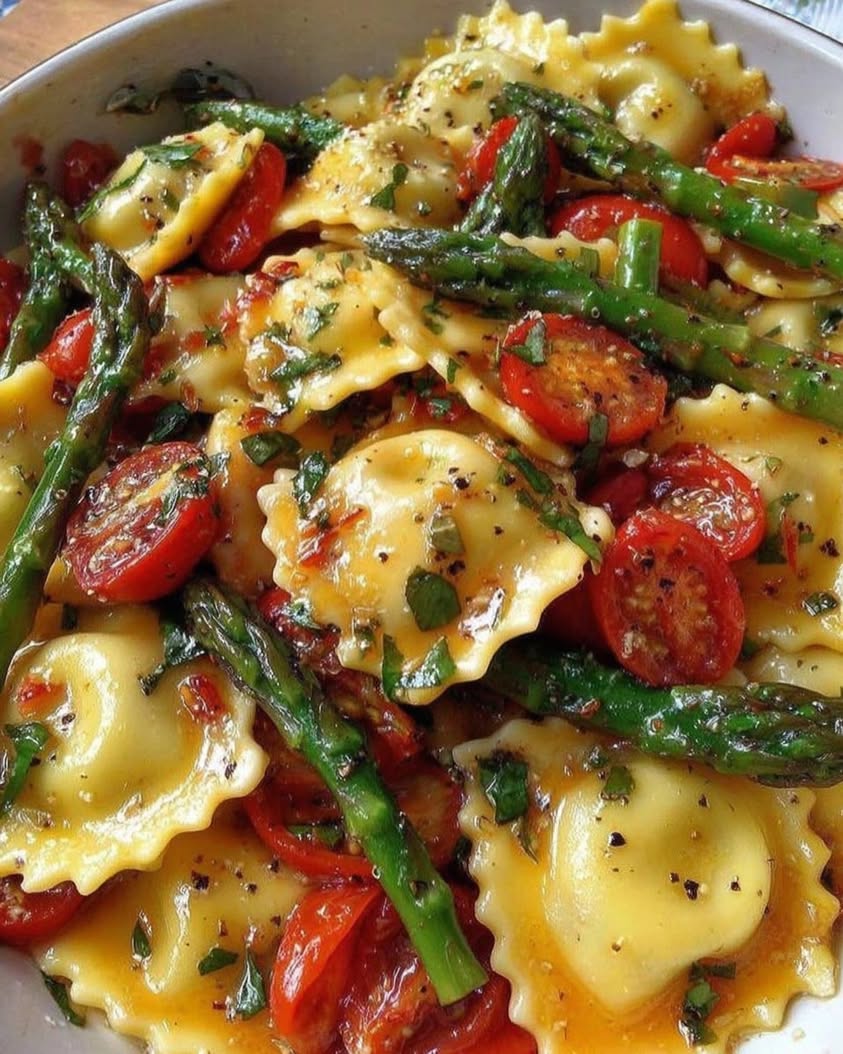
- Texture: You get a wonderful contrast of textures. The ravioli are soft and pillowy, the asparagus tips offer a tender-crisp bite, and the tomatoes soften into a jammy sauce. A final sprinkle of fresh herbs adds a delicate, leafy texture.
- Aroma: The kitchen fills with an intoxicating aroma of sautéed garlic and toasting herbs. As the tomatoes cook down, a sweet, tangy scent emerges, mingling with the earthy green fragrance of fresh asparagus. It is a welcoming, homey perfume.
- Visual Appeal: This dish is a feast for the eyes. The golden-brown ravioli sit atop a vibrant red and green sauce. Bright green asparagus spears and flecks of fresh herbs dot the plate, creating a colorful, appetizing presentation.
- Skill Level Needed: This recipe is perfect for beginners. There is no complicated technique, just basic sautéing and boiling. Even if you are new to cooking, you can master this dish on your first try.
- Special Equipment: You only need a large pot for the pasta, a large skillet for the sauce, and a colander. A sharp knife and cutting board are helpful for prepping the vegetables.
Recipe Overview
- Difficulty Level: I have rated this recipe as easy because it involves straightforward steps and no intricate techniques. You simply boil pasta, sauté vegetables, and toss everything together. The timing is forgiving, and the results are consistently delicious. Even a novice cook can feel accomplished.
- Category: This dish falls into the pasta or main course category. It is hearty enough to serve as a complete meal, but you can also serve it as a side to a protein like grilled chicken or fish. It works beautifully for both lunch and dinner.
- Cuisine: While ravioli is Italian in origin, this particular preparation draws from modern American-Italian cooking. It highlights fresh seasonal vegetables and simple techniques. The use of garlic, basil, and olive oil is classic, but the quick pan sauce method is a contemporary approach.
- Cost: This is an affordable meal. A package of store-bought cheese ravioli costs a few dollars. Cherry tomatoes, asparagus, and fresh herbs are inexpensive, especially when in season. Garlic, olive oil, and Parmesan are pantry staples. You can feed a family of four for under fifteen dollars.
- Season: The dish shines in spring and summer when asparagus and tomatoes are at their peak. However, you can enjoy it year-round using grocery store produce. In winter, the bright flavors offer a welcome reminder of warmer days.
- Occasion: This recipe is perfect for a busy weeknight dinner when you need something fast and satisfying. It also works well for a casual weekend lunch or a light dinner with friends. It is impressive enough for a dinner party but simple enough for a solo meal.
Why You Will Love This Recipe
The taste and texture combination in this easy ravioli with tomatoes, asparagus, garlic, and fresh herbs is genuinely addictive. The cheese ravioli are rich and creamy on the inside, providing a decadent base. The pan sauce, made with sweet cherry tomatoes and crisp asparagus, adds a fresh, tangy counterpoint. Every bite delivers a harmony of flavors. The garlic provides a deep savory note, while the fresh herbs provide a bright, clean finish. You get a satisfying, well-rounded meal that feels both comforting and light.
Convenience is a major reason to love this dish. You can have it on the table in just 25 minutes. That includes time for chopping vegetables and boiling water. There is no need to make homemade pasta or a complex sauce. The recipe uses minimal dishes, which makes cleanup quick. Because the steps are simple and the ingredient list is short, you can easily memorize the process. This makes it a go-to recipe for those nights when you need dinner fast without sacrificing quality.
From a nutritional standpoint, this recipe offers surprising benefits. The cheese ravioli provides protein and calcium from the cheese filling. The asparagus is packed with vitamins A, C, and K, plus fiber. Cherry tomatoes are rich in lycopene, an antioxidant. Garlic is known for its immune-boosting properties. Fresh herbs add additional antioxidants and flavor without extra calories. With a drizzle of good olive oil for healthy fats, this dish is a balanced meal that supports your well-being.
Socially, this recipe is a crowd-pleaser. It looks elegant on the plate, and the aroma draws everyone to the table. You can easily double the recipe to feed a group. It is a dish that sparks conversation about fresh ingredients and simple cooking. Guests will assume you spent more effort than you actually did. It is perfect for a casual get-together, a potluck, or a romantic dinner at home. The versatility means you can adapt it to different dietary preferences by using gluten-free or vegan ravioli.
Finally, this easy ravioli with tomatoes, asparagus, garlic, and fresh herbs is incredibly cost-effective. Ravioli is one of the most affordable pasta options, especially when bought in bulk. Fresh vegetables, when in season, are budget-friendly. A small bunch of asparagus and a pint of cherry tomatoes go a long way. Herbs like basil and parsley are inexpensive and elevate the dish without adding cost. You get a restaurant-quality meal for a fraction of the price, making it an excellent choice for saving money without sacrificing taste.
Historical Background and Cultural Significance
Ravioli has a rich history that dates back to medieval Italy. The word itself likely comes from the Italian verb “riavvolgere,” meaning to wrap or fold. Early versions were simple filled pasta, often using leftover meats, cheeses, or vegetables. The concept of filled pasta spread across Italy, with each region developing its own variations. In Liguria, ravioli is often filled with greens and ricotta. In Emilia-Romagna, the filling might include roasted meats and Parmigiano-Reggiano. This tradition of filling pasta with local ingredients has continued for centuries.
Culturally, ravioli holds a special place in Italian home cooking. It is a celebratory dish often served on Sundays or holidays. The act of making ravioli by hand is a labor of love, often involving the whole family. In many Italian-American households, Sunday gravy or sauce is served with ravioli. This dish represents comfort, family, and tradition. The combination of fresh vegetables and herbs in our recipe pays homage to the Italian philosophy of using simple, high-quality ingredients to create something greater than the sum of its parts.
The evolution of this recipe reflects modern cooking trends. While traditional ravioli sauces might involve long-simmered meat ragu, contemporary cooks favor quick, vegetable-based sauces. The use of asparagus and cherry tomatoes is a nod to seasonal eating and lighter fare. This adaptation makes the dish accessible for weeknight meals. It also highlights the versatility of ravioli as a base for various flavor profiles. The addition of fresh herbs like basil and parsley is a classic choice that never goes out of style.
Regional variations of this dish are endless. In Tuscany, you might find ravioli served with a simple sage and butter sauce. In the south, tomato-based sauces with fresh basil are common. Our recipe draws inspiration from the coastal regions of Italy, where seafood and vegetables are abundant. The asparagus adds a distinctly springtime feel. You can easily substitute other seasonal vegetables, like zucchini in summer or butternut squash in fall. This flexibility is a hallmark of great home cooking, and it is one reason why this dish remains so beloved.
Ingredient Deep Dive
Cheese ravioli is the star of this dish. The cultural significance of filled pasta dates back centuries, as it was a way to use leftovers and showcase local cheeses. Culturally, cheese ravioli often symbolizes comfort and indulgence. Nutritionally, it provides a good source of protein and calcium from the cheese, plus carbohydrates for energy. When selecting ravioli, look for brands with a high cheese content and a short ingredient list. Fresh ravioli, found in the refrigerated section, cooks faster and has a better texture than dried. Store it in the refrigerator and use it by the sell-by date. If you need a substitution, you can use tortellini, or for a gluten-free option, use chickpea or lentil-based ravioli.
Cherry tomatoes are another key ingredient. They are a staple of Mediterranean cuisine, prized for their sweetness and versatility. Nutritionally, they are low in calories and high in vitamins A, C, and lycopene. Lycopene is a powerful antioxidant linked to heart health and cancer prevention. When selecting cherry tomatoes, look for firm, brightly colored fruit with no blemishes. Store them at room temperature, away from direct sunlight, to preserve their flavor. If you cannot find cherry tomatoes, you can use grape tomatoes, or even regular Roma tomatoes cut into small pieces. Roasting them brings out their natural sweetness.
Asparagus adds a fresh, grassy note and a beautiful green color. It has been cultivated for over two thousand years, originating in the eastern Mediterranean. Culturally, it is a symbol of spring and renewal. Nutritionally, asparagus is a fantastic source of folate, fiber, and vitamins A, C, and K. When selecting asparagus, look for firm, bright green spears with tight tips. Thicker spears are often more tender. Store them upright in a glass of water in the refrigerator, like a bouquet. You can substitute green beans, snap peas, or even broccoli if asparagus is out of season.
Garlic is the aromatic backbone of this recipe. It has been used for thousands of years in cooking and medicine across many cultures. Nutritionally, garlic contains allicin, a compound linked to numerous health benefits, including immune support and reduced inflammation. Choose garlic bulbs that are firm and heavy for their size, with no sprouting. Store them in a cool, dark, dry place with good airflow. Peeled cloves can be refrigerated in oil for a few days. If you are out of fresh garlic, you can use 1/4 teaspoon of garlic powder per clove, though the flavor will be less pungent.
Fresh herbs like basil and parsley are essential for this dish. Basil is a tender herb with a sweet, peppery flavor that is central to Italian cooking. It pairs beautifully with tomatoes and garlic. Parsley adds a fresh, clean taste and a vibrant green color. Both herbs are rich in vitamins A, C, and K. When selecting fresh herbs, look for bright, perky leaves with no wilting. Store them by trimming the stems and placing them in a glass of water, covered loosely with a plastic bag in the refrigerator. Dried herbs can be used in a pinch, but use only one-third the amount. For a variation, you can also use oregano or thyme.
Extra virgin olive oil is the foundation of the sauce. It is a cornerstone of the Mediterranean diet, valued for its fruity flavor and heart-healthy monounsaturated fats. Choose a good quality extra virgin olive oil for the best taste. It adds a peppery, grassy note that complements the vegetables. Store olive oil in a cool, dark cabinet away from heat and light. If you need a substitute, you can use avocado oil or a light olive oil. For a nutty flavor, use a small amount of butter, but be careful as butter burns more easily.
Common Mistakes to Avoid
- Overcooking the ravioli is a common mistake. Ravioli only needs a few minutes to cook. Overcooking makes it mushy and causes the filling to leak. Always check the package directions and start testing a minute before the suggested time.
- Not salting the pasta water enough is another error. The water should taste like the sea. Salt infuses the pasta with flavor. Without enough salt, the entire dish will taste flat. Add a generous tablespoon of salt per 4 quarts of water.
- Crowding the skillet can lead to steamed, not sautéed, vegetables. The pan needs to be hot enough and spacious enough so the asparagus and tomatoes sear, not steam. Cook in batches if necessary to get that beautiful caramelization.
- Adding herbs too early is a mistake. Fresh herbs are delicate. If you add them at the beginning of cooking, they can wilt and lose their flavor. Always add fresh herbs at the very end, just before serving, to preserve their color and aroma.
- Using low-quality olive oil can ruin the dish. Since the oil is a key flavor component, use a good extra virgin olive oil. Cheap oils can taste harsh or rancid and will negatively affect the final flavor.
- Forgetting to reserve pasta water is a common oversight. The starchy pasta water is essential for creating a silky sauce. Before draining the ravioli, reserve a cup of the cooking water. You can then use it to thin the sauce and help it cling to the pasta.
- Cutting the asparagus unevenly affects cooking time. Cut the spears into uniform pieces, about 1-2 inches long. This ensures they cook evenly. The thicker ends may need an extra minute, so consider slicing them in half lengthwise.
- Not tasting and adjusting seasoning is a critical step. You should taste the sauce before adding the ravioli and then taste the final dish. You might need more salt, pepper, or a splash of lemon juice to brighten the flavors.
Essential Techniques
Sautéing the vegetables correctly is crucial for this recipe. Sautéing means cooking quickly over medium-high heat in a small amount of fat. This technique caramelizes the natural sugars in the vegetables, developing a deep, savory flavor. To master it, ensure your skillet is hot before adding the oil. The oil should shimmer, not smoke. Add the asparagus first because it takes a bit longer to cook, then add the tomatoes later. Avoid moving the vegetables too much in the pan; let them sit to develop a nice sear. A good visual cue is when the asparagus turns bright green and is easily pierced with a fork, and the tomatoes start to blister and soften.
Creating a pan sauce from the residual juices is another essential skill. After you remove the vegetables from the skillet, you can deglaze the pan with a splash of the reserved pasta water. This lifts the browned bits, called fond, off the bottom of the pan. These bits are packed with flavor. Add a little more olive oil, and you have a quick, flavorful sauce. The starchy pasta water helps thicken the sauce slightly and gives it a silky texture. The visual cue is when the liquid reduces slightly and forms a cohesive, glossy sauce that coats the back of a spoon.
Boiling ravioli correctly ensures the perfect texture. Use a large pot with plenty of water so the ravioli have room to move. A good rule is 4 quarts of water per pound of pasta. Bring the water to a rolling boil before adding the ravioli. Stir gently to prevent sticking. Start checking for doneness a minute before the package recommends. The ravioli should be tender but still firm to the bite, with no raw flour taste. Drain them carefully as they are delicate and can tear easily. Do not rinse the ravioli; you want to keep the starch on the surface to help the sauce adhere.
Finishing the dish with fresh herbs and a drizzle of oil is the final touch. Chopping fresh herbs correctly is important. Use a sharp knife to gently chiffonade basil leaves, rolling them up and slicing into thin ribbons. For parsley, you can simply chop it finely. Sprinkle the herbs over the finished dish just before serving. This preserves their bright color and flavor. A final drizzle of high-quality extra virgin olive oil adds a fruity, peppery note and a beautiful sheen. These final touches elevate the dish from good to great, providing a burst of freshness and complexity.
Pro Tips for Perfect Easy Ravioli with Tomatoes, Asparagus, Garlic, and Fresh Herbs
First, always cook the pasta and sauce simultaneously to save time. Start boiling the water as soon as you begin prepping the vegetables. By the time you are sautéing the asparagus, you can drop the ravioli in the water. This ensures everything is hot and ready at the same moment.
Second, use a microplane to grate fresh Parmesan cheese over the finished dish. Pre-shredded cheese often contains anti-caking agents that prevent it from melting smoothly. Freshly grated cheese has a superior, nutty flavor and melts into the sauce beautifully.
Third, do not be afraid to add a pinch of red pepper flakes for a subtle heat. The gentle kick contrasts nicely with the sweet tomatoes and creamy ravioli. Add it with the garlic to let the spice bloom in the oil.
Fourth, if you want extra flavor, use a mix of fresh herbs. Basil and parsley are classic, but you can also add a few leaves of fresh oregano or a sprig of thyme. Tie the herbs in a bundle and remove them before serving, or chop them finely.
Fifth, consider roasting the cherry tomatoes instead of sautéing them for a deeper, sweeter flavor. Toss them with olive oil and salt, and roast at 400 degrees Fahrenheit for 15-20 minutes until blistered. This works well if you are making a larger batch.
Sixth, for a richer sauce, add a splash of heavy cream or a pat of butter at the end. This creates a more decadent, restaurant-style dish. Stir the cream in after you add the pasta water, and let it simmer gently for a minute.
Seventh, if you are using frozen ravioli, do not thaw it before cooking. Add it directly to the boiling water. It may take an extra minute or two to cook, but it will be just as delicious. This is a great time-saving tip.
Eighth, save the woody ends of the asparagus to make a quick vegetable stock. You can freeze them until you have enough. This reduces waste and adds flavor to future soups or risottos.
Variations and Adaptations
Regional variations are a fantastic way to explore this dish. For a southern Italian twist, add a handful of black olives and capers for a briny, salty kick. For a northern Italian approach, use butter and sage instead of olive oil and basil. You can also add a bit of pancetta or prosciutto, cooked until crisp, for a savory, umami boost. These small changes create entirely different flavor profiles while keeping the core recipe intact.
Seasonal adaptations are natural for this recipe. In spring, use fresh peas and mint in addition to the asparagus. In summer, swap the asparagus for zucchini and add fresh corn kernels. In fall, use butternut squash cubes and sage. In winter, try roasted cherry tomatoes and kale. The basic method remains the same, but the vegetables change to reflect what is fresh and available. This ensures you enjoy the dish at its best all year long.
Dietary modifications are easy to implement. For a gluten-free version, simply use gluten-free ravioli, which is widely available. For a dairy-free version, use a dairy-free ravioli alternative, like those made from tofu or almond milk, and skip the Parmesan or use a vegan substitute. For a vegan option, use a vegan cheese ravioli or filled pasta, or simply use plain pasta like orecchiette or shells, and make the sauce with nutritional yeast for a cheesy flavor.
Flavor variations are endless. For a spicy version, add a chopped jalapeno or serrano pepper with the garlic. For a more complex flavor, use a tablespoon of tomato paste and cook it for a minute before adding the tomatoes. For an herby twist, use a different herb combination, like tarragon and chives, or dill and mint. You can also add a splash of balsamic vinegar or a squeeze of lemon juice at the end to brighten the sauce.
Texture modifications can change the dish completely. For a creamier sauce, blend half of the sautéed vegetables with a little pasta water before adding them back to the pan. For a crunchier texture, toast some pine nuts or chopped walnuts in the pan before adding the vegetables. For a fresher feel, serve the ravioli at room temperature over a bed of arugula, making it a warm pasta salad.
Presentation alternatives can make this dish stand out. Serve the ravioli in shallow bowls, arranged in a circle, with the sauce spooned over the top. You can also plate it on a large platter for a family-style meal. For an elegant touch, use a ring mold to shape the pasta and sauce on the plate. Garnish with microgreens or edible flowers for a pop of color.
Serving and Presentation Guide
Plating this dish beautifully is simple. Use a large, shallow bowl or a rimmed plate. Place a generous portion of ravioli in the center. Spoon the sauce and vegetables over the top, making sure each ravioli gets some of the sauce. Tilt the bowl slightly to let the sauce pool around the edges. This creates a visually appealing, rustic look that is both inviting and elegant.
Garnishing ideas can elevate the presentation. A generous grating of fresh Parmesan cheese is a classic choice. Add a few fresh basil leaves, whole or chiffonaded, on top. A final drizzle of high-quality extra virgin olive oil adds a glossy sheen. For a pop of color, you can also add a sprinkle of red pepper flakes or a twist of black pepper. For a special occasion, edible flowers like pansies or nasturtiums add a beautiful, unexpected touch.
Traditional accompaniments for this dish include a simple green salad with a lemon vinaigrette. The acidity of the salad cuts through the richness of the pasta. Crusty bread, like a baguette or ciabatta, is perfect for soaking up any leftover sauce. A glass of crisp white wine, such as Pinot Grigio or Sauvignon Blanc, pairs wonderfully. These sides round out the meal and make it feel complete.
Modern serving suggestions include using this dish as a side for grilled proteins. It pairs wonderfully with grilled chicken, shrimp, or salmon. You can also serve it as a main course with a side of roasted vegetables, like broccoli or green beans. For a lighter meal, serve it in smaller portions as a starter or appetizer for a dinner party. The versatility makes it suitable for any occasion.
Temperature considerations are important for the best experience. Serve the dish immediately after cooking for the best texture and flavor. The ravioli should be hot, and the sauce should be warm. If you need to reheat leftovers, do so gently. Place the ravioli in a skillet with a splash of water or broth, cover, and heat over medium-low heat. This prevents the pasta from drying out or becoming mushy.
Portion control tips help you manage serving sizes. A standard serving is about 1 to 1.5 cups of cooked ravioli, which is roughly a quarter of a 16-ounce package. For a main course, this is plenty. For a side dish, serve half that amount. If you are serving a crowd, you can easily double the recipe. The nutritional information adjusts accordingly.
Wine and Beverage Pairing
Wine pairings for this dish are delightful. A crisp, unoaked white wine is the best choice. Pinot Grigio is a classic option because its light, citrusy notes complement the bright tomatoes and herbs. Sauvignon Blanc, with its grassy and herbaceous flavors, pairs beautifully with the asparagus. For a fuller-bodied white, consider a Vermentino or a Soave. The acidity in these wines cuts through the richness of the cheese ravioli and ties the dish together.
If you prefer red wine, go with a light-bodied, low-tannin option. Pinot Noir is an excellent choice. Its red fruit flavors and earthy undertones do not overpower the delicate vegetables. A Barbera or a young Chianti also works well. Serve these reds slightly chilled, around 55-60 degrees Fahrenheit, to keep them refreshing. The key is to choose a wine that complements, not competes with, the flavors.
Non-alcoholic alternatives are just as enjoyable. A sparkling water with a squeeze of lemon or lime adds a refreshing, palate-cleansing element. A good-quality sparkling grape juice or apple cider makes a festive pair. For a more sophisticated option, try a non-alcoholic wine or a shrub syrup mixed with soda water. These drinks provide acidity and bubbles that enhance the meal.
Coffee and tea pairings are not typical for a pasta dish, but they can work. A light, floral white tea like jasmine or chamomile offers a gentle counterpart to the savory meal. For coffee lovers, an espresso after the meal is perfect. Its bitterness and intensity provide a nice contrast to the rich pasta. Avoid sugary iced teas or lattes, as they can clash with the savory flavors.
Temperature considerations for beverages are simple. White wines and non-alcoholic drinks should be served cold, around 45-50 degrees Fahrenheit. Red wines should be served slightly cool, around 55-60 degrees. Sparkling water and sodas should be ice-cold. For coffee, serve it hot after the meal. Serving drinks at the correct temperature enhances the overall dining experience.
Storage and Shelf Life
Storing leftover easy ravioli with tomatoes, asparagus, garlic, and fresh herbs requires proper technique. Allow the dish to cool completely to room temperature, but do not leave it out for more than two hours. Transfer it to an airtight container. The pasta will absorb the sauce over time, but it will still be delicious. Store it in the refrigerator for up to three days.
Temperature requirements are straightforward. Keep the container in the coldest part of the refrigerator, which is usually the back of the bottom shelf. The temperature should be consistently at or below 40 degrees Fahrenheit. If you are storing it for more than a day, press a piece of plastic wrap directly onto the surface of the pasta before sealing the lid. This prevents a skin from forming and reduces oxidation.
Container recommendations include using a glass or BPA-free plastic container. Glass is preferred because it does not absorb odors. A shallow, wide container is better than a deep one because it allows the food to cool and reheat more evenly. If you do not have an airtight container, you can cover the bowl tightly with plastic wrap and then aluminum foil.
Signs of spoilage to watch for include an off smell, a slimy texture, or visible mold. The vegetables may become limp and discolored. If the pasta has a sour or yeasty odor, it is time to discard it. Trust your senses. When in doubt, throw it out. It is better to be safe than to risk foodborne illness.
Reheating instructions are simple. The best method is to reheat the pasta in a skillet. Add a splash of water or vegetable broth to the pan to create steam. Cover the skillet and heat over medium-low heat for 3-5 minutes, stirring occasionally. This method restores some of the sauce’s moisture. You can also use the microwave, but the texture may be less ideal. Microwave in 30-second intervals, stirring in between, until heated through.
Freezing guidelines are useful for make-ahead meals. This dish freezes reasonably well, but the texture of the asparagus may become a bit softer. To freeze, allow the dish to cool completely. Transfer it to a freezer-safe container or a zip-top bag. Remove as much air as possible. Label it with the date. It will keep for up to two months. Thaw it overnight in the refrigerator before reheating. The sauce may separate a bit, but a good stir will bring it back together.
Make Ahead Strategies
Prepping this dish in advance is a great way to save time. You can complete several steps ahead of time. Wash and trim the asparagus, and store it in a damp paper towel in a sealed bag. Halve the cherry tomatoes and store them in a bowl. Chop the garlic and store it in a small container. Chop the fresh herbs and store them in a separate container. These tasks can be done a day ahead and will simplify the assembly process.
Storage between steps is easy. Once you have prepped the vegetables, you can store them in the refrigerator. The tomatoes and asparagus will stay fresh for up to two days. The garlic and herbs are best used within a day. Do not cook the ravioli ahead of time, as it will become mushy. The sauce can be made a day ahead and stored separately. Simply reheat it gently while you cook the fresh ravioli.
Quality impact assessment is important. The dish is best when served immediately after cooking. If you make the sauce ahead of time, the flavor may concentrate and become even more delicious. The vegetables may lose some of their vibrant color and crunch, but they will still be tasty. The herbs are best added fresh, so do not mix them into the sauce until serving. The ravioli must be cooked fresh for the best texture.
Assembly tips for quick final preparation are helpful. When you are ready to eat, simply boil the ravioli according to the package directions. While it cooks, reheat the sauce in a separate skillet. Add a splash of pasta water to the sauce to thin it out if needed. Once the ravioli are done, drain them and toss them with the sauce. Add the fresh herbs at the very end. This process takes just a few minutes.
Reheating guidelines for the make-ahead sauce are simple. Remove the sauce from the refrigerator and let it sit at room temperature for 10 minutes. Heat it in a skillet over medium heat, stirring occasionally. If it looks dry, add a tablespoon of the reserved pasta water or broth. Taste and adjust the seasoning before adding the pasta. This ensures the sauce is flavorful and the right consistency.
Fresh element additions are key to reviving any make-ahead dish. When you are ready to serve, add a squeeze of fresh lemon juice to brighten the flavors. A handful of fresh baby spinach can be stirred into the hot sauce until wilted. A final drizzle of good olive oil and a generous grating of Parmesan cheese. These fresh components bring the dish back to life and make it taste as if it were just cooked.
Scaling Instructions
Halving the recipe is a simple process. Use half a package of ravioli, about 8 ounces. Halve all the vegetables and herbs accordingly. Use about half the amount of oil. The cooking times remain roughly the same. You will need a smaller skillet. The key is to maintain the proportions so that the flavors stay balanced. Taste and adjust the seasoning as needed.
Doubling or tripling the recipe is also straightforward. Use two or three packages of ravioli. Double or triple all the other ingredients. You will need a larger pot for the pasta and a larger skillet or Dutch oven for the sauce. Cook the vegetables in batches to avoid overcrowding. If you are tripling the recipe, consider roasting the tomatoes in the oven to save stovetop space. The cooking times for the sauce may increase slightly as you are managing a larger volume.
Equipment adjustments are necessary when scaling. For a double batch, use a 12-inch skillet or a large Dutch oven. For a triple batch, a heavy-bottomed Dutch oven or a large roasting pan on the stovetop works well. You may need to use two pots if your equipment is not large enough. Always use a pot that allows the ravioli to move freely in the water. A crowded pot will cause the pasta to stick together.
Timing modifications are important. Print
Ravioli with Tomatoes, Asparagus, Garlic, and Herbs
- Total Time: 25 minutes
- Yield: 4
Description
A light and flavorful pasta dish featuring cheese ravioli, fresh asparagus, cherry tomatoes, and a fragrant garlic herb sauce.
Ingredients
- 1 pound cheese ravioli (fresh or frozen)
- 1 bunch asparagus, trimmed and cut into 1-inch pieces
- 2 cups cherry tomatoes, halved
- 4 cloves garlic, minced
- 3 tablespoons olive oil
- 1/4 cup fresh basil, chopped
- 2 tablespoons fresh parsley, chopped
- 1/2 teaspoon dried oregano
- Salt and black pepper to taste
- 1/4 cup grated Parmesan cheese (optional)
Instructions
- Bring a large pot of salted water to a boil. Cook ravioli according to package directions until al dente. Reserve 1/2 cup pasta water, then drain.
- While ravioli cooks, heat olive oil in a large skillet over medium heat. Add asparagus and cook for 3-4 minutes until tender-crisp.
- Add cherry tomatoes and minced garlic to the skillet. Cook for 2-3 minutes until tomatoes start to soften.
- Stir in fresh basil, parsley, dried oregano, salt, and pepper. Cook for 1 minute until fragrant.
- Add the cooked ravioli to the skillet. Toss gently to combine, adding reserved pasta water a little at a time if needed to loosen the sauce.
- Serve immediately, topped with grated Parmesan cheese if desired.
Notes
You can customize the seasonings to taste.
- Prep Time: 10 minutes
- Cook Time: 15 minutes
- Method: Main
- Cuisine: Italian