No-Knead Rosemary Cranberry Bread with Olive Oil and Sea Salt: A Rustic Loaf Anyone Can Master
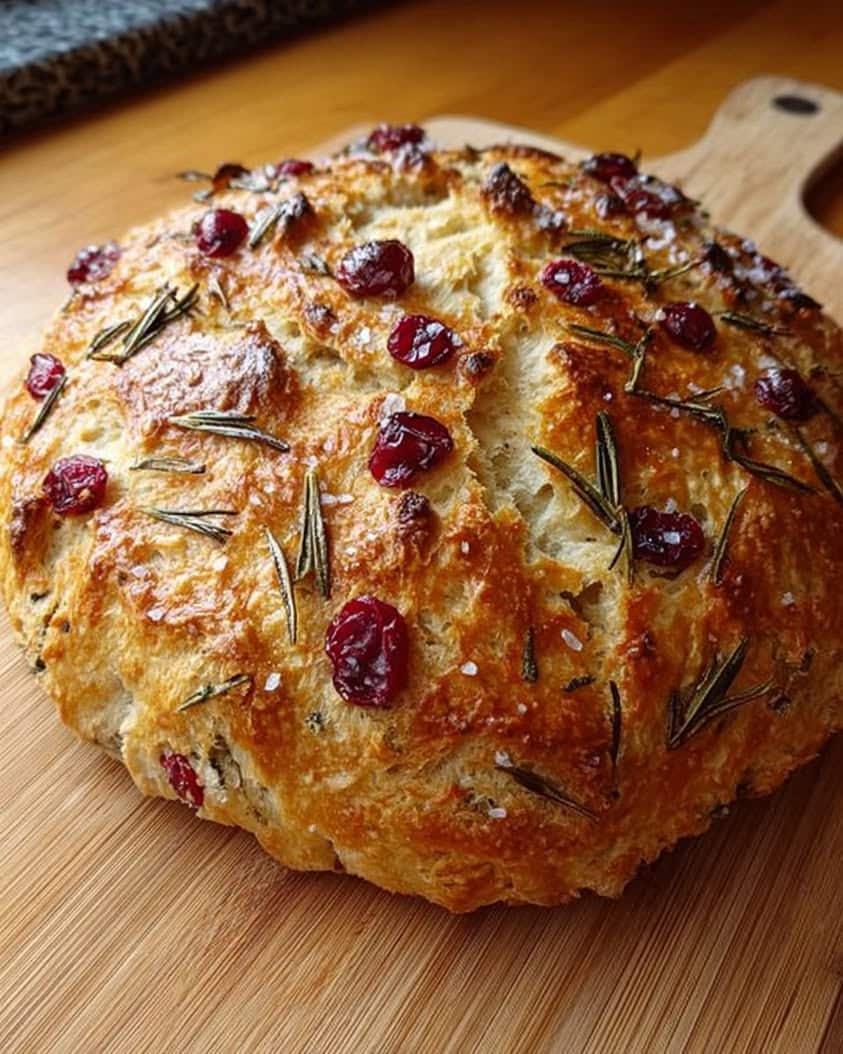
If you have ever felt intimidated by the idea of baking bread from scratch, this No-Knead Rosemary Cranberry Bread with Olive Oil and Sea Salt will change your mind forever. This loaf delivers a golden, crackly crust and a tender, open crumb without any kneading, proofing stress, or specialty equipment. You simply stir the ingredients together, let time do the work, and bake a beautiful artisan-style bread that looks like it came from a boutique bakery.
The flavor combination in this No-Knead Rosemary Cranberry Bread with Olive Oil and Sea Salt is genuinely unforgettable. Fresh rosemary brings a piney, woodsy aroma, while dried cranberries add bright pops of sweetness that balance the savory olive oil and flaky sea salt. Because the dough relies on a long, slow fermentation, the finished loaf develops a subtle tang and a depth of flavor that you cannot rush. Meanwhile, the olive oil keeps the interior soft and moist for days.
Whether you are a total beginner or a seasoned home baker, this No-Knead Rosemary Cranberry Bread with Olive Oil and Sea Salt fits beautifully into your routine. You can mix the dough in the evening, let it rest overnight, and bake fresh bread by lunchtime the next day. Therefore, this recipe works perfectly for holiday tables, weekend brunches, soup suppers, and everyday sandwiches. In short, it is the kind of dependable recipe you will return to again and again.
Quick Recipe Highlights
- Flavor Profile: This bread balances earthy rosemary, sweet-tart cranberries, fruity olive oil, and a savory finish from flaky sea salt. Each bite shifts between herbal, bright, and rich notes.
- Texture: Expect a crisp, crackly crust that gives way to a soft, airy interior crumb. The dried cranberries add pleasant chewiness throughout.
- Aroma: Fresh rosemary dominates the aroma as the loaf bakes, followed by warm bread notes and a hint of olive oil. Your kitchen will smell incredible.
- Visual Appeal: The loaf emerges with a deep golden-brown crust, bursts of ruby-red cranberries, and a light dusting of sea salt on top. It photographs beautifully for sharing.
- Skill Level Needed: This recipe suits absolute beginners because it requires no kneading, no stand mixer, and no fancy shaping skills. You only need a bowl, a spoon, and patience.
- Special Equipment: A Dutch oven produces the best crust, but any heavy covered pot works well. You also need parchment paper, a mixing bowl, and a kitchen scale for accuracy.
Recipe Overview
- Difficulty Level: This No-Knead Rosemary Cranberry Bread with Olive Oil and Sea Salt earns an easy rating because the dough does most of the work while you wait. The only real skills involved are stirring and gentle shaping. Beginners routinely succeed on their first attempt.
- Category: This loaf works as an artisan bread, a holiday side, a breakfast toast, or a sandwich base. It fits breakfast, lunch, dinner, and snack categories equally well.
- Cuisine: The recipe draws on European artisan bread traditions, particularly rustic country loaves from the Mediterranean. Rosemary and olive oil reflect Italian and Provencal influences, while cranberries add an American twist. The no-knead method itself popularized in modern American home baking.
- Cost: You can bake this loaf for roughly three to four dollars using pantry staples. Flour, yeast, salt, and water cost very little, and rosemary plus cranberries add modest expense. Compared to bakery artisan bread at six to nine dollars, this recipe saves real money.
- Season: This bread shines in autumn and winter when cranberries and rosemary feel festive and cozy. However, you can bake it year-round because dried cranberries stay available. It pairs especially well with fall soups and winter holiday meals.
- Occasion: Serve this loaf for Thanksgiving, Christmas, Easter brunch, dinner parties, or casual soup nights. It also makes a thoughtful homemade gift wrapped in linen. Any gathering that welcomes fresh bread suits this recipe.
Why You’ll Love This Recipe
Taste and texture make this No-Knead Rosemary Cranberry Bread with Olive Oil and Sea Salt a standout. The crust shatters slightly when you slice it, revealing a chewy, tender interior. Sweet cranberries contrast beautifully with herbal rosemary, and the sea salt finishes each bite with a clean savory note. Because the olive oil carries flavor through the crumb, every slice tastes rich without feeling heavy.
Convenience sets this recipe apart from traditional bread baking. You mix everything in one bowl with a spoon, then walk away for twelve to eighteen hours. There is no kneading, no second rise marathon, and no complicated shaping. Consequently, you gain fresh artisan bread with about fifteen minutes of hands-on effort, which makes weeknight baking genuinely realistic.
Nutritional advantages matter here too. Olive oil provides heart-healthy monounsaturated fats, while rosemary contributes antioxidants. Cranberries add fiber and natural sweetness with less sugar than many add-ins. Because you control the ingredients, you avoid preservatives and excess sodium found in commercial bread. Meanwhile, the simple ingredient list keeps the loaf approachable for many diets.
Social and entertaining value runs high with this loaf. Fresh bread on the table signals warmth and generosity, and guests always notice. You can slice it on a board with olive oil for dipping, or serve it alongside cheese and charcuterie. Furthermore, the rosemary and cranberry combination feels festive, so it elevates holiday gatherings without extra work.
Cost-effectiveness and accessibility complete the appeal. The ingredients live in your pantry, and none require a specialty store trip. You need no stand mixer or bread machine, only a bowl and a Dutch oven. As a result, this No-Knead Rosemary Cranberry Bread with Olive Oil and Sea Salt welcomes bakers at every budget and skill level.
Historical Background and Cultural Significance
The no-knead bread method gained massive popularity in the mid-2000s when home bakers discovered that time replaces kneading. A long, slow fermentation develops gluten naturally, so the dough strengthens without physical work. This discovery democratized artisan bread baking and inspired countless home bakers to try rustic loaves for the first time.
Rosemary and olive oil carry deep Mediterranean roots. Bakers in Italy, Greece, and southern France have folded herbs and olive oil into bread for centuries. These loaves historically accompanied meals as a staple rather than a side. Therefore, adding rosemary connects this recipe to a long culinary tradition of herb-infused country bread.
Cranberries bring distinctly North American history to the loaf. Indigenous communities used wild cranberries for food, medicine, and dye long before European settlers arrived. Today, dried cranberries appear in everything from salads to stuffings. Combining them with Mediterranean bread traditions creates a bridge between old-world technique and new-world flavor.
Regional variations of this style of bread appear across Europe and America. Some bakers add walnuts, others swap in thyme or orange zest. The core method remains constant, while the flavor profile adapts to local seasons and tastes. Consequently, this recipe represents a living tradition that invites personal interpretation.
Ingredient Deep Dive
Bread flour forms the backbone of this No-Knead Rosemary Cranberry Bread with Olive Oil and Sea Salt. Its higher protein content creates a stronger gluten network during the long fermentation. Historically, millers developed bread flour to support hearty European loaves. Choose a reputable brand with at least twelve percent protein, and store it in an airtight container away from heat. You can substitute all-purpose flour, though the crumb will be slightly less open and chewy.
Instant yeast makes this recipe reliable and forgiving. Unlike active dry yeast, instant yeast requires no proofing in water, so you simply whisk it into the flour. Home bakers embraced instant yeast because it streamlines the process and stays stable in storage. Keep yeast sealed in the refrigerator for long-term freshness, and check the expiration date before baking. If you prefer active dry yeast, proof it first in the warm water with a pinch of sugar.
Fresh rosemary delivers the signature aroma of this loaf. This woody Mediterranean herb has symbolized remembrance and hospitality for centuries. Select bright green sprigs with flexible needles and a strong scent, then strip the leaves and chop them finely. Store rosemary wrapped loosely in the refrigerator, or freeze chopped leaves for months. In a pinch, dried rosemary works at one-third the quantity, though fresh offers superior flavor.
Dried cranberries add sweetness, acidity, and color to every slice. These ruby-red berries became a pantry staple through the cranberry industry of the northeastern United States. Choose unsweetened or lightly sweetened dried cranberries, and plump them briefly in warm water if they feel leathery. Keep them in a sealed bag in a cool cupboard, and swap in raisins, cherries, or chopped apricots if you prefer.
Extra virgin olive oil enriches this No-Knead Rosemary Cranberry Bread with Olive Oil and Sea Salt. The oil contributes fruity notes, keeps the crumb moist, and helps the crust brown evenly. Mediterranean cultures have pressed olives for oil for thousands of years, and quality varies widely. Select a fresh, peppery extra virgin oil you enjoy tasting, store it away from light, and use it within a year of opening. A milder oil also works if you prefer subtle flavor.
Flaky sea salt finishes the loaf and elevates every flavor. Salt strengthens gluten, controls fermentation, and prevents blandness, while flaky salt on top adds a delicate crunch. Sea salt production dates back thousands of years across coastal cultures. Choose coarse flakes such as Maldon for the topping and fine sea salt for the dough, and keep both dry in sealed jars. Kosher salt substitutes well in the dough, but the flaky finish is worth seeking out.
Common Mistakes to Avoid
- Using water that is too hot kills the yeast and prevents rising. Aim for lukewarm water around one hundred degrees Fahrenheit, which feels barely warm to the touch.
- Rushing the fermentation produces dense, flavorless bread. Give the dough the full twelve to eighteen hours so gluten develops and flavor deepens properly.
- Skipping the preheated Dutch oven costs you the crackly crust. The hot pot traps steam and creates bakery-style browning, so preheat it fully before loading the dough.
- Over-flouring the dough during shaping makes the loaf heavy. Keep your hands and surface lightly dusted, and resist adding flour beyond what the dough needs.
- Under-salting the dough leads to flat flavor that no topping can fix. Measure the salt carefully and taste a pinch of dough to confirm seasoning.
- Opening the oven early releases steam and drops the temperature. Keep the lid on for the first thirty minutes, then uncover and finish baking without peeking.
- Cutting the loaf while hot smashes the crumb structure. Wait at least thirty minutes so steam escapes and the interior sets properly.
- Storing bread in plastic traps moisture and softens the crust. Keep the loaf cut-side down on a board or wrapped in a clean towel instead.
- Ignoring dough temperature during cold months slows fermentation dramatically. If your kitchen runs cold, place the bowl in an oven with the light on or use slightly warmer water.
- Packing the dough too tightly during shaping creates dense spots. Handle the dough gently and preserve as much air as possible.
Essential Techniques
The overnight fermentation is the heart of this No-Knead Rosemary Cranberry Bread with Olive Oil and Sea Salt. Time allows enzymes to break down starches and gluten to develop without kneading. Master it by mixing thoroughly, covering the bowl, and leaving it at cool room temperature for twelve to eighteen hours. You know it is ready when the surface bubbles and the dough has doubled with a domed top and slightly sour aroma.
Gentle shaping determines the loaf’s final structure. Instead of punching down, you fold the dough onto itself a few times to build tension. Work on a lightly floured surface, flour your hands, and use quick, confident folds. The dough should feel soft, slightly tacky, and hold a rough round shape after shaping. Avoid overworking, because excessive handling deflates the gas you worked all night to create.
Baking in a preheated Dutch oven creates the signature crust. The sealed pot traps steam from the dough, which keeps the crust supple while the loaf expands. Then, removing the lid lets the crust brown and crisp. Preheat the pot for at least thirty minutes at four hundred fifty degrees, use parchment to lower the dough safely, and watch for deep golden color before removing the loaf.
The final rest after baking protects the crumb. Bread continues cooking as it cools, and slicing too early releases steam that leaves gummy texture. Therefore, transfer the loaf to a rack and wait at least thirty minutes, ideally an hour. You should hear gentle crackling as the crust cools, a sign of a well-baked artisan loaf.
Pro Tips for Perfect No-Knead Rosemary Cranberry Bread with Olive Oil and Sea Salt
Weigh your ingredients with a kitchen scale for consistent results every time. Flour settles differently in measuring cups, so weight eliminates guesswork and keeps hydration accurate. This single habit improves bread more than any other change.
Use filtered water if your tap water tastes strongly of chlorine. Off flavors in water carry straight into the dough and can inhibit yeast activity. Filtered or bottled water keeps the flavor clean and fermentation healthy.
Plump dried cranberries in warm water for ten minutes and pat them dry before folding them in. This step prevents dry, hard berries and keeps them from stealing moisture from the crumb. Coating them lightly in flour also stops them from sinking.
Reserve a tablespoon of olive oil to brush the dough before the final rise. This small step encourages even browning and adds a glossy sheen. Do not skip it if you want a bakery-style finish.
Score the top of the loaf with a sharp knife or lame right before baking. Scoring guides expansion and prevents unpredictable tears. A simple cross or single slash looks elegant and functions reliably.
Let the dough come to room temperature for thirty minutes before baking in cold weather. Cold dough slows oven spring and produces a tighter crumb. A brief warm-up restores flexibility and improves rise.
Check the loaf at thirty-five minutes and rotate the pot if your oven runs uneven. Even browning matters for both appearance and flavor. Add five to ten minutes if the crust looks pale.
Cool the loaf completely before wrapping it for storage. Trapping warmth creates condensation and sogginess. Patience here preserves the crust you worked so hard to build.
Variations and Adaptations
Regional variations let you travel with flavor while keeping the method intact. Try Italian-inspired additions such as chopped Kalamata olives and oregano, or French-style versions with thyme and Gruyere. A Greek direction might include feta crumbles and dill. Each version keeps the same fermentation and baking steps, so you gain confidence while exploring new tastes.
Seasonal adaptations keep this No-Knead Rosemary Cranberry Bread with Olive Oil and Sea Salt fresh all year. In autumn, add diced apple and cinnamon for a harvest loaf. During spring, fold in lemon zest and chives for a lighter profile. Summer versions might include sun-dried tomatoes and basil, while winter welcomes orange zest and toasted walnuts.
Dietary modifications make the recipe flexible for different households. Use certified gluten-free flour blends marked for bread baking, and add a teaspoon of psyllium husk for structure. Vegan bakers already enjoy this loaf because it contains no dairy or eggs. For whole-grain preferences, swap half the bread flour for whole wheat and increase water slightly.
Flavor variations range from sweet to savory with minimal effort. Add honey and toasted pecans for a breakfast loaf, or fold in roasted garlic and black pepper for a savory dinner bread. A citrus version with orange zest and dried cherries feels festive. Adjust add-ins to about one cup total to protect the crumb structure.
Texture modifications suit different preferences. For a softer crust, bake the loaf uncovered on a sheet pan instead of in a Dutch oven. For extra chew, substitute bread flour entirely and extend fermentation by two hours. A sprinkle of cornmeal under the dough adds rustic crunch.
Presentation alternatives help the same recipe serve different tables. Bake the dough in a loaf pan for sandwich slices, or divide it into rolls for dinner parties. A round boule suits a centerpiece, while an oval batard fits a crowded holiday table. Shape matters less than the bake, so choose what serves your occasion.
Serving and Presentation Guide
Plating techniques matter when you serve this No-Knead Rosemary Cranberry Bread with Olive Oil and Sea Salt. Slice thick rounds on a wooden board and arrange them slightly overlapping for abundance. Add a small bowl of olive oil with cracked pepper and a sprig of rosemary beside the bread. This simple setup looks polished yet effortless.
Garnishing ideas enhance the loaf’s natural beauty. A light sprinkle of flaky sea salt and a few rosemary sprigs on top of the loaf before baking creates a bakery look. After baking, brush the crust with olive oil and scatter fresh rosemary leaves for color. These touches take seconds but elevate presentation.
Traditional accompaniments pair naturally with this bread. Serve it alongside soups such as minestrone, butternut squash, or lentil. It also partners beautifully with roasted meats, holiday stuffings, and cheese boards featuring aged cheddar or brie. Because the bread carries rosemary and cranberry, it complements both savory and sweet spreads.
Modern serving suggestions expand its role beyond the bread basket. Toast slices and top them with ricotta, honey, and cracked pepper for an appetizer. Use thick slices for turkey sandwiches with cranberry sauce the day after Thanksgiving. Cubes of this bread also make exceptional croutons for winter salads.
Temperature considerations affect the eating experience. Serve the bread slightly warm for the best texture, ideally within a few hours of baking. Reheat slices in a toaster oven rather than a microwave to protect the crust. Room temperature works fine for sandwiches and cheese boards.
Portion control tips help at gatherings. Slice thinner rounds for large crowds so guests can sample several items. For family dinners, thicker slices feel generous and satisfying. Keep extra slices wrapped so the second round stays fresh.
Wine and Beverage Pairing
Wine pairings with this No-Knead Rosemary Cranberry Bread with Olive Oil and Sea Salt should match its herbal and fruity notes. A crisp Sauvignon Blanc brightens the rosemary, while a light Pinot Noir complements the cranberry sweetness. Sparkling wine works beautifully for celebrations and cuts through the olive oil richness. Avoid heavily oaked wines because they overpower the delicate herb flavors.
Non-alcoholic alternatives include sparkling water with lemon, apple cider, or a rosemary-infused mocktail. Cranberry juice spritzers echo the loaf’s fruit notes and feel festive. Iced tea with orange slices offers a refreshing option for warm weather gatherings.
Coffee and tea pair surprisingly well with this bread. A medium roast coffee balances the savory rosemary and sweet cranberries at breakfast. Earl Grey tea adds bergamot brightness that mirrors the fruit. Herbal teas such as chamomile or rooibos provide a gentle evening pairing.
Temperature considerations matter for beverages. Chill white wines and sparkling options to fifty degrees Fahrenheit, and serve reds slightly below room temperature. Warm cider and tea feel cozy with autumn slices. Match the drink temperature to the season and the meal.
Serving suggestions complete the pairing experience. Offer glasses alongside a cheese board and sliced bread so guests can mix and match. Set out water carafes so palates stay refreshed between bites. A well-considered beverage table turns simple bread into an event.
Storage and Shelf Life
Storage methods determine how long your loaf stays enjoyable. Keep the cooled loaf cut-side down on a wooden board and cover it with a clean kitchen towel. This approach preserves the crust for up to two days. For longer storage, wrap the whole loaf tightly in plastic after day two, accepting a softer crust.
Temperature requirements favor room temperature storage over refrigeration. Cold temperatures accelerate staling and make the crumb dry. Store the loaf in a cool, dry spot away from direct sun. Only refrigerate if your kitchen stays hot and humid.
Container recommendations include bread boxes, paper bags, and linen wraps. Paper bags breathe and protect the crust better than plastic. Linen bread bags offer an attractive, reusable option. Avoid sealed plastic containers for the first day because they trap moisture.
Signs of spoilage appear as fuzzy mold spots, sour off-odors, or sticky surfaces. Check the loaf daily and remove any suspicious slices immediately. Properly stored bread lasts three to four days at room temperature. Mold grows faster in humid conditions, so watch closely in summer.
Reheating instructions restore near-fresh texture. Warm slices in a toaster oven at three hundred fifty degrees for five minutes. Sprinkle with water before reheating to revive the crust. A brief oven refresh works for half loaves too.
Freezing guidelines extend shelf life to three months. Slice the loaf first, wrap tightly in plastic, then place in a freezer bag. Thaw slices at room temperature or toast them directly from frozen. Freezing whole loaves also works well when wrapped in two layers.
Make Ahead Strategies
A preparation timeline makes this No-Knead Rosemary Cranberry Bread with Olive Oil and Sea Salt stress-free. Mix the dough at eight in the evening, let it ferment overnight, and shape it the next morning. Bake by midday and cool before lunch. This schedule suits busy weekends and holiday preparations.
Storage between steps protects quality at every stage. After fermentation, refrigerate the dough for up to three days before baking. The cold slows fermentation and deepens flavor. Bring the dough to room temperature for thirty minutes before shaping.
Quality impact assessment shows minimal loss with make-ahead steps. Overnight fermentation improves flavor rather than harming it. Shaped dough held in the refrigerator for a day bakes nearly identically. Only extended storage beyond three days risks over-fermentation.
Assembly tips help when you bake for events. Mix and bake the loaf a day before serving, then refresh it in a warm oven before the meal. Slice just before guests arrive to protect the crust. These small steps keep the bread tasting fresh.
Reheating guidelines for make-ahead loaves matter for texture. Wrap the loaf in foil and warm at three hundred degrees for ten minutes. Remove foil for the last five minutes to crisp the crust. Avoid microwaving whole loaves because it toughens the crumb.
Fresh element additions bring make-ahead bread back to life. Brush the crust with olive oil and sprinkle fresh rosemary after reheating. Serve with fresh butter or flavored oil. These touches restore the just-baked feeling.
Scaling Instructions
Halving the recipe works smoothly for smaller households. Use five hundred grams of flour, one and a quarter teaspoons of instant yeast, and ten grams of salt. Reduce the water proportionally and keep the same fermentation time. Bake in a smaller pot or on a sheet pan.
Doubling or tripling the recipe supports holidays and gift baking. Mix the dough in a large container with room to triple in volume. Ferment in a cool spot and divide the dough before shaping. Bake loaves in batches so the oven stays hot.
Equipment adjustments matter when scaling. A large Dutch oven fits doubled dough only if you divide it into two loaves. Sheet pans work well for multiple loaves, though the crust will be slightly softer. Use parchment to move dough safely.
Timing modifications keep scaled batches consistent. Doubled dough needs roughly the same fermentation time, though very large batches may run thirty minutes longer. Rotate pans halfway through baking for even color. Check each loaf individually before removing.
Storage considerations multiply with larger batches. Freeze extra loaves sliced and wrapped for future meals. Share fresh loaves with neighbors or freeze half the batch. Label bags with dates for easy rotation.
Nutritional Deep Dive
The macro breakdown of this No-Knead Rosemary Cranberry Bread with Olive Oil and Sea Salt looks moderate and balanced. Each slice provides roughly one hundred eighty calories, thirty grams of carbohydrate, four grams of protein, and five grams of fat. Olive oil contributes most of the fat, while flour supplies carbohydrates and some protein. Cranberries add a small amount of sugar and fiber per slice.
Micronutrient analysis reveals useful contributions. Olive oil provides vitamin E and polyphenols, rosemary adds antioxidants, and cranberries contribute vitamin C and fiber. Bread flour offers B vitamins and iron. These nutrients support everyday wellness without turning bread into a health food claim.
Health benefits center on the Mediterranean-style ingredients. Monounsaturated fats from olive oil support heart health when part of a balanced diet. Antioxidants from rosemary and cranberries help the body manage oxidative stress. Fiber from cranberries and flour supports digestion.
Dietary considerations matter for some eaters. This bread contains gluten and is not suitable for celiac disease unless made with certified gluten-free flour. It is naturally dairy-free and vegan, which suits many diets. Those watching sodium should moderate the added salt.
Portion analysis guides sensible serving sizes. One thick slice alongside soup or salad makes a balanced meal component. Two slices fit a sandwich or toast breakfast. Adjust portions with spreads and toppings in mind.
Weight management tips emphasize balance over restriction. Pair bread with protein and vegetables to slow digestion. Choose olive oil over butter for heart-healthier fats. Enjoy the bread mindfully, and savor its flavor rather than treating it as forbidden.
Dietary Adaptations
Gluten-free versions require a certified gluten-free bread flour blend and a binder such as psyllium husk. Use one tablespoon of psyllium per five hundred grams of flour and add extra water. Fermentation time shortens to about four hours because gluten-free doughs behave differently. Bake in a smaller pot and cool completely before slicing.
Dairy-free eaters already enjoy this recipe because it contains no milk or butter. Olive oil replaces butter entirely, which makes the loaf naturally dairy-free. Check that add-ins such as dried cranberries contain no dairy cross-contamination. Serve with dairy-free spreads.
Vegan bakers find this No-Knead Rosemary Cranberry Bread with Olive Oil and Sea Salt perfectly suited to their diet. The recipe contains no eggs, honey, or animal products. Sugar in sweetened cranberries is vegan, and yeast is a fungus rather than an animal product. No substitutions are needed.
Low-carb adaptations exist, though bread remains carbohydrate-rich by nature. Reduce the flour slightly and add flax meal for structure. Slice thinner portions to manage carbs per serving. These loaves will be denser, so adjust expectations.
Keto versions require major changes and specialized ingredients such as almond flour and vital wheat gluten. Expect a different texture and shorter fermentation. Follow a tested keto bread formula rather than adapting this one directly. The rosemary and cranberry flavors still translate beautifully.
Paleo approaches face challenges because grains and yeast are excluded. A paleo swap might use cassava flour and a sourdough starter, though results differ noticeably. Treat paleo versions as separate recipes. The flavor concept still works with alternative flours.
Low-FODMAP eaters should consider portion sizes because wheat contains fructans. Sourdough fermentation reduces some FODMAPs, and a long ferment helps further. Limit servings to one slice and monitor tolerance. Cranberries are low-FODMAP at typical amounts.
Other specific diets may need small tweaks. Nut-free households skip pecan variations, and sesame-free bakers avoid seed toppings. Always read labels on add-ins. The core recipe suits most eating styles with minimal adjustment.
Troubleshooting Guide
Texture issues often trace to fermentation or hydration. Dense bread usually means under-fermentation or too much flour, so extend the rest time and measure by weight. Gummy crumb means slicing too early, so cool fully. Crumbling slices signal over-fermentation, so shorten the time or cool the dough.
Flavor balance problems come from salt and add-in ratios. Bland bread needs more salt or a longer ferment. Overly sour notes mean fermentation ran too long, so reduce hours in warm kitchens. Too-sweet loaves suggest cutting back on sweetened cranberries.
Temperature problems affect rise and crust. Cold kitchens slow fermentation, so use warm water and a warm spot. Ovens that run hot burn the bottom, so place a sheet pan under the Dutch oven. Uneven browning calls for rotation and an oven thermometer.
Equipment challenges arise with pots and pans. A Dutch oven that is too small forces the dough upward, so choose a five to six quart pot. Pots without lids block the steam stage, so cover with foil. Parchment paper makes transferring dough safer and easier.
Ingredient substitutions change results predictably. Active dry yeast needs proofing, so dissolve it in water first. Dried rosemary is stronger, so use a third of the amount. All-purpose flour works, though the crumb will be slightly tighter.
Timing concerns often mean overthinking the schedule. The dough tolerates a wide window, so flexibility is built in. Check for doubled volume and bubbling rather than watching the clock. When in doubt, give it another hour rather than rushing.
Recipe Success Stories
Community feedback for this No-Knead Rosemary Cranberry Bread with Olive Oil and Sea Salt has been overwhelmingly positive. Readers report first-time success and share photos of gorgeous golden loaves. Many say the recipe replaced their store-bought bakery habit. Beginners especially appreciate the forgiving timeline.
Variation successes appear in reader comments regularly. One baker added toasted walnuts and called it the best bread she ever made. Another swapped cranberries for dried cherries with orange zest for a holiday loaf. Savory versions with olives and thyme earned praise at dinner parties.
Adaptation stories show the recipe’s flexibility. Gluten-free bakers shared successful results with tested blends. Vegan households appreciate a holiday bread that needs no substitutions. Busy parents love mixing the dough after bedtime and baking the next day.
Reader suggestions improved the recipe over time. Many recommend weighing ingredients and plumping cranberries first. Others suggest baking in a preheated cast iron pot for the best crust. These community tips now guide new bakers.
Photography tips help readers capture the loaf’s beauty. Natural window light flatters the golden crust, and a wooden board adds warmth. Slice one piece to show the crumb and cranberry bursts. A rosemary sprig beside the loaf completes the scene.
Frequently Asked Questions
Can I make this No-Knead Rosemary Cranberry Bread with Olive Oil and Sea Salt without a Dutch oven? Yes, you can bake it on a preheated sheet pan or in a covered casserole dish. A Dutch oven produces the crispiest crust, but any heavy pot with a lid works well. Adjust baking time by a few minutes if your pot is thinner.
How long should the dough ferment? Ferment for twelve to eighteen hours at cool room temperature. The dough should double in size and show bubbles on top. In warm kitchens, twelve hours usually suffices, while cold kitchens may need the full eighteen.
Can I use fresh cranberries instead of dried? Fresh cranberries contain too much moisture and can make the crumb gummy. Dried cranberries work best because they stay suspended and add concentrated sweetness. If you use fresh, chop them finely and reduce the water slightly.
Why did my bread turn out dense? Dense bread usually results from under-fermentation or excess flour. Give the dough more time to rise and measure ingredients by weight. Also avoid adding flour during shaping unless the dough truly sticks.
Can I skip the rosemary? Absolutely, swap rosemary for thyme, sage, or dill depending on your menu. Herbs change the flavor profile but not the method. Use the same quantity and chop finely for even distribution.
How do I store leftover bread? Keep the loaf cut-side down on a board covered with a towel for two days. For longer storage, wrap tightly and freeze slices. Reheat in a toaster oven to restore the crust.
Is this bread vegan? Yes, this recipe contains no eggs, dairy, or honey, so it suits vegan diets. Check labels on dried cranberries to confirm no added dairy ingredients. The olive oil provides all the fat.
Can I halve the recipe? Yes, halve all ingredients and keep the same fermentation time. Bake in a smaller pot or on a sheet pan. Watch the loaf closely because smaller loaves bake faster.
What flour works best? Bread flour gives the best rise and chew because of its higher protein. All-purpose flour works with slightly denser results. Whole wheat flour adds flavor but requires extra water.
Why is my crust soft? A soft crust often means the loaf cooled in a humid spot or was stored in plastic too soon. Bake uncovered in the final stage and cool on a rack. Store in paper rather than plastic.
Can I add cheese to the dough? Yes, up to three quarters of a cup of shredded hard cheese such as Parmesan folds in nicely. Add it during shaping to preserve the crumb. Cheese increases browning, so check the crust earlier.
How do I know when the bread is done? The loaf should sound hollow when tapped on the bottom. The crust turns deep golden brown, and an instant-read thermometer registers about two hundred degrees Fahrenheit. Cool before slicing.
Additional Resources
Related recipes extend your bread baking journey beyond this No-Knead Rosemary Cranberry Bread with Olive Oil and Sea Salt. Try a classic no-knead country loaf to master the basic method. Explore a honey whole wheat version for weekday sandwiches. A cranberry orange loaf makes a festive variation for holiday mornings.
Technique guides deepen your understanding of fermentation and shaping. Articles on autolyse, oven spring, and steam baking explain the science behind great bread. Videos showing gentle shaping help beginners visualize the process. Bookmark these resources for reference during your next bake.
Ingredient information helps you shop wisely. Guides to flour protein levels, yeast types, and olive oil quality make selection easier. Learn how sea salt differs from table salt and why flaky finishing salt matters. Understanding ingredients builds confidence and improves results.
Equipment recommendations simplify your setup. A five to six quart Dutch oven Print
No-Knead Rosemary Cranberry Bread with Olive Oil & Sea Salt
- Total Time: 45 minutes
- Yield: 4
Description
A rustic no-knead bread infused with fresh rosemary and dried cranberries, finished with olive oil and a sprinkle of sea salt for a savory-sweet crust.
Ingredients
- 3 cups all-purpose flour
- 1 teaspoon active dry yeast
- 1 1/2 teaspoons sea salt
- 1 1/2 cups warm water (about 110°F)
- 2 tablespoons olive oil
- 1 tablespoon chopped fresh rosemary
- 3/4 cup dried cranberries
- Extra olive oil for brushing
- Coarse sea salt for sprinkling
Instructions
- In a large bowl, whisk together flour, yeast, and sea salt. Add warm water and olive oil, and stir until a sticky dough forms. Fold in rosemary and cranberries until evenly distributed. Cover with plastic wrap and let rise at room temperature for 12-18 hours.
- Preheat oven to 450°F (230°C) with a Dutch oven inside. Turn dough onto a floured surface, shape into a ball, and let rest for 30 minutes.
- Carefully place dough in hot Dutch oven, brush with olive oil, and sprinkle with coarse sea salt. Cover and bake for 30 minutes, then uncover and bake 10-15 minutes more until golden brown. Cool on a wire rack before slicing.
Notes
You can customize the seasonings to taste.
- Prep Time: 15 minutes
- Cook Time: 30 minutes
- Method: Main
- Cuisine: American