Baked Spinach Mushroom Quesadillas: A Crispy, Cheesy Delight
If you have been searching for a fuss-free dinner that delivers restaurant-quality flavor, these Baked Spinach Mushroom Quesadillas deserve a spot on your weekly menu. Instead of standing over a hot skillet flipping individual tortillas, you simply layer everything onto a sheet pan and let the oven do the heavy lifting. The result is a golden, crunchy exterior wrapped around a warm, cheesy filling studded with earthy mushrooms and vibrant spinach. This recipe proves that wholesome, vegetable-forward cooking can still feel indulgent.
These Baked Spinach Mushroom Quesadillas come together with just a handful of everyday ingredients, which makes them ideal for busy weeknights. You likely already have tortillas, cheese, and a few pantry staples on hand. The mushrooms bring a savory, meaty depth that satisfies even the pickiest eaters, while the spinach adds color and a subtle freshness. Because you bake rather than fry, you use far less oil and you can prepare the entire batch at once. That means less cleanup and more time at the table with the people you love.
What makes this version stand out is the balance of textures and flavors. A blend of melty cheese holds everything together and creates those irresistible crispy edges where the tortilla meets the pan. A pinch of garlic powder and smoked paprika deepens the umami of the mushrooms. Whether you serve these quesadillas as a quick family dinner, a game-day snack, or a meatless Monday staple, they deliver big flavor with minimal effort. Once you try baking your quesadillas, you may never go back to the stovetop method again.
Quick Recipe Highlights
- Flavor Profile: Savory sauteed mushrooms and garlicky spinach pair with nutty melted cheese for a rich, satisfying taste. A hint of smoked paprika adds warmth without heat.
- Texture: A crisp, golden tortilla shell contrasts beautifully with the soft, gooey cheese and tender vegetables inside. Each bite offers a satisfying crunch followed by a creamy center.
- Aroma: The kitchen fills with the toasty scent of browning tortillas and garlic. Earthy mushroom notes and a whisper of smoked paprika make the whole house smell inviting.
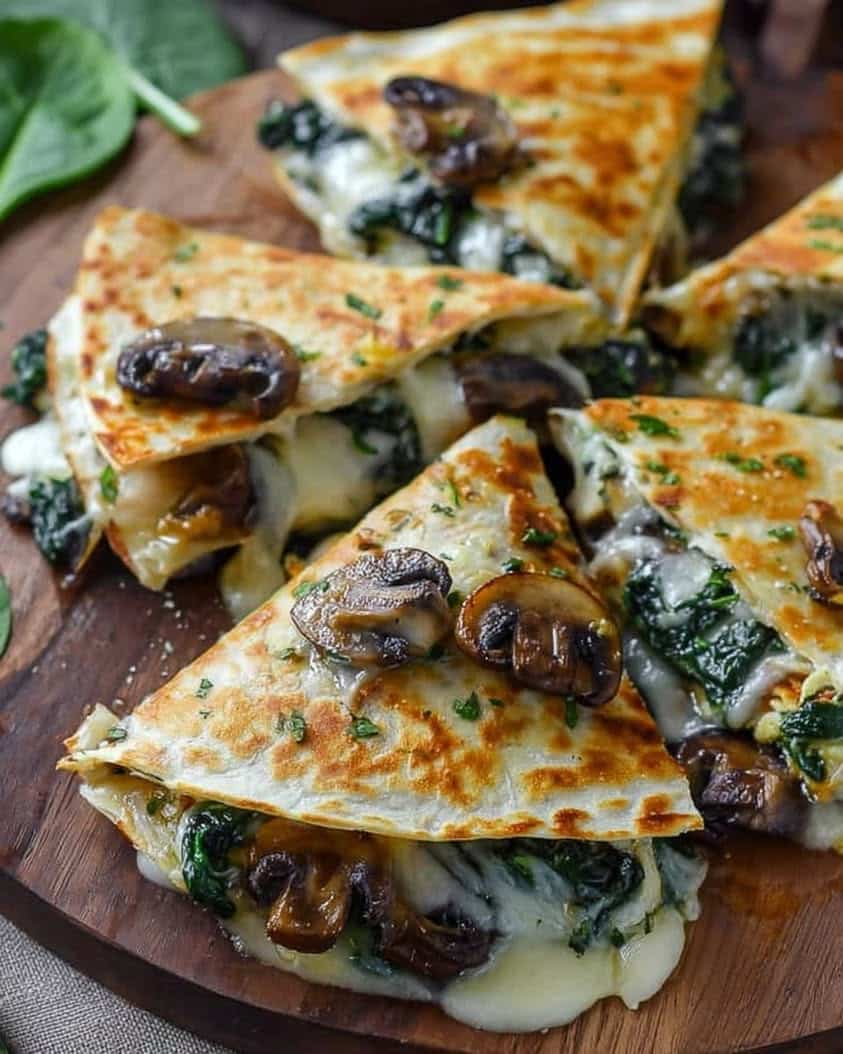
- Visual Appeal: Deep green spinach and browned mushrooms peek through melted cheese between perfectly toasted tortilla layers. A sprinkle of fresh cilantro on top adds a bright pop of color.
- Skill Level Needed: This recipe suits beginners and experienced cooks alike because it requires no flipping, no fancy knife work, and no precise timing. If you can saute vegetables and use an oven, you can master this dish.
- Special Equipment: You only need a sheet pan, parchment paper, and a skillet for the vegetables. A pizza cutter makes slicing clean and easy, though a sharp knife works just fine.
Recipe Overview
- Difficulty Level: I rate these Baked Spinach Mushroom Quesadillas as easy because the oven handles most of the work. The only real technique involves sauteing the mushrooms until their moisture releases, which takes about five minutes. You assemble the quesadillas flat on a sheet pan, so there is no risky flipping over an open flame. Even a first-time cook can produce a crispy, golden result.
- Category: This dish works as a main course for lunch or dinner and also shines as an appetizer cut into smaller wedges. It doubles as a meatless entree that satisfies vegetarians and omnivores alike. Serve it alongside soup or salad for a complete meal.
- Cuisine: These quesadillas draw from Mexican and Tex-Mex traditions, where quesadillas have long been a staple of casual cooking. The baked preparation reflects a modern American home-cooking approach that values convenience. The spinach and mushroom filling nods to Italian flavors, creating a friendly fusion that feels right at home in any kitchen.
- Cost: The entire recipe costs roughly six to eight dollars when you shop smart, depending on cheese variety and mushroom prices. Tortillas and frozen spinach keep the cost low, while fresh mushrooms add the most expense. Overall, it is a budget-friendly option that feeds a family without straining your wallet.
- Season: These quesadillas work year-round, but they shine in fall and winter when earthy mushrooms are at their peak. Fresh spinach stays available in every season, so you never have to wait for a specific harvest. Spring and summer versions pair nicely with a light side salad and fresh salsa.
- Occasion: Serve them for weeknight dinners, casual weekend lunches, or game-day gatherings where finger food wins. They also make a smart addition to potlucks and taco nights. Because they bake in a big batch, they suit parties and family meals with equal ease.
Why You’ll Love This Recipe
The taste and texture of these Baked Spinach Mushroom Quesadillas give you the best of both worlds. You get the crackly, golden crispness of a perfectly toasted tortilla without the greasy finish of pan-frying. Meanwhile, the filling stays warm and gooey because the oven heats everything evenly from all sides. The mushrooms soak up garlic and paprika, and the spinach wilts just enough to stay tender. Every bite balances crunch, creaminess, and savory depth, which keeps people coming back for a second and third wedge.
Convenience sets this recipe apart from traditional stovetop quesadillas. You assemble everything on one sheet pan and slide it into the oven, so you never babysit a skillet or flip individual tortillas. That hands-off approach frees you to set the table, toss a salad, or simply relax. Cleanup takes minutes because parchment paper catches the mess. For anyone juggling work, kids, and evening routines, this set-and-forget method removes the stress from dinner.
Nutritionally, these quesadillas deliver real value. Spinach brings iron, vitamin K, and folate, while mushrooms add B vitamins and antioxidants. Cheese contributes protein and calcium, and you control the amount so the dish stays balanced. Baking instead of frying cuts the added oil significantly. You end up with a meal that feels indulgent but supports a sensible eating pattern, especially when you pair it with a fresh side.
This recipe also shines as a social dish because it feeds a crowd and invites customization. Set out bowls of salsa, sour cream, avocado, and pickled jalapenos so guests build their own wedges. The sheet-pan format means you can bake two batches back to back without extra effort. Whether you host a casual movie night or a family game day, these quesadillas keep the mood relaxed and the plates full.
Finally, the cost-effectiveness makes this recipe a repeat performer in any household. Simple ingredients stretch far, and the vegetables bulk up the filling so you need less cheese. Tortillas last for weeks in the pantry, and frozen spinach costs pennies per serving. When grocery budgets tighten, this meal still delivers flavor, comfort, and nutrition without compromise. That combination of affordability and quality explains why so many home cooks keep this recipe in rotation.
Historical Background and Cultural Significance
The quesadilla traces its roots to Mexico, where cooks folded corn tortillas around cheese and heated them on a comal for centuries. The name combines queso, the Spanish word for cheese, with the suffix that suggests a small or folded treat. In central and southern Mexico, quesadillas traditionally featured corn masa and regional cheeses like Oaxaca. Street vendors and home cooks alike embraced the format because it turned simple staples into a warm, portable meal.
Regional Mexican cooking treats the quesadilla as a flexible canvas rather than a fixed recipe. In Mexico City, vendors stuff tortillas with squash blossoms, huitlacoche, or potatoes. In the northern states, flour tortillas and melted yellow cheese became common influences from cross-border exchange. That flexibility explains why vegetable fillings like spinach and mushrooms fit naturally into the tradition. Home cooks have always used whatever the market offered, and greens and fungi have long played a role in Mexican home cooking.
As quesadillas crossed into the United States, they adapted to American kitchens and tastes. Tex-Mex restaurants popularized flour tortillas and generous cheese blends, and weeknight cooks simplified the process further. The baked sheet-pan method emerged from that practical American instinct to feed families with less fuss. Over time, cooks began adding vegetables like spinach and mushrooms to lighten the dish and add nutrition, which brings us to the modern version you see here.
Today, the quesadilla holds a firm place in American home cooking and appears on menus from diners to upscale taquerias. The baked spinach mushroom variation reflects broader food trends toward plant-forward meals and hands-off cooking. It honors the original spirit of the quesadilla, which prizes flexibility and comfort above all else. When you bake a batch at home, you join a long tradition of cooks who turn humble ingredients into something warm and memorable.
Ingredient Deep Dive
Mushrooms: Mushrooms have fed humans for thousands of years, and cultures worldwide prize them for their earthy flavor and meaty texture. Ancient Romans and Chinese cooks both documented mushroom cultivation, and indigenous Mexican cooks gathered wild varieties long before Europeans arrived. Nutritionally, mushrooms deliver B vitamins, selenium, and antioxidants while staying low in calories. When shopping, choose firm, dry caps with no sliminess, and store them in a paper bag in the fridge so they breathe. If you dislike cremini, swap in white button mushrooms or meaty shiitakes for a deeper flavor.
Mushrooms also earn their place in this recipe because they brown beautifully and soak up seasoning. They release water as they cook, then reabsorb garlic, paprika, and butter, which concentrates their umami. That savory quality mimics meat and satisfies hearty appetites. Because mushrooms stay affordable and available year-round, they make an accessible addition to any quesadilla filling. Cooks who want a richer bite can mix in a handful of oyster mushrooms for contrast.
Spinach: Spinach originated in ancient Persia and traveled trade routes into China, Europe, and eventually the Americas. Cooks have long valued it for its quick cooking time and dense nutrients, including iron, vitamin K, and folate. For this recipe, fresh baby spinach works beautifully because it wilts fast and stays tender, though frozen spinach offers a budget-friendly substitute after you squeeze out excess water. Store fresh spinach in a sealed container with a paper towel to absorb moisture. If spinach is unavailable, kale or Swiss chard make sturdy, nutritious replacements.
Spinach also brings color and balance to the filling, cutting through the richness of melted cheese. Its mild, slightly earthy flavor pairs well with garlic and mushrooms without overpowering them. Because spinach shrinks dramatically when cooked, a large handful folds down into a modest pile, so do not fear using plenty. That volume collapse means you pack serious nutrition into every wedge. Home cooks appreciate how spinach turns a simple cheese quesadilla into a legitimate vegetable-forward meal.
Tortillas: Tortillas anchor the quesadilla and have sustained Mexican cooking for millennia, with corn versions dating back thousands of years and flour versions emerging in northern Mexico. Flour tortillas suit baked quesadillas because they crisp evenly and hold fillings without cracking. Choose eight-inch tortillas so the layers fit your sheet pan and slice cleanly. Store tortillas at room temperature in their original bag, and refresh stale ones in a warm oven for a minute. For gluten-free needs, reliable gluten-free flour tortillas work well, and corn tortillas offer a traditional alternative with a nuttier crunch.
Tortillas also determine the texture of the final dish, so quality matters more than you might expect. Thin flour tortillas crisp faster and shatter pleasantly, while thicker ones stay chewier. Read labels and pick a brand without excessive preservatives for the best flavor. Because tortillas act as both base and lid, they need to be pliable when you assemble the quesadillas so they do not tear. Letting them sit at room temperature for a few minutes solves most cracking issues.
Cheese: Cheese gives quesadillas their identity, and Mexican traditions favor melting cheeses like Oaxaca and Chihuahua. For baked quesadillas, a blend of mozzarella and Monterey Jack melts smoothly and browns nicely at the edges. Cheddar adds sharpness but can release oil, so blend it with a softer cheese for balance. Keep cheese refrigerated and grate it fresh for the creamiest melt. Dairy-free eaters can use a quality plant-based shred that melts well, and the dish still delivers that gooey center.
Cheese also contributes protein and calcium, which makes the meal more satisfying. Grating your own cheese avoids the anti-caking starches in pre-shredded bags, and it melts into a smoother layer. A moderate amount goes far because the vegetables bulk up the filling. If you watch sodium, choose a lower-sodium cheese and season the vegetables lightly. The cheese should complement the spinach and mushrooms rather than drown them.
Common Mistakes to Avoid
- Crowding the pan with too many quesadillas causes steam to build up, and the tortillas turn soggy instead of crisp. Leave an inch between each one so hot air circulates freely. Bake in batches if your pan feels full.
- Skipping the saute step leaves mushrooms watery, and that moisture soaks the tortillas during baking. Cook the mushrooms first until their liquid evaporates and they brown. This step takes five minutes and makes the difference between crisp and soggy.
- Overfilling the quesadillas makes them impossible to slice cleanly, and the filling spills out during baking. Keep the filling to a thin, even layer and resist the urge to pile it high. Less filling means a better seal and a cleaner bite.
- Using wet spinach straight from washing introduces excess moisture. Dry the leaves well or use a salad spinner before cooking. Wet greens steam the filling and soften the crust.
- Baking at too low a temperature dries out the tortillas before they brown. Use a hot oven around 425 degrees Fahrenheit so the exterior crisps quickly while the cheese melts. Check at the eight-minute mark to catch early browning.
- Forgetting to spray or line the pan causes sticking and torn tortillas. Parchment paper solves this problem entirely and speeds cleanup. A light spritz of cooking spray also works if you prefer direct pan contact.
- Adding cold cheese straight from the fridge to a cold tortilla slows melting and extends bake time. Grate cheese ahead and let it sit briefly at room temperature. The filling then melts evenly and the edges crisp on schedule.
- Slicing immediately after baking causes the cheese to ooze everywhere and the layers to slide apart. Rest the quesadillas for two minutes so the cheese sets slightly. Clean wedges follow every time.
- Ignoring seasoning in the vegetable layer leaves the filling flat. Salt the mushrooms during saute and add garlic powder and paprika so the flavor builds. Bland vegetables make bland quesadillas, even with good cheese.
- Reheating leftovers in the microwave destroys the crisp texture you worked for. Use the oven or a toaster oven to restore crunch. A skillet over medium heat also revives the crust in minutes.
Essential Techniques
Sauteing mushrooms correctly matters because mushrooms hold a surprising amount of water, and that water determines whether your filling tastes rich or bland. Start with a hot skillet and a modest amount of butter or oil, then add the mushrooms in a single layer. Resist stirring too often so the surfaces brown and develop flavor. When the mushrooms release their liquid, keep cooking until it evaporates and they squeak against the pan, which signals readiness. Visual cues include deepened color and shrunken volume, and tasting as you go ensures proper seasoning.
Wringing moisture from spinach keeps the filling from turning soupy, especially if you use frozen spinach. Thaw frozen spinach completely, then wrap it in a clean kitchen towel and squeeze hard until no more water drips out. For fresh spinach, saute it briefly, then drain and press it against a colander. This step takes two minutes but saves the entire dish from sogginess. You will know you succeeded when the spinach feels dry to the touch and holds together in clumps.
Layering the quesadilla determines how cleanly it slices and how evenly it bakes. Place the tortilla flat, then spread cheese on the bottom half so it acts as glue when melted. Add the vegetable filling in a thin layer, then top with more cheese so the tortilla adheres to the filling. Fold the empty half over the filled half and press gently. This cheese-sandwich approach keeps the layers locked and prevents spills.
Baking for crispness requires high heat and a watchful eye. A 425-degree oven browns the tortillas before the filling dries out. Bake on the middle rack and rotate the pan halfway through if your oven runs hot. Watch for golden edges and small bubbles on the surface, which signal that the tortilla has crisped. If the top browns too fast, tent the pan loosely with foil while the filling finishes melting.
Pro Tips for Perfect Baked Spinach Mushroom Quesadillas
Grate your cheese fresh instead of buying pre-shredded bags, because the starch coating on bagged cheese prevents smooth melting. Fresh grating takes three minutes and produces a creamier center. Use the large holes of a box grater for the best melt.
Salt the mushrooms at the start of sauteing and let them brown undisturbed for a few minutes. This technique builds a deep, savory crust that boosts the entire filling. Stirring too early cools the pan and steams the mushrooms instead of browning them.
Spray the tortillas lightly with cooking spray before baking, which accelerates browning without adding much oil. A light spritz on the outside creates a golden, crackly surface. Use an oil sprayer for even coverage instead of heavy aerosol bursts.
Warm your tortillas for twenty seconds in the microwave before assembling so they fold without cracking. This step matters most with older tortillas that have dried out in the pantry. A quick warm-up restores flexibility and prevents tears at the fold.
Cut the quesadillas with a pizza cutter while they are still slightly warm, which produces clean lines without tearing the filling. Press firmly and slice in one motion rather than sawing back and forth. Let the wedges rest briefly so the cheese sets.
Serve immediately after the two-minute rest so the crust stays crisp and the cheese stays gooey at the table. Hold finished pans in a low oven only if necessary, since extended warming softens the crust. Timing the bake to the moment of serving gives the best result.
Layer cheese on both the bottom and top of the vegetables, which creates a seal that holds the filling inside. This double layer also improves the cheese-to-filling ratio in every bite. The bottom cheese melts into the tortilla and locks it to the filling.
Variations and Adaptations
Regional variations offer endless ways to reshape this recipe. Mexican street-style versions use corn tortillas and Oaxaca cheese with a quick salsa verde of fresh tomatillos. Tex-Mex renditions lean on cheddar and Monterey Jack with pickled jalapenos and cumin. Italian-influenced cooks might fold in roasted red peppers and a touch of pesto. Each direction keeps the bake method intact while changing the flavor story entirely.
Seasonal adaptations let you follow the market and keep the dish fresh. Spring versions add sauteed asparagus or ramps alongside the spinach for a bright, grassy note. Summer batches feature fresh corn kernels and halved cherry tomatoes tucked between the cheese layers. Fall and winter call for roasted squash and sage, and the earthiness of mushrooms shines brightest in cooler months.
Dietary modifications make this recipe flexible for many eaters. Gluten-free flour tortillas work well and crisp the same way. Dairy-free cheese shreds melt acceptably at high heat, though a drizzle of olive oil on top helps mimic richness. Vegan cooks can skip cheese or use cashew-based queso and add extra mushrooms for substance.
Flavor variations range from smoky to bright with one or two extra ingredients. Add chipotle powder and smoked paprika for a warm, campfire profile. Stir a spoonful of pesto or sun-dried tomato paste into the filling for a Mediterranean spin. A squeeze of lime juice over the finished wedges wakes up every layer.
Texture modifications let you dial the dish toward crunch or cream. Add finely chopped water chestnuts for a crisp bite inside the melt. A sprinkle of crushed tortilla chips between the layers adds an unexpected crunch. For a softer experience, use a thicker tortilla and slightly less bake time.
Presentation alternatives suit any gathering. Cut wedges into small triangles for party platters, or serve whole folded halves on a dinner plate. A drizzle of crema and a scatter of pomegranate seeds turn this casual dish into a photo-ready plate. Stacked wedges with toothpicks become a fun appetizer for crowds.
Serving and Presentation Guide
Plating technique matters even for casual food like quesadillas. Arrange wedges slightly overlapping on a warm platter so the cheese stays soft and the crust stays crisp. Drizzle a thin line of crema or drizzle of salsa across the top for a polished look. Wipe the plate rim clean so the presentation feels intentional.
Garnishing ideas should add color and freshness without overwhelming the dish. Fresh cilantro leaves, thinly sliced radishes, and a few lime wedges brighten the plate instantly. A scattering of queso fresco crumbles adds a salty contrast. Keep garnishes close to the center so the edges of the tortillas stay crisp.
Traditional accompaniments include pico de gallo, guacamole, and sour cream for dipping. A simple cabbage slaw with lime dressing adds crunch and cuts the richness. Refried beans or black beans round out the meal with protein and warmth. These sides honor the quesadilla’s roots while keeping the plate balanced.
Modern serving suggestions lean lighter and brighter. Pair the wedges with a citrusy kale salad or a bowl of spicy tomato soup. A platter of pickled onions and jalapenos lets guests adjust the heat. For brunch, top the quesadillas with a fried egg and serve with hot sauce.
Temperature considerations matter for texture, so serve the quesadillas within five minutes of baking. Warm plates help the wedges stay hot through the meal, especially at a dinner party. Keep sides at room temperature and let guests add them at the table. Cold cheese and hot filling do not mix well, so serve salsa chilled on the side.
Portion control becomes easier when you slice into six wedges per quesadilla. Two wedges per person suits a light eater, while hearty appetites need three or four. Add substantial sides like beans or salad for a complete meal without extra wedges. This approach balances satisfaction with portion awareness.
Wine and Beverage Pairing
Wine pairings for these quesadillas favor bright, acidic choices that cut through melted cheese. A dry Sauvignon Blanc adds citrus and herbal notes that echo the spinach. A medium-bodied rosé brings enough fruit to match the earthy mushrooms. For red drinkers, a light Pinot Noir or a juicy Grenache works without overpowering the filling.
Non-alcoholic alternatives keep the meal family-friendly and refreshing. Sparkling water with lime and a pinch of salt cleans the palate between bites. A pitcher of agua fresca with cucumber and mint delivers a cool, garden-fresh counterpoint. Iced hibiscus tea brings tartness that pairs surprisingly well with melted cheese.
Coffee and tea pairings rarely accompany quesadillas, but a light iced tea fits the casual vibe. Black tea with lemon adds tannin and citrus that refresh the palate. If serving these as a brunch dish, a mild cold brew complements the savory flavors without competing. Skip strong dark roasts, which can overwhelm the spinach.
Temperature considerations matter for beverages as much as for food. Serve white wines well-chilled and reds slightly below room temperature so they stay refreshing against warm wedges. Add plenty of ice to non-alcoholic options, and keep refills nearby. A cold drink with hot, crispy quesadillas makes a satisfying contrast.
Storage and Shelf Life
Storage methods should protect the crisp crust as much as possible. Let leftover wedges cool completely, then stack them with parchment paper between layers. Place them in an airtight container and refrigerate for up to three days. Wrapping loosely in foil also works, though the crust may soften faster than with a hard container.
Temperature requirements for safety mean leftovers should stay below 40 degrees Fahrenheit in the fridge. Avoid leaving quesadillas on the counter for more than two hours at room temperature. Label the container with the date so you track freshness easily. Hot and cold extremes both damage texture, so store and reheat thoughtfully.
Container recommendations favor shallow, rigid boxes over deep plastic bags. A rectangular container keeps wedges flat and prevents cracking. Glass containers resist staining from paprika and hold up well in the oven if you reheat directly. Choose a size that fits the wedges snugly without crushing them.
Signs of spoilage include a sour smell, slick cheese, or darkened spinach that looks slimy. Discard leftovers that show these cues even if they are within the three-day window. Mold, off colors, and a changed texture all mean the food has passed its prime. When in doubt, throw it out.
Reheating instructions determine whether leftovers taste almost as good as fresh. Use a 350-degree oven for six to eight minutes on a sheet pan for the best crisp revival. A toaster oven achieves similar results with less energy. Avoid the microwave for whole wedges, though a brief zap followed by a skillet finish works in a pinch.
Freezing guidelines make batch cooking possible for busy weeks. Freeze baked wedges on a sheet pan until solid, then transfer to freezer bags for up to two months. Reheat from frozen in a hot oven for twelve to fifteen minutes without thawing first. The texture stays surprisingly good, though the crust softens slightly compared to fresh.
Make Ahead Strategies
A prep timeline keeps the cooking process smooth and stress-free. Saute the mushrooms and spinach up to two days ahead and store them in the fridge. Grate cheese the night before and keep it in a sealed bag. With those steps done, assembling and baking takes about twenty minutes on the day of serving.
Storage between steps protects flavor and texture. Keep cooked vegetables in a shallow container so they cool quickly, and drain any liquid that accumulates. Store grated cheese separately so it does not absorb vegetable moisture. Keeping components apart until assembly preserves the best texture.
Quality impact assessment shows where make-ahead steps help and where they hurt. Prepped vegetables taste nearly identical to fresh because the flavors meld in the fridge. Pre-assembled quesadillas can turn soggy if they sit too long, so assemble no more than a few hours ahead. Baking fresh from prepped components offers the highest quality.
Assembly tips for ahead-of-time planning include keeping tortillas wrapped until the last minute. Layer cheese first on both sides to create a moisture barrier, which protects the tortilla. Press gently and store assembled quesadillas covered in the fridge. Bake straight from the fridge with two extra minutes of oven time.
Reheating guidelines for ahead-of-time batches mirror storage rules, with a hot oven and a short bake. If reheating from cold, add a few minutes and check for golden edges. Tent with foil if the top browns before the center heats through. Always serve promptly after reheating so the crust stays crisp.
Fresh element additions at serving time restore brightness. Add a squeeze of lime, fresh cilantro, or a spoonful of pico de gallo after reheating. These small touches wake up the flavors and make leftovers feel intentional. Do not skip this step, because freshness lifts the whole dish.
Scaling Instructions
Halving the recipe works easily because the ingredients divide cleanly. Use two large tortillas instead of four and cut the filling amounts in half. A smaller sheet pan keeps the quesadillas from sliding around during the bake. Timing stays nearly the same since the oven temperature and filling thickness do not change.
Doubling or tripling the recipe suits parties and meal prep plans. Use two sheet pans and rotate them halfway through baking for even browning. Saute the mushrooms in batches so they brown instead of steam, which keeps quality high. Keep finished batches warm in a low oven while the rest bake.
Equipment adjustments prevent crowding when you scale up. Multiple sheet pans and extra parchment paper make large batches manageable. A larger skillet helps when you cook several pounds of mushrooms at once. Borrow or borrow again, because the right pan size matters more than any other factor.
Timing modifications matter because crowded ovens bake unevenly. Rotate pans and add two to three minutes if the crust lacks color. Bake in batches and hold finished quesadillas in a 200-degree oven so everything arrives hot. Plan an extra ten minutes for large-scale cooking.
Storage considerations for scaled batches require more containers and freezer space. Wrap extra wedges individually before freezing so you pull out only what you need. Label everything with dates and reheating instructions for future you. A well-organized freezer makes big-batch cooking pay off.
Nutritional Deep Dive
The macro breakdown of these quesadillas looks balanced for a casual meal. Each serving supplies protein from cheese, carbohydrates from tortillas, and fat from both cheese and cooking oil. Spinach and mushrooms add fiber and volume with very few calories. Portions stay reasonable because the filling is vegetable-heavy rather than cheese-heavy.
Micronutrient analysis highlights spinach as the star, delivering vitamin K, vitamin A, folate, and iron. Mushrooms contribute B vitamins, selenium, and antioxidants like ergothioneine. Cheese adds calcium and some vitamin D depending on the variety. Together these ingredients cover a wide nutritional range in one simple dish.
Health benefits extend beyond basic nutrition. The fiber in vegetables supports digestion, and the protein from cheese helps with satiety. Baking instead of frying lowers added fat, which supports heart health over time. Choosing whole-food ingredients over processed ones makes this a smart choice for regular rotation.
Dietary considerations include sodium and saturated fat, which cheese contributes. Choose a lower-sodium cheese and moderate the amount if you watch your intake. Portion control with six wedges per quesadilla helps manage calories. Pair with a fresh salad to add volume without extra fat.
Portion analysis suggests two wedges per person as a sensible baseline with sides. Each wedge delivers a satisfying mix of crunch and creaminess without excess. Add beans or salad for a fuller meal rather than extra cheese. This approach keeps the meal balanced and enjoyable.
Weight management tips focus on smart pairings rather than restriction. Load the filling with extra spinach and mushrooms to increase volume and fiber. Use a moderate amount of strongly flavored cheese like sharp cheddar so less goes further. Fill half the plate with vegetables and protein to stay full and satisfied.
Dietary Adaptations
Gluten-free: Choose certified gluten-free flour tortillas or traditional corn tortillas for a naturally gluten-free base. Check cheese labels for added fillers, though most natural cheeses are safe. Verify that your paprika and garlic powder come from gluten-free facilities if you have celiac disease. The filling itself contains no gluten, so the tortilla is the only swap needed.
Dairy-free: Use a quality plant-based cheese shred that melts under high heat. Add a drizzle of olive oil or a spread of vegan pesto to replace the richness of dairy cheese. Nutritional yeast sprinkled over the filling adds a savory, cheesy flavor. Confirm all seasonings and tortillas are dairy-free, since some brands add milk powder.
Vegan: Combine dairy-free cheese with extra mushrooms for a satisfying texture and umami. Saute the mushrooms in olive oil instead of butter, and add a pinch of smoked paprika for depth. Cashew-based queso makes an excellent spreadable layer. Pair with vegan salsa and guacamole so the meal remains fully plant-based.
Low-carb: Use low-carb tortillas, which crisp well and cut carbohydrates significantly. Increase the spinach and mushroom filling to bulk up the meal. Add extra cheese for satiety within your carbohydrate budget. Pair with a green salad to round out the plate without adding carbs.
Keto: Choose keto-friendly tortillas made with almond or coconut flour, or use large cheese shells baked flat. Keep the filling rich with mushrooms, spinach, and full-fat cheese. Watch the paprika and garlic powder, since small amounts of sugar can appear in blends. Fat from cheese and oil keeps the meal aligned with keto macros.
Paleo: Skip the tortillas and bake the filling in a dish as a crustless casserole, or use thin sliced sweet potato rounds as the base. Use grass-fed cheese if your paleo approach allows dairy, or omit it for a dairy-free version. Focus on the vegetables, healthy fats, and clean seasonings. The result still delivers big flavor without grains.
Low-FODMAP: Replace cremini mushrooms with oyster mushrooms, which suit low-FODMAP diets in small amounts, or omit them entirely. Spinach is generally well tolerated, but portion sizes matter. Choose lactose-free cheese or hard aged cheeses like Parmesan. Keep servings modest and adjust based on personal tolerance.
Troubleshooting Guide
Texture issues often stem from moisture, so dry your spinach thoroughly and cook mushrooms until their liquid evaporates. If the tortillas turn soggy, reduce the filling amount and bake on parchment at a higher temperature. A brief pre-toast of the tortillas in the oven before filling adds a crispness buffer. These fixes restore the crunch you want.
Flavor balance problems usually trace to under-seasoned vegetables. Salt the mushrooms during saute and taste the filling before assembly. If the filling tastes flat, add a squeeze of lemon or a dash of hot sauce. If it tastes too strong, increase the cheese slightly and reduce the paprika.
Temperature problems include ovens that run hot or cold, which affects browning. Use an oven thermometer to confirm your setting and adjust accordingly. If the top browns too fast, tent with foil while the center heats. If the tortillas stay pale, raise the heat by 25 degrees and check every two minutes.
Equipment challenges like warped pans or dull knives slow you down. Use a sturdy rimmed sheet pan that sits flat and browns evenly. A sharp pizza cutter makes slicing easy and clean. Borrow or buy the basic tools once, and the recipe becomes effortless.
Ingredient substitutions need careful timing adjustments. Frozen spinach requires thorough squeezing and adds a few minutes of prep. Thicker tortillas need extra bake time and a slightly lower temperature. Plant-based cheese may need a minute longer to melt fully.
Timing concerns arise when you juggle multiple dishes, so use a timer and preheat thoroughly. Assemble quesadillas while the oven heats to save minutes. Bake one pan at a time if your oven runs unevenly. With practice, the whole process fits into a busy weeknight.
Recipe Success Stories
Community feedback shows how quickly this recipe becomes a household favorite. Home cooks report that picky kids eat spinach without complaint when it hides inside melted cheese. Parents love that the sheet-pan method frees them from stovetop stress. Many readers say the recipe replaced their old stovetop method entirely.
Variation successes range from spicy to smoky, and everyone finds Print
Baked Spinach Mushroom Quesadillas
- Total Time: 45 minutes
- Yield: 4
Description
Crispy baked quesadillas filled with sautéed mushrooms, spinach, and melted cheese. A healthier twist on a classic favorite.
Ingredients
- 4 large flour tortillas
- 2 cups fresh spinach, chopped
- 8 oz mushrooms, sliced
- 1 cup shredded cheese (cheddar or mozzarella)
- 1 tablespoon olive oil
- 1/2 teaspoon garlic powder
- Salt and pepper to taste
- Cooking spray
Instructions
- Preheat oven to 400°F (200°C). Line a baking sheet with parchment paper or lightly grease.
- In a skillet, heat olive oil over medium heat. Add mushrooms and cook until softened, about 5 minutes. Add spinach and garlic powder; cook until spinach wilts, about 2 minutes. Season with salt and pepper. Remove from heat.
- Place tortillas on the baking sheet. Spread half of the cheese on one half of each tortilla. Top with the mushroom-spinach mixture, then sprinkle remaining cheese. Fold the other half over.
- Lightly spray the tops with cooking spray. Bake for 10-12 minutes, flipping halfway, until golden and crispy.
- Cut into wedges and serve warm.
Notes
You can customize the seasonings to taste.
- Prep Time: 15 minutes
- Cook Time: 30 minutes
- Method: Main
- Cuisine: American