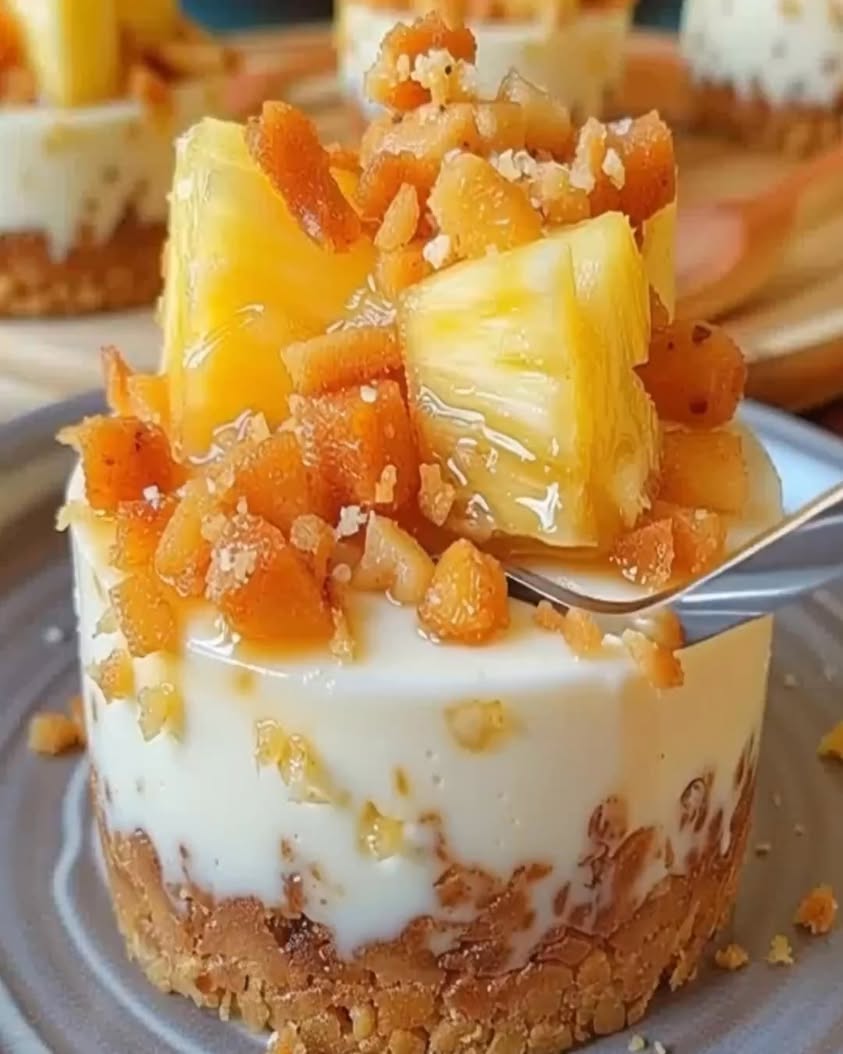
Mini Pineapple Coconut Cheesecakes: A Tropical No-Bake Dessert
Imagine a dessert that instantly transports you to a sun-drenched beach. These Mini Pineapple Coconut Cheesecakes do exactly that. They combine creamy, tropical flavors in a convenient, no-bake format. Furthermore, they are perfect for anyone seeking a refreshing treat without turning on the oven. Each bite delivers a perfect harmony of tangy pineapple and rich coconut. Consequently, they are a guaranteed crowd-pleaser for any gathering.
The magic of this recipe lies in its simplicity and stunning results. You create a delightful crust from buttery graham crackers. Then, you whip up a luxuriously smooth filling using cream cheese and condensed coconut milk. Finally, you crown each mini cheesecake with a vibrant pineapple topping. The visual appeal is as impressive as the taste. Ultimately, this dessert proves that extraordinary flavors can come from straightforward preparation.
These individual desserts offer portion control and elegant presentation. They are ideal for parties, potlucks, or a special weeknight treat. Moreover, the no-bake method means you can prepare them ahead of time. This allows the flavors to meld beautifully in the refrigerator. In short, these Mini Pineapple Coconut Cheesecakes are a versatile, delicious solution for your sweet cravings.
Quick Recipe Highlights
- Flavor Profile: These mini cheesecakes deliver a bold tropical fusion. The creamy coconut filling perfectly balances the bright, tangy pineapple topping. Additionally, the buttery graham cracker crust adds a comforting, familiar base note that ties everything together.
- Texture: Experience a delightful contrast in every bite. You get a crunchy crust, followed by an ultra-smooth and creamy no-bake cheesecake filling. The pineapple topping adds a soft, juicy element that completes the textural symphony.
- Aroma: As soon as you open the container, the sweet scent of coconut and pineapple will fill your kitchen. The graham cracker crust contributes a warm, toasted note that makes the aroma incredibly inviting.
- Visual Appeal: These mini desserts are beautiful with their layered look. The golden crust, creamy white filling, and sunny yellow pineapple topping create a stunning color contrast. They look professional and are perfect for photographing.
- Skill Level Needed: This is a beginner-friendly recipe requiring no special pastry skills. The most important techniques are simple mixing and assembly. Therefore, even novice bakers can achieve fantastic results on their first try.
- Special Equipment: You only need basic kitchen tools. A muffin tin with liners, a mixing bowl, and a hand mixer or whisk are essential. A food processor can help make the crust crumbs, but a zip-top bag and rolling pin work perfectly.
Recipe Overview
- Difficulty Level: We rate this recipe as easy for several reasons. First, there is no baking or precise temperature control involved. Second, the steps are sequential and simple to follow. Finally, the ingredients are common and the method is forgiving, making it hard to fail.
- Category: This recipe falls squarely into the dessert category. Specifically, it is a no-bake cheesecake, a subcategory loved for its simplicity. It can also be considered a tropical dessert or a individual portioned treat.
- Cuisine: While cheesecake has roots in many cultures, this version embraces tropical flavors. It draws inspiration from Pacific Island and Southeast Asian cuisines where coconut and pineapple are staples. It is a modern fusion dessert rather than a traditional one.
- Cost: Making these at home is very cost-effective. Cream cheese and graham crackers are inexpensive pantry staples. Condensed coconut milk and canned pineapple are also budget-friendly. Overall, homemade mini cheesecakes cost a fraction of bakery prices.
- Season: These are perfect for spring and summer. Their cool, refreshing nature is ideal for warm weather. However, the tropical flavors can also provide a delightful escape during the colder winter months.
- Occasion: They are incredibly versatile for events. Serve them at birthday parties, baby showers, or summer barbecues. They also make an elegant ending to a weeknight dinner or a festive holiday meal.
Why You’ll Love This Recipe
First and foremost, the taste is absolutely irresistible. The combination of creamy coconut and zesty pineapple is a classic for good reason. Each component complements the other without being overly sweet. The graham cracker base provides a familiar, comforting crunch. Consequently, every bite is a perfect balance of flavor and texture that will have you reaching for seconds.
Secondly, the convenience factor is a major win. Because this is a no-bake recipe, you avoid heating up your kitchen. This is a huge advantage during hot summer months. Moreover, the active preparation time is under thirty minutes. After that, the refrigerator does all the work, setting the cheesecakes perfectly. This makes it an ideal make-ahead dessert for busy hosts.
From a nutritional perspective, you have more control than with store-bought versions. You can choose high-quality cream cheese and find condensed coconut milk with simpler ingredients. While it is a dessert, you can adjust the sugar level slightly if desired. Additionally, using individual portions helps with mindful eating. You get a satisfying treat without the temptation of a whole large cake.
For social gatherings, these mini cheesecakes are a superstar. Their individual serving size eliminates the need for slicing and plating mess. They look elegant and thoughtful on a dessert platter. Guests often appreciate having their own personal dessert. Furthermore, they are easy to transport if you are bringing them to a party. They are guaranteed to spark conversation and recipe requests.
Finally, this recipe is wonderfully cost-effective and accessible. The ingredients are easy to find at any standard grocery store. You do not need expensive equipment or rare, specialty items. Making a dozen beautiful mini desserts at home costs significantly less than buying them. This accessibility means you can enjoy a taste of the tropics anytime the craving strikes.
Historical Background and Cultural Significance
The concept of cheesecake dates back thousands of years to ancient Greece. However, the modern no-bake cheesecake is a distinctly American innovation from the mid-20th century. It emerged with the widespread availability of cream cheese and electric mixers. The addition of condensed milk created a sweet, stable filling without eggs. This tropical version is a more recent fusion, marrying that American classic with global flavors.
Coconut and pineapple carry deep cultural significance in tropical regions. For instance, the coconut palm is considered the “tree of life” in many Southeast Asian and Pacific cultures. Every part of the tree is used. Similarly, pineapple has been a symbol of hospitality and welcome since colonial times. Combining these ingredients in a dessert celebrates their importance beyond mere flavor.
The evolution of this specific recipe follows trends in home baking. As home cooks sought easier, faster desserts, no-bake recipes gained popularity. The rise of food blogging and social media further propelled interest in visually appealing, individual desserts. Mini Pineapple Coconut Cheesecakes are a product of this era. They prioritize ease, presentation, and bold, photogenic flavors that resonate online.
Regional variations of this concept are endless. In the Caribbean, you might find a similar dessert using rum-soaked pineapple. In Southeast Asia, pandan leaf might flavor the coconut layer for a vibrant green hue. Some versions use a crust made from crushed biscuits like Digestives or vanilla wafers. This adaptability shows how a simple formula can be transformed by local ingredients and traditions.
Ingredient Deep Dive
Let us start with cream cheese, the star of the filling. Originating in the United States in the late 1800s, it gave birth to the New York-style cheesecake. It provides the rich, tangy base and creamy structure essential for no-bake cheesecakes. For best results, always use full-fat, brick-style cream cheese at room temperature. This ensures a lump-free, silky smooth filling. Do not substitute spreadable or whipped cream cheese from a tub, as they contain stabilizers that can affect setting.
Condensed coconut milk is the revolutionary ingredient that makes this dessert dairy-free adaptable. It is simply coconut milk with sugar cooked down until thick and sweet. It adds intense coconut flavor and the necessary sweetness to the filling. Look for it in the Asian or baking aisle of your grocery store. You can often find it online if not locally. Be sure to shake the can well before using to incorporate any separation.
Graham crackers form the classic American crust. Invented by Sylvester Graham in the 19th century for dietary reform, they are now a dessert staple. Their lightly sweet, honey-kissed flavor and sturdy crunch make an ideal base. For a gluten-free version, use certified gluten-free graham crackers or another crunchy cookie. You can also experiment with crushed vanilla wafers, shortbread, or even ginger snaps for a different flavor profile.
Canned crushed pineapple is the convenient key to the topping. Pineapple cultivation has a complex history involving colonial trade routes. Using canned pineapple guarantees consistent sweetness and texture year-round. Be sure to drain it very well, even pressing out excess juice with a spoon. This prevents a watery topping that could make the crust soggy. For a fresher taste, you can use finely chopped fresh pineapple, but cook it briefly with a little sugar to soften.
Common Mistakes to Avoid
- Using Cold Cream Cheese: This is the number one error. Cold cream cheese will not blend smoothly, leaving you with a lumpy filling. Always plan ahead and let your cream cheese sit on the counter for at least an hour until it is perfectly soft.
- Inadequate Crust Pressing: If you just sprinkle the crust mixture into the liner, it will not hold together. You must firmly press it down with a glass or spoon. A compacted crust provides the necessary stable foundation for the creamy layers above.
- Not Draining the Pineapple Enough: Excess pineapple juice is the enemy of your crisp crust. After draining in a sieve, actively press the pineapple with the back of a spoon to remove as much liquid as possible. Your cheesecakes will thank you.
- Overmixing the Filling: Once you add the condensed coconut milk, mix just until the ingredients are combined and smooth. Overmixing can incorporate too much air, which may cause the filling to deflate or crack as it sets.
- Skipping the Chill Time: Impatience leads to disappointment. The filling needs a full four hours, preferably overnight, to set properly. If you try to unmold or eat them too soon, they will be soft and messy.
- Substituting Sweetened Condensed Milk: While sweetened condensed dairy milk will work, it will completely change the flavor profile. You will lose the distinct coconut taste that defines these mini cheesecakes. Stick to condensed coconut milk for authentic flavor.
- Using the Wrong Cream Cheese Format: As mentioned, brick-style is non-negotiable. The tub versions have a higher moisture content and different texture. They will not set firmly, resulting in a runny filling that never holds its shape.
- Forgetting the Liners: Do not try to make these directly in a greased muffin tin. The liners are crucial for easy removal and clean presentation. Use good quality liners that peel away easily after chilling.
Essential Techniques
Properly softening cream cheese is a foundational technique. Room temperature cream cheese blends seamlessly, creating a silky, lump-free filling. To achieve this, take the brick out of the fridge at least one hour before you start. Alternatively, you can microwave it on low power in 10-second intervals. However, be very careful not to melt it. The goal is softness, not warmth.
Creating a perfect crumb crust is another key skill. The crumbs should be fine, like sand, for even pressing. Use a food processor or a zip-top bag and rolling pin. The binding agent is almost always melted butter. Mix thoroughly so every crumb is coated. Then, press firmly and evenly into the liner. A good test is that the crust should hold together when you gently poke it.
Folding and mixing the filling requires a gentle hand. Start by beating the softened cream cheese alone until it is completely smooth. Next, gradually add the condensed coconut milk, mixing on low speed. Mix only until the two are fully incorporated and no streaks remain. Over-beating incorporates air bubbles that can ruin the texture. The final mixture should be thick, creamy, and pourable.
Mastering the assembly layering ensures structural integrity. First, divide the crust mixture and press it down. Then, spoon or pipe the filling on top, leaving a little room for the topping. Finally, add a spoonful of well-drained pineapple. The layers should be distinct and level. Chill the pan on a flat surface in the refrigerator to prevent sliding or uneven setting.
Pro Tips for Perfect Mini Pineapple Coconut Cheesecakes
For an extra-toasty flavor, bake your graham cracker crust. Spread the crumbs on a baking sheet and toast them in a 350°F oven for 5-7 minutes before mixing with butter. This deepens the flavor and can make the crust slightly sturdier.
Use a cookie scoop or piping bag to distribute the filling. This creates neat, even layers in each cup and is much less messy than using a spoon. A piping bag without a tip works perfectly for this task.
Garnish just before serving for the best look. Add a tiny sprinkle of toasted coconut flakes, a mint leaf, or a thin slice of fresh pineapple on top right before you present them. This keeps garnishes fresh and vibrant.
Run a knife under hot water for clean slices. If you are making a larger version in a pan, dip your knife in hot water and wipe it dry between each cut. This gives you beautifully clean slices every time.
Line your muffin tin even if using liners. Placing the liners in the tin provides support and helps the cheesecakes keep their shape as they set. It also makes transferring the whole batch to the fridge much easier.
For intense coconut flavor, add a touch of extract. A quarter teaspoon of pure coconut extract blended into the filling can amplify the tropical taste, especially if your condensed coconut milk is mild.
Variations and Adaptations
Consider regional variations to take your mini cheesecakes on a world tour. For a Caribbean twist, soak the drained pineapple in a tablespoon of dark rum before topping. A Thai-inspired version could include a teaspoon of finely chopped lemongrass in the filling. For a Mexican flair, add a pinch of chili powder to the crust mixture for a sweet and spicy surprise.
Seasonal adaptations keep this recipe exciting all year. In fall, replace the pineapple topping with spiced apple compote and add cinnamon to the crust. For winter, use a cranberry-orange compote. In spring, a strawberry-rhubarb topping is delightful. The creamy coconut base pairs beautifully with almost any fruit.
Dietary modifications are straightforward. For a vegan version, use vegan cream cheese and ensure your graham crackers are vegan. A gluten-free adaptation simply requires certified gluten-free graham crackers. To reduce sugar, look for a “less sugar” variety of condensed coconut milk, though the setting may be slightly softer.
Experiment with flavor variations in the filling itself. Add the zest of one lime for a key lime pie vibe. Mix in a tablespoon of passionfruit puree for a more exotic tropical flavor. For a piña colada effect, add a teaspoon of rum extract along with the coconut milk.
Texture modifications can add fun elements. Mix a handful of toasted macadamia nuts into the crust for extra crunch. Layer a thin spread of mango puree between the crust and filling. Or, sprinkle shredded coconut between the filling and pineapple topping for a chewy middle layer.
Presentation alternatives offer creative freedom. Instead of a muffin tin, make a single large cheesecake in a springform pan. You can also layer the components in small glasses or jars for a parfait-style dessert. For a free-form look, set the filling in silicone molds without a crust and roll the set cheesecake balls in toasted coconut.
Serving and Presentation Guide
Plating techniques elevate these from simple to stunning. Arrange three mini cheesecakes in a triangular formation on a white plate for a modern look. Alternatively, place a single cheesecake on a small dessert plate with a decorative drizzle of caramel or fruit sauce around it. Use edible flowers or gold leaf for a truly special occasion presentation.
Garnishing ideas are endless and add pops of color and texture. A small sprig of fresh mint provides a beautiful green contrast. Toasted coconut flakes add elegance and reinforce the coconut flavor. A thin, vertical slice of fresh pineapple perched on the side looks professional. A light dusting of graham cracker crumbs or powdered sugar can also be effective.
Traditional accompaniments might include a dollop of freshly whipped cream or a scoop of vanilla ice cream. For a tropical pairing, coconut or pineapple sorbet is exceptional. A simple side of macerated berries adds a fresh, tart component that cuts through the richness.
Modern serving suggestions focus on interactive elements. Set up a mini cheesecake bar with various toppings like chocolate shavings, chopped nuts, sprinkles, and different fruit sauces. Let guests customize their own dessert. Serve them on a tiered cake stand for a party to maximize visual impact and save table space.
Temperature considerations are crucial for texture. Serve these cheesecakes chilled straight from the refrigerator. However, for the fullest flavor, let them sit at room temperature for about 5-10 minutes before serving. This slight warming allows the creamy filling to soften just enough for perfect mouthfeel.
Portion control is built-in, but you can adjust. The standard recipe makes 12 satisfying mini cheesecakes. For a larger crowd, you can easily make 18 slightly smaller ones using a mini muffin tin. For a more substantial dessert, consider making 8 larger ones in a standard muffin tin. Just adjust the chilling time accordingly.
Wine and Beverage Pairing
Wine pairings should complement the tropical sweetness without overpowering it. A late-harvest Riesling or Gewürztraminer with its notes of lychee and apricot is a classic match. A Moscato d’Asti offers gentle bubbles and peachy sweetness that harmonizes beautifully. For a more sophisticated option, try a glass of Sauternes. Its honeyed richness stands up to the creamy coconut and tangy pineapple.
Non-alcoholic alternatives can be just as thoughtful. Sparkling coconut water with a squeeze of lime feels refreshing and thematic. A pineapple iced tea, either black or herbal, echoes the main flavors. A creamy, frothy mango lassi provides a delightful contrast and cleanses the palate between bites.
Coffee and tea pairings work wonderfully with the creamy dessert. A light-roast coffee with citrusy notes can highlight the pineapple. A cup of chai tea, with its warm spices, creates a fascinating flavor contrast with the tropical elements. For tea, consider a floral white tea or a jasmine green tea, which are delicate enough not to clash.
Temperature considerations apply to beverages as well. Iced or chilled drinks generally pair best with this cold dessert. However, a warm cup of tea or coffee can be a comforting contrast, especially in cooler weather. The key is to ensure neither the drink nor the dessert is at an extreme temperature that dulls the taste buds.
Serving suggestions include offering a choice. At a dinner party, you might offer both a wine and a non-alcoholic option. For a casual gathering, a signature cocktail or mocktail that incorporates pineapple or coconut ties the whole menu together. Always provide water to cleanse the palate and enhance the tasting experience.
Storage and Shelf Life
Storage methods are simple but important for maintaining quality. Keep the mini cheesecakes in a single layer in an airtight container in the refrigerator. If you need to stack them, place a sheet of parchment paper between layers to prevent sticking and damage to the toppings. The refrigerator is the only suitable place for medium-term storage.
Temperature requirements are strictly refrigeration. These no-bake cheesecakes contain dairy and must be kept at or below 40°F (4°C) for safety. Never leave them at room temperature for more than two hours. If traveling, transport them in a cooler with ice packs to keep them chilled.
Container recommendations include plastic containers with tight-fitting lids or glass food storage dishes. You can also keep them in the muffin tin covered tightly with plastic wrap if you plan to serve them within a day. For the best freshness, avoid storing them in metal tins for more than a day, as condensation can form.
Signs of spoilage are usually visible or olfactory. Look for any unusual discoloration, especially mold growth. A sour or off smell is a clear indicator the cheesecakes are no longer good. If the texture becomes excessively watery or slimy, discard them immediately. When in doubt, follow the golden rule and throw it out.
Reheating instructions are not applicable, as this is a cold dessert. However, if they have been in the fridge for a while and are very firm, letting them sit at room temperature for 5-10 minutes before serving will improve the texture. Do not microwave them.
Freezing guidelines can extend the shelf life significantly. Freeze the cheesecakes on a baking sheet until solid, then transfer to a freezer-safe bag or container. They will keep for up to 2 months. Thaw overnight in the refrigerator before serving. Note that the pineapple topping may release a bit more liquid after thawing, but the flavor will remain excellent.
Make Ahead Strategies
Prep timeline can be stretched over two days for ultimate convenience. Day one, prepare the crusts and press them into the liners. Cover the tin and store at room temperature. Day two, make the filling and topping, assemble the cheesecakes, and chill. This breaks the work into manageable chunks and is perfect for party planning.
Storage between steps is safe and effective. The unbaked crusts can sit covered at room temperature for up to 24 hours. The filling, once mixed, should be used within a few hours if not assembled, as it can begin to separate. The drained pineapple topping can be stored in an airtight container in the fridge for a day.
Quality impact assessment shows make-ahead is beneficial. Allowing the fully assembled cheesecakes to chill overnight actually improves them. The flavors have time to meld, and the texture becomes perfectly set and firm. They often taste better on day two. The crust may soften slightly but remains pleasantly chewy.
Assembly tips for make-ahead include waiting to add delicate garnishes. Add any fresh mint, toasted coconut, or whipped cream just before serving, not before storing. This keeps them looking fresh and vibrant. If using a sauce, consider serving it on the side rather than drizzling it on top in advance.
Reheating guidelines do not apply, but serving temperature is key. If made more than a day ahead, the cheesecakes will be very cold. Let the container sit on the counter for 10-15 minutes before serving to take the extreme chill off. This allows the creamy flavors to shine.
Fresh element additions are the final touch. Any component that wilts, gets soggy, or loses its crunch should be added at the last minute. This includes certain fresh fruits, crispy cookies, or delicate herbs. Plan your make-ahead strategy around these time-sensitive items.
Scaling Instructions
Halving the recipe is simple for smaller households. Simply divide all ingredient quantities by two. You will end up with 6 perfect mini cheesecakes. Use a 6-cup muffin tin, or fill every other cup in a 12-cup tin to ensure even baking if you decide to toast the crust. The chilling time remains the same.
Doubling or tripling the recipe is easy for a crowd. Multiply all ingredients accordingly. You may need to mix the filling in batches if your mixer bowl is not large enough. Ensure you have enough muffin tins or bake in batches. The active prep time will increase slightly, but the process is the same.
Equipment adjustments may be necessary when scaling. For a double batch, you might need two muffin tins. If tripling, a large commercial-style muffin tin or preparing in shifts works. Make sure your refrigerator has enough flat space to accommodate all the tins for chilling. Rotating shelves may be needed.
Timing modifications are minimal when scaling up. The mixing and assembly time will increase linearly with the batch size. However, the chilling time remains constant at a minimum of 4 hours, regardless of how many you make. The setting process is not dependent on batch size, only on temperature and ingredient ratios.
Storage considerations become more important with large batches. You will need appropriately sized airtight containers or more refrigerator space. For a big event, consider assembling the cheesecakes in disposable aluminum muffin liners set on a tray. This can simplify transport and cleanup.
Nutritional Deep Dive
Macro breakdown for one mini cheesecake typically includes a balance of carbohydrates, fat, and protein. The primary sources are the graham crackers (carbs), cream cheese and butter (fat), and the cream cheese again (protein). The condensed coconut milk adds significant carbohydrates in the form of sugars. This makes it an energy-dense treat best enjoyed in moderation as part of a balanced diet.
Micronutrient analysis reveals some benefits alongside the indulgence. Pineapple provides vitamin C and manganese. Coconut offers small amounts of iron and potassium. The dairy in cream cheese provides calcium and vitamin A. While not a health food, it does contribute more than just empty calories, especially if you use high-quality ingredients.
Health benefits are linked to the enjoyment and satisfaction factor. Allowing yourself a properly portioned, delicious dessert can support a healthy relationship with food. The individual serving size helps prevent overconsumption. Furthermore, the tropical flavors are very satisfying, which can reduce the desire to keep eating other sweets.
Dietary considerations are important for those with specific needs. This recipe contains gluten (graham crackers), dairy (cream cheese, butter), and is high in sugar. However, as discussed, adaptations for gluten-free, dairy-free, and lower-sugar needs are quite feasible. Always check labels, especially on condensed coconut milk, for hidden allergens.
Portion analysis is one of this recipe’s strengths. Each mini cheesecake is a pre-defined portion, which is a powerful tool for mindful eating. It eliminates the guesswork and temptation of cutting a “small slice” from a large cake. This built-in control can be helpful for weight management goals.
Weight management tips include savoring each bite slowly to maximize satisfaction. Pair a mini cheesecake with a cup of herbal tea or black coffee to make the dessert experience last longer. You can also balance a richer dessert by choosing lighter, vegetable-focused meals earlier in the day. It is all about balance, not deprivation.
Dietary Adaptations
For a gluten-free version, the change is simple. Substitute the graham crackers with an equal amount of certified gluten-free graham crackers or gluten-free vanilla cookies. Ensure all other packaged ingredients, like the condensed coconut milk, are certified gluten-free. The method remains identical, and the result is just as delicious.
A dairy-free adaptation is fully achievable. Use vegan cream cheese, which is widely available. Replace the butter in the crust with vegan butter or coconut oil. Double-check that your condensed coconut milk brand does not contain dairy derivatives. With these swaps, you create a completely plant-based tropical dessert.
Creating a vegan version follows the dairy-free guidelines above. Ensure your cookie crust uses vegan butter and vegan cookies. The filling will be vegan cream cheese and condensed coconut milk. The pineapple topping is naturally vegan. This adaptation allows everyone to enjoy the tropical flavors.
A low-carb or keto adaptation requires more significant changes. For the crust, use a mixture of almond flour, a keto-friendly sweetener, and melted butter. The filling must use a keto-friendly sweetened condensed coconut milk alternative or a homemade version with sugar substitutes. Omit the pineapple topping or replace it with a few low-carb berries.
A Paleo adaptation focuses on whole, unprocessed ingredients. Use a crust made from nuts and dates. For the filling, a combination of cashews soaked and blended with coconut cream and a natural sweetener like maple syrup can mimic the texture. The pineapple topping can remain if tolerated within your Paleo guidelines.
For a Low-FODMAP version, careful ingredient selection is key. Use a gluten-free, wheat-free crust. The cream cheese is typically low-FODMAP in servings of 2 tablespoons or less per sitting, which this recipe aligns with. Use a small amount of pineapple, as it is only low-FODMAP in servings of 1/2 cup or less. Monitor your personal tolerance.
Troubleshooting Guide
If your filling is too runny and won’t set, the cause is usually ingredient temperature or ratio. Ensure you used full-fat, brick-style cream cheese, not a spreadable tub. Also, confirm you used condensed coconut milk, not regular coconut milk. The solution is more chilling time, up to 6-8 hours or overnight. If it still hasn’t set, you can try freezing them for 30 minutes before serving.
If the crust is too crumbly and falls apart, it likely needs more binding agent. Next time, add an extra half tablespoon of melted butter to the crumb mixture. For this batch, serve them in the liner or with a spoon. Pressing the crust more firmly during assembly is also crucial for cohesion.
If the pineapple topping made the crust soggy, the pineapple was not drained sufficiently. For future batches, drain the pineapple in a fine-mesh sieve and actively press out the juice with the back of a spoon. You can even spread it on a paper towel for a few minutes. For this batch, they are still edible but best eaten with a fork.
If you detect lumps in the filling, the cream cheese was too cold when mixed. To fix it for next time, ensure your cream cheese is very soft. For this batch, you can try pressing the filling through a fine-mesh sieve before portioning, though this is labor-intensive. Alternatively, embrace the rustic texture.
If the cheesecakes are sticking to the liners, it can be frustrating. To prevent this, use high-quality non-stick liners. You can also very lightly spray the liners with cooking spray before adding the crust. To salvage stuck ones, peel the liner away slowly, or simply serve them in the liner.
If the flavor is bland, it often needs a boost of acid or salt. A pinch of salt in the crust and filling can make all the difference. A small amount of lemon or lime juice (start with a teaspoon) in the filling can brighten the coconut flavor. For this batch, serve with a tangy fruit sauce on the side.
Recipe Success Stories
Community feedback on this recipe has been overwhelmingly positive. Many home bakers report that it was their first successful no-bake dessert. They love how impressive it looks for the level of effort required. Several readers have mentioned making it for potlucks and always coming home with an empty tray. The individual portions are consistently praised for their convenience and charm.
Variation successes from readers are inspiring. One reader added a layer of dark chocolate ganache under the pineapple topping for a decadent twist. Another mixed finely chopped macadamia nuts into the crust for extra texture. A creative baker used grilled pineapple for the topping, which added a subtle smoky flavor that was reportedly a huge hit.
Adaptation stories highlight the recipe’s flexibility. A reader with a dairy allergy used the vegan adaptations and said her guests could not tell the difference. Another successfully made it gluten-free for a family gathering, allowing everyone to enjoy the same dessert. A home cook scaled the recipe up to make 48 mini cheesecakes for a wedding shower with great success.
Reader suggestions have improved the recipe over time. The tip to toast the graham cracker crumbs came from a reader. Another suggested using a shot glass to press the crust down evenly, which works perfectly. The idea for a make-ahead timeline was also crowd-sourced from busy parents who needed to prep in stages.
Photography tips from successful bakers include using natural light. A white plate or marble background makes the colors pop. Shooting from above (flat lay) captures all the beautiful layers. Some recommend adding a sprinkle of toasted coconut or a mint leaf just for the photo to add a professional touch. Many say the dessert is so pretty it practically photographs itself.
Frequently Asked Questions
Can I use fresh pineapple instead of canned? Absolutely. Use about 1 cup of finely chopped fresh pineapple. For the best texture and to prevent sogginess, cook it in a small saucepan with a tablespoon of sugar over medium heat for 5-7 minutes until slightly softened and the juices have thickened. Let it cool completely before using as a topping.
My filling is soft after 4 hours. What should I do? Do not worry. Simply chill them longer. The setting time can vary based on your refrigerator’s temperature and the depth of your filling. Give them a full 6-8 hours, or preferably overnight. They will firm up perfectly with a little more patience.
Can I make one big cheesecake instead of minis? Yes. Press the crust mixture into the bottom of a 9-inch springform pan. Pour the filling over the top, add the pineapple, and chill. The total chilling time will need to increase to at least 6 hours, or overnight, to ensure the center sets completely.
Where do I find condensed coconut milk? Look in the Asian food aisle of your grocery store, often near Thai ingredients. It is also frequently found in the baking aisle or the natural foods section. If you cannot find it locally, it is readily available for purchase online from retailers like Amazon or specialty food websites.
Can I freeze these mini cheesecakes? You can. Freeze them on a baking sheet until solid, then transfer to a freezer bag or container for up to 2 months. Thaw overnight in the refrigerator. The texture may be slightly denser after freezing, and the pineapple topping may release a little more liquid Print
Mini Pineapple Condensed Coconut Milk Cheesecakes
- Total Time: 45 minutes
- Yield: 4
Description
Creamy, tropical mini cheesecakes with a graham cracker crust, sweetened with condensed coconut milk and topped with pineapple.
Ingredients
- 1 cup graham cracker crumbs
- 3 tablespoons melted coconut oil
- 8 ounces cream cheese, softened
- 1/2 cup sweetened condensed coconut milk
- 1/2 cup canned crushed pineapple, drained
- 1 teaspoon vanilla extract
- 1/4 cup shredded coconut, toasted
- Pinch of salt
Instructions
- Preheat oven to 325°F (165°C). Line a muffin tin with paper liners.
- Mix graham cracker crumbs with melted coconut oil until combined. Press about 1 tablespoon into each liner to form the crust.
- In a bowl, beat cream cheese until smooth. Add condensed coconut milk, vanilla, and salt, mixing until creamy. Fold in crushed pineapple.
- Spoon the filling over the crusts, filling each about 3/4 full. Bake for 20-25 minutes until set. Let cool, then chill for at least 2 hours.
- Top each cheesecake with toasted shredded coconut before serving.
Notes
You can customize the seasonings to taste.
- Prep Time: 15 minutes
- Cook Time: 30 minutes
- Method: Dessert
- Cuisine: American