Layered Mediterranean Vegetable Lasagna with Creamy Three-Cheese Drizzle: A Healthy Twist on a Classic Comfort Dish
This Layered Mediterranean Vegetable Lasagna with Creamy Three-Cheese Drizzle brings together the vibrant flavors of the Mediterranean coast in a wholesome, vegetable-forward main course. Imagine tender slices of eggplant, zucchini, and colorful bell peppers stacked between layers of rich, herbed cheese sauce. This recipe transforms simple garden vegetables into a stunning centerpiece that feels indulgent yet light.
The creamy garlic herb three-cheese drizzle is the star of this dish. It combines ricotta, mozzarella, and Parmesan with fresh basil, oregano, and garlic. This velvety sauce blankets the roasted vegetables, creating a harmonious balance of earthy, tangy, and savory notes. Each bite offers a delightful contrast between the soft, caramelized vegetables and the luscious cheese layer.
You do not need to be a professional chef to master this Layered Mediterranean Vegetable Lasagna with Creamy Three-Cheese Drizzle. The preparation is straightforward, and the results are impressive. This recipe works perfectly for a cozy family dinner, a festive gathering, or a meal prep Sunday. It also happens to be naturally gluten-free and low in carbohydrates, making it a smart choice for many dietary preferences.
Quick Recipe Highlights
- Flavor Profile: The dish delivers a savory, herbaceous flavor with subtle sweetness from roasted bell peppers. The garlic and Parmesan add a sharp, nutty kick. The creamy cheese sauce ties everything together with a mild tang.
- Texture: You experience a tender yet firm bite from the roasted vegetables. The cheese sauce is smooth and velvety, coating each slice. The top layer browns slightly, adding a pleasant chewy crust.
- Aroma: Your kitchen fills with the scent of roasting eggplant and bell peppers. Fresh basil and oregano release their aromatic oils as they bake. Garlic infuses the cheese sauce with a warm, inviting fragrance.
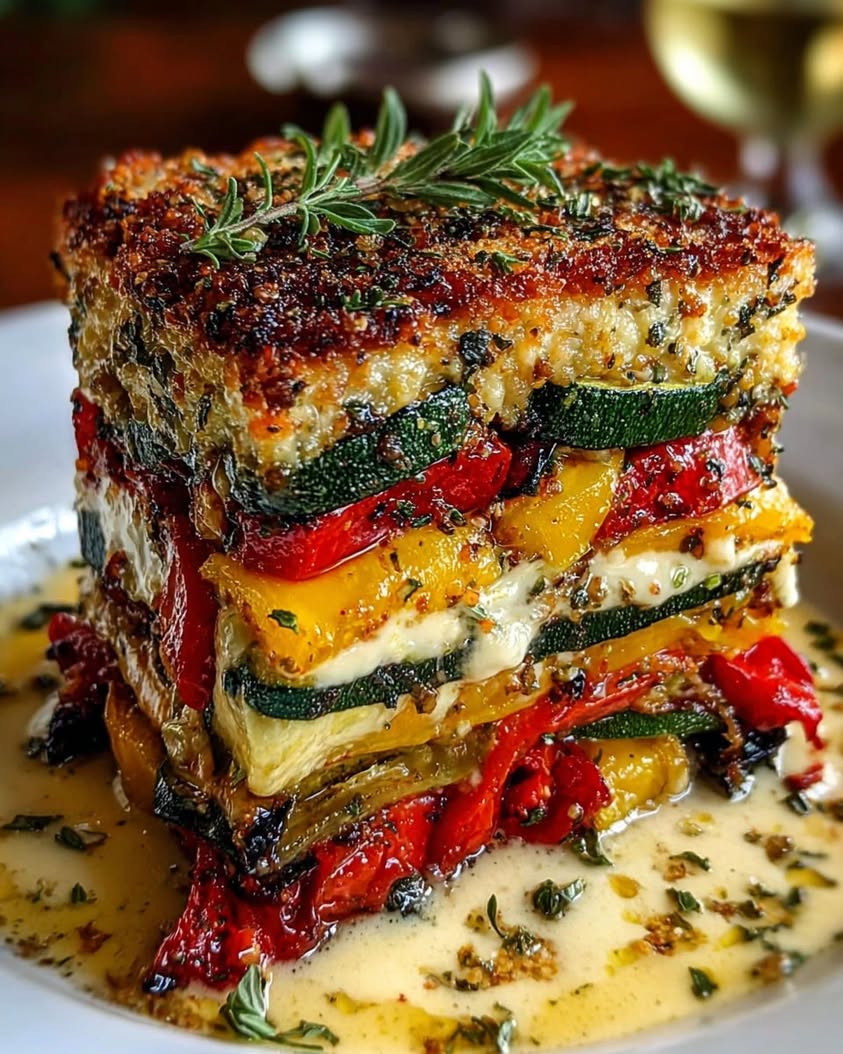
- Visual Appeal: The layers create a beautiful mosaic of deep purple, bright green, and vivid red and yellow. The creamy white sauce contrasts elegantly against the colorful vegetables. A sprinkle of fresh herbs on top adds a final polished touch.
- Skill Level Needed: This recipe requires basic knife skills and some confidence with layering. You need to slice vegetables evenly and prepare a simple cheese sauce. It is accessible to beginner home cooks who follow instructions carefully.
- Special Equipment: A sharp chef knife and a mandoline slicer help achieve uniform vegetable slices. A 9×13 inch baking dish works best for layering. A whisk and a medium saucepan are necessary for the cheese sauce.
Recipe Overview
- Difficulty Level: This dish earns a medium difficulty rating because of the multiple components and layering steps. You need to prep several vegetables and make a cheese sauce. However, each step is simple, and the assembly is forgiving. Once you have all ingredients ready, it comes together quickly.
- Category: This recipe fits as a main course for lunch or dinner. It also works as a hearty side dish for grilled meats or fish. For vegetarians, it can serve as the star of a holiday meal.
- Cuisine: The flavors draw heavily from Italian and Greek culinary traditions. Eggplant, zucchini, and bell peppers are staples in Mediterranean cooking. The use of ricotta and Parmesan echoes classic Italian lasagna, while the herb blend nods to Greek cuisine.
- Cost: This is an affordable recipe, especially during summer when vegetables are in season. Eggplant, zucchini, and bell peppers are budget-friendly. The cheeses add some cost, but you can buy store-brand versions to keep it around fifteen to twenty dollars total.
- Season: Late summer and early autumn are the best seasons for this dish. Eggplant and zucchini are at their peak, sweet and firm. Bell peppers are abundant and flavorful during these months.
- Occasion: It is perfect for a casual weeknight dinner, a potluck, or a festive holiday table. It also travels well, making it a great option for picnics or camping trips. Leftovers taste even better the next day.
Why You Will Love This Recipe
The taste of this Layered Mediterranean Vegetable Lasagna with Creamy Three-Cheese Drizzle is both comforting and exciting. The roasted vegetables offer a deep, caramelized sweetness that pairs beautifully with the savory cheese sauce. Each layer adds a new dimension of flavor, from the earthy eggplant to the sweet bell peppers. The creamy drizzle brings everything together with a luxurious finish. You will find yourself going back for seconds.
Convenience is a huge advantage of this recipe. You can prep the vegetables and cheese sauce in advance, then assemble and bake when ready. The active cooking time is only about thirty minutes. The oven does most of the work, freeing you up to enjoy time with family. Cleanup is also simple, as you use just one baking dish and a few pots.
Nutritionally, this dish is a winner. It is packed with fiber-rich vegetables and protein from the cheese. You get vitamins A, C, and K from the bell peppers and zucchini. Eggplant provides antioxidants like nasunin. Compared to traditional pasta lasagna, this version is lower in carbohydrates and higher in nutrients.
Socially, this recipe shines. It presents beautifully on a serving platter, with its colorful layers visible when sliced. Guests will admire the effort you put into creating a visually stunning dish. It works as a conversation starter about Mediterranean cuisine and healthy eating. You can easily double the recipe for a crowd.
Cost-effectiveness makes this dish accessible to everyone. The ingredients are widely available and affordable. You can use whatever bell peppers are on sale or substitute with other summer vegetables. The cheese sauce stretches nicely, so you get eight generous servings from a modest budget. Leftovers reheat well, giving you lunch for several days.
Historical Background and Cultural Significance
The inspiration for this Layered Mediterranean Vegetable Lasagna with Creamy Three-Cheese Drizzle comes from the rustic vegetable timbales and layered casseroles of Southern Italy and Greece. In Italy, dishes like Parmigiana di Melanzane layer fried eggplant with tomato sauce and cheese. In Greece, moussaka uses eggplant, zucchini, and a creamy béchamel topping. This recipe merges those traditions into a lighter, vegetable-forward version.
Mediterranean cuisine has always celebrated seasonal vegetables. Eggplant and zucchini were cultivated for centuries across the region. Bell peppers arrived after the Columbian Exchange and became staples in Mediterranean cooking. Layering vegetables with cheese and herbs is a technique that emphasizes the natural flavors of the produce. It reflects the Mediterranean philosophy of simple, high-quality ingredients.
Over time, home cooks adapted these layered dishes to fit modern dietary preferences. This version removes the pasta and heavy béchamel, replacing them with more vegetables and a lighter cheese sauce. The result is a dish that honors its heritage while catering to contemporary tastes for low-carb and gluten-free meals. It represents the evolution of traditional cuisine in a health-conscious world.
Regional variations abound. In Sicily, they add capers and olives to the layers. In Provence, ratatouille serves as the filling. In Turkey, Imam Bayildi features stuffed eggplant. This recipe draws from those influences, creating a unique fusion. The creamy garlic herb three-cheese drizzle is a modern twist that adds richness without heaviness.
Ingredient Deep Dive
Eggplant is the backbone of this dish. It has been cultivated in India and Southeast Asia for over 4,000 years. Mediterranean cultures adopted it enthusiastically. Eggplant is rich in dietary fiber, manganese, and antioxidants. It absorbs flavors beautifully when roasted. Choose eggplants that are firm, glossy, and heavy for their size. Store them in a cool, dry place and use within a few days. If you dislike its slight bitterness, you can substitute with portobello mushrooms for a meatier texture.
Zucchini adds a mild, slightly sweet flavor and a tender texture. It originated in the Americas but became a staple in Italian cuisine. Zucchini is low in calories and high in vitamin C and potassium. Look for smaller zucchinis with shiny, unblemished skin. Store them in the refrigerator crisper drawer. You can substitute with yellow squash or even thinly sliced fennel for a different flavor profile.
Yellow and red bell peppers provide sweetness and vibrant color. Bell peppers are rich in vitamin C, vitamin A, and antioxidants. They were domesticated in Central and South America. Choose peppers that are firm, bright, and feel heavy. Store them in the refrigerator. Roasting them before layering intensifies their sweetness. You can substitute with orange or green bell peppers, though green peppers are more bitter.
The creamy garlic herb three-cheese drizzle is the soul of this recipe. Ricotta cheese offers a creamy, mild base. It is fresh cheese with a high moisture content. Mozzarella provides stretch and a mild, milky flavor. Parmesan adds a sharp, nutty saltiness. Fresh garlic and herbs brighten the sauce. Use whole milk ricotta for the best texture. Fresh mozzarella works better than pre-shredded. Grate Parmesan fresh for maximum flavor.
Common Mistakes to Avoid
- Not salting the eggplant before cooking can result in a bitter, watery lasagna. Salting draws out moisture and bitterness. Let the slices sit for twenty minutes, then pat them dry.
- Overcooking the vegetables makes them mushy and unappealing. Roast them just until tender and lightly browned. They will continue cooking in the lasagna.
- Using pre-shredded cheese often leads to a grainy sauce. Pre-shredded cheese contains anti-caking agents that prevent smooth melting. Grate your own cheese for the best texture.
- Skipping the garlic blooming step makes the sauce less flavorful. Saute the garlic briefly in butter or olive oil before adding liquid. This releases its aromatic compounds.
- Assembling the lasagna too thick prevents even cooking. Keep each layer relatively thin. Aim for about three to four layers of vegetables.
- Forgetting to season each layer results in a bland final dish. Sprinkle a pinch of salt and pepper between layers. Taste the cheese sauce before adding it.
- Baking without covering can dry out the top layer. Cover with foil for the first thirty minutes. Remove it for the last fifteen to brown the top.
- Cutting the lasagna too soon causes it to fall apart. Let it rest for ten to fifteen minutes after baking. This allows the layers to set.
Essential Techniques
Roasting vegetables is essential for this Layered Mediterranean Vegetable Lasagna with Creamy Three-Cheese Drizzle. Roasting concentrates their natural sugars and develops deep flavor. To master this, arrange vegetable slices in a single layer on a baking sheet. Drizzle with olive oil and season with salt. Roast at 400 degrees Fahrenheit until tender and lightly browned. The visual cue is a slight browning around the edges. Avoid overcrowding the pan, as that steams rather than roasts.
Making a smooth cheese sauce requires patience and technique. Start by melting butter in a saucepan over medium heat. Whisk in flour to create a roux, cooking for one minute. Slowly add milk while whisking constantly to prevent lumps. Bring the mixture to a gentle simmer. Remove from heat and stir in the cheeses until melted. The sauce should coat the back of a spoon. If it is too thick, add a splash of milk. If it is too thin, cook it for another minute.
Layering is an art that ensures even cooking and beautiful presentation. Begin with a thin layer of sauce on the bottom of the dish. Add a single layer of vegetables, slightly overlapping. Spread another layer of cheese sauce on top. Repeat until you use all ingredients. The visual cue is seeing distinct layers when you look at the side of the dish. Press down gently to compact the layers. This helps the lasagna hold its shape when sliced.
Pro Tips for Perfect Layered Mediterranean Vegetable Lasagna with Creamy Three-Cheese Drizzle
Slice all vegetables to the same thickness for even cooking. A mandoline slicer gives you uniform slices quickly. Aim for about a quarter-inch thickness. Thin slices cook faster and layer better. Thick slices may remain crunchy.
Use a mix of roasted and raw vegetables for textural contrast. Roasting the eggplant and bell peppers adds depth. You can leave the zucchini raw, as it releases moisture during baking. This prevents the dish from becoming too watery.
Season the cheese sauce generously. The vegetables absorb a lot of salt. Taste the sauce before layering and adjust accordingly. A pinch of nutmeg adds a classic warmth to the ricotta mixture.
Let the finished lasagna rest before slicing. This allows the cheese sauce to set and the layers to fuse. Cutting too early results in a messy, soupy presentation. Resting also makes it easier to serve.
For a golden brown top, switch the oven to broil for the last two minutes. Watch it closely to prevent burning. The cheese should bubble and develop brown spots. This adds a delightful texture contrast.
Garnish with fresh basil or parsley just before serving. This adds brightness and color. The herbs complement the creamy sauce and roasted vegetables. A drizzle of balsamic glaze also works beautifully.
Variations and Adaptations
Regional variations can transform this dish. In the Greek style, add layers of seasoned ground lamb or beef between the vegetables. Top with a béchamel sauce instead of the three-cheese drizzle. This creates a heartier, more traditional moussaka. The spices shift toward cinnamon and allspice.
Seasonal adaptations allow you to use what is fresh. In spring, substitute asparagus and artichoke hearts for the bell peppers. In winter, use butternut squash and kale. Roast the squash first to soften it. The cheese sauce adapts well to any vegetable combination.
Dietary modifications are easy to accommodate. For a dairy-free version, use cashew cream and nutritional yeast for the sauce. For a vegan version, replace cheese with a tofu-based ricotta. Use plant-based milk and vegan butter for the sauce. The vegetables remain the same.
Flavor variations can change the profile entirely. Add sun-dried tomatoes for a tangy, concentrated flavor. Incorporate capers and olives for a salty, briny kick. Use smoked mozzarella for a subtle smoky note. Fresh thyme or rosemary works well in the herb blend.
Texture modifications adjust the final result. For a crunchier top, add a layer of toasted breadcrumbs mixed with Parmesan. For a softer texture, steam the zucchini instead of roasting it. You can also add a layer of cooked quinoa or lentils for extra heartiness.
Presentation alternatives make it suitable for different occasions. Make individual ramekins for a dinner party. Use a round springform pan for a taller, more dramatic presentation. Slice it into squares for a buffet or picnic. Each option looks elegant.
Serving and Presentation Guide
Plating techniques can elevate this dish from simple to spectacular. Use a wide, flat spatula to lift individual portions. Place them in the center of a warm plate. A smear of extra cheese sauce on the plate adds a professional touch. You can also serve it family style directly from the baking dish.
Garnishing ideas add color and freshness. A sprinkle of fresh basil ribbons or micro greens works beautifully. A few toasted pine nuts add crunch and visual interest. A light dusting of red pepper flakes offers heat and color. Edible flowers like nasturtiums bring a whimsical touch.
Traditional accompaniments include a simple green salad with lemon vinaigrette. Crusty bread or garlic bread is perfect for sopping up extra sauce. Grilled or roasted chicken adds protein for meat eaters. A side of roasted potatoes or quinoa makes a complete meal.
Modern serving suggestions focus on balance. Pair it with a light, crisp white wine like Sauvignon Blanc. Serve at room temperature for a picnic or potluck. It holds its shape well even when not piping hot. You can also serve it cold as a unique salad.
Temperature considerations are important for best flavor. Serve the lasagna hot from the oven for the most dramatic presentation. Allow it to cool for ten minutes before serving to set the layers. Room temperature also works well for outdoor events. Avoid serving it ice cold, as the cheese sauce becomes firm.
Portion control tips help with meal planning. One serving is about a quarter of the 9×13 dish. If you are serving it as a main course, one portion is sufficient. As a side dish, you can cut it into smaller squares. Leftovers freeze well for future meals.
Wine and Beverage Pairing
Wine pairings for this Layered Mediterranean Vegetable Lasagna with Creamy Three-Cheese Drizzle should complement its herbaceous and creamy nature. A crisp Sauvignon Blanc from the Loire Valley or New Zealand cuts through the richness of the cheese. The citrus and herbal notes mirror the basil and garlic. An unoaked Chardonnay also works, offering a round texture without overwhelming the vegetables.
For red wine lovers, a light-bodied Pinot Noir is an excellent choice. Its earthy, fruity profile matches the roasted eggplant and bell peppers. Avoid heavy, tannic reds that clash with the creamy sauce. A Beaujolais or a young Sangiovese also works well.
Non-alcoholic alternatives include sparkling water with a squeeze of lemon or a splash of pomegranate juice. The acidity and bubbles cleanse the palate between bites. Herbal iced tea, such as mint or hibiscus, offers a refreshing contrast. A glass of cold milk also pairs nicely with the cheesy sauce.
Coffee and tea pairings are less traditional but possible. A light roast coffee with bright acidity works after the meal. A cup of earl grey tea with its bergamot notes complements the herbs. Avoid heavy, dark roasts that can overpower the dish.
Temperature considerations apply to all beverages. Serve white wines and sparkling options well chilled. Red wines should be slightly cool, around 55 degrees Fahrenheit. Non-alcoholic drinks should be cold to refresh the palate. Room temperature beverages can make the dish feel heavy.
Serving suggestions include offering both a red and white wine option at a dinner party. Let guests choose based on preference. For a casual meal, a pitcher of infused water with cucumber and mint is refreshing. It cleanses the palate without competing with the food.
Storage and Shelf Life
Storage methods for this lasagna are straightforward. Allow it to cool completely before covering. Transfer leftovers to an airtight container or cover the baking dish tightly with plastic wrap and foil. Refrigerate within two hours of cooking. Properly stored, it lasts for three to four days.
Temperature requirements are crucial for safety. Keep the lasagna at or below 40 degrees Fahrenheit in the refrigerator. If you plan to keep it longer, freeze it. Do not leave it at room temperature for more than two hours. Bacteria grow rapidly between 40 and 140 degrees.
Container recommendations include glass or ceramic dishes with tight-fitting lids. Avoid metal containers, as they can react with the cheese sauce. If you freeze it, use a freezer-safe container or wrap it in heavy-duty foil and place it in a freezer bag. Remove as much air as possible to prevent freezer burn.
Signs of spoilage are easy to spot. A sour or off smell indicates the cheese has gone bad. Visible mold on the surface means you should discard the entire dish. A slimy texture on the vegetables also signals spoilage. When in doubt, throw it out.
Reheating instructions ensure the best quality. Preheat your oven to 350 degrees Fahrenheit. Cover the lasagna with foil and heat for fifteen to twenty minutes. Remove the foil for the last five minutes to re-crisp the top. You can also microwave individual portions for two to three minutes, but the texture will be softer.
Freezing guidelines help you enjoy this dish later. Freeze the unbaked lasagna for best results. Assemble it completely but do not bake it. Wrap it tightly and freeze for up to three months. To bake from frozen, add about thirty minutes to the cooking time. Thaw it in the refrigerator overnight for even baking.
Make Ahead Strategies
Prep timeline for this Layered Mediterranean Vegetable Lasagna with Creamy Three-Cheese Drizzle is flexible. You can roast the vegetables up to two days in advance. Store them in the refrigerator in an airtight container. The cheese sauce also keeps for three days. Reheat it gently before assembling.
Storage between steps is simple. If you prep the vegetables and sauce ahead, store them separately. Assemble the lasagna the day you plan to bake it. You can also assemble the entire dish a day in advance. Cover and refrigerate it, then bake it the next day. Add about ten minutes to the baking time if starting from cold.
Quality impact assessment shows that making it ahead improves the flavor. The herbs and garlic meld with the vegetables overnight. The layers set better, making slicing easier. The sauce thickens slightly, creating a firmer texture. Overall, it tastes even better the next day.
Assembly tips for make-ahead success include layering slightly less sauce. The vegetables release moisture overnight, so a little less sauce prevents a watery result. Also, season each layer slightly more than you think necessary. Flavors can mute after refrigeration.
Reheating guidelines for a pre-assembled dish are similar to reheating leftovers. Cover with foil and bake at 350 degrees until hot throughout. Check the internal temperature with a thermometer, aiming for 165 degrees. Let it rest for ten minutes before serving.
Fresh element additions can brighten a make-ahead dish. Add a final layer of fresh herbs just before serving. You can also drizzle a bit of extra olive oil or balsamic reduction on top. A sprinkle of fresh Parmesan cheese adds a salty, nutty finish.
Scaling Instructions
Halving the recipe is straightforward. Use an 8×8 inch baking dish instead of the 9×13. Reduce the vegetable quantities by half. Halve the cheese sauce ingredients as well. The baking time remains about the same, but check for doneness five minutes earlier. This smaller version serves four people.
Doubling or tripling the recipe requires some adjustments. Use two 9×13 dishes or a larger roasting pan. Increase all ingredients proportionally. You may need to roast the vegetables in batches to avoid overcrowding. The cheese sauce also needs a larger pot. Baking time will increase by ten to fifteen minutes for a larger pan.
Equipment adjustments are necessary for larger batches. You need a larger whisk and saucepan for the cheese sauce. A commercial-sized baking dish or multiple standard dishes work. Make sure your oven can accommodate the dishes with proper air circulation. Rotate the pans halfway through baking for even cooking.
Timing modifications depend on the scale. Roasting time for vegetables remains the same, but you may need to run multiple batches. Assembly takes longer with more layers. Baking time for a doubled recipe increases by about ten minutes. Check the internal temperature to confirm doneness.
Storage considerations change with larger batches. Leftovers from a doubled recipe last for several days. Freeze individual portions in airtight containers for quick meals. You can also share with friends or neighbors. The recipe freezes well, so it is worth making extra.
Nutritional Deep Dive
Macro breakdown for one serving of this Layered Mediterranean Vegetable Lasagna with Creamy Three-Cheese Drizzle is balanced. Each serving contains approximately 280 calories, 18 grams of fat, 12 grams of protein, and 20 grams of carbohydrates. The fat comes mostly from the cheese and olive oil. The protein is from the dairy. The carbohydrates are primarily from the vegetables.
Micronutrient analysis shows a wealth of vitamins and minerals. Eggplant provides manganese, vitamin K, and folate. Zucchini offers vitamin C, vitamin A, and potassium. Bell peppers are loaded with vitamin C, vitamin A, and vitamin B6. The cheese adds calcium, phosphorus, and vitamin B12.
Health benefits of this dish are numerous. The fiber from the vegetables supports digestive health. The antioxidants in eggplant and bell peppers fight inflammation. The calcium in the cheese supports bone health. The garlic offers immune-boosting properties. It is a nutrient-dense meal that satisfies hunger.
Dietary considerations include potential allergens. This recipe contains dairy, so it is not suitable for those with lactose intolerance or milk allergies. It is naturally gluten-free and low in carbohydrates. It fits a vegetarian diet. For vegans, you need to substitute the cheese.
Portion analysis helps with weight management. One serving is filling due to the fiber and protein content. The vegetable base provides volume without excessive calories. It is a great option for those watching their calorie intake. Pair it with a side of protein for a complete meal.
Weight management tips include portion control. Stick to one serving per meal. Use a food scale to measure out exactly one quarter of the dish. Pair it with a large salad to increase volume without adding many calories. Avoid adding extra cheese or oil on top.
Dietary Adaptations
For a gluten-free version, this recipe is naturally suitable. The vegetables and cheese sauce contain no wheat. However, check your store-bought ricotta and mozzarella for additives. Some brands add wheat starch. Use certified gluten-free products if you have celiac disease. Serve it with a gluten-free grain like quinoa or rice.
For a dairy-free adaptation, replace the cheeses with plant-based alternatives. Use cashew cream made from soaked cashews and water. Add nutritional yeast for a cheesy flavor. Use vegan mozzarella and Parmesan shreds. The sauce will be thinner, so add a tablespoon of cornstarch to thicken it. The flavor will be different but still delicious.
For a vegan version, follow the dairy-free instructions but also omit any honey or animal-based ingredients. Use plant-based butter for the roux. Substitute the milk with unsweetened almond or oat milk. Use vegan cheese alternatives. The vegetables remain the same. The dish will be lighter but still satisfying.
For a low-carb version, this recipe is already suitable. Each serving has about 20 grams of carbohydrates. To lower it further, reduce the amount of bell peppers, which are higher in sugar. Increase the zucchini and eggplant. You can also add more cheese for extra fat and protein.
For a keto version, increase the fat content. Use full-fat ricotta and add extra mozzarella. Drizzle with olive oil before serving. Serve with a side of avocado or olives. The vegetables are low in net carbs, so this dish fits well into a keto diet. Aim for a higher ratio of fat to carbohydrates.
For a paleo version, replace the cheese with a paleo-friendly sauce. Use a combination of coconut cream, nutritional yeast, and garlic. Omit the dairy entirely. Use ghee instead of butter for the roux. The vegetables are all paleo-approved. This version is dairy-free and grain-free.
Troubleshooting Guide
If your lasagna turns out watery, you likely did not salt the eggplant properly. Next time, salt the eggplant slices and let them sit for twenty minutes. Pat them dry before roasting. Also, make sure to roast the vegetables until they are dry and lightly browned. Excess moisture from the vegetables can be prevented.
If the cheese sauce is too thin, you may have added too much milk. Simmer the sauce for a few extra minutes to thicken it. Alternatively, whisk in a slurry of one tablespoon cornstarch and two tablespoons cold milk. Bring it to a simmer until it thickens. Next time, measure your ingredients precisely.
If the top is burning before the center is hot, the oven temperature is too high. Reduce the temperature to 375 degrees Fahrenheit. Cover the dish with foil for the entire baking time, removing it only for the last five minutes. Use an oven thermometer to ensure accuracy.
If the layers are falling apart, you did not let the dish rest long enough. Allow it to rest for at least fifteen minutes after baking. The cheese sauce needs time to set. Also, make sure your layers are compact and tight. Use a spatula to press them down gently.
If the vegetables are too crunchy, you did not roast them long enough. Roast them until tender and lightly browned. The visual cue is a slight browning and a fork that slides in easily. You can also parboil the zucchini for a minute before roasting to ensure tenderness.
If the flavor is bland, you forgot to season each layer. Salt and pepper are essential at every step. The cheese sauce needs a generous amount of salt. Taste and adjust before layering. Add fresh herbs at the end for a burst of flavor. Garlic powder or onion powder can help.
Recipe Success Stories
Community feedback on this Layered Mediterranean Vegetable Lasagna with Creamy Three-Cheese Drizzle has been overwhelmingly positive. One reader from California shared that she made it for a family reunion and it was the first dish to disappear. She added a layer of grilled chicken for the meat eaters. Everyone loved it, including the children.
Variation successes include a reader from New York who tried it with roasted cauliflower and broccoli instead of zucchini. The result was equally delicious. She reported that the cauliflower held its shape well and absorbed the cheese sauce beautifully. This version became her go-to for holiday dinners.
Adaptation stories include a reader in Texas who turned it into a breakfast casserole. She added scrambled eggs and bacon between the layers. The result was a hearty brunch dish that impressed her guests. The creamy cheese sauce complemented the eggs perfectly.
Reader suggestions have inspired new versions. One reader suggested adding a layer of cooked lentils for extra protein. Another recommended using smoked mozzarella for a deeper flavor. Several readers have asked for a vegan version, which led to the adaptation above. The community continues to innovate.
Photography tips from readers help others present the dish beautifully. One tip is to use a sharp knife and wipe it clean between cuts for neat slices. Another is to place the lasagna on a bed of arugula for a pop of green. Natural light from a window makes the colors pop.
Frequently Asked Questions
Can I use frozen vegetables for this recipe? Yes, you can use frozen vegetables, but thaw and pat them dry first. Frozen vegetables release more moisture during cooking. You may need to increase the roasting time to evaporate excess water. The texture will be softer than fresh.
Can I substitute the cheese sauce with a tomato-based sauce? Absolutely. If you prefer a tomato-based sauce, use a good quality marinara or crushed tomatoes. Add dried oregano and basil for Mediterranean flavor. The dish will be less creamy but still delicious. You may want to add a layer of béchamel for texture.
How do I prevent the eggplant from being bitter? Salting the eggplant draws out bitterness. Slice the eggplant, sprinkle with salt, and let it sit for twenty minutes. Rinse and pat dry. This step is essential. Choose younger, smaller eggplants for less bitterness.
Can I make this recipe ahead and freeze it? Yes, it freezes well. Assemble the lasagna completely but do not bake it. Wrap it tightly and freeze for up to three months. Thaw in the refrigerator overnight before baking. Add about thirty minutes to the baking time.
What is the best cheese for the sauce? A combination of ricotta, mozzarella, and Parmesan works best. Ricotta provides creaminess, mozzarella adds stretch, and Parmesan offers saltiness. You can substitute cottage cheese for ricotta, but the texture will be grainier.
Can I add meat to this recipe? Yes, you can add cooked ground beef, lamb, or chicken between the layers. Season the meat with garlic, oregano, and salt. Brown it before adding to the lasagna. This creates a heartier meal.
How do I know when the lasagna is fully cooked? The cheese should be bubbly and the top golden brown. Insert a knife into the center; it should slide in easily. The internal temperature should reach 165 degrees Fahrenheit. Let it rest before serving.
Can I use other vegetables? Yes, you can use any Mediterranean vegetables. Try artichoke hearts, roasted red peppers, or mushrooms. Slice them thinly and roast or saute before layering. Asparagus and fennel also work well.
How do I store leftovers? Cool completely and store in an airtight container in the refrigerator for up to four days. Reheat in the oven or microwave. The leftovers often taste better the next day as flavors meld.
Is this recipe keto-friendly? Yes, it is naturally low in carbohydrates. Each serving has about 20 grams of carbs. For a stricter keto diet, reduce the bell peppers and add more cheese or olive oil. It fits well into a keto lifestyle.
Additional Resources
Related recipes on this site include a classic Greek moussaka and a roasted vegetable ratatouille. Both share similar flavors and techniques. You can also try a creamy spinach and artichoke lasagna for a different twist. These recipes expand your Mediterranean cooking repertoire.
Technique guides for roasting vegetables and making cheese sauce are available. They provide step-by-step instructions with photos. The roasting guide explains how to achieve perfect caramelization. The sauce guide covers troubleshooting common issues like lumps and thinness.
Ingredient information for eggplant, zucchini Print
Layered Mediterranean Eggplant, Zucchini, Yellow & Red Bell Pepper Lasagna with Creamy Garlic Herb Three-Cheese Drizzle
- Total Time: 1 hour 15 minutes
- Yield: 6
Description
A vibrant, vegetable-forward lasagna featuring layers of roasted eggplant, zucchini, and bell peppers, all topped with a rich and creamy garlic herb three-cheese sauce. This dish is a colorful and satisfying twist on the classic lasagna, perfect for a hearty main course.
Ingredients
- 1 large eggplant, sliced into 1/4-inch rounds
- 2 medium zucchinis, sliced into 1/4-inch rounds
- 1 yellow bell pepper, sliced into strips
- 1 red bell pepper, sliced into strips
- 3 tablespoons olive oil
- 1 teaspoon salt
- 1/2 teaspoon black pepper
- 1 teaspoon dried oregano
- 1 teaspoon dried basil
- 9 lasagna noodles, cooked al dente
- 2 cups ricotta cheese
- 1 cup shredded mozzarella cheese
- 1/2 cup grated Parmesan cheese
- 2 cloves garlic, minced
- 2 tablespoons fresh parsley, chopped
- 1 tablespoon fresh basil, chopped
- 1/4 cup heavy cream
- 1 cup marinara sauce
Instructions
- Preheat the oven to 400°F (200°C). Line two baking sheets with parchment paper.
- Arrange eggplant and zucchini slices and bell pepper strips on the baking sheets. Drizzle with olive oil, season with salt, pepper, oregano, and basil. Roast for 20-25 minutes, until tender and lightly browned.
- While vegetables roast, prepare the creamy garlic herb three-cheese drizzle: In a medium bowl, combine ricotta, mozzarella, Parmesan, minced garlic, parsley, fresh basil, and heavy cream. Mix well and set aside.
- Reduce oven temperature to 375°F (190°C). Lightly grease a 9×13 inch baking dish.
- Spread a thin layer of marinara sauce on the bottom of the dish. Arrange a layer of cooked lasagna noodles over the sauce.
- Spread a third of the cheese mixture over the noodles, then layer with half of the roasted eggplant and zucchini. Repeat layers: noodles, cheese mixture, remaining eggplant and zucchini, then noodles.
- Top the final layer of noodles with the remaining cheese mixture and bell pepper strips. Spoon remaining marinara sauce over the top.
- Cover with foil and bake for 25 minutes. Remove foil and bake for an additional 10-15 minutes, until bubbly and golden.
- Let lasagna rest for 10 minutes before slicing. Garnish with extra fresh basil if desired.
Notes
You can customize the seasonings to taste. For a richer sauce, add more cream or substitute with a splash of milk. Roasting the vegetables enhances their flavor and prevents the lasagna from becoming watery.
- Prep Time: 20 minutes
- Cook Time: 55 minutes
- Method: Main
- Cuisine: Italian-Mediterranean