Mediterranean Salad Recipe: A Fresh, Healthy, Flavorful Dish
If you crave a bowl of sunshine that comes together in minutes, this Mediterranean Salad Recipe delivers exactly that. This Mediterranean Salad Recipe combines crisp cucumbers, juicy tomatoes, tangy feta, and briny olives with a bright lemon-herb dressing that wakes up every taste bud. Because it relies on fresh vegetables and pantry staples, this Mediterranean salad recipe fits busy weeknights, weekend gatherings, and meal-prep routines alike. Moreover, the ingredients stay affordable and easy to find at any grocery store.
What makes this Mediterranean salad recipe truly special is its balance. The crunch of cucumber contrasts beautifully with the creaminess of feta, while the lemon dressing adds a zesty kick that keeps every bite lively. In addition, the salad comes together without cooking, so you avoid heating up the kitchen on warm days. Consequently, home cooks of every skill level can serve a restaurant-quality dish with minimal effort.
Furthermore, this Mediterranean salad recipe adapts to your preferences. You can add grilled chicken for protein, swap in different vegetables, or adjust the dressing to suit your taste. Meanwhile, the core ingredients remain classic and reliable. As a result, you gain a versatile recipe that becomes a staple in your kitchen rotation. Whether you serve it as a side or a main, this Mediterranean salad recipe consistently satisfies.
Quick Recipe Highlights
- Flavor Profile: This salad balances salty feta, sweet tomatoes, and tart lemon for a bold Mediterranean taste. The herbs add freshness, and the olive oil rounds out every bite.
- Texture: Crisp cucumbers and crunchy red onions provide satisfying bites. Meanwhile, creamy feta and soft olives add contrast and richness.
- Aroma: Fresh parsley and oregano fill the air with herbal notes. The lemon zest brightens the entire bowl before you even taste it.
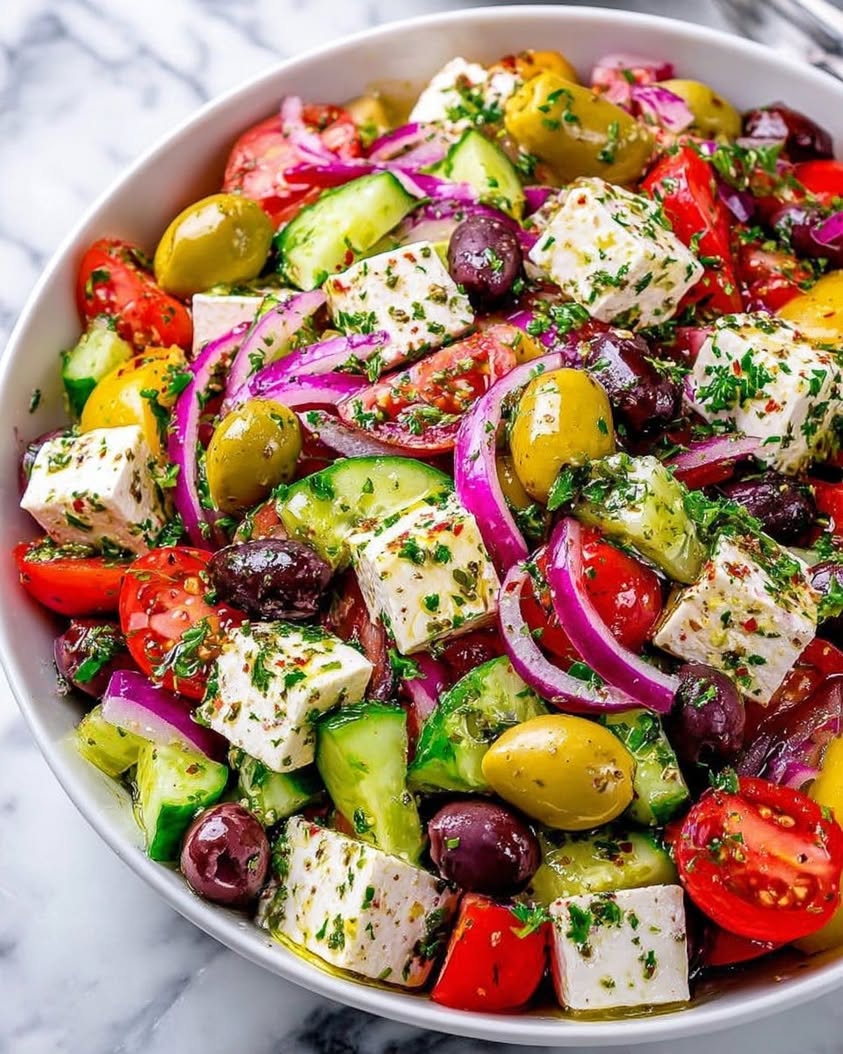
- Visual Appeal: Red tomatoes, green cucumbers, purple onions, and white feta create a colorful mosaic. The salad looks as vibrant as it tastes on any table.
- Skill Level Needed: Beginners can master this recipe easily because it requires only chopping and whisking. No advanced cooking techniques appear anywhere in the process.
- Special Equipment: You need only a sharp knife, a cutting board, and a large mixing bowl. A small whisk or jar handles the dressing perfectly.
Recipe Overview
- Difficulty Level: This recipe earns an easy rating because it involves no stovetop cooking or baking. The only skills required are basic chopping and stirring. Therefore, first-time cooks can succeed on the very first attempt. Even children can help assemble the salad with supervision.
- Category: The dish works as a side salad, a light lunch, or a starter course. Additionally, it serves well as a potluck contribution or a picnic companion.
- Cuisine: This Mediterranean salad recipe draws from Greek and Levantine traditions. Those regions celebrate fresh vegetables, olive oil, and herbs as daily staples. The combination reflects centuries of coastal cooking along the Mediterranean Sea. Today, home cooks worldwide embrace this style of eating for its freshness and simplicity.
- Cost: The ingredients cost roughly eight to twelve dollars for four servings. Fresh vegetables stay inexpensive in season, and feta and olives last for weeks in the refrigerator. Overall, the dish delivers excellent value for feeding a family.
- Season: Summer offers peak flavor because tomatoes and cucumbers reach their sweetest point. However, the salad works year-round with greenhouse vegetables. Spring and early fall also provide excellent produce for this recipe.
- Occasion: Serve this salad at backyard barbecues, holiday tables, or simple family dinners. It also shines at picnics and potlucks because it holds up well at room temperature. Furthermore, it makes a refreshing addition to lunch meal prep.
Why You’ll Love This Recipe
First, the taste and texture appeal of this Mediterranean salad recipe wins people over instantly. The vegetables stay crisp and refreshing while the feta adds a creamy, salty punch. Meanwhile, the lemon dressing ties everything together with bright acidity. Every forkful delivers a satisfying mix of crunch, creaminess, and zest. Consequently, even picky eaters come back for seconds.
Second, convenience sets this recipe apart from complicated dishes. You need no oven, no stove, and no special gadgets. In fact, the entire salad comes together in about fifteen minutes from start to finish. Because the steps stay simple, you can prepare it after a long workday without stress. Moreover, cleanup takes only minutes since one bowl and one cutting board handle most of the work.
Third, nutritional advantages make this Mediterranean salad recipe a smart choice. Fresh vegetables provide fiber, vitamins, and antioxidants, while olive oil offers heart-healthy fats. Feta contributes calcium and protein, and olives add beneficial plant compounds. Additionally, the recipe fits the widely praised Mediterranean diet pattern. As a result, you nourish your body while enjoying every bite.
Fourth, social and entertaining value makes this dish a party favorite. The salad presents beautifully in a large bowl, and guests love the vibrant colors. Because it holds up well at room temperature, you can set it out at buffets without worry. Furthermore, it pairs with almost any main course, from grilled fish to roasted chicken. Hosts appreciate how easily it feeds a crowd.
Fifth, cost-effectiveness and accessibility keep this recipe practical. The ingredients appear in nearly every supermarket worldwide. You avoid expensive specialty items because the recipe relies on humble staples. Additionally, seasonal vegetables keep the price low during summer months. Therefore, families on a budget can enjoy restaurant-quality food at home.
Historical Background and Cultural Significance
The origins of Mediterranean salad recipes trace back to ancient Greece and the surrounding coastal regions. Farmers and fishermen relied on fresh vegetables, olive oil, and cheese as daily nourishment. Consequently, simple salads became a cornerstone of the regional diet. Historical records even suggest that early versions combined tomatoes with onions and herbs. Over time, cooks refined these combinations into the dishes we recognize today.
Culturally, this salad represents the Mediterranean philosophy of eating. That philosophy emphasizes fresh ingredients, shared meals, and slow enjoyment of food. Families gather around tables with bowls of vegetables, bread, and olive oil. Meanwhile, the salad symbolizes hospitality because hosts serve it generously to guests. In Greece, similar dishes appear at nearly every taverna table as a welcoming gesture.
The evolution of this Mediterranean salad recipe reflects centuries of trade and migration. Tomatoes arrived in Europe from the Americas in the sixteenth century, transforming local cooking. Later, olives and feta became defining features of Greek cuisine. Additionally, regional cooks added their own touches, from capers to roasted peppers. Today, the salad exists in countless variations across the Mediterranean basin.
Regional variations illustrate the recipe’s flexibility. Greek versions emphasize feta and oregano, while Italian adaptations feature mozzarella and basil. Meanwhile, Middle Eastern cooks incorporate sumac, za’atar, and flatbread. Each region claims its own signature approach to the same basic idea. Consequently, the salad carries a rich heritage that spans continents and centuries.
Ingredient Deep Dive
Cucumbers form the crunchy backbone of this Mediterranean salad recipe. Historically, cucumbers have grown along the Mediterranean for thousands of years and appear in ancient Roman writings. Furthermore, they offer hydration and a mild, refreshing flavor. Nutritionally, cucumbers provide vitamin K and potassium with almost no calories. When shopping, choose firm, dark green cucumbers without soft spots. Store them in the refrigerator crisper drawer for up to a week. If cucumbers prove unavailable, substitute zucchini or bell peppers for similar crunch.
Cucumbers require minimal preparation, but quality matters enormously. English cucumbers offer fewer seeds and thinner skin, which makes them ideal for salads. Additionally, peeling remains optional because the skin holds nutrients and color. Because cucumbers release water, consider salting them briefly before mixing. This step prevents a watery salad later. Consequently, the final dish stays crisp and flavorful.
Tomatoes bring sweetness and acidity to this Mediterranean salad recipe. Native to the Americas, tomatoes spread across the Mediterranean after the sixteenth century and became essential to regional cooking. Additionally, they supply lycopene, vitamin C, and antioxidants. For the best flavor, select ripe, fragrant tomatoes at room temperature. Store them on the counter rather than the refrigerator to preserve texture. When tomatoes are out of season, cherry tomatoes offer reliable sweetness year-round.
Tomato selection impacts the salad’s success significantly. Heirloom varieties add depth and color, while Roma tomatoes provide meatiness. Furthermore, removing excess seeds reduces wateriness in the bowl. Because fresh summer tomatoes taste superior, plan this salad around peak season when possible. Meanwhile, grape tomatoes provide a convenient alternative with consistent quality.
Feta cheese delivers the salty, creamy element in this Mediterranean salad recipe. Greek feta holds protected designation status, reflecting its ancient heritage. Historically, shepherds preserved cheese in brine for months, which created feta’s distinctive tang. Nutritionally, feta offers calcium, protein, and probiotics. When shopping, look for blocks packed in brine rather than pre-crumbled options. Store feta in its brine in the refrigerator for up to three months. For substitution, try goat cheese or ricotta salata when feta is unavailable.
Feta quality varies widely, so choose carefully. Authentic Greek feta made from sheep’s milk delivers the richest flavor. Additionally, crumble it with your fingers for rustic texture. Because feta is salty, adjust the dressing accordingly to avoid overseasoning. Consequently, the salad achieves balanced seasoning every time.
Olives provide briny intensity and Mediterranean character to this salad recipe. Olive cultivation dates back over six thousand years in the region, making olives a true ancient food. Additionally, olives supply healthy fats and vitamin E. Kalamata olives offer a fruity, rich flavor, while Castelvetrano olives taste mild and buttery. Purchase olives from a deli counter when possible for superior quality. Refrigerate opened jars and use within several weeks. If olives don’t suit your taste, capers or pickled peppers work as substitutes.
Red onions add sharp bite and color to this Mediterranean salad recipe. Additionally, they contain antioxidants and compounds that support heart health. To reduce harshness, soak sliced onions in cold water for ten minutes before adding them. This technique mellows the flavor while preserving crunch. Because red onions offer the best color contrast, prefer them over white or yellow varieties. Meanwhile, shallots provide a gentler alternative for sensitive palates.
Common Mistakes to Avoid
- Dressing the salad too early causes vegetables to release water and turn soggy. Therefore, add dressing just before serving to maintain crunch. Leftovers keep better when stored undressed.
- Skipping the salt-and-rest step for cucumbers leads to watery salad. Salting draws out excess moisture and improves texture. Consequently, the final bowl stays crisp and flavorful.
- Using unripe or refrigerated tomatoes weakens the flavor significantly. Cold temperatures dull tomato aroma and sweetness. Therefore, let tomatoes come to room temperature before mixing.
- Overdressing overwhelms the fresh vegetables and makes the salad heavy. Start with half the dressing and add more as needed. Because a light coat suffices, taste before adding extra.
- Buying pre-crumbled feta sacrifices flavor and texture. Blocks in brine stay fresher and taste richer. Furthermore, crumbling by hand creates better texture in the bowl.
- Chopping vegetables too far ahead causes sogginess and nutrient loss. Cut ingredients within an hour of serving when possible. Meanwhile, store components separately until assembly.
- Ignoring onion harshness ruins the salad for sensitive eaters. Soaking sliced onions in cold water removes excess bite. Additionally, rinsing after soaking improves the flavor further.
- Forgetting to taste and adjust seasoning leaves the salad flat. Acid, salt, and pepper need balancing for full flavor. Therefore, taste after dressing and adjust as needed.
- Using dull knives bruises delicate vegetables. Sharp knives create clean cuts and preserve texture. Consequently, maintain your knives for better results.
- Serving the salad ice cold mutes the flavors. Let the salad sit briefly at room temperature before serving. Because cold dulls taste buds, a short rest improves enjoyment.
Essential Techniques
Proper chopping forms the foundation of a great Mediterranean salad recipe. Even, bite-sized pieces ensure every forkful contains a balanced mix of ingredients. Additionally, uniform cuts improve presentation and make the salad easier to eat. To master this technique, use a sharp chef’s knife and a stable cutting board. Also, cut tomatoes with a serrated knife to avoid crushing them. Consequently, the vegetables retain their shape and texture throughout mixing.
Emulsifying the dressing properly matters enormously for flavor distribution. A good emulsion combines lemon juice and olive oil into a smooth, cohesive liquid. To achieve this, whisk steadily while streaming oil slowly into the juice. Alternatively, shake everything in a sealed jar for thirty seconds. Furthermore, adding a pinch of salt helps stabilize the emulsion. As a result, the dressing coats every vegetable evenly.
Balancing flavors represents the most important skill in this Mediterranean salad recipe. Taste as you go and adjust acid, salt, and fat in small increments. Usually, a squeeze of lemon fixes a flat dressing, while a pinch of salt sharpens sweetness. Additionally, a drizzle of olive oil softens harsh acidity. Consequently, the final salad tastes vibrant and harmonious.
Pro Tips for Perfect Mediterranean Salad Recipe
First, use the ripest vegetables you can find because flavor comes from produce quality. Visit a farmers market during summer for the best tomatoes and cucumbers. Second, dress the salad at the last moment to preserve crunch. Third, make the dressing in a jar so you can shake and store leftovers easily. Fourth, salt cucumbers and drain them for ten minutes before mixing. Fifth, crumble feta by hand for better texture and flavor distribution. Sixth, soak red onions in cold water to tame their bite. Seventh, add fresh herbs right before serving to keep them bright. Finally, taste the salad one last time before it reaches the table.
Variations and Adaptations
Regional variations transform this Mediterranean salad recipe in delicious ways. A Greek version emphasizes feta, oregano, and Kalamata olives. Meanwhile, an Italian adaptation swaps in mozzarella, basil, and balsamic vinegar. Middle Eastern cooks add sumac, za’atar, and toasted pita chips for crunch. Additionally, Lebanese versions often include mint and bulgur. Each interpretation reflects local ingredients and traditions. As a result, you can travel the Mediterranean through your salad bowl.
Seasonal adaptations keep the salad fresh year-round. In summer, showcase heirloom tomatoes and fresh cucumbers. During fall, add roasted peppers and red onions. Meanwhile, winter versions benefit from citrus segments and shredded cabbage. Spring brings radishes and tender greens to the mix. Consequently, the salad never grows boring across the calendar.
Dietary modifications make the recipe accessible to everyone. For a vegan version, omit feta or replace it with marinated tofu. Gluten-free eaters already enjoy this salad since it contains no grains. Low-carb and keto diners appreciate the naturally low carbohydrate content. Additionally, dairy-free cooks can substitute avocado for creaminess. Therefore, nearly every dietary lifestyle fits this Mediterranean salad recipe.
Flavor variations let you customize the dressing and add-ins. Add harissa for heat, honey for sweetness, or Dijon mustard for tang. Meanwhile, fresh dill or mint changes the herbal profile entirely. Texture modifications include toasted pine nuts, crunchy chickpeas, or fried pita strips. Furthermore, presentation alternatives range from layered platters to individual portions. These adjustments keep the recipe exciting and personal.
Serving and Presentation Guide
Plating techniques elevate this Mediterranean salad recipe from simple to stunning. Spread the vegetables across a wide shallow bowl to showcase their colors. Alternatively, arrange ingredients in sections for a striking composed salad. Then drizzle dressing over the top so guests see the glossy finish. Scatter feta and olives last for visual contrast. Consequently, the salad becomes a centerpiece worthy of any table.
Garnishing ideas add polish and freshness. Sprinkle chopped parsley, mint, or oregano over the finished bowl. Add lemon wedges along the rim for a bright accent. Meanwhile, a light dusting of sumac or cracked pepper adds rustic charm. Edible flowers offer an elegant touch for special occasions. Because garnishes take seconds, they deliver big visual impact.
Traditional accompaniments complete the Mediterranean experience. Serve warm pita bread, crusty sourdough, or flatbread alongside the salad. Additionally, grilled chicken, lamb skewers, or falafel turn it into a full meal. Hummus and tzatziki make excellent partners for dipping. Furthermore, a plate of olives and stuffed grape leaves rounds out the spread. These pairings create an authentic Mediterranean table.
Temperature considerations affect how guests experience the salad. Serve it slightly cool rather than ice cold for maximum flavor. If transporting the salad, keep components chilled separately and assemble on site. Additionally, avoid direct sunlight at outdoor events to prevent wilting. Portion control tips help with planning: plan about one and a half cups per person as a side. For a main course, offer three cups per guest.
Wine and Beverage Pairing
Wine pairings enhance this Mediterranean salad recipe beautifully. A crisp Sauvignon Blanc matches the lemon dressing and fresh herbs. Alternatively, a dry rosé complements the tomatoes and olives with fruity notes. Greek Assyrtiko offers mineral brightness that echoes the feta’s tang. Meanwhile, a light Pinot Grigio provides easy sipping for casual gatherings. Because the salad stays light, avoid heavy oaky wines that overpower it. Consequently, bright, acidic wines deliver the best experience.
Non-alcoholic alternatives keep everyone refreshed. Sparkling water with lemon and mint mirrors the salad’s flavors. Additionally, iced hibiscus tea adds tartness and color. A cucumber-lime cooler offers cooling refreshment on hot days. Meanwhile, traditional Greek lemonade pairs delightfully with the dish. Because these drinks stay light, they complement rather than compete with the food.
Serving suggestions make beverage service effortless. Chill white wines and rosés to about fifty degrees Fahrenheit for best flavor. Additionally, offer water glasses with lemon wedges at every place setting. For large gatherings, set up a self-serve drink station near the food. Consequently, guests stay refreshed throughout the meal.
Storage and Shelf Life
Proper storage protects the quality of this Mediterranean salad recipe. Store leftovers in an airtight container in the refrigerator. However, keep dressing separate whenever possible to prevent sogginess. Additionally, place a paper towel under the lid to absorb excess moisture. Consequently, the salad stays fresh for up to two days.
Temperature requirements matter for food safety. Keep the salad below forty degrees Fahrenheit during storage. Furthermore, avoid leaving it at room temperature for more than two hours. During summer gatherings, nestle the serving bowl in ice to maintain safe temperatures. Because dairy spoils quickly, discard any salad left out overnight.
Container recommendations improve results. Glass containers preserve freshness better than plastic because they resist odors. Additionally, wide, shallow containers prevent crushing. Use small jars for dressing storage with tight-fitting lids. Meanwhile, keep olives and feta in their original brine for longest shelf life.
Recognizing signs of spoilage protects your health. Discard the salad if it smells sour, looks slimy, or shows mold. Additionally, wilted, mushy vegetables indicate the salad has passed its prime. Feta that turns yellowish or develops an off smell should go immediately. Because freshness defines this dish, err on the side of caution.
Make Ahead Strategies
Smart prep timelines make this Mediterranean salad recipe stress-free for events. Chop vegetables up to twenty-four hours ahead and refrigerate them separately. Additionally, whisk the dressing up to five days in advance and store it in a jar. Wash and dry herbs the day before for quick assembly. Consequently, serving day requires only mixing and plating.
Storage between steps preserves quality during advance preparation. Keep cucumbers and tomatoes in separate containers to prevent moisture transfer. Meanwhile, hold onions in cold water in the refrigerator until needed. Store feta submerged in brine until crumbled. Because each component stays独立, the final salad tastes freshly made.
Quality impact assessment helps set realistic expectations. Vegetables hold up beautifully overnight, but herbs lose brightness after chopping. Therefore, chop herbs on serving day for the best flavor. Dressing improves after a few hours as flavors meld. Additionally, assembly takes only five minutes when everything is prepped. This strategy suits both weeknight dinners and party planning.
Scaling Instructions
Halving the recipe works easily for smaller households. Use half of each ingredient and keep the dressing ratio the same. Additionally, a small jar handles the reduced dressing volume. Because the salad scales linearly, flavors stay consistent. Consequently, singles and couples enjoy fresh salad without waste.
Doubling or tripling the recipe suits parties and large families. Increase all ingredients proportionally and use a large mixing bowl. Meanwhile, prepare dressing in batches to ensure proper emulsification. Additionally, taste and adjust seasoning after combining everything. Because flavors intensify with volume, start conservatively with salt.
Equipment adjustments matter when scaling up. Use a large platter or roasting pan when mixing bowls run short. Additionally, borrow extra cutting boards to speed chopping. Timing modifications include starting prep earlier for larger batches. Consequently, everything comes together smoothly for big events.
Nutritional Deep Dive
The macro breakdown of this Mediterranean salad recipe supports balanced eating. Each serving provides roughly two hundred calories, eight grams of protein, and fifteen grams of healthy fat. Additionally, carbohydrates stay low at around ten grams per serving. Fiber content reaches three grams, supporting digestive health. Consequently, the salad fits most nutrition plans comfortably.
Micronutrient analysis reveals impressive vitamin content. Tomatoes supply vitamin C and lycopene, while cucumbers add vitamin K. Additionally, feta contributes calcium and phosphorus. Olives provide vitamin E, and olive oil delivers polyphenols. Because these nutrients work together, the salad supports overall wellness.
Health benefits extend beyond basic nutrition. The Mediterranean diet pattern links to heart health, reduced inflammation, and better longevity. Additionally, olive oil supports healthy cholesterol levels. Fresh vegetables provide antioxidants that combat oxidative stress. Consequently, regular enjoyment of this salad supports long-term wellness goals.
Portion analysis helps with mindful eating. A side portion of one and a half cups delivers modest calories with high satisfaction. Additionally, the fiber and fat content promote fullness. Weight management tips include bulking the salad with extra greens for volume. Because the recipe satisfies without heaviness, it supports balanced meals.
Dietary Adaptations
Gluten-free eaters enjoy this Mediterranean salad recipe without any changes. The recipe contains no grains, bread, or pasta. However, check that any added pita chips are certified gluten-free. Additionally, verify that olives and feta are free from gluten-containing additives. Consequently, the dish suits celiac and gluten-sensitive diners naturally.
Dairy-free modifications require only one swap. Omit the feta or replace it with marinated tofu, avocado, or a dairy-free cheese alternative. Additionally, nutritional yeast adds a savory, cheese-like flavor. Because the dressing contains no dairy, no other changes are needed. Consequently, dairy-free diners enjoy a complete salad.
Vegan adaptations follow the same path as dairy-free changes. Replace feta with chickpeas or white beans for protein and texture. Additionally, add extra olives and roasted red peppers for richness. Because olive oil anchors the dressing, no other swaps are required. Consequently, vegans enjoy a satisfying, flavorful dish.
Low-carb and keto diners find this salad naturally suitable. The vegetables provide minimal net carbs, and the fat content stays high from olive oil and feta. Additionally, skip any honey in the dressing for strict keto compliance. Because the base recipe fits these plans, no major modifications are needed. Meanwhile, paleo eaters should choose high-quality feta or omit it entirely.
Troubleshooting Guide
Texture issues arise most often from watery vegetables. Salt cucumbers and drain tomatoes to prevent sogginess. Additionally, dress the salad at serving time rather than hours ahead. Because moisture control defines good texture, take these steps consistently. Consequently, every bowl stays crisp and appealing.
Flavor balance problems usually stem from under-seasoning or overdressing. Taste after dressing and add salt, lemon, or olive oil as needed. Additionally, remember that feta and olives contribute salt, so season cautiously. Because flavors need small adjustments, taste frequently during assembly. Consequently, balance arrives quickly with practice.
Temperature problems affect both texture and safety. Serve the salad slightly cool, never ice cold, for best flavor. Additionally, keep it out of direct sun at outdoor events. If the salad warms too much, return it to the refrigerator briefly. Because food safety matters, discard anything left out too long.
Equipment challenges rarely arise with this simple recipe. A sharp knife and cutting board handle all the prep. Additionally, a jar or small whisk manages the dressing. When feeding crowds, borrow extra bowls and boards. Consequently, no special purchases are ever needed.
Recipe Success Stories
Community feedback highlights how often this Mediterranean salad recipe appears at family tables. Readers report making it weekly during tomato season. Additionally, many share photos of colorful bowls at barbecues and picnics. Because the recipe succeeds consistently, beginners gain confidence quickly. Consequently, the dish earns repeat appearances in countless homes.
Variation successes come from readers who adapt freely. Some add grilled shrimp, while others toss in chickpeas for protein. Additionally, one reader layered the salad over hummus for a striking appetizer. Meanwhile, another substituted feta with goat cheese for a tangier profile. Because the recipe welcomes creativity, every adaptation finds fans.
Photography tips help readers capture beautiful shots. Natural light flatters the vibrant colors best, so photograph near a window. Additionally, garnish with fresh herbs right before shooting. A shallow bowl shows the ingredients clearly from above. Consequently, home photos look magazine-ready with minimal effort.
Frequently Asked Questions
How long does Mediterranean salad last in the refrigerator? The salad keeps for up to two days when stored in an airtight container. However, dressing the salad in advance shortens its shelf life. For the best texture, store components separately and combine just before serving. Discard any leftovers that smell sour or look slimy.
Can I make this Mediterranean salad recipe ahead of time? Yes, you can prep all components up to a day in advance. Chop vegetables and refrigerate them separately, then whisk the dressing and store it in a jar. Assemble the salad within an hour of serving for peak freshness. This approach saves time on busy event days.
What protein pairs well with this salad? Grilled chicken, lamb skewers, and shrimp all complement the flavors beautifully. Additionally, chickpeas, white beans, and grilled tofu work for plant-based meals. Because the salad stays light, nearly any protein fits alongside it. Choose based on your meal goals and preferences.
Is feta cheese required for this recipe? Feta provides the classic salty, creamy element, but substitutions work well. Try goat cheese, ricotta salata, or shaved Parmesan for similar results. For dairy-free diners, marinated tofu or avocado offers creaminess. Consequently, the salad adapts to many dietary needs.
How do I prevent the salad from getting soggy? Salt cucumbers and drain them before mixing, and dress the salad at serving time. Additionally, keep tomatoes at room temperature and avoid overmixing. Because moisture control is key, store leftovers undressed. These steps keep every bowl crisp.
Can I use dried herbs instead of fresh? Dried oregano works well, though fresh herbs deliver brighter flavor. Use one teaspoon of dried herbs for every tablespoon of fresh. Additionally, let dried herbs sit in the dressing for ten minutes to rehydrate. Consequently, flavor remains robust either way.
What are the best tomatoes for this salad? Heirloom, cherry, and Roma tomatoes all perform well. Choose ripe, fragrant tomatoes at room temperature for the sweetest flavor. Additionally, remove excess seeds to reduce wateriness. Because tomato quality defines the salad, shop at peak season when possible.
Can I add grains to make it a main dish? Yes, cooked quinoa, farro, or orzo turn the salad into a hearty main course. Additionally, bulgur provides a traditional Mediterranean option. Because the dressing already provides plenty of flavor, simply toss the grains with the vegetables. Consequently, one bowl feeds a family.
How do I make the dressing less acidic? Add a drizzle of olive oil or a pinch of sugar to soften sharp acidity. Additionally, a small amount of Dijon mustard balances the lemon juice. Because balance matters, taste as you adjust. Consequently, the dressing suits every palate.
Is this salad suitable for meal prep? Yes, with smart packing, the salad suits weekly meal prep. Keep dressing in separate small containers and add it at lunchtime. Additionally, layer heartier ingredients at the bottom of containers. Consequently, weekday lunches stay fresh and appealing.
What olives work best in this recipe? Kalamata olives deliver bold, fruity flavor and classic Mediterranean character. Castelvetrano olives offer a milder, buttery alternative. Additionally, Niçoise olives bring a subtle, nutty note. Because olives contribute significant flavor, choose varieties you enjoy.
Can children eat this Mediterranean salad recipe? Yes, children generally enjoy the mild, fresh flavors. Additionally, serve the dressing on the side and let kids choose their favorites. Because the ingredients stay familiar, picky eaters often try more. Consequently, the salad becomes a family-friendly staple.
Additional Resources
Related recipes expand your Mediterranean cooking repertoire. Try classic Greek tzatziki, roasted red pepper hummus, or lemon-herb grilled chicken. Additionally, tabbouleh and fattoush offer satisfying grain-based alternatives. Because these dishes share ingredients, shopping stays efficient. Consequently, you build a complete Mediterranean menu with ease.
Technique guides help sharpen essential kitchen skills. Learn proper knife care, emulsification, and vegetable storage through trusted cooking resources. Additionally, video tutorials demonstrate chopping methods step by step. Because practice builds confidence, revisit these guides often. Consequently, every recipe improves alongside your skills.
Ingredient information deepens your appreciation for Mediterranean cooking. Explore the history of olive oil production and feta-making traditions. Additionally, learn about heirloom tomato varieties and seasonal produce calendars. Because knowledge enhances enjoyment, these resources reward curious cooks. Consequently, your salads improve with every insight.
Equipment recommendations simplify shopping decisions. A quality chef’s knife, sturdy cutting board, and glass mixing bowls cover nearly every need. Additionally, a simple salad spinner speeds drying leafy greens. Because good tools last years, invest wisely. Consequently, cooking becomes easier and more enjoyable over time. Print
Mediterranean Salad
- Total Time: 45 minutes
- Yield: 4
Description
A refreshing and vibrant salad featuring crisp vegetables, creamy feta, and a tangy lemon-herb dressing.
Ingredients
- 4 cups romaine lettuce, chopped
- 1 cup cherry tomatoes, halved
- 1 cucumber, diced
- 1/2 red onion, thinly sliced
- 1/2 cup Kalamata olives
- 1/2 cup crumbled feta cheese
- 2 tablespoons fresh lemon juice
- 3 tablespoons olive oil
- 1 teaspoon dried oregano
- Salt and pepper to taste
Instructions
- In a large bowl, combine the romaine lettuce, cherry tomatoes, cucumber, red onion, and Kalamata olives.
- In a small bowl, whisk together the lemon juice, olive oil, oregano, salt, and pepper.
- Pour the dressing over the salad and toss to coat. Sprinkle with feta cheese and serve immediately.
Notes
You can customize the seasonings to taste.
- Prep Time: 15 minutes
- Cook Time: 30 minutes
- Method: Main
- Cuisine: American