Honeyed Pistachio Baklava Cheesecake: A Decadent Fusion Dessert
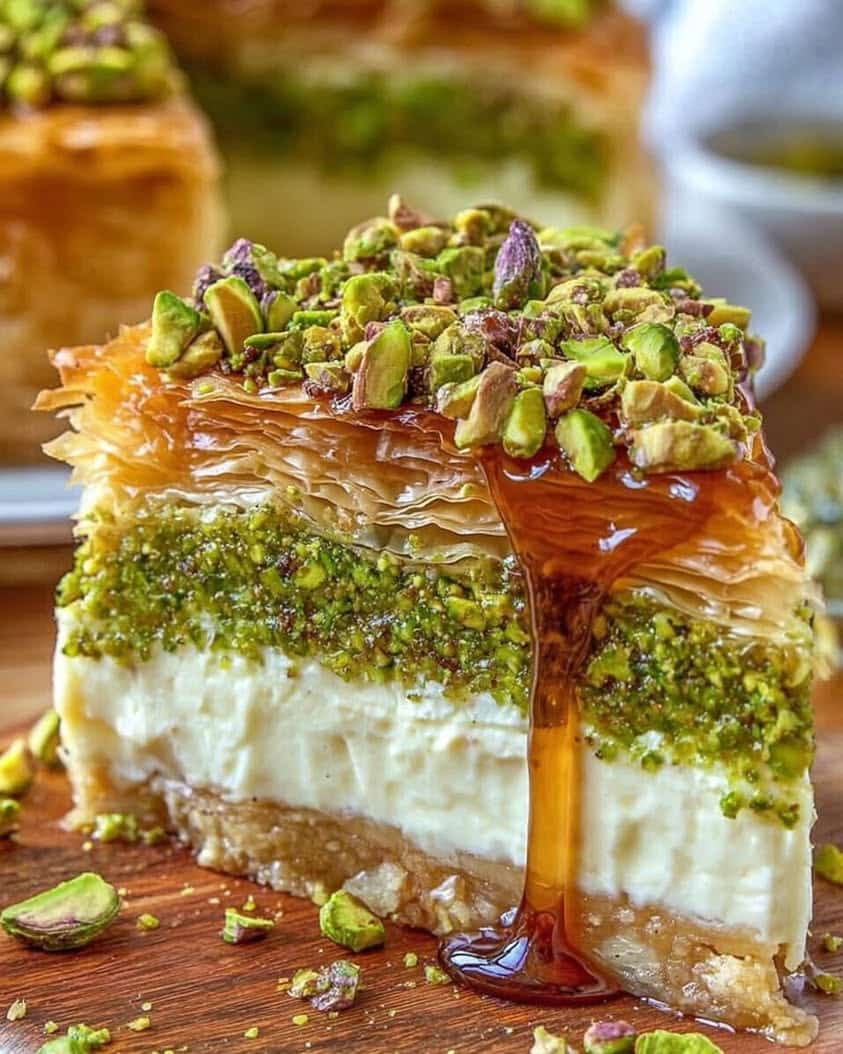
This Honeyed Pistachio Baklava Cheesecake brings together two beloved dessert traditions in one unforgettable slice. Imagine a creamy, velvety cheesecake layer nestled beneath a crisp, golden phyllo crown, all kissed with fragrant honey syrup and jewel-like pistachios. Every bite delivers the tangy richness of classic cheesecake alongside the flaky, nutty crunch of traditional baklava. Whether you serve it for a holiday gathering or a weekend treat, this Honeyed Pistachio Baklava Cheesecake earns rave reviews every single time.
The magic happens when textures and flavors collide. A buttery graham and pistachio crust anchors the dessert, while a silky cream cheese filling provides a cool, tangy contrast to the sweet honey glaze. Layered phyllo sheets, brushed with clarified butter and scattered with chopped pistachios, bake into a shatteringly crisp topping that echoes the classic Middle Eastern pastry. The final drizzle of honey syrup soaks into the layers, creating that signature baklava stickiness we all crave. Meanwhile, the cheesecake base stays smooth and luscious beneath the crunch.
You might worry that combining two elaborate desserts demands professional skill, yet this Honeyed Pistachio Baklava Cheesecake recipe remains approachable for home bakers. The components come together in clear, manageable steps, and the payoff far exceeds the effort. Because the cheesecake chills overnight, you can spread the work across two days and serve it stress-free. Consequently, this dessert suits both confident beginners and seasoned bakers who want a showstopper without fuss. Let this recipe guide you toward a dessert that looks bakery-worthy and tastes even better.
Quick Recipe Highlights
- Flavor Profile: Expect a harmonious balance of tangy cream cheese, sweet floral honey, toasted pistachio, and warm cinnamon. The honey syrup adds a luscious caramel-like sweetness that lingers pleasantly. Meanwhile, a hint of lemon zest brightens the entire experience.
- Texture: The dessert delivers a thrilling contrast between the creamy, dense cheesecake and the shatteringly crisp phyllo layers. Chopped pistachios add a satisfying crunch throughout. Additionally, the honey soak softens the phyllo just enough to create that classic baklava chew.
- Aroma: Toasted nuts and butter dominate the nose, followed by the floral notes of quality honey. A whisper of cinnamon and vanilla rounds out the fragrance. As a result, the kitchen smells irresistible during baking.
- Visual Appeal: Golden phyllo shards crown a pale ivory cheesecake, while emerald pistachios scatter across the top like confetti. The amber honey drizzle catches the light beautifully. Consequently, this dessert photographs like a dream and impresses at any table.
- Skill Level Needed: Intermediate bakers will feel comfortable with this recipe, though beginners can succeed with patience. The main challenges involve working gently with phyllo and avoiding overbaking the custard. However, clear instructions and visual cues guide you through each stage.
- Special Equipment: You need a 9-inch springform pan, a food processor for crushing nuts and cookies, and a pastry brush for buttering phyllo. A stand mixer or hand mixer speeds up the filling preparation. Additionally, a rimmed baking sheet protects against butter drips.
Recipe Overview
- Difficulty Level: This recipe sits comfortably at the intermediate level because it combines two distinct techniques, namely cheesecake baking and phyllo layering. Each component alone is straightforward, yet coordinating them requires attention and timing. The overnight chill adds convenience rather than difficulty. Overall, most home cooks with a few baking projects behind them will succeed.
- Category: This dessert functions as both a celebration cake and a plated dinner finale. It also works beautifully on brunch buffets and holiday dessert tables. Because it slices cleanly, it suits casual gatherings and formal events alike.
- Cuisine: The recipe fuses American cheesecake tradition with Middle Eastern and Mediterranean pastry heritage. Baklava itself carries deep roots across Turkish, Greek, Lebanese, and Persian cuisines. Therefore, this dessert honors multiple culinary traditions in a single creative dish. The result feels both familiar and delightfully exotic.
- Cost: Expect to spend roughly twelve to eighteen dollars on ingredients for twelve servings. Pistachios represent the largest expense, followed by cream cheese and honey. However, the per-serving cost stays reasonable compared to bakery prices for specialty desserts.
- Season: This cheesecake shines brightest during fall and winter holidays when rich desserts feel most welcome. It also works beautifully in spring for Eid celebrations and Easter tables. Because pistachios and honey remain available year-round, you can enjoy it any season.
- Occasion: Serve this dessert for holidays, birthdays, dinner parties, and cultural celebrations. It makes a stunning centerpiece for potlucks and bridal showers. Moreover, it elevates ordinary weekends into something special.
Why You’ll Love This Recipe
The taste and texture alone justify making this Honeyed Pistachio Baklava Cheesecake. The creamy filling carries a gentle tang that balances the honey syrup’s sweetness perfectly. Meanwhile, the phyllo layers deliver that iconic baklava crunch, and toasted pistachios add richness and depth. Each forkful offers something new, transitioning from cool creaminess to warm, nutty crispness. Consequently, tasters rarely stop at one slice.
Convenience also plays a starring role in this recipe’s appeal. You can prepare the components in stages, and the overnight chill does most of the work for you. The phyllo topping bakes in under twenty minutes while the cheesecake cools. Because the dessert improves with rest, you avoid last-minute stress before guests arrive. Additionally, the recipe uses common pantry staples alongside accessible specialty items.
Nutritionally, this dessert offers more than empty calories. Pistachios contribute protein, fiber, and healthy fats, while honey provides natural sweetness with trace minerals. Cream cheese supplies calcium and protein, and eggs add essential nutrients. Although this remains an indulgent treat, it delivers real substance alongside its sweetness. Portion control keeps the indulgence sensible.
Socially, this Honeyed Pistachio Baklava Cheesecake sparks conversation wherever it appears. Guests often ask about the fusion concept and request the recipe on the spot. The striking presentation makes it feel celebratory without requiring professional plating skills. Therefore, it works as a built-in icebreaker at parties and family gatherings. Hosts love a dessert that doubles as entertainment.
Finally, the cost-effectiveness keeps this recipe in regular rotation. Compared to specialty bakery cheesecakes that cost forty dollars or more, homemade versions save significant money. The ingredients stretch across twelve generous servings, and leftovers keep beautifully. Consequently, you gain a budget-friendly showstopper that rivals any pastry case.
Historical Background and Cultural Significance
Baklava originated in the imperial kitchens of the Ottoman Empire, though its exact birthplace remains debated among food historians. Topkapi Palace records from the fifteenth century describe layered pastry preparations similar to modern baklava. Greek, Turkish, Armenian, and Middle Eastern communities all claim beloved versions of the dessert. Consequently, baklava represents a shared culinary heritage across many cultures.
In these traditions, baklava symbolizes hospitality and celebration. Families serve it at weddings, religious holidays, and major life milestones. The labor-intensive layering process historically demonstrated a host’s generosity and skill. Today, sharing baklava still conveys warmth, respect, and welcome. Therefore, incorporating its flavors into cheesecake carries genuine cultural meaning.
Cheesecake itself traces back to ancient Greece, where writers described early versions made with fresh cheese and honey. The dessert evolved through Roman, European, and eventually American kitchens. New York-style cheesecake became an icon in the twentieth century. By blending these histories, this recipe bridges old-world pastry craft with modern American dessert culture.
Regional variations abound across the baklava landscape. Turkish baklava features pistachios and clarified butter, while Greek versions often use walnuts and cinnamon. Lebanese bakeries add orange blossom water, and Persian traditions incorporate rosewater and saffron. This Honeyed Pistachio Baklava Cheesecake draws primarily from Turkish and Greek influences. However, cooks can adapt it toward any regional style they love.
Ingredient Deep Dive
Pistachios anchor the flavor identity of this dessert and deserve careful attention. These green gems originated in Central Asia and have been cultivated for thousands of years. Nutritionally, pistachios supply protein, fiber, potassium, and vitamin B6. When selecting pistachios, choose shelled, unsalted raw nuts for the best control over flavor. Store them in an airtight container away from heat and light. In a pinch, almonds or walnuts work as substitutes, though the color and flavor shift noticeably.
Honey brings the signature sweetness and floral complexity to the syrup. Beekeepers have harvested honey for over eight thousand years, making it one of humanity’s oldest sweeteners. Beyond sweetness, honey offers antioxidants and trace minerals. For this recipe, select a mild, fragrant variety such as clover or orange blossom honey. Store honey at room temperature, sealed tightly. If you avoid honey, agave syrup or maple syrup can replace it with minor flavor differences.
Phyllo dough provides the essential flaky layers of the baklava crown. Greek for leaf, phyllo consists of paper-thin pastry sheets that bakers have made for centuries across the Mediterranean. Commercially frozen phyllo makes this recipe practical for home cooks. Look for brands that list flour, water, and oil without additives. Keep phyllo frozen until ready to use, and always cover sheets with a damp towel during work. Spring roll wrappers do not substitute well here.
Cream cheese forms the heart of the cheesecake filling. American cream cheese emerged in New York dairy country during the late nineteenth century and became a household staple. It contributes calcium, protein, and that signature tang. Choose full-fat blocks rather than spreadable tubs for reliable structure. Store it refrigerated and bring it to room temperature before mixing. Mascarpone creates a richer, softer substitute, while Neufchatel lowers fat content.
Clarified butter, known as ghee in many cultures, enriches the phyllo layers. Indian and Middle Eastern cooks have clarified butter for millennia to extend shelf life and elevate flavor. Clarified butter contains fat-soluble vitamins and adds a nutty aroma. Buy prepared ghee or make your own by simmering butter until the milk solids separate. Store it sealed at room temperature or in the refrigerator. Regular melted butter works in a pinch but browns faster.
Common Mistakes to Avoid
- Drying out the phyllo causes cracks and shattering. Keep sheets covered with a damp towel at all times because they dry within minutes of exposure. Work quickly and keep the stack protected between layers.
- Overbeating the filling whips too much air into the batter and causes cracks during baking. Mix at low speed until the ingredients just combine. A few small lumps remain acceptable and prevent structural problems.
- Skipping the water bath leads to uneven baking and a scorched top. The gentle steam heat produces the creamy, crack-free texture that defines excellent cheesecake. Wrap the pan tightly in foil first to block moisture.
- Overbaking the cheesecake ruins the silky texture and creates a dry, crumbly bite. Pull the pan when the center still wobbles slightly like firm gelatin. Carryover heat finishes the job during cooling.
- Undercooking the phyllo topping leaves pale, limp layers instead of golden shards. Bake until the edges turn deep amber because that color signals crispness. Watch closely during the final minutes.
- Pouring hot syrup onto the dessert too early creates sogginess throughout. Let both components cool to warm or room temperature before combining. Patience preserves each distinct texture.
- Using cold cream cheese leads to lumpy, uneven filling that never smooths out completely. Set blocks on the counter for at least two hours before mixing. Room temperature ingredients incorporate beautifully.
- Cutting the cheesecake cold with a dull knife smears the layers and crushes the phyllo. Use a sharp, thin-bladed knife dipped in hot water and wiped dry between slices. Clean cuts showcase the gorgeous interior layers.
- Skipping the overnight chill shortchanges flavor and structure. The cheesecake needs at least eight hours to set fully and let flavors marry. Overnight chilling also makes slicing dramatically easier.
- Overloading the honey syrup drowns the phyllo and turns it mushy. Drizzle gently and allow the syrup to soak gradually. A light hand preserves the essential crunch.
Essential Techniques
Layering phyllo properly determines whether the topping shatters beautifully or collapses sadly. Brush each sheet evenly with clarified butter, working from the edges inward. Alternate slightly offset angles to build an organic, ruffled crown. Additionally, scatter pistachios every few sheets for even distribution. Visual cues for success include a glossy, translucent sheen after the butter brushing. If sheets tear, embrace the imperfection because the layers hide flaws once baked.
Mastering the water bath transforms cheesecake texture from merely good to extraordinary. Place the wrapped springform pan inside a larger roasting pan, then add hot water halfway up the sides. The surrounding steam regulates oven temperature and prevents sudden rises and falls. Consequently, the surface bakes smooth and creamy without cracks. Check the water level midway through baking and add hot water if it drops. This technique rewards you with bakery-quality results at home.
Recognizing the proper doneness point saves countless cheesecakes from overbaking. Gently shake the pan, and the center should jiggle like soft gelatin. The edges should appear set and slightly puffed. Furthermore, an instant-read thermometer inserted near the center should read around 150 degrees Fahrenheit. If the entire surface looks firm, pull it immediately because residual heat continues cooking the custard. With practice, this visual and tactile check becomes second nature.
Creating the honey syrup requires a light touch with heat and timing. Warm honey with a splash of water and lemon zest until it flows freely but never boil it vigorously. Boiling alters honey’s delicate floral notes and thickens the syrup excessively. Strain out the zest, then let the syrup cool to warm before drizzling. Taste and adjust with a pinch of salt to balance the sweetness. This simple syrup elevates the entire dessert.
Pro Tips for Perfect Honeyed Pistachio Baklava Cheesecake
Toast the pistachios lightly before using them in the crust and topping. A quick eight-minute roast at 350 degrees deepens their flavor and removes raw bitterness. Cool them completely before chopping for even results. This extra step takes minimal effort yet pays enormous flavor dividends.
Wrap the springform pan in two layers of heavy-duty foil before the water bath. Even water-resistant pans can leak through the base seal. Crisscross the foil and press it snugly against the sides. This precaution prevents soggy crusts and disappointing textures.
Add a tablespoon of cornstarch to the cheesecake batter for extra insurance against cracking. The starch stabilizes the custard without affecting taste. Whisk it into the sugar before creaming for even distribution. This quiet upgrade delivers consistently smooth surfaces.
Brush the phyllo with generous but not excessive butter to guarantee crispness. Every sheet needs full coverage to bake into golden shards. However, puddles of butter create greasy, heavy layers. Aim for a thin, even sheen across each surface.
Chill the assembled dessert overnight, then let it sit at room temperature for fifteen minutes before slicing. This brief rest softens the phyllo just slightly while keeping its signature crunch. Cold, rigid desserts resist clean cutting. The short wait improves both presentation and mouthfeel.
Reserve a handful of the most beautiful pistachios for the final garnish. Chop the rest for layering and scatter the perfect pieces across the top just before serving. This small detail makes the dessert look professionally finished. Practice a little dessert styling and your table photos will shine.
Wipe the knife clean between every single slice for a pristine presentation. A damp, hot towel beside your cutting board makes this habit effortless. Clean cuts reveal the gorgeous layers and encourage oohs from guests. Presentation matters as much as flavor.
Serve the honey syrup in a small pitcher alongside the cheesecake for guests to add themselves. Some prefer a lighter drizzle while others crave extra sweetness. This interactive touch delights guests and accommodates every preference. It also prevents the dessert from becoming oversaturated during storage.
Variations and Adaptations
Regional variations let you explore the broader baklava landscape from your kitchen. Try Greek-style with walnuts and cinnamon in place of pistachios for a warmer profile. Lebanese-inspired versions benefit from a teaspoon of orange blossom water in the syrup. Persian adaptations add saffron threads and rosewater for a stunning golden hue. Each regional twist offers a new cultural story on the plate.
Seasonal adaptations keep this dessert exciting throughout the year. In autumn, fold pumpkin pie spice into the filling and swap maple syrup for part of the honey. Summer versions pair beautifully with fresh berries and a lighter honey drizzle. Around the holidays, add dried cranberries to the phyllo layers for festive color. Adapting to the season makes the recipe feel fresh every time.
Dietary modifications expand who can enjoy this dessert. Gluten-free bakers can substitute gluten-free graham crackers for the crust and check phyllo brands carefully because most contain wheat. A spring roll wrapper alternative changes the texture but works in a pinch. For lactose concerns, use lactose-free cream cheese and ghee, which contains minimal lactose. Always taste-test substitutions before serving guests.
Flavor variations offer endless creative freedom. Add espresso powder to the filling for a mocha twist that pairs beautifully with the pistachio. Swap honey for bourbon caramel for a Southern-inspired rendition. A raspberry swirl through the cheesecake introduces tart fruitiness that cuts the sweetness. Citrus zest, cardamom, or nutmeg each bring distinct personalities to the table.
Texture modifications create entirely new eating experiences. Crush extra pistachios coarsely for added crunch on top, or fold chopped chocolate into the phyllo layers. Pressing crushed nuts directly onto the cheesecake sides after chilling adds dimension. A dollop of whipped cream softens each bite. Considering texture at every layer elevates the final result.
Presentation alternatives suit every gathering style. Bake individual portions in muffin tins for elegant single-serve desserts at parties. A rectangular pan version slices into easy bars for buffets. Mini phyllo shells hold cheesecake filling for bite-sized hors d’oeuvres. Each format keeps the signature flavors while adjusting the service style.
Serving and Presentation Guide
Plating this Honeyed Pistachio Baklava Cheesecake begins with a clean slice on a small dessert plate. Place the slice slightly off-center and add a delicate drizzle of warmed honey beside it. A dusting of crushed pistachios around the plate adds visual interest. Moreover, a small wedge of fresh fig or a few raspberries complements the flavors beautifully.
Garnishing ideas range from simple to dramatic. Scatter whole pistachios and edible rose petals for a stunning Middle Eastern aesthetic. A curl of lemon zest adds brightness, and a thin honey drizzle on the plate creates a professional look. Softly whipped cream on the side provides contrast. Keep garnishes light so the dessert remains the star.
Traditional accompaniments honor the dessert’s heritage. Serve small cups of strong Arabic coffee or mint tea alongside since both cut through the sweetness elegantly. Fresh fruit such as sliced oranges or pomegranate arils offer refreshing contrast. A small dish of extra honey lets guests adjust sweetness. These touches connect the fusion dessert back to its roots.
Modern serving suggestions suit contemporary dining. A scoop of pistachio gelato beside the slice creates a luxurious pairing for dinner parties. A splash of rose liqueur over the plate adds sophistication. Crumbled baklava pieces alongside the slice double down on the theme. Creative pairings keep the dessert feeling fresh and exciting.
Temperature considerations matter significantly for this dessert. Serve the cheesecake slightly cooled from the refrigerator rather than ice cold. Let slices rest at room temperature for ten to fifteen minutes before serving for maximum flavor expression. If the room runs warm, shorten the rest time. The phyllo stays crispest at cool serving temperatures.
Portion control keeps the experience delightful at celebrations. Slice into twelve modest pieces because the dessert is rich and satisfying. Serve with small dessert forks to slow the pace of eating. A smaller slice paired with coffee feels complete. Guests appreciate thoughtful portions that never overwhelm.
Wine and Beverage Pairing
Wine pairings elevate this Honeyed Pistachio Baklava Cheesecake to restaurant status. A late-harvest Riesling balances the dessert’s sweetness with bright acidity. Muscat wines, with their floral and honeyed notes, echo the syrup beautifully. For a bolder pairing, tawny port complements the nuts and caramelized sugar flavors. Choose a wine sweeter than the dessert to prevent either from tasting flat.
Non-alcoholic alternatives work just as beautifully for all-ages gatherings. Sparkling apple cider with a cinnamon stick delivers festive sparkle and refreshing acidity. Iced mint tea cuts through the richness and refreshes the palate between bites. A pomegranate spritzer adds tartness and gorgeous color. These options ensure every guest finds a delightful pairing.
Coffee and tea pairings honor the dessert’s regional roots. Strong Turkish coffee served in small cups delivers bold contrast to the sweet honey. Espresso works well for the same reason. Mint tea offers a traditional pairing in many Middle Eastern households. Alternatively, milky chai with cardamom bridges both flavor traditions charmingly.
Temperature considerations shape beverage enjoyment. Serve white wines well-chilled around forty-five degrees, and port slightly below room temperature. Iced beverages should arrive very cold to refresh between rich bites. Hot coffee and tea should steam gently without burning. Thoughtful temperatures enhance every sip alongside the dessert.
Serving suggestions keep the pairing experience polished. Offer wine in smaller dessert glasses so guests enjoy the pairing without excess. Pour beverages tableside for a touch of hospitality. Set up a small beverage station at buffets so guests can experiment. These details make the pairing feel intentional and generous.
Storage and Shelf Life
Storage methods determine how long this dessert stays at its best. Cover the cheesecake tightly with plastic wrap, then place it in an airtight cake carrier. The refrigerator provides the ideal environment for storage. However, keep the phyllo topping separate if possible to preserve maximum crispness. Assembled leftovers in a well-sealed container stay fresh remarkably well.
Temperature requirements for safety and quality fall within standard refrigerator ranges of thirty-eight to forty degrees. Never leave the cheesecake at room temperature for more than two hours. During summer months or warm kitchens, tighten that window to one hour. Consistent cold storage also maintains that creamy texture.
Container recommendations prioritize protection. A springform pan with its base works beautifully for storing the whole cake. For sliced portions, use shallow airtight containers or wrap individual slices in plastic and foil. Glass containers perform better than soft plastic for protecting the phyllo crown. Additionally, label containers with the date for easy tracking.
Signs of spoilage include sour odors, visible mold, or a sliminess on the filling. Because dairy and egg ingredients make this a perishable dessert, follow the three-to-four-day refrigeration guideline. The phyllo topping softens beyond that window, although safety comes first. When in doubt, discard rather than risk illness.
Reheating instructions differ by component. The cheesecake tastes best cold, so avoid reheating it. To restore phyllo crispness, briefly warm only the topping in a 300-degree oven for five minutes. Alternatively, serve the topping fresh. Because the dessert contains a sugar syrup, the topping should not simmer or it will lose its unique texture.
Freezing guidelines allow long-term storage with care. Freeze individual portions wrapped tightly in plastic and foil for up to one month. Thaw overnight in the refrigerator rather than at room temperature. Note that the phyllo topping softens noticeably after freezing. Therefore, add fresh phyllo shards atop thawed slices for the best texture balance.
Make Ahead Strategies
A clear prep timeline removes stress from serving days. Bake the cheesecake two days ahead and let it chill overnight. Prepare the phyllo topping the morning of serving, then bake it fresh for maximum crunch. Make the honey syrup up to a week ahead and store it refrigerated. This staggered approach transforms a complex dessert into a manageable project.
Storage between steps requires attention to detail. Cool the baked cheesecake completely before covering it, because trapped steam creates condensation. Store the phyllo dough wrapped tightly in the freezer until needed. Keep the syrup in a glass jar in the refrigerator. Each component stays fresh independently until the final assembly.
Quality impact assessment reveals that most elements hold up beautifully. The cheesecake arguably improves after twenty-four hours as flavors deepen. The syrup keeps beautifully for weeks. Only the phyllo topping demands fresh baking for peak crispness. Therefore, plan the assembly so the topping bakes close to serving time.
Assembly tips streamline the final hours. Run a warm knife around the cheesecake rim before releasing the springform. Drizzle the warm syrup over the cooled phyllo topping rather than soaking it completely. Place the phyllo crown gently so it stays intact. A few minutes of careful styling pays off for the presentation.
Reheating guidelines stay minimal because this dessert serves cold. Simply crisp the phyllo shards separately in the oven for five minutes at 300 degrees. Reassemble the topping and finish with the honey drizzle. Avoid microwaving because the filling turns rubbery. Because every element involves simple finishing touches, the final assembly takes only minutes.
Fresh element additions brighten leftovers or made-ahead portions. Add fresh pistachios, a dollop of whipped cream, or extra honey freshly drizzled. Fresh fruit alongside revives any stored slice. These small touches keep leftovers feeling newly made. Your guests and family will never guess the dessert was prepared days earlier.
Scaling Instructions
Halving the recipe suits smaller households or intimate dinners. Use a seven-inch springform pan and adjust baking time downward by ten to fifteen minutes. The filling layers thin out, so watch the center even more closely. Keep the phyllo topping quantities generous because leftover phyllo stores beautifully. Half batches deliver the same wow factor in smaller form.
Doubling or tripling the recipe works for large celebrations and catering jobs. Bake two separate cheesecakes because the batter will not fit in one standard pan. The phyllo topping can bake on a large sheet pan with adjusted clustering. Mix the batter in extra-large bowls and use a heavy-duty mixer. Always verify your oven’s capacity and rotate pans for even baking.
Equipment adjustments streamline larger batches. Buy an extra springform pan and an extra rimmed baking sheet for the water bath. Pre-cut parchment rounds save time, while a food processor speeds up the nut chopping. Batch-making syrup in a larger saucepan reduces cleanup. Smart equipment planning makes scale-up far easier.
Timing modifications mean little change for doubling batches, though two pans might need oven rotation. Add a few extra minutes for larger batches to chill and set fully. Halved recipes chill faster but still benefit from an overnight rest. Always test doneness with wobble and temperature checks regardless of batch size. Consistent cues keep quality steady across volumes.
Storage considerations shift with quantity, so plan refrigerator space accordingly. Two full cheesecakes demand creative shelving or an extra fridge for parties. Pre-slice portions for easy storage in stacked containers. Label everything with dates because a crowded fridge causes mix-ups. Thoughtful planning prevents waste and confusion.
Nutritional Deep Dive
The macro breakdown of each serving reveals a rich, satisfying dessert. Each of twelve servings delivers roughly five hundred calories, thirty grams of fat, and thirty-five grams of carbohydrates. Pistachios contribute protein and fiber, bringing about eight grams of protein per slice. Because this remains a dessert, treat those figures as an occasional indulgence rather than a daily staple.
The micronutrient analysis offers pleasant surprises. Pistachios deliver potassium, vitamin B6, and antioxidants, while honey contributes trace minerals. Cream cheese adds calcium, and eggs supply choline and vitamin D. These nutrients contribute genuine value alongside the sugar and fat. Balanced eating means enjoying dessert mindfully within a varied diet.
p>The health benefits of enjoying dessert mindfully deserve acknowledgment. Consider slowing down and savoring each bite for greater satisfaction from smaller portions. Dessert improves mood and encourages social connection, and research links shared sweets to tighter social bonds. Because this dessert contains nuts, it also satisfies hunger longer than lighter treats. Balanced enjoyment supports a healthy relationship with food.
Dietary considerations matter for guests with restrictions. This recipe contains dairy, eggs, wheat, and nuts, which cover several common allergens. Flag these ingredients clearly when serving at gatherings. Alternative versions exist for many restrictions, though results vary. Clear communication keeps every guest safe and included.
Portion analysis offers insight into balanced enjoyment. A modest slice alongside coffee provides ample satisfaction because the flavors are concentrated. Cooling and styling portions on plates slows eating naturally. Pairing with fruit or savory snacks balances the meal overall. These simple practices keep dessert joyful and reasonable.
Weight management tips make this dessert fit into balanced lifestyles. Choose a smaller slice and load the plate with fresh fruit for volume. Savor slowly and skip second helpings in favor of morning coffee with a sliver. Share leftovers with neighbors and coworkers rather than storing temptation. Mindful choices let you enjoy special desserts without disruption.
Dietary Adaptations
Gluten-free adaptations require careful ingredient swaps. Substitute gluten-free graham crackers for the crust, and source gluten-free phyllo or use a crushed nut crust base. Because most commercial phyllo contains wheat, verify labels before committing. The filling itself remains naturally gluten-free. With careful shopping, celiac guests can enjoy a safe slice.
Dairy-free adaptations brighten possibilities for lactose concerns. Replace cream cheese with a quality dairy-free alternative, and swap clarified butter for coconut oil or a plant-based butter. Because dairy-free cream cheese varies in texture, choose brands fermented for tang and body. The result tastes slightly different but remains delicious. Note texture changes and adjust expectations accordingly.
Vegan adaptations challenge the recipe more significantly. A cashew-based cream cheese substitute and silken tofu blend create a creamy filling, while aquafaba or flax eggs bind the structure. Because vegan cheesecakes typically require setting agents, consider adding agar. The phyllo layers adapt easily with coconut oil. These changes transform the recipe into a plant-forward project.
Low-carb adaptations trim sugar and grains. A nut-flour crust replaces graham crackers, and a sugar-free sweetener stands in for most honey. Because phyllo is high in carbohydrates, consider a thinner crumble topping with more crushed pistachios instead. The filling adjusts well with alternative sweeteners. These modifications suit guests monitoring carbohydrate intake.
Keto adaptations push low-carb principles further. A cream cheese filling with keto sweetener, a crushed pistachio crust, and a reduced-sugar syrup deliver satisfying flavor. Because honey is not keto-compatible, choose allulose-based syrup alternatives. The phyllo topping requires omission or substitution with a keto-friendly crisp. These changes keep carbs minimal while preserving richness.
Paleo adaptations prioritize whole ingredients. Use a nut-based crust, natural sweeteners in moderation, and grass-fed dairy if the eater allows it. Because true paleo excludes dairy, a cashew-based filling alternative is necessary. The phyllo crown must be replaced with a nut crumble. These adaptations suit paleo guidelines while honoring the dessert’s spirit.
Low-FODMAP adaptations help those with sensitive digestion. Cream cheese in small amounts often suits low-FODMAP diets, and pistachios should be limited because they contain FODMAPs. Because honey exceeds the FODMAP threshold, switch to maple syrup. The portion size matters significantly here. These careful tweaks support comfortable digestion.
Other specific diets may require custom solutions. Nut-free versions swap seeds for pistachios, though flavor changes noticeably. For sugar-free concerns, choose a sweetener that measures and bakes well. For heart-healthy goals, use reduced-fat dairy but expect a slightly lighter texture. Always taste-test altered recipes and invite objective feedback.
Troubleshooting Guide
Texture issues top the list of baking concerns. If the cheesecake turns grainy, the cream cheese was likely too cold or the batter was overmixed. If the phyllo turns soggy, the syrup was added too hot or too much liquid was used. If the filling is runny, extend the chill time and confirm the center reached temperature. Diagnosing the specific issue guides the fix.
Flavor balance problems arise from proportions. If the dessert tastes excessively sweet, add lemon zest or a pinch of salt to the filling and lighten the syrup. If it tastes flat, vanilla and proper salt levels need checking. If the pistachio flavor gets lost, toast the nuts longer and add extra to the topping. Taste-testing each component before assembly prevents surprises.
Temperature problems impact both safety and quality. Ovens often run hot or cold, so always use an oven thermometer. If the cheesecake browns too fast, tent it with foil while baking. If the syrup takes too long to cool, place it in a shallow bowl and stir occasionally. Consistent temperature control makes the process predictable.
Equipment challenges should be addressed ahead of time. If you lack a springform pan, use a deep cake pan lined with parchment and lift slices carefully. If you own no water bath pan, use any roasting pan large enough to surround the springform. If a food processor is unavailable, Print
Honeyed Pistachio Baklava Cheesecake
- Total Time: 1 hour 25 minutes
- Yield: 12
Description
A decadent fusion dessert combining creamy cheesecake with the crispy, honey-sweet layers of baklava and crunchy pistachios.
Ingredients
- For the baklava crust: 1 cup shelled pistachios, finely chopped
- 1/2 cup unsalted butter, melted
- 12 sheets phyllo dough, thawed
- For the cheesecake filling: 16 oz cream cheese, softened
- 3/4 cup granulated sugar
- 3 large eggs
- 1 tsp vanilla extract
- 1/2 cup Greek yogurt
- For the honey syrup: 1/2 cup honey
- 1/4 cup water
- 1 tbsp lemon juice
- For topping: 1/4 cup shelled pistachios, roughly chopped
Instructions
- Preheat oven to 350°F (175°C). Butter a 9-inch springform pan.
- Layer 6 phyllo sheets in the pan, brushing each with melted butter. Sprinkle with half the finely chopped pistachios. Top with remaining 6 phyllo sheets, brushing each with butter. Bake for 10 minutes until golden.
- In a large bowl, beat cream cheese and sugar until smooth. Add eggs one at a time, then vanilla and yogurt. Beat until combined.
- Pour filling over baked phyllo crust. Bake for 40-45 minutes until set. Cool completely.
- In a small saucepan, combine honey, water, and lemon juice. Simmer for 5 minutes. Pour over cooled cheesecake. Sprinkle with chopped pistachios. Refrigerate for at least 4 hours before serving.
Notes
You can customize the seasonings to taste.
- Prep Time: 30 minutes
- Cook Time: 55 minutes
- Method: Dessert
- Cuisine: Fusion