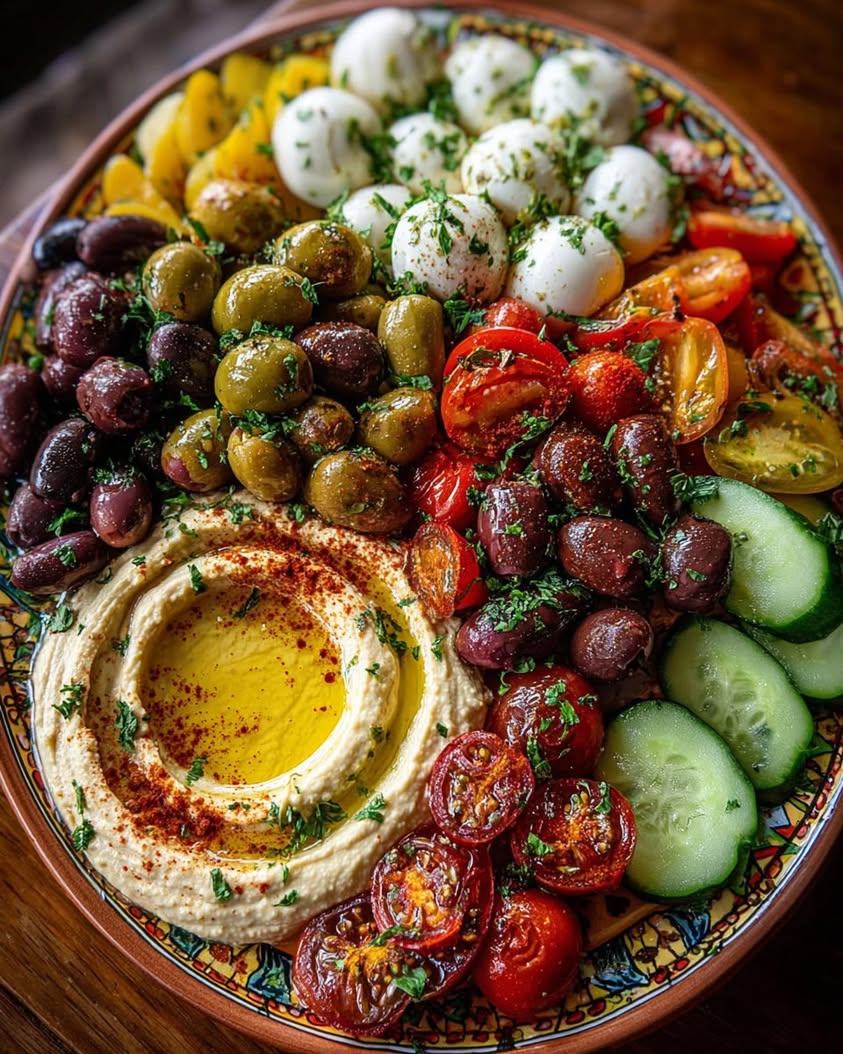
Mediterranean Mezze Platter with Hummus, Olives & Burrata: A Perfect Party Appetizer
Imagine a table filled with vibrant colors, creamy textures, and briny, bright flavors. That is the magic of a well-crafted Mediterranean Mezze Platter with Hummus, Olives & Burrata. This is not just a snack board; it is an experience. It brings together the best of the Mediterranean pantry, offering something for everyone. You get the velvety smoothness of homemade hummus, the rich, milky cream of burrata cheese, and the salty punch of marinated olives. Every bite tells a story of sun-drenched coasts and simple, honest ingredients. This platter is perfect for gatherings, quiet nights in, or even a light summer dinner. It requires no actual cooking, which means you spend less time in the kitchen and more time enjoying the company around you.
The appeal of this Mediterranean Mezze Platter with Hummus, Olives & Burrata lies in its balance. First, you have the creamy hummus, which acts as a smooth base. Then, the burrata adds a decadent, milky richness that contrasts beautifully with the firm, briny olives. You can add crunchy vegetables like cucumber and bell pepper, along with warm, soft pita bread. The whole arrangement becomes a tour of textures and temperatures. It is a simple recipe, but the result feels incredibly special. You are essentially creating a small feast that looks as good as it tastes. The colors alone are stunning, with deep greens, bright reds, and pure whites. This dish brings the heart of the Mediterranean right to your table, making every gathering feel more festive and relaxed.
When you serve a Mediterranean Mezze Platter with Hummus, Olives & Burrata, you are offering your guests a choice. They can build their own perfect bite. They can spread hummus on a piece of pita. They can top it with a slice of burrata and a briny olive. This interactive element makes the meal more engaging. It turns a simple appetizer into the centerpiece of the conversation. The best part about this recipe is its flexibility. You can use store-bought hummus to save time, or you can make your own from scratch. You can choose your favorite olives, whether they are Kalamata, Castelvetrano, or a mix. This adaptability makes the dish incredibly approachable for any home cook. It is a no-fail recipe that guarantees a delicious crowd-pleaser every single time.
Quick Recipe Highlights
- Flavor Profile: This platter offers a symphony of savory and tangy notes. The hummus provides a nutty, earthy base, while the burrata adds a rich, milky sweetness. The olives bring a sharp, briny, and slightly salty kick that cuts through the creaminess.
- Texture: You will experience a range of textures. The hummus is silky and smooth. The burrata is soft and luscious on the inside with a firmer outer shell. The olives are firm and meaty, while the pita bread offers a chewy, slightly crisp contrast.
- Aroma: The air fills with the warm, nutty scent of chickpeas and tahini from the hummus. You will also pick up the floral, peppery notes of extra virgin olive oil. The burrata has a faint, clean dairy aroma, and the olives release a fragrant, briny scent.
- Visual Appeal: This platter is a feast for the eyes. You see the pale, creamy hummus swirled with green olive oil. The bright white burrata sits in the center, surrounded by dark, glossy olives. Pops of red from cherry tomatoes and green from cucumber add freshness and color.
- Skill Level Needed: You do not need any special cooking skills to assemble this platter. If you are making hummus from scratch, you only need a food processor. Arranging the platter is purely about placement. It is a perfect recipe for novice cooks and experienced hosts alike.
- Special Equipment: You will need a large wooden board or a serving platter. For the hummus, a food processor or a high-powered blender is essential for achieving a smooth texture. Other than that, you only need bowls for the olives and a serving spoon.
Recipe Overview
- Difficulty Level: This recipe earns an Easy rating because it requires no heat or complex techniques. The most demanding step is making the hummus, which is a simple blend-and-season process. Even if you buy pre-made components, the assembly is straightforward. You are simply arranging beautiful ingredients on a plate. This dish proves that you do not need to be a professional chef to create something stunning.
- Category: This dish fits perfectly as an appetizer, a starter, or a light lunch. It also works wonderfully as a snack board for parties. You can serve it as a main course for a casual dinner. It is versatile enough to be the star of a cocktail party or a simple weeknight meal.
- Cuisine: This platter is rooted in Mediterranean cuisine, specifically drawing from Greek, Italian, and Middle Eastern traditions. The hummus is a staple of Middle Eastern cooking. The burrata is a treasured Italian cheese. Olives are a universal ingredient across the Mediterranean region. This dish celebrates the shared culinary heritage of these sun-drenched cultures.
- Cost: The cost is moderate and very reasonable for a party platter. A can of chickpeas and tahini are very affordable. Burrata cheese is a bit more of a splurge but worth it for the creamy texture. Olives and fresh vegetables are inexpensive. Overall, you can feed a small crowd for a very reasonable price compared to ordering takeout.
- Season: This dish is perfect for every season, but it truly shines in the summer. During warmer months, fresh vegetables and herbs are at their peak. The light, refreshing nature of the platter is ideal for hot days. It is also a fantastic holiday appetizer during the winter, as it provides a bright, fresh contrast to heavier holiday foods.
- Occasion: This platter is ideal for casual gatherings, game days, and holiday parties. It is perfect for a picnic or a potluck because it travels well. It also makes a beautiful, romantic date night meal. Any occasion that calls for sharing good food with good people is perfect for this dish.
Why You Will Love This Recipe
The taste and texture appeal of this Mediterranean Mezze Platter with Hummus, Olives & Burrata is undeniable. The creamy hummus acts like a blank canvas. Then, you add the cool, rich burrata. The briny olives add a pop of intense flavor that wakes up your palate. You get a mix of smooth, creamy, and firm textures in every single bite. It is not a heavy dish. Instead, it feels light and refreshing. The flavors are bright and clean. This contrast is what makes the platter so addictive. You will find yourself reaching for just one more piece of pita to scoop up the last bit of hummus and cheese.
The convenience and preparation benefits are a major reason to love this dish. You can prepare everything in under twenty minutes. There is no oven to preheat. There is no stove to watch. If you are short on time, you can buy high-quality store-bought hummus and pre-marinated olives. The entire process is about assembly rather than cooking. This makes it the perfect recipe for busy hosts. You can focus on setting the table and greeting your guests instead of standing over a hot stove. The cleanup is also very simple. You only dirty a food processor and a few bowls.
Nutritional advantages make this platter a smart choice. Chickpeas are packed with fiber and plant-based protein. They help keep you full and satisfied. Tahini, which is made from sesame seeds, provides healthy fats and calcium. Olives are full of antioxidants and heart-healthy monounsaturated fats. Burrata, while indulgent, offers protein and calcium. The fresh vegetables add vitamins and hydration. This dish offers a balanced mix of macronutrients. It is a wholesome way to enjoy a party appetizer without feeling overly guilty. You are feeding your body good, whole foods.
The social and entertaining value of this platter is unmatched. It is a sharing dish by nature. Placing a large board in the center of the table encourages people to serve themselves and pass the food around. This creates a natural, relaxed flow of conversation. It breaks the ice and gets people interacting. A Mediterranean Mezze Platter with Hummus, Olives & Burrata looks impressive and elegant. Guests will feel special and treated. It signals that you put thought and care into the meal. It makes any gathering feel more sophisticated and fun.
Finally, the cost-effectiveness and accessibility are key selling points. Most of the ingredients are pantry staples. Canned chickpeas, tahini, olive oil, and spices are inexpensive and easy to find. Fresh vegetables and herbs are available at any grocery store. Burrata can be found at most supermarkets now. You can also swap it for fresh mozzarella to save even more money. This recipe proves that you do not need expensive or hard-to-find ingredients to create a show-stopping dish. It uses simple elements to create something truly special and memorable.
Historical Background and Cultural Significance
The Mediterranean Mezze Platter with Hummus, Olives & Burrata is a modern interpretation of an ancient tradition. The concept of mezze, a collection of small dishes, originated in the Eastern Mediterranean and Middle East. It is a social way of eating, where people share many small plates. Think of it as a community experience rather than a solitary meal. This tradition dates back centuries. It was a way to offer hospitality and variety to guests. Placing a large platter in the center of the table is a gesture of generosity. It invites everyone to partake and share in the abundance.
Hummus itself has a long and storied history. Its exact origins are debated, but it is generally believed to have originated in Egypt or the Levant region. The word hummus means chickpea in Arabic. It has been a staple food in the Middle East for centuries. It is a symbol of simple, nourishing food. Hummus is so culturally significant that it has been at the center of political disputes between countries claiming its origin. Regardless, it remains a beloved, unifying dish. It is a testament to the power of simple ingredients, like chickpeas, tahini, lemon, and garlic.
The evolution of this recipe, specifically the addition of burrata, is a more recent development. Burrata is a fresh Italian cheese made from mozzarella and cream. It was invented in the early 20th century in the Apulia region of Italy. It was a way to use up leftover mozzarella scraps. The outer shell is solid mozzarella, while the inside is a creamy mixture of soft curds and cream. Its inclusion on a mezze platter is a modern, fusion twist. It adds a luxurious Italian element to the traditional Middle Eastern spread. This combination reflects the interconnected nature of modern cuisine.
Regional variations of the mezze platter are endless. In Greece, you might find tzatziki, feta cheese, and dolmades. In Lebanon, you will see baba ghanoush, tabbouleh, and grape leaves. In Turkey, lentil köfte and various dips are common. This platter, with its hummus, olives, and burrata, is a globalized version. It takes the best elements from different regions and combines them into one cohesive board. This flexibility is what makes the mezze concept so enduring. It adapts to local tastes and available ingredients. It is a living tradition that continues to evolve with each generation.
Ingredient Deep Dive
Chickpeas are the foundation of any great hummus. They have been cultivated in the Middle East for over 7,000 years. They are a vital source of plant-based protein and fiber. This makes them incredibly satisfying and filling. Chickpeas also contain iron, folate, and manganese. When choosing canned chickpeas, look for low-sodium options. You can also buy dried chickpeas and cook them yourself, which gives you more control over texture. To store canned chickpeas, simply transfer them to a sealed container and refrigerate them after opening. If you are avoiding legumes, you can substitute white beans or canned artichoke hearts for a different, but still delicious, dip base.
Tahini is a paste made from toasted, ground sesame seeds. It is a cornerstone of Middle Eastern cooking. Tahini has a rich, nutty flavor that is both bitter and savory. It is also a powerhouse of nutrition. It provides healthy fats, calcium, and amino acids. You can use it in sauces, dressings, and baked goods. When buying tahini, look for one that is well-stirred and smooth. A good tahini should be pourable, not stiff. Store it in a cool, dark place or in the refrigerator to prevent the oils from going rancid. If you run out of tahini, you can use unsalted, creamy peanut butter or almond butter for a slightly different flavor profile.
Burrata is the jewel of this platter. It is a fresh cheese that is prized for its creamy, milky center. The outer shell is mozzarella, and the inside is a mixture of cream and soft curds. This cheese is best enjoyed fresh and at room temperature. It should feel slightly firm to the touch but yield easily. When selecting burrata, look for a cheese that is plump and feels heavy for its size. Avoid any that look deflated or have a watery appearance. Store it in its original liquid in the refrigerator. Take it out about 30 minutes before serving to let it come to room temperature. A good substitute is fresh mozzarella pearls or a dollop of ricotta cheese.
Olives are the salty, briny element that ties the platter together. They have been a staple in the Mediterranean diet for thousands of years. Olives are rich in vitamin E and antioxidants. They are also a great source of healthy monounsaturated fats. Kalamata olives are a classic choice with their deep purple color and fruity flavor. Castelvetrano olives are milder and buttery green. You can also use a mix of both for variety. When buying olives, look for ones that are plump and shiny. Avoid olives that look shriveled or are sitting in murky brine. Store opened olives in a sealed container in the refrigerator. They will last for several weeks.
Extra virgin olive oil is the lifeblood of the Mediterranean diet. It is used in the hummus and drizzled over the burrata and the whole platter. This oil is rich in monounsaturated fats and anti-inflammatory antioxidants. It adds a fruity, slightly peppery flavor. Always choose a high-quality extra virgin olive oil for the best taste. Look for a harvest date on the bottle to ensure freshness. Store olive oil in a cool, dark place away from heat and light. It does not need to be refrigerated. There is no real substitute for good olive oil, but a high-quality avocado oil can be used in a pinch for a neutral flavor.
Common Mistakes to Avoid
- Using cold hummus directly from the refrigerator is a common mistake. Cold hummus tastes dense and loses its creamy texture. Always let hummus sit at room temperature for at least 30 minutes before serving. This allows the flavors to bloom and the texture to soften.
- Serving the burrata straight out of the fridge is another error. Burrata is best when it is at room temperature. It will be more fluid and creamy. If it is too cold, the creamy center will be firm and less luscious. Let it sit out for at least 20 to 30 minutes before serving.
- Choosing olives that are too salty or poorly marinated can ruin the balance. Taste your olives before adding them. If they are overly salty, you can rinse them quickly with cool water. This will help balance the overall flavor profile of the platter.
- Over-blending the hummus can make it gummy and pasty. Blend it just until it is smooth. If you are using a food processor, scrape down the sides a few times. Adding a little ice water helps create an ultra-smooth, creamy texture without overworking the machine.
- Not toasting the pita bread can make it feel stale or chewy. Lightly toast the pita wedges in a dry skillet or in the oven. This gives them a crisp texture that holds up better to dips. It also adds a warm, pleasant aroma.
- Arranging the platter too early can lead to dry or wilted ingredients. Assemble the platter no more than an hour before serving. Keep the hummus covered until you are ready to serve. This preserves the freshness of the vegetables and the cheese.
- Using low-quality olive oil can make the hummus taste metallic or flat. The olive oil is a major flavor component. Investing in a good bottle makes a huge difference. It is worth the extra few dollars for a fruity, peppery oil.
- Ignoring the importance of acid is a common miss. A squeeze of fresh lemon juice in the hummus brightens the whole dish. It cuts through the richness of the tahini and chickpeas. Do not skip it, as it is essential for balancing the flavors.
- Forgetting to season the hummus properly is a frequent error. Chickpeas are quite bland on their own. You need to add enough salt, cumin, and garlic. Taste the hummus and adjust the seasoning. It should be savory and well-rounded before you serve it.
- Overcrowding the platter can make it look messy. Leave some negative space between the ingredients. This allows each component to stand out visually. It also makes it easier for guests to pick up items without disturbing others.
Essential Techniques
Making perfect hummus requires the technique of emulsification. This is the process of combining fat and water into a smooth, stable mixture. You start by blending the tahini with lemon juice and garlic. Then, you slowly drizzle in olive oil while the machine is running. This creates a creamy, light base. Next, you add the chickpeas and blend again. Adding a few tablespoons of ice water is a pro technique. It lightens the texture and makes the hummus incredibly fluffy. The key is to be patient. You want to blend for a full two to three minutes to ensure it is completely smooth.
Handling burrata requires a gentle touch. You do not want to break the delicate outer pouch. When removing it from the container, use a slotted spoon to lift it out. Let it drain briefly on a paper towel. To serve it, you have two options. You can place it whole on the platter and let guests break it open. Or, you can gently tear it into large pieces before serving. Either way, you want to preserve its beautiful, round shape until the last moment. Drizzling it with olive oil and a pinch of flaky salt enhances its natural flavor.
Assembling the platter is an art of visual balance. Start with the largest element, which is the bowl of hummus. Place it in a prominent spot. Then, place the burrata in the center or off to one side. Next, arrange your olives in small clusters or in a small bowl. Fill in the remaining gaps with colorful vegetables. You can slice cucumbers into rounds or sticks. You can halve cherry tomatoes. You can add crisp radishes or bell pepper strips. The goal is to create a tapestry of color. You want every inch of the board to be interesting and inviting.
Pro Tips for Perfect Mediterranean Mezze Platter with Hummus, Olives & Burrata
For the smoothest hummus, always peel your chickpeas. This is a time-consuming task, but it removes the tough skins. This results in a silky, luxurious texture that is restaurant quality. You can also buy pre-peeled chickpeas in some stores.
Warm your pita bread right before serving. You can pop it in the oven for a few minutes or heat it on a gas burner. Warm pita is soft and pliable, making it perfect for scooping. It also releases a lovely toasted aroma.
Add a drizzle of high-quality, fruity olive oil right before serving. This adds a final touch of richness and a beautiful sheen. You can also add a sprinkle of sumac or za atar for an extra layer of flavor.
Use a mix of olive colors and sizes for visual interest. Combine large, green Castelvetrano olives with smaller, dark Kalamata olives. You can also throw in some cracked green olives marinated with herbs.
Do not forget the fresh herbs. A sprinkle of fresh parsley, mint, or dill adds a pop of color and freshness. It also ties the flavors of the dish together. It makes the platter look more professional.
Offer a variety of dippers. In addition to pita bread, include crunchy cucumber spears, bell pepper strips, and carrot sticks. This adds more texture and provides low-carb options for your guests.
Season the burrata generously. A simple sprinkle of flaky sea salt and cracked black pepper is essential. You can also add a pinch of red pepper flakes for a touch of heat.
Let the hummus rest for at least 15 minutes after you make it. This resting time allows the flavors to meld together. The hummus will taste much more cohesive and flavorful.
Variations and Adaptations
Regional variations can add a new dimension to this platter. For a Greek twist, add a bowl of tzatziki made with yogurt, cucumber, and dill. You can also include dolmades and pieces of feta cheese. For a more Italian version, swap the hummus for a white bean dip. Add marinated artichokes, prosciutto, and sun-dried tomatoes. You can even add a spread of pesto for a bright, herbal note.
Seasonal adaptations allow you to use the best produce available. In the spring, add fresh asparagus spears and radishes. In the summer, use vibrant heirloom tomatoes and fresh basil. In the fall, roast some beets and add them to the board. In the winter, include roasted red peppers and marinated mushrooms. The platter is a canvas for whatever is fresh and beautiful.
Dietary modifications are easy to implement. To make this dish gluten-free, simply serve it with gluten-free crackers or vegetable sticks instead of pita. The hummus and cheese are naturally gluten-free. For a dairy-free version, you can omit the burrata entirely. You can replace it with a creamy cashew cheese or a dollop of dairy-free yogurt. The platter will still be delicious.
Flavor variations can keep the recipe exciting. You can add a swirl of harissa to the hummus for a spicy kick. You can roast a head of garlic and stir it into the hummus for a sweet, mellow flavor. You can also add a sprinkle of smoked paprika or cumin to the top. Each small change creates a completely new taste experience.
Texture modifications can be made to suit your preferences. If you prefer a chunkier hummus, you can pulse it less. You can also add some whole chickpeas on top for a crunchy garnish. For a smoother burrata, let it sit out longer. You can also mix the creamy center with some olive oil to make a dipping sauce.
Presentation alternatives can change the whole feel of the dish. Instead of one large board, you can serve individual small plates. This is perfect for a more formal dinner. You can also arrange the ingredients in rows or sections on a long platter. Using a slate board or a marble slab can give it a modern, elegant look.
Serving and Presentation Guide
Plating techniques are crucial for making your platter look professional. Always start with the largest item. Place the bowl of hummus at one end or in the center. Then, place the burrata next to it. Next, arrange your olives in small clusters. Finally, fill in the gaps with your vegetables. Use a combination of shapes. Slice some vegetables, leave others whole. This creates visual interest and invites exploration.
Garnishing ideas can elevate the platter. A swirl of olive oil on the hummus is a classic. Add a dusting of smoked paprika or za atar. Fresh herbs like mint, parsley, or dill are perfect. You can also add a few edible flowers for a really special touch. A few toasted pine nuts or slivered almonds on top of the hummus add a lovely crunch.
Traditional accompaniments are essential for a complete experience. Warm pita bread is a must. You can also offer pita chips or crusty bread. a small bowl of extra virgin olive oil for dipping is a great addition. You can also serve some pickled turnips or hot peppers for an extra kick.
Modern serving suggestions can update the dish. You can serve it in a deconstructed way. Place a bowl of hummus in the center of a large plate. Arrange the burrata and olives around it. Use small ramekins for different dips. This makes it easier for guests to access everything.
Temperature considerations are key to the best flavor. The hummus and burrata should be at room temperature. The vegetables should be cold and crisp. The olives can be at room temperature or slightly cool. When you serve the platter, the contrast between the warm pita and the cool vegetables is delightful.
Portion control tips are helpful for serving a crowd. Plan for about a quarter cup of hummus per person. For burrata, one ball can serve two to three people as an appetizer. For olives, a handful per person is a good rule of thumb. You can always add more if needed. It is better to have a little extra than not enough.
Wine and Beverage Pairing
Wine pairings for this Mediterranean Mezze Platter with Hummus, Olives & Burrata are delightful. A crisp, dry white wine like a Sauvignon Blanc or a Pinot Grigio works beautifully. These wines have high acidity that cuts through the richness of the hummus and cheese. A light, fruity red like a Beaujolais or a Dolcetto is also excellent. The low tannins and bright fruit flavors complement the briny olives. For a sparkling option, a dry Prosecco or Cava is perfect. The bubbles cleanse the palate between bites.
Non-alcoholic alternatives are just as satisfying. A sparkling water with a squeeze of lemon or lime is a refreshing palate cleanser. A good quality iced tea, such as a mint tea or a hibiscus tea, pairs wonderfully. The herbal notes complement the flavors on the platter. You can also serve a homemade lemonade or a spiced pomegranate juice.
Coffee and tea pairings can be considered for an after-dinner gathering. A strong, dark roast coffee contrasts nicely with the creamy, rich cheese. A mint tea is a classic choice in the Mediterranean region. It aids digestion and cleanses the palate. You could also serve a Turkish coffee for a more authentic experience.
Temperature considerations for beverages are important. White wines and sparkling wines should be well-chilled. Red wines should be served slightly cool, around 55 degrees Fahrenheit. Non-alcoholic drinks should be served over ice or cold. The goal is to provide a contrast to the room-temperature components of the platter.
Serving suggestions for beverages include offering a small glass for wine or a tall glass for water. Place a carafe of water on the table for guests to help themselves. For a party, you can set up a drink station with various options. This allows guests to choose what they prefer.
Storage and Shelf Life
Storage methods for the components vary. Hummus can be stored in an airtight container in the refrigerator for up to five days. It is best to keep it in a sealed container to prevent it from absorbing other odors. Olive oil can be stored in a cool, dark pantry. Burrata should be kept in its original liquid in the refrigerator. It is best consumed within two days of purchase.
Temperature requirements are important for safety and quality. Hummus loves consistent refrigeration. Never leave it out at room temperature for more than two hours. Olives are very shelf-stable due to their brine. They can last for weeks in the refrigerator. Burrata is a very fresh cheese and is highly perishable. It needs to stay cold.
Container recommendations depend on the ingredient. For hummus, a glass or plastic container with a tight-fitting lid is best. For olives, keep them in their original brine in a glass jar. For burrata, keep it in its liquid in the plastic container it came in. Always use clean utensils when scooping out dips.
Signs of spoilage are important to recognize. Hummus that has gone bad will have a sour smell or a moldy appearance. Olives that are spoiled will have a slimy texture or an off odor. Burrata that is spoiled will have a sour smell and a watery, thin liquid. Discard any ingredient that shows these signs immediately. Do not taste it.
Reheating instructions are not typically needed for this dish. The hummus is best served cold or at room temperature. The pita bread can be reheated in a skillet or toaster oven. If you want to serve the hummus warm, you can gently heat it in a saucepan over low heat. Stir it frequently to prevent it from scorching.
Freezing guidelines for hummus are good to know. Hummus freezes very well for up to three months. Place it in a freezer-safe container, leaving some room for expansion. Thaw it in the refrigerator overnight. You may need to stir it well and add a little water or olive oil to restore the texture. Do not freeze burrata, as it will become grainy and watery.
Make Ahead Strategies
Prep timeline is key for stress-free entertaining. You can make the hummus up to two days in advance. Store it in the refrigerator. You can also wash and chop all your vegetables the day before. Store them in separate bags or containers in the fridge. You can marinate your olives if you are using plain olives. This will infuse them with flavor.
Storage between steps is important. Keep the hummus covered tightly to prevent a skin from forming. You can press a piece of plastic wrap directly onto the surface. For the vegetables, keep them dry. Store them with a paper towel to absorb any excess moisture. This will keep them crisp and fresh.
Quality impact assessment is necessary. Hummus actually tastes better the next day. The flavors have time to meld together. Vegetables will stay crisp for a day if stored properly. Burrata should always be added right before serving. It is the only component that must be fresh.
Assembly tips for make-ahead success include pre-boarding. You can arrange the entire platter on a board up to an hour before serving. Just cover it loosely with plastic wrap. Add the burrata at the very last moment. This ensures it stays fresh and beautiful.
Reheating guidelines apply only to the pita. You can toast the pita wedges ahead of time. Store them in an airtight container for a day. Before serving, you can reheat them in a low oven for a few minutes. This restores their crispness.
Fresh element additions should be added at the end. Add the fresh herbs, such as parsley or dill, right before serving. A final drizzle of olive oil should also be done at the last minute. These finishing touches make the platter look vibrant and appetizing.
Scaling Instructions
Halving the recipe is very straightforward. You can use a half can of chickpeas for the hummus. You can use one ball of burrata instead of two. For the olives, use a smaller handful. This is perfect for a smaller gathering or a date night. The prep time will be even shorter.
Doubling or tripling the recipe is easy for a large party. You will need to use a large food processor or blend the hummus in batches. You will need a very large board or multiple boards. For the olives, you can buy them in bulk. The burrata can be bought in packs at most grocery stores.
Equipment adjustments are needed for larger batches. If you are making a double batch of hummus, a standard food processor will handle it. For a triple batch, you may need to blend it in two batches. You will also need larger serving bowls and a very large surface for the platter.
Timing modifications are minimal. Making a double batch of hummus only takes about five extra minutes. Arranging a large platter takes more time because of the extra ingredients. Plan to spend about fifteen to twenty minutes on the assembly for a large crowd.
Storage considerations change with scale. A large batch of hummus will not fit in a small container. Use a large bowl or multiple containers. Leftover hummus keeps well, so you can enjoy it for days. Leftover olives are very stable.
Nutritional Deep Dive
Macro breakdown of this platter is balanced and satisfying. A serving of hummus provides about 10 grams of protein and 12 grams of healthy fat. The chickpeas provide complex carbohydrates and fiber. The burrata adds significant protein and fat. The olives contribute more healthy fat. The pita bread provides simple carbohydrates. This combination creates a well-rounded snack.
Micronutrient analysis shows a wealth of vitamins. Chickpeas are high in iron and folate. Tahini is rich in calcium and magnesium. Olives contain vitamin E. Fresh vegetables add vitamin C and potassium. This dish is not just tasty; it is also very nutrient-dense. It supports overall health and well-being.
Health benefits of this dish are numerous. The fiber in chickpeas supports digestive health. The healthy fats in olive oil and olives support heart health. The protein helps keep you full and satisfied. The antioxidants protect your cells from damage. This is a smart choice for a nourishing meal.
Dietary considerations are important for many people. This dish is naturally vegetarian. It is also naturally gluten-free if you swap the pita. It Print
Mediterranean Mezze Platter with Hummus, Olives & Burrata
- Total Time: 15 minutes
- Yield: 4
Description
A vibrant and colorful Mediterranean mezze platter featuring creamy hummus, briny olives, and luscious burrata cheese. Perfect for sharing as an appetizer or light meal.
Ingredients
- 1 cup canned chickpeas, drained and rinsed
- 2 tablespoons tahini
- 2 tablespoons lemon juice
- 1 clove garlic, minced
- 1/4 cup olive oil
- 1/2 teaspoon salt
- 1/4 teaspoon ground cumin
- 1/4 cup water (as needed for consistency)
- 1/2 cup mixed olives (Kalamata, green, etc.)
- 1 ball burrata cheese (about 8 oz)
- 1/4 cup cherry tomatoes, halved
- 1/4 cup cucumber, diced
- 2 tablespoons fresh parsley, chopped
- 1 tablespoon fresh mint, chopped
- 1/4 cup pine nuts, toasted
- Pita bread or crackers for serving
Instructions
- For the hummus: In a food processor, combine chickpeas, tahini, lemon juice, garlic, olive oil, salt, and cumin. Process until smooth, adding water a tablespoon at a time until desired consistency is reached. Transfer to a serving bowl.
- Arrange the olives, burrata cheese, cherry tomatoes, cucumber, parsley, mint, and pine nuts on a large platter around the hummus.
- Drizzle the burrata with a little olive oil and sprinkle with flaky sea salt if desired.
- Serve immediately with pita bread or crackers.
Notes
You can customize the seasonings to taste. For extra flavor, add a drizzle of balsamic glaze or a sprinkle of za’atar. Store leftover hummus in an airtight container in the refrigerator for up to 3 days.
- Prep Time: 15 minutes
- Cook Time: 0 minutes
- Method: Appetizer
- Cuisine: Mediterranean