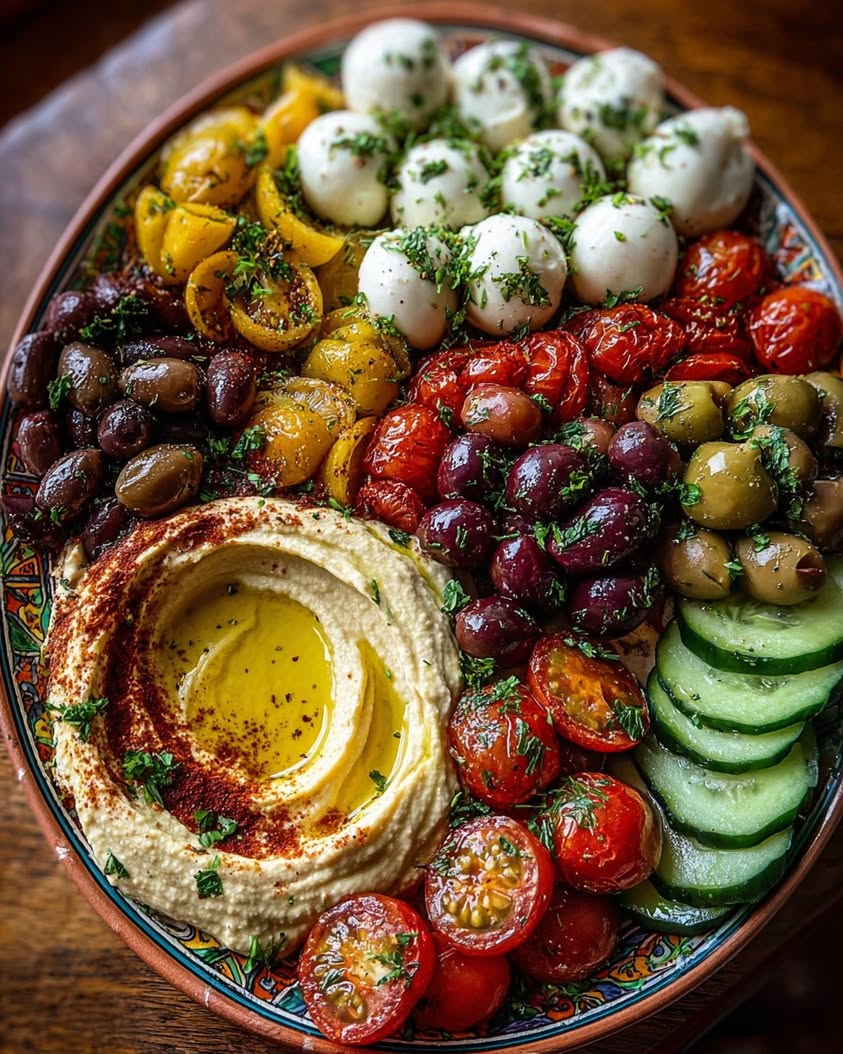
How to Build the Perfect Mediterranean Mezze Platter with Burrata
Imagine a table laden with vibrant colors and bold flavors. That is the magic of a Mediterranean Mezze Platter with Hummus, Olives & Burrata. This dish is not just a meal. It is an experience. Sharing a mezze platter encourages conversation and connection. You get to sample a little bit of everything. The creamy burrata contrasts perfectly with the tangy olives and the smooth, savory hummus. Building this platter is surprisingly simple. You do not need to be a professional chef. You just need quality ingredients and a love for good food.
This Mediterranean Mezze Platter with Hummus, Olives & Burrata is perfect for any gathering. It works for a casual weeknight dinner or a festive party spread. The best part is the assembly. There is no actual cooking required. You simply arrange beautiful ingredients on a board. This makes it an ideal choice for hot summer days. It also works wonderfully as a quick appetizer for unexpected guests. The flavor profile is a journey. You get the rich creaminess of the burrata. You get the earthy, nutty notes of the hummus. Then, the briny pop of olives and the freshness of vegetables tie it all together.
When you serve a Mediterranean Mezze Platter with Hummus, Olives & Burrata, you are serving more than food. You are presenting a visual feast. The deep green of the olive oil contrasts with the white burrata. The bright red of the tomatoes adds a pop of color. The golden hummus sits proudly in the center. Every color invites a bite. The aromas are just as enticing. Fresh herbs, good olive oil, and warm pita create an irresistible combination. This dish celebrates simplicity. It celebrates the beauty of letting ingredients speak for themselves. Whether you are a seasoned cook or a beginner, this recipe is for you. It is forgiving, flexible, and endlessly customizable.
Quick Recipe Highlights
- Flavor Profile: This platter offers a beautiful balance of flavors. You get the cool, creamy richness from the burrata. The hummus provides a savory, garlicky base. Olives add a salty, briny punch that cuts through the fat. Fresh vegetables like cucumbers and tomatoes provide a crisp, refreshing counterpoint. The combination is harmonious and deeply satisfying.
- Texture: The textural variety is a key highlight. You have the soft, oozy burrata that spreads like a dream. The hummus is smooth and velvety. Olives offer a firm, meaty chew. Crunchy fresh vegetables like bell peppers and radishes provide a crisp bite. Toasted pita or crackers add a satisfying crunch. Each bite offers a new sensation.
- Aroma: The aromas of this platter are intoxicating and inviting. The primary note comes from extra virgin olive oil. Its grassy, peppery scent immediately sets a Mediterranean mood. Fresh herbs like mint or basil add a bright, clean fragrance. The warmth of the pita bread fills the air. A touch of lemon from the hummus adds a clean, citrusy note.
- Visual Appeal: This platter is a showstopper on any table. The arrangement creates a rainbow of colors. The stark white of the burrata sits next to the deep green of the olives. The vibrant orange of roasted red peppers adds warmth. Bright green cucumber ribbons and red cherry tomatoes create visual pop. The golden hummus is a central anchor. It looks as good as it tastes.
- Skill Level Needed: This recipe requires absolutely no cooking skills. It is perfect for beginners. The main skill is learning how to arrange ingredients beautifully. You need to know how to drain burrata and slice vegetables. Anyone can master this in minutes. It is the ultimate low-stress, high-reward recipe.
- Special Equipment: You do not need any special equipment for this recipe. A large wooden board or a serving platter is essential. You will need a few small bowls for dips and olives. A sharp knife for slicing vegetables is helpful. That is all you need to create this stunning spread.
Recipe Overview
- Difficulty Level: This is an incredibly easy recipe. There is no heat involved. There is no complicated technique required. The primary challenge is in the selection and arrangement of ingredients. You must choose ripe, high-quality components. Arranging them in an appealing way takes a little thought. But it is not difficult. Anyone can achieve a beautiful result with minimal effort.
- Category: This dish functions as a fantastic appetizer or a light main course. It is often called a grazing board. It is perfect for sharing. You can serve it as a starter before a heavier meal. You can also make it the main event for a casual lunch or dinner. It fits perfectly into the appetizer, snack, and small plates categories.
- Cuisine: This platter draws its inspiration from the diverse cuisines of the Eastern Mediterranean and the Middle East. The concept of mezze is central to these cultures. It involves serving small dishes to be shared. Hummus originated in the Levant region. Olives and olive oil are staples across the Mediterranean. Burrata, while Italian, has been embraced globally and adds a modern, creamy twist to the traditional spread.
- Cost: The cost of this platter is moderate and very flexible. The hummus is quite inexpensive to make from scratch with chickpeas and tahini. High-quality burrata and a good bottle of extra virgin olive oil are the priciest items. Olives can vary in cost depending on the variety. Fresh vegetables are usually affordable. You can easily adjust the cost by choosing seasonal produce and store-brand items.
- Season: This platter is best enjoyed in the summer and early fall. This is when tomatoes are at their peak ripeness and sweetness. Fresh cucumbers and bell peppers are also abundant. The light, refreshing nature of the dish is perfect for warm weather. However, you can easily adapt it for other seasons. Use roasted squash in the fall or citrus segments in the winter.
- Occasion: This Mediterranean Mezze Platter with Hummus, Olives & Burrata is perfect for many occasions. It is ideal for parties, game days, and holiday appetizers. It is also wonderful for a romantic picnic or a casual family dinner. It is a go-to dish for potlucks because it travels well and requires no reheating. It is a guaranteed crowd-pleaser for any event.
Why You’ll Love This Recipe
The taste and texture of this platter are simply phenomenal. You get a burst of flavor in every single bite. The creamy burrata melts on your tongue. It combines with the savory hummus for an incredible mouthfeel. The olives provide a welcome saltiness that balances the richness. Then, a crisp cucumber slice cleanses your palate. This contrast keeps your taste buds engaged and excited. You will find yourself going back for more combinations. It is a truly interactive eating experience.
The convenience of this recipe is unmatched. You can have it on the table in under 20 minutes. There is no need to turn on the stove or oven. The preparation is all about chopping and arranging. This makes it perfect for busy weeknights. It is also a lifesaver when you have unexpected guests. You can simply pull ingredients from your fridge and pantry. It looks impressive with very little effort. This is a recipe that makes you look like a rockstar without the stress.
The nutritional advantages of this platter are a major bonus. You get a fantastic balance of macros. The hummus provides plant-based protein and fiber from chickpeas. The healthy fats in olive oil and olives are great for heart health. Burrata offers protein and calcium. The fresh vegetables are packed with vitamins and antioxidants. You can feel good about eating this. It is a satisfying meal that nourishes your body. It is far healthier than many typical party appetizers.
The social and entertaining value of this dish is enormous. It is designed to be shared. It encourages people to gather around the table and build their own bites. It sparks conversation. People love discussing which combination they like best. It is an interactive centerpiece for any gathering. It eliminates the need for individual plating. It simplifies the host’s job. You can prepare it ahead of time and just bring it out when guests arrive. It is a fantastic way to create a warm, communal atmosphere.
Cost-effectiveness and accessibility make this recipe a winner. The basic ingredients are easy to find at any grocery store. You can make a beautiful, impressive platter without breaking the bank. The hummus is cheap to make homemade. Olives and vegetables are very affordable. You can splurge on one or two premium items like burrata, but you do not have to. This flexibility allows you to adapt the platter to any budget. It is a high-impact, low-cost option for feeding a crowd.
Historical Background and Cultural Significance
The concept of mezze has ancient roots in the Eastern Mediterranean and Middle East. The word mezze itself likely comes from the Persian word maze, meaning taste or snack. This tradition of serving small, flavorful dishes dates back centuries. It is a way of life in countries like Lebanon, Turkey, Greece, and Israel. Mezze is not just food. It is a social ritual. It represents hospitality, generosity, and the pleasure of shared dining. Families and friends gather for hours, enjoying a leisurely meal composed of many small plates.
Cultural importance of mezze is deeply woven into the social fabric of these regions. It is a symbol of welcome. When you visit a home in the Levant, you will almost certainly be offered a mezze spread. It is a sign of respect and friendship. The variety on the table reflects the host’s generosity. It is common to see plates overflowing with olives, cheeses, dips, and fresh vegetables. This tradition of sharing food creates a bond between people. It slows down the pace of modern life and encourages connection.
The evolution of the Mediterranean Mezze Platter has been fascinating. Traditional mezze focused on local, seasonal ingredients. It was about using what was available. Over time, ingredients like hummus and baba ghanoush became globally popular. The modern version of a mezze platter often incorporates international twists. The addition of burrata is a perfect example. Burrata is an Italian cheese from Puglia. Its inclusion shows how culinary borders are blurring. People are now mixing traditions to create new, delicious combinations. This platter represents the best of both worlds: traditional flavors with a modern flair.
Regional variations of mezze are incredibly diverse. In Greece, you will find tzatziki, feta cheese, and dolmades. In Turkey, you might see borek, stuffed grape leaves, and spicy ezme salad. The Lebanese mezze is famous for its hummus, tabbouleh, and baba ghanoush. Each region brings its own unique flavors and specialties to the table. This Mediterranean Mezze Platter with Hummus, Olives & Burrata draws from these rich traditions. It celebrates the core principle of sharing, while allowing for endless personalization. It is a tribute to the diverse culinary heritage of the Mediterranean basin.
Ingredient Deep Dive
Burrata: Burrata is a fresh Italian cheese made from mozzarella and cream. The outer shell is solid mozzarella. The inside, called stracciatella, is a soft, creamy mixture of curds and cream. Its history is relatively modern, originating in Puglia in the early 20th century. It was created as a way to use leftover mozzarella scraps. Nutritionally, burrata is rich in calcium and protein. It is also high in fat from the cream, which gives it its luxurious texture. When selecting burrata, look for ones that are plump and feel firm but not hard. The package should feel heavy for its size. Store it in its liquid in the refrigerator. Use it within a day or two of purchase for the best flavor and texture. For a substitution, fresh mozzarella balls are a good alternative. They are less creamy but still delicious.
Hummus: Hummus is a Levantine dip made from cooked, mashed chickpeas blended with tahini, lemon juice, and garlic. It is one of the oldest known prepared foods. Hummus is a staple in many Middle Eastern countries. It is a fantastic source of plant-based protein and dietary fiber. The tahini adds healthy fats and minerals like sesame. To select the best hummus, you can make it yourself for ultimate freshness. If buying store-bought, look for brands with simple ingredients and no preservatives. The texture should be smooth and creamy. Store homemade hummus in an airtight container in the fridge for up to a week. If you want a substitution, white bean dip or roasted red pepper dip are excellent alternatives. They offer a different flavor profile but work well in a mezze setting.
Olives: Olives are a cornerstone of Mediterranean cuisine. They have been cultivated for thousands of years. They are packed with healthy monounsaturated fats and antioxidants. Different varieties offer different intensities. Kalamata olives are dark purple and have a rich, fruity flavor. Castelvetrano olives are bright green, mild, and buttery. For this platter, use a mix of colors and flavors. When selecting olives, buy them from a deli counter for the best quality. They should be plump and glossy. Store opened olives in their brine in the refrigerator. They will last for several weeks. A good substitution is capers or sun-dried tomatoes. They both provide that intense, briny flavor that contrasts so well with the creamy cheese and hummus.
Extra Virgin Olive Oil: This is not just an ingredient. It is the lifeblood of the Mediterranean diet. Good quality olive oil adds richness, flavor, and aroma. It is rich in healthy fats and antioxidants. Look for bottles that are dark to protect the oil from light. Check the harvest date to ensure freshness. A good olive oil should smell grassy and taste slightly peppery. Store it in a cool, dark place away from the stove. Do not refrigerate it. For a substitution, avocado oil is a good neutral alternative. It lacks the same flavor profile but works nicely in a pinch.
Common Mistakes to Avoid
- Using low-quality, watery burrata. Always drain your burrata well before serving. Patting it dry with paper towels helps prevent a watery mess on your board.
- Forgetting to season your vegetables. A simple sprinkle of sea salt and a squeeze of lemon juice elevates the flavor of your cucumbers and tomatoes immensely. Do not skip this step.
- Using cold ingredients straight from the fridge. Let your hummus, olives, and burrata sit at room temperature for about 20 minutes before serving. Their flavors and textures will be much more pronounced.
- Overcrowding the board. Leaving a little space between components makes the platter look more elegant and inviting. It also makes it easier for guests to grab items without disturbing others.
- Not having a variety of textures. A great platter needs crunch. Include toasted pita chips, crispy crackers, or fresh raw vegetables like radishes and endive for that necessary contrast.
- Using a dull knife. A sharp knife makes clean, beautiful cuts in your vegetables and bread. Dull knives crush ingredients and make the platter look messy.
- Skipping the fresh herbs. A sprinkle of fresh mint, basil, or parsley adds a pop of color and a burst of fresh aroma. It makes the entire platter feel brighter.
- Making the hummus too thick or too thin. Homemade hummus should be smooth and easily spreadable. If it is too thick, add a splash of ice water or extra lemon juice.
Essential Techniques
Draining Burrata: This is the most critical technique for this recipe. Burrata is packed in water or whey to keep it fresh. If you place it directly on the board, the excess liquid will pool and ruin the presentation. Gently remove the burrata from its container. Place it on a plate lined with paper towels. Let it sit for at least 5 minutes. You can also use a clean kitchen towel. Gently pat the surface dry. This ensures a beautiful, creamy center that does not water down your hummus or other components.
Arranging the Board: The visual appeal of a mezze platter is crucial. Start by placing your small bowls for dips, olives, and nuts on the board first. This anchors the layout. Then, place the burrata as a central focal point. Next, arrange your fresh vegetables in small piles or rows around the bowls. Use different colors to create contrast. Fill in any gaps with crackers, pita bread, or fresh herbs. Step back and look at it from a few angles before serving. The goal is a balanced, abundant look that invites people to dig in.
Toasting Pita Bread: While you can serve pita bread soft, toasting it adds a wonderful crunch. Cut the pita into wedges or strips. Toss them with a little olive oil and sea salt. Spread them on a baking sheet in a single layer. Bake at 375 degrees Fahrenheit for 8-10 minutes, flipping halfway through. Watch them closely so they do not burn. They should be golden brown and crispy. This simple step transforms the texture of your entire platter. It provides the necessary crunchy vehicle for the creamy dips.
Pro Tips for Perfect Mediterranean Mezze Platter
Always taste your components before assembling the platter. A quick taste test ensures everything is seasoned properly. Adjust salt or lemon juice as needed.
Use a variety of colors for maximum visual impact. Mix green cucumbers, red tomatoes, orange peppers, and purple olives. This creates a board that is as beautiful as it is delicious.
Do not be afraid of asymmetry. A perfectly symmetrical board can look stiff. A slightly chaotic, abundant arrangement looks more natural and homey.
Serve the platter with small spoons for the hummus and other dips. This prevents guests from double-dipping directly with crackers. It is a small touch that guests appreciate.
For an extra layer of flavor, drizzle a little honey over the burrata just before serving. The sweet honey pairs beautifully with the creamy cheese and salty olives.
Consider adding a small bowl of flaky sea salt and cracked black pepper. Let your guests season their own bites to their preference. This adds an interactive element to the meal.
Variations and Adaptations
Regional Variations: This platter is highly adaptable. For a Greek twist, add feta cheese, tzatziki sauce, and dolmades. For a Turkish influence, include spicy ezme salad, borek, and sigara boregi. A Lebanese version would feature more dips like baba ghanoush and mutabbal, along with tabbouleh. Each region adds its own signature flavors while maintaining the core concept of shared small plates.
Seasonal Adaptations: In the summer, use peak-season tomatoes and fresh corn. In the fall, add roasted butternut squash, pomegranate seeds, and caramelized onions. Winter is perfect for roasted beets, citrus segments, and dates. Spring brings fresh artichokes, peas, and asparagus. Adapting to the seasons keeps this dish exciting and ensures you are using the freshest produce available.
Dietary Modifications: This platter is naturally gluten-free if you avoid pita bread and use only vegetable crudites and gluten-free crackers. It is also easy to make it vegetarian. For a vegan version, simply omit the burrata and add more dips like a vegan cashew cheese or an extra bowl of roasted vegetables. You can also add marinated mushrooms or artichoke hearts for extra protein.
Flavor Variations: Spice lovers can add a bowl of harissa or spicy chili oil. For a smoky flavor, include roasted red peppers or smoked paprika on the hummus. A refreshing twist is to add cucumber mint yogurt dip alongside the hummus. For a sweeter element, include a small bowl of honey-drizzled figs or dates. These small additions can completely transform the flavor profile.
Serving and Presentation Guide
Plating techniques for a mezze platter are all about balance and abundance. Use a large wooden board or a white ceramic platter as your base. Place your small bowls first. Then, arrange your main components like the burrata and vegetables. Create small piles of similar items together. This creates visual pauses for the eye. Avoid making the board look too neat. A slightly messy, abundant look is more inviting. Use fresh herbs like mint or basil to add a green, organic border.
Garnishing ideas can elevate your platter from simple to stunning. A generous flurry of flaky sea salt on the burrata is essential. A drizzle of your best extra virgin olive oil over the hummus and vegetables adds shine and flavor. A sprinkle of za’atar spice blend on the hummus is a beautiful touch. Edible flowers like nasturtiums add a pop of color and a peppery kick. A few lemon wedges tucked into corners are both functional and decorative. They allow guests to add a squeeze of freshness.
Traditional accompaniments for this platter are simple and classic. Warm pita bread is a must. You can serve it whole or cut into triangles. Stuffed grape leaves, called dolmades, are a fantastic addition. They are sold in most grocery stores and add an authentic touch. Marinated artichoke hearts and roasted red peppers are also common. They fit the flavor profile perfectly. For a crunchy element, add some Marcona almonds or pistachios.
Wine and Beverage Pairing
Wine pairings for this platter are delightful. A crisp, dry white wine like a Sauvignon Blanc or a Greek Assyrtiko works beautifully. Their high acidity cuts through the creamy burrata and hummus. A light-bodied red like a Pinot Noir or a Grenache is also a good choice. It pairs well with the olives and roasted vegetables. For a truly Mediterranean experience, try a glass of chilled Retsina. Its piney flavor is a classic match for this style of food.
Non-alcoholic alternatives are just as exciting. A sparkling water with a squeeze of lemon or lime is a refreshing palate cleanser. A mint and cucumber iced tea is a fantastic option. It is light, herbaceous, and complements the fresh vegetables. For a more festive option, try a pomegranate spritzer. Mix pomegranate juice with sparkling water and a sprig of rosemary. It is sweet, tart, and beautifully paired with the savory flavors of the platter.
Serving suggestions for beverages are important. Keep white wine and sparkling water well-chilled. Serve red wine slightly below room temperature. For your non-alcoholic drinks, a large pitcher with ice is perfect. This allows guests to serve themselves. The temperature of the drink should contrast nicely with the room-temperature cheeses and dips. This temperature contrast makes each sip and bite more refreshing.
Storage and Shelf Life
Storage methods for this platter are straightforward. The individual components have different shelf lives. The hummus and olives can be kept in airtight containers in the refrigerator for up to a week. The fresh vegetables should be stored separately in the crisper drawer of your fridge. The burrata is the most delicate. It must be consumed within a day or two of purchase. It does not store well once cut open. Leftover assembled platter can be tricky. The textures will suffer.
Temperature requirements are critical for food safety. Do not leave the assembled platter out at room temperature for more than two hours. In hot weather, this time is reduced to one hour. If you are serving the platter for a long event, consider placing small bowls of the dips on a bed of ice. This keeps them cool and safe. The burrata and any other cheese should be brought back to the fridge if not eaten immediately. Never leave food that has been out for more than two hours.
Signs of spoilage include off smells or sliminess. Hummus that has turned sour or developed a dark film on top should be discarded. Olives that are mushy or smell fermented are bad. Fresh vegetables that are wilted or slimy are no longer good. Burrata that smells sour or has a runny, watery consistency has gone bad. Always trust your senses. If something looks or smells wrong, it is best to throw it away.
Make Ahead Strategies
Prep timeline is your best friend for this recipe. You can do most of the work hours before your guests arrive. Up to one day ahead, you can make the hummus. You can also wash and slice your vegetables. Store them in separate containers with damp paper towels to keep them crisp. The olives can be placed in their serving bowl. The pita bread can be chopped and stored in an airtight container. The only thing you should not do ahead is assemble the platter or cut the burrata.
Storage between steps is all about maintaining freshness. Keep your hummus in the fridge with a layer of plastic wrap pressed directly onto the surface. This prevents a skin from forming. Store sliced vegetables in airtight containers. Put a paper towel in the bottom to absorb excess moisture. This prevents them from getting soggy. Keep your olives in their brine until you are ready to serve. Keep the pita bread in a paper bag, not plastic, to preserve its texture.
Assembly tips for the day of serving are simple. Remove the hummus and olives from the fridge about 30 minutes before serving. This allows them to come to room temperature. While they are warming up, you can prepare the burrata. Drain and pat it dry. Then, begin arranging your board. This is the final step. It should take no more than 10 minutes. Your guests can see you putting the finishing touches on the platter. It adds to the anticipation and the experience of a fresh, homemade meal.
Scaling Instructions
Halving the recipe is very simple. The proportions are flexible. For a smaller gathering of 2-3 people, use one ball of burrata and half the amount of hummus. Use smaller bowls for the olives. You will need about half the quantity of vegetables. The key is to use a smaller board or a large dinner plate. The visual principle remains the same. You want the board to still look full and abundant, just on a smaller scale. Adjust the seasoning accordingly.
Doubling or tripling the recipe for a crowd requires some planning. Use a larger board, or use multiple boards. You can set up stations. One board for the dips and cheese, another for the vegetables and bread. When multiplying quantities, remember that burrata comes in packages. Buy extra balls. For the hummus, double the recipe easily. The vegetables scale up without issue. The main challenge is having enough space for everything. Do not be afraid to use a second board. It helps with traffic flow at a party.
Nutritional Deep Dive
Macro breakdown of a typical serving is well-balanced. You get healthy fats from the olive oil, olives, and burrata. The hummus provides complex carbohydrates and protein from the chickpeas. The vegetables add a small amount of carbohydrates and a lot of fiber. This combination makes for a satisfying meal that keeps you full. It is not a low-fat dish, but the fats are primarily heart-healthy monounsaturated and polyunsaturated fats.
Micronutrient analysis is impressive. This platter is rich in vitamin C from the bell peppers and tomatoes. It provides vitamin K from the cucumbers and herbs. The olives are a good source of iron and vitamin E. The tahini in hummus is high in copper and selenium. Fresh herbs add a boost of vitamin A and antioxidants. Each component contributes a unique set of vitamins and minerals, making this a nutrient-dense meal choice.
Portion analysis is key for weight management. Because the platter is so visually abundant and satisfying, it is easy to control portions. A typical serving is about one-quarter of the burrata ball, a generous scoop of hummus, and a handful of vegetables and olives. The fiber and protein content help you feel full on fewer calories. This makes it a great option for those watching their weight. It is a mindful eating experience.
Dietary Adaptations
Gluten-free: This platter is naturally gluten-free if you avoid the pita bread. Simply replace the pita with gluten-free crackers, rice cakes, or fresh vegetable crudites. Use endive leaves or cucumber slices as scoops for the hummus. All the other main ingredients like hummus, olives, burrata, and vegetables are naturally gluten-free. Just check labels on any store-bought items to be safe.
Dairy-free: This is a simple adaptation. Omit the burrata entirely. Replace it with a high-quality dairy-free cheese alternative. Cashew-based cheeses are particularly good. You can also add more plant-based dips like baba ghanoush, muhammara, or a white bean dip. The platter will still be delicious and satisfying without the dairy. Load it up with extra olives and roasted vegetables for texture and flavor.
Vegan: This adaptation is very easy. Follow the dairy-free instructions. Then, ensure your hummus is vegan. Most hummus is vegan by definition. Check that no honey is added. Replace the burrata with marinated tofu or a cashew cheese. Add more nuts and seeds for protein and crunch. This platter can be 100% plant-based and still be incredibly flavorful and visually stunning.
Low-carb and Keto: This platter can be made very low-carb. Omit the pita bread and crackers. Use only the most low-carb vegetables for dipping. Celery, bell pepper strips, endive leaves, and cucumber slices are excellent choices. The hummus is higher in carbs due to the chickpeas. You can replace the hummus with a cauliflower-based dip or a spinach artichoke dip. The burrata and olives are perfect for a keto diet. They are high in fat and low in carbs.
Troubleshooting Guide
Texture issues: If your hummus is too thick, add a tablespoon of ice water or lemon juice at a time while blending. This will loosen it up to a perfect, creamy consistency. If your burrata is weeping water, you did not drain it long enough. Pat it dry with a paper towel before serving. If your pita chips are soggy, they were not toasted long enough. Ensure they are completely cooled before storing them in an airtight container.
Flavor balance: If the platter tastes flat, you are missing acid or salt. A squeeze of fresh lemon juice over the vegetables and hummus can brighten everything up. A sprinkle of flaky sea salt on the burrata and tomatoes is essential. If the olives are too salty, serve them in a small bowl on the side. This allows guests to add them to their plates in controlled amounts. The key is to balance the richness of the cheese with the acidity of the pickled elements.
Temperature problems: If the burrata is cold and firm, it was served too soon. Let it sit at room temperature for at least 20 minutes. This softens the interior and makes it oozy. If the hummus has a skin on top, it was stored without plastic wrap touching the surface. Simply mix it well before serving. If the pita bread is stale, revive it in a warm oven for a few minutes. This will bring back some of its softness.
Recipe Success Stories
Community feedback on this recipe is overwhelmingly positive. Readers consistently tell me this is their go-to party dish. One reader named Sarah wrote that she served it for a book club and it was the first thing to disappear. She appreciated how little effort it took. Another reader, Mark, said he made it for a first date. It impressed his guest so much that she asked for the recipe. The ease and beauty of this platter make it a hit with home cooks of all levels.
Variation successes are fun to hear about. A reader named Elena added a bowl of roasted garlic cloves. She said it added an incredible depth of flavor. Another reader swapped the burrata for fresh mozzarella and added a balsamic reduction drizzle. She called it her signature appetizer. People are not afraid to experiment. The versatility of this platter encourages creativity. It is a blank canvas for your culinary ideas.
Frequently Asked Questions
Q: Can I use store-bought hummus for this platter? A: Absolutely. Store-bought hummus is a great time-saver. Just be sure to taste it first. You may want to add a little extra lemon juice or a drizzle of good olive oil on top to improve the flavor. Transfer it to a nice bowl for presentation.
Q: How far in advance can I assemble the platter? A: You should not assemble the platter more than 30 minutes before serving. The cut vegetables will start to wilt. The pita bread will get stale. The burrata can weep Print
Mediterranean Mezze Platter with Hummus, Olives & Burrata
- Total Time: 15 minutes with canned chickpeas
- Yield: 6
Description
A vibrant and shareable Mediterranean mezze platter featuring creamy hummus, briny olives, and rich burrata, perfect for entertaining or a light meal.
Ingredients
- 1 cup dried chickpeas, soaked overnight (or 1 can, drained and rinsed)
- 1/4 cup tahini
- 1/4 cup fresh lemon juice
- 2 cloves garlic, minced
- 1/2 teaspoon ground cumin
- 1/4 cup ice water
- Salt to taste
- 3 tablespoons extra virgin olive oil
- 1 cup mixed olives (Kalamata, Castelvetrano)
- 8 ounces burrata cheese
- 1/2 cup cherry tomatoes, halved
- 1/4 cup fresh parsley, chopped
- 1/4 cup fresh mint, chopped
- 1/4 cup toasted pine nuts
- Pita bread or crackers for serving
Instructions
- If using dried chickpeas, cook them in water until tender, then drain. Alternatively, use canned chickpeas.
- In a food processor, combine chickpeas, tahini, lemon juice, garlic, cumin, and salt. Process until smooth, adding ice water as needed for desired consistency.
- Transfer hummus to a bowl, drizzle with olive oil, and garnish with a sprinkle of paprika or parsley.
- Arrange hummus, burrata, olives, cherry tomatoes, and fresh herbs on a large platter.
- Sprinkle toasted pine nuts over the platter and serve with warm pita or crackers.
Notes
You can customize the seasonings to taste. For a spicier version, add a pinch of cayenne or red pepper flakes to the hummus.
- Prep Time: 15 minutes
- Cook Time: 0 minutes (if using canned chickpeas) or 1 hour (if using dried)
- Method: Appetizer
- Cuisine: Mediterranean