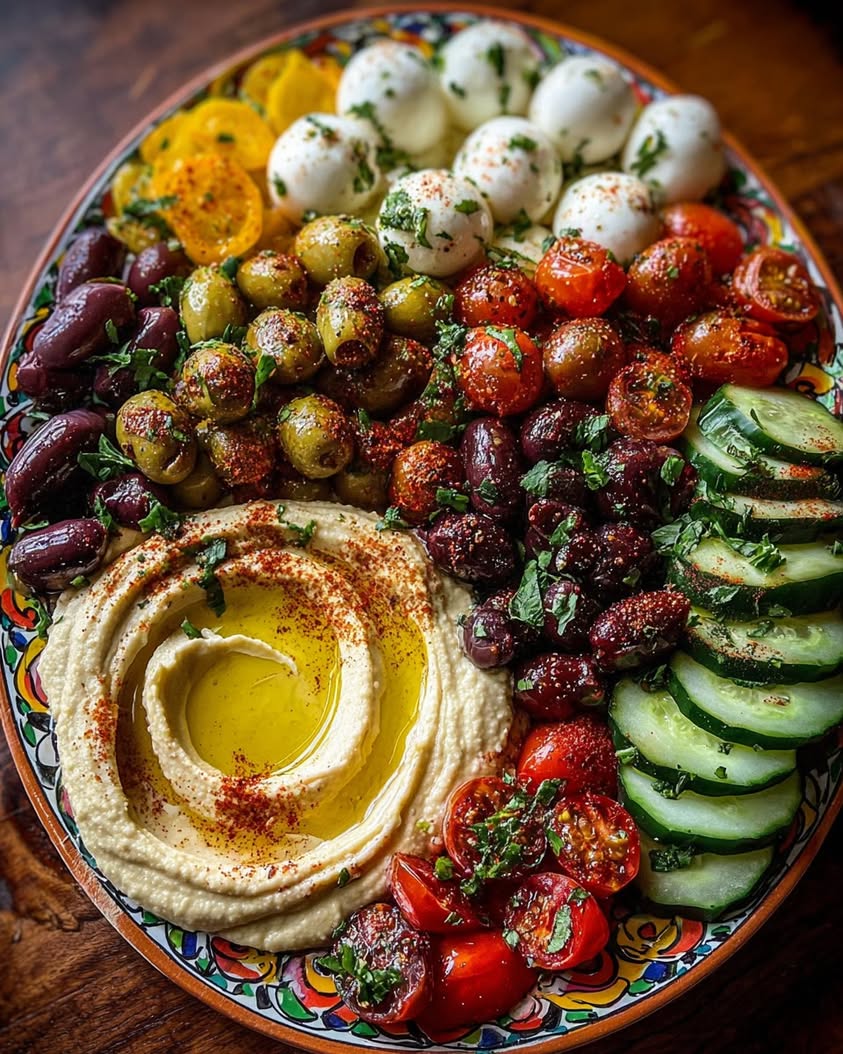
The Ultimate Mediterranean Mezze Platter with Hummus, Olives, and Burrata
The Mediterranean Mezze Platter with Hummus, Olives, and Burrata represents everything we adore about Mediterranean cooking. This vibrant sharing board brings together creamy homemade hummus, briny olives, and luscious burrata cheese with an array of colorful vegetables, warm pita bread, and aromatic spices. When you set this spectacular platter on your table, you immediately transport your guests to a sun-drenched Greek taverna or a rustic Italian trattoria. The combination of silky hummus, milky burrata, and salty olives creates an unforgettable flavor experience that keeps everyone coming back for more.
Creating a Mediterranean Mezze Platter with Hummus, Olives, and Burrata at home offers endless possibilities for customization and personal expression. You can arrange your ingredients according to color, texture, or flavor intensity, making each platter unique to your taste and occasion. The beauty of this recipe lies in its simplicity and flexibility. Whether you serve it for a casual weeknight dinner, an elegant dinner party, or a festive holiday gathering, this mezze platter always impresses guests with its abundance and beauty. Furthermore, this recipe requires minimal cooking time, which means you can assemble a spectacular spread even on your busiest days.
I discovered this particular combination during a memorable trip through the Mediterranean coast. The creamy hummus from a small family-run shop in Beirut, the fresh burrata from a dairy farm in Puglia, and the kalamata olives from a sun-drenched grove in Greece all came together on one magnificent table. Since then, I have perfected this Mediterranean Mezze Platter with Hummus, Olives, and Burrata to bring those magical flavors into everyday home cooking. This recipe honors traditional techniques while embracing modern convenience, delivering an authentic taste of the Mediterranean that anyone can recreate in their own kitchen.
Quick Recipe Highlights
- Flavor Profile: This platter shines with a beautiful balance of savory, tangy, and creamy elements. The earthy hummus pairs wonderfully with the sweet, buttery burrata, while briny olives add a delightful salty punch. Fresh vegetables contribute crunch and brightness that perfectly complement the rich components.
- Texture: The texture experience ranges from silky smooth hummus to the soft, pillowy interior of burrata. Crisp cucumber slices and crunchy radishes provide satisfying contrast against creamy spreads. Warm, toasted pita bread adds a chewy element that ties everything together beautifully.
- Aroma: Fragrant olive oil, toasted sesame seeds from the tahini, and fresh herbs create an intoxicating Mediterranean aroma. The floral notes of za’atar spice blend add warmth and complexity to the entire platter. Fresh garlic from the hummus provides a subtle, inviting pungency that awakens the senses.
- Visual Appeal: This Mediterranean Mezze Platter with Hummus, Olives, and Burrata creates a stunning rainbow of colors. Bright green herbs, deep purple olives, pristine white burrata, and golden pita bread make an eye-catching presentation. The arrangement allows for beautiful color contrasts that look gorgeous in photographs and on your table.
- Skill Level Needed: This recipe welcomes cooks of all experience levels with open arms. You need basic knife skills for chopping vegetables and spreading hummus smoothly. Even novice cooks will find this platter easy to assemble with our detailed instructions and helpful tips.
- Special Equipment: A food processor makes the hummus incredibly smooth and creamy, though you can also achieve great results with a blender. A large wooden board or serving platter provides the perfect canvas for arranging your spread. Small serving bowls help organize individual components beautifully.
Recipe Overview
- Difficulty Level: This recipe earns its “easy” rating because it relies on simple techniques rather than complicated cooking methods. You only need to blend the hummus ingredients, warm the pita bread, and arrange everything artfully on a board. Even the most inexperienced home cooks will feel confident tackling this Mediterranean Mezze Platter with Hummus, Olives, and Burrata. The recipe requires no specialized skills, complex temperature control, or tricky timing. Your success depends mainly on quality ingredients and thoughtful arrangement rather than technical cooking abilities.
- Category: This versatile dish works beautifully as an appetizer, starter, or light main course. It also serves wonderfully as a party platter, game day snack, or picnic centerpiece. The mezze-style format encourages grazing and socializing, making it ideal for casual gatherings. Many people also enjoy it as a weekend lunch paired with a fresh green salad. You can adjust portions easily depending on whether you plan to serve it as a starter or main event.
- Cuisine: This recipe draws inspiration from the rich culinary traditions of Greece, Lebanon, Italy, and Turkey. Mezze culture originated in the Eastern Mediterranean, where sharing small plates represents hospitality and community. Burrata brings an Italian touch, while hummus and olives reflect Levantine and Greek influences. These flavors and techniques have evolved over centuries through trade, cultural exchange, and shared culinary wisdom across Mediterranean nations.
- Cost: Creating this Mediterranean Mezze Platter with Hummus, Olives, and Burrata proves quite budget-friendly for the abundance it provides. Hummus ingredients like chickpeas, tahini, and lemon cost just a few dollars total. Burrata is the most expensive component, typically running six to eight dollars for good quality. Fresh vegetables and quality olives remain reasonably priced at most grocery stores. In total, you can expect to spend around twenty to twenty-five dollars to serve six to eight people generously.
- Season: This platter can grace your table year-round, but it particularly shines during spring and summer months. Fresh vegetables reach their peak flavor and affordability during warmer seasons. The light, refreshing nature of this dish suits outdoor dining and hot weather perfectly. During fall and winter, you can still enjoy this platter with roasted vegetables and warm pita for comfort. The Mediterranean climate that inspires this cuisine makes it welcome in every season.
- Occasion: Hosting a dinner party provides the perfect opportunity to showcase this impressive spread. Game day gatherings benefit from the communal sharing format that keeps guests mingling. Holiday brunch tables welcome the bright colors and fresh flavors this platter brings. Family movie nights feel more special with a delicious Mediterranean board to snack on. Date nights at home become romantic and memorable with this beautiful spread for two.
Why You’ll Love This Recipe
The taste experience of this Mediterranean Mezze Platter with Hummus, Olives, and Burrata will absolutely delight your palate. Each component brings its own distinct character, and together they create a harmonious symphony of flavors. The creamy hummus offers earthy, nutty notes from the chickpeas and tahini, brightened perfectly with fresh lemon juice and garlic. Burrata adds a rich, buttery decadence that melts in your mouth, while the olives contribute a bold, briny complexity. Every bite you take brings a different combination of tastes, keeping your taste buds excited and curious throughout the meal.
Convenience makes this recipe practically perfect for hectic modern lifestyles. The prep time stays minimal, particularly if you allow yourself some shortcuts for certain components. You can prepare the hummus up to three days in advance, streamlining your actual serving day. Moreover, assembly requires no heating, baking, or complicated final steps. After cooking, this recipe works beautifully for meal prep or for transforming your regular family meals into something special. You can also adapt this platter based on what you have in your refrigerator, reducing waste and saving money.
Nutritionally, this platter delivers impressive health benefits that align perfectly with Mediterranean diet principles. Chickpeas provide substantial plant-based protein and fiber while supporting digestive and heart health. Burrata offers calcium and protein for strong bones and tissue maintenance. Olive consumption contributes healthy monounsaturated fats and powerful antioxidants to your diet. The abundance of fresh vegetables supplies vitamins, minerals, and phytochemicals that support overall wellness and disease prevention.
From an entertaining perspective, sharing this Mediterranean Mezze Platter with Hummus, Olives, and Burrata creates a warm and interactive dining experience for your guests. The communal nature of mezze encourages conversation, sharing, and connection among friends and family. People love building their own perfect bites from the beautiful selection you provide. This style of eating naturally slows down the meal and allows everyone to savor each moment together. Your guests will remember this enjoyable experience long after the last bite disappears.
Cost-effectiveness makes this recipe a smart choice for generous entertaining without breaking the bank. You save money substantially by making hummus from scratch rather than buying expensive prepared versions. Most ingredients are affordable staples that you can easily find at any grocery store. The flexibility of this recipe also prevents waste, as you can use whatever vegetables you have available. Additionally, leftovers keep well for several days, giving you multiple meal opportunities from one investment.
Historical Background and Cultural Significance
The mezze tradition traces its roots back through centuries of Eastern Mediterranean and Middle Eastern cuisine. Anthropologists believe that hospitality customs in the Levant region established the foundation for this style of eating. In ancient cultures, offering plentiful small dishes to guests represented respect, generosity, and social status. Over time, this custom spread throughout the entire Mediterranean basin, adopted and adapted by various cultures along the way. Each region added its own specialties while maintaining the core principle of sharing abundant food among companions.
Mezze holds deep cultural importance beyond mere nourishment in Mediterranean societies. Sharing food this way represents friendship and often extends to business relationships, political discussions, and even marriage arrangements. The leisurely pace of mezze eating encourages meaningful conversation, storytelling, and emotional connection among participants. In many Mediterranean cultures, the mezze table serves as neutral ground for important discussions and celebrations. This tradition reinforces social bonds and community cohesion that have shaped Mediterranean society for generations.
This particular combination of hummus, olives, and burrata reflects the beautiful evolution of Mediterranean cuisine over time. Hummus has ancient origins in the Middle East, where chickpeas and sesame seeds have served as essential foods for thousands of years. Burrata emerged more recently, created in Southern Italy during the early twentieth century alongside a dairy processing innovation. Olives and olive oil have sustained Mediterranean civilization since ancient times being essential to daily life. The mingling of these elements on one platter showcases how Mediterranean trade and cultural exchange have blended diverse culinary traditions.
Regional variations of this Mediterranean sharing platter demonstrate how local ingredients shape culinary expression across the region. Greek mezze emphasizes feta cheese, olives, and grilled vegetables rather than burrata. Lebanese mezze typically includes multiple small salads and spread like hummus and baba ganoush. Turkish meze offerings feature yogurt-based dips and stuffed grape leaves prominently. Italian versions transform into antipasto boards with cured meats, cheeses, and marinated vegetables. This diversity shows how humble ingredients can be transformed into beloved regional specialties while sharing common principles of hospitality and simplicity.
Ingredient Deep Dive
Chickpeas, also known as garbanzo beans, lie at the heart of hummus and have nourished civilizations since ancient times. These legumes were first cultivated in the Middle East more than seven thousand years ago and quickly became dietary staples across the ancient world. Nutritionally, chickpeas deliver exceptional plant-based protein, dietary fiber, iron, and folate necessary for overall health. When selecting chickpeas, you should look for dried beans with uniform size and smooth skins. Canned chickpeas work beautifully for convenience, and you can also substitute white beans like cannellini for a different flavor profile.
Burrata, which translates to “buttery” in Italian, represents a luxury in Mediterranean dairy products. This fresh cheese originated in the Puglia region where skilled cheese makers developed this delicate creation. Burrata consists of an outer mozzarella shell filled with a creamy mixture of stracciatella and cream. This cheese provides excellent protein and calcium, plus healthy fats that contribute satiety and flavor. When choosing burrata, look for pieces that feel slightly springy with no liquid seepage from packaging. You should consume it fresh within two days of purchase, though it will last up to five days when refrigerated.
Olives contribute bold, briny flavor and deep purple color to the Mediterranean Mezze Platter with Hummus, Olives, and Burrata. Olive cultivation began around six thousand years ago in the Mediterranean basin and represents biblical references to abundance and peace. Olives provide heart-healthy monounsaturated fats, vitamin E, and beneficial plant compounds like oleuropein. Select olives from quality producers who brine with natural sea salt rather than chemical processing. For this recipe, kalamata olives from Greece offer exceptional flavor, though you can mix varieties for interesting depth. Store olives in their brine and use within a month as they do keep deliciously in the refrigerator.
Fresh vegetables and herbs complete the culinary experience with crunch and brightness. Cucumbers, tomatoes, and radishes add refreshing textures that balance rich ingredients. Fresh parsley and mint provide aromatic lift and beautiful color contrast throughout the platter. When choosing vegetables, look for firm specimens with vibrant colors and no blemishes or soft spots. These vegetables can be prepared several hours ahead, though you should add them to the platter right before serving. You can adapt the vegetable selection according to season and personal preference with wonderful results. These elements also provide crucial micronutrients including vitamin C, potassium, and beta-carotene essential for health.
Tahini serves as the essential binding element in hummus and provides distinctive nutty sesame flavor. Made from toasted ground sesame seeds, tahini has been used in Middle Eastern cooking for centuries. This ingredient adds healthy fats, protein, and minerals including calcium and magnesium to the dish. When purchasing tahini, select the Middle Eastern brands that contain only sesame seeds and no additives. The tahini should be smoothly ground and pour easily from the jar, and you can store it in the pantry or refrigerator to maintain freshness. If you cannot access quality tahini, you can substitute with almond butter or sunflower seed butter for delicious variations.
Common Mistakes to Avoid
- You might use cold ingredients straight from the refrigerator, which can make the hummus thick and difficult to blend smoothly. Allow all ingredients to come to room temperature before beginning. This simple step ensures a silky texture and more evenly blended flavor in your dip.
- Many people skip straining and rinsing canned chickpeas, resulting in gassy, starchy hummus with an unpleasant aftertaste. Always drain and rinse your chickpeas thoroughly before processing. Taking time to remove the skins will result in substantially smoother hummus perfect for your platter.
- Some cooks blend the olive oil into the hummus instead of drizzling it on top. Adding olive oil during blending can cause the hummus to separate or become greasy. Instead, blend all other ingredients first, then drizzle quality olive oil over the finished mixture for the best presentation and flavor.
- Presenting burrata straight from the refrigerator diminishes its creamy, luscious texture considerably. Remove the burrata from refrigeration thirty to sixty minutes before serving. Allowing it to come to room temperature permits the interior to recapture its signature creaminess and full flavor profile.
- Overcrowding the platter makes the Mediterranean Mezze Platter with Hummus, Olives, and Burrata difficult to manage and unattractive. Leave sufficient space between components, which makes each element accessible and visually appealing. Use additional small bowls or plates if needed to spread out your elements comfortably.
- Neglecting to season individual components before assembly results in a flat, unsatisfying platter. Remember to add salt, pepper, and olive oil to your vegetables and other elements. Tasting and adjusting seasonings as you prepare each component ensures the final platter tastes vibrant and complete.
- Processing hummus for too short a time yields a grainy, chunky texture that lacks the expected creaminess. Blend for three to five full minutes, scraping down the sides of the processor occasionally. Adding ice-cold water during blending helps achieve that ultra-smooth professional consistency.
- Using low-quality or oxidized olives contributes off-flavors and dull color to your beautiful platter. Look for olives sold from an olive bar or in glass jars from reputable producers. Always taste olives before purchasing, and avoid any that taste soapy, bitter, or overly salty, as they will dominate the platter character.
- Warming pita bread at too-high a temperature dries it out quickly and makes it brittle. Wrap pita in foil and heat at three hundred fifty degrees for ten minutes, which will yield soft pliable bread. Keep the pita covered in a clean kitchen towel to retain moisture and warmth while serving.
- Preparing everything too far in advance causes vegetables to dry out and lose their crisp texture. Some components like hummus benefit from advance preparation, but cut vegetables should be prepared no more than two hours before serving. Arrange the final platter immediately before your guests arrive to maintain optimal freshness.
Essential Techniques
Making perfectly creamy hummus is a fundamental skill for this Mediterranean Mezze Platter with Hummus, Olives, and Burrata. Begin with room temperature chickpeas and quality tahini for the best results. Process the garlic and lemon juice together first to distribute these potent flavors evenly throughout the dip. Then add the tahini and process until a thick paste forms before adding the chickpeas in batches. While blending, add ice-cold water gradually until the consistency becomes light and billowy. Continue processing for several minutes until the hummus appears completely smooth and glossy, with no visible graininess or lumps.
Properly handling and serving burrata transforms good cheese into an exceptional experience. Remove the burrata from your refrigerator thirty minutes before serving to achieve optimal temperature. Pat the burrata gently with a paper towel to remove excess moisture, avoiding any pressure that could break the delicate outer shell. To serve, you may either present the sphere whole as a stunning centerpiece or cut it open to reveal the creamy interior. Cutting the burrata right before serving prevents the filling from running and losing its luxurious texture. Drizzle with high-quality extra virgin olive oil and season with flaky salt just before serving to elevate the flavor experience.
Arranging the mezze platter artfully requires attention to color, height, and flow, similar to creating an edible still life. Start with the largest bowls and containers, placing hummus at the center or slightly off-center for visual interest. Arrange olives in small contrasting bowls and position them strategically around the board. Create layers by placing the burrata on a bed of fresh herbs or arugula for visual elevation and contrast. Group vegetables with similar colors in small clusters for intentional, curated appearance. Finally, sprinkle fresh herbs, pine nuts, or pomegranate seeds across the entire platter to add visual connection between components.
Bread handling significantly influences the platter experience, as pita provides the perfect vessel for scooping hummus. Serving pita warm ensures maximum flavor and pliability for easy dipping. Wrap pita in foil and warm in the oven, then wrap in a clean cloth napkin or towel for presentation that keeps it cozy. For variety, cut pita into triangles or tear into rustic pieces for a more casual look. Consider also including other breads like crusty sourdough or grilled flatbread to create additional flavor and texture contrast. The bread serves as both a functional scooping tool and delicious element of the meal.
Pro Tips for Perfect The Ultimate Mediterranean Mezze Platter with Hummus, Olives, and Burrata
Use the highest quality extra virgin olive oil you can find for this dish. The olive oil features prominently in the platter, from drizzling over hummus to dressing the vegetables and garnishing the burrata. A robust, peppery oil adds authentic Mediterranean character and freshness to the entire Mezze platter.
Make the hummus at least two hours before serving, but ideally one day ahead. This resting period allows flavors to meld and mature nicely, producing a deeper, more rounded flavor. Always bring the hummus to room temperature before serving for maximum flavor impact.
Create your own za’atar spice blend for a distinctive, fresh flavor experience. Combine toasted sesame seeds, dried thyme, sumac, and a touch of salt for a fragrant, earthy mixture. Alternatively, a simple mix of sumac and sesame seeds provides similar vibrancy if you need to simplify.
Toast pine nuts in a dry skillet until just golden brown for a rich, buttery garnish for your hummus. This adds a wonderful crunch and textural contrast to the creamy dip and will wow your guests with gourmet attention to detail.
Layer your flavors in the hummus bowl. Spread the hummus with a wide circular motion to create swirls that catch olive oil. Make a well in the center to hold extra olive oil and perhaps a few whole chickpeas for visual appeal. This small step elevates the presentation from simple to spectacular.
Prep your vegetables and arrange the platter close to serving time. While hummus and spreads do well ahead, crisp vegetables lose their fresh texture quickly. A final setup takes only minutes, but the visual impact of fresh, vibrant vegetables is worth the cinematic timing.
Ensure you use ice-cold water while blending the hummus. This chill keeps the blade and mixture cool, allowing the tahini and chickpeas to emulsify into a perfectly fluffy and light cream. The texture becomes airy and delicate, a hallmark of excellent hummus.
Do not forget the citrus when serving the burrata. A final squeeze of fresh lemon juice over the cheese just before serving brightens its flavor profile beautifully. The acidity balances the rich cream and adds a sparkling finish.
Variations and Adaptations
Regional variations of the mezze platter abound, each reflecting local tastes and available ingredients. Greek versions commonly swap burrata for feta cheese and include Greek olives and dolmades. Lebanese mezze often features baba ganoush alongside hummus with additional spice blends. Turkish presentations regularly include smoky eggplant salads and yogurt-based dips. Italian antipasto versions replace hummus with marinated cheeses and cured meats. Each regional interpretation highlights beloved local ingredients while maintaining the festive sharing concept.
Seasonal adaptations allow your platter to evolve throughout the year with nature’s freshest offerings. Summer brings juicy tomatoes, sweet peppers, and fresh herbs that burst with flavor. Autumn calls for roasted pumpkin, caramelized figs, and warm spices to complement the creamy elements. Winter adaptations incorporate roasted beets, citrus segments, and hearty greens for color and nourishing warmth. Spring welcomes asparagus, peas, and fresh artichokes that speak of renewal and lightness on your board.
Dietary modifications can accommodate various health needs without sacrificing deliciousness on your platter. For a dairy-free version, replace burrata with marinated tofu or additional smoked almond ricotta. Vegan adaptations use plant-based cheese alternatives or emphasize vegetables and legumes. Gluten-free serving requires corn tortillas or vegetable crudités instead of pita bread. Low-carb versions highlight vegetables and hummus while limiting bread portions appropriately. These modifications allow everyone to enjoy the communal dining experience without restriction.
Flavor variations present endless creativity opportunities for the home cook. Spice up the hummus with roasted red peppers, jalapenos, or sun-dried tomatoes. Add fresh herbs like dill, basil, or cilantro to your hummus for unexpected brightness. Infuse olive oil with garlic, chili, or rosemary for additional complexity when drizzling. Incorporate spice blends like harissa or baharat to the vegetables for heat and aromatic spices. Experiment with different olive varieties like Castelvetrano, niçoise, or spicy marinated olives to customize the briny element.
Texture modifications allow you to make the platter crunchier, creamier, or more substantial as desired. Add crispy chickpeas for pleasant crunch that contrasts beautifully with creamy dips. Include toasted pita chips for extra crispness alongside softer breads. Incorporate nuts and seeds for additional texture variation throughout the board. Layer raw and cooked vegetables to create interesting textural interplay between components.
Presentation alternatives inspire creative ways to showcase this Mediterranean Mezze Platter with Hummus, Olives, and Burrata. Serve individual components on separate plates for family-style eating that people serve sequentially. Create single-serving mezze bowls in small jars or glasses for easy portion control at parties. Use hollowed vegetables like peppers or cucumbers as edible serving vessels. Stack vertical arrangements to create height and dimension on your serving board. These variations bring fresh perspective to the same wonderful combination of flavors and ingredients.
Serving and Presentation Guide
Plating techniques create visual appeal and make your Mediterranean sharing board accessible and practical. Start with the hummus in the center of your largest board and build around it. Add the burrata as the star of the show, centered in a prominent location. Harness the visual power of negative space by leaving some board showing for balance and depth. Remember to wipe any drips or smudges for a clean, presentable finish that looks professional and intentional.
Garnishing ideas elevate the entire aesthetic from simple to sophisticated in seconds. Sprinkle za’atar, paprika, or sumac over the hummus for color and friendly visual warmth. Add fresh herb leaves like parsley, mint, or dill in clusters for aromatic appeal. Scatter pomegranate seeds like jewels across the board for bright crimson accents. Drizzle high-quality olive oil generously as a finishing touch that adds sheen and rich flavor.
Traditional accompaniments complete the Mediterranean dining experience authentically. Warm pita bread remains a beloved choice for scooping hummus. Add a side of pita chips for those who prefer extra crunch. Serve fresh vegetable crudités like carrots and celery alongside for additional dipping options. Include extra olives, pickles, or marinated vegetables in small dishes for even more variety at the table.
Modern serving suggestions refresh this classic for contemporary entertaining style. Create a DIY mezze bar where guests build their own plates from the selection. Use multiple smaller boards for larger groups or to create interesting stations. Include social media-ready styling with vibrant elements that photograph appealingly. Serve with labeled components for guest education and appreciation of different ingredients.
Temperature considerations significantly affect the eating experience of the Mezze platter. Hummus should sit at room temperature for thirty minutes before serving. Burrata needs the same resting time to bring out full creaminess. Olives taste best slightly chilled but not freezing cold. Vegetables provide maximum crunch when served cold and crunchy. Warm pita provides a pleasing contrast to the cooler elements on the board.
Portion control tips help you feed guests properly without excessive leftovers. Plan for approximately one to one and a half cups of hummus per four guests. Estimate one burrata ball per three to four people as part of a larger menu. Provide at least four olives per person and a variety of vegetables generously. Remember that mezze meals are naturally grazing-focused, so accommodating extended periods with this proportion guidance works perfectly.
Wine and Beverage Pairing
Wine pairing elevates the Mediterranean Mezze Platter with Hummus, Olives, and Burrata pairing to a new level. A crisp, unoaked white wine like Assyrtiko from Greece provides bright acidity that complements the creamy hummus. Sauvignon Blanc works wonderfully with the fresh vegetables and herbs on your board. A light, chilled Rosé proves versatile and friendly for this assortment of flavors. For red wine lovers, a light-bodied Pinot Noir with moderate tannins pairs nicely without overpowering the delicate burrata.
Non-alcoholic alternatives deliver plenty of refreshment for any guests who avoid alcohol. Sparkling water with a squeeze of lemon or lime cleanses the palate beautifully between bites. Iced green tea with fresh mint offers Mediterranean flavor with subtle sweetness. Pomegranate juice mixed with sparkling water creates a festive and tangy beverage. Fresh lemonade or orange juice provides natural citrus flavor that lifts all the savory components.
Consider a traditional Greek frappe for coffee lovers accompanying the meal experience. This iced coffee beverage offers bitter notes that contrast nicely with creamy hummus and rich burrata. Turkish tea, typically served in small glasses, provides a warming and traditional accompaniment to mezze. A cold beer, especially a light lager or wheat beer, offers a palatable option for many guests and casual gatherings.
Temperature matters for beverages served alongside the platter. Whites and rosés should be thoroughly chilled but not ice cold, typically around forty-five to fifty degrees Fahrenheit. Red wines benefit from slightly cool temperatures around sixty degrees. Sparkling water and soft drinks taste best served very cold with plenty of ice. Remember to provide plenty of cold water for guests to stay hydrated and refresh their palates.
Serving suggestions that enhance flavor include matching each beverage type to its best complementary component. Pair acidic wines with the hummus to cut through its richness. Serve sweeter beverages alongside the olives to balance their saltiness. Choose more full-bodied drinks to stand up to the creamy burrata. Experiment with these basic principles until you find your ideal pairing combinations for different tastes and occasions.
Storage and Shelf Life
Storage methods vary by component, helping you plan properly for leftovers from your generous platter. Homemade hummus keeps beautifully refrigerated in an airtight container for up to five days. Burrata stays fresh for two to three days when kept in its original liquid in an airtight container. Olives maintain quality for about two weeks refrigerated in their brine or seasoned oil. Fresh vegetables must be stored separately in sealed containers or bags with paper towels to absorb excess moisture.
Temperature requirements ensure maximum longevity for your Mediterranean ingredients. Keep all prepared items refrigerated promptly after serving, never allowing anything to sit out more than two hours. Store hummus between thirty-four and thirty-eight degrees Fahrenheit in the coldest part of your refrigerator. Burrata remains best maintained at these same cool temperatures in its original packaging. Olives should remain submerged in liquid to prevent drying out, store them refrigerated and tightly covered.
Container recommendations make storage simple and efficient for leftovers. Use glass containers with tight-fitting lids that will not absorb flavors or stain. For small portions, use small jars or ramekins with plastic wrap or beeswax covers. Keep olive oil at room temperature in a cool, dark place away from sunlight. Use large zip-top bags for bread storage, pressing out all air before sealing to prevent drying.
Signs of spoilage you should recognize include visual changes, texture shifts, and off-putting odors that indicate discarding is necessary. Hummus that develops pinkish or gray coloring or a sour aroma should be discarded. Burrata that smells or tastes sour or shows visible mold growth should be thrown away. Olives that become slimy or mushy indicate spoilage. Vegetables that develop sliminess, excessive wilting, or visible mold should always be discarded immediately.
Reheating instructions apply mainly to pita bread, which tastes best warmed and soft. Wrap leftover pita in foil and heat in a three hundred degree oven for five minutes. This method retains moisture better than microwaving, which tends to produce tough, chewy texture. Never reheat hummus, as this destroys its texture and alters the flavor profile. Serve leftover vegetables as part of salads or sandwiches the next day rather than reheating them.
Freezing guidelines suggest that some components freeze better than others for future meals. Hummus freezes successfully for up to three months in an airtight container, though texture may alter slightly. Burrata does not freeze well due to its delicate composition and fresh cheese nature. Olives can be frozen with acceptable results for cooking, though they lose some texture for snacking. Chop extra vegetables and freeze in mixtures for soups, stews, or pasta sauces later.
Make Ahead Strategies
Prep timeline allows you to spread out your work and reduce stress on the day you plan to serve. Three days ahead, make the hummus completely and store it in a sealed container in the refrigerator. Two days before serving, wash all your vegetables and store them separated in airtight containers. One day prior, season your olives and prepare any spice blends or marinades needed for the platter. On the day of your gathering, simply arrange the components and add fresh garnishes, which takes only about fifteen minutes total.
Storage between steps requires attention to keep each element fresh and delicious. Keep hummus in a covered container with plastic wrap pressed directly onto the surface to prevent skin formation. Store cut vegetables in containers lined with paper towels to absorb moisture and maintain crispness. Keep herbs upright in a glass with water and partially cover with a plastic bag in the refrigerator. All prepared components should remain refrigerated until thirty minutes before assembly for optimal quality.
Quality impact assessment shows which items can be prepared early without sacrificing flavor or texture. Hummus actually improves with a day of refrigeration as components meld and mature. Olives and marinated vegetables benefit from time in their seasonings, developing complex flavor profiles. Fresh vegetables maintain quality when prepped carefully but should always be cut within two hours of serving for peak crunch. The burrata cannot be portioned ahead, though removing it from the refrigerator thirty minutes before serving optimizes its creaminess.
Assembly tips ensure your make-ahead effort results in a spectacular final presentation. Arrange those elements that are temperature-stable first, like olives and any pickled items. Add the hummus in the center and spread into an attractive swirl pattern. Place the burrata last, just before serving, so it maintains its beautiful shape. Scatter fresh herbs and delicate garnishes as the final touch, creating visual appeal and aromatic freshness that announce ready-to-eat perfection.
Reheating guidelines for any warm elements matter when assembling early. Warm pita just before your guests are ready to eat, keeping them wrapped in a clean tea towel to hold warmth. If you include any roasted vegetables, you can reheat them in a three hundred fifty degree oven briefly if desired. Warm components contrast beautifully with the cold elements, adding temperature variety to your board. Always ensure warm items are served hot but not burning, to pair perfectly with the cooler components.
Fresh element additions right before serving bring the platter alive. Just before presenting, drizzle the burrata with olive oil and sprinkle with flaky salt and fresh herbs. Add final drops of lemon juice over vegetables and hummus for brightness. Scatter pomegranate seeds or toasted nuts for crunch and color. Arranging these final fresh touches at serving time preserves their beautiful appearance and peak flavor.
Scaling Instructions
Halving the recipe proves simple when preparing the Mediterranean Mezze Platter with Hummus, Olives, and Burrata for smaller gatherings. Use about one can of chickpeas for the hummus rather than two, maintaining the same proportions. Purchase a smaller burrata ball, or cut one large ball into two servings. Reduce the variety and quantity of vegetables while still choosing three to four options. Assemble on a smaller board or use a quarter sheet pan to create a beautiful arrangement that feels appropriately Print
Mediterranean Mezze Platter with Hummus, Olives & Burrata
- Total Time: 20 minutes
- Yield: 4
Description
A vibrant and easy-to-assemble mezze platter featuring creamy hummus, briny olives, and luscious burrata, surrounded by fresh vegetables, warm pita, and a drizzle of herb oil. Perfect for sharing as an appetizer or light meal.
Ingredients
- 1 cup canned chickpeas, drained and rinsed
- 1/4 cup tahini
- 2 tablespoons fresh lemon juice
- 1 small garlic clove, minced
- 3 tablespoons extra-virgin olive oil, plus more for serving
- 1/2 teaspoon ground cumin
- Salt to taste
- 1/2 cup water (or as needed)
- 1 cup mixed olives (Kalamata, Castelvetrano)
- 8 ounces fresh burrata cheese
- 1 cup cherry tomatoes, halved
- 1 cucumber, sliced
- 1/2 red onion, thinly sliced
- 1/4 cup fresh parsley leaves
- 2 tablespoons fresh mint leaves
- 1/4 teaspoon red pepper flakes
- 4 pieces pita bread, warmed
- 1 tablespoon lemon zest
- Fresh ground black pepper
Instructions
- In a food processor, combine chickpeas, tahini, lemon juice, garlic, olive oil, cumin, and salt. Process until smooth, adding water gradually until creamy. Set aside.
- On a large serving platter, spread the hummus in a smooth layer, creating a slight well in the center.
- Place the burrata in the center of the platter, breaking it slightly to expose the creamy center. Drizzle with olive oil and sprinkle with lemon zest and black pepper.
- Arrange the olives, cherry tomatoes, cucumber slices, red onion, and herbs around the hummus and burrata.
- Sprinkle with red pepper flakes and drizzle with additional olive oil if desired.
- Serve with warm pita bread for dipping and assembling.
Notes
You can customize the seasonings to taste. Add grilled vegetables or marinated artichokes for extra variety.
- Prep Time: 20 minutes
- Cook Time: 0 minutes
- Method: Appetizer
- Cuisine: Mediterranean