Mediterranean Meatball Rice Bowl with Tzatziki & Fresh Veggies: A Vibrant Weeknight Feast
Imagine a bowl that captures the essence of a sun-drenched Mediterranean coastline. This Mediterranean Meatball Rice Bowl recipe delivers exactly that experience. It combines savory, herb-infused meatballs with fluffy rice, crisp vegetables, and a cool, creamy tzatziki sauce. Consequently, every bite offers a perfect harmony of flavors and textures. This dish is not just a meal; it’s a vibrant, satisfying escape to a simpler, fresher way of eating.
Furthermore, this recipe is designed for real life. It transforms simple, wholesome ingredients into a restaurant-quality dinner without the fuss. The meatballs come together quickly, the rice cooks while you prepare the fresh toppings, and the tzatziki sauce can be made ahead. Ultimately, you get a colorful, nutrient-packed meal that feels special enough for guests but easy enough for a busy Tuesday night. The beauty of this Mediterranean Meatball Rice Bowl lies in its versatility and its guaranteed crowd-pleasing appeal.
Quick Recipe Highlights
- Flavor Profile: This dish bursts with bright, herby notes from fresh dill and parsley in the meatballs and tzatziki. Simultaneously, the savory depth of the meatballs balances beautifully with the tangy, garlicky yogurt sauce and the sweet acidity of fresh vegetables.
- Texture: You experience a wonderful contrast in every forkful. Notably, you get the tender, juicy bite of the meatballs against the fluffy rice, the cool creaminess of the tzatziki, and the satisfying crunch of cucumbers, tomatoes, and red onion.
- Aroma: As the meatballs cook, your kitchen fills with the warm, inviting scents of garlic, onion, and Mediterranean herbs. Meanwhile, the fresh dill and lemon in the tzatziki add a bright, clean top note that makes the dish smell incredibly fresh.
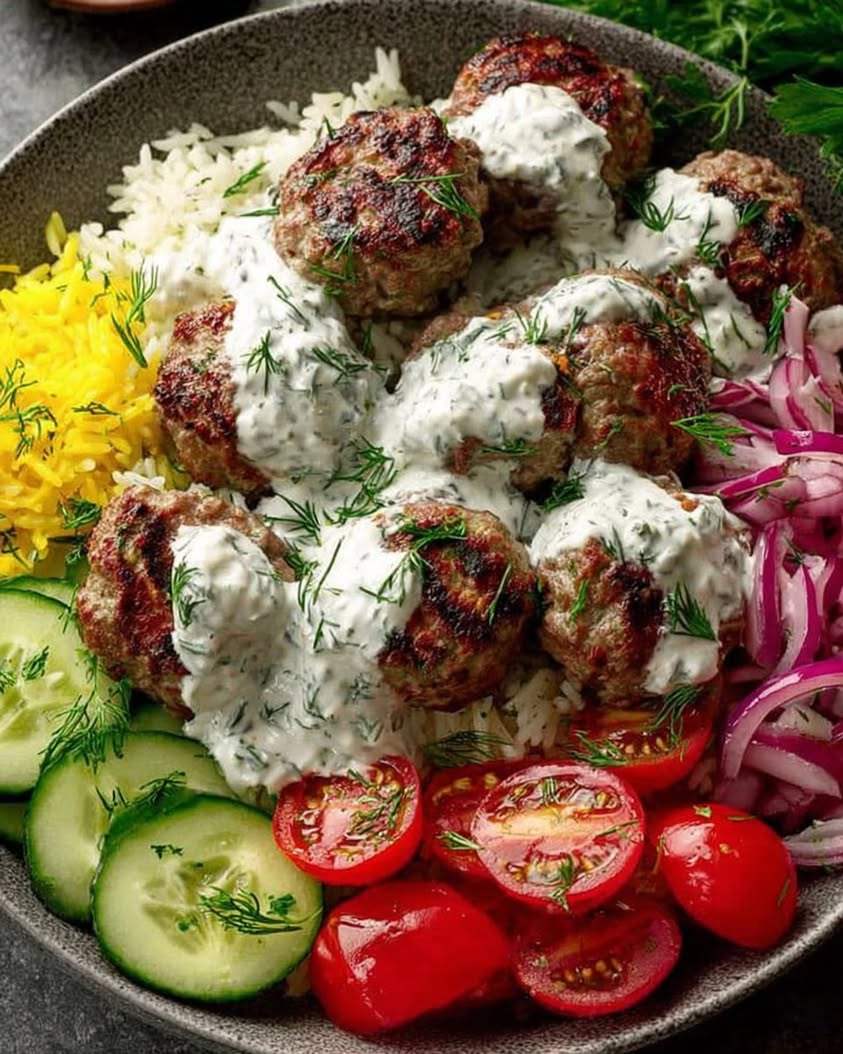
- Visual Appeal: This bowl is a feast for the eyes with its vibrant color palette. The white tzatziki and rice, golden-brown meatballs, and pops of red, green, and purple from the veggies create a stunning, Instagram-worthy presentation.
- Skill Level Needed: This is a beginner-friendly recipe. Basic skills like chopping, mixing, and pan-frying are all you need. Moreover, the steps are straightforward and forgiving, making it a fantastic recipe for building kitchen confidence.
- Special Equipment: You only need common kitchen tools: a mixing bowl, a baking sheet or skillet, a box grater for the cucumber, and a small bowl for the sauce. No fancy gadgets are required, which adds to the recipe’s accessibility.
Recipe Overview
- Difficulty Level: We rate this recipe as “Easy.” The techniques are fundamental, and the components can be prepared simultaneously. While there are several parts, none are complicated. Therefore, even novice cooks can achieve excellent results by following the clear, sequential steps.
- Category: This dish is a complete, balanced main course. It fits perfectly into categories like “Healthy Dinners,” “Meal Prep Bowls,” and “Family-Friendly Meals.” It provides protein, complex carbs, and plenty of vegetables in one satisfying container.
- Cuisine: The recipe draws direct inspiration from the flavors of the Eastern Mediterranean, particularly Greek and Turkish cuisines. Key elements like the lemon-herb meatballs, tzatziki sauce, and use of fresh vegetables are hallmarks of this healthy, flavor-focused culinary region.
- Cost: This is a very cost-effective meal. Ground meat, rice, and yogurt form an affordable base. Seasonal vegetables keep the price down. Overall, you can feed a family of four a restaurant-quality meal for a fraction of the cost of dining out.
- Season: This recipe shines brightest in the spring and summer when cucumbers, tomatoes, and fresh herbs are at their peak. However, its bright flavors also provide a wonderful contrast to heavier winter meals, making it a versatile year-round option.
- Occasion: It’s incredibly versatile for any occasion. Serve it for a casual weeknight dinner, pack it for a healthy lunch, or arrange the components on a platter for a stunning, interactive meal with friends. It’s equally suited for a simple family meal or easy entertaining.
Why You’ll Love This Recipe
First and foremost, the taste and texture are utterly irresistible. Each component of this Mediterranean Meatball Rice Bowl is designed to complement the others. The savory, well-seasoned meatballs provide a hearty, protein-rich foundation. Then, the cool, garlicky tzatziki sauce cuts through that richness with its tangy creaminess. Finally, the array of fresh vegetables adds necessary crunch and a burst of juicy sweetness. Consequently, every single bite is a complex and satisfying experience that keeps you coming back for more. This is not a boring, one-note meal; it’s a symphony of Mediterranean flavors on your spoon.
From a practical standpoint, the convenience factor is a major win. This recipe uses a clever parallel-prep method. While your rice simmers, you can mix and cook the meatballs. Meanwhile, as those cook, you can quickly chop the veggies and whisk together the simple tzatziki sauce. This efficient workflow means dinner is on the table in under an hour with minimal stress. Additionally, the components are fantastic for meal prep. You can cook the meatballs and rice, and make the sauce ahead of time. Then, you simply assemble a fresh bowl in minutes throughout the week.
Nutritionally, this bowl is a powerhouse. It provides a balanced mix of macronutrients: high-quality protein from the meatballs and yogurt, complex carbohydrates from the rice, and healthy fats from the olive oil. Moreover, the generous serving of fresh vegetables delivers essential vitamins, minerals, and fiber. This combination promotes sustained energy, supports muscle repair, and aids digestion. Choosing lean ground meat and Greek yogurt makes it a lighter option without sacrificing flavor or satisfaction. Ultimately, it’s a meal that makes you feel nourished and energized, not weighed down.
This Mediterranean Meatball Rice Bowl also offers tremendous social and entertaining value. Its beautiful, colorful presentation is guaranteed to impress guests. You can easily double or triple the recipe for a crowd. For a fun twist, set up a “bowl bar” with all the components in separate dishes and let everyone build their own masterpiece. This interactive style of serving is engaging and accommodates different dietary preferences effortlessly. It transforms a simple dinner into a memorable, shared experience centered around fresh, delicious food.
Finally, its cost-effectiveness and accessibility are undeniable. The ingredients are common, affordable, and available in any standard grocery store. You don’t need expensive, hard-to-find specialty items. Ground turkey or chicken can be used instead of beef or lamb for a budget-friendly swap. Similarly, you can use whatever fresh vegetables are in season or on sale. This recipe demonstrates how to create a spectacular, healthy meal without breaking the bank. It proves that eating well doesn’t require exotic ingredients, just a thoughtful combination of simple, quality components.
Historical Background and Cultural Significance
The concept of the meatball, or “keftedes” in Greek, has ancient roots across the Mediterranean and Middle East. Historically, these spiced ground meat mixtures were a practical way to stretch expensive meat with breadcrumbs or grains and add flavor with abundant local herbs. The version in this Mediterranean Meatball Rice Bowl draws specifically from the Greek tradition, where oregano, mint, and parsley are classic additions. These herby meatballs are often pan-fried or baked until golden and served as part of a mezze spread or a main course, symbolizing hospitality and communal eating.
Tzatziki sauce is equally steeped in history, with variations found from Greece to Turkey (where it’s called “cacık”) and beyond. Its foundation of yogurt, cucumber, garlic, and herbs was born from a need to preserve and enhance simple, perishable ingredients in a hot climate. The yogurt provided probiotics and protein, while the cucumber added hydration. In Greek culture, tzatziki is more than a condiment; it’s a staple that accompanies grilled meats, acts as a dip for bread, and adds a cooling element to spicy dishes. Its inclusion in this bowl connects the meal directly to centuries-old culinary traditions.
The evolution of this specific recipe into a “bowl” format is a modern interpretation of these classic elements. While the components are traditional, assembling them over rice in a single serving vessel reflects contemporary eating trends focused on convenience, customization, and visual appeal. This format takes the shared-plate philosophy of a Mediterranean mezze table and personalizes it. It’s a fusion of ancient flavor principles with a modern presentation style, making timeless tastes accessible and convenient for today’s home cook and eater.
Regional variations of this concept are plentiful. In Turkey, you might find the meatballs (köfte) served with bulgur pilaf and a side of cacık. In the Levant, similar bowls could feature lamb meatballs with tahini sauce and a parsley-tomato salad. The specific herbs, the choice of grain (rice, couscous, orzo), and the exact composition of the yogurt sauce can vary from village to village. This recipe celebrates that spirit of variation, encouraging cooks to use what they have and make it their own, all while staying true to the bright, fresh, and herb-forward spirit of Mediterranean cuisine.
Ingredient Deep Dive
Ground Lamb or Beef: Lamb is traditional in many Mediterranean meatball recipes, prized for its rich, slightly gamey flavor that pairs perfectly with bold herbs and garlic. Historically, sheep herding was common in the rocky Greek hillsides, making lamb a staple protein. Nutritionally, it’s an excellent source of high-quality protein, iron, zinc, and vitamin B12. For selection, choose ground meat with a moderate fat content (around 85/15) for juicy meatballs that aren’t greasy. You can substitute with ground turkey or chicken for a lighter option, or use a plant-based ground meat for a vegan adaptation. Store it in the coldest part of your refrigerator and use within 1-2 days of purchase, or freeze for longer storage.
Greek Yogurt (for Tzatziki): Thick, strained Greek yogurt is non-negotiable for authentic tzatziki. Its origins lie in the need to preserve milk in a warm climate before refrigeration. The straining process removes whey, resulting in a creamy, tangy, protein-dense product. It’s a fantastic source of probiotics for gut health, calcium, and protein. Always select plain, full-fat or 2% Greek yogurt for the best texture and flavor; non-fat varieties can be watery and tart. For a dairy-free version, use a thick, plain coconut or almond milk yogurt. Once opened, store yogurt in its original container in the refrigerator and use by the date on the package.
Fresh Dill and Parsley: These herbs are the aromatic soul of the Mediterranean. Dill, with its feathery fronds and sweet, grassy flavor, is essential in tzatziki and often in meatball mixtures. Parsley (preferably flat-leaf Italian parsley) adds a fresh, clean, slightly peppery note. Both herbs have been used for millennia not just for flavor but also for their digestive and medicinal properties. They are rich in vitamins A, C, and K, and antioxidants. Select bunches with vibrant, perky leaves and no signs of wilting or yellowing. To store, treat them like flowers: trim the stems, place in a jar with an inch of water, cover loosely with a bag, and refrigerate.
English Cucumber: The cucumber in tzatziki provides crucial crunch and hydration. English or “hot-house” cucumbers are ideal because they have thinner skins, fewer seeds, and a less bitter taste than standard varieties. They originated from selective breeding to create a more consistent, enjoyable eating cucumber. They are over 95% water, making them incredibly hydrating and low in calories, while also providing a small amount of vitamin K and potassium. When selecting, choose firm cucumbers without soft spots. To prepare for tzatziki, grating and then squeezing out the excess water is the critical step to prevent a watery sauce. Store whole cucumbers in the refrigerator crisper drawer.
Long-Grain White Rice: Rice serves as the neutral, fluffy base that soaks up all the delicious juices and sauces. While not native to ancient Greece, rice became integrated into Mediterranean cuisine over centuries of trade. It provides easily digestible carbohydrates for energy. For the best texture in bowls, use a long-grain variety like Basmati or Jasmine, which cook up separate and fluffy rather than sticky. Rinsing the rice before cooking removes excess surface starch, which is key to achieving those distinct grains. For a whole-grain alternative, brown rice or quinoa work beautifully but will require a longer cook time. Store dry rice in a cool, dry pantry in a sealed container.
Common Mistakes to Avoid
- Overmixing the Meatball Meat: When combining the ground meat with herbs, breadcrumbs, and egg, mix just until the ingredients are incorporated. Overworking the mixture activates proteins in the meat, leading to dense, tough, rubbery meatballs. Use a gentle hand or a fork for best results.
- Not Draining the Grated Cucumber: Skipping the step of squeezing the water from the grated cucumber is the number one reason for runny, disappointing tzatziki. The excess moisture will dilute the yogurt, making the sauce thin and bland. Always use a clean kitchen towel or your hands to wring it out thoroughly.
- Crowding the Pan When Cooking Meatballs: If you pan-fry the meatballs, give them plenty of space in the skillet. Crowding them causes the pan temperature to drop, resulting in steaming instead of browning. Steam leads to pale, soggy meatballs without the desirable caramelized crust. Cook in batches if necessary.
- Using Fresh Garlic in Tzatziki Immediately: Raw garlic can be overpowering and leave a harsh aftertaste. For a mellower, more integrated garlic flavor, mince the garlic and mix it with a pinch of salt into a paste, or let it sit in the lemon juice for a few minutes before adding to the yogurt.
- Underseasoning the Meatball Mixture: Ground meat needs a generous amount of seasoning. Do not be shy with salt, pepper, and dried herbs. Taste a tiny bit of the raw mixture (or cook a small patty) to check the seasoning before forming all the meatballs. Remember, some salt will be lost during cooking.
- Skipping the Resting Time for Tzatziki: Tzatziki’s flavors need time to marry. Making it just before serving means the garlic and dill flavors will be sharp and separate. For the best taste, prepare the tzatziki at least 30 minutes to an hour ahead, allowing it to chill and the flavors to meld beautifully.
- Not Fluffing the Rice After Cooking: After the rice is done cooking and has rested, fluff it gently with a fork. If you skip this or stir it vigorously, you can break the grains and make the rice gummy. Fluffing separates the grains and releases steam for a perfect, light texture.
- Cutting Vegetables Too Far in Advance: While prepping veggies ahead is convenient, tomatoes and cucumbers can become watery and limp if diced hours before serving. For optimal crunch and freshness, chop your fresh vegetable toppings shortly before you plan to assemble and eat the bowls.
Essential Techniques
Forming Even Meatballs: Consistency in size is crucial for even cooking. Use a small cookie scoop or a tablespoon to portion the meat mixture. Then, lightly roll each portion between damp palms to form a smooth ball. Damp hands prevent the sticky mixture from clinging to your skin. Avoid compacting the meat too tightly; a gentle roll creates a tender interior. The goal is uniform, golf ball-sized spheres that will cook through at the same rate, ensuring some aren’t raw while others are overdone.
Proper Searing/Browning: Browning, known as the Maillard reaction, is essential for developing deep, savory flavor in the meatballs. Whether pan-frying or baking, ensure your cooking surface is properly preheated. For pan-frying, use a thin layer of oil over medium-high heat. Place meatballs in the pan and resist the urge to move them for a few minutes. This allows a proper crust to form. When they release easily from the pan, they are ready to turn. This crust locks in juices and adds complex flavor that boiling or steaming cannot achieve.
Preventing Watery Tzatziki: This technique has two critical steps. First, grate the cucumber on the large holes of a box grater. Second, and most importantly, transfer the grated cucumber to a clean kitchen towel or several layers of paper towels. Gather the edges and twist tightly over the sink to squeeze out as much liquid as possible. This may seem like a small step, but it is the absolute key to a thick, creamy, dip-able sauce that won’t make your rice soggy. The difference in final texture is dramatic.
Cooking Fluffy, Separate Rice: The method matters. First, always rinse your rice in a fine-mesh strainer under cold water until the water runs clear to remove excess starch. Use the absorption method: combine rinsed rice with the correct amount of water or broth, bring to a boil, then reduce to the lowest simmer, cover tightly, and do not peek. Once the cooking time is up, remove from heat and let it steam, covered, for 10 minutes. Finally, fluff with a fork. This process ensures each grain is cooked through and distinct, not mushy or clumped together.
Pro Tips for Perfect Mediterranean Meatball Rice Bowls
For incredibly juicy meatballs, soak your breadcrumbs in a tablespoon of milk or water before adding them to the meat mixture. This “panade” helps retain moisture during cooking. Additionally, let your formed meatballs rest on a plate in the refrigerator for 15-20 minutes before cooking; this helps them hold their shape better.
Elevate your tzatziki by adding a tablespoon of high-quality extra virgin olive oil and a pinch of lemon zest along with the juice. The oil adds richness and a fruity note, while the zest provides a brighter, more complex citrus aroma without extra acidity.
When baking meatballs for a hands-off approach, place them on a parchment-lined baking sheet. For extra browning and flavor, lightly spray or brush them with olive oil before they go into the oven. This mimics the sear from a pan and promotes even browning all around.
Build your bowl with temperature contrast in mind. Start with a base of warm, fluffy rice. Then, add the hot meatballs. Finally, top with the cold tzatziki and fresh, room-temperature vegetables. This layering of warm and cool elements makes the eating experience more dynamic and enjoyable.
If you have time, toast your rice in a bit of olive oil or butter before adding the cooking liquid. Simply sauté the rinsed and drained rice in the pot for 2-3 minutes until it becomes slightly translucent and fragrant. This adds a nutty depth of flavor to the entire bowl.
For a more vibrant and integrated flavor, toss your chopped fresh vegetables (tomatoes, cucumber, red onion) with a small pinch of salt, a squeeze of lemon juice, and a drizzle of olive oil. Let them marinate for 10-15 minutes while you cook. This lightly “pickles” them, enhancing their flavor and making them even more delicious.
Double the meatball recipe and freeze half. After cooking and cooling, place the extra meatballs in a single layer on a baking sheet to freeze solid, then transfer to a freezer bag. You’ll have a ready-made protein for future bowls, pasta, or pitas on a busy night.
Use an ice cream scoop or a measuring cup to portion the rice into each bowl. This ensures everyone gets an equal amount and creates a neat, professional-looking base for piling on the other beautiful ingredients.
Variations and Adaptations
Regional Variations: Travel the Mediterranean through your bowl. For a Turkish twist, add a pinch of cumin and smoked paprika to the meatballs and serve the cacık (tzatziki) with a drizzle of mint oil. For a Lebanese-inspired version, add chopped mint and allspice to the meat, and swap the tzatziki for a garlicky toum (whipped garlic sauce). A Cypriot variation might include halloumi cheese cubes pan-fried until golden and added as a topping.
Seasonal Adaptations: Embrace the produce of the moment. In summer, use heirloom tomatoes, fresh sweet corn, and zucchini ribbons. For fall, incorporate roasted cubes of butternut squash, pomegranate arils, and toasted walnuts. In winter, add warm, roasted Brussels sprout halves or sautéed kale. Spring calls for fresh peas, asparagus tips, and radish slices. The base recipe remains constant, but the vegetable toppings can rotate with the seasons for endless variety.
Dietary Modifications: This bowl is highly adaptable. For a gluten-free version, use certified gluten-free breadcrumbs or rolled oats pulsed into crumbs. To make it dairy-free, substitute the tzatziki with a tahini-lemon sauce or a dairy-free yogurt alternative. For a vegan bowl, use a plant-based ground “meat” for the meatballs and a vegan yogurt for the sauce. A low-carb or keto adaptation replaces the rice with cauliflower rice and ensures the meatballs use almond flour instead of breadcrumbs.
Flavor Variations: Experiment with the spice profile. Add a tablespoon of harissa paste to the meatball mix for a North African kick. Incorporate sun-dried tomatoes and kalamata olives finely chopped into the meat mixture for a Greek island flavor. For an Italian spin, use a mix of Parmesan cheese, basil, and oregano in the meatballs, and serve with a marinara drizzle instead of tzatziki.
Texture Modifications: Play with the components. Instead of rice, use quinoa, couscous, orzo, or farro for a different grain texture. For extra crunch, top the bowl with toasted pine nuts, slivered almonds, or crispy chickpeas. You can also shred the vegetables differently—use a vegetable peeler to create cucumber ribbons or thinly slice the onion on a mandoline for a more delicate texture.
Presentation Alternatives: Move beyond the bowl. Serve the components deconstructed on a large platter for a family-style feast. Stuff the meatballs, tzatziki, and veggies into warm pita bread for a handheld gyro-style sandwich. Alternatively, layer the ingredients in a mason jar for a portable lunch: sauce on the bottom, then rice, then meatballs, with veggies on top to stay crisp.
Serving and Presentation Guide
Plating is key to making this meal feel restaurant-worthy. Start with a wide, shallow bowl to showcase all the colorful components. Place a generous scoop of warm, fluffy rice slightly off-center. Arrange 4-5 warm meatballs artfully around or on top of the rice. Drizzle a generous amount of the cool, white tzatziki sauce over the meatballs and rice, allowing it to pool slightly. Then, strategically scatter the vibrant chopped vegetables—tomatoes, cucumber, red onion—in empty spaces, creating pops of color. Finally, garnish with a sprig of fresh dill or a sprinkle of chopped parsley and a lemon wedge on the side.
Garnishing adds the final touch of freshness and professionalism. Beyond fresh herbs, consider a light dusting of paprika or sumac over the tzatziki for color. A drizzle of high-quality extra virgin olive oil around the rim of the bowl adds shine and flavor. For a salty, briny accent, add a few whole kalamata olives or capers. Toasted sesame seeds or a sprinkle of za’atar can introduce an aromatic, Middle Eastern note. Remember, garnishes should be edible and complement the overall flavor profile.
Traditional accompaniments for these flavors include warm, pillowy pita bread for scooping up leftovers from the bowl. A simple side salad of peppery arugula dressed with lemon and olive oil provides a bitter contrast. For a more substantial spread, add other mezze like hummus, dolmas (stuffed grape leaves), or a feta cheese block drizzled with oregano and oil. These additions turn the single bowl into a complete Mediterranean feast experience.
For modern serving, consider the “build-your-own-bowl” bar. This is perfect for entertaining or family dinners with varied tastes. Place each component—rice, meatballs, tzatziki, and all the chopped veggies—in separate bowls with serving spoons. Let everyone customize their creation. This interactive approach is fun, engaging, and allows for personal preference, ensuring everyone gets exactly what they love on their plate.
Temperature considerations are crucial for maximum enjoyment. The rice and meatballs should be served hot or very warm. The tzatziki should be cold from the refrigerator. The fresh vegetables are best at room temperature. This intentional contrast between hot and cold, and soft and crunchy, is what makes the dish so exciting to eat. Avoid letting the hot components sit too long before serving, as lukewarm meatballs lose their appeal.
Portion control is easy with this recipe. A standard serving is about ¾ to 1 cup of cooked rice, 4-5 medium meatballs (roughly 4-5 ounces of meat total), ¼ cup of tzatziki, and a heaping ½ cup of mixed vegetables. This balance provides a satisfying meal that is filling but not overly heavy. For heartier appetites, you can increase the meatball count or add a side of bread. For lighter eaters, slightly reduce the rice and increase the vegetable portion.
Wine and Beverage Pairing
The bright, herbal, and sometimes tangy flavors of this bowl call for wines with good acidity and complementary notes. A classic Greek Assyrtiko is a perfect match with its crisp minerality and citrus notes that mirror the lemon in the dish. A dry Rosé from Provence, with its red fruit and herbal hints, complements the meatballs and fresh veggies beautifully. For red wine lovers, a light-bodied, low-tannin red like a Greek Xinomavro or a Pinot Noir works well; their bright acidity and red fruit profiles won’t overpower the meal. Avoid heavily oaked or high-alcohol wines, as they can clash with the dish’s freshness.
Non-alcoholic alternatives should also focus on bright, cleansing flavors. Sparkling water with a squeeze of lemon or lime is always refreshing. A homemade mint-lemonade provides a sweet-tart counterpoint. Iced herbal teas, like mint or chamomile, are soothing and complementary. For something more unique, try a cucumber-mint infused water or a pomegranate spritzer. These drinks cleanse the palate between bites and enhance the overall Mediterranean feel of the meal without the alcohol.
While not traditional post-meal pairings for this dish, coffee and tea can follow nicely if desired. A light, bright coffee like a washed Ethiopian with citrusy notes would be a pleasant finish. For tea, consider a peppermint or spearmint herbal tea to aid digestion, or a green tea with lemongrass to continue the citrus-herbal theme. Serve these beverages after the meal rather than during, as their strong flavors might compete with the nuanced tastes of the bowl itself.
Temperature is key for all beverage pairings. White wines, rosés, and non-alcoholic spritzers should be served well-chilled, between 45-55°F. Light reds like Pinot Noir are best served slightly cooler than room temperature, around 55-60°F, to emphasize their freshness. Iced beverages should be cold but not diluted; use large ice cubes or frozen fruit to keep them cool without watering them down too quickly as you enjoy your meal.
Serving suggestions include offering a variety of options if you’re hosting. Place a bottle of chilled white or rosé on the table alongside a pitcher of a signature non-alcoholic drink, like lavender lemonade. Provide clear glassware to show off the colors of the drinks. Encourage guests to sip water throughout the meal to cleanse their palates, especially since the tzatziki and vegetables are so refreshing. The goal is to have beverages that feel like a natural, enhancing part of the Mediterranean dining experience.
Storage and Shelf Life
For optimal freshness, store all components separately in airtight containers in the refrigerator. Cooked meatballs will keep for 3-4 days. Place them in a single layer or stack them with parchment paper between layers to prevent sticking. Tzatziki sauce is best consumed within 3-4 days as well; its garlic flavor will intensify over time. Cooked rice should be cooled completely and stored for up to 5 days. The chopped fresh vegetables (tomatoes, cucumber, onion) are best stored together in a separate container and eaten within 2 days for maximum crunch and freshness.
Temperature control is critical for food safety. All cooked components must be cooled to room temperature within two hours of cooking before refrigerating. Do not leave the meatballs or rice sitting out on the counter for extended periods. The refrigerator should be at or below 40°F (4°C). When reheating, ensure meatballs reach an internal temperature of 165°F (74°C) to eliminate any potential bacteria. The tzatziki and fresh veggies should always remain cold and never be reheated.
Container recommendations are important for maintaining quality. Use glass or BPA-free plastic containers with tight-fitting lids. For the tzatziki, a shallow container is better than a deep one, as it allows for more even cooling and less potential for condensation. For the rice, a wide container helps it cool faster and prevents clumping. If pre-assembling bowls for lunch, use a divided container to keep the tzatziki and fresh veggies separate from the warm rice and meatballs until you’re ready to eat.
Signs of spoilage to watch for include an off or sour smell, especially from the meatballs or tzatziki. Mold growth (fuzzy spots of white, green, or black) is an obvious indicator. For meatballs, a slimy texture on the surface means they should be discarded. If the rice develops an unusual smell, becomes excessively dry and hard, or shows signs of mold, do not consume it. When in doubt, throw it out. The fresh vegetables will simply wilt and become mushy when they are past their prime.
Reheating instructions vary by component. Reheat meatballs gently in a microwave at 50% power, in a covered skillet with a splash of water or broth to prevent drying out, or in a 300°F oven until warmed through. Reheat rice by sprinkling it with a tablespoon of water, covering it, and microwaving in short bursts, fluffing with a fork between intervals. The tzatziki and fresh vegetables should never be reheated; serve them cold or at room temperature. For assembled bowls, it’s best to reheat the rice and meatballs first, then add the cold toppings afterward.
Freezing guidelines: Meatballs freeze exceptionally well. After cooking and cooling, freeze them in a single layer on a baking sheet, then transfer to a freezer bag for up to 3 months. Thaw overnight in the refrigerator before reheating. Tzatziki does not freeze well, as the yogurt will separate and become grainy upon thawing. Cooked rice can be frozen, but the texture becomes drier and less fluffy; it’s better fresh. Fresh vegetables should not be frozen for this application. For best results, only freeze the meatballs and prepare the other components fresh when ready to serve.
Make Ahead Strategies
You can efficiently prep this entire meal over a weekend for easy weekday dinners. The ideal timeline is to cook the meatballs and rice, and prepare the tzatziki 1-2 days in advance. Chop the sturdy vegetables like red onion a day ahead, but wait to dice the tomatoes and cucumber until the day of serving to prevent sogginess. This split approach maximizes freshness while minimizing daily cooking time. Storing the components separately is the golden rule for make-ahead success, as it preserves individual textures and flavors until assembly.
Storage between steps is straightforward with the right containers. Place cooled meatballs in an airtight container, optionally with a piece of parchment between layers. Store the rice in its own container. Keep the tzatziki in a sealed jar or bowl. All three go in the refrigerator. The onions can be stored in a small container; a splash of vinegar or lemon juice can help keep them crisp. Keep tomatoes and cucumbers whole until the day you plan to eat, then chop them fresh for that perfect crunch.
The quality impact of make-ahead prep is generally positive. Meatballs often taste even better the next day as the flavors meld. Tzatziki’s garlic and herb flavors deepen and improve with a few hours of chilling. Rice may dry out slightly, but reheating with a sprinkle of water restores its fluffiness. The only potential negative impact is on the texture of the fresh vegetables, which is why they are the exception to the make-ahead rule. Overall, planning ahead saves significant time on a busy weeknight with minimal sacrifice in quality.
Assembly tips for make-ahead meals are crucial. If taking this for lunch, pack components in a divided bento-style container. Put the tzatziki in the smallest section, the cold veggies in another, and the rice and meatballs together in the largest section. If reheating at work, microwave the rice and meatballs first, then add the cold tzatziki and veggies. For dinner at home, simply reheat the rice and meatballs while you quickly chop the fresh veggies, then assemble bowls in minutes. This method keeps everything tasting its best.
Reheating guidelines for prepped components ensure they taste fresh. For the rice, sprinkle 1-2 tablespoons of water over it in a Print
Mediterranean Meatball Rice Bowl with Tzatziki & Fresh Veggies
- Total Time: 45 minutes
- Yield: 4
Description
A vibrant and healthy bowl featuring spiced lamb and beef meatballs over fluffy rice, topped with creamy tzatziki, crisp cucumbers, tomatoes, and red onion for a fresh Mediterranean-inspired meal.
Ingredients
- 1 lb ground lamb or beef (or a mix)
- 1/2 cup breadcrumbs
- 1 large egg
- 2 cloves garlic, minced
- 1 tsp dried oregano
- 1 tsp ground cumin
- 1/2 tsp smoked paprika
- Salt and black pepper to taste
- 2 cups cooked white or brown rice
- 1 cup plain Greek yogurt
- 1/2 cucumber, grated and drained
- 1 tbsp lemon juice
- 1 tbsp fresh dill, chopped
- 1 cup cherry tomatoes, halved
- 1/2 red onion, thinly sliced
- 1/4 cup Kalamata olives, pitted
- Fresh parsley for garnish
- Olive oil for cooking
Instructions
- In a bowl, combine ground meat, breadcrumbs, egg, minced garlic, oregano, cumin, paprika, salt, and pepper. Mix until just combined, then form into 1-inch meatballs.
- Heat olive oil in a skillet over medium heat. Cook meatballs for 8-10 minutes, turning occasionally, until browned and cooked through.
- In another bowl, make tzatziki by mixing Greek yogurt, grated cucumber, lemon juice, dill, and a pinch of salt. Refrigerate until ready to serve.
- Assemble bowls by dividing cooked rice among four bowls. Top with meatballs, cherry tomatoes, red onion, and olives.
- Drizzle generously with tzatziki, garnish with fresh parsley, and serve immediately.
Notes
You can customize the seasonings to taste.
- Prep Time: 15 minutes
- Cook Time: 30 minutes
- Method: Main
- Cuisine: Mediterranean