Mediterranean Greek Meatball Bowl with Tzatziki, Hummus & Fresh Village Salad: A Wholesome One-Bowl Dinner
Introduction to This Mediterranean Bowl
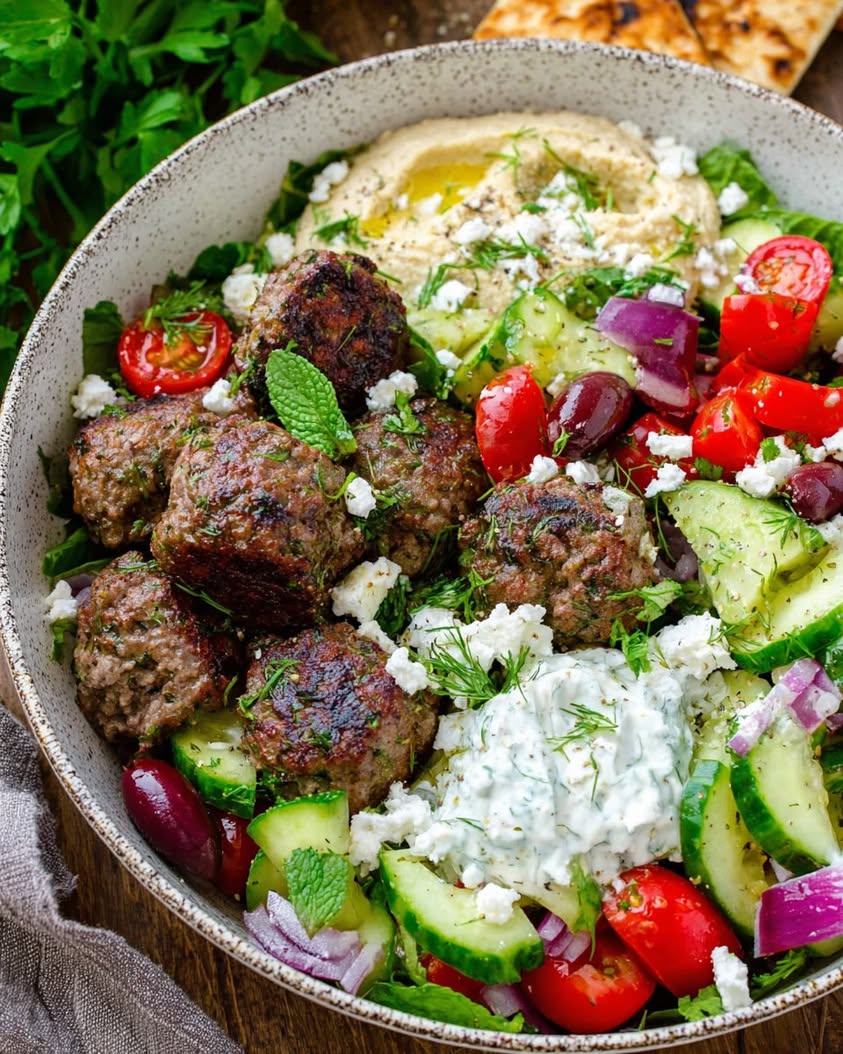
Imagine a bowl where every single bite offers a new layer of flavor. The Mediterranean Greek Meatball Bowl with Tzatziki, Hummus & Fresh Village Salad delivers exactly that experience. You get juicy, herb-infused meatballs resting against a bed of creamy hummus. A generous scoop of cool tzatziki sauce adds a refreshing tang, while the crunchy Fresh Village Salad brings brightness and texture. This is not just a bowl; it is a complete, balanced meal that feels both indulgent and nourishing at the same time. The first forkful immediately transports you to a sunny Greek taverna, where the aroma of oregano and lemon fills the air.
Furthermore, this recipe is thoughtfully designed for the modern home cook. You can prepare the components simultaneously, which makes the overall process efficient and rewarding. The meatballs bake to golden perfection in the oven, so you save time on stovetop monitoring. Meanwhile, you assemble the salad and whisk together the tzatziki. Therefore, the entire meal comes together in under one hour without any frantic scrambling. The beauty of this dish lies in its adaptability. You can serve it for a quick weeknight dinner, yet it is impressive enough for weekend entertaining. The Mediterranean Greek Meatball Bowl with Tzatziki, Hummus & Fresh Village Salad truly bridges the gap between convenience and authentic Mediterranean flavor.
Finally, the sensory appeal of this dish is undeniable. When you cut into a meatball, you see the flecks of fresh parsley and dried oregano. The hummus is silky smooth with a subtle hint of garlic. The tzatziki is thick and creamy, dotted with cucumber and dill. The village salad offers a crisp, juicy crunch with tomatoes, cucumbers, and red onion. Combining these elements creates a symphony of tastes and textures. Therefore, this meal satisfies every craving. It is savory, creamy, tangy, and refreshing all at once. You will find yourself returning to this recipe repeatedly, as it becomes a staple in your kitchen rotation.
Quick Recipe Highlights
- Flavor Profile: This bowl delivers a perfect balance of savory, tangy, and herbaceous notes. The meatballs are seasoned with oregano, garlic, and lemon zest for a classic Greek taste. The tzatziki adds a cool, tangy element, while the hummus provides a nutty, creamy base. The fresh salad contributes a bright, acidic finish.
- Texture: You will experience a delightful range of textures in every spoonful. The meatballs are tender and juicy with a slightly crisp exterior. The hummus is luxuriously smooth and velvety. The tzatziki is thick and refreshing. The village salad offers a satisfying crunch from fresh vegetables and a briny pop from olives.
- Aroma: The kitchen fills with the warm, inviting scent of baking meatballs infused with oregano and garlic. The hummus releases a subtle nutty aroma from the tahini. The tzatziki brings a fresh, clean scent of dill and cucumber. The overall aroma is deeply comforting and appetizing.
- Visual Appeal: The presentation is vibrant and colorful, making the bowl a feast for the eyes. The golden-brown meatballs contrast beautifully against the creamy, pale hummus. The white tzatziki is swirled on top with a drizzle of olive oil. The bright red tomatoes, green cucumbers, and purple olives add pops of color throughout.
- Skill Level Needed: This recipe requires basic cooking skills such as mixing ingredients, forming meatballs, and chopping vegetables. You need to be comfortable with simple knife work and basic oven baking. The steps are straightforward and clearly outlined, making it accessible for confident beginners. An experienced cook will find the process quick and intuitive.
- Special Equipment: You need a standard baking sheet lined with parchment paper for the meatballs. A food processor is helpful for making the hummus smooth, though a blender works as well. You also need a mixing bowl, a fine grater for the cucumber, and a sharp knife for chopping vegetables. No specialized or expensive equipment is required.
Recipe Overview
- Difficulty Level: I classify this recipe as medium difficulty, primarily due to the multi-component nature of the dish. You are preparing three separate elements: meatballs, hummus, and tzatziki, along with the salad. However, none of these components are technically difficult. The timing requires some coordination, but the recipe provides a clear workflow. Once you make it once, you will find the process becomes very manageable.
- Category: This dish fits perfectly into the main course category for lunch or dinner. It also works wonderfully as a substantial appetizer if you serve smaller portions. The bowl format makes it a great candidate for meal prep. You can easily categorize it under Mediterranean cuisine, Greek recipes, or healthy bowl meals.
- Cuisine: The culinary tradition here is distinctly Greek, drawing from classic island and mainland flavors. The use of oregano, lemon, garlic, and olive oil is fundamental to Greek cooking. The tzatziki sauce and hummus are staple dips found in every Greek household. The village salad, known as horiatiki, is a traditional Greek peasant salad. Therefore, this bowl is a true homage to authentic Greek cuisine.
- Cost: This recipe is quite budget-friendly, especially if you buy dried chickpeas and cook them yourself. The ground lamb or beef is the most expensive ingredient, but it is still affordable. Fresh vegetables like cucumbers and tomatoes are inexpensive, especially in season. Pantry staples like tahini and olive oil are used in small amounts. Overall, you can feed four people for under twenty dollars.
- Season: This bowl is perfect for spring and summer when cucumbers and tomatoes are at their peak. The cool, refreshing tzatziki and crisp salad are ideal for warm weather. However, the hearty meatballs make it satisfying during cooler months as well. It truly works year-round, though the fresh produce shines brightest in the summer.
- Occasion: This dish is perfect for casual weeknight dinners, but it also shines at weekend gatherings. It makes a fantastic meal prep lunch for the work week. The bowl presentation is impressive enough for a dinner party or potluck. It is also a great option for a healthy post-workout meal due to its protein content.
Why You Will Love This Recipe
The taste and texture appeal of this bowl is simply unmatched. You get the savory, juicy meatballs that are packed with aromatic herbs and garlic. The hummus provides a creamy, nutty foundation that ties everything together. The tzatziki offers a cool, tangy contrast that cuts through the richness. Meanwhile, the fresh village salad adds a bright, crunchy, and acidic element that refreshes your palate. Every single component complements the others perfectly, creating a harmonious and satisfying meal that you will crave repeatedly.
The convenience and preparation benefits make this recipe a lifesaver for busy home cooks. You can make the hummus and tzatziki a day in advance, which reduces the workload on serving day. The meatballs bake in the oven, which frees you up to prepare the salad and set the table. The entire cooking process is hands-off for significant portions of time. Therefore, you can easily manage this meal even on a hectic weeknight. The clean-up is also minimal, especially if you use a food processor for the hummus.
The nutritional advantages of this bowl are substantial and well-documented. You get a high amount of lean protein from the meatballs, which helps with muscle repair and satiety. The hummus provides plant-based protein and healthy fats from tahini and olive oil. The fresh vegetables in the salad supply essential vitamins, minerals, and antioxidants. The tzatziki adds probiotics from the yogurt, which supports gut health. Therefore, this bowl is a nutrient-dense meal that aligns with a balanced, health-conscious lifestyle.
The social and entertaining value of this dish cannot be overstated. When you serve the Mediterranean Greek Meatball Bowl with Tzatziki, Hummus & Fresh Village Salad, your guests will be genuinely impressed. The colorful, artful presentation makes it look like a restaurant-quality dish. You can set up a bowl bar where guests can customize their own bowls with different ratios of components. This interactive element makes dinner more fun and engaging. It is a guaranteed crowd-pleaser that satisfies various tastes and dietary preferences.
The cost-effectiveness and accessibility of ingredients make this recipe a practical choice for any budget. Most of the ingredients are pantry staples or easily found at any grocery store. Ground meat is affordable, and you can use lamb, beef, or even chicken. Canned chickpeas are inexpensive, and tahini is a worthwhile investment that lasts for months. Fresh herbs and vegetables are budget-friendly, especially when they are in season. Therefore, you get a gourmet-tasting meal without breaking the bank.
Historical Background and Cultural Significance
The Mediterranean Greek Meatball Bowl with Tzatziki, Hummus & Fresh Village Salad draws from deep culinary traditions that span thousands of years. Meatballs, known as keftedes in Greece, have ancient origins dating back to the Minoan civilization. The Greeks traditionally made these small meat patties using leftover meat mixed with breadcrumbs and herbs. The practice of grinding meat and mixing it with fillers helped stretch expensive ingredients during lean times. This practical approach evolved into a beloved staple of Greek cuisine that is still cherished today.
The cultural importance of this meal lies in its communal and sharing nature. In Greek culture, food is a central part of social life and family gatherings. A spread of small dishes, known as meze, encourages conversation and connection. Our bowl format takes this concept and modernizes it for today s lifestyle. The components represent the classic Greek meze table: meatballs, hummus, tzatziki, and salad. Therefore, eating this bowl is like experiencing a miniature Greek feast in a single dish. It honors the tradition of sharing and enjoying food together.
The evolution of this recipe reflects the global spread and adaptation of Greek cuisine. Hummus and tzatziki became widely popular in the United States during the late twentieth century. Chefs began combining these dips with proteins to create balanced bowl meals. The concept of a grain or bowl bowl gained traction in the health food movement of the 2010s. Our recipe brings together these trends while staying true to the original flavors. It is a testament to how traditional recipes can evolve to meet modern tastes and dietary needs.
Regional variations of this bowl exist throughout Greece and the broader Mediterranean region. In Crete, cooks might add graviera cheese to the meatball mixture for extra richness. On the islands, meatballs often include mint and cinnamon for a unique flavor profile. In Turkey, a similar dish called kofte is served with yogurt sauce and salad. The hummus component is more common in Middle Eastern versions of this bowl. Therefore, this recipe is a fusion of various regional influences, all united under the Mediterranean culinary umbrella.
Ingredient Deep Dive
The ground lamb or beef is the star protein in the Mediterranean Greek Meatball Bowl with Tzatziki, Hummus & Fresh Village Salad. Lamb holds significant cultural importance in Greek cuisine, often used in festive dishes like souvlaki and gyros. It provides a rich, slightly gamey flavor that pairs beautifully with garlic and oregano. Nutritionally, lamb is an excellent source of high-quality protein, iron, and zinc. When selecting lamb, look for meat that is bright red with white, creamy fat. For beef, choose ground chuck with an 80/20 ratio for the best flavor and juiciness. Store ground meat in the coldest part of your refrigerator and use it within two days. If you need a substitution, ground chicken or turkey works well for a leaner alternative, though the flavor will be less robust.
The chickpeas are the foundation of the hummus and bring a creamy, nutty element to the bowl. Chickpeas have been cultivated in the Mediterranean region for over seven thousand years. They are deeply embedded in Greek and Middle Eastern culinary traditions. Nutritionally, chickpeas are packed with fiber, protein, folate, and manganese. This combination supports digestive health and stable blood sugar levels. When selecting chickpeas, choose canned varieties that are low in sodium, or cook dried chickpeas from scratch for the best texture. Store dried chickpeas in an airtight container in a cool, dark place for up to a year. Canned chickpeas should be transferred to a sealed container and refrigerated after opening. If you need a substitution, white beans or cannellini beans can be used to make a similar creamy dip, though the flavor will be milder.
The cucumber plays a crucial role in both the tzatziki and the fresh village salad. Cucumbers have a long history in Greek cuisine, valued for their cooling and hydrating properties. They are composed of over ninety-five percent water, making them incredibly refreshing. Nutritionally, cucumbers provide vitamin K, potassium, and antioxidants that support hydration. When selecting cucumbers, choose firm, dark green specimens without soft spots or wrinkles. English cucumbers are ideal because they have fewer seeds and thinner skin. Store cucumbers in the refrigerator crisper drawer, wrapped in a paper towel to absorb excess moisture. If you need a substitution, zucchini can be grated for the tzatziki, though the flavor will be less distinct. For the salad, diced celery can add a similar crunch.
The Greek yogurt is the key to achieving the thick, tangy tzatziki sauce. Greek yogurt has been a dietary staple in Greece for centuries, traditionally made by straining regular yogurt to remove whey. This process creates a thicker, creamier yogurt with a higher protein content. Nutritionally, Greek yogurt is rich in protein, calcium, and probiotics. These probiotics support gut health and digestion. When selecting Greek yogurt, choose full-fat varieties for the best texture and flavor. Non-fat yogurt will work but will produce a thinner tzatziki. Store yogurt in the refrigerator and check the expiration date before use. If you need a dairy-free substitution, use a thick coconut or almond-based yogurt, though the flavor will change significantly.
The tahini is an essential ingredient that gives hummus its characteristic nutty flavor and creamy texture. Tahini is made from ground sesame seeds and has been used in Middle Eastern and Mediterranean cooking for millennia. It is a key component in many traditional dips and sauces. Nutritionally, tahini is rich in healthy unsaturated fats, calcium, magnesium, and iron. These nutrients support bone health and heart function. When selecting tahini, look for brands that are made from one hundred percent sesame seeds without added oils. It should be smooth and pourable, not dry or clumpy. Store tahini in a cool, dark pantry after opening, though refrigeration can extend its shelf life. If you need a substitution, sunflower seed butter or almond butter can be used, though the flavor profile will change dramatically.
The fresh herbs including parsley, dill, and oregano are what give this bowl its authentic Greek character. Herbs have been central to Greek cooking since ancient times, used both for flavor and for medicinal purposes. Parsley adds a bright, slightly peppery note, while dill brings a delicate, anise-like flavor. Oregano provides a warm, slightly bitter earthiness that defines Greek cuisine. Nutritionally, fresh herbs are packed with antioxidants, vitamins, and minerals that support overall health. When selecting fresh herbs, look for vibrant, perky leaves without any yellowing or wilting. Store them in the refrigerator with their stems in a glass of water, loosely covered with a plastic bag. If you need a substitution for dried herbs, use half the amount called for in the recipe. Dried oregano is an acceptable substitute, but fresh parsley and dill should always be used fresh for the best flavor.
Common Mistakes to Avoid- Overmixing the meatball mixture is a common error that results in tough, dense meatballs. Mix the ingredients just until they are combined. Overworking the meat develops the proteins too much, leading to a rubbery texture. Stop mixing as soon as you see the ingredients are evenly distributed.
- Under-seasoning the meatballs will leave them bland and uninteresting. Greek meatballs rely heavily on herbs and spices for their characteristic flavor. Taste the mixture by cooking a small patty in a pan before forming all the meatballs. Adjust the salt, garlic, and oregano according to your preference.
- Skipping the step of draining the cucumber for the tzatziki is a frequent mistake. Cucumbers contain a high amount of water that will thin out the yogurt sauce. Grate the cucumber, then squeeze it dry using a clean kitchen towel or cheesecloth. This simple step ensures a thick, creamy tzatziki.
- Not letting the hummus rest after blending can result in a grainy texture. Blending creates heat that affects the texture of the tahini and chickpeas. Let the hummus sit for at least thirty minutes at room temperature. This resting period allows the flavors to meld and the texture to become smoother.
- Using cold yogurt straight from the refrigerator will make the tzatziki taste flat. Allow the yogurt to come to room temperature for about fifteen minutes before mixing. Cold temperatures mute flavors, while room temperature allows the tanginess to shine. The tzatziki will taste significantly more vibrant.
- Cutting the vegetables for the salad too far in advance causes them to become watery. Tomatoes and cucumbers release water when they sit after being cut. Chop the salad ingredients just before serving to maintain maximum crunch. If you must prep ahead, store the cut vegetables separately and combine them right before serving.
- Overcooking the meatballs will dry them out and make them crumbly. Bake them just until they reach an internal temperature of one hundred sixty degrees Fahrenheit. Carryover cooking will continue to raise the temperature after you remove them from the oven. Slightly underdone is better than overdone.
- Adding too much garlic to the tzatziki can overwhelm the other flavors. Use a moderate amount of fresh garlic and let the dill and cucumber shine. Raw garlic can be quite pungent, so add it gradually. Start with one small clove and taste before adding more.
- Forgetting to season the hummus properly is a missed opportunity for depth. Hummus needs a good amount of salt and a squeeze of lemon juice to brighten it. Taste and adjust the seasonings after resting. A well-seasoned hummus elevates the entire bowl.
- Serving the components cold straight from the refrigerator reduces their flavor impact. Allow the hummus and tzatziki to sit at room temperature for twenty minutes before serving. The meatballs should be served warm, not piping hot. This temperature balance makes the bowl more enjoyable.
Essential Techniques
The technique for forming and baking meatballs is essential to the success of this bowl. Start by soaking breadcrumbs in milk to create a panade that keeps the meatballs moist and tender. This step is crucial because the bread absorbs moisture and prevents the meat from drying out during baking. Then, gently mix the ground meat with the panade, herbs, and seasoning using your hands. Overmixing at this stage is the primary pitfall that leads to tough meatballs. Use a light touch and stop as soon as the ingredients are combined. For even cooking, roll the meatballs into uniform sizes, about one and a half inches in diameter. This consistency ensures that all meatballs cook at the same rate. Bake them on a parchment-lined baking sheet at four hundred degrees Fahrenheit for about eighteen to twenty minutes. You will know they are done when they are golden brown on the outside and firm to the touch. The internal temperature should reach one hundred sixty degrees Fahrenheit.
The technique for making smooth hummus requires patience and the right blending method. First, process the tahini with lemon juice and garlic before adding any chickpeas. This step creates a creamy emulsion that forms the base of the hummus. Blend these ingredients for a full minute until the mixture becomes pale and thick. Next, add the drained and rinsed chickpeas along with a pinch of salt. Blend again, then slowly drizzle in ice-cold water while the machine is running. The cold water helps create an ultra-smooth, airy texture. Common pitfalls include adding too much water too quickly, which makes the hummus runny. You want the consistency to be thick but spreadable. If the hummus seems too thick, add water one tablespoon at a time until it reaches the desired texture. The visual cue for success is a silky, glossy sheen on the surface.
The technique for making thick, creamy tzatziki revolves around proper cucumber preparation and yogurt selection. Start by grating the cucumber on the large holes of a box grater. Then, place the grated cucumber in a clean kitchen towel and squeeze firmly to extract as much liquid as possible. This step cannot be skipped because the water in cucumbers will thin out the yogurt significantly. Meanwhile, line a fine-mesh strainer with cheesecloth or a coffee filter. Place the yogurt in the strainer and let it drain over a bowl for about thirty minutes. This additional straining concentrates the yogurt and makes it even thicker. Finally, combine the drained cucumber, strained yogurt, minced garlic, chopped dill, a squeeze of lemon juice, and a drizzle of olive oil. The visual cue for success is a thick, spoonable sauce that holds its shape when dolloped.
The technique for assembling the fresh village salad is deceptively simple but requires proper knife skills. Cut the tomatoes into irregular chunks rather than perfect cubes, which releases more juice and flavor. The cucumbers should be halved lengthwise, then sliced into half-moons for a pleasing shape. Slice the red onion very thinly, preferably using a mandoline for evenness. Combine these vegetables in a bowl with Kalamata olives and a generous amount of crumbled feta cheese. Dress the salad simply with extra virgin olive oil, red wine vinegar, dried oregano, and a pinch of salt. Toss everything gently with your hands to coat the vegetables evenly. The common pitfall is over-dressing the salad, which makes it soggy. The visual cue for success is a vibrant mix where each ingredient is still distinct and glossy with dressing.
Pro Tips for Perfect Mediterranean Greek Meatball Bowl
Use freshly squeezed lemon juice for both the hummus and the tzatziki. Bottled lemon juice lacks the bright, acidic punch that fresh lemons provide. This small detail dramatically improves the overall flavor of the dish. The acidity helps balance the richness of the meatballs and the creaminess of the hummus.
Toast the pine nuts for the salad lightly in a dry skillet before adding them. This releases their natural oils and brings out a nutty, toasty flavor. Toasted pine nuts add a wonderful crunch and an extra layer of sophistication. Watch them carefully, as they burn quickly.
Let the meatballs rest on the baking sheet for five minutes after removing them from the oven. This resting period allows the juices to redistribute throughout the meat. Cutting into them immediately causes the juices to run out, leaving the meatballs dry. Patience here is rewarded with juicier meatballs.
Double the hummus recipe intentionally because it keeps well in the refrigerator for up to a week. Having extra hummus on hand is a great way to add a healthy snack to your week. You can also use it as a spread for sandwiches or wraps. This makes your cooking effort go further.
Use a rasp-style grater to mince the garlic for both the tzatziki and the meatballs. This creates a fine paste that distributes evenly without leaving chunks of raw garlic. The paste also releases the essential oils more effectively than chopped garlic. This ensures a more consistent garlic flavor throughout the dish.
Add a pinch of cayenne pepper or smoked paprika to the meatball mixture for a subtle warmth. This does not make the meatballs spicy, but it adds depth and complexity. The heat is very subtle and complements the other Mediterranean flavors beautifully. This is a trick many Greek grandmothers use.
Warm the pita bread or flatbreads in the oven for a few minutes before serving. Warm bread is infinitely more enjoyable than cold, stale bread. It also becomes soft and pliable, perfect for scooping up the hummus and tzatziki. Wrap the bread in foil and warm it in the oven for about five minutes.
Season the fresh village salad generously with salt and let it sit for five minutes before serving. This draws out the natural juices from the tomatoes and cucumbers, creating a light dressing. This simple step dramatically enhances the flavor of the salad. Do not skip this crucial step.
Variations and Adaptations
Regional variations of the Mediterranean Greek Meatball Bowl with Tzatziki, Hummus & Fresh Village Salad are abundant across Greece and the Levant. In the Peloponnese region, cooks often add a pinch of cinnamon and allspice to the meatball mixture. This warm spice blend is reminiscent of traditional Greek keftedes served at festive occasions. In Cyprus, the meatballs might include fresh mint and crushed coriander seeds. The hummus in Lebanese versions is typically lighter and more lemony than Greek versions. These regional differences offer endless opportunities for exploration.
Seasonal adaptations allow you to enjoy this bowl year-round while using the freshest available produce. In the summer, use ripe, heirloom tomatoes and Persian cucumbers for the salad. In the fall, roast butternut squash cubes and add them to the bowl for a sweet, earthy element. In the winter, substitute roasted red peppers and artichoke hearts for the fresh tomatoes. In the spring, add fresh peas and asparagus tips for a vibrant, green twist. Each season offers a new way to experience this versatile dish.
Dietary modifications make this bowl accessible to a wide range of eating preferences. For a gluten-free version, use gluten-free breadcrumbs or rolled oats in the meatball mixture. Ensure the pita bread is certified gluten-free or serve the bowl without bread. For a dairy-free adaptation, use a plant-based yogurt for the tzatziki and omit the feta cheese. Nutritional yeast can provide a cheesy flavor without dairy. For a lower-carb option, serve the bowl on a bed of fresh greens instead of pita bread.
Flavor variations can completely transform the character of this bowl while keeping the structure the same. Try adding harissa paste to the hummus for a smoky, spicy kick. Substitute the oregano with za atar, a Middle Eastern spice blend, for an earthy, tangy note. Add roasted garlic to the tzatziki for a sweeter, mellow garlic flavor. Incorporate sun-dried tomatoes into the meatball mixture for a concentrated, savory pop. Each variation provides a new and exciting flavor experience.
Texture modifications can cater to different preferences and dietary needs. For a crunchier meatball, add finely chopped walnuts or almonds to the meat mixture. For a silkier hummus, peel the chickpeas before blending, though this is time-consuming. For a chunkier tzatziki, chop the cucumber into small dice instead of grating it. For a more substantial salad, add cooked quinoa or farro to the bowl. These textural tweaks keep the bowl interesting and customizable.
Presentation alternatives allow you to serve this dish in creative and elegant ways. Create a deconstructed version by serving each component in separate small bowls. This makes a beautiful and interactive meze platter for a party. For a more casual presentation, serve the components over a bed of warm rice or couscous. For an elegant dinner, plate everything in a neat, structured arrangement on a large white plate. The garnishing options are endless, with fresh herbs, a drizzle of olive oil, and a sprinkle of paprika.
Serving and Presentation Guide
The plating technique for the Mediterranean Greek Meatball Bowl with Tzatziki, Hummus & Fresh Village Salad is crucial for visual impact. Start by spreading a generous layer of hummus on the bottom of each bowl, creating a smooth base. Arrange the warm meatballs on top of the hummus, slightly nested into the dip. Place a large dollop of tzatziki to the side of the meatballs. Finally, mound the fresh village salad on the remaining empty space. This arrangement creates a beautiful color contrast against the white bowl. Drizzle everything with a final touch of extra virgin olive oil.
Garnishing ideas can elevate the presentation from simple to spectacular. A sprinkle of fresh chopped parsley and dill adds a pop of green and a fresh aroma. A few whole Kalamata olives placed strategically on the hummus add visual interest. A pinch of smoked paprika or sumac dusted over the tzatziki adds a beautiful red hue. A light sprinkle of flaky sea salt on the finished bowl adds texture and a burst of flavor. Toasted pine nuts or sesame seeds add a nutty finish.
Traditional accompaniments are essential for an authentic Mediterranean experience. Warm pita bread or flatbread is a must for scooping up the dips and meatballs. Lemon wedges on the side allow guests to add extra acidity as they wish. A small dish of extra olive oil for dipping the bread is a classic touch. Roasted red peppers or pickled turnips make excellent tangy side additions. These accompaniments complete the meal and stay true to the Greek dining tradition.
Modern serving suggestions can update this classic bowl for a contemporary audience. Serve the components in a deconstructed salad format over a bed of arugula or mixed greens. Use a bento box style container for a visually striking meal prep presentation. Create a wrap by stuffing the components into a large pita pocket. Offer the bowl as a dip board by arranging everything on a large wooden platter. These modern approaches keep the recipe fresh and exciting.
Temperature considerations are important for maximizing the enjoyment of this dish. The meatballs should be served warm, but not steaming hot, to allow the flavors to meld. The hummus and tzatziki should be at room temperature, not cold from the refrigerator. The fresh salad should be cool and crisp, straight from the refrigerator. This temperature contrast between warm, room temperature, and cool makes each bite interesting. Let the components sit out for about fifteen minutes before assembling the bowls.
Wine and Beverage Pairing
Wine pairings for the Mediterranean Greek Meatball Bowl with Tzatziki, Hummus & Fresh Village Salad should complement the bright, herbal flavors. A crisp Assyrtiko from Santorini is an excellent choice for its high acidity and mineral notes. This Greek white wine cuts through the richness of the meatballs and hummus beautifully. Alternatively, a dry rosé from Provence offers a versatile pairing that works with all components. For red wine lovers, a light-bodied Pinot Noir or a Greek Agiorgitiko is a good choice. These wines have enough acidity to handle the tomatoes and olives without overpowering the dish.
Non-alcoholic alternatives are just as satisfying and can be quite sophisticated. A sparkling water with a squeeze of lemon and a sprig of mint is incredibly refreshing. This cleanses the palate between bites and complements the fresh herbs in the dish. A chilled mint and cucumber infused water is another excellent choice. For a more festive option, a non-alcoholic Mediterranean spritzer made with pomegranate juice and soda water is delightful. These options allow everyone to enjoy a beverage that pairs well with the meal.
Iced tea pairings are particularly well-suited to this Mediterranean bowl. A traditional Greek iced tea made with mountain tea, known as sideritis, is a wonderful choice. This herbal tea has a mild, earthy flavor that does not compete with the food. A classic unsweetened iced black tea with a lemon wedge is also a great option. For a fruity twist, consider a hibiscus iced tea called karkade, which is popular in Egypt. These tea options are traditionally served in the region.
Serving suggestions for beverages include using proper glassware for the best experience. Serve white wine in a tulip-shaped glass to concentrate the aromas. Chill the wine to about fifty degrees Fahrenheit for the best flavor. For non-alcoholic drinks, use a highball glass filled with ice. Garnish with a slice of cucumber or a sprig of fresh mint to tie into the flavors of the bowl. The presentation of the beverage should be as thoughtful as the food.
Storage and Shelf Life
Proper storage methods are essential for maintaining the quality of the Mediterranean Greek Meatball Bowl with Tzatziki, Hummus & Fresh Village Salad components. Store each component separately in airtight containers to prevent them from mingling and becoming soggy. The hummus and tzatziki should be stored in separate containers to maintain their distinct textures. The meatballs should be stored in a shallow container to allow for even cooling. The fresh salad should always be stored separately and added just before serving to maintain its crunch. Never store the assembled bowl because the salad will release water and make everything soggy.
Temperature requirements vary for each component to maximize shelf life. The hummus and tzatziki should be stored in the refrigerator and will last for up to five days. The meatballs can be stored in the refrigerator for up Print
Mediterranean Greek Meatball Bowl with Tzatziki, Hummus & Fresh Village Salad
- Total Time: 35 minutes
- Yield: 4
Description
A vibrant, healthy bowl featuring herbed lamb or beef meatballs, creamy tzatziki, smooth hummus, and a crunchy tomato-cucumber salad. Perfect for a satisfying, well-balanced meal.
Ingredients
- 1 lb ground lamb or beef
- 1/2 cup breadcrumbs
- 1 egg, beaten
- 2 cloves garlic, minced
- 1 tsp dried oregano
- 1/2 tsp ground cumin
- Salt and pepper to taste
- 2 tbsp olive oil
- 1 cup plain Greek yogurt
- 1/2 cucumber, grated and drained
- 1 tbsp lemon juice
- 1 tbsp fresh dill, chopped
- 1 cup prepared hummus
- 2 large tomatoes, diced
- 1 cucumber, diced
- 1/2 red onion, thinly sliced
- 1/4 cup Kalamata olives
- 1/4 cup crumbled feta cheese
- 2 tbsp red wine vinegar
- 3 tbsp olive oil
- Fresh parsley for garnish
Instructions
- Prepare the meatballs: In a bowl, combine ground meat, breadcrumbs, egg, garlic, oregano, cumin, salt, and pepper. Mix gently and form into 1-inch meatballs.
- Heat 2 tbsp olive oil in a large skillet over medium heat. Cook meatballs in batches, turning occasionally, until browned and cooked through (about 8-10 minutes). Set aside.
- Make the tzatziki: In a small bowl, mix Greek yogurt, grated cucumber, lemon juice, dill, and a pinch of salt. Refrigerate until ready to serve.
- Prepare the village salad: In a separate bowl, combine diced tomatoes, cucumber, red onion, olives, and feta. Drizzle with red wine vinegar and 3 tbsp olive oil. Toss gently.
- Assemble the bowls: Spread a generous spoonful of hummus on the base of each bowl. Add a portion of village salad and 4-5 meatballs. Top with tzatziki and garnish with fresh parsley.
Notes
You can customize the seasonings to taste. For a lighter version, use ground turkey or chicken. The tzatziki can be made a day ahead for better flavor.
- Prep Time: 20 minutes
- Cook Time: 15 minutes
- Method: Main
- Cuisine: Mediterranean