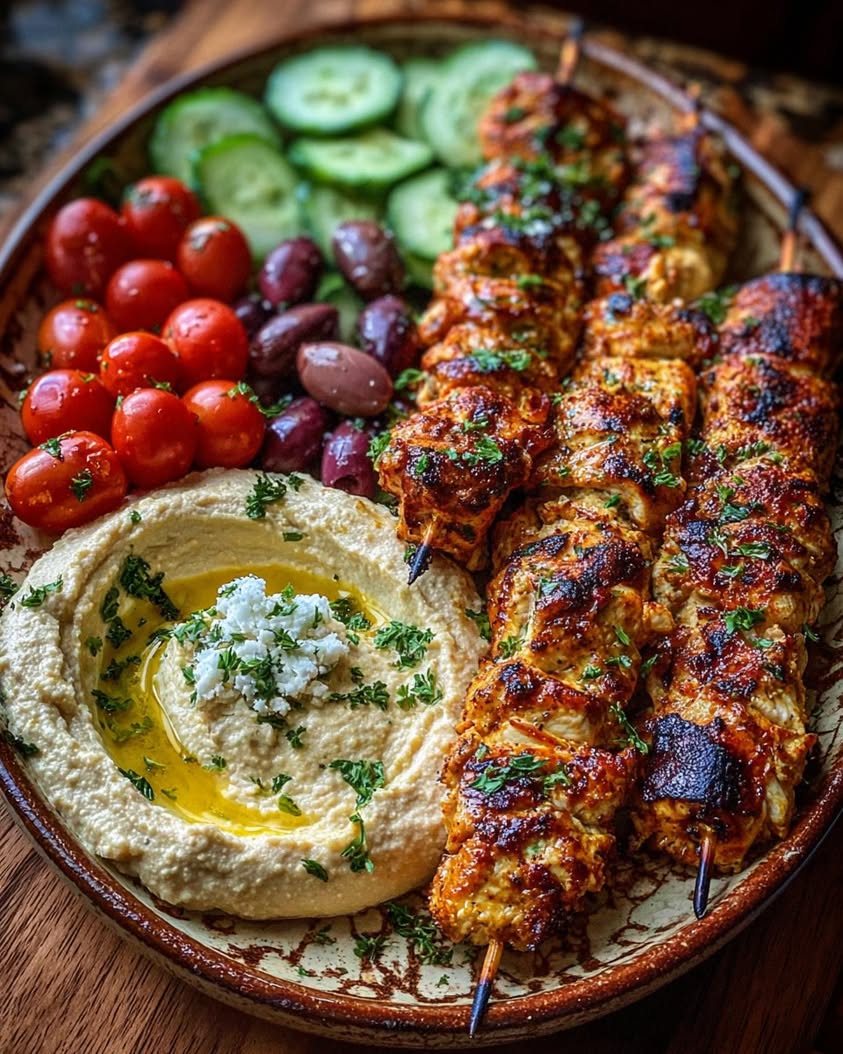
Grilled Mediterranean Chicken Skewers with Homemade Hummus Spread: A Flavorful Weeknight Dinner
Imagine biting into a tender, juicy piece of chicken that has soaked up a vibrant marinade of lemon, garlic, and herbs. The smoky char from the grill adds a layer of depth that pairs perfectly with a creamy, rich hummus spread. These Grilled Mediterranean Chicken Skewers with Homemade Hummus Spread are not just a meal. They are an experience. You get the bright, zesty notes of the Mediterranean coast in every single bite, and the best part is that this recipe comes together in just over thirty minutes. This makes it an ideal choice for a busy weeknight when you still want something special.
The combination of lean protein with a plant-based spread creates a balanced dish that feels both indulgent and wholesome. You will love how the marinade infuses the chicken with flavor without requiring hours of waiting. And the hummus? It is surprisingly simple to make from scratch, and it tastes worlds better than anything you can buy in a store. This dish truly shines because it delivers restaurant-quality results with minimal fuss. Whether you are cooking for your family or hosting a casual get-together, these skewers will impress everyone at the table. They are colorful, aromatic, and packed with the sunny flavors of the Mediterranean.
What makes these Grilled Mediterranean Chicken Skewers with Homemade Hummus Spread a standout recipe is the attention to texture and taste. The chicken comes out perfectly charred on the outside while remaining incredibly moist on the inside. The hummus provides a cool, silky counterpoint that balances the smokiness of the meat. Adding a fresh squeeze of lemon right before serving brightens everything up. This dish is a celebration of simple, high-quality ingredients working together in perfect harmony. It is the kind of meal that makes you feel like you are dining on a sun-drenched terrace overlooking the sea.
Quick Recipe Highlights
- Flavor Profile: You get a bright, tangy punch from lemon and yogurt, balanced by warm, earthy spices like cumin and paprika. Garlic adds a savory backbone, and the fresh herbs bring a pop of green, grassy flavor.
- Texture: The chicken offers a satisfying firm bite with a slightly crispy, charred exterior. The hummus is luxuriously smooth and creamy, creating a wonderful contrast with the meat and any fresh vegetables you serve alongside.
- Aroma: As the skewers hit the hot grill, a cloud of smoky, garlicky, and lemony fragrance fills the air. The scent of toasted spices in the hummus adds a nutty, comforting undertone.
- Visual Appeal: The golden-brown chicken pieces are flecked with dark green herbs and charred in spots from the grill. The hummus is a pale, creamy beige, often finished with a swirl of olive oil, a dusting of paprika, and a few fresh parsley leaves.
- Skill Level Needed: This recipe is perfect for beginners and experienced home cooks alike. The marinade is straightforward, and grilling the skewers requires only basic attention to timing. Making hummus from scratch is equally simple with a food processor.
- Special Equipment: You will need wooden or metal skewers. If using wooden ones, soak them in water for at least 30 minutes before grilling to prevent burning. A food processor is necessary for a smooth hummus.
Recipe Overview
- Difficulty Level: We rate this recipe as easy because the techniques are very basic. You simply whisk a marinade, cut some chicken, thread it onto skewers, and grill. The hummus involves adding ingredients to a food processor and blending until smooth. No complex skills like basting, deglazing, or working with delicate pastry are required here. The timing is forgiving, and the results are consistently excellent.
- Category: This dish fits perfectly into the main course category for lunch or dinner. It also works wonderfully as a hearty appetizer for a party if you serve smaller skewers. You can easily categorize it as grilling food, Mediterranean cuisine, or high-protein meal prep.
- Cuisine: The recipe draws deeply from the culinary traditions of the Eastern Mediterranean and the Levant. You will recognize flavors from Greece, Turkey, and Lebanon. The use of yogurt, lemon, garlic, and olive oil is classic Greek. The hummus and spice blend like cumin and paprika have roots in Middle Eastern cooking.
- Cost: This is a very budget-friendly recipe. Chicken thighs or breasts are typically affordable. Canned chickpeas, tahini, and lemons are pantry staples with a low cost. Fresh herbs like parsley and mint are inexpensive. Overall, you can feed four people very well for under fifteen dollars.
- Season: While you can enjoy these skewers year-round, they are at their absolute best during the spring and summer months. This is when grilling is most enjoyable and fresh produce like tomatoes, cucumbers, and herbs are at their peak. The bright, fresh flavors are perfect for warm weather.
- Occasion: These skewers are incredibly versatile for different occasions. They are perfect for a casual family dinner on the deck. They also shine at summer barbecues, potlucks, and backyard parties. You can even dress them up for a more formal dinner party by plating them elegantly.
Why You Will Love This Recipe
The primary reason you will fall in love with these skewers is the incredible taste. The marinade works magic on the chicken, making it exceptionally juicy and flavorful. Every bite delivers a balanced hit of acid from the lemon, savoriness from the garlic, and warmth from the spices. The creamy hummus provides a cooling, rich base that makes each mouthful complex and satisfying. It is a flavor combination that feels both exotic and comforting.
Beyond the amazing flavor, the convenience of this recipe is a huge draw. You can prep the marinade and the hummus a day in advance. This means on a busy weeknight, all you have to do is thread the chicken onto skewers and grill. The actual active cooking time is very short. Cleanup is also minimal, especially if you use a single bowl for the marinade and a food processor for the hummus. It is a high-reward, low-effort meal.
Nutritionally, this dish is a powerhouse. You get a generous serving of lean protein from the chicken, which helps keep you full and supports muscle health. The hummus adds plant-based protein and healthy fats from the olive oil and tahini. Chickpeas are also packed with fiber, which is great for digestion. The fresh herbs and lemon provide antioxidants and vitamins. This is a well-rounded meal that supports your health goals without sacrificing flavor.
This recipe is also a social superstar. When you bring a platter of sizzling skewers to the table, people naturally gather around. The interactive nature of eating food off a stick adds a fun, communal element to the meal. You can set up a bowl of warm pita, fresh veggies, and the hummus for dipping. It encourages everyone to build their own perfect bite, which makes for a lively and memorable dining experience. It is the perfect dish for bringing people together.
Finally, this recipe is incredibly cost-effective and accessible. Almost all the ingredients are available at any standard grocery store. You do not need any exotic or expensive specialty items. Canned chickpeas, yogurt, and chicken are budget-friendly staples. This means you can create a delicious and impressive Mediterranean feast without straining your wallet. It is proof that eating well does not have to be expensive.
Historical Background and Cultural Significance
The concept of cooking meat on a skewer has ancient origins, dating back to the earliest days of open-fire cooking. In the Mediterranean and Middle East, this method became highly refined. Soldiers and travelers would cook chunks of meat over campfires using their swords or sharpened sticks. This practical cooking technique evolved into the beloved kebabs we know today, with each region developing its own unique marinades and spice blends.
Hummus, the creamy spread of chickpeas and tahini, has an equally storied past. Its exact origins are fiercely debated among several countries in the Levant, including Lebanon, Israel, Palestine, and Syria. What is clear is that hummus has been a dietary staple in the region for centuries. Chickpeas were cultivated in the Middle East as far back as 7500 BC. The combination of chickpeas with tahini, lemon, and garlic became a cornerstone of the cuisine, valued for its nutrition and versatility.
Over time, the simple kebab and the humble hummus have traveled the world and evolved. Chefs and home cooks have experimented with different meats, from lamb to beef to chicken. The marinades have become more complex, incorporating yogurt, which tenderizes the meat beautifully. Hummus, too, has seen countless variations, with additions like roasted red peppers, sun-dried tomatoes, or caramelized onions. This recipe represents a modern, accessible fusion of these two great culinary traditions.
Regional variations of chicken skewers are endless. In Greece, you will find souvlaki, often marinated in lemon, oregano, and olive oil. In Turkey, skewers, or sis kebab, are often spiced with cumin and sumac. In Iran, you might find jujeh kebab, which uses a saffron and lemon-based marinade. Hummus also varies by region. Some versions are very heavy on the tahini, while others are more lemony or garlicky. This recipe takes inspiration from these traditions, creating a balanced version that is familiar yet deliciously unique.
Ingredient Deep Dive
Chicken is the star of the show, and choosing the right piece is important. Boneless, skinless chicken thighs are our top choice. They have a higher fat content, which keeps them incredibly moist and flavorful during the high heat of grilling. Breasts work too, but they are leaner and can dry out more easily if overcooked. Chicken has been a global protein source for millennia, and it is valued for its versatility. It is rich in B vitamins and selenium, which support metabolism and immune function.
For the hummus, chickpeas are the base. Canned chickpeas are perfectly convenient and affordable, but you can also cook dried ones from scratch for a slightly different texture. Chickpeas, also known as garbanzo beans, have been cultivated in the Middle East for over 7,000 years. They are an excellent source of plant-based protein, fiber, folate, and iron. When buying canned chickpeas, look for ones that are low in sodium, or simply rinse and drain them well to remove excess salt and the metallic taste of the canning liquid.
Tahini is a paste made from toasted sesame seeds. It is a crucial ingredient in hummus, providing a nutty, creamy depth that you cannot get from anything else. Tahini is rich in healthy unsaturated fats, calcium, and magnesium. When selecting tahini, look for one that is pourable and not too thick or separated. If it seems stiff, simply stir in a little warm water until it becomes smooth. Store opened tahini in the refrigerator to prevent the oils from going rancid.
Greek yogurt acts as the tenderizing agent in the chicken marinade. The natural acidity in the yogurt helps break down the proteins in the chicken, ensuring it stays tender and juicy. Yogurt also adds a subtle tang that complements the other flavors. You can use either full-fat or low-fat Greek yogurt. For a dairy-free option, you can substitute a thick plant-based yogurt, though the tenderizing effect may be slightly less pronounced. Greek yogurt is a great source of probiotics and protein.
Fresh herbs like parsley and mint are essential for the bright, fresh flavor profile. Parsley adds a clean, slightly peppery note, while mint brings a cool, refreshing finish. Herbs have been used for both culinary and medicinal purposes since ancient times. They are packed with antioxidants and vitamins. Always opt for fresh herbs over dried for this recipe, as the dried versions lack the vibrant punch. Store fresh herbs in the refrigerator with their stems in a glass of water, loosely covered with a plastic bag.
Olive oil is used in both the marinade and the hummus. It provides richness, helps carry flavors, and adds healthy monounsaturated fats. For the best flavor, use a good-quality extra virgin olive oil. The oil in the hummus helps create a creamy emulsion. The oil drizzled on top at the end adds a beautiful finish. Extra virgin olive oil is a staple of the Mediterranean diet and is linked to numerous health benefits, including reduced inflammation and heart health.
Lemons provide the vital acidity that brightens the entire dish. The zest adds aromatic oils, while the juice provides a sharp, clean tang. Lemon juice helps balance the richness of the olive oil and tahini. It also helps the flavors in the marinade penetrate the chicken. When selecting lemons, choose ones that feel heavy for their size, as this indicates they are juicy. Store lemons at room temperature for up to a week, or in the refrigerator for several weeks.
Common Mistakes to Avoid
- Overcrowding the skewers is a common error. If you pack the chicken pieces too tightly, they will not cook evenly. The pieces in the center will steam rather than sear, leading to a gray, unappetizing appearance. You should leave a small gap between each piece to allow hot air to circulate freely.
- Skipping the soaking step for wooden skewers will cause them to burn on the grill. Dry wood catches fire very quickly, which can ruin your chicken and create a dangerous flare-up. You must soak your skewers in water for at least 30 minutes before you even start prepping the chicken.
- Over-marinating the chicken can make the texture mushy. While yogurt is a great tenderizer, leaving the chicken in it for too long, like more than 12 hours, can break down the proteins too much. The chicken will lose its pleasant, firm texture. Two to four hours is the sweet spot.
- Not patting the chicken dry before marinating can dilute the flavors. If the chicken is very wet, the marinade will not cling to the surface properly. You should pat the chicken pieces dry with paper towels first to ensure the marinade adheres and creates a flavorful crust.
- Failing to preheat the grill properly leads to sticking and poor searing. A hot grill is essential for creating those beautiful char marks and for preventing the chicken from sticking to the grates. You should heat your grill to medium-high for at least 10 minutes before adding the skewers.
- Moving the skewers too much while they cook will prevent a good sear. Leave the skewers undisturbed for the first few minutes of cooking. This allows a nice crust to form. Once the crust has developed, you can easily flip them to cook the other side.
- Forgetting to season the hummus properly is a missed opportunity. Hummus needs a generous amount of salt and acid to bring out its flavor. Taste it as you go and adjust with lemon juice and salt until the flavors pop. A bland hummus will make the whole dish taste flat.
- A gritty hummus texture often results from not processing it long enough or from using cold ingredients. You must process the hummus for at least a full two to three minutes. Also, using warm chickpeas and letting the hummus run in the processor longer will produce a silky-smooth result.
- Overcooking the chicken is the most common and most disappointing mistake. Chicken skewers cook very quickly. You need to monitor the internal temperature with a meat thermometer. The chicken is done when it reaches 165 degrees Fahrenheit. Overcooking it by just a few minutes will make it dry and tough.
Essential Techniques
Mastering the art of the marinade is your first key technique. The marinade is not just for flavor; it is also a tenderizer. The acid in the lemon and yogurt helps relax the proteins in the meat. You should always whisk your marinade ingredients together first to ensure they are well combined. Then, coat the chicken evenly. For best results, place the chicken and marinade in a zip-top bag. Remove as much air as possible before sealing. This ensures the marinade is in full contact with every surface of the meat. Give the bag a gentle massage every now and then to redistribute the marinade.
Perfectly threading the skewers is a simple but important skill. You want to thread the chicken pieces onto the skewers so they lie flat and will cook evenly. Try to use pieces of a similar size so they all finish cooking at the same time. Run the skewer through the center of each piece of chicken, spreading the pieces out slightly. A good rule of thumb is to leave about a quarter-inch of space between each piece. This allows heat to circulate, which promotes even browning and prevents steaming.
Proper grilling technique is crucial for achieving that desirable smoky char. You must start with a clean, well-oiled grill grate. Use a pair of tongs and a paper towel dipped in oil to grease the grates right before cooking. Place the skewers on the hottest part of the grill. Listen for a satisfying sizzle. This sound tells you the Maillard reaction is taking place, creating flavor and color. After about four to five minutes, rotate the skewers a quarter turn to create a crosshatch pattern. Then, flip them and repeat. The total cooking time is usually around 10 to 12 minutes.
Creating a silky smooth hummus requires a specific technique. First, warm the chickpeas. You can do this by rinsing them under hot water or by heating them in a bowl in the microwave for about a minute. Warm chickpeas blend much more easily. Then, add the tahini, lemon juice, and garlic to a food processor first. Process until it forms a thick paste. This step is crucial for a creamy texture because it emulsifies the tahini properly. Then, add the chickpeas and process for a full minute. Finally, with the processor running, stream in the olive oil and cold water. Let it run for another two minutes until the hummus is very smooth and pale.
The art of resting the cooked chicken is often overlooked. Once you pull the skewers off the grill, you should let them rest for at least five minutes. The internal temperature of the meat will continue to rise by a few degrees during this time. More importantly, the juices inside the meat need time to redistribute. If you cut into the chicken or pull it off the skewer immediately, those flavorful juices will run out onto the cutting board. Resting the meat ensures every bite is as juicy as possible.
Pro Tips for Perfect Grilled Mediterranean Chicken Skewers with Homemade Hummus Spread
For the most tender chicken, use skinless, boneless chicken thighs and cut them into uniform one-and-a-half-inch cubes. Thighs are much more forgiving than breasts and will remain juicy even if they cook for a minute too long. Uniform sizing is just as important, as it ensures all the pieces cook at the same rate.
You can amplify the flavor of the hummus by using a surprising ingredient: a pinch of baking soda. Add a quarter teaspoon of baking soda to the chickpeas before processing. This softens the chickpea skins, resulting in an incredibly smooth, almost buttery texture. It is a trick used by many professional hummus makers.
To get the best char on your chicken, make sure your grill is screaming hot. A hot grill sears the meat quickly, locking in the juices. If the grill is not hot enough, the chicken will cook slowly and lose moisture, leading to a dry result. You should not be able to hold your hand over the grill grate for more than two seconds.
Do not discard the liquid from the chickpea can, also known as aquafaba. This starchy liquid can be used in other recipes as a vegan egg substitute. However, for this hummus recipe, we recommend rinsing the canned chickpeas. The canning liquid can have a slightly metallic taste, which you do not want in your dip.
When serving, spread the hummus on a large plate and create a well in the center with the back of a spoon. This well is meant to hold a generous pool of good olive oil. Place the hot, sizzling chicken skewers right on top of the hummus. The heat from the skewers will gently warm the hummus, and the olive oil will infuse the chicken with even more flavor.
For a final touch of freshness, squeeze a little extra lemon juice over the entire platter right before serving. You can also garnish with a sprinkle of fresh parsley, a few pomegranate seeds for sweetness, or some toasted pine nuts for crunch. These little touches elevate the dish from a simple meal to a memorable feast.
Variations and Adaptations
Regional variations of this dish are exciting to explore. For a Greek-inspired version, use oregano, thyme, and a touch of mint in the marinade and serve with tzatziki sauce instead of hummus. For a North African twist, add harissa paste to the marinade for a spicy kick and serve the skewers over a bed of couscous. A Lebanese variation might include a pinch of sumac and a side of garlic sauce called toum.
Seasonal adaptations keep this recipe fresh year-round. In the summer, serve the skewers with a bright tomato and cucumber salad. In the fall, consider roasting some seasonal vegetables like butternut squash or bell peppers to serve alongside. In the spring, fresh asparagus or artichoke hearts make excellent companions. The basic chicken skewer is a blank canvas that welcomes any seasonal produce.
Dietary modifications are easy to implement. For a gluten-free meal, simply ensure you are using certified gluten-free ingredients for the hummus and serve with gluten-free pita or rice. The recipe is naturally dairy-free if you skip the yogurt marinade or use a dairy-free yogurt alternative. It is also nut-free. To make it lower in fat, use chicken breast instead of thighs and reduce the amount of olive oil in the hummus. You can also roast the skewers in the oven on a parchment-lined baking sheet for a less fat-tened approach.
Flavor variations are limited only by your imagination. You can add smoked paprika to the marinade for a deeper, smokier flavor. You can add a teaspoon of ground coriander for a citrusy, floral note. A little bit of cayenne pepper or red pepper flakes will add welcome heat. For a sweeter profile, a touch of honey or pomegranate molasses works beautifully.
Texture modifications change the whole experience. If you prefer a chunkier hummus, simply pulse the food processor a few times instead of running it continuously. You can also fold in whole chickpeas or roasted red peppers for texture. For the chicken, you can leave the skin on the thighs before cutting them into cubes for a crispier exterior, though the skin can sometimes peel off during grilling.
Presentation alternatives allow you to customize the dish for any event. Instead of serving the skewers whole, you can slide the chicken off the skewers and serve it over a bed of hummus, like a main course salad. You can also serve the components deconstructed: a bowl of shaved chicken, a bowl of hummus, and a basket of warm pita for dipping. This works wonderfully for a casual buffet.
Serving and Presentation Guide
Plating these skewers beautifully is about creating contrast and height. Start with a large, flat platter. Spread a generous layer of hummus across the bottom, using a spoon to create swirls. Lay the hot skewers right on top of the hummus, crisscrossing them for visual interest. The heat from the meat will slightly warm the hummus, making it even more inviting.
Garnishing ideas are simple but impactful. A generous drizzle of good extra virgin olive oil over the entire platter adds a glossy shine and rich flavor. A sprinkle of fresh, chopped parsley adds a pop of green. A dusting of smoked paprika or Aleppo pepper adds a beautiful red hue and a subtle warmth. You can also add a few whole chickpeas, a handful of pomegranate seeds, or some toasted pine nuts for texture.
Traditional accompaniments are a key part of the Mediterranean experience. A side of warm, soft pita bread is essential for scooping up the hummus and chicken. A simple Greek salad with cucumbers, tomatoes, red onion, and feta cheese complements the flavors perfectly. A side of pickled turnips or peppers provides a nice acidic contrast. Rice pilaf or couscous are also excellent choices.
Modern serving suggestions can make this dish even more versatile. You can serve the components in lettuce cups for a low-carb, gluten-free option. You can also incorporate the chicken and hummus into a bowl with farro, quinoa, or bulgur, along with roasted vegetables and a lemon-tahini dressing. This turns it into a hearty and trendy grain bowl.
Temperature considerations are important for the best experience. The chicken is best served hot off the grill, while the hummus should be at room temperature. If you make the hummus in advance, let it sit out for about thirty minutes before serving to take the chill off. This allows the flavors to blossom. Serve the pita bread warm.
Portion control tips help you plan perfectly. For a main course, plan on two to three skewers per person. Each skewer should have about six to eight pieces of chicken. For the hummus, plan on about a quarter to a third of a cup per person as a side. If you are serving it as a dip with other appetizers, you can prepare a larger batch. This recipe as written provides a generous main course for four people.
Wine and Beverage Pairing
Wine pairings for this dish are wonderful and varied. The bright, herby flavors of the chicken pair beautifully with a crisp, unoaked white wine. A classic choice is a Sauvignon Blanc, particularly one from the Loire Valley or New Zealand. The wine’s high acidity and grassy notes will mirror the lemon and herbs in the dish. Another great option is a Greek Assyrtiko, which has a mineral finish that complements the hummus. A light, fruity rosé from Provence is also a fantastic, food-friendly choice.
Non-alcoholic alternatives are just as flavorful. A sparkling water with a squeeze of lemon or lime is a classic palate cleanser. A mint lemonade is a fantastic choice, as the mint ties into the flavors of the chicken. You can also try a ginger beer or a ginger ale, as the spicy, sweet notes of the ginger go well with the savory chicken. A pomegranate juice spritzer with soda water offers a tart and festive option.
Coffee and tea pairings work particularly well for this meal. A strong, black Turkish or Greek coffee is a traditional way to end a meal in the Mediterranean. The bitterness of the coffee contrasts beautifully with the creamy hummus and the savory chicken. For a less intense option, a mint tea is a classic digestif that cleanses the palate. You can also serve a more full-bodied iced tea with a squeeze of lemon.
Temperature considerations for drinks are simple. Serve white wines and rosés well-chilled. Red wines, if you choose them, should be light-bodied and served slightly cool, around 55 to 60 degrees Fahrenheit. Non-alcoholic drinks should be served very cold with plenty of ice. Tea can be served hot or iced, depending on the season.
Serving suggestions for beverages involve thinking about the glassware. Use stemware for wine to keep the wine from warming in your hand. For non-alcoholic drinks, a tall glass with ice is perfect. You can garnish the rim of the glass with a lemon wheel or a sprig of mint to tie the beverage to the food. Present the drink alongside the meal, or offer it as an aperitif.
Storage and Shelf Life
Storing leftover chicken skewers properly will keep them tasty for days. You should remove the chicken from the skewers first. Then, place it in an airtight container. The chicken will keep in the refrigerator for up to three days. The hummus should be stored in a separate airtight container. It will stay fresh for about four to five days. The flavors of the hummus often meld and improve overnight.
Temperature requirements are crucial for food safety. You should refrigerate any leftovers within two hours of cooking. If you are serving the food outdoors on a hot day, reduce that time to one hour. Never leave the grilled chicken or the hummus sitting out at room temperature for an extended period. Bacteria multiply rapidly in the danger zone between 40 and 140 degrees Fahrenheit.
Container recommendations help preserve quality. For the chicken, a glass or plastic container with a tight-fitting lid works best. For the hummus, glass is ideal because it does not absorb odors. You can also cover the hummus container with a layer of plastic wrap directly on the surface of the hummus before putting the lid on. This prevents a skin from forming on top due to air exposure.
Signs of spoilage are easy to spot. If the chicken develops a sour smell, a slimy texture, or any discoloration, you must discard it. If the hummus develops a separation that does not fix with stirring, or if it smells off or rancid, it is time to throw it out. Trust your senses. When in doubt, it is always safer to discard the leftovers.
Reheating instructions require a gentle touch to avoid drying out the chicken. The best way to reheat chicken skewers is in a preheated oven at 350 degrees Fahrenheit. Place the chicken pieces on a baking sheet and warm them for about five to seven minutes. You can also reheat them in a dry skillet over medium heat, turning to warm them through. Avoid using the microwave, as it tends to dry out chicken and make the texture rubbery.
Freezing guidelines allow you to make this dish even more convenient. You can freeze the cooked chicken for up to two months. Let it cool completely, then place it in a freezer-safe bag or container. To thaw, move it to the refrigerator overnight or submerge the sealed bag in cold water for a few hours. The hummus can also be frozen for up to three months. However, the texture may become slightly grainy after thawing, so it is best to freeze the hummus only if necessary. Give the thawed hummus a good stir, and if needed, add a little warm water to restore its creaminess.
Make Ahead Strategies
A prep timeline makes this meal effortless on a busy day. You can complete most of the work up to two days in advance. On day one, make the marinade and the hummus. Store them both in the refrigerator. On the day of serving, simply cut the chicken into cubes, marinate it for an hour or two, then thread and grill. This approach breaks the work into manageable pieces.
Storing components between steps is straightforward. The marinade should be kept in a sealed jar or bowl. The hummus needs to be in an airtight container. The raw chicken, cut into cubes, can be stored in a zip-top bag in the refrigerator for up to a day before you plan to marinate it. Keeping everything cold prevents the growth of harmful bacteria.
A quality impact assessment shows that most components improve with a little time. The hummus, in particular, develops deeper, more harmonious flavors after a day in the fridge. The fresh herbs in the marinade will stay vibrant for about a day. The raw chicken is perfectly fine to marinate for up to 12 hours. Beyond that, the texture may start to degrade. You should avoid marinating the chicken for more than 24 hours.
Assembly tips are key when you are ready to cook. An hour before grilling, take the chicken pieces out of the marinade and let them sit at room temperature. This allows the meat to cook more evenly. Thread the chicken onto the soaked skewers. Do this right before they hit the grill. This prevents the pieces from sticking to the board or to each other.
Reheating guidelines for make-ahead situations are simple. If you cooked the chicken the day before, reheat it in the oven or in a skillet as described. Do not overcook it during reheating. The hummus is best served at room temperature, so simply take it out of the fridge about thirty minutes before you are ready to eat. Give it a stir before serving.
Fresh element additions are the secret to making a reheated dish feel new. Right before serving, add a fresh squeeze of lemon juice over the chicken. Sprinkle with a generous amount of fresh herbs, such as parsley or mint. A final drizzle of high-quality olive oil will add a burst of flavor and freshness that can disguise the fact that the chicken has been reheated.
Scaling Instructions
Halving the recipe is very simple. You can reduce the ingredient amounts by half. Use two chicken thighs instead of four. Use half a can of chickpeas for the hummus. The marinade and hummus recipes are easy to cut in half. Just be mindful that you might need a smaller food processor for the hummus. The cooking time on the grill will not change significantly, but you may need to work in batches to avoid overcrowding the grill.
Doubling or tripling the recipe is also easy, but you need to think about equipment. You may need to marinate the chicken in two separate bags to ensure even coverage. You might need to make the hummus in two batches if your food processor is not large enough. You will definitely need to grill the skewers in batches. Cooked skewers can be kept warm on a baking sheet in a low oven, set to 200 degrees Fahrenheit, while you finish the rest.
Equipment adjustments are necessary for larger batches. You will need more skewers. Consider using metal skewers, which are reusable and do not require soaking. You will need a larger container to hold the marinating chicken. A large roasting pan works well. For the hummus, if you have a high-powered blender like a Vitamix Print
Mediterranean Chicken Skewers with Hummus Spread
- Total Time: 1 hour 27 minutes (including marinating time)
- Yield: 4
Description
Juicy marinated chicken skewers grilled to perfection, served over a bed of creamy hummus and garnished with fresh herbs. A flavorful and healthy Mediterranean-inspired dish.
Ingredients
- 1.5 lbs boneless skinless chicken breasts, cut into 1-inch cubes
- 3 tablespoons olive oil
- 3 tablespoons lemon juice
- 3 cloves garlic, minced
- 1 teaspoon dried oregano
- 1 teaspoon ground cumin
- 1/2 teaspoon salt
- 1/4 teaspoon black pepper
- 1 cup hummus (store-bought or homemade)
- Fresh parsley, chopped for garnish
- Lemon wedges for serving
- Wooden skewers, soaked in water for 30 minutes
Instructions
- In a medium bowl, whisk together olive oil, lemon juice, minced garlic, oregano, cumin, salt, and pepper. Add chicken cubes and toss to coat. Cover and marinate in the refrigerator for at least 30 minutes (up to 2 hours).
- Preheat grill or grill pan to medium-high heat. Thread marinated chicken onto skewers, dividing evenly.
- Grill skewers for about 10-12 minutes, turning occasionally, until chicken is cooked through and has nice char marks. Internal temperature should reach 165°F.
- Spread hummus onto a serving platter. Arrange hot chicken skewers on top of the hummus.
- Garnish with chopped fresh parsley and serve with lemon wedges.
Notes
You can customize the seasonings to taste. For extra flavor, add a pinch of smoked paprika or sumac. Soaking wooden skewers prevents them from burning on the grill.
- Prep Time: 15 minutes
- Cook Time: 12 minutes
- Method: Main
- Cuisine: Mediterranean