Vibrant Mediterranean Beef Stir-Fry with Feta, Zucchini & Cherry Tomatoes: A Quick and Healthy Weeknight Dinner
Picture a weeknight where you crave something deeply satisfying yet undeniably fresh. You want a meal that bursts with flavor but doesn’t keep you chained to the stove for an hour. This is exactly where this vibrant Mediterranean beef stir-fry with feta, zucchini, and cherry tomatoes steps in to save the day. It combines the hearty richness of browned beef with the sun-kissed sweetness of cherry tomatoes and the tender bite of zucchini. The entire dish comes together in just 30 minutes, making it a perfect rescue for busy schedules. You get the best of Mediterranean cuisine without the lengthy simmering or complex techniques typically associated with it.
The magic of this vibrant Mediterranean beef stir-fry with feta, zucchini, and cherry tomatoes lies in its beautiful simplicity. High heat works quickly to sear the beef, locking in juices and creating a savory crust. As the vegetables soften, they release their natural moisture, creating a light, flavorful sauce that coats every bite. Finally, a generous crumble of creamy, salty feta cheese melts slightly into the warm mixture, adding a luxurious tang and texture that ties everything together. It is a balanced, colorful, and deeply satisfying meal that feels special enough for a weekend gathering yet quick enough for any Tuesday night.
This recipe is more than just a weeknight dinner; it is an invitation to explore bold Mediterranean flavors with modern efficiency. It showcases how simple, fresh ingredients can transform into something extraordinary with minimal effort. The combination of lean beef and vibrant vegetables provides a nutritional powerhouse, offering protein, fiber, and essential vitamins. It naturally fits gluten-free and low-carb lifestyles, requiring only a few simple adjustments for other dietary needs. You will find that this versatile dish becomes a beloved staple, easily adaptable to what you have on hand and perfect for sharing with family and friends.
Quick Recipe Highlights
- Flavor Profile: This stir-fry delivers a bright, savory, and slightly salty taste. The beef provides a rich, umami base, while the cherry tomatoes burst with sweet acidity. Zucchini offers a mild, earthy note, and the feta cheese adds a sharp, tangy creaminess that balances everything perfectly.
- Texture: You will experience a delightful contrast of textures. The beef is tender with caramelized edges, the zucchini remains slightly firm with a soft interior, and the cherry tomatoes pop with juicy seeds. The crumbled feta provides a soft, crumbly coolness that melts slightly into the warm ingredients.
- Aroma: The kitchen fills with an inviting, savory aroma as the beef browns. Garlic and oregano release their fragrant, herbaceous notes, mingling with the sweet scent of cooking tomatoes and zucchini. A final squeeze of lemon brightens the air with a fresh, citrusy finish.
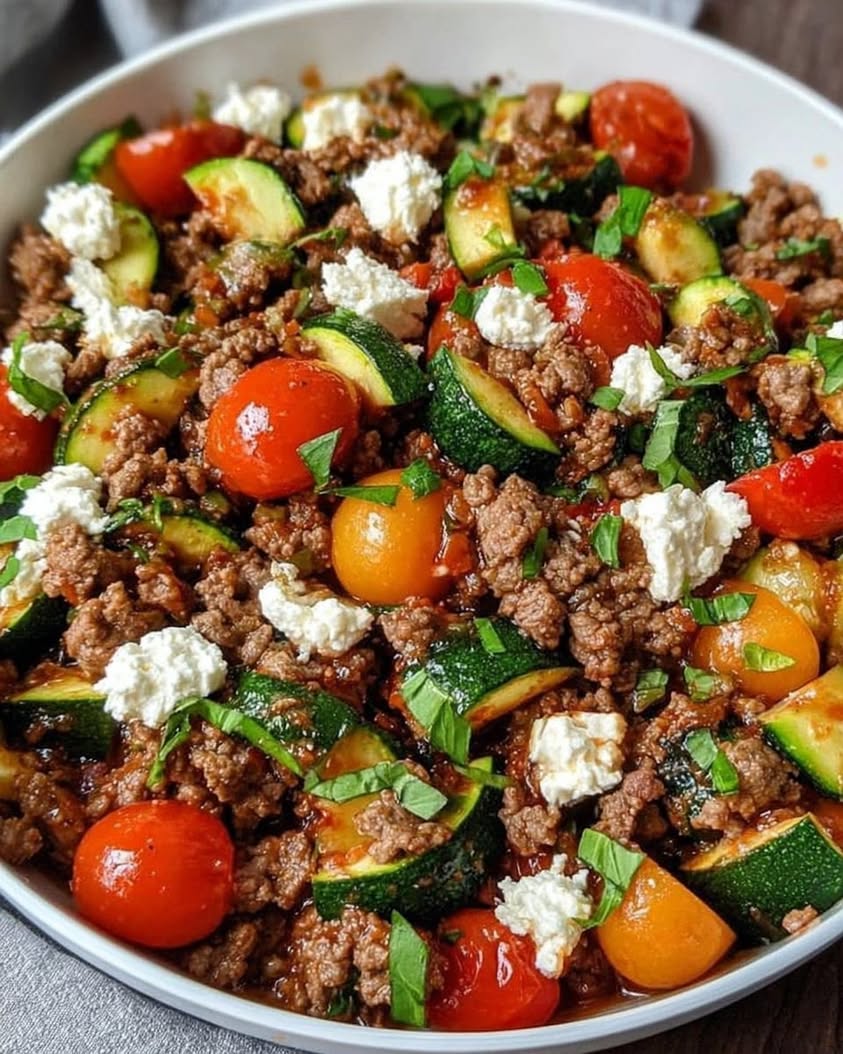
- Visual Appeal: This dish is a feast for the eyes. Deep brown pieces of beef contrast beautifully with vibrant green zucchini rounds and bright red cherry tomatoes. Snowy white crumbles of feta cheese are scattered across the top, creating a stunning, appetizing presentation.
- Skill Level Needed: This recipe is perfect for beginners and experienced cooks alike. The techniques are straightforward, involving basic slicing and stir-frying. Success relies on high heat and proper timing, which are easy to manage with the simple instructions provided.
- Special Equipment: You will need a large, heavy-bottomed skillet or wok to achieve the best sear and even cooking. A sharp chef’s knife will make slicing the beef and vegetables quick and safe. No other specialized tools are required for this streamlined dish.
Recipe Overview
- Difficulty Level: This recipe earns an easy rating due to its simple techniques and forgiving nature. There are no complicated sauces, marinades, or precise cooking methods required. Basic knife skills for slicing vegetables and a single-pan cooking process make it accessible for any home cook. Even if you are new to stir-frying, the clear timing guides will help you achieve perfect results.
- Category: This dish comfortably fits several meal categories. It works wonderfully as a quick and healthy weeknight dinner, served over rice, quinoa, or cauliflower rice. It also makes an excellent, satisfying lunch that can be prepared in advance and enjoyed cold or reheated. For a lighter option, serve it on a bed of fresh greens for a hearty salad.
- Cuisine: While inspired by the vibrant coastal flavors of the Mediterranean region, this recipe is a modern interpretation. It borrows key elements like olive oil, oregano, garlic, zucchini, tomatoes, and feta cheese from Greek and Italian culinary traditions. The cooking technique, however, utilizes the speed and high heat of a stir-fry, creating a delicious fusion that respects its roots while embracing efficiency.
- Cost: This is a budget-friendly meal that uses readily available ingredients. The beef, typically sirloin or flank steak, is the most expensive component, but you only need one pound. Zucchini and cherry tomatoes are generally inexpensive, especially during summer months. A block of feta cheese and basic pantry staples like olive oil and garlic add minimal cost to your grocery bill.
- Season: Summer is the absolute peak season for this recipe. This is when zucchini and cherry tomatoes are at their most flavorful and affordable, bursting with sweetness and vibrant color. That being said, the ingredients are available year-round in most grocery stores. During cooler months, the hearty beef and savory flavors make it a comforting and warming meal.
- Occasion: This vibrant Mediterranean beef stir-fry is incredibly versatile for occasions. It is ideal for a stress-free family dinner any night of the week. It also impresses guests at casual gatherings, potlucks, or summer barbecues. Its bright colors and fresh flavors make it a fantastic choice for a healthy post-workout meal or a satisfying lunch prep option.
Why You’ll Love This Recipe
The primary reason to love this dish is its incredible balance of taste and texture. The savory beef provides a hearty and satisfying foundation that carnivores will adore. Then the sweet, acidic burst of cherry tomatoes cuts through the richness, offering a bright pop of flavor in every bite. The tender zucchini adds a pleasant, mild earthiness that absorbs the pan juices beautifully. Finally, the salty, creamy feta cheese comes in as the perfect finishing touch, melting slightly and tying every element together into one cohesive, unforgettable experience. It is a complete flavor journey on one plate.
Convenience is another massive draw for this recipe. The entire process, from start to finish, takes only 30 minutes. This makes it an absolute lifesaver on those hectic evenings when time is short but you still want a homemade, nutritious meal. The prep work is minimal, involving just a few simple chops and slices. Furthermore, it is a one-pan marvel, which means cleanup is incredibly fast and easy. You can have a dinner that tastes like it took much longer without spending your entire evening in the kitchen. This is a true win-win scenario.
The nutritional advantages of this meal are substantial and noteworthy. Lean beef is an excellent source of high-quality protein and iron, which are essential for muscle health and energy levels. Zucchini provides a great dose of fiber, vitamin C, and antioxidants while being very low in calories. Cherry tomatoes are packed with lycopene, a powerful antioxidant linked to heart health. The olive oil contributes healthy monounsaturated fats. Feta cheese provides calcium and protein, making this a well-rounded, nutrient-dense meal that supports a balanced diet without sacrificing flavor or satisfaction.
This recipe also excels in its social and entertaining value. It is a dish that looks and tastes impressively sophisticated, yet it is secretly simple to execute. Guests will be delighted by the vibrant colors and the aromatic blend of Mediterranean flavors. You can easily double the recipe to feed a crowd without any extra hassle. It also serves beautifully as a shared dish on a table, allowing everyone to serve themselves. The fresh, bright character of the food makes it a perfect conversation starter and a surefire crowd-pleaser for any casual get-together.
Finally, this Vibrant Mediterranean beef stir-fry is incredibly cost-effective and accessible. The ingredients are common and found in almost any supermarket. The recipe does not call for any exotic or expensive specialty items, keeping the overall cost low. It is a fantastic way to use up summer vegetables if you have an abundance from a garden or farmer’s market. Moreover, leftover beef and vegetables can be repurposed into other meals, like wraps, omelets, or grain bowls. This makes it a smart choice for meal planning and reducing food waste, offering great value for your time and money.
Historical Background and Cultural Significance
This dish draws its primary inspiration from the traditional cuisines of Greece and the broader Eastern Mediterranean region. In these cultures, lamb is often featured, but beef has become increasingly popular. The concept of combining simple, fresh vegetables with a protein and a salty cheese is a hallmark of many Mediterranean meals. Specifically, the combination of tomatoes, zucchini, and feta cheese echoes classic Greek dishes like “Briam,” a roasted vegetable medley, and “Horiatiki,” the traditional Greek salad. Quick cooking over high heat, however, is a more modern adaptation.
The cultural significance of this meal lies in its embodiment of the Mediterranean diet, which is celebrated worldwide for its health benefits and delicious simplicity. This diet emphasizes fresh, seasonal vegetables, lean proteins, healthy fats like olive oil, and dairy in moderation. A dish like this represents a communal style of eating where ingredients are allowed to shine on their own. It reflects a lifestyle that values meals as a time for connection and enjoyment, rather than just fuel. The use of feta cheese, specifically linked to Greece, adds a layer of cultural identity to the recipe.
The evolution of this recipe reflects a broader culinary trend toward fusion and efficiency. While a traditional Greek “stir-fry” might not exist in this exact form, the principles are derived from home cooking where leftover meats and garden vegetables are quickly combined. The modern “one-pan” trend has popularized this style, making it more accessible to home cooks. It takes the foundational flavors of the Mediterranean and applies a high-heat, rapid stir-frying technique more commonly associated with Asian cuisines, resulting in a delightful and practical hybrid dish for today’s busy world.
Regional variations of this concept are abundant. In Italy, a similar dish might use pancetta or sausage instead of beef, with eggplant taking the place of zucchini and fresh mozzarella or ricotta salata as the cheese. In the Levant, ground beef is often used with warm spices like allspice and cinnamon, topped with toasted pine nuts and a dollop of yogurt instead of feta. In North Africa, versions might include harissa for heat and preserved lemons for a briny kick. This makes the core idea of a savory meat and vegetable stir-fry with cheese deeply flexible and open to endless creativity.
Ingredient Deep Dive
Let us start with the beef. Beef has a long and varied history in the Mediterranean region, though it was historically less common than lamb or goat due to agricultural limitations. In modern times, it has become a prized protein. The beef provides a rich source of iron, zinc, and B vitamins, which are crucial for energy production and immune function. For this recipe, you want a tender cut that cooks quickly, such as sirloin, flank steak, or ribeye. Look for beef that is bright red with fine marbling for the best flavor and texture. You should store it in the coldest part of your refrigerator and use it within a few days. For a substitution, you can easily use chicken breast, pork tenderloin, or even lamb strips for a more traditional flavor.
Zucchini adds a wonderful, mild sweetness and tender texture to the dish. Native to the Americas, zucchini was embraced by Italian cuisine and is now a staple throughout the Mediterranean summer. It is exceptionally low in calories but high in water content, fiber, and vitamin C. When selecting zucchini, look for small to medium ones that are firm, heavy for their size, and have glossy, unblemished skin. Avoid large, soft ones as they can be watery and seedy. You should store unwashed zucchini in a plastic bag in the refrigerator for up to a week. If you do not have zucchini, yellow summer squash or even eggplant can be used as a great alternative. Remember to cut zucchini into even half-moons or rounds for uniform cooking.
Cherry tomatoes are the flavor bombs of this stir-fry. Their history traces back to South America, but they became a cornerstone of Mediterranean cuisine after being introduced to Europe. They are packed with lycopene, a powerful antioxidant linked to reducing inflammation and supporting heart health, especially when cooked. For the best selection, choose cherry tomatoes that are deeply colored, plump, and firm but with a slight give. They should have a sweet, earthy aroma at the stem. Store them at room temperature away from direct sunlight for the best flavor; do not refrigerate them as this can make them mealy. If you cannot find cherry tomatoes, you can substitute with grape tomatoes or even chopped Roma tomatoes, though the cooking time may vary slightly.
Feta cheese is the star of the show, providing a salty, tangy, and creamy finish. Feta has been produced in Greece for thousands of years, traditionally made from sheep’s milk or a mixture of sheep and goat milk. It is a protected designation of origin (PDO) product in the European Union. Nutritionally, feta is lower in fat and calories than many other cheeses but is rich in calcium and protein. When buying feta, consider buying a block stored in brine rather than pre-crumbled, as it is much creamier and more flavorful. Look for a white, slightly crumbly texture. You should store the block in its brine in the refrigerator. For a dairy-free option, you can use a high-quality vegan feta alternative or omit it and add a squeeze of lemon for acidity.
Olive oil and garlic complete the flavor foundation. Extra virgin olive oil is a hallmark of the Mediterranean diet, known for its monounsaturated fats and antioxidants. It provides a fruity, peppery base for cooking. You should use a moderate quality for cooking and a finer one for drizzling at the end. Garlic adds a pungent, aromatic depth that is essential to the dish. Always choose firm, unblemished heads of garlic. For the best flavor, use fresh garlic cloves rather than pre-minced versions. They should be stored in a cool, dark, and dry place. Oregano, preferably dried Greek oregano, adds an earthy, slightly floral note that is quintessentially Mediterranean. These simple pantry staples are the key to unlocking the dish’s authentic character.
Common Mistakes to Avoid
- Overcrowding the pan is a frequent error. When you add too much beef or vegetables at once, they steam instead of sear. This prevents the desirable brown crust on the meat and leaves the zucchini watery. Always cook in batches to ensure high heat contact.
- Cutting the beef incorrectly can lead to toughness. You must slice the beef against the grain, which means cutting perpendicular to the direction of the muscle fibers. This shortens the fibers, making the meat much more tender to eat. Slicing with the grain will result in chewy, stringy pieces.
- Adding the feta cheese too early is a common mistake. If you stir in the feta during the last few minutes of cooking, it will melt completely and disappear. You should always sprinkle it on top right before serving so it stays in distinct, creamy crumbles that offer a burst of salty flavor.
- Using low heat is a major pitfall for stir-fries. A wok or skillet needs to be very hot to achieve a proper sear on the beef. If the heat is too low, the beef will release its juices and boil rather than brown. Make sure your pan is smoking hot before adding the oil and meat.
- Skimping on the seasoning is a missed opportunity. Beef needs a generous amount of salt and pepper to bring out its flavor. Do not forget to season the beef well before cooking it. Additionally, the vegetables appreciate a sprinkle of salt to help them release their moisture and soften properly.
- Not prepping all ingredients before you start can lead to burnt food. Stir-frying is a fast process, and you will not have time to chop garlic while the beef is cooking. This is called “mise en place.” Having all your vegetables sliced, garlic minced, and feta crumbled ensures a smooth and successful cooking experience.
- Using dried herbs from an old jar can result in a flat flavor. Old dried oregano loses its pungency and can taste like hay. For the best flavor, use a fresh jar of dried oregano. Alternatively, use fresh oregano leaves, but double the quantity as fresh herbs are less concentrated.
- Overcooking the zucchini makes it mushy. Zucchini cooks very quickly, often in just 3 to 4 minutes. You want it to be tender but still have a slight bite. Overcooking it until it is soft and releases too much water will ruin the texture of the entire dish.
- Forgetting to rest the meat before slicing can cause juices to run out. If you slice the raw beef and cook it immediately, it is fine. But if you are cooking a whole steak, you must let it rest for 5 minutes before slicing. This allows the juices to redistribute, keeping the meat moist.
- Draining the cherry tomatoes of their seeds is not necessary unless you want a firmer texture. The seeds and juices from the tomatoes are pure flavor. They help create the light sauce that coats the beef and zucchini. Embrace them for a more delicious result.
Essential Techniques
Mastering the high-heat sear is the most critical technique for this recipe. When you add the beef to a screaming hot pan with a thin layer of oil, it immediately begins to brown. This browning, known as the Maillard reaction, creates hundreds of complex, savory flavor compounds. Without it, the beef will taste bland and boiled. To master it, you must heat your pan for a good 2 minutes on high heat before adding the oil. Once the oil shimmers, add the beef in a single layer, leaving space between pieces. Do not stir it for at least 1 minute. You will see the bottom edge turn a deep, rich brown, and then you can flip it. A common pitfall is flipping the meat too early, which prevents a good crust. A visual cue for success is a dark, caramelized exterior on the beef strips.
Proper vegetable timing is essential for achieving the perfect texture. The zucchini, being denser, needs to be cooked a little longer than the delicate cherry tomatoes. If you add everything together, the tomatoes will become mushy and burst completely before the zucchini is tender. The proper technique is to add the zucchini first, allowing it to cook and soften slightly for about 2 minutes. Then you add the cherry tomatoes and cook for another 2 to 3 minutes. This allows the zucchini to become tender-crisp while the tomatoes just begin to soften and release their juices. A visual cue is when the zucchini turns a brighter green and shows slight browning on the edges, and the tomato skins begin to wrinkle gently. Stirring occasionally ensures even cooking without breaking the vegetables apart.
The art of deglazing the pan is a secret to creating a flavorful sauce. After you remove the cooked beef and vegetables, there will be tasty browned bits stuck to the bottom of the pan. These bits are packed with concentrated flavor. Deglazing is the process of adding a liquid, such as a splash of white wine, chicken broth, or a squeeze of lemon juice, to the hot pan. As you stir, the liquid will dissolve these browned bits, lifting them into the sauce. This technique enriches the entire dish with a deep, savory taste. You should scrape the bottom of the pan with a wooden spoon while the liquid bubbles. Once the bits are dissolved, you can return the beef and vegetables to the pan to coat them. It is a simple step that elevates the entire meal.
Knowing when to finish the dish with fresh ingredients is a mark of a skilled cook. The final step of topping the hot stir-fry with cold, crumbled feta cheese and a squeeze of fresh lemon juice is crucial. This technique adds a bright, acidic contrast to the rich, savory beef and soft vegetables. The cold feta slowly warms and softens but does not melt completely, maintaining its unique crumbly texture. The fresh lemon juice cuts through the richness, balancing the flavors and waking up the palate. You should never cook the feta into the dish. Instead, plate the hot stir-fry and garnish immediately. This provides a final pop of flavor, temperature contrast, and visual appeal that makes the dish feel complete and professionally executed.
Pro Tips for Perfect Vibrant Mediterranean Beef Stir-Fry with Feta, Zucchini & Cherry Tomatoes
To achieve the absolute best sear, pat the beef strips completely dry with paper towels before seasoning. Any excess moisture on the meat will turn to steam in the hot pan and prevent browning. Dry meat sears much more effectively, creating that coveted crust.
Cut your zucchini into half-moons that are about a quarter-inch thick. This thickness is ideal because it is thick enough to stay firm and maintain a pleasant bite, yet thin enough to cook through in just a few minutes without becoming mushy. Uniform slices ensure even cooking.
Use a large 12-inch skillet or a wok. If your pan is too small, the ingredients will crowd each other and steam. Giving the beef and vegetables room to breathe ensures high heat contact and perfect caramelization. Cook in batches if your pan is not large enough.
When you add the garlic, do not let it burn. Minced garlic can scorch in seconds over high heat, turning bitter and acrid. Add the garlic right after the zucchini, stir it for about 30 seconds until it becomes fragrant, and then immediately add the tomatoes to cool down the pan slightly.
Reserve a few tablespoons of the crumbled feta cheese for garnish. While you mix most of it into the dish right before serving, saving a small pile for the top adds a beautiful visual element and a final, concentrated burst of salty flavor for the first bite.
To add a layer of complexity, toast a pinch of red pepper flakes or a teaspoon of chopped fresh rosemary in the olive oil before adding the beef. This infuses the oil with subtle heat or aromatic flavor, which then coats everything else you cook in the pan.
For the best texture, let the cooked beef rest on a plate for a few minutes while you cook the vegetables. This allows the meat’s juices to redistribute, making the final stir-fry even more tender and flavorful. If you toss it back in immediately, it may release its juices into the pan.
Always taste and adjust seasoning at the very end. After you combine everything, the flavors can change. A final pinch of salt or a drizzle of good extra virgin olive oil can make a significant difference. Do not forget that the feta is salty, so be careful with added salt until the end.
Variations and Adaptations
Regional variations for this dish can be quite exciting. To give it a Greek-Italian twist, swap the oregano for dried mint and use kalamata olives alongside the cherry tomatoes. You could also add a handful of fresh arugula right at the end, allowing it to wilt slightly for a peppery bite. For a North African flavor profile, add a teaspoon of ground cumin and a pinch of cinnamon to the beef while it cooks. Finish the dish with a sprinkle of fresh cilantro and a dollop of harissa paste on the side for those who want heat.
Seasonal adaptations are a fantastic way to keep this recipe fresh all year. In the spring, you can replace the zucchini with asparagus spears cut into 2-inch pieces and add fresh peas at the end. In the fall, try using cubed butternut squash instead of zucchini. You will need to roast the squash first as it takes longer to cook. During winter, use hearty greens like chopped kale or Swiss chard, sautéing them until they wilt before adding the tomatoes. Each season brings a new flavor profile to the base recipe.
Dietary modifications are straightforward for this dish. To make it gluten-free, this recipe is naturally gluten-free as long as you use gluten-free soy sauce or tamari if you choose to add a splash. Ensure any broth you use is also certified gluten-free. For a dairy-free version, simply omit the feta cheese. To replace the tangy, salty flavor, add a generous squeeze of lemon juice and some capers or chopped kalamata olives. For a completely vegan option, replace the beef with extra-firm tofu, tempeh, or hearty portobello mushrooms.
Flavor variations can completely change the character of the dish. For a sweeter profile, add a balsamic glaze drizzle at the end instead of the lemon juice. The balsamic reduction pairs beautifully with the feta and beef. For a zestier kick, add the zest of one lemon along with its juice. You can also incorporate a pinch of smoked paprika or sumac to the seasoning for a smoky or tangy undertone. A handful of fresh basil or mint leaves torn over the top just before serving adds a burst of freshness.
Texture modifications allow you to tailor the dish to your preference. If you prefer a softer texture, cook the zucchini a minute longer and let the tomatoes burst completely. If you want more crunch, you can add a handful of toasted pine nuts or slivered almonds right before serving. This adds a wonderful contrasting crunch to the soft vegetables and creamy feta. For a more substantial meal, you can stir in a cup of cooked chickpeas or cannellini beans for extra protein and fiber.
Presentation alternatives can make this dish suitable for various occasions. For a casual dinner, serve it directly from the skillet. For a more elegant presentation, mound the stir-fry in a shallow white bowl, creating a small well in the center. Place the remaining feta crumbles in the well and garnish with a sprig of fresh oregano. You can also serve it in individual lettuce cups for a fun, low-carb appetizer or as a topping for grilled flatbread for a Mediterranean-style pizza.
Serving and Presentation Guide
Plating this Vibrant Mediterranean beef stir-fry with feta, zucchini, and cherry tomatoes is about showcasing its beautiful colors and textures. For a family-style meal, serve it on a large, warm platter. This allows everyone to see the components and serve themselves. For individual plates, use shallow bowls or wide-rimmed plates. Spoon the stir-fry into the center, leaving a border of the plate visible. This creates a clean, professional look that highlights the vibrant ingredients.
Garnishing ideas can elevate the dish from simple to stunning. A final drizzle of high-quality extra virgin olive oil just before serving adds a fruity sheen and flavor. A squeeze of fresh lemon juice adds brightness. Fresh herbs are the best garnish; a scattering of fresh oregano, parsley, or mint leaves adds a pop of green and a fresh aroma. For a bit of heat and color, a pinch of red pepper flakes is excellent. You can also add a few whole cherry tomatoes that you have reserved and sautéed briefly for a beautiful visual anchor.
Traditional accompaniments for this dish are rooted in Mediterranean simplicity. A side of crusty bread is essential for soaking up the delicious pan juices. A simple Greek salad with cucumbers, red onion, and olives is a classic pairing. For a heartier meal, serve it alongside herbed rice, orzo pasta, or fluffy couscous. A dollop of tzatziki sauce on the side adds a cool, creamy element that complements the tangy feta perfectly. These sides help round out the meal.
Modern serving suggestions can make this recipe feel new. For a low-carb option, serve it over cauliflower rice or a bed of fresh arugula. You can also stuff the stir-fry inside a warm pita or flatbread with some fresh lettuce and tomato for a delicious sandwich. For a grain bowl, serve it over quinoa with roasted chickpeas and a lemon-tahini dressing. These modern takes keep the dish exciting and adaptable to current food trends while retaining its core appeal.
Temperature considerations are crucial for the best dining experience. This dish is best served immediately after cooking, while the beef is hot and the feta is cool and creamy. If you let it sit, the feta will warm and soften too much, and the vegetables will continue to cook and become softer. If you need to keep it warm, place it in a low oven (200 F) covered with foil for a short time, but add the feta garnish only right before serving. This ensures the best flavor and texture at the table.
Wine and Beverage Pairing
A crisp, dry white wine is an excellent companion for this vibrant stir-fry. The acidity of a Sauvignon Blanc from Sancerre or Marlborough will cut through the richness of the beef and the saltiness of the feta, while complementing the bright flavors of the tomato and lemon. A dry, unoaked Greek Assyrtiko is a fantastic choice for a more authentic pairing. Its high acidity and mineral notes are a perfect match for the Mediterranean ingredients. A Pinot Grigio from Friuli is another reliable, food-friendly option.
For those who prefer red wine, a light-bodied, chilled red is the way to go. A young, unoaked Pinot Noir from Oregon or Burgundy has enough fruit to complement the beef without overwhelming the vegetables. A Dolcetto from Piedmont, which is low in tannins and high in cherry-like fruit, is another wonderful choice. You should avoid heavy, tannic reds like Cabernet Sauvignon, as they can clash with the feta and make the dish taste metallic. Serving these reds with a slight chill (around 55 F) makes them even more refreshing.
Non-alcoholic alternatives are plentiful and delicious. A sparkling water with a squeeze of lemon or lime is a simple, palate-cleansing choice. A high-quality sparkling lemonade or a ginger beer with a spicy kick can also be wonderful. For a more sophisticated option, try a dry, non-alcoholic white wine or a hop-infused sparkling water. A traditional Mediterranean beverage like Ayran, a savory yogurt drink, is a fantastic choice. Its tangy, salty, and creamy profile mirrors the feta cheese and balances the spices beautifully.
Coffee and tea pairings are less traditional but can work for a brunch or light dinner version. A strong, cold-brewed iced tea, especially a mint or herbal blend, would be refreshing. For a warm drink, a cup of chamomile or mint tea would be soothing after the meal. Coffee would not be a typical pairing, but a light, floral coffee like a pour-over from Ethiopia could be surprisingly complementary to the herbal notes in the dish. However, for the full experience, a crisp white wine or a cold Ayran is highly recommended.
Storage and Shelf Life
Proper storage is key to enjoying leftovers of this dish. You should allow the stir-fry to cool completely to room temperature before storing it. This typically takes about 30 minutes. Once cool, transfer it to an airtight container. The container should seal tightly to prevent the odors from the garlic and feta from spreading to other foods in your refrigerator and to keep the dish from drying out. Glass containers are excellent as they do not retain odors.
Temperature requirements are crucial for food safety. You must store the cooled stir-fry in the refrigerator at a temperature of 40 F or below. Do not leave it out at room temperature for more than two hours. If you plan to eat it within a few days, the refrigerator is perfect. For longer storage, you should freeze it. When stored properly in the refrigerator, this dish will maintain its best quality for 3 to 4 days. The flavors often meld together overnight, making it taste even better the next day.
When it comes to reheating, gentle methods are best. The microwave is the fastest option, but it can make the zucchini mushy. To reheat, place a portion in a microwave-safe dish and heat on medium power in 30-second intervals. A much better method is to reheat it in a skillet over medium heat. Add a tiny splash of water or broth to create some steam. Stir gently until everything is heated through, which takes just a few minutes. This helps restore some of the original texture. You should not overheat it.
Signs of spoilage are important to recognize. The first indicator is usually a change in smell. If the stir-fry develops a sour or off odor, it is time to discard it. You should also look for any signs of mold, which might appear as fuzzy spots on the surface. A slimy texture on the vegetables or a general discoloration are other clear signs. If you are unsure about its freshness, it is always best to err on the side of caution and throw it away. Food safety is the most important consideration.
Make Ahead Strategies
Strategic prep work can turn this 30-minute meal into a 10-minute assembly job. The best make-ahead strategy is to prepare all your ingredients separately and store them. You can slice the beef into strips, season it with salt and pepper, and store it in a sealed container in the refrigerator. You can wash and slice the zucchini and halve the cherry tomatoes. You can also crumble the feta cheese and mince the garlic. Keeping everything separate ensures that the vegetables remain crisp and the feta does not get soggy.
When you store the prepped ingredients, consider a few key points. The sliced beef should be used within 24 hours for maximum freshness. The sliced zucchini should be stored in a container lined with a paper towel to absorb excess moisture. This helps keep it from becoming wet in the fridge. The halved tomatoes are also best used within a day. You should not combine any of the prepped ingredients until you are ready to cook. This simple separation is the key to preserving quality.
Assembling the dish on the day you plan to serve it is simple. When you are ready, heat your skillet over high heat and start cooking. The total cooking time will be exactly the same because all the prep work is already done. This is a fantastic system for busy weeknights. You can do all the chopping on a Sunday afternoon and have a delicious, fresh dinner ready in minutes on a Tuesday. The final quality of the dish is not compromised by this method; in fact, it is enhanced by the convenience.
You can also cook the entire dish in advance and reheat it Print
Vibrant Mediterranean Beef Stir-Fry with Feta, Zucchini & Cherry Tomatoes
- Total Time: 25 minutes
- Yield: 4
Description
A quick and colorful stir-fry that brings the flavors of the Mediterranean to your weeknight dinner table. Tender strips of beef are seared with zucchini and cherry tomatoes, then finished with tangy feta cheese and fresh herbs.
Ingredients
- 1 lb beef sirloin, thinly sliced
- 2 medium zucchini, halved lengthwise and sliced into half-moons
- 1 cup cherry tomatoes, halved
- 1/2 cup crumbled feta cheese
- 2 cloves garlic, minced
- 2 tablespoons olive oil
- 1 teaspoon dried oregano
- 1/2 teaspoon dried thyme
- Salt and black pepper to taste
- 2 tablespoons fresh parsley, chopped (for garnish)
Instructions
- In a large skillet or wok, heat 1 tablespoon olive oil over high heat until shimmering.
- Add the sliced beef in a single layer and sear for 2 minutes without stirring. Flip and cook another minute until browned. Remove beef and set aside.
- Reduce heat to medium-high and add remaining 1 tablespoon olive oil. Add zucchini and cook for 3 minutes, stirring occasionally, until lightly browned and tender.
- Add garlic and cherry tomatoes, cooking for 2 more minutes until tomatoes begin to soften.
- Return beef to the skillet. Sprinkle with oregano, thyme, salt, and pepper. Toss everything together and cook for 1 minute to heat through.
- Remove from heat. Crumble feta cheese over the stir-fry and garnish with fresh parsley. Serve immediately.
Notes
You can customize the seasonings to taste. For a more robust Mediterranean flavor, add a squeeze of lemon juice or a drizzle of balsamic glaze before serving.
- Prep Time: 15 minutes
- Cook Time: 10 minutes
- Method: Main
- Cuisine: Mediterranean