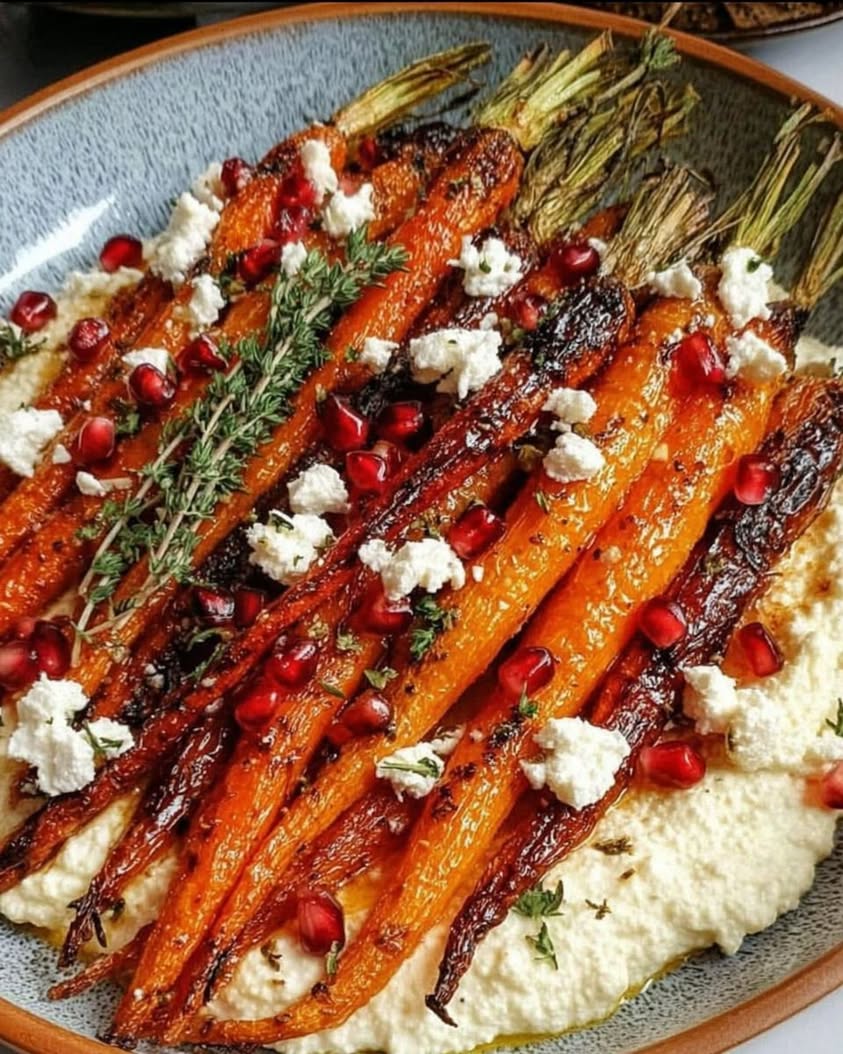
Maple Roasted Carrots with Whipped Feta: Caramelized Maple Glazed Carrots with Creamy Whipped Feta & Pomegranate
Transform your ordinary side dish into a stunning culinary centerpiece with these Maple Roasted Carrots with Whipped Feta. This recipe elevates humble root vegetables into a sweet, savory, and visually spectacular dish perfect for any table. The process involves roasting carrots until they caramelize beautifully under a glossy maple glaze. Meanwhile, you will whip tangy feta into a cloud-like spread that provides the perfect creamy counterpoint. Finally, a generous sprinkle of vibrant pomegranate seeds adds a burst of juicy freshness and a delightful crunch.
Imagine pulling a tray from the oven where the carrots glisten with a sticky, sweet maple syrup that has caramelized into the edges. The aroma of roasted vegetables and warm maple fills your kitchen, promising a comforting yet elegant bite. Consequently, this dish masterfully balances flavors and textures, making it far more than just another roasted vegetable recipe. It is a celebration of seasonal produce, simple techniques, and bold, complementary flavors. Ultimately, these Maple Glazed Carrots with Whipped Feta and Pomegranate Seeds will become your new favorite way to enjoy carrots.
Moreover, this recipe is incredibly versatile, fitting seamlessly into a weeknight dinner or a festive holiday spread. The combination of sweet, salty, creamy, and tart elements creates a complex flavor profile that feels both sophisticated and deeply satisfying. Whether you are cooking for family or impressing guests, this dish delivers on every level. From the first prep to the final garnish, you will find the process straightforward and the results consistently impressive. Therefore, get ready to fall in love with carrots all over again through this unforgettable recipe.
Quick Recipe Highlights
- Flavor Profile: This dish offers a masterful balance of sweet and savory notes. The natural sweetness of the carrots intensifies through roasting, while the maple glaze adds a rich, caramelized depth. Conversely, the whipped feta introduces a sharp, salty tang that cuts through the sweetness perfectly. Finally, the pomegranate seeds contribute a bright, tart pop that ties all the flavors together.
- Texture: You will experience a wonderful contrast in every bite. The roasted carrots become tender yet maintain a slight bite, with sticky, caramelized edges. Meanwhile, the whipped feta is luxuriously smooth and creamy, almost like a fluffy dip. Additionally, the pomegranate arils provide a juicy, satisfying crunch that elevates the entire dish.
- Aroma: As the carrots roast, your kitchen will fill with the warm, comforting scent of caramelizing maple syrup and earthy root vegetables. The aroma is subtly sweet and deeply inviting, reminiscent of autumn and cozy gatherings. Furthermore, the fresh, slightly floral note from the pomegranate seeds adds a final aromatic lift when you garnish the dish.
- Visual Appeal: This plate is a feast for the eyes with its stunning color contrast. The deep orange of the glazed carrots sits atop a bed of snowy white whipped feta. Subsequently, the brilliant ruby-red pomegranate seeds scattered over the top create a jewel-like finish that is both festive and elegant.
- Skill Level Needed: This is an accessible recipe for cooks of all levels. The techniques are fundamental: chopping, roasting, and blending. Importantly, there is no need for advanced culinary skills, making it a fantastic recipe to build confidence in the kitchen. The key is simply timing and paying attention to the caramelization of the maple glaze.
- Special Equipment: You only need very basic kitchen tools. A good baking sheet, parchment paper, a sharp knife, and a food processor or blender for the whipped feta are essential. Notably, a high-speed blender will create the smoothest whipped feta, but a standard food processor works perfectly well too.
Recipe Overview
- Difficulty Level: We rate this recipe as easy because it breaks down into simple, manageable steps. First, you prepare the carrots and make the glaze, which is a straightforward mix of ingredients. Next, the roasting process requires minimal hands-on time. Finally, blending the feta is quick and foolproof. Consequently, even beginner cooks can achieve restaurant-quality results with this approachable method.
- Category: This dish shines as a spectacular side dish for any protein, from roasted chicken to grilled salmon. Alternatively, you can serve it as a vibrant vegetarian main course when paired with a hearty grain like farro or quinoa. It also fits beautifully into a mezze or sharing platter for entertaining.
- Cuisine: While not tied to one specific tradition, this recipe draws inspiration from modern fusion and Mediterranean influences. The use of feta cheese and pomegranate is common in Eastern Mediterranean and Middle Eastern cuisines. Meanwhile, the maple glaze introduces a North American twist, creating a delicious cross-cultural dish.
- Cost: This is a very cost-effective recipe, especially when carrots are in season. Feta cheese and maple syrup are the primary investments, but a little goes a long way. Pomegranate seeds can be bought pre-packaged or harvested from a whole fruit for better value. Overall, you create an impressive dish without a hefty grocery bill.
- Season: This recipe is perfect for fall and winter when carrots are at their sweetest and pomegranates are in season. However, it works year-round thanks to the constant availability of these ingredients. The warm, comforting flavors feel particularly suitable for cooler weather gatherings and holiday meals.
- Occasion: It is ideal for holiday dinners like Thanksgiving or Christmas, where it adds a colorful and modern twist to the table. Furthermore, it is excellent for dinner parties, potlucks, or even as a special weeknight treat. The stunning presentation makes it feel celebratory for any occasion.
Why You’ll Love This Recipe
You will adore the incredible taste and texture appeal of these Maple Glazed Carrots with Whipped Feta and Pomegranate Seeds. Each forkful delivers a harmonious symphony of sweet, salty, creamy, and tart flavors that dance on your palate. The tender-crisp carrots coated in sticky maple glaze contrast magically with the light, tangy cloud of whipped feta. Meanwhile, the burst of juicy pomegranate adds a refreshing finish that makes the dish utterly addictive. This combination is so satisfying that it often steals the spotlight from the main course.
The convenience and preparation benefits are another major reason to love this recipe. Despite its elegant appearance, the dish comes together with minimal active effort. You simply toss the carrots in glaze and let the oven do most of the work. Simultaneously, the whipped feta takes just minutes to prepare in a food processor. This streamlined process means you can create an impressive side dish without spending hours in the kitchen, which is perfect for busy cooks.
From a nutritional standpoint, this recipe packs a powerful health punch. Carrots are famously rich in beta-carotene, which supports eye health and immunity. Pomegranate seeds are antioxidant powerhouses, fighting inflammation. Additionally, feta cheese provides a good source of calcium and protein. When you combine these elements, you get a dish that is as nourishing as it is delicious, allowing you to indulge guilt-free.
The social and entertaining value of this dish cannot be overstated. Its vibrant colors and elegant presentation are guaranteed to draw compliments from your guests. Moreover, it serves as a fantastic conversation starter at any dinner party or family gathering. The familiar ingredients presented in a novel way make it appealing to a wide range of tastes, pleasing both adventurous eaters and traditionalists alike.
Finally, the cost-effectiveness and accessibility make this a recipe you will return to again and again. The ingredients are affordable and easy to find at any standard grocery store. You can easily scale the recipe up or down depending on your guest count. Ultimately, this dish proves that you do not need expensive or exotic components to create something truly special and memorable on your table.
Historical Background and Cultural Significance
The story of roasted carrots as a culinary staple stretches back centuries, rooted in the domestication of the vegetable itself. Originally, wild carrots were small, tough, and predominantly purple or white. Through selective breeding, particularly in the Netherlands, the sweet, orange carrot we know today emerged. Roasting was a fundamental cooking method for root vegetables long before modern ovens, often done in hearths or over open fires to concentrate their natural sugars. This simple technique transformed the humble carrot into a sweeter, more palatable side dish.
Culturally, carrots hold significance across many regions as a durable, stored crop for winter. In European culinary traditions, glazed carrots became a classic preparation, often using honey or sugar to enhance their sweetness. The addition of maple syrup is a distinctly North American twist, tapping into the indigenous and colonial history of maple sugaring. This fusion of Old World vegetable and New World sweetener represents a beautiful blending of food histories on a single plate.
The recipe has evolved significantly from its simple origins. Modern interpretations, like this one with whipped feta and pomegranate, reflect contemporary dining trends that prioritize texture contrast, visual appeal, and bold flavor combinations. The practice of whipping feta into a creamy spread has gained popularity through the global fascination with Mediterranean and Middle Eastern dips. Adding pomegranate seeds introduces an element common in Persian and other regional cuisines, where their tartness is used to balance rich dishes.
Regional variations of glazed carrot dishes abound worldwide. In France, *carottes Vichy* involves glazing carrots with butter and sugar. Moroccan cuisine often features carrots with spices like cumin and cinnamon. The version presented here, Maple Glazed Carrots with Whipped Feta and Pomegranate Seeds, is a modern, fusion-style take that borrows elements from various traditions. It exemplifies how global ingredients and techniques can come together to create something new and exciting, while still honoring the fundamental appeal of the roasted carrot.
Ingredient Deep Dive
Carrots: Carrots have a long and fascinating history, first cultivated in Persia over a thousand years ago. They are nutritional powerhouses, exceptionally high in beta-carotene, which the body converts to vitamin A, crucial for vision and immune function. When selecting carrots for roasting, choose firm, smooth roots with vibrant color and fresh, green tops if attached. Avoid any that are limp or cracked. For the best caramelization, use medium-sized carrots that will roast evenly. Store them unwashed in the crisper drawer of your refrigerator in a plastic bag.
Maple Syrup: Pure maple syrup is a natural sweetener with deep roots in North American indigenous culture. It contains antioxidants and minerals like manganese and zinc, offering a slightly better nutritional profile than refined sugar. Always opt for “pure maple syrup” rather than pancake syrup, which contains artificial flavors and corn syrup. The syrup’s grade (like Grade A Amber) affects flavor intensity. Store it in the refrigerator after opening to prevent mold. For a substitution, you could use honey, but the distinct maple flavor will be lost.
Feta Cheese: Feta is a brined curd cheese with a protected designation of origin in Greece, traditionally made from sheep’s or goat’s milk. It is a good source of calcium, protein, and beneficial fatty acids. When buying feta for whipping, choose a block stored in brine for the best texture and flavor. Pre-crumbled feta often contains anti-caking agents that can hinder a smooth blend. Store leftover feta submerged in its brine in the refrigerator. For a dairy-free version, consider a firm, tangy almond or tofu-based feta alternative.
Pomegranate Seeds: Pomegranates are ancient fruits symbolizing abundance and fertility in many cultures, from Greek mythology to Persian art. The arils (seeds) are packed with vitamin C, vitamin K, and potent antioxidants called punicalagins. You can buy pre-seeded containers for convenience, or harvest seeds from a whole fruit by scoring and submerging it in water. Fresh seeds should be plump and deep red. Store them in an airtight container in the fridge for up to 5 days, or freeze them for months. A good substitute for color and tartness could be dried cranberries or fresh raspberries.
Common Mistakes to Avoid
- Overcrowding the Pan: Placing carrots too close together on the baking sheet causes them to steam instead of roast. This prevents the beautiful caramelization and sticky glaze you desire. Always ensure the carrots are in a single layer with a little space between each piece for optimal hot air circulation.
- Using Pre-Crumbled Feta: Pre-crumbled feta often contains additives to prevent clumping, which can make your whipped feta grainy or prevent it from becoming perfectly smooth. For the creamiest texture, always start with a solid block of feta stored in brine.
- Not Tossing the Carrots Midway: Failing to toss or turn the carrots halfway through the roasting time leads to uneven cooking. One side may burn while the other remains pale. A quick stir ensures all sides get exposed to the heat and glaze evenly for consistent color and tenderness.
- Skipping the Parchment Paper: Roasting the maple-glazed carrots directly on a bare pan can create a nightmare of sticky, burned-on mess. Lining your sheet with parchment paper guarantees easy cleanup and prevents the sugary glaze from cementing itself to your bakeware.
- Adding the Glaze Too Early: If you mix the maple syrup with the carrots at the very beginning of roasting, the high sugar content can cause it to burn before the carrots are tender. Coating the carrots about halfway through the cook time allows them to cook through before the glaze caramelizes.
- Underseasoning the Whipped Feta: Feta is salty, but the whipping process dilutes its flavor. Not tasting and adjusting the seasoning of your whipped feta after blending is a missed opportunity. Often, a pinch of black pepper or a drizzle of olive oil can elevate it to the next level.
- Using Old, Woody Carrots: Large, thick, old carrots can be woody and fibrous in the center, remaining tough even after roasting. Choosing fresh, medium-sized carrots ensures a tender, sweet result throughout. If you only have large carrots, consider slicing them lengthwise to reduce the cooking time.
- Forgetting the Acid: This dish relies on the balance between sweet (maple), salty (feta), and acid (pomegranate). Omitting the pomegranate seeds or another acidic element leaves the palate feeling overwhelmed by sweetness and richness. The tart pop is essential for a complete flavor profile.
Essential Techniques
Roasting for Caramelization: Roasting is the crucial technique that transforms raw carrots into sweet, tender morsels with concentrated flavor. The dry heat of the oven causes the natural sugars in the carrots to caramelize, creating complex flavors and a beautiful browned exterior. To master it, ensure your oven is fully preheated and use a high enough temperature (around 400°F/200°C). The common pitfall is overcrowding the pan, which leads to steaming. You will know it is working when the carrots are fork-tender and have dark, sticky spots on their surface.
Whipping the Feta: Whipping feta breaks down its crumbly texture into a smooth, spreadable, and airy consistency. This technique is important because it changes the cheese’s mouthfeel, making it a luxurious base rather than a chunky topping. To master it, use a food processor or high-powered blender and process until completely smooth, scraping down the sides as needed. A common mistake is not processing long enough, leaving it grainy. Success is visible when the feta has the consistency of a thick, fluffy whipped cream cheese.
Creating a Maple Glaze: A glaze is a thin, sweet coating that adds flavor and a shiny finish. For this recipe, the glaze is simple—just maple syrup—but the technique lies in its application. Applying it at the right time prevents burning. Toss the carrots in the syrup partway through roasting so they are partially cooked, allowing the glaze to caramelize without scorching. The visual cue for success is a glossy, bubbling coating that thickens and darkens slightly on the carrots in the oven’s final minutes.
Pro Tips for Perfect Maple Roasted Carrots with Whipped Feta
First, cut your carrots into uniform sizes. This ensures every piece roasts at the same rate, preventing some from being overcooked while others are still hard. A diagonal cut exposes more surface area for better caramelization.
Second, pat your carrots completely dry before tossing them with oil. Any excess moisture will steam them initially, delaying the browning process that is key to developing flavor.
Third, warm your maple syrup slightly before using it. Warm syrup is thinner and coats the carrots more evenly than cold, thick syrup straight from the refrigerator.
Fourth, reserve a tablespoon of pomegranate seeds for a final garnish after plating. This adds a fresh, bright pop of color and texture right before serving, making the presentation extra vibrant.
Fifth, let the roasted carrots rest for 5 minutes after pulling them from the oven. This allows the maple glaze to thicken slightly and cling to the carrots better instead of pooling on the plate.
Sixth, if your whipped feta seems too thick, blend in a teaspoon of cold water or milk at a time. This helps achieve a perfectly spreadable, cloud-like consistency without making it runny.
Seventh, use the leftover pomegranate juice. If you seed a fresh pomegranate, save the vibrant juice that collects and drizzle a few drops over the finished dish for an extra hit of tartness.
Eighth, add a savory herb to the whipped feta. A small pinch of fresh thyme or oregano blended with the feta can introduce an aromatic layer that complements the sweet carrots beautifully.
Variations and Adaptations
Regional Variations: You can easily adapt this recipe to reflect different regional flavors. For a Middle Eastern twist, add a sprinkle of za’atar or sumac to the carrots before roasting, and use a labneh base instead of whipped feta. For a Nordic feel, substitute lingonberry jam thinned with water for the pomegranate seeds. An Italian version might feature whipped ricotta with lemon zest and a balsamic glaze drizzle instead of maple.
Seasonal Adaptations: While perfect for fall, this dish adapts wonderfully to other seasons. In spring, use young, multi-colored baby carrots and garnish with fresh pea shoots. For summer, add grilled corn kernels and fresh basil. In winter, incorporate roasted walnuts or pecans for a festive crunch alongside the pomegranate.
Dietary Modifications: For a vegan version, substitute the feta with whipped firm tofu or a store-bought vegan feta, and use a vegan-friendly maple syrup. To make it gluten-free, ensure all packaged ingredients are certified GF—this recipe is naturally compliant. For a lower-sugar option, reduce the maple syrup by half and add a pinch of smoked paprika to enhance the savory notes.
Flavor Variations: Experiment with infusing the maple glaze. Before tossing the carrots, warm the syrup with a sprig of rosemary, a clove of garlic, or a dash of cayenne pepper for a subtle infused flavor. You could also mix a tablespoon of Dijon mustard into the glaze for a sweet and tangy profile.
Texture Modifications: If you prefer more texture, do not whip the feta completely smooth—leave it slightly chunky. Alternatively, mix chopped toasted pistachios or walnuts into the whipped feta for a nutty crunch. For extra crispness on the carrots, finish them under the broiler for the last 2-3 minutes of cooking.
Presentation Alternatives: Instead of spreading the whipped feta on a platter, pipe it using a star tip for an elegant look. Serve individual portions in small bowls or on slate boards. You can also deconstruct the dish by serving the carrots upright in a glass with the whipped feta at the bottom and pomegranate on top.
Serving and Presentation Guide
Plating Techniques: For a family-style presentation, spread the creamy whipped feta in a generous swoosh or circle on a large, shallow platter. Artfully arrange the warm Maple Glazed Carrots with Whipped Feta and Pomegranate Seeds over the top, letting some feta peek through. For individual plates, place a quenelle or dollop of feta on one side and lean the carrots against it. The goal is to create height and visual interest, making the dish look abundant and inviting.
Garnishing Ideas: While pomegranate seeds are the star garnish, do not stop there. A final drizzle of high-quality extra virgin olive oil adds sheen and flavor. Fresh, delicate herbs like micro cilantro, dill fronds, or chopped chives provide a green contrast. A light dusting of flaky sea salt, such as Maldon, over the carrots just before serving enhances all the flavors and adds a subtle crunch.
Traditional Accompaniments: This dish pairs classically with simply prepared proteins that do not compete with its vibrant flavors. Think herb-roasted chicken, grilled lamb chops, or pan-seared salmon. It also fits beautifully on a Thanksgiving table alongside turkey and other classic sides, offering a modern, colorful alternative to traditional glazed carrots.
Modern Serving Suggestions: For a contemporary appetizer, serve the whipped feta in a bowl surrounded by the glazed carrot sticks for dipping. Alternatively, use the components in a grain bowl: layer quinoa or farro, the whipped feta, the carrots, and pomegranate seeds for a complete meal. It also makes a fantastic topping for crostini or flatbread.
Temperature Considerations: Serve this dish warm for the best experience. The carrots should be hot or very warm from the oven, while the whipped feta is best at cool room temperature. This contrast in temperatures is part of the sensory appeal. If the feta is too cold, it will harden and lose its creamy texture against the warm carrots.
Portion Control Tips: As a side dish, plan for about 3-4 carrot pieces per person. The whipped feta is rich, so a heaping tablespoon per serving is sufficient. If serving as part of a larger spread with many other dishes, you can reduce the portions accordingly. The recipe scales easily, so adjust quantities based on your guest count and the number of other dishes being served.
Wine and Beverage Pairing
Wine Pairings: The sweet and savory profile of Maple Glazed Carrots with Whipped Feta and Pomegranate Seeds calls for versatile wines. A dry Riesling or Gewürztraminer complements the sweetness with their own fruity notes and crisp acidity, which cuts through the creamy feta. For red wine lovers, a light, low-tannin Pinot Noir works well, as its red fruit flavors harmonize with the pomegranate without overpowering the dish. An off-dry rosé is another excellent choice, bridging the gap between the vegetable’s sweetness and the cheese’s saltiness.
Non-Alcoholic Alternatives: Sparkling water with a twist of orange or a few pomegranate seeds muddled in the glass offers a refreshing, palate-cleansing option. For something sweeter, a tart cherry or cranberry spritzer balances the dish’s richness. Iced herbal tea, like hibiscus or mint, provides a sophisticated, flavor-complementary non-alcoholic pairing that won’t clash with the complex tastes on the plate.
Coffee/Tea Pairings: While not a typical pairing for a side dish, if serving this as part of a brunch, a medium-roast coffee with low acidity would complement the caramelized flavors. For tea, consider a smoky Lapsang Souchong, whose bold character can stand up to the strong flavors, or a gentle white tea that won’t compete for attention on your palate.
Temperature Considerations: Serve white and rosé wines well chilled, between 45-50°F (7-10°C). Red wines like Pinot Noir should be slightly cooler than room temperature, around 55°F (13°C). Non-alcoholic sparkling drinks are best served very cold to provide a refreshing contrast to the warm, rich dish. Always ensure your beverages are at their ideal serving temperature to maximize the pairing experience.
Serving Suggestions: Pour wines into appropriate glassware to enhance their aroma and taste. Offer a carafe of chilled water on the table to help guests cleanse their palates between bites. If serving non-alcoholic options, present them in elegant glassware, perhaps with a garnish, to make them feel just as special as the alcoholic selections.
Storage and Shelf Life
Storage Methods: Store the components separately for the best results. Place cooled roasted carrots in an airtight container in the refrigerator. Keep the whipped feta in a separate sealed container. Store pomegranate seeds in their own small container or bag. This prevents the carrots from making the feta watery and keeps the pomegranate seeds fresh and crisp.
Temperature Requirements: All components must be refrigerated promptly. The ideal refrigerator temperature is below 40°F (4°C). Do not leave the assembled dish or its parts at room temperature for more than two hours, as the dairy-based whipped feta is perishable.
Container Recommendations: Use glass or BPA-free plastic containers with tight-fitting lids. For the whipped feta, a shallow container is better than a deep one, as it allows for quicker, even cooling. You can also press a piece of plastic wrap directly onto the surface of the feta before sealing the lid to prevent it from drying out or absorbing other fridge odors.
Signs of Spoilage: Discard the whipped feta if it develops an off smell, a slimy texture, or visible mold. Carrots that have become slimy, excessively soft, or have a sour odor should be thrown out. Pomegranate seeds that look shriveled, have changed color, or smell fermented are past their prime.
Reheating Instructions: Reheat only the carrots. Spread them on a baking sheet and warm in a 350°F (175°C) oven for 10-15 minutes until heated through. Avoid the microwave, as it can make them soggy. The whipped feta and pomegranate seeds should be served cold or at cool room temperature; do not reheat them.
Freezing Guidelines: Freezing is not recommended for the assembled dish or the whipped feta, as the texture will become grainy and separate upon thawing. You can freeze the roasted carrots (without garnish) on a tray before transferring to a freezer bag for up to 2 months. Thaw in the refrigerator and reheat in the oven. Pomegranate seeds freeze very well; spread them on a tray to freeze individually before bagging.
Make Ahead Strategies
Prep Timeline: You can prepare nearly every component 1-2 days in advance. The day before, wash, peel, and cut the carrots. Store them submerged in water in the refrigerator to keep them crisp. Make the whipped feta and store it in a sealed container. Seed the pomegranate. On the day of serving, simply drain and dry the carrots, roast them, and assemble.
Storage Between Steps: Keep pre-cut carrots in water in the fridge. The whipped feta may thicken slightly when chilled; let it sit at room temperature for 20 minutes before serving, or stir in a teaspoon of cold water to loosen it. Keep pomegranate seeds dry in a sealed container. This staged approach minimizes day-of stress.
Quality Impact Assessment: Prepping the carrots in advance has no negative impact; it may even save time. The whipped feta holds its texture and flavor beautifully for 2-3 days. The pomegranate seeds are best used within 24 hours of seeding for maximum juiciness, but they will keep for several days. The final roasted carrots are always best served fresh, but they reheat well.
Assembly Tips: For the freshest presentation, assemble the dish just before serving. Spread the whipped feta on the platter, top with warm carrots, and immediately garnish with the pomegranate seeds and any fresh herbs. This prevents the carrots from wilting the feta or the pomegranate seeds from bleeding their color.
Reheating Guidelines: If you must reheat pre-roasted carrots, do so in the oven, not the microwave, to restore some of their caramelized texture. Spread them on a parchment-lined sheet and heat at 375°F (190°C) for 5-10 minutes. The brief return to high heat can help re-crisp the exterior.
Fresh Element Additions: Even with make-ahead components, always add the final garnishes at the last minute. Sprinkle the pomegranate seeds, fresh herbs, and a drizzle of oil right before you bring the platter to the table. This ensures vibrant color, optimal texture, and the brightest flavors for your guests.
Scaling Instructions
Halving the Recipe: Halving this recipe is straightforward for smaller households. Use half the quantity of all ingredients. The cook time may reduce by 5-7 minutes, so start checking the carrots for tenderness earlier. Use a smaller baking sheet so the carrots still crowd together slightly, which helps them steam and soften initially before caramelizing. You may need to use a mini food processor for the smaller amount of feta, or simply mash it vigorously with a fork for a chunkier texture.
Doubling or Tripling: For a crowd, doubling or tripling works perfectly. Multiply all ingredients accordingly. The key is to use multiple baking sheets and rotate them between oven racks halfway through cooking to ensure even browning. Do not pile the carrots onto one sheet. You may need to roast in batches. For the whipped feta, ensure your food processor is not overfilled; blend in batches if necessary for the smoothest consistency.
Equipment Adjustments: When scaling up, equipment is your main consideration. Have enough baking sheets and oven space. A large food processor is essential for big batches of whipped feta. For very large quantities, consider using a stand mixer with a paddle attachment to whip the feta. Ensure you have a large enough platter or multiple serving dishes for elegant presentation.
Timing Modifications: When doubling, the prep time increases linearly, but the cook time may increase slightly. More carrots on multiple trays can lower the oven temperature momentarily when the door is opened. Allow an extra 5-10 minutes of roasting time and rely on the visual cue of tender carrots with caramelized edges rather than a strict timer.
Storage Considerations: Leftovers from a scaled-up recipe will be more abundant. Plan your storage containers in advance. Remember that the whipped feta is best fresh, so if you have a huge amount left over, its texture may suffer after 3-4 days. Consider if you can repurpose leftovers into other meals, like grain bowls or sandwiches.
Nutritional Deep Dive
Macro Breakdown: A serving of Maple Glazed Carrots with Whipped Feta and Pomegranate Seeds provides a balanced mix of macronutrients. The carbohydrates come primarily from the carrots and maple syrup, offering natural sugars and fiber. The whipped feta contributes protein and healthy fats, including conjugated linoleic acid from the sheep’s or goat’s milk. The pomegranate seeds add a small amount of additional fiber and natural fruit sugars. This combination provides sustained energy without a heavy calorie load.
Micronutrient Analysis: This dish is a micronutrient powerhouse. Carrots deliver a massive dose of vitamin A (as beta-carotene), vital for vision and immune health. Pomegranate seeds are rich in vitamin C, vitamin K, and folate. Feta cheese provides calcium for bone health, phosphorus, and B vitamins. Together, they offer a wide spectrum of vitamins and minerals that support overall wellness, from antioxidant protection to bone density.
Health Benefits: Consuming this dish supports several health systems. The antioxidants in carrots and pomegranates combat oxidative stress and inflammation. The fiber promotes digestive health and helps regulate blood sugar spikes from the natural sugars. The calcium and protein in feta support muscle and bone maintenance. The combination of fat from the cheese and fiber from the vegetables also aids in the absorption of fat-soluble vitamins present in the carrots.
Dietary Considerations: This recipe is naturally gluten-free. It is vegetarian but not vegan due to the dairy-based feta. For those monitoring sodium, feta is a salty cheese, so the dish’s sodium content is moderate. The sugar content comes from natural sources (maple syrup, carrots, pomegranate), but individuals managing carbohydrate intake should be mindful of portion size.
Portion Analysis: A standard serving (about ¼ of the recipe) is satisfying without being excessive. It provides volume and fiber from the vegetables, creating a feeling of fullness. The richness of the whipped feta means a little goes a long way in terms of flavor and satisfaction, naturally encouraging reasonable portion sizes.
Weight Management Tips: This dish can be part of a weight-conscious diet. To reduce calories slightly, you can decrease the maple syrup by a tablespoon and increase the black pepper or herbs for flavor. The high fiber and water content of the carrots promote satiety. Pairing it with a lean protein and a leafy green salad creates a balanced, satisfying meal that helps manage overall calorie intake.
Dietary Adaptations
Gluten-Free: