Greek Chicken Souvlaki Bowls with Creamy Garlic Sauce: A Flavorful Weeknight Escape
Imagine the vibrant streets of Athens, where the air is filled with the irresistible aroma of sizzling, herb-marinated meat. Now, you can bring that authentic Mediterranean magic straight to your dinner table with these incredible Greek Chicken Souvlaki Bowls. This recipe is not just a meal; it’s a complete sensory experience that combines tender, juicy chicken with crisp, fresh vegetables and a legendary creamy garlic sauce. Ultimately, these bowls offer a perfect balance of flavor, nutrition, and visual appeal that will make you feel like you’re dining under the Grecian sun.
Creating these Greek Chicken Souvlaki Bowls is surprisingly simple, even for a busy weeknight. The process begins with a quick marinade that infuses the chicken with classic Greek flavors like lemon, oregano, and garlic. While the chicken soaks up all that goodness, you can prepare the rest of your bowl components. The result is a wholesome, satisfying dish that is far more exciting than your standard chicken dinner. Furthermore, this recipe is highly adaptable, allowing you to customize it based on your dietary preferences or what you have available in your pantry.
The star of this show, without a doubt, is the iconic creamy garlic sauce, often known as tzatziki’s richer cousin. This sauce adds a cool, tangy, and garlicky punch that ties the entire bowl together beautifully. Each bite delivers a symphony of textures and tastes, from the charred, savory chicken to the cool crunch of cucumber and the creamy, herbaceous sauce. Consequently, this dish is guaranteed to become a regular in your meal rotation, offering a delicious and healthy escape from the ordinary.
Quick Recipe Highlights
- Flavor Profile: These Greek Chicken Souvlaki Bowls deliver a bright and herbaceous taste. The marinade features tangy lemon juice, earthy oregano, and pungent garlic, which perfectly complements the smoky char from grilling. Meanwhile, the creamy garlic sauce adds a cool, tangy contrast that balances the savory elements beautifully.
- Texture: This dish is a masterclass in contrasting textures. You get tender, juicy chicken pieces alongside crisp, fresh vegetables like cucumber and red onion. Additionally, fluffy rice or quinoa provides a soft base, and the creamy garlic sauce adds a luxurious, smooth finish that coats every component.
- Aroma: As the chicken cooks, it releases an incredible fragrance of lemon, garlic, and herbs that will fill your kitchen. The aroma is unmistakably Mediterranean, fresh, and inviting. Ultimately, it promises a meal that is as pleasing to the nose as it is to the palate.
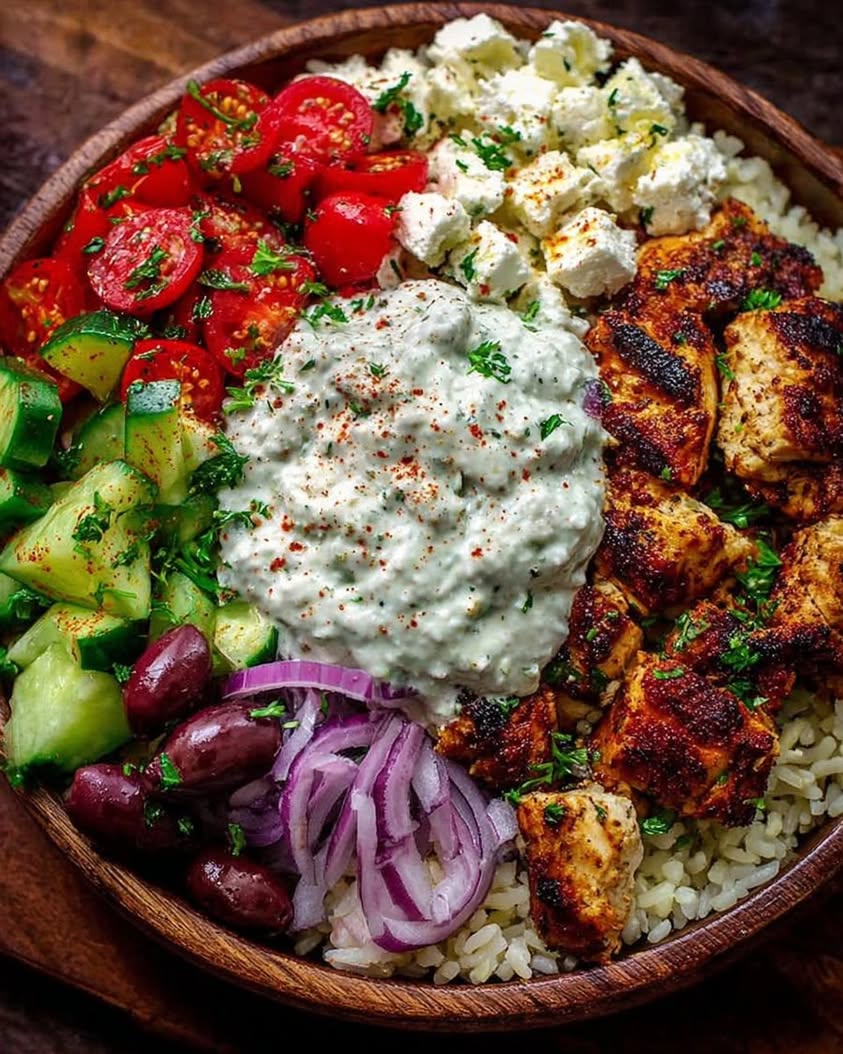
- Visual Appeal: These bowls are a feast for the eyes with their vibrant colors. Think golden-brown chicken, bright red tomatoes, green cucumbers, and purple onions, all drizzled with white sauce and often sprinkled with fresh dill or parsley. The presentation is colorful, fresh, and incredibly appetizing.
- Skill Level Needed: This recipe is perfect for cooks of all levels. The techniques are straightforward, involving simple chopping, mixing, and either grilling or pan-searing. Therefore, even a beginner can achieve fantastic results with minimal stress and effort.
- Special Equipment: You need very little special equipment. A set of skewers (if using wooden, remember to soak them) is helpful for authentic souvlaki presentation, but you can easily cook the chicken in a grill pan or skillet. A good knife and cutting board are your main tools for prep.
Recipe Overview
- Difficulty Level: We rate this Greek Chicken Souvlaki Bowls recipe as “Easy” because it breaks down into simple, manageable steps. The marinade requires just mixing ingredients, and the cooking process is quick. Moreover, most components can be prepared ahead of time, making final assembly a breeze even on hectic evenings.
- Category: This dish falls perfectly into the categories of a healthy dinner, a meal prep superstar, and a fantastic option for entertaining. It’s a complete, balanced meal with protein, carbohydrates, and plenty of vegetables. Consequently, it satisfies hunger while nourishing your body.
- Cuisine: This recipe is firmly rooted in Greek and broader Mediterranean cuisine, celebrated for its use of fresh herbs, olive oil, lemon, and garlic. It captures the essence of Greek street food but presents it in a convenient, modern bowl format that is popular worldwide today.
- Cost: Preparing these Greek Chicken Souvlaki Bowls at home is remarkably cost-effective, especially compared to ordering similar meals at a restaurant. Chicken thighs or breasts are affordable protein options, and the vegetables and pantry staples like rice and spices are inexpensive. Therefore, you get a restaurant-quality meal for a fraction of the price.
- Season: This is truly a year-round recipe. It feels light and refreshing for spring and summer meals, often served with a cool salad. Conversely, it remains satisfying and hearty enough for fall and winter, especially when paired with warm rice or roasted vegetables.
- Occasion: These bowls are incredibly versatile for any occasion. They make a simple yet impressive weeknight family dinner, a healthy lunch option for meal prep, or a fantastic, interactive dish for casual gatherings where guests can build their own bowls.
Why You’ll Love This Recipe
First and foremost, the taste and texture of these Greek Chicken Souvlaki Bowls are utterly irresistible. The chicken is marinated to perfection, resulting in pieces that are incredibly juicy and packed with the sunny flavors of the Mediterranean. Each forkful combines the savory, charred meat with the cool crunch of fresh veggies and the luxurious, garlicky sauce. This harmonious blend creates a dining experience that is both satisfying and exciting, far surpassing any takeout alternative. You will find yourself craving the bright, clean flavors long after the bowl is empty.
From a practical standpoint, the convenience of this recipe is a major win. The marinade comes together in minutes, and while the chicken rests, you can prep all other components. Furthermore, the entire meal cooks quickly, making it ideal for busy evenings when you want something delicious without spending hours in the kitchen. The bowl format itself is wonderfully convenient for serving and for next-day lunches. Simply pack the elements separately, and you have a fresh, assembled meal ready to go, avoiding the soggy pitfalls of many pre-made lunches.
Nutritionally, these Greek Chicken Souvlaki Bowls are a powerhouse. They offer a fantastic balance of lean protein from the chicken, complex carbohydrates from the rice or quinoa, and a wealth of vitamins and fiber from the fresh vegetable toppings. Using olive oil in the marinade adds heart-healthy fats. This balance helps keep you full and energized, supports muscle maintenance, and contributes to overall well-being. It’s a meal that makes healthy eating feel indulgent and utterly delicious, not like a chore.
For social and entertaining value, this dish is a true crowd-pleaser. The vibrant, colorful presentation is instantly appealing and looks fantastic on a dinner table. Additionally, you can easily set up a “souvlaki bowl bar” for parties or family dinners, allowing everyone to customize their creation with their favorite toppings and sauce. This interactive element makes mealtime fun and engaging, ensuring there’s something for every palate. It’s a surefire way to impress guests with minimal stress on the host.
Finally, the cost-effectiveness and accessibility of this recipe cannot be overstated. You can create four generous restaurant-quality portions for less than the price of two takeout orders. The ingredients are common and easy to find at any standard grocery store. Moreover, the recipe is forgiving and adaptable; you can swap vegetables based on seasonality or use what you have on hand. This flexibility makes it a reliable, budget-friendly staple that delivers incredible flavor without straining your wallet.
Historical Background and Cultural Significance
The story of souvlaki stretches back to ancient Greece, with archaeological evidence suggesting skewered meat was a popular cooking method as early as the Bronze Age. References to “obelos” (spits) appear in the works of Homer and other classical writers. However, the modern concept of souvlaki as seasoned, grilled meat on a skewer truly evolved as a quintessential Greek street food in the mid-20th century, particularly in urban centers like Athens. It provided a quick, affordable, and delicious meal for workers and families, often served wrapped in pita bread with tomatoes, onion, and tzatziki sauce.
Culturally, souvlaki is more than just food; it is a symbol of Greek social life and hospitality. It is the food of shared moments, enjoyed at bustling street-side shops, family tavernas, and weekend gatherings. The act of grilling souvlaki over charcoal is often a communal, celebratory event, filling the air with its distinctive aroma. This dish represents the Greek philosophy of “philoxenia” (love for strangers), where sharing a simple, flavorful meal is an act of friendship and welcome. Consequently, it holds a cherished place in the nation’s culinary heart.
The evolution of the traditional souvlaki wrap into a modern “bowl” is a fascinating adaptation to contemporary global dining trends. While the classic pita-wrapped version remains iconic, the bowl format appeals to those seeking a gluten-free option, a lighter meal, or simply a different presentation. It allows for greater customization and the inclusion of additional bases like rice, quinoa, or salad greens. This evolution demonstrates the dynamic nature of food culture, where traditional recipes adapt to new preferences while retaining their core identity and flavors.
Regional variations of souvlaki exist throughout Greece. For instance, in different areas, the meat might be pork instead of chicken, and the seasoning blends can vary slightly. The accompanying sauces also differ; while tzatziki (yogurt, cucumber, garlic) is classic, other regions might use a mustard-based sauce or simply a squeeze of lemon. The creamy garlic sauce featured in this bowl recipe is a beloved variant, offering a richer, more pungent garlic flavor. These regional differences highlight the diversity within Greek cuisine, where local ingredients and traditions shape a shared culinary heritage.
Ingredient Deep Dive
Let’s start with the chicken. Boneless, skinless chicken thighs are highly recommended for their flavor and juiciness, as they withstand high-heat cooking without drying out. Chicken breasts are a leaner alternative but require careful monitoring to prevent toughness. From a nutritional standpoint, chicken is an excellent source of complete protein, B vitamins, and selenium. For the best results, pat your chicken pieces dry before marinating to ensure the flavors adhere properly. You can store raw, marinated chicken in the refrigerator for up to 24 hours before cooking.
The marinade builds the foundational flavor. Extra virgin olive oil is crucial, providing healthy fats and carrying the herb flavors. Fresh lemon juice tenderizes the meat and adds brightness, while dried oregano (preferably Greek) delivers an authentic, earthy note. Fresh garlic is non-negotiable for its pungent aroma. If you’re out of lemon juice, a good quality red wine vinegar can work in a pinch. Always use fresh garlic rather than powdered for the most vibrant taste. Store your olive oil in a cool, dark place to preserve its quality.
For the creamy garlic sauce, full-fat Greek yogurt is the ideal base for its thick texture and tangy flavor. It provides probiotics, protein, and calcium. The garlic should be finely minced or pressed for the strongest flavor. Fresh dill adds a classic, grassy note, while a splash of red wine vinegar or lemon juice provides necessary acidity. For a dairy-free version, you can use a thick, unsweetened plant-based yogurt. Importantly, let the sauce rest in the fridge for at least 30 minutes before serving; this allows the flavors to meld and the garlic to mellow slightly.
The vegetable toppings are where you add freshness and crunch. English cucumber, with its thin skin and minimal seeds, is perfect for dicing. Tomatoes add juicy sweetness and lycopene, an antioxidant. Red onion provides a sharp, colorful bite that can be mellowed by a quick soak in cold water. Kalamata olives contribute a salty, briny depth that is signature to Greek cuisine. All these vegetables are rich in vitamins, minerals, and fiber. For the best texture, chop your vegetables just before assembling the bowls to maintain their crispness and prevent sogginess.
The base of the bowl is highly adaptable. Traditionally, you might use fluffy white rice or lemon-herb rice. For a healthier, whole-grain option, quinoa is an excellent choice as it’s a complete protein. You could also use brown rice, couscous, or even a bed of crisp romaine lettuce for a salad-style bowl. These carbohydrates provide sustained energy and help make the meal satisfying. Cook your chosen base according to package directions, and consider seasoning it with a pinch of salt and a drizzle of olive oil for extra flavor.
Common Mistakes to Avoid
- Not marinating long enough. While 30 minutes is the minimum, the chicken truly benefits from 2-4 hours (or even overnight) in the marinade. This allows the acidic lemon juice and flavors to penetrate deeply, resulting in more tender and flavorful meat. Rushing this step is the most common reason for bland souvlaki.
- Using low-fat yogurt for the sauce. Full-fat Greek yogurt is essential for achieving the proper thick, creamy, and luxurious texture. Low-fat or non-fat varieties often contain stabilizers and can become watery, leading to a runny sauce that won’t coat the ingredients properly. Invest in good quality yogurt for the best results.
- Overcrowding the pan or grill. To get that beautiful, caramelized sear on your chicken, you need space. If you cram too many pieces into the skillet or on the grill grate, they will steam instead of sear. Cook in batches if necessary to ensure each piece has contact with the hot surface for optimal browning.
- Cutting the chicken into uneven pieces. Consistency is key for even cooking. Aim for 1 to 1.5-inch cubes. If some pieces are much larger than others, the smaller ones will be overcooked and dry by the time the larger ones are done. Take a moment to trim your chicken into uniform chunks.
- Skipping the rest time for the cooked chicken. After removing the chicken from the heat, let it rest for 5 minutes before serving. This allows the juices, which have been driven to the center by the heat, to redistribute throughout the meat. Cutting into it immediately will cause those flavorful juices to spill out onto the cutting board.
- Adding raw garlic to the sauce without letting it mellow. Fresh garlic is potent. Simply mixing it into the yogurt and serving immediately can result in an overly harsh, spicy garlic flavor. Letting the finished sauce sit in the refrigerator for at least 30 minutes (or longer) allows the garlic flavor to integrate and soften beautifully.
- Using wooden skewers without soaking them. If you choose to grill your souvlaki on skewers, soaking wooden skewers in water for at least 30 minutes is mandatory. This prevents them from catching fire and burning on the grill. Alternatively, you can use metal skewers, which are reusable and eliminate this concern entirely.
- Underseasoning the marinade or the overall bowl. Taste your marinade before adding the chicken; it should be bold and flavorful. Remember, it needs to season the entire volume of meat. Similarly, don’t forget to season your rice or quinoa base with a little salt. The fresh vegetables and sauce will carry the final dish, but every layer needs attention.
Essential Techniques
Mastering the marinade is your first essential technique. A good marinade has three key components: an acid (like lemon juice) to tenderize, oil to carry flavor and promote browning, and seasonings (herbs, garlic, salt). Combine these thoroughly before adding your chicken. Ensure each piece is well-coated, then cover and refrigerate. The acid will start to break down proteins on the surface, so marinating for several hours is beneficial, but avoid going beyond 24 hours as the texture can become mushy. The visual cue for success is chicken that has slightly changed color on the surface from the lemon juice.
Achieving the perfect sear on your chicken is critical for flavor. Whether using a grill, grill pan, or skillet, ensure your cooking surface is very hot before adding the oil and chicken. You should hear a definite sizzle upon contact. Resist the urge to constantly move or flip the chicken. Let it cook undisturbed for a few minutes to develop a golden-brown crust. Then, turn the pieces to cook on all sides. The common pitfall is a crowded, cool pan that steams the meat. Success is visible: you want deeply browned, caramelized edges on your chicken cubes.
Preparing the creamy garlic sauce requires balance. Start with very thick Greek yogurt. Finely mince or use a microplane to grate the garlic; this maximizes surface area and distributes flavor evenly. Chop the dill finely. Mix all ingredients until completely smooth. The importance of this technique lies in texture and flavor integration. A lumpy sauce is less appealing. Letting the sauce rest in the refrigerator is part of the technique; it’s not just storage. This resting period allows the sharp bite of the raw garlic to mellow and harmonize with the yogurt and herbs, resulting in a smoother, more rounded flavor profile.
Proper vegetable prep enhances the final bowl. For the cucumber, if using a standard variety, you may want to peel it and scoop out the seeds to prevent excess water from diluting your bowl. Dice it uniformly. Soaking thinly sliced red onion in ice water for 10 minutes is a pro technique that reduces its sharp, pungent bite and makes it crisper and more palatable. For tomatoes, remove the watery seed pulp and just use the firm flesh for dicing to avoid a soggy bowl. These small steps significantly improve the eating experience by ensuring crisp, clean vegetable textures.
Pro Tips for Perfect Greek Chicken Souvlaki Bowls
For the most authentic flavor, seek out Greek oregano. It has a more robust and slightly different flavor profile than the common Mediterranean oregano found in most supermarkets. The difference is subtle but noticeable to a trained palate.
If you have time, thread your marinated chicken onto skewers before cooking. This not only looks traditional but also promotes even cooking by allowing heat to circulate around each piece. Remember to soak wooden skewers first.
Take your sauce to the next level by adding a teaspoon of high-quality extra virgin olive oil to the yogurt mixture. This adds a fruity depth and contributes to an even silkier texture.
For an extra layer of flavor, warm your pita bread (if serving on the side) directly on a gas burner for a few seconds per side. This gives it a slight char and makes it wonderfully pliable and aromatic.
When building your bowl, think in layers. Start with your warm base (rice/quinoa), then add the hot chicken, followed by the cool vegetables, and finally drizzle generously with the cold sauce. This preserves the individual temperatures and textures of each component.
If meal prepping, store the creamy garlic sauce in a separate, airtight container. Add it to your bowl just before eating to prevent it from making the other ingredients soggy during storage.
For a deeper color and flavor on your chicken, add a half teaspoon of paprika or a pinch of saffron threads to your marinade. This gives the meat a beautiful reddish-golden hue.
Don’t discard the marinade liquid after removing the chicken. You can simmer it in a small saucepan for a few minutes until reduced and slightly thickened, then brush it over the cooked chicken as a finishing glaze for an extra flavor boost.
Variations and Adaptations
For regional variations, consider using different proteins. Traditional Greek pork souvlaki is incredibly popular; substitute pork tenderloin cut into cubes. In coastal regions, you might find shrimp or fish souvlaki. For the sauce, a true tzatziki, which includes grated cucumber, is the classic Athenian street food accompaniment. Some islands use a spicy cheese spread instead. Exploring these options lets you travel through Greece on your plate.
Seasonal adaptations are easy and rewarding. In summer, add grilled zucchini, eggplant, or bell peppers to your bowl. In cooler months, swap the fresh tomato salad for roasted cherry tomatoes and use a base of warm, lemon-infused farro or barley. For a winter twist, you could even serve the components wrapped in a warm, soft pita as a handheld meal, perfect for cozy nights.
Dietary modifications are straightforward. For a gluten-free version, ensure your base is gluten-free (rice, quinoa, lettuce) and skip the pita or use a certified GF brand. To make it dairy-free, use a thick, unsweetened coconut or almond milk yogurt for the sauce. For a vegan adaptation, replace the chicken with marinated, grilled extra-firm tofu or chickpeas and use a plant-based yogurt sauce.
Flavor variations can keep the recipe exciting. Add a Middle Eastern twist by including sumac in the chicken marinade and using a tahini-lemon sauce instead of the yogurt sauce. For an Italian-inspired version, marinate the chicken with rosemary and basil, and serve with a pesto drizzle. A spicy variation could include a pinch of cayenne in the marinade and a harissa swirl in the yogurt sauce.
Texture modifications cater to personal preference. If you love crunch, add toasted pine nuts or slivered almonds on top. For extra creaminess, crumble some feta cheese over the assembled bowl. If you prefer a smoother eating experience, you can puree some of the roasted red peppers into the yogurt sauce for a silky, sweet, and colorful alternative.
Presentation alternatives offer fun ways to serve. Instead of a bowl, serve the components deconstructed on a large platter for a family-style feast. For parties, make mini souvlaki skewers as appetizers with small cups of the garlic sauce for dipping. For kids, serve the chicken, rice, and sauce separately in a partitioned plate, allowing them to mix as they like.
Serving and Presentation Guide
Plating techniques matter for visual appeal. Choose wide, shallow bowls to showcase all the colorful ingredients. Start by creating a bed of your chosen base—fluff the rice or quinoa with a fork for volume. Arrange the warm chicken pieces neatly on one side of the bowl. Then, artfully group the vegetable toppings (cucumber, tomato, onion, olives) in separate little piles around the chicken. This organized yet abundant look is inviting and allows each flavor to be distinct.
Garnishing is the final touch that elevates the dish. A generous drizzle of the creamy garlic sauce over everything is essential. Then, sprinkle with freshly chopped fresh dill or parsley and a final crack of black pepper. For a restaurant-quality finish, add a light drizzle of extra virgin olive oil and a wedge of lemon on the side. A few whole Kalamata olives and a sprig of fresh herb placed on top make for a beautiful photograph.
Traditional accompaniments include warm, soft pita bread, either served on the side or cut into triangles for scooping. A simple Greek village salad (horiatiki) with chunks of feta is a perfect side. For a beverage, a glass of chilled retsina wine or a cold lager complements the flavors beautifully. These additions round out the meal into a complete Mediterranean experience.
Modern serving suggestions embrace convenience and customization. Set up a build-your-own-bowl bar for guests with separate containers of rice, chicken, all the toppings, sauces, and extras like feta cheese, pepperoncini, and extra lemon wedges. For a lighter option, serve the chicken and toppings over a massive bed of mixed greens instead of a grain. This approach caters to all preferences and makes serving a crowd effortless.
Temperature considerations are crucial for the best experience. Serve the chicken hot or warm, straight from the grill or pan. The rice or quinoa base should also be warm. Conversely, the vegetable toppings and the creamy garlic sauce should be cold or at room temperature. This contrast between hot and cold elements is part of what makes the bowl so refreshing and satisfying. Avoid letting the hot chicken sit on the cold veggies for too long before serving to prevent wilting.
Portion control is easy with this format. A general guide is one cup of cooked grain, 5-6 ounces of cooked chicken, and a generous half-cup of mixed vegetables per bowl. The sauce can be portioned with a two-tablespoon cookie scoop for consistency. This structure ensures a balanced meal that is filling without being overly heavy. For larger appetites, simply increase the protein and grain portions slightly, or offer extra pita bread on the side.
Wine and Beverage Pairing
Wine pairings for these Greek Chicken Souvlaki Bowls should complement the bright acidity and herbal notes. A classic Greek white like Assyrtiko from Santorini is perfect, with its crisp minerality and citrus flavors that mirror the lemon in the dish. A Sauvignon Blanc from New Zealand or a Vermentino from Italy also works wonderfully, offering grassy and herbal notes that pair with the oregano and dill. For red wine lovers, a light-bodied, low-tannin red like a Greek Xinomavro or a Beaujolais Villages can be served slightly chilled to complement the meal without overpowering it.
Non-alcoholic alternatives are just as important. Freshly squeezed lemonade, perhaps infused with a few sprigs of mint or rosemary, is a fantastic match. Sparkling water with a squeeze of lemon or lime and a cucumber slice is refreshing and cleansing. For a more authentic touch, try a glass of chilled Greek mountain tea (tsai tou vounou), an herbal infusion known for its subtle, floral flavor and health benefits. These drinks enhance the Mediterranean feel of the meal.
While not traditional, certain iced teas or coffees can work if served after the meal. A glass of unsweetened iced tea with a lemon wedge is a light, palate-cleansing finish. A small, strong Greek coffee is a classic way to end any Greek meal, though its intense flavor is best enjoyed after you’ve finished the savory components. The bitterness of the coffee provides a stark and pleasant contrast to the creamy, garlicky flavors that preceded it.
Temperature considerations for beverages are straightforward. White wines and non-alcoholic options should be served well-chilled. If you choose a light red, aim for a slight chill, around 55°F (13°C). Iced drinks should be cold but not so icy that they numb the palate. The goal is to have a beverage that refreshes between bites of the flavorful, sometimes rich chicken and sauce, not to overwhelm your taste buds with extreme cold.
Serving suggestions for beverages include presentation. Serve white wine in traditional stemless glasses or tumblers for a casual feel. Lemonade or iced tea looks beautiful in a glass pitcher with citrus slices and herbs. Always offer plenty of ice and lemon wedges on the side so guests can customize their drink. Having a variety of options, especially for non-drinkers, ensures everyone has a delightful beverage to accompany their flavorful bowl.
Storage and Shelf Life
Storage methods must keep components separate to maintain quality. Store cooked, cooled chicken in an airtight container in the refrigerator for up to 4 days. The creamy garlic sauce should be kept in its own sealed container for up to 5 days. Chopped vegetables (except onions, which can be stored separately) are best used within 2 days for optimal crispness. Cooked rice or quinoa can be refrigerated for 5-6 days. Never store the fully assembled bowls with the sauce mixed in, as they will become soggy very quickly.
Temperature requirements are critical for safety. All cooked and perishable ingredients must be refrigerated at 40°F (4°C) or below within two hours of cooking. If you are meal prepping, allow the chicken and grains to cool to room temperature (no more than 1 hour) before transferring to the refrigerator. The sauce and vegetables should go directly into the fridge after preparation. This prevents bacterial growth and preserves freshness.
Container recommendations focus on airtightness. Glass containers with locking lids are ideal because they don’t absorb odors and allow you to see the contents. For the sauce, a small mason jar works perfectly. If using plastic, ensure it is BPA-free and designed for food storage. For the best meal prep, consider using divided containers that keep the chicken, grains, and veggies in separate compartments until you’re ready to eat.
Signs of spoilage are important to recognize. For the chicken, look for any off smells, a slimy texture, or a change in color. The yogurt sauce may separate slightly, which is normal, but if it develops an off odor, visible mold, or an excessively sour taste, discard it. Vegetables will become wilted, slimy, or discolored when they are past their prime. When in doubt, follow the golden rule: if you’re unsure, throw it out.
Reheating instructions are specific to each component. Reheat the chicken gently in a skillet over medium heat with a splash of water or broth to prevent drying out, or in the microwave at 50% power. Reheat grains with a sprinkle of water, covered, in the microwave. The sauce and fresh vegetables should never be reheated; add them cold to the reheated base and protein. This method ensures each part retains its intended texture.
Freezing guidelines apply primarily to the cooked chicken and the marinade (before adding chicken). Place cooled, cooked chicken in a freezer-safe bag or container for up to 3 months. Thaw overnight in the refrigerator before reheating. You can also freeze the raw chicken in its marinade in a sealed bag for up to 2 months; thaw in the fridge before cooking. The yogurt sauce does not freeze well, as it will separate and become grainy upon thawing. Vegetables and cooked grains also suffer in texture when frozen, so it’s not recommended.
Make Ahead Strategies
An ideal prep timeline starts up to two days in advance. Day 1: Make the creamy garlic sauce and store it in the fridge—its flavor improves overnight. Chop vegetables like cucumber, tomato, and onion; store them separately in airtight containers. You can also cook your rice or quinoa. Day of cooking: In the morning or afternoon, cut and marinate the chicken. Then, 30 minutes before dinner, cook the chicken and quickly reheat the grain. This split approach makes weeknight assembly incredibly fast.
Storage between steps is simple with proper planning. Keep all prepped ingredients in the refrigerator until needed. The marinating chicken should always be refrigerated, never left on the counter. If you’ve pre-chopped vegetables that release water (like tomatoes), place a paper towel in the container with them to absorb excess moisture and prevent sogginess. Label containers with the date to keep track of freshness.
Assessing the quality impact of make-ahead steps is generally positive. The sauce benefits immensely from resting. The chicken gains more flavor from a longer marinade. The only potential downside is a slight loss of crispness in pre-chopped vegetables, but storing them properly minimizes this. The cooked grain may dry out slightly; reheating it with a tablespoon of water restores moisture. Overall, the convenience far outweighs any minimal texture trade-offs for a busy cook.
Assembly tips for make-ahead meals are key. If taking for lunch, pack the cold sauce in a very small separate container or a condiment cup. Pack the reheated chicken and grain in one section of a divided container, and the cold veggies in another. Assemble just before eating by dumping everything into your bowl and drizzling with sauce. This keeps the lettuce crisp, the veggies cool, and the chicken warm until the last moment.
Reheating guidelines for pre-cooked components require care. For the chicken, the stovetop method in a lightly oiled skillet is best to restore a slight sear. Microwave reheating can make it rubbery if done on full power; use medium power and cover with a damp paper towel. For grains, sprinkle with water, cover, and microwave in short bursts, fluffing with a fork between intervals. Always reheat only what you plan to eat immediately for the best texture.
Adding fresh elements after storage elevates the final dish. Even if you pre-chopped most veggies, consider adding a final sprinkle of freshly chopped herbs (dill, parsley) right before serving. A fresh squeeze of lemon juice over the assembled bowl just before eating adds a bright, vibrant note that can get lost if added too early. These last-minute touches bring back the “just made” freshness that makes the meal special.
Scaling Instructions
Halving the recipe is straightforward for smaller households. Simply divide all ingredient quantities by two. Use a smaller baking dish or zip-top bag for marinating the reduced amount of chicken. Cooking time may decrease slightly since there will be fewer pieces in the pan, so check for doneness a minute or two earlier. The sauce recipe can be halved, but consider making the full batch as it keeps well and is delicious with other dishes like grilled vegetables or as a dip.
Doubling or tripling the recipe for a crowd requires slight adjustments. Use a very large bowl or multiple containers for marinating the chicken. When cooking, you must work in batches to avoid overcrowding the pan; no amount of scaling should compromise the essential sear. For the sauce, simply multiply the ingredients. You may want to use a food processor to blend large batches smoothly. For grains, cook in separate pots or use a rice cooker with a large capacity to ensure even cooking.
Equipment adjustments are necessary when scaling up. For a double batch, your standard skillet might suffice if you cook in two separate batches. For tripling or more, consider using a large griddle or firing up an outdoor grill to accommodate all the chicken at once. You’ll need larger mixing bowls, more storage containers, and potentially a larger pot for cooking grains. Planning your equipment needs ahead prevents last-minute scrambling during party prep.
Timing modifications are minimal when scaling. The marinating time remains the same regardless of quantity. The active cooking time will increase linearly if you cook in batches—double the chicken means roughly double the cook time if using the same pan. Factor this into your meal planning. The sauce and vegetable prep time will also increase with volume, but you can enlist help for chopping to speed up the process.
Storage considerations change with scale. Leftovers from a large batch are a blessing for meal prep. Ensure you have enough appropriately sized airtight containers to store the components separately. Label them clearly with contents and date. If you’ve made a massive amount of sauce, consider freezing a portion in an ice cube tray for future use in smaller quantities. Always cool large batches of food quickly before refrigerating to maintain food safety.