Lemon Pesto Rigatoni with Burrata and Roasted Pine Nuts: A Bright and Creamy Weeknight Masterpiece
Lemon Pesto Rigatoni with Burrata and Roasted Pine Nuts delivers a restaurant-quality dining experience right in your own kitchen. This vibrant pasta dish combines the bold, garlicky flavors of fresh basil pesto with the zesty brightness of lemon and the creamy, luxurious texture of burrata cheese. Moreover, the roasted pine nuts add a delightful crunch that elevates every single bite. Whether you need a quick weeknight dinner or a show-stopping dish for weekend guests, this lemon pesto rigatoni with burrata and roasted pine nuts satisfies everyone at the table. The recipe comes together in just 35 minutes, so you can enjoy incredible Italian-inspired flavors without spending hours in the kitchen.
The magic of this lemon pesto rigatoni with burrata and roasted pine nuts lies in its perfect balance of flavors and textures. Tangy lemon cuts through the rich, nutty pesto, while the creamy burrata melts into the warm rigatoni and creates a silky sauce that coats every piece of pasta. Meanwhile, the roasted pine nuts provide a toasty, buttery crunch that keeps each bite interesting. This dish looks stunning on a plate, yet it requires minimal effort and basic cooking skills. In addition, the recipe uses simple, accessible ingredients that you can find at any grocery store. Consequently, anyone can master this lemon pesto rigatoni with burrata and roasted pine nuts on the very first try.
Furthermore, this lemon pesto rigatoni with burrata and roasted pine nuts fits seamlessly into a variety of occasions. You can serve it for a cozy family dinner, a romantic date night, or even a casual gathering with friends. The bright colors of the dish, from the vivid green pesto to the snowy white burrata, make it a visual centerpiece that impresses without stress. Additionally, the recipe offers plenty of room for customization, so you can adapt it to your dietary needs or seasonal preferences. Ultimately, this lemon pesto rigatoni with burrata and roasted pine nuts proves that elegant Italian cooking does not require complicated techniques or exotic ingredients.
Quick Recipe Highlights
- Flavor Profile: This dish balances bright citrus notes from fresh lemon with savory, herbaceous basil pesto and rich, creamy burrata. The roasted pine nuts add a subtle, nutty depth that rounds out the flavor profile beautifully. Every bite delivers a harmonious blend of tangy, savory, and buttery tastes.
- Texture: The rigatoni offers a satisfying al dente bite that holds up well against the creamy burrata and thick pesto sauce. Roasted pine nuts contribute a delicate crunch, while the burrata delivers an indulgent, velvety smoothness. Together, these textures create a dynamic and pleasurable mouthfeel.
- Aroma: Fresh basil dominates the aroma and fills your kitchen with a garden-fresh scent as the pesto warms. The toasted pine nuts add a warm, nutty fragrance that deepens the overall olfactory experience. Additionally, the lemon zest releases bright, citrusy top notes that awaken the senses.
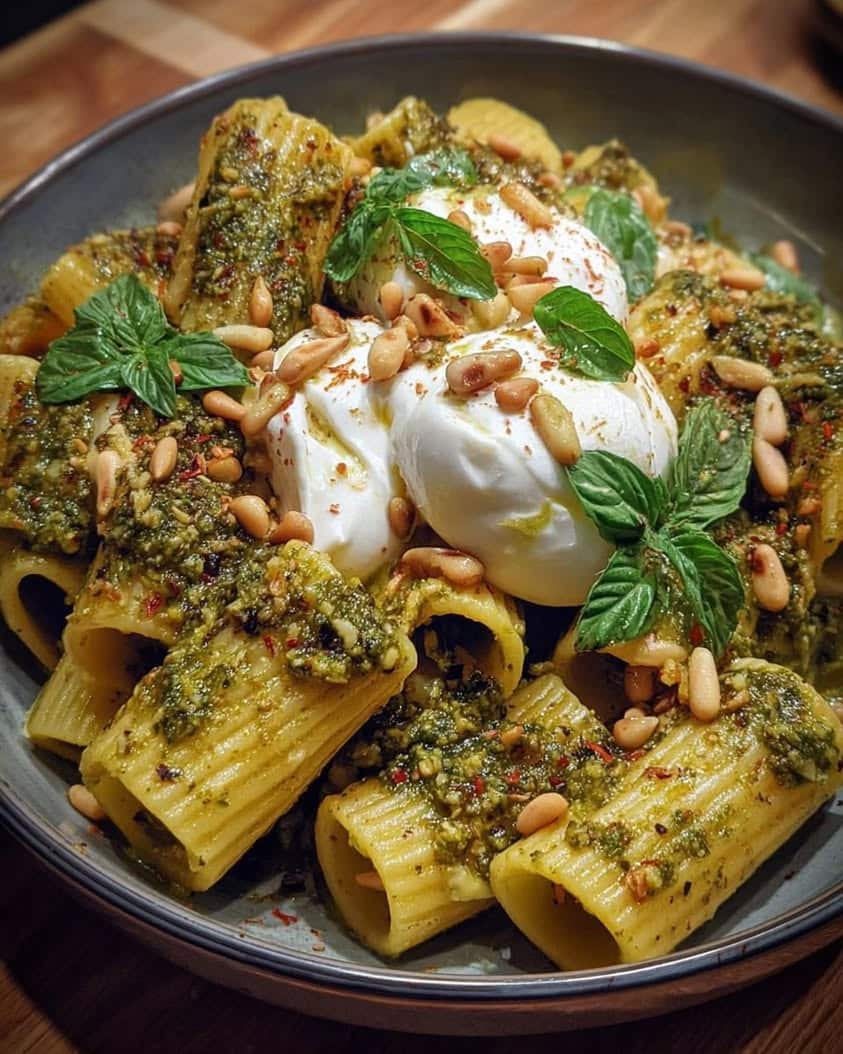
- Visual Appeal: The vibrant green pesto coats the rigatoni in a gorgeous emerald hue that pops against a white plate. Creamy burrata sits on top and creates a stunning contrast of color and texture. Finally, golden-brown pine nuts and fresh basil leaves add the perfect finishing touches.
- Skill Level Needed: This recipe requires only basic cooking skills, such as boiling pasta and toasting nuts. You do not need any advanced techniques or specialized training to achieve excellent results. Even a beginner cook can confidently prepare this dish for guests.
- Special Equipment: You need a large pot for boiling pasta, a colander for draining, and a small skillet for roasting the pine nuts. A food processor or blender helps make the pesto, though you can also use a mortar and pestle. Additionally, a microplane or fine grater works perfectly for zesting the lemon.
Recipe Overview
- Difficulty Level: This lemon pesto rigatoni with burrata and roasted pine nuts earns an Easy rating because it involves straightforward steps and common ingredients. The most technical aspect involves toasting pine nuts, which simply requires attention and a few minutes of stirring. Furthermore, the pesto comes together quickly in a food processor, and the pasta cooks in about 12 minutes. Consequently, even novice cooks can execute this recipe flawlessly.
- Category: This recipe works beautifully as a main course for lunch or dinner. You can also serve it as a hearty side dish alongside grilled chicken or fish. Moreover, it functions as a stunning pasta course for multi-course Italian meals.
- Cuisine: This dish draws inspiration from classic Italian cuisine, particularly the pesto traditions of Liguria and the fresh pasta culture of Southern Italy. However, the addition of burrata reflects modern Italian cooking trends that emphasize luxurious, creamy textures. The lemon element nods to the Amalfi Coast, where citrus grows abundantly and flavors many local dishes. Overall, this recipe celebrates the simplicity and quality that define authentic Italian cooking.
- Cost: The total cost for this lemon pesto rigatoni with burrata and roasted pine nuts ranges from approximately $18 to $25 for four servings. Fresh burrata typically costs between $6 and $9, while pine nuts represent the most expensive pantry item at around $5 to $7 per batch. However, the remaining ingredients, including pasta, basil, lemon, and garlic, are quite affordable. Consequently, this dish offers excellent value compared to ordering similar pasta at a restaurant.
- Season: Summer offers the best season for this recipe because fresh basil thrives in warm weather and reaches peak flavor. Additionally, lemon adds a refreshing quality that suits hot days perfectly. Nevertheless, you can enjoy this dish year-round using greenhouse basil or high-quality store-bought pesto.
- Occasion: This lemon pesto rigatoni with burrata and roasted pine nuts suits countless occasions, from casual weeknight dinners to elegant dinner parties. The impressive presentation makes it ideal for birthdays, anniversaries, and holiday gatherings. Furthermore, it works wonderfully for meal prep and leftovers, making it a practical choice for busy professionals.
Why You’ll Love This Recipe
The taste and texture of this lemon pesto rigatoni with burrata and roasted pine nuts create an unforgettable dining experience that keeps you coming back for more. The creamy burrata melts slowly into the hot pasta and creates a luscious sauce that clings to every piece of rigatoni. Meanwhile, the lemon pesto delivers a burst of fresh, herbaceous flavor that brightens the entire dish. Additionally, the roasted pine nuts provide a satisfying crunch that contrasts beautifully with the soft, creamy cheese. Therefore, each forkful offers a perfect harmony of flavors and textures that you simply cannot resist.
Convenience and preparation benefits make this lemon pesto rigatoni with burrata and roasted pine nuts an ideal choice for busy households. You can prepare the entire dish in just 35 minutes from start to finish, which makes it faster than ordering takeout. Moreover, the recipe uses minimal equipment and produces very few dishes to wash. The pesto comes together in a food processor in under five minutes, and the pasta cooks while you prepare the sauce. Consequently, you spend less time in the kitchen and more time enjoying your meal with loved ones.
Nutritional advantages of this lemon pesto rigatoni with burrata and roasted pine nuts extend beyond its delicious taste. Fresh basil provides antioxidants and essential vitamins, while pine nuts deliver healthy fats and protein. The burrata contributes calcium and protein, and the lemon adds vitamin C to support your immune system. Furthermore, olive oil in the pesto offers heart-healthy monounsaturated fats. Although this dish qualifies as an indulgence, it also provides meaningful nutritional value that supports a balanced diet.
Social and entertaining value makes this lemon pesto rigatoni with burrata and roasted pine nuts a go-to recipe for hosting. The stunning presentation never fails to impress guests, who often assume you spent hours in the kitchen. You can easily double or triple the recipe to feed a crowd without significant extra effort. Additionally, the dish pairs beautifully with wine and appetizers, making it perfect for dinner parties. Consequently, you gain confidence as a host and create memorable experiences around the table.
Cost-effectiveness and accessibility round out the reasons to love this lemon pesto rigatoni with burrata and roasted pine nuts. The ingredients remain affordable and widely available at most grocery stores throughout the year. You can substitute store-bought pesto to save even more time and money without sacrificing too much flavor. Furthermore, the recipe scales easily, so you can adjust portions based on your budget and household size. Ultimately, this dish delivers exceptional value and proves that incredible meals do not require a hefty price tag.
Historical Background and Cultural Significance
The origin story of this lemon pesto rigatoni with burrata and roasted pine nuts begins with the ancient tradition of pesto in the Liguria region of Italy. Generations of Italian cooks have crushed basil, garlic, pine nuts, and olive oil together to create this iconic green sauce. Traditional pesto alla Genovese dates back centuries and remains a cornerstone of Italian culinary heritage. Furthermore, the addition of lemon reflects the Southern Italian practice of using citrus to brighten savory dishes. Therefore, this recipe represents a beautiful fusion of Northern and Southern Italian traditions.
Cultural importance of pasta dishes like this lemon pesto rigatoni with burrata and roasted pine nuts centers on the Italian philosophy of simplicity and quality. Italians believe that excellent meals require only a few fresh, high-quality ingredients prepared with care. This dish embodies that philosophy by combining basic pantry staples into something extraordinary. Moreover, sharing pasta represents an act of love and hospitality in Italian culture. Consequently, serving this dish connects you to a rich tradition of bringing people together through food.
The evolution of this lemon pesto rigatoni with burrata and roasted pine nuts reflects modern trends in Italian-American cooking. Chefs in the United States began adding burrata to pasta dishes in the early 2000s as the cheese gained popularity. Simultaneously, lemon pesto emerged as a variation that appealed to diners seeking brighter, fresher flavors. Over time, home cooks adopted these restaurant innovations and created accessible versions for weeknight meals. As a result, this dish now represents the best of both traditional and contemporary Italian cuisine.
Regional variations of this lemon pesto rigatoni with burrata and roasted pine nuts appear across Italy and beyond. In Sicily, cooks might incorporate almonds instead of pine nuts for a sweeter, milder pesto. Meanwhile, cooks in Campania might use buffalo mozzarella in place of burrata for a lighter texture. Additionally, some versions include cherry tomatoes or sun-dried tomatoes for extra sweetness and acidity. Regardless of the variation, the core concept remains the same: bright, creamy, and herbaceous pasta that delights the senses.
Ingredient Deep Dive
Rigatoni serves as the foundation of this lemon pesto rigatoni with burrata and roasted pine nuts and offers both cultural significance and practical benefits. This tubular pasta originated in Southern Italy and features ridges that help sauce cling to every surface. Furthermore, the wide opening of rigatoni traps chunky ingredients like pine nuts and bits of burrata inside. Consequently, each bite delivers a perfect ratio of pasta to sauce to toppings. When selecting rigatoni, look for bronze-die extruded varieties that have a rough, porous texture. Store dried rigatoni in a cool, dark pantry for up to two years, and check for signs of moisture or pests before cooking.
Nutritionally, rigatoni provides complex carbohydrates that fuel your body and deliver sustained energy. A standard serving of cooked rigatoni contains approximately 200 calories, 7 grams of protein, and 2 grams of fiber. Additionally, durum wheat pasta offers iron, B vitamins, and small amounts of calcium. For a healthier option, choose whole wheat rigatoni, which provides more fiber and nutrients. You can also substitute gluten-free rigatoni made from rice, corn, or chickpea flour for a similar texture and taste.
Fresh basil plays a starring role in the lemon pesto that defines this lemon pesto rigatoni with burrata and roasted pine nuts. This aromatic herb has deep cultural roots in Italian, Mediterranean, and Asian cuisines and symbolizes love and devotion in many cultures. Furthermore, basil contains antioxidants like lutein and beta-carotene that support eye health and reduce inflammation. When selecting basil, choose bright green leaves without dark spots or wilting, and avoid bunches with flowering tops. Store fresh basil at room temperature in a glass of water or wrap it in a damp paper towel and refrigerate for up to five days. If you cannot find fresh basil, substitute arugula, spinach, or kale for a different but delicious pesto.
Pine nuts contribute richness and crunch to this lemon pesto rigatoni with burrata and roasted pine nuts and carry fascinating historical significance. These edible seeds come from pine cones and have been harvested for thousands of years across Europe, Asia, and North America. Moreover, pine nuts provide impressive nutritional benefits, including vitamin E, magnesium, and zinc, along with heart-healthy fats. When selecting pine nuts, choose plump, ivory-colored nuts without signs of rancidity or dark spots. Store pine nuts in an airtight container in the refrigerator or freezer to prevent them from going stale, and use them within three months for the best flavor. If pine nuts are too expensive or unavailable, substitute cashews, almonds, or walnuts.
Common Mistakes to Avoid
- Overcooking the pasta ruins the texture and causes rigatoni to become mushy and unappetizing. Always cook pasta to al dente and check it one minute before the package instructions suggest. Additionally, reserve pasta water before draining to help adjust the sauce consistency.
- Burning the pine nuts creates a bitter, unpleasant flavor that ruins the entire dish. Toast pine nuts over medium-low heat and stir constantly for even browning. Remove them from the pan immediately once they turn golden brown.
- Using stale or rancid pine nuts introduces off-flavors that no amount of lemon or basil can mask. Always taste pine nuts before using them, and discard any that smell like paint or cardboard. Store them properly in the refrigerator or freezer to extend their shelf life.
- Adding cold burrata directly from the refrigerator prevents it from melting into the pasta properly. Let burrata sit at room temperature for at least 15 minutes before serving. This allows the creamy center to soften and blend beautifully with the warm rigatoni.
- Skipping the pasta water leads to a dry, clumpy sauce that does not coat the rigatoni evenly. The starchy pasta water helps emulsify the pesto and creates a silky, cohesive sauce. Always reserve at least one cup of pasta water before draining.
- Overprocessing the pesto in a food processor creates a mushy, uniform paste instead of a textured sauce. Pulse the ingredients in short bursts until just combined. This preserves the texture and prevents the basil from turning dark.
- Adding too much lemon juice overwhelms the other flavors and makes the dish overly sour. Start with the juice of half a lemon and taste before adding more. Remember that lemon zest provides bright flavor without excessive acidity.
- Using dried basil instead of fresh basil produces a dull, uninspired pesto that lacks vibrancy. Fresh basil delivers the bright, aromatic quality that defines this dish. If fresh basil is unavailable, consider using fresh parsley or arugula as a substitute.
- Neglecting to salt the pasta water results in bland rigatoni that no amount of sauce can fix. Salt the water generously before adding the pasta, using approximately one tablespoon per gallon. This seasons the pasta from the inside out.
- Serving immediately without resting the dish for a moment prevents the flavors from melding together. Let the pasta sit for one to two minutes after tossing with pesto. This brief rest allows the sauce to penetrate the rigatoni and intensify the flavor.
Essential Techniques
Toasting pine nuts properly forms the foundation of success for this lemon pesto rigatoni with burrata and roasted pine nuts. This technique matters because raw pine nuts taste flat and lack the depth that toasting provides. To master this skill, place pine nuts in a dry skillet over medium-low heat and stir frequently for three to five minutes. Watch for a golden-brown color and a warm, nutty aroma as visual and olfactory cues for doneness. Common pitfalls include walking away from the pan and burning the nuts, so stay attentive throughout the process.
Making pesto in a food processor requires a gentle touch to preserve color and texture in your lemon pesto. This technique matters because overprocessing creates a dull, mushy sauce that lacks character. To master this skill, combine basil, garlic, pine nuts, and Parmesan in the processor and pulse in short bursts. Add olive oil gradually while pulsing until the mixture reaches your desired consistency. Visual cues for success include a vibrant green color and small, visible pieces of nuts and basil rather than a smooth paste.
Cooking pasta to al dente ensures the rigatoni maintains a satisfying bite in this lemon pesto rigatoni with burrata and roasted pine nuts. This technique matters because properly cooked pasta holds up better when tossed with thick sauces. To master this skill, bring salted water to a rolling boil and add rigatoni, stirring occasionally. Begin checking for doneness two minutes before the package instructions indicate. Visual and tactile cues include firmness at the center when you bite into a piece, with no white, chalky core remaining.
Pro Tips for Perfect Lemon Pesto Rigatoni with Burrata and Roasted Pine Nuts
Always grate your own Parmesan cheese for the pesto instead of using pre-shredded varieties. Pre-shredded cheese contains anti-caking agents that prevent it from melting smoothly into the sauce. Freshly grated Parmesan delivers superior flavor and a creamier texture in the final dish.
Zest the lemon before juicing it to capture the essential oils that provide the brightest flavor. The zest contains concentrated citrus oils that add complexity without excessive acidity. Use a microplane for fine zest that incorporates seamlessly into the pesto.
Warm your serving bowls before plating the pasta to keep the dish hot throughout the meal. Burrata melts more beautifully when the pasta stays warm, creating that luxurious, creamy sauce. Simply run the bowls under hot water and dry them before serving.
Toss the rigatoni with pesto in the cooking pot rather than a separate bowl to save cleanup time. Additionally, the residual heat from the pot helps the pesto warm through and coat the pasta evenly. This practical approach makes the cooking process more efficient.
Reserve extra pasta water even if you think you will not need it, because the pesto often absorbs more liquid than expected. Having extra pasta water on hand allows you to adjust the sauce consistency at any point. Furthermore, leftover pasta water keeps well in the refrigerator for up to three days.
Add a pinch of red pepper flakes to the pesto for a subtle heat that balances the creamy burrata. The gentle spiciness enhances the other flavors without overwhelming the dish. Adjust the amount based on your personal preference for heat.
Tear the burrata by hand instead of cutting it with a knife to create rustic, irregular pieces. The torn edges catch the pesto and pine nuts more effectively than smooth, uniform slices. This simple technique also adds visual interest to the final presentation.
Variations and Adaptations
Regional variations of this lemon pesto rigatoni with burrata and roasted pine nuts allow you to explore different Italian culinary traditions. In Liguria, cooks might use trofie pasta instead of rigatoni and omit the burrata entirely. Meanwhile, in Puglia, you might find a version that incorporates orecchiette and ricotta forte for a bolder, tangier flavor. Additionally, Sicilian cooks might add toasted almonds and anchovies to the pesto for a deeper, more complex taste. These regional adaptations showcase the versatility of the core recipe and invite you to experiment with local ingredients.
Seasonal adaptations let you enjoy this lemon pesto rigatoni with burrata and roasted pine nuts throughout the year with fresh, flavorful results. In spring, add blanched asparagus or peas to celebrate the season’s bounty. During summer, incorporate cherry tomatoes or grilled zucchini for a lighter, fresher version. In autumn, roasted butternut squash or mushrooms add earthy depth and warmth. Finally, winter versions might feature kale pesto and roasted Brussels sprouts for a hearty, comforting meal.
Dietary modifications make this lemon pesto rigatoni with burrata and roasted pine nuts accessible to people with various dietary needs and restrictions. For a gluten-free version, simply substitute gluten-free rigatoni made from rice, corn, or chickpea flour. To make the dish dairy-free, replace Parmesan with nutritional yeast and use a dairy-free mozzarella alternative. Additionally, vegan cooks can omit the cheese entirely and add extra pine nuts for richness. These modifications maintain the essence of the dish while accommodating different lifestyles.
Flavor variations invite you to customize this lemon pesto rigatoni with burrata and roasted pine nuts to suit your personal taste preferences. Try adding sun-dried tomatoes for a sweet, tangy punch that complements the lemon. Alternatively, incorporate roasted red peppers for a smoky depth that pairs beautifully with burrata. For a bolder version, add Calabrian chili paste or harissa to the pesto for a spicy kick. Each variation creates a unique dining experience while staying true to the recipe’s spirit.
Texture modifications allow you to adjust this lemon pesto rigatoni with burrata and roasted pine nuts for different mouthfeels. If you prefer a creamier dish, add a splash of heavy cream or mascarpone to the pesto before tossing. For a crunchier texture, increase the amount of roasted pine nuts or add toasted breadcrumbs on top. Conversely, if you want a lighter dish, use less burrata and more pasta water to create a thinner sauce. Each adjustment changes the character of the dish in delightful ways.
Presentation alternatives let you serve this lemon pesto rigatoni with burrata and roasted pine nuts in creative and visually stunning ways. Instead of a bowl, serve the pasta in individual ramekins for elegant portion control. You can also arrange the rigatoni on a large platter and place the burrata in the center for a family-style presentation. For a modern twist, use a ring mold to shape the pasta into a perfect circle before topping with burrata. These presentation ideas elevate the dish for special occasions.
Serving and Presentation Guide
Plating techniques for this lemon pesto rigatoni with burrata and roasted pine nuts can transform a simple pasta dish into a work of art. Start by twirling the rigatoni with tongs and placing it in the center of a warmed bowl or plate. Create a small well in the center of the pasta and nestle the torn burrata there. This technique highlights the burrata as the star of the dish and creates a beautiful visual focal point.
Garnishing ideas for this lemon pesto rigatoni with burrata and roasted pine nuts add color, texture, and elegance to the final presentation. Sprinkle the roasted pine nuts over the burrata and pasta for a golden, crunchy finish. Add fresh basil leaves, lemon zest curls, and a drizzle of high-quality olive oil for a polished look. For extra color, consider adding edible flowers or a pinch of red pepper flakes.
Traditional accompaniments for this lemon pesto rigatoni with burrata and roasted pine nuts include crusty Italian bread and a simple green salad. The bread helps soak up any remaining pesto and burrata, ensuring no flavor goes to waste. A light arugula salad with lemon vinaigrette balances the richness of the pasta. Additionally, a glass of white wine or sparkling water with lemon completes the meal.
Modern serving suggestions for this lemon pesto rigatoni with burrata and roasted pine nuts offer creative ways to enjoy the dish. Serve it as a pasta bar with various toppings like grilled chicken, shrimp, or roasted vegetables. Alternatively, portion it into small bowls as an appetizer for cocktail parties. You can also pair it with a charcuterie board for a casual yet sophisticated gathering.
Temperature considerations play a crucial role in the enjoyment of this lemon pesto rigatoni with burrata and roasted pine nuts. Serve the pasta hot, with the burrata at room temperature so it melts beautifully into the rigatoni. Avoid serving the dish cold, as the pesto loses its vibrancy and the burrata becomes stiff. If needed, warm the bowls and plates before plating to keep the dish hot longer.
Portion control tips help you serve this lemon pesto rigatoni with burrata and roasted pine nuts appropriately for different appetites and occasions. A standard serving of 1.5 to 2 cups of pasta works well for a main course. For a lighter meal, reduce the portion to 1 cup and add a larger salad on the side. When serving as a side dish, use half-cup portions to complement other main courses.
Wine and Beverage Pairing
Wine pairings for this lemon pesto rigatoni with burrata and roasted pine nuts focus on bright, crisp whites that complement the citrus and herbal flavors. A Sauvignon Blanc from New Zealand offers grassy, citrusy notes that echo the lemon and basil beautifully. Alternatively, an Italian Vermentino or Pinot Grigio provides a clean, refreshing finish that cuts through the creamy burrata. For a richer option, try an unoaked Chardonnay that adds body without overpowering the dish.
Non-alcoholic alternatives for this lemon pesto rigatoni with burrata and roasted pine nuts include sparkling water with lemon and fresh basil. This refreshing drink mirrors the flavors of the dish and cleanses the palate between bites. Additionally, a homemade lemonade with a hint of mint offers a sweet-tart contrast that enhances the meal. For a more sophisticated option, try a virgin cucumber basil spritz.
Coffee and tea pairings may seem unconventional for pasta, but certain varieties complement this lemon pesto rigatoni with burrata and roasted pine nuts surprisingly well. A light green tea with lemon notes provides a subtle, earthy contrast to the pesto. Meanwhile, a cold brew coffee with a splash of cream echoes the rich, creamy burrata. These beverages offer unique and enjoyable alternatives to traditional wine pairings.
Temperature considerations for beverages paired with this lemon pesto rigatoni with burrata and roasted pine nuts matter for optimal enjoyment. Serve white wines well-chilled at around 45 to 50 degrees Fahrenheit to enhance their crispness. Non-alcoholic options should be served ice-cold for maximum refreshment. Coffee and tea should be served hot or iced depending on the season and your preference.
Serving suggestions for beverages alongside this lemon pesto rigatoni with burrata and roasted pine nuts include offering a choice of two or three options. This allows guests to select the pairing that appeals most to their taste. Additionally, provide plenty of ice and fresh garnishes like lemon slices and basil leaves. A well-chosen beverage elevates the entire dining experience.
Storage and Shelf Life
Storage methods for this lemon pesto rigatoni with burrata and roasted pine nuts determine how well the dish maintains its quality and flavor. Transfer leftovers to an airtight container and refrigerate within two hours of cooking. Keep the burrata separate from the pasta if possible to prevent it from becoming overly soft. Additionally, store the pine nuts in a separate small container to preserve their crunch.
Temperature requirements for storing this lemon pesto rigatoni with burrata and roasted pine nuts involve keeping the dish consistently cold. Refrigerate at 40 degrees Fahrenheit or below to prevent bacterial growth and maintain freshness. Avoid leaving the pasta at room temperature for more than two hours. Furthermore, do not store the dish near strong-smelling foods, as pasta absorbs odors easily.
Container recommendations for this lemon pesto rigatoni with burrata and roasted pine nuts include glass containers with tight-fitting lids. Glass does not retain odors or stains, and it allows you to see the contents clearly. Alternatively, use high-quality plastic containers designed for food storage. Avoid using containers that are too large, as excess air accelerates spoilage.
Signs of spoilage in this lemon pesto rigatoni with burrata and roasted pine nuts include off-putting odors, sliminess, or visible mold growth. The pesto may darken over time, but this does not necessarily indicate spoilage. However, if the pasta develops a sour smell or the burrata turns yellow and watery, discard the dish immediately. Always trust your senses when evaluating food safety.
Reheating instructions for this lemon pesto rigatoni with burrata and roasted pine nuts require gentle heat to prevent the pasta from becoming tough. Warm the pasta in a skillet over medium-low heat with a splash of water or olive oil. Alternatively, microwave in short intervals, stirring between each session. Add fresh burrata and pine nuts after reheating for the best texture and flavor.
Freezing guidelines for this lemon pesto rigatoni with burrata and roasted pine nuts suggest that the pasta freezes better without the burrata. Freeze the pesto-coated rigatoni in a freezer-safe container for up to three months. Thaw overnight in the refrigerator and reheat gently before adding fresh burrata. The pine nuts may lose some crunch after freezing, so add fresh ones after reheating.
Make Ahead Strategies
Prep timeline for this lemon pesto rigatoni with burrata and roasted pine nuts allows you to spread the work across several hours or even a day. Make the pesto up to three days in advance and store it in an airtight container in the refrigerator. Toast the pine nuts up to a week ahead and keep them in a cool, dry place. Additionally, grate the Parmesan and zest the lemon in advance to streamline the cooking process.
Storage between steps for this lemon pesto rigatoni with burrata and roasted pine nuts ensures that each component stays fresh until assembly. Keep the pesto covered with a thin layer of olive oil to prevent oxidation and browning. Store the toasted pine nuts at room temperature in a sealed jar. Finally, keep the burrata refrigerated until 15 minutes before serving.
Quality impact assessment for make-ahead preparation of this lemon pesto rigatoni with burrata and roasted pine nuts reveals minimal loss of quality. The pesto actually develops deeper flavor after a day in the refrigerator as the ingredients meld together. The pasta itself tastes best when cooked fresh, but you can parboil it a day ahead. Overall, make-ahead strategies save time without compromising taste.
Assembly tips for this lemon pesto rigatoni with burrata and roasted pine nuts help you bring the dish together quickly and elegantly. Cook the pasta fresh, then toss it with the prepared pesto and a splash of pasta water. Plate the rigatoni and top with torn burrata and toasted pine nuts. Finish with fresh basil and lemon zest for a vibrant, just-made appearance.
Reheating guidelines for make-ahead versions of this lemon pesto rigatoni with burrata and roasted pine nuts focus on preserving texture and flavor. Reheat the pasta gently in a skillet with a small amount of water or broth. Avoid high heat, which can toughen the pasta and separate the sauce. Add fresh burrata and pine nuts after reheating to restore the dish’s original appeal.
Fresh element additions for make-ahead versions of this lemon pesto rigatoni with burrata and roasted pine nuts enhance the revived dish. Add freshly torn basil leaves, lemon zest, and a drizzle of olive oil right before serving. These fresh touches brighten the flavors and make the dish taste as good as new. Additionally, a squeeze of fresh lemon juice restores the citrusy zing.
Scaling Instructions
Halving this lemon pesto rigatoni with burrata and roasted pine nuts recipe works well for smaller households or intimate dinners. Simply use half of each ingredient, including 8 ounces of rigatoni and 4 ounces of burrata. However, keep the lemon juice and zest amounts flexible, tasting as you go to achieve the right balance. Additionally, reduce the pasta water to about half a cup and adjust as needed.
Doubling or tripling this lemon pesto rigatoni with burrata and roasted pine nuts recipe allows you to feed a crowd without much extra effort. Use a larger pot for boiling pasta and a bigger food processor for the pesto, or make the pesto in batches. Keep the ratios consistent, but taste the pesto before tossing to ensure proper seasoning. Furthermore, increase the pasta water reserve to two cups for larger batches.
Equipment adjustments for scaled versions of this lemon pesto rigatoni with burrata and roasted pine nuts ensure smooth execution. Use a stockpot instead of a standard pasta pot when doubling the recipe. For tripling, consider using two pots or cooking the pasta in batches. Similarly, use a large serving platter or multiple bowls for family-style presentation.
Timing modifications for scaled versions of this lemon pesto rigatoni with burrata and roasted pine nuts help you manage the cooking process efficiently. Cooking larger batches of pasta takes slightly longer, so start the water boiling earlier. Additionally, make the pesto in advance when scaling up to avoid last-minute stress. Keep the pine nuts warm in a low oven until ready to serve.
Storage considerations for scaled versions of this lemon pesto rigatoni with burrata and roasted pine nuts ensure that leftovers stay fresh. Use multiple smaller containers rather than one large container to cool the pasta faster. Label containers with the date to track freshness. Furthermore, freeze portions individually for easy reheating later.
Nutritional Deep Dive
Macro breakdown for this lemon pest Print
Lemon Pesto Rigatoni with Burrata and Roasted Pine Nuts
- Total Time: 30 minutes
- Yield: 4
Description
A vibrant and creamy pasta dish featuring rigatoni tossed in a fresh lemon pesto, topped with creamy burrata and crunchy roasted pine nuts.
Ingredients
- 1 pound rigatoni pasta
- 1 cup fresh basil leaves, packed
- 1/2 cup grated Parmesan cheese
- 1/3 cup extra-virgin olive oil
- 1/4 cup pine nuts, toasted
- 2 cloves garlic, peeled
- Zest and juice of 1 lemon
- 1/2 teaspoon salt
- 1/4 teaspoon black pepper
- 8 ounces burrata cheese
- Additional toasted pine nuts for garnish
- Fresh basil leaves for garnish
Instructions
- Bring a large pot of salted water to a boil. Add rigatoni and cook until al dente, according to package directions. Reserve 1/2 cup pasta water, then drain.
- In a food processor, combine basil, Parmesan, olive oil, pine nuts, garlic, lemon zest, lemon juice, salt, and pepper. Process until smooth, scraping down sides as needed. If pesto is too thick, add a little pasta water.
- In a large bowl, toss the drained rigatoni with the lemon pesto until well coated. Add more pasta water if needed to loosen.
- Divide pasta among serving bowls. Tear burrata into pieces and place on top of each serving. Garnish with additional toasted pine nuts and fresh basil leaves.
- Serve immediately and enjoy!
Notes
You can customize the seasonings to taste.
- Prep Time: 15 minutes
- Cook Time: 15 minutes
- Method: Main
- Cuisine: Italian