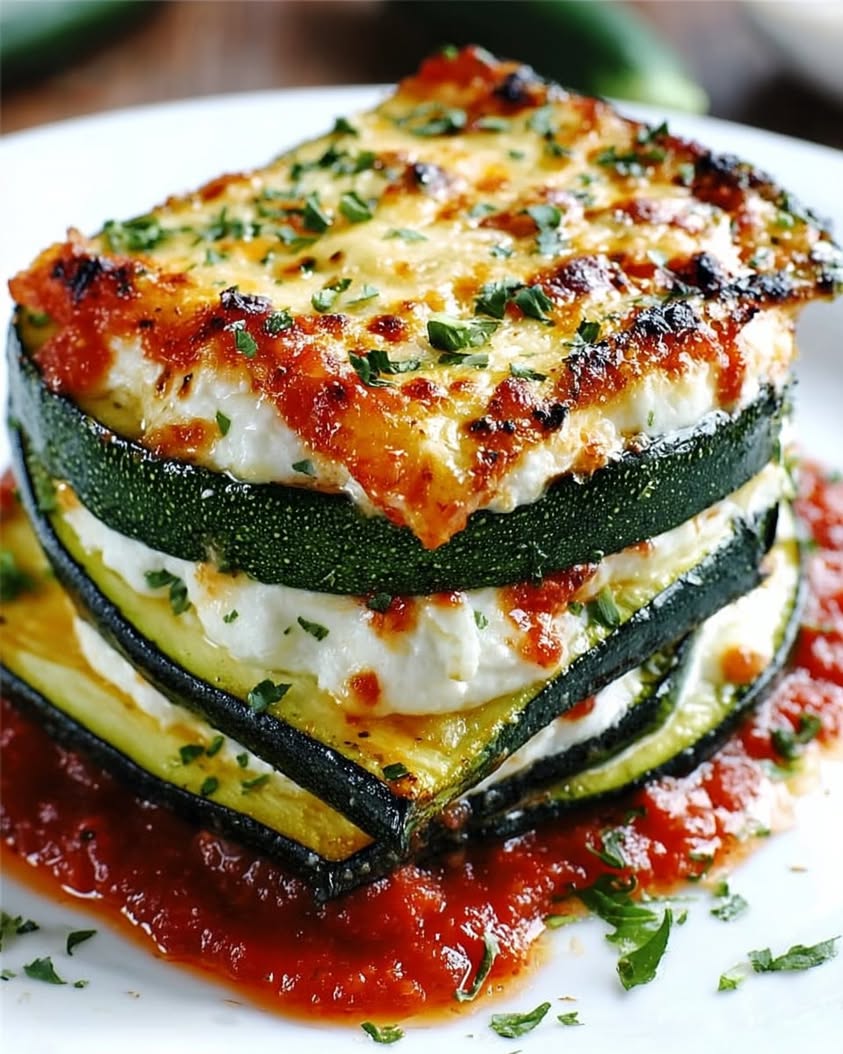
Layered Zucchini Ricotta Melts with Marinara: Easy Low-Carb Dinner
Imagine a dish that delivers the comforting, cheesy satisfaction of a classic baked pasta but without the heavy carbs. This is exactly what you get with these Layered Zucchini Ricotta Melts with Marinara. They transform humble garden vegetables into a stunning, weeknight-friendly meal that feels both indulgent and virtuous. The combination of tender, thinly sliced zucchini, a creamy, herbed ricotta filling, and a rich, tangy marinara sauce creates a harmony of flavors that is deeply satisfying.
Therefore, these melts are not just a simple substitute for lasagna. They are a complete culinary experience in their own right. As the dish bakes, the zucchini layers soften and meld together, absorbing the savory tomato sauce and the fragrant herbs. The ricotta mixture becomes luscious and warm, offering a wonderful contrast to the slightly firm texture of the cooked zucchini. When you pull this dish from the oven, the aroma of bubbling cheese, garlic, and oregano will fill your kitchen, promising a meal that is both nourishing and delicious.
Furthermore, this recipe is a fantastic way to use up an abundance of summer zucchini. It is also a smart choice for anyone looking to increase their vegetable intake while still enjoying a meal that feels like a treat. These Layered Zucchini Ricotta Melts with Marinara are perfect for a busy weeknight dinner because they come together with minimal hands-on time. You can even assemble them ahead of time, making them a stress-free option for entertaining or for those evenings when you need a quick, healthy meal.
Quick Recipe Highlights
- Flavor Profile: The taste is a classic Italian-inspired medley. The mild, slightly sweet zucchini acts as a perfect canvas for the creamy, savory ricotta and the bright, acidic marinara sauce. A subtle hint of garlic and basil elevates the entire dish, creating a comforting and balanced flavor profile.
- Texture: You will experience a wonderful textural journey. The zucchini slices become tender but not mushy, providing a delicate bite. The ricotta filling is smooth, creamy, and slightly thick, while the melted mozzarella on top adds a satisfyingly gooey and slightly chewy finish.
- Aroma: The key aromatic notes are of simmering tomatoes and fragrant basil, which immediately evoke a cozy Italian kitchen. The scent of garlic and oregano, combined with the toasty aroma of melting mozzarella, creates an irresistible, mouth-watering fragrance as the dish bakes.
- Visual Appeal: This dish is a feast for the eyes. The vibrant red of the marinara sauce contrasts beautifully with the pale green of the zucchini and the snowy white of the ricotta. The golden-brown, bubbly mozzarella topping adds a final touch of rustic elegance, making it a beautiful dish to bring directly to the table.
- Skill Level Needed: This recipe is perfectly suited for beginner to intermediate home cooks. The techniques are straightforward, involving slicing, mixing, and layering. There is no complex rolling, searing, or careful timing required, making it an accessible and confidence-building project for anyone new to the kitchen.
- Special Equipment: You will need a sharp knife or a mandoline for slicing the zucchini into uniform rounds. A 9×13 inch baking dish is the ideal size for the full recipe. A mixing bowl, a spatula, and a measuring cup are also necessary for assembling the layers.
Recipe Overview
- Difficulty Level: This recipe earns an easy difficulty rating because the process is incredibly forgiving and highly intuitive. There are no finicky techniques like making a roux or achieving a perfect sear. The primary skills are slicing vegetables, mixing a simple cheese filling, and layering the components in a baking dish. Even if your slices are not perfectly uniform, the final dish will still be delicious and visually appealing.
- Category: This main course falls squarely into the comfort food category, but with a healthy twist. It also works wonderfully as a substantial side dish for grilled chicken or fish. For a lighter meal, you can serve it as a vegetarian main course alongside a simple green salad and some crusty bread for dipping in the extra sauce.
- Cuisine: The culinary tradition here is unmistakably Italian-American. It draws inspiration from classic dishes like eggplant Parmesan and lasagna, reimagining them with low-carb, vegetable-forward ingredients. The use of ricotta, marinara, mozzarella, and basil anchors it firmly in the Italian culinary landscape, while the use of zucchini as a noodle substitute is a more modern, health-conscious adaptation.
- Cost: This is a very budget-friendly meal. Zucchini is often one of the most affordable vegetables in the summer. Ricotta cheese, marinara sauce, and mozzarella are all pantry and refrigerator staples that are typically inexpensive. Fresh basil can be a bit pricier, but it adds a huge flavor impact for a small amount. Overall, the cost per serving is quite low, especially when compared to a meat-based lasagna.
- Season: The absolute best season for this recipe is late summer, when zucchini are at their peak of freshness, flavor, and availability. You can find them at farmers’ markets and grocery stores for very low prices. However, since grocery store zucchini is available year-round, you can enjoy these melts in any season. In the winter, using a high-quality jarred marinara and dried herbs can be just as satisfying.
- Occasion: This dish is incredibly versatile for any occasion. It is perfect for a simple Tuesday night dinner when you need a quick, healthy, and delicious meal. Furthermore, it is an excellent choice for a casual dinner party because it is impressive to look at, easy to scale up, and can be fully assembled ahead of time. It is also a great way to get kids to eat their vegetables disguised in a cheesy, saucy format.
Why You Will Love This Recipe
First and foremost, the taste and texture of these Layered Zucchini Ricotta Melts with Marinara are simply outstanding. Each forkful delivers a perfect bite of tender zucchini, smooth and creamy ricotta, and a punch of rich, herby marinara. The melted mozzarella on top pulls everything together with its delightful, stringy goodness. It is a dish that feels decadent and satisfying, yet it is surprisingly light and fresh, making you feel great after eating it. The balance of flavors ensures that no single element overpowers another, creating a truly harmonious dining experience.
Moreover, the convenience and preparation benefits are a major reason to love this recipe. The hands-on prep time is minimal. You simply slice the zucchini, mix the ricotta filling, and layer everything in a dish. The oven does the rest of the work. This makes it an ideal lifeline for busy weeknights when you are short on time and energy. Additionally, you can easily assemble the entire dish in the morning or the day before, then simply pop it in the oven when you are ready to eat, making dinnertime completely stress-free.
Beyond the convenience, there are significant nutritional advantages. These melts are naturally low in carbohydrates and gluten-free, making them an excellent choice for anyone following a keto, paleo, or low-carb lifestyle. They are packed with vegetables, providing essential vitamins, minerals, and fiber. The ricotta and mozzarella add a good dose of protein and calcium, which helps create a balanced and satisfying meal. You can enjoy the comfort of a cheesy, saucy bake without any of the guilt or the post-meal carb crash.
Furthermore, this recipe has incredible social and entertaining value. When you bring this dish to the table, it is a showstopper. Its beautiful layering and golden-brown cheese crust make it look like you spent hours in the kitchen. It serves a crowd easily in a single baking dish, which is perfect for potlucks, family gatherings, or casual get-togetors. Because it is vegetarian, it can easily accommodate guests with different dietary preferences, ensuring everyone can enjoy a hearty and delicious main course.
Finally, the cost-effectiveness and accessibility of the ingredients make this a no-brainer. Nearly everything you need is affordable and easy to find at any standard grocery store. You do not need speciality ingredients or expensive cuts of meat to create a spectacular meal. This recipe proves that you can eat well, eat healthily, and eat deliciously without breaking the bank. It is a fantastic way to use up a surplus of zucchini from your garden or a great deal from the farmers market, turning a humble vegetable into a memorable main dish.
Historical Background and Cultural Significance
The origins of this recipe are deeply rooted in the Italian-American culinary tradition of “cucina povera,” or “poor kitchen” cooking. This philosophy is about making delicious, humble meals from simple, affordable, and seasonal ingredients. Zucchini, being a prolific summer squash, has always been a staple in Italian gardens. Therefore, cooks would often use it in gratins, frittatas, and layered bakes to stretch a meal. The idea of using zucchini as a base, instead of pasta or eggplant, is a natural evolution of this resourceful cooking style.
Culturally, dishes like this one represent the heart of Italian home cooking. The focus is on quality ingredients, simple preparation, and the shared pleasure of eating together as a family. The combination of tomato sauce, ricotta, and mozzarella is a classic Italian flavor profile found in countless regional specialties. It is a comforting and familiar taste that evokes memories of Sunday dinners and family gatherings. The use of these specific flavors connects the dish to a long, proud history of Italian gastronomy.
The evolution of this recipe is a direct response to modern dietary needs and preferences. As low-carb and gluten-free diets became more popular, home cooks and chefs began looking for creative substitutes for pasta and bread. The classic eggplant Parmesan became a perfect candidate for a vegetable-forward makeover. By substituting tender zucchini for the breaded and fried eggplant, you create a healthier, lighter version that retains all the comforting qualities of the original. This transformation perfectly demonstrates how traditional recipes can adapt to modern lifestyles.
Regional variations of this concept are common. In Southern Italy, you might find a “parmigiana di zucchine” which is a simpler bake of fried or grilled zucchini with mozzarella and tomato sauce. In other parts of the country, the ricotta is sometimes omitted, or a bechamel sauce is used instead of marinara. Some versions include layers of ham or prosciutto for a non-vegetarian twist. Each family and region has its own treasured recipe, but the core principle of layering tender, economical vegetables with cheese and sauce remains a constant and beloved theme.
Ingredient Deep Dive
Zucchini is the star of this dish, providing the main structure and a mild, slightly sweet flavor. It has a long history in the Americas as a variety of summer squash, but it became a cornerstone of Italian cuisine after its introduction from the New World. Nutritionally, zucchini is a powerhouse. It is extremely low in calories and carbohydrates while being a good source of vitamin C, vitamin B6, and potassium. Its high water content helps keep the dish light and moist. When selecting zucchini, look for small to medium specimens that are firm, heavy for their size, and have a vibrant, unblemished skin. Avoid large, overly mature zucchini as they can be watery and have tough seeds. For the best results, do not peel the zucchini; the skin holds its shape during baking and adds valuable nutrients and fiber. If you cannot find fresh zucchini, yellow summer squash is an excellent substitute, offering a similar texture and a slightly sweeter taste.
Ricotta cheese is the creamy heart of the filling. This fresh, mild cheese has been made in Italy for centuries, originating from the whey leftover from making other cheeses. It is a fantastic source of high-quality protein and calcium. It also provides a creamy texture without a heavy, greasy feel. When buying ricotta, you will often find two types: whole milk and part-skim. For the richest flavor and creamiest texture, whole milk ricotta is the best choice. If you prefer a lower-fat option, part-skim works well, though the filling will be slightly less luscious. For a dairy-free version, you can use a high-quality cashew-based ricotta alternative, which mimics the creamy texture beautifully. Always drain your ricotta in a fine-mesh sieve for about 30 minutes before using it; this removes excess moisture and prevents the final dish from becoming watery.
Marinara sauce provides the essential acidity and savory depth that cuts through the richness of the cheese. This simple tomato sauce originated in Naples, Italy, where it was historically cooked by sailors on their ships. It is typically made with tomatoes, garlic, onions, and herbs. Marinara is rich in lycopene, a powerful antioxidant found in cooked tomatoes, which is great for heart health. For the best flavor, use a high-quality jarred marinara sauce with a short ingredient list. Look for San Marzano tomatoes as a base for a sweeter, less acidic taste. If you have time, a simple homemade sauce is always stellar. For a low-sodium option, look for a no-salt-added variety and adjust the seasoning yourself. If you are out of marinara, you can roughly blend a can of crushed tomatoes with a clove of garlic, some dried oregano, and a pinch of salt as an emergency substitute.
Mozzarella cheese creates the signature golden, bubbly crust. This beloved cheese originates from the Campania region of Italy, traditionally made from water buffalo milk. It is a good source of protein and calcium. For this recipe, low-moisture, part-skim mozzarella is the best choice because it melts beautifully without becoming too watery. Fresh mozzarella can be used, but it releases a lot of liquid, so you must squeeze and pat it very dry before shredding or slicing it. For a dairy-free melt, use a vegan mozzarella shred that is specifically designed for melting. Avoid pre-shredded cheese if possible, as it contains anti-caking agents that can prevent it from melting smoothly.
Fresh basil is the aromatic finishing touch. It is a sacred herb in Italian cooking, symbolizing love and good wishes. It adds a bright, peppery, and slightly sweet flavor that is the perfect complement to tomatoes and creamy cheese. Fresh basil is also a good source of vitamin K and antioxidants. To get the most flavor, add the fresh basil after baking, as heat can quickly diminish its delicate aroma. If fresh basil is unavailable, you can sprinkle a small amount of dried basil over the top before baking, but the flavor will be less vibrant. Other fresh herbs like oregano or parsley can be used as substitutes for a slightly different but still delicious flavor profile.
Garlic and dried oregano are the foundational aromatics. Garlic, a staple in virtually every cuisine, brings a pungent, savory depth that enhances all the other flavors. Dried oregano, an earthy and slightly minty herb, is a classic pairing for tomato-based dishes. When selecting garlic, choose firm, plump heads with tight skins. For the best flavor from dried oregano, crumble it between your fingers before adding it to the ricotta mixture to release its essential oils.
Common Mistakes to Avoid
- Using watery zucchini: Sliced zucchini can release a lot of water as it bakes, leading to a soggy, soupy final dish. To avoid this, salt the sliced zucchini lightly and let it sit in a colander for about 30 minutes. Then, pat it thoroughly dry with paper towels before layering. This simple step is crucial for achieving a firm, structured melt.
- Skipping the ricotta drain: Fresh ricotta often contains a significant amount of whey. If you do not drain it, this extra moisture will leak out during baking, making your layers watery and diluting the flavors. Drain the ricotta in a fine-mesh sieve set over a bowl for at least 30 minutes before mixing it with the other ingredients.
- Overcrowding the baking dish: If you cram too many layers into the pan, the heat cannot circulate properly, and the center will not cook through evenly. It will steam rather than bake. Ensure you have a proper 9×13 inch dish and layer the ingredients in even, consistent layers for uniform cooking.
- Not seasoning the zucchini: Zucchini itself is very mild. If you do not season the slices before layering, the final dish will taste bland. A simple sprinkle of salt and pepper is essential. Even better, a light brush of olive oil and a pinch of garlic powder will add another layer of flavor.
- Using too much sauce: While a generous amount of sauce is delicious, adding too much can make your melts a sloppy mess. Use just enough to coat the bottom of the dish and lightly cover each layer. The sauce will also be absorbed by the zucchini and ricotta as it bakes, so a moderate amount is key.
- Forgetting to salt the water: While this recipe does not involve boiling water, it is a common mistake in many cooking contexts. In this specific recipe, the equivalent is forgetting to season the ricotta filling. The cheese mixture needs plenty of salt, pepper, and garlic to be flavorful enough to carry the entire dish.
- Burning the cheese: The mozzarella on top is the last thing you add because it melts and browns very quickly. If you add the cheese too early in the baking process, it will burn before the zucchini is tender. Cover the dish with foil for the first half of the baking time, then remove it to add the cheese and brown it for the final minutes.
- Cutting the zucchini too thick: If the zucchini slices are more than 1/4 inch thick, they will not become fully tender during the allotted baking time. It is better to slice them uniformly, ideally around 1/8 to 1/4 inch thick. This ensures they cook through perfectly, becoming soft but still retaining a slight bite.
Essential Techniques
Salting and draining the zucchini is your most important technique for texture. This process, known as “degorging,” draws out excess moisture from the vegetable cells using salt. As the salt sits on the cut surfaces, it creates a brine that pulls water out through osmosis. This water is then discarded, preventing it from turning your casserole into a watery soup. To master this, spread the sliced zucchini on a sheet pan, sprinkle generously with salt, and let it rest for 20 to 30 minutes. You will see beads of moisture form on the surface. After resting, thoroughly blot the slices with paper towels to remove both the drawn-out water and the excess salt. This single step is the secret to a firm, perfectly structured bake.
Proper layering is the technique that creates the beautiful, cohesive final product. The goal is to build a structure where every component is evenly distributed and cooks at the same rate. Start by spreading a thin layer of marinara sauce on the bottom of the dish. This prevents the bottom layer of zucchini from sticking and adds flavor from the start. Then, create a single, slightly overlapping layer of zucchini slices. Next, spread a layer of the ricotta mixture, followed by a sprinkle of mozzarella and another thin layer of sauce. Repeat these layers, finishing with a top layer of sauce and a generous amount of mozzarella. This systematic approach ensures consistent flavor in every bite.
Baking with a foil cover is a simple but vital technique to ensure even cooking. Covering the dish with foil for the first 25 minutes of baking traps steam, which gently cooks the zucchini and heats the ricotta filling all the way through without drying it out or browning the cheese too quickly. This steamy environment is crucial for turning the raw veggies into tender layers. After this initial covered bake, you remove the foil to allow the top layer of mozzarella to bubble, melt, and turn a beautiful golden brown. This two-stage baking process gives you perfectly tender vegetables and a perfectly browned, bubbly cheese crust.
Letting the dish rest after baking is a final, non-negotiable step for serving success. When the casserole comes out of the oven, it is incredibly hot, and the layers are still loose and liquidy. Allow the dish to rest on the counter for at least 10 to 15 minutes before slicing and serving. During this time, the internal structure sets, the juices are reabsorbed, and the layers firm up beautifully. If you cut into it immediately, your portion will slide apart into a messy puddle. A proper rest is the difference between a beautiful slice and a saucy scramble.
Pro Tips for Perfect Layered Zucchini Ricotta Melts with Marinara
For the best flavor, make a simple garlic and herb oil to brush on your zucchini slices before layering. Mix a few tablespoons of olive oil with minced garlic, dried oregano, and a pinch of red pepper flakes. This will infuse the zucchini with deep, savory flavor from the inside out, making the entire dish far more complex and aromatic.
Do not be afraid to use a mandoline slicer for perfectly uniform zucchini rounds. Consistent thickness is key for even cooking. A mandoline makes this task effortless and ensures you get perfectly tender slices every time. If you use a knife, aim for about 1/8 inch thickness for the best texture.
Elevate the ricotta filling by adding a handful of fresh, chopped spinach or some wilted arugula. These leafy greens will add color, nutrients, and a subtle peppery or earthy flavor that pairs beautifully with the creamy ricotta and tomato sauce. Just make sure to squeeze any excess moisture out of the greens after wilting them.
Use a mix of shredded mozzarella and a little bit of provolone or fontina for a more complex cheese flavor. A small amount of a sharper, more pungent cheese can add depth and richness to the final bake. Grated Parmesan or Pecorino Romano can also be sprinkled between layers for a savory, salty kick.
To prevent a soggy bottom, ensure your baking dish is not overcrowded and that you do not oversauce the bottom layer. A thin skim of sauce is all that is needed. Also, make sure your zucchini is very dry after the salting process. Any lingering moisture will pool at the bottom of the dish.
Allow the assembled dish to sit at room temperature for about 15 minutes before baking if you are putting it straight into the oven. This takes the chill off the dish, which helps the heat distribute more evenly in the oven, resulting in a better-cooked final product. If you have assembled it from the refrigerator, you may need to add a few extra minutes to the covered baking time.
Finally, for the most beautiful presentation, let the dish rest fully and then use a large spatula to lift out clean squares. A wide, offset spatula or a fish spatula works wonderfully. This helps you serve picture-perfect portions that showcase the beautiful layers of zucchini, cheese, and sauce.
Variations and Adaptations
Regional variations of this dish are a testament to its versatility. In a Tuscan-style version, you could add a layer of sauteed mushrooms and finely chopped kale to the ricotta filling. A Calabrian adaptation might include spicy ‘nduja or hot pepper flakes in the sauce for a fiery kick. For a taste of Liguria, you could add a layer of thin-sliced potatoes alongside the zucchini, and use a pesto-based sauce instead of the traditional marinara. Each region highlights local ingredients and flavor preferences.
Seasonal adaptations make this a year-round recipe. In the summer, when zucchini is abundant and sweet, this dish is perfect as is. In the fall, you can add roasted butternut squash cubes or sauteed spinach to the layers for a heartier meal. Winter can bring a richer, more savory profile by using a roasted garlic and tomato sauce and incorporating hearty greens like Swiss chard. Spring is a great time to add fresh peas and asparagus tips to the ricotta mixture.
Dietary modifications are very achievable. To make the dish completely vegan, use a combination of cashew-based ricotta or firm tofu ricotta and a high-quality vegan mozzarella shred. For a gluten-free version, ensure your marinara sauce is certified gluten-free, as some brands contain thickeners with gluten. A low-carb or keto version is already achieved with this recipe, but you can increase the fat content by using full-fat dairy and adding a bit of olive oil or pesto to the ricotta mix.
Flavor variations can transform the dish entirely. You can add a layer of Italian sausage or ground beef (cooked and crumbled) for a non-vegetarian version. A smoky flavor can be achieved by using fire-roasted tomatoes for the sauce. For a more herby profile, add fresh thyme, rosemary, or sage to the ricotta mixture. A touch of lemon zest in the ricotta adds a bright, fresh note that cuts through the richness perfectly.
Texture modifications are possible as well. For a firmer, more substantial bite, grill the zucchini slices on a grill pan or outdoor grill before layering them. This adds a lovely smoky char and removes even more moisture. For a creamier, more decadent texture, you can add a layer of bechamel sauce between the cheese and sauce layers. For a crispy topping, sprinkle some almond flour or pork panko mixed with Parmesan on top of the mozzarella before the final browning.
Presentation alternatives make this dish perfect for any event. You can make individual servings in small ramekins for an elegant dinner party. These single-serving “zucchini melts” are a beautiful and practical option. Alternatively, you can roll the zucchini slices around a spoonful of the ricotta filling to create zucchini rolls, which you then arrange in a baking dish and cover with sauce and cheese. This is a more intricate presentation that is stunning for special occasions.
Serving and Presentation Guide
Plating techniques should highlight the beautiful layers of the dish. After the mandatory rest, use a large, flat spatula to lift out a square. Place it in the center of a shallow bowl or a wide-rimmed plate. A generous spoonful of extra warmed marinara sauce can be placed around the base of the square, allowing the red sauce to pool beautifully on the white plate. This not only adds flavor but also creates a striking visual contrast against the green zucchini and white cheese.
Garnishing ideas will elevate the dish from homey to elegant. The most important garnish is a shower of fresh, chiffonade-cut basil leaves. This bright green herb is the classic pairing and provides a burst of fresh flavor. You can also add a light grating of Parmesan cheese over the top for a final savory note. A drizzle of high-quality extra-virgin olive oil just before serving adds a touch of richness and a beautiful sheen.
Traditional accompaniments for a dish like this are simple and classic. A crisp green salad with a lemon vinaigrette provides a refreshing counterpoint to the rich, cheesy casserole. A slice of crusty, good-quality bread is perfect for mopping up any extra sauce on the plate. For a more complete meal, serve it alongside a light roasted vegetable, such as asparagus or broccoli rabe.
Modern serving suggestions can make this a more streamlined meal. For a lighter, more casual dinner, you can serve the melts with a side of cauliflower rice or a simple saute of zucchini noodles. Alternatively, you can turn the leftovers into a fantastic lunch by placing a square of the cooled melt on top of a bed of mixed greens for a hearty salad.
Temperature considerations are crucial for the best experience. This dish is best served hot out of the oven, after its essential rest. The cheese should be stretchy, the zucchini warm and tender, and the sauce piping hot. However, it is also surprisingly delicious at room temperature, making it a great option for a summer picnic or a packed lunch. Avoid serving it cold, as the fats in the cheese will solidify and the texture will become rubbery.
Portion control tips are helpful for any meal. A 9×13 inch dish will yield about 6 generous main course servings. If you are serving it as a side dish, you can easily get 8 to 10 portions. For weight management, a single portion is a full serving of vegetables and a good amount of protein, making it a very satisfying and filling meal on its own.
Wine and Beverage Pairing
Wine pairings are delightful with this dish. The bright acidity and herbal notes of a classic Italian red wine are a perfect match. A Chianti Classico or a Sangiovese from Tuscany is an excellent choice because the wine’s acidity cuts through the richness of the ricotta and mozzarella. For a lighter, more fruit-forward option, a Dolcetto or a Barbera from Piedmont works beautifully. The low tannins in these wines will not overpower the delicate zucchini flavors.
If you prefer white wine, a crisp Italian white is a fantastic alternative. A Pinot Grigio or a Verdicchio offers bright citrus and almond notes that complement the creamy cheese and fresh herbs. A dry Vermentino from Sardinia, with its slight salinity, also works wonders. The key is to choose a white wine with good acidity and a clean, un-oaked profile, which will refresh the palate between bites of the rich, cheesy casserole.
Non-alcoholic alternatives are abundant and delicious. A sparkling mineral water with a squeeze of lemon is a classic and refreshing palate cleanser. A high-quality, unsweetened sparkling iced tea, such as a peach or lemon flavor, can also work well. For a more sophisticated option, a kombucha with a ginger or berry flavor profile can cut through the richness of the cheese nicely.
For a coffee or tea pairing, this is a very savory meal, so it is best with a black or oolong tea. A robust black tea, like an Assam or an English Breakfast, provides a strong flavor that can stand up to the cheese and sauce. A more delicate green tea would be overpowered, but a jasmine green tea can offer a lovely floral counterpoint. For coffee, an espresso after the meal is a wonderful digestive.
Serving suggestions for beverages keep the meal cohesive. For wine, serve slightly chilled for white wine and at a cool room temperature for red wine. For non-alcoholic options, serve ice-cold. You can also offer a simple Aperol Spritz or a Negroni for a pre-dinner cocktail that will prepare the palate for the layers of Italian flavors to come.
Storage and Shelf Life
Storage methods are simple to follow. Allow any leftover Layered Zucchini Ricotta Melts with Marinara to cool completely to room temperature. Do not leave it out for more than two hours. Transfer the leftovers to an airtight container. You can also cover the baking dish itself tightly with plastic wrap or aluminum foil. Stored properly in the refrigerator, the dish will remain fresh and delicious for up to four days.
Temperature requirements are essential for food safety. Your refrigerator should be set at 40 degrees Fahrenheit or below. The dish should be kept away from the refrigerator door where temperatures fluctuate most. Always keep it covered to prevent it from absorbing odors from other foods in the fridge.
Container recommendations are straightforward. Glass or ceramic containers with tight-fitting lids are the best choice for storing this casserole. They do not react with the acidic tomato sauce and will not stain. If you use plastic containers, ensure they are BPA-free and specifically designed for food storage. A shallow, rectangular container is ideal for stacking portions neatly.
Signs of spoilage are important to recognize. While cheese and tomato sauce can last a while, zucchini has a limited shelf life. Look for any off smells, such as a sour or yeasty odor. Mold on the surface is an obvious sign that the dish has gone bad. If the texture becomes excessively mushy or slimy, it is also a sign to discard the leftovers. When in doubt, always throw it out.
Reheating instructions are simple for best results. The best method is to reheat individual portions in a low oven at 325 degrees Fahrenheit for about 15 to 20 minutes, covered with foil to prevent the top from burning. You can also use a microwave, though it may make the zucchini slightly more watery. In the microwave, reheat on medium power for 2 to 3 minutes, ensuring it is heated through.
Freezing guidelines are effective for longer storage. You can freeze the entire baked and cooled casserole, or you can freeze individual portions. To freeze, wrap the dish tightly in a layer of plastic wrap, followed by a layer of aluminum foil. This double-wrapping prevents freezer burn. It will stay fresh for up to 3 months. To thaw, place it in the refrigerator overnight before reheating as directed.
Make Ahead Strategies
A prep timeline makes this dish incredibly convenient. You can do all the prep work in the morning or the day before you plan to serve it. Start by salting and draining the zucchini. While the zucchini is draining, you can make the ricotta filling by mixing the ricotta, egg, Parmesan, garlic, and herbs. Then, simply assemble the entire casserole in the baking dish, but do not add the top layer of mozzarella cheese yet.
Storage between steps is crucial for quality. If you are storing the assembled dish, cover it tightly with plastic wrap and place it in the refrigerator. The dish can be stored like this for up to 24 hours. The flavors will meld beautifully overnight. Just remember to remove the plastic wrap and add the mozzarella topping right before you are ready to bake it.
There is a slight quality impact assessment to consider. While the dish is still fantastic when made ahead, the zucchini will release more moisture as it sits. Therefore, you may need to increase the covered baking time by about 5 to 10 minutes to ensure the center is hot and the zucchini is tender. The final result will be a little softer, but still very delicious.
Assembly tips for make-ahead success are key. To minimize moisture accumulation, ensure your zucchini is very well-drained and patted dry before layering. Also, use a slightly thicker layer of ricotta on the top layer to help insulate the dish. Do not oversauce the dish; the rice (or rather, the zucchini) will absorb the sauce overnight.
Reheating guidelines for a pre-assembled dish are simple. Remove the dish from the refrigerator and let it sit on the counter for about 20 minutes to take the chill off. Then, bake it as instructed, but increase the initial covered baking time by 10 to 15 minutes. Check the center with a knife to ensure it is steaming hot before removing the foil and browning the cheese.
Fresh element additions are a great way to finish the dish. Since fresh basil loses its flavor when baked, wait to add it until after the dish is fully baked and has rested. You can also add a final drizzle of fresh olive oil or a squeeze of lemon juice just before serving to brighten the flavors that have been developing overnight.
Scaling Instructions
Halving the recipe is straightforward. To make a smaller batch, simply cut all the ingredient quantities in half. This works perfectly in a 9×9 inch baking dish or an 8×8 inch square pan. The baking time will be slightly shorter because the dish is smaller. Start checking for doneness about 5 minutes earlier than the full recipe calls for, as the dish will be less thick.
Doubling or tripling the recipe requires a change in strategy. You will need to use two 9×13 inch baking dishes for a double batch, or three for a triple batch. It is best to make them in separate dishes rather than trying to use a single, much larger pan. If you try to use one massive pan, the center will not cook before the edges burn, and the structure will collapse. The baking time will remain the same for each dish.
Equipment adjustments are necessary for larger batches. You will need two or three baking dishes, which also means you will need more counter space for assembly. A large mixing bowl is still fine for the ricotta filling, but you may need to mix the filling in two batches if you have tripled the recipe. The biggest adjustment is ensuring your oven has enough room for the racks to allow for good air circulation around all the dishes.
Timing modifications for a larger or smaller batch are important. For a single dish, stick to the original times. For two dishes, you may need to add a few minutes to the covered baking time because the oven will be more crowded. Always use the visual cues: the cheese should be bubbly, the zucchini tender, and the sauce hot. A quick check with an instant-read thermometer in the center should read 165 degrees Fahrenheit.