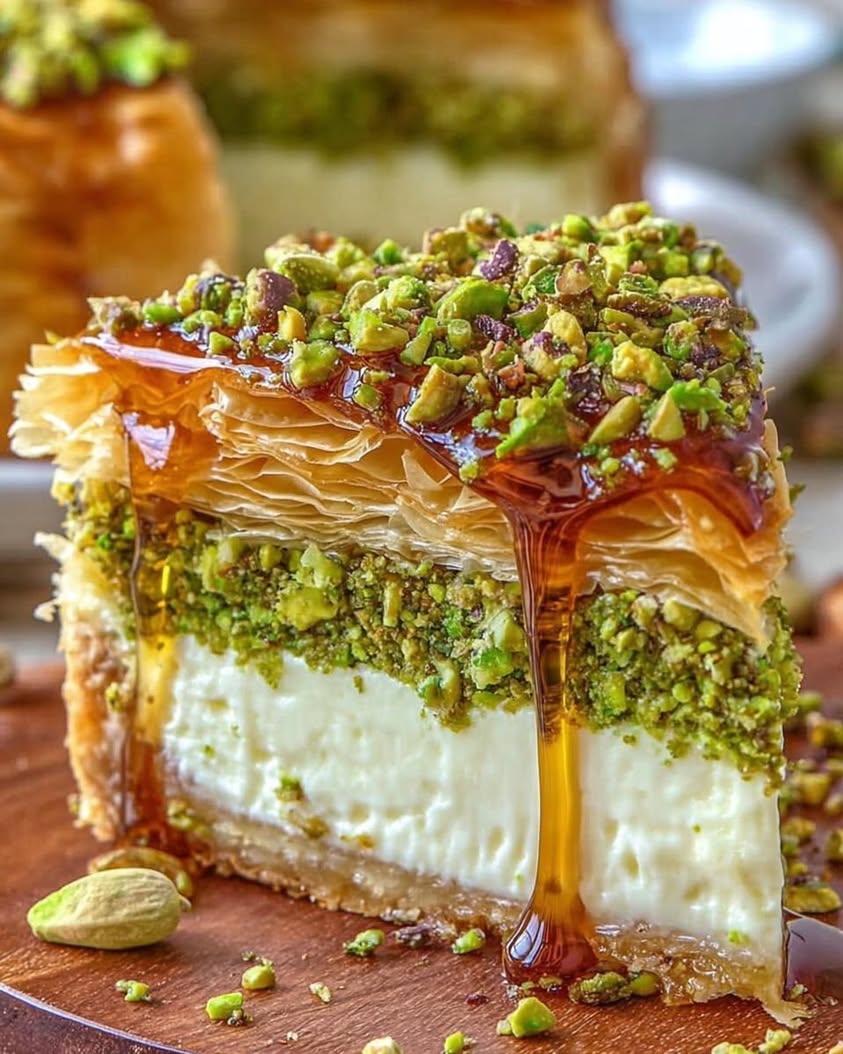
Honeyed Pistachio Baklava Cheesecake: A Fusion Dessert Masterpiece
Imagine the best parts of two legendary desserts coming together in perfect harmony. This Honeyed Pistachio Baklava Cheesecake does exactly that, creating a show-stopping fusion that will become the star of your dessert table. Consequently, it combines the rich, creamy indulgence of a classic New York-style cheesecake with the flaky, nutty, syrup-soaked brilliance of traditional baklava. The result is a dessert that feels both comfortingly familiar and excitingly new, offering a symphony of textures and flavors in every single bite.
Furthermore, this recipe is designed for the adventurous home baker who loves a project with a spectacular payoff. The process involves layering a buttery phyllo crust, a velvety smooth cheesecake filling infused with orange blossom water, and a generous topping of honey-glazed pistachios. Ultimately, the final product is a stunning centerpiece that looks as incredible as it tastes. The golden layers of phyllo peek out from the sides, while the emerald green pistachios and glossy honey drizzle create a mosaic of color on top.
This Honeyed Pistachio Baklava Cheesecake is more than just a dessert; it is a conversation piece. It bridges culinary traditions, bringing the warmth of Middle Eastern pastry into the form of a beloved American classic. Whether you are serving it at a festive holiday gathering, a special birthday dinner, or simply as a weekend baking triumph, this cake promises to deliver an unforgettable experience. The aroma alone, with notes of butter, honey, and toasted nuts, will have everyone eagerly awaiting a slice.
Quick Recipe Highlights
- Flavor Profile: This dessert masterfully balances sweet, creamy, and nutty notes. The tangy cream cheese filling is perfectly complemented by the floral sweetness of orange blossom honey and the rich, buttery taste of toasted pistachios. Additionally, a hint of cinnamon and lemon zest adds a warm, bright complexity that ties all the elements together.
- Texture: Experience a delightful contrast in every mouthful. You get the shatteringly crisp layers of buttery phyllo dough at the base, followed by the dense, velvety-smooth body of the baked cheesecake. Finally, the crunchy, honey-coated pistachio topping provides the perfect finishing crunch, mimicking the classic baklava experience.
- Aroma: As this Honeyed Pistachio Baklava Cheesecake bakes and cools, it fills your kitchen with an intoxicating fragrance. The scent of browning butter and toasted phyllo comes first, followed by the sweet, floral notes of honey and orange blossom. Finally, the warm, earthy aroma of pistachios and cinnamon completes the sensory journey.
- Visual Appeal: This cheesecake is a true feast for the eyes. The cross-section reveals beautiful horizontal stripes: golden-brown phyllo, pale creamy filling, and a vibrant green pistachio crown. A glossy honey drizzle adds a professional, decadent finish that makes it look straight from a patisserie window.
- Skill Level Needed: This is an intermediate-level recipe. It requires patience and attention to detail, particularly when handling the delicate phyllo dough to prevent tearing and drying. However, the steps are clearly outlined and sequential, making it entirely achievable for a confident home baker with some experience in cheesecake making.
- Special Equipment: A 9-inch springform pan is non-negotiable for clean removal. You will also benefit from a food processor for finely chopping the pistachios and a stand mixer or electric hand mixer for achieving the perfectly smooth, lump-free cheesecake filling. A pastry brush is essential for buttering the phyllo layers.
Recipe Overview
- Difficulty Level: We classify this Honeyed Pistachio Baklava Cheesecake as intermediate. The reason is the multi-step process and the use of delicate phyllo dough, which requires a gentle touch. Moreover, achieving the perfect doneness for a cheesecake—creamy with no cracks—demands careful temperature control and baking technique. However, each component is simple on its own, and with clear instructions, success is highly attainable.
- Category: This dessert falls squarely into the special occasion and celebration cake category. It is rich, impressive, and meant to be shared. It also fits into fusion cuisine, beautifully marrying techniques and flavors from different culinary traditions into one cohesive and stunning dish.
- Cuisine: This recipe is a creative fusion of American baking and Eastern Mediterranean pastry arts. The cheesecake component is deeply rooted in American dessert culture, while the use of phyllo, pistachios, honey syrup, and orange blossom water is a direct homage to classic baklava from regions like Greece, Turkey, and the Middle East.
- Cost: Creating this showpiece dessert is a moderate investment. High-quality pistachios, pure honey, and phyllo dough are the primary cost drivers. Cream cheese and other dairy ingredients are relatively standard. Overall, the cost per serving is still far less than ordering a similar dessert from a high-end bakery, making it a value-driven project for a special event.
- Season: This Honeyed Pistachio Baklava Cheesecake is wonderfully versatile across seasons. Its warm spices and nuts make it perfect for fall and winter holidays. Conversely, the bright notes of citrus and floral honey also lend a beautiful elegance to spring and summer gatherings, especially for occasions like Eid, Mother’s Day, or bridal showers.
- Occasion: This is the ultimate dessert for moments that call for something extraordinary. It is ideal for festive holidays like Christmas, Thanksgiving, or Easter. Furthermore, it makes a breathtaking birthday cake for someone who appreciates sophisticated flavors. It is also a magnificent contribution to a potluck or dinner party where you want your dish to be remembered.
Why You’ll Love This Recipe
First and foremost, the taste and texture combination is utterly divine. This Honeyed Pistachio Baklava Cheesecake delivers a complex flavor profile that evolves with each bite. You experience the initial sweetness of the honey, followed by the tangy richness of the cheesecake, and finally, the savory, buttery finish of the pistachios. The contrast between the crisp phyllo, creamy filling, and crunchy topping creates a mouthfeel that is endlessly satisfying and far more interesting than a standard cheesecake.
From a convenience standpoint, this recipe is brilliantly structured. You can prepare several components in stages. For instance, the nut topping can be made ahead, and the phyllo crust assembled before you even make the filling. This modular approach breaks down what seems like a daunting project into manageable tasks. Consequently, you can spread the work over an afternoon, making the final assembly before baking feel calm and controlled rather than rushed.
While this is an indulgent dessert, it offers some nutritional advantages from its whole-food ingredients. Pistachios are a great source of protein, healthy fats, fiber, and antioxidants like lutein. Honey, especially raw local honey, contains trace enzymes and minerals. Using these premium ingredients means you are enjoying a treat made with real, recognizable components, not artificial flavors or fillers. Of course, it is still a dessert to be enjoyed in moderation, but the quality of the ingredients matters.
The social and entertaining value of this cake cannot be overstated. Bringing this Honeyed Pistachio Baklava Cheesecake to any gathering instantly elevates the occasion. It sparks conversation, demonstrates care and effort, and becomes the focal point of the dessert spread. It is a generous dessert that serves a crowd, making it perfect for sharing. The wow factor it delivers is immense, guaranteeing compliments and requests for the recipe.
Finally, considering its cost-effectiveness and accessibility, this dessert is a smart choice. While specialty ingredients like phyllo and pistachios require a trip to a well-stocked grocery store, they are not obscure or overly difficult to find. Compared to the price of a bespoke fusion dessert from a professional bakery, making it at home saves a significant amount of money. Additionally, you have complete control over the quality of every element, ensuring a final product that is tailored to your taste and made with love.
Historical Background and Cultural Significance
The origin story of this dessert is a modern tale of culinary innovation. While baklava and cheesecake each have ancient, storied pasts, their fusion is a relatively recent phenomenon in the world of gourmet desserts. Cheesecake dates back to ancient Greece, while baklava’s roots are fiercely debated among Greek, Turkish, and Middle Eastern cultures. The creative idea to layer a cheesecake on a baklava crust likely emerged from contemporary pastry chefs and avid home bakers looking to merge beloved textures and flavors into a new, spectacular form.
Understanding the cultural importance of each component deepens the appreciation for this fusion. Baklava is more than a sweet; it is a symbol of celebration, hospitality, and tradition across the Eastern Mediterranean and Middle East. It is served during holidays, weddings, and religious festivals. Cheesecake, in its modern American form, represents comfort, indulgence, and celebration in Western culture. By combining them, this Honeyed Pistachio Baklava Cheesecake creates a bridge between these culinary traditions, honoring both in a single, shareable creation.
The evolution of the recipe follows a natural path of dessert innovation. As global cuisine becomes more accessible, home cooks and chefs experiment by combining techniques and ingredients from different heritages. The structural genius lies in using the phyllo layers as a crust—providing the essential baklava texture without the labor-intensive process of stacking dozens of layers for a full pastry. This adaptation makes the iconic flavor and crunch of baklava accessible in a familiar cheesecake format, which is a brilliant example of culinary evolution.
Regional variations of this concept are already emerging. Some versions might use walnuts or almonds instead of pistachios, reflecting the nut commonly used in Greek or Armenian baklava. Others might infuse the honey syrup with rose water instead of orange blossom water. The cheesecake filling itself can be adapted—some recipes incorporate mascarpone for extra richness, or a touch of mahleb (a cherry pit spice) for an authentic Middle Eastern note. This adaptability shows how the core fusion idea is a fantastic canvas for personalization based on available ingredients and cultural preferences.
Ingredient Deep Dive
Phyllo Dough: Phyllo, meaning “leaf” in Greek, is a paper-thin unleavened dough central to many pastries from the Balkans and the Middle East. Its creation is a skilled art, requiring dough to be stretched until translucent. Historically, it was a sign of a baker’s expertise. Nutritionally, it is low in fat compared to pie crust, but it becomes flaky and rich when layered with butter. When selecting phyllo, find it in the freezer section. Thaw it slowly in the refrigerator overnight. Keep unused sheets covered with a damp towel to prevent drying and cracking. If phyllo is unavailable, a very thin, buttered puff pastry sheet can be a less authentic but workable substitute for the base.
Pistachios: Pistachios have been cultivated in the Middle East for thousands of years, symbolizing wellness and robust health. They were a prized delicacy in ancient Persian courts. These green nuts are nutritional powerhouses, packed with protein, fiber, and healthy fats. They are also rich in antioxidants, including lutein for eye health. For this recipe, use raw, unsalted pistachios for the best flavor control. Toasting them before chopping intensifies their nutty essence. Store pistachios in an airtight container in the freezer to maintain freshness and prevent their oils from turning rancid. For a variation, you could substitute with an equal weight of walnuts or almonds, though the distinctive color and flavor will change.
Orange Blossom Water: This aromatic hydrosol is a cornerstone of Eastern Mediterranean and North African baking. It is made by distilling the fragrant blossoms of the bitter orange tree. Its floral, perfumed note is what gives many pastries like baklava and ma’amoul their characteristic scent. A little goes a very long way; using too much can make food taste soapy. It contains no significant nutrients but is prized for its flavor. Find it in Middle Eastern grocery stores or the international aisle. Store it in a cool, dark place. If unavailable, you can substitute with an equal amount of rose water or use the zest of one orange steeped in the honey syrup, though the floral quality will be different.
High-Quality Honey: Honey is one of humanity’s oldest sweeteners, with evidence of its use dating back over 8,000 years. In many cultures, it symbolizes sweetness, prosperity, and good fortune. Opt for a pure, raw honey for the best flavor, as it will not be heated to a high temperature that destroys its subtle notes. Honey contains trace amounts of vitamins, minerals, and antioxidants, and some believe local honey can help with seasonal allergies. For this Honeyed Pistachio Baklava Cheesecake Handling Phyllo Dough: Mastering phyllo is crucial for the structural integrity of your crust. The key is speed and moisture control. Work on a clean, dry surface with your melted butter and pastry brush ready. Lift each sheet gently by its corners and lay it in the pan. Immediately brush it lightly with butter before adding the next sheet. The butter acts as both an adhesive and a moisture barrier, creating those signature flaky layers when baked. If a sheet tears, do not worry; simply patch it with another small piece and butter over it. The layers will fuse during baking. Creating a Smooth Cheesecake Batter: The velvety texture of the filling hinges on proper mixing technique. Start by beating the room-temperature cream cheese alone until it is completely smooth and free of any lumps. Scrape the bowl down thoroughly. Next, add the sugar and beat again until creamy. Incorporate the sour cream and flavorings. Finally, add the eggs one at a time, mixing on low speed just until the yolk disappears into the batter. Overmixing after adding the eggs incorporates air and protein, which can lead to cracking and a less dense texture. Implementing a Water Bath: A bain-marie, or water bath, is non-negotiable for a perfect cheesecake. It surrounds the pan with gentle, moist heat, which cooks the eggs slowly and evenly, preventing the proteins from seizing and causing cracks. To do it correctly, wrap the outside bottom and sides of your springform pan tightly with two layers of heavy-duty aluminum foil to create a waterproof seal. Place the pan in a larger roasting pan and pour boiling water into the outer pan until it comes halfway up the sides of the springform. This technique is the secret to a professional, crack-free surface. Testing for Doneness: Unlike a cake, a cheesecake should not be tested with a toothpick. The visual and tactile jiggle test is the professional method. At the end of the baking time, gently shake the oven rack. The edges of the cheesecake should look set and may have pulled away slightly from the pan. The center, about a 3-inch diameter circle, should have a pronounced but firm jiggle—like set Jell-O. It will not look liquid, but it will move as one mass. Remember, the cheesecake continues to cook from residual heat as it cools in the turned-off oven. Toast your pistachios in a dry skillet over medium heat for 3-5 minutes before chopping. This simple step deepens their flavor and enhances their crunch in the final topping, making a noticeable difference. When brushing butter between phyllo sheets, use a light hand. You want each layer glistening, not soaked. Too much butter can make the bottom crust greasy and heavy instead of light and flaky. For the smoothest filling, consider pushing your cream cheese batter through a fine-mesh sieve after mixing. This catches any tiny lumps of cream cheese that might have been missed, guaranteeing absolute silkiness. Let your cheesecake cool gradually. After baking, turn the oven off, crack the door open with a wooden spoon, and let it sit for an hour. This prevents a sudden temperature shock that causes sinking and cracking. When making the honey syrup, add a strip of lemon zest while it simmers. The citrus oils infuse into the syrup, adding a bright note that cuts through the richness of the cheesecake and nuts beautifully. Apply the pistachio topping after the cheesecake has fully chilled. If you add it while the cake is warm, the nuts can soften and the honey can soak in too much, losing the desirable textural contrast. For clean slices, use a thin, sharp knife dipped in very hot water. Wipe the blade clean with a paper towel between each cut. This method glides through the sticky honey and dense filling without dragging. Garnish individual slices with a tiny sprinkle of flaky sea salt just before serving. The salt amplifies the sweetness of the honey and the richness of the nuts, elevating the entire flavor profile. Regional Variations: Embrace different baklava traditions by changing the nut. Use finely chopped walnuts for a Greek-inspired version, or a mix of almonds and pistachios for a Lebanese twist. You could even incorporate a sprinkle of ground mahleb or cardamom into the nut mixture for an authentic Middle Eastern spice note. Seasonal Adaptations: In the fall, incorporate warm spices like a teaspoon of cinnamon or a pinch of cloves directly into the cheesecake batter. For a winter holiday version, add a tablespoon of bourbon or rum to the honey syrup. In spring, garnish with edible flowers like violets or rose petals alongside the pistachios. Dietary Modifications: For a gluten-free Honeyed Pistachio Baklava Cheesecake, use a certified gluten-free phyllo dough or create a crust from crushed gluten-free shortbread cookies mixed with butter. For a dairy-free version, use high-quality vegan cream cheese and butter substitutes, and ensure your phyllo is made without dairy. Flavor Variations: Infuse the honey syrup with different flavors. Try steeping a split vanilla bean, a few sprigs of fresh thyme, or a teaspoon of crushed rose petals. You could also replace the orange blossom water in the filling with almond extract or a tablespoon of finely grated lemon zest for a different citrus profile. Texture Modifications: If you prefer a more pronounced baklava experience, chop the pistachios more coarsely for a chunkier topping. For a smoother, more integrated nut flavor, you can blend a portion of the toasted pistachios into the cheesecake batter itself. Presentation Alternatives: Instead of a full topping, arrange whole or halved pistachios in a decorative pattern on top of the unbaked filling before it goes in the oven. Alternatively, bake the cheesecake plain and serve each slice with a generous spoonful of the honeyed pistachio mixture on the side. Plating Techniques: For a restaurant-quality presentation, place a slice on a plain white or dark slate plate. Use an offset spatula for a clean transfer. You can drizzle a small pool of extra honey or a thin line of Greek yogurt on the plate first, then place the slice on top or beside it for visual appeal. Garnishing Ideas: Beyond the honey drizzle, a light dusting of confectioners’ sugar adds elegance. Fresh mint leaves provide a pop of color and a refreshing aroma. A few delicate curls of orange zest on top complement the orange blossom water perfectly. A sprinkle of edible gold flakes makes it exceptionally luxurious for a celebration. Traditional Accompaniments: In the spirit of its origins, serve with a small cup of strong Turkish coffee or Greek coffee. The bitter, robust coffee is the classic partner to sweet baklava and cuts through the richness of the cheesecake impeccably. Modern Serving Suggestions: Offer a side of lightly sweetened whipped cream flavored with a drop of orange blossom water. A scoop of vanilla bean ice cream or a dollop of thick, tangy labneh provides a wonderful temperature and texture contrast that guests will love. Temperature Considerations: This cheesecake is best served chilled but not ice-cold. Remove it from the refrigerator 20-30 minutes before serving to allow the flavors to bloom and the texture to soften slightly, making it creamier and easier to slice. Portion Control Tips: Given its richness, this dessert yields generous servings. You can easily get 14-16 smaller, more modest slices from a 9-inch pan, which is ideal for a large party or when serving multiple other desserts. Use a sharp knife and a gentle sawing motion to create clean, smaller portions. Wine Pairings: The sweetness and nuttiness of this dessert call for specific wines. A late-harvest Riesling or a Gewürztraminer with its lychee and spice notes pairs beautifully, as their acidity balances the richness. A cream sherry or a Pedro Ximénez sherry is a classic match for nut-based desserts, mirroring the caramelized, raisiny flavors. For a red option, a light, low-tannin Brachetto d’Acqui with its slight fizz and berry notes can be delightful. Non-Alcoholic Alternatives: Sparkling apple cider or a ginger beer provide a refreshing, fizzy contrast. A tart pomegranate spritzer or a glass of cold, sweetened mint tea (like Moroccan tea) complements the Middle Eastern flavors perfectly. For a creamy option, a chai latte or a dirty chai offers warm spices that echo the cinnamon in the dessert. Coffee/Tea Pairings: This is where the pairing truly shines. Strong, black Turkish coffee is the traditional and impeccable choice. Alternatively, a French press of dark roast coffee or a single-origin espresso works well. For tea, opt for a smoky Lapsang Souchong, a spiced chai, or a floral Earl Grey to create a harmonious flavor experience. Temperature Considerations: Serve dessert wines slightly chilled, not cold. Coffee should be hot and freshly brewed. Iced coffee or a cold brew can be a great summer pairing, but ensure it is strong and slightly sweetened to stand up to the dessert’s intensity. Serving Suggestions: Offer a pairing flight for a special dinner party—a small glass of dessert wine, a demitasse of Turkish coffee, and a glass of ice water on the side. This allows guests to cleanse their palate and experience how different beverages interact with the complex flavors of the Honeyed Pistachio Baklava Cheesecake. Storage Methods: Once completely cooled, cover the cheesecake tightly with plastic wrap or place it in an airtight cake carrier. Due to the honey topping, avoid letting the plastic wrap touch the surface, as it will stick. Instead, tent the wrap over the cake or use toothpicks to create a barrier. Store it in the refrigerator. Temperature Requirements: This cheesecake must be stored in the refrigerator at all times. The dairy-based filling is perishable. Do not leave it at room temperature for more than 2 hours to prevent bacterial growth and maintain food safety. Container Recommendations: The best container is the springform pan bottom with the sides removed, covered with a large, inverted bowl or a dedicated cake dome. If you need to transport it, a sturdy, lidded cake carrier is ideal to prevent damage to the topping and sides. Signs of Spoilage: While unlikely if stored properly, discard the cheesecake if you notice an off or sour smell, significant discoloration (like gray or green spots), or if it develops an overly wet or slimy texture. The phyllo base will soften in the fridge but should not become mushy. Reheating Instructions: Cheesecake is best served cold or cool. Reheating is not recommended, as it can compromise the texture of the filling and melt the topping. If you must, a very brief 10-second microwave burst for a single slice can take the chill off, but monitor it closely. Freezing Guidelines: You can freeze this cheesecake successfully for up to 2 months. Freeze the whole cake or individual slices uncovered on a parchment-lined tray until solid (about 4 hours). Then, wrap tightly in plastic wrap and foil. Thaw overnight in the refrigerator before serving. Note that the phyllo crust will lose some crispness after freezing. Prep Timeline: This dessert is an excellent candidate for advanced preparation. You can make the honeyed pistachio topping up to 3 days ahead and store it in an airtight container at room temperature. The phyllo crust can be assembled in the springform pan, wrapped well in plastic, and refrigerated 1 day before baking. The entire cheesecake can be baked and chilled up to 2 days before you plan to serve it. Storage Between Steps: Keep the prepared crust chilled. Store the topping at room temperature to maintain crunch. If you bake the cheesecake ahead, add the pistachio topping on the day of serving for the best texture contrast. The flavors actually improve and meld together after a day or two in the fridge. Quality Impact Assessment: Making it ahead has minimal negative impact and can even be beneficial. The long chill allows the filling to set perfectly and the flavors to deepen. The only element that suffers with time is the crispness of the phyllo crust, which will soften slightly but remain delicious. Adding the crunchy topping just before serving mitigates this. Assembly Tips: For stress-free assembly, have all your ingredients measured and equipment ready. If making components ahead, let the refrigerated crust come to room temperature for 15 minutes before adding the filling. Ensure your filling ingredients are at room temperature before mixing, even if you mixed the crust the day before. Reheating Guidelines: As mentioned, reheating is not ideal. The make-ahead strategy relies on serving chilled. If the cake is too cold, simply let it sit on the counter for 20-30 minutes before slicing to achieve the perfect creamy texture. Fresh Element Additions: The final garnish is where you can add a fresh touch. Add a drizzle of extra honey, a sprinkle of flaky salt, or fresh mint leaves just before presenting the cake to guests. This gives it a just-made appearance and a burst of fresh flavor. Halving the Recipe: To make a smaller 6-inch cheesecake, halve all ingredients precisely. Use a 6-inch springform pan and reduce the baking time by 15-20 minutes, relying on the jiggle test for doneness. The phyllo crust will require fewer layers; aim for 6-8 sheets, still buttered between each layer. The water bath is still essential. Doubling or Tripling: Doubling for two cakes is straightforward—simply prepare two separate springform pans. Do not attempt to make one gigantic cheesecake, as the center will not cook properly. For tripling, ensure your stand mixer bowl is large enough to hold the doubled batter; you may need to mix in two batches. Baking times may increase slightly for multiple pans in the oven, and you may need to rotate them halfway through. Equipment Adjustments: When scaling, your pan size is the most critical factor. Do not use a deeper pan for a larger batch; use multiple pans of the correct size. Ensure you have a roasting pan large enough to hold multiple springform pans for the water bath, or bake them one at a time if space is limited. Timing Modifications: For halved recipes, check for doneness 15-20 minutes earlier than the original time. For multiple full-sized cakes, they may take 5-10 minutes longer due to the oven being more crowded. Always use the visual and jiggle tests, not just the timer, as your guide. Storage Considerations: Scaling up means you will have more leftovers. Ensure you have adequate refrigerator space for storage. Consider freezing portions of a large batch if you will not consume it within 4-5 days. Macro Breakdown: A typical slice of this rich dessert is high in calories, with significant contributions from fats and carbohydrates. The fats come from the cream cheese, butter, sour cream, and pistachios, providing a mix of saturated and unsaturated fats. The carbohydrates are primarily from the sugar, honey, and phyllo dough. The protein content is moderate, sourced from the dairy, eggs, and nuts. This is an energy-dense treat best enjoyed occasionally. Micronutrient Analysis: Despite its indulgent nature, this cheesecake delivers valuable micronutrients. Pistachios contribute B vitamins, copper, manganese, and antioxidants like lutein. Dairy provides calcium and vitamin A. Eggs add choline and selenium. Honey contains trace amounts of minerals like iron and zinc. Using whole, real ingredients means you are consuming nutrients, not just empty calories. Health Benefits: The pistachios offer heart-healthy fats and fiber, which can aid in satiety. The antioxidants in nuts and honey combat oxidative stress. The protein from dairy and nuts helps stabilize blood sugar spikes compared to purely sugary desserts. However, these benefits are within the context of a balanced diet; the dessert is still high in sugar and should be consumed mindfully. Dietary Considerations: This recipe is not suitable for those with dairy, egg, gluten (due to phyllo), or nut allergies. It is also high in sugar. Individuals managing diabetes, heart conditions, or weight should be cautious with portion size, considering a smaller slice as part of an overall balanced meal plan. Portion Analysis: The recipe yields 12 generous servings. For a more moderate portion, it can easily be sliced into 16 pieces. Using a smaller slice reduces the calorie and sugar load per serving while still allowing everyone to enjoy the experience of this special dessert. Weight Management Tips: If you are mindful of intake, enjoy a smaller slice as a planned treat after a healthy, balanced meal. Savor it slowly to maximize satisfaction. You can also balance the day by reducing added sugars in other meals and beverages. Remember, deprivation often backfires; planned,
Print A decadent fusion dessert combining creamy cheesecake with the flaky, nutty layers of baklava, all drizzled with honey syrup. You can customize the seasonings to taste.Common Mistakes to Avoid
Essential Techniques
Pro Tips for Perfect Honeyed Pistachio Baklava Cheesecake
Variations and Adaptations
Serving and Presentation Guide
Wine and Beverage Pairing
Storage and Shelf Life
Make Ahead Strategies
Scaling Instructions
Nutritional Deep Dive
Honeyed Pistachio Baklava Cheesecake
Description
Ingredients
Instructions
Notes