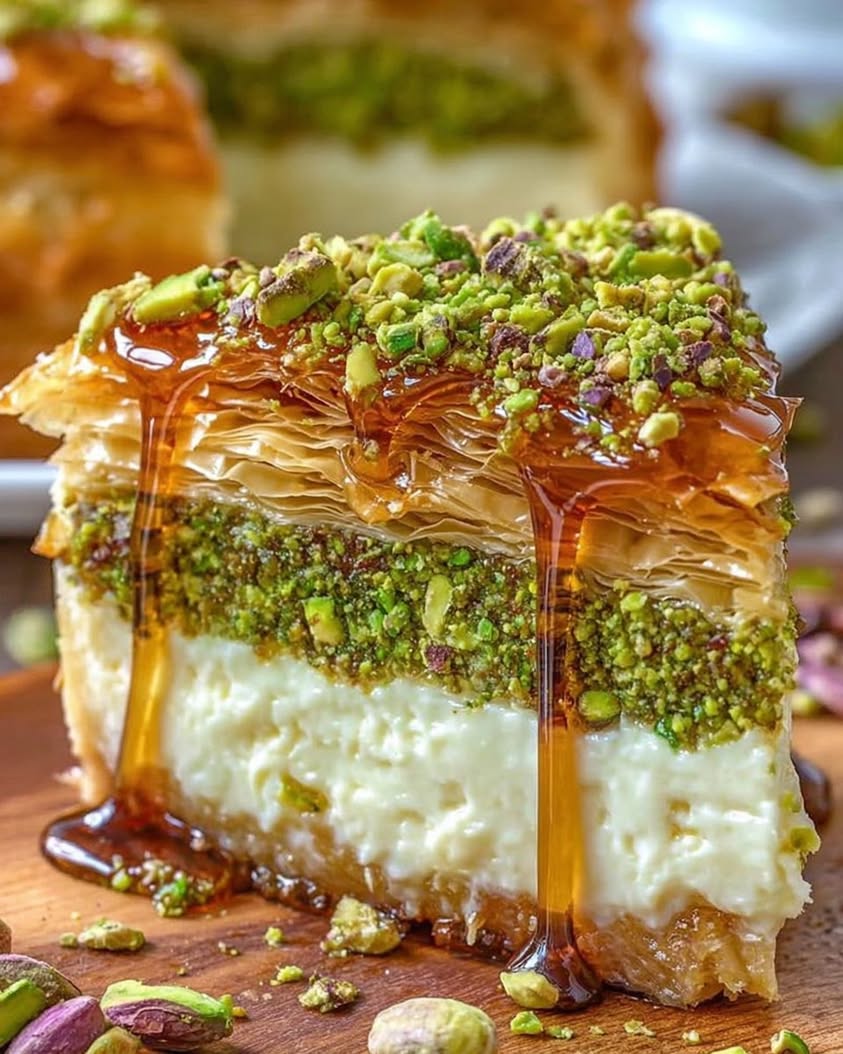
Indulgent Honeyed Pistachio Baklava Cheesecake: The Ultimate Fusion Dessert
The Indulgent Honeyed Pistachio Baklava Cheesecake is the dessert you never knew you needed. Imagine a velvety, creamy cheesecake filling nestled on top of a buttery, flaky phyllo crust that crumbles with every single bite. This recipe artfully merges the rich nutty warmth of traditional Middle Eastern baklava with the lush, smooth texture of a classic American cheesecake. Each mouthful delivers a perfect harmony of sweet honey, toasted pistachios, and tangy cream cheese that dances across your palate. You will find layers of flavor that unfold slowly, from the initial crunch of the crust to the silken finish of the filling. It is a show-stopping dessert that feels both familiar and wonderfully exotic, making any gathering feel like a special occasion. The aroma alone, with notes of cinnamon and honey, will draw everyone into the kitchen with eager anticipation. For anyone seeking to create a memorable centerpiece for a holiday meal or a dinner party, this recipe is a guaranteed triumph.
This Indulgent Honeyed Pistachio Baklava Cheesecake is designed to impress, but it is also surprisingly approachable. The preparation requires a bit of patience, but the final payoff is absolutely worth the effort. You will start by layering delicate phyllo dough with melted butter and ground pistachios to form a crisp, multi-layered crust that supports the luscious cheesecake batter. Then you mix a simple but rich batter of cream cheese, sugar, eggs, and a splash of vanilla before pouring it over the prepared crust. After baking in a water bath to ensure a crack-free top, you finish the cake with a generous pour of warm honey syrup infused with orange zest and cinnamon. This glossy topping soaks into the crust and seeps into the cheesecake, creating a sticky, fragrant glaze that is pure magic. The final touch involves scattering extra crushed pistachios and edible rose petals across the top for a pop of color and texture. When you slice into this masterpiece, you will see distinct layers of buttery crust, creamy filling, and glossy syrup that reveal the careful construction behind it.
The beauty of this recipe lies in its versatility and its ability to marry two beloved dessert cultures. If you love the nutty sweetness of baklava and the creamy indulgence of cheesecake, this is the perfect hybrid for you. It also offers an incredible opportunity to impress guests with something they have likely never tried before. Furthermore, the ingredient list is mostly pantry-friendly, using items like phyllo dough, walnuts or pistachios, honey, and cream cheese that you can find at any grocery store. You can even prepare components ahead of time to make the final assembly quick and stress-free. The Indulgent Honeyed Pistachio Baklava Cheesecake works beautifully for spring holidays like Easter, summer picnics, autumn dinners, and winter celebrations. In addition, it pairs wonderfully with a cup of strong black coffee or a glass of sweet dessert wine. Ultimately, this dessert delivers a unique eating experience that bridges tradition and innovation, and it will quickly become a requested favorite among family and friends.
Quick Recipe Highlights
- Flavor Profile: This dessert features a sweet, nutty base from toasted pistachios complemented by tangy cream cheese and floral honey. The cinnamon and orange zest in the syrup add a warm, aromatic layer that balances the richness perfectly. Each bite offers a dynamic interplay of savory, sweet, and citrus notes that keep you coming back for more.
- Texture: The crust delivers a crispy, shattering crunch thanks to the multiple layers of buttered phyllo dough, while the cheesecake filling is luxuriously smooth and dense. The honey syrup adds a sticky, gooey element that contrasts with the creamy center and the crunchy pistachio topping. You will experience a delightful textural journey across every single forkful.
- Aroma: The fragrance of melted butter and baking phyllo fills the kitchen first, followed by the warm scent of cinnamon and honey as the syrup is added. The orange zest brings a bright, citrusy note that lifts the entire dessert. Furthermore, the toasted pistachios release a nutty, earthy aroma that hints at the rich flavors to come.
- Visual Appeal: This cheesecake is a showstopper with its golden-brown crust, pale ivory filling, and glossy amber honey glaze. The vibrant green pistachios and pink rose petals create a stunning contrast against the creamy surface. When you slice into it, the distinct layers of crust, filling, and syrup become visible, making a gorgeous presentation on any table.
- Skill Level Needed: We rank this recipe as intermediate because of the delicate phyllo dough handling and the water bath technique required for a smooth cheesecake. However, a beginner with patience and careful reading can absolutely succeed. The crucial steps include layering the phyllo gently and monitoring the water bath temperature to prevent cracks.
- Special Equipment: You will need a 9-inch springform pan for easy removal, a pastry brush for buttering the phyllo layers, and a large roasting pan for the water bath. A food processor helps grind the pistachios evenly for the crust and topping. A kitchen scale is also useful for measuring ingredients accurately for the best results.
Recipe Overview
- Difficulty Level: We classify this dessert as intermediate because it involves multiple steps that require careful attention. The phyllo dough can be fragile and quick to dry out, so you must work efficiently to keep it moist. In addition, using a water bath demands extra preparation to ensure the cheesecake bakes evenly without cracking. Still, with a little focus and following our detailed instructions, you can achieve a professional result without previous cheesecake experience.
- Category: This dessert fits squarely into the fusion dessert and special occasion baking categories. It is a hybrid of a baked cheesecake and a pastry-based dessert, making it suitable for both dessert lovers and adventurous bakers. You could also classify it as a holiday dessert or an elegant dinner party finale. It works wonderfully for both casual gatherings and formal celebrations.
- Cuisine: The recipe draws inspiration from two rich culinary traditions: Middle Eastern baklava and American cheesecake. Baklava originated in the Ottoman Empire and spread through the Levant, Greece, and the Balkans, while cheesecake has roots in ancient Greece but evolved into its modern form in the United States. This fusion honors both heritages by combining the flaky phyllo and nutty filling of baklava with the creamy richness of American cheesecake. The honey syrup and cinnamon pay homage to Middle Eastern sweets, while the cream cheese base stays true to classic American cheesecake.
- Cost: The cost for this recipe is moderate to high due to the specialty ingredients like phyllo dough, pistachios, and high-quality cream cheese. A box of phyllo dough costs around 4 to 6 dollars, while raw pistachios can run up to 10 to 12 dollars per pound. Cream cheese and heavy cream add another 8 to 10 dollars to the total. However, since the recipe serves 12 people, the per-serving cost is quite reasonable at about 3 to 4 dollars, especially compared to buying a similar dessert from a bakery.
- Season: This dessert is perfect for all seasons, but it truly shines in the spring and fall. In spring, the floral honey and rose petals complement the fresh, blooming atmosphere. During fall, the warm cinnamon and nutty pistachios pair beautifully with crisp weather and harvest flavors. It also fits well into winter holiday tables, where its rich, indulgent nature matches the festive mood.
- Occasion: This recipe is ideal for holidays like Thanksgiving, Christmas, Easter, and New Year’s Eve dinner parties. It also works wonderfully for birthdays, anniversaries, and cultural celebrations where you want to serve something unique. you can cut it into smaller slices for buffet tables or serve it in elegant wedges for sit-down dinners. It is also a fantastic dessert for potlucks and brunch gatherings because of its impressive presentation.
Why You’ll Love This Recipe
First and foremost, the taste and texture combination of this Indulgent Honeyed Pistachio Baklava Cheesecake is absolutely unparalleled. You get the satisfying crunch of phyllo crust, the creamy, almost melt-in-your-mouth quality of the cheesecake, and the sticky sweetness of honey all in one bite. The pistachios add a nutty, slightly savory element that cuts through the richness, preventing the dessert from feeling overly heavy. The honey syrup carries hints of cinnamon and orange that brighten the entire experience, making each mouthful feel fresh and complex. Unlike many cheesecakes that can become monotonous after a few bites, this one offers layers of texture and flavor that keep you engaged. Moreover, the combination is so perfectly balanced that even those who typically avoid cheesecake will find themselves reaching for seconds. The taste is both comforting and exciting, familiar yet exotic, making it a crowd-pleaser for a wide range of palates.
Second, the convenience and preparation benefits of this recipe make it surprisingly manageable, even for busy home cooks. While it does require a few steps, you can break them down into phases over a day or two. For example, you can prepare the phyllo crust and store it in the refrigerator overnight. The cheesecake batter comes together in a single bowl with a hand mixer, which reduces cleanup time. Using a water bath is easier if you wrap the springform pan in a double layer of foil to prevent leaks. In addition, the honey syrup can be made ahead and kept at room temperature until you are ready to pour it. These make-ahead strategies mean you can assemble and bake the cheesecake on a leisurely Sunday, then serve it on a busy Tuesday evening. The total active time is only about 30 to 40 minutes, with the rest being hands-off baking time. For a dessert this impressive, the effort is minimal, and the payoff is huge.
Third, the nutritional advantages of this dessert, when enjoyed in moderation, are more favorable than many other decadent treats. Pistachios are rich in healthy fats, protein, fiber, and antioxidants like vitamin B6 and copper. They also contain plant compounds that support heart health and reduce inflammation. Cream cheese, while high in fat, provides calcium and protein that contribute to bone health and satiety. The honey in this recipe is a natural sweetener that contains trace amounts of vitamins and minerals, unlike refined sugar. Of course, this is still a dessert and should be enjoyed as an occasional indulgence, but the nutrient density of the ingredients is higher than in many other sweets. You can also control the sugar level by adjusting the honey quantity in the syrup. When you serve a slice, you are not just eating empty calories; you are getting beneficial nutrients from nuts, dairy, and honey. It is a dessert that satisfies your sweet tooth while offering a small nutritional silver lining.
Fourth, the social and entertaining value of this Indulgent Honeyed Pistachio Baklava Cheesecake is enormous. When you bring this cake to a gathering, it immediately becomes the center of attention and a conversation starter. Guests will be curious about the unique combination and will admire the beautiful layers of crust, filling, and glaze. serving a dessert that looks and tastes this special helps you create memorable experiences for your loved ones. It also shows a level of thoughtfulness and creativity that people truly appreciate. Because it can be made a day or two ahead of time, you free up valuable time on the day of your event to focus on other preparations. When it is time to serve, just slice, plate, and watch the compliments roll in. Moreover, the recipe yields a large cake that can comfortably serve 12 people, making it perfect for dinner parties, holiday dinners, and potlucks. You can also halve the recipe to use a smaller pan for a more intimate gathering.
Fifth, this recipe is cost-effective and accessible despite its fancy appearance. The ingredients are available at most grocery stores, and none of them are extremely rare or expensive when you consider the yield. A single box of phyllo dough costs around 5 dollars and will likely leave you with extra sheets for another use. Pistachios are the most expensive component, but you only need one cup, and you can often find them in bulk bins for a lower price. Cream cheese is generally affordable, especially when bought on sale. The honey, butter, and eggs are pantry staples for most home cooks. When you price out the per-slice cost, you will find that making this dessert at home is far cheaper than buying a comparable dessert from a bakery or specialty shop. In fact, a similar slice at a fancy bakery could cost 8 to 10 dollars, while making the entire cake at home costs about 30 to 35 dollars total. That is a huge savings for a dessert that tastes and looks like it came from a professional pastry kitchen.
Historical Background and Cultural Significance
The origins of baklava are deeply rooted in the culinary history of the Middle East and the Mediterranean. This layered pastry dessert is believed to have been created in the imperial kitchens of the Ottoman Empire, which spanned from the 13th to the 20th centuries. The word “baklava” is derived from Mongolian, Turkish, or Persian roots, reflecting its rich cultural tapestry. Traditionally, baklava consists of many thin layers of phyllo dough brushed with butter, filled with chopped nuts like walnuts or pistachios, and sweetened with a syrup made from honey and rosewater. It was a dessert reserved for the elite and was often served during special celebrations and religious festivals. The technique of stretching phyllo to paper-thin layers is a skill that was passed down for generations, with each region adding its own twist. Today, baklava is a beloved dessert across the Middle East, Greece, the Balkans, and beyond, with each culture claiming its own variation. Its legacy as a symbol of hospitality and celebration continues to this day, and it is a staple at weddings, holidays, and family gatherings.
Cheesecake, on the other hand, has an equally ancient and storied history that begins in ancient Greece. The earliest known cheesecake was served to athletes during the first Olympic games in 776 BC, made from simple ingredients like cheese, flour, and honey. When the Romans conquered Greece, they adopted the recipe and spread it across their empire, adding eggs and shaping it into a more refined cake. The modern cheesecake as we know it, however, was popularized in the United States during the late 19th and early 20th centuries. New York cream cheese became the standard base, giving the dessert its signature dense, creamy texture. The classic New York style cheesecake is known for its tall, crack-free top and its simple but rich flavor. Over time, bakers began experimenting with toppings and mix-ins, creating countless variations like chocolate, fruit, and even savory versions. Today, cheesecake is one of the most popular desserts in the world, celebrated for its versatility and its ability to adapt to different flavors and cultural traditions.
The fusion of baklava and cheesecake is a relatively modern culinary innovation that reflects the growing trend of blending diverse food traditions. This hybrid dessert honors the best of both worlds: the flaky, buttery layers of baklava and the creamy, smooth consistency of cheesecake. It first started appearing in bakeries and home kitchens around the early 2000s, when dessert experimentation became a popular trend. Food bloggers and pastry chefs began sharing their own versions, incorporating elements like phyllo crusts, honey syrups, and nut toppings into traditional cheesecake recipes. This recipe represents a culmination of these efforts, resulting in a dessert that feels both novel and deeply satisfying. The combination works so well because the textures and flavors complement each other perfectly, with the crunchy phyllo providing a contrast to the smooth filling. the honey syrup acts as a binder that ties the two components together, creating a unified, cohesive experience. This evolution shows how culinary boundaries continue to blur, creating delicious new possibilities for adventurous home cooks and professional chefs alike.
Regional variations of this fusion dessert are emerging as bakers across the globe put their own spin on the concept. In Greece, some versions use walnut and cinnamon fillings and a honey syrup infused with orange blossom water. In Turkey, the pistachio is the star, and the cheesecake may incorporate a layer of kadayif, a shredded phyllo dough that adds even more texture. In the United States, bakers often use a graham cracker crust as a simpler alternative to phyllo, though the phyllo crust is more authentic to the baklava experience. Some versions also add a layer of chopped nuts directly into the cheesecake batter for extra crunch throughout. Additionally, variations in sweeteners include using maple syrup, agave nectar, or date syrup instead of honey. The toppings can be as simple as a dusting of powdered sugar or as elaborate as edible flowers and gold leaf. These regional adaptations show that the core idea of this dessert is flexible and open to interpretation, allowing anyone to tailor it to their taste preferences and available ingredients. No matter how you make it, the fusion of baklava and cheesecake is sure to impress.
Ingredient Deep Dive
Phyllo dough is the backbone of the baklava crust and holds a special place in Middle Eastern and Mediterranean cooking. This unleavened dough is made from wheat flour, water, and a small amount of oil, and it is rolled and stretched by hand until it is almost paper-thin. The history of phyllo dates back to the Ottoman Empire, where skilled bakers would spend hours creating dozens of translucent layers for pastries and pies. Phyllo is not only used for baklava but also for savory dishes like spanakopita and börek. Nutritionally, phyllo is relatively low in fat and calories compared to other pastry doughs, but it becomes richer when brushed with butter. For selection, look for phyllo in the frozen section of the grocery store, usually in a box with two rolls. It should be stored in the freezer until you are ready to use it, and you must thaw it slowly in the refrigerator for at least 8 hours before use. Once thawed, handle the sheets gently because they dry out quickly and can tear easily. If the dough becomes brittle, cover it with a damp towel to add moisture. Substitution options include using store-bought pie crust sheets for a less flaky but still delicious base, or you can use thick shredded phyllo, known as kataifi, for a different texture.
Pistachios are the star nut in this recipe and bring both flavor and nutrition to the table. These small, green nuts have been cultivated for thousands of years, with origins tracing back to Central Asia and the Middle East. They are mentioned in the Old Testament and were a prized delicacy among ancient royalty. Pistachios are packed with antioxidants, particularly lutein and zeaxanthin, which are beneficial for eye health. They also provide a good amount of vitamin B6, copper, and manganese, and they contain more protein per serving than most other nuts. When selecting pistachios, look for ones that are raw, unsalted, and shelled for the most even texture. They should have a bright green color and a slight sheen, indicating freshness. Store shelled pistachios in an airtight container in a cool, dark place for up to six months or in the refrigerator for a year. If you cannot find pistachios, you can substitute with walnuts, almonds, or even hazelnuts. Each alternative will give the dessert a different flavor profile, but the crunchy texture will remain. Toasting the pistachios lightly before using them enhances their nutty aroma and adds an extra layer of flavor to the final dish.
Cream cheese is the essential ingredient that defines the cheesecake part of this recipe. It is a soft, mild-tasting cheese made from milk and cream, and it was accidentally invented in the 1870s by a dairyman in New York state. Cream cheese is rich in fat, which gives it the smooth, creamy texture that is ideal for baking. It also contains calcium and protein, making it a relatively nutrient-dense option for a dessert base. For the best results, use full-fat cream cheese, as the reduced-fat versions contain more water and can lead to a less stable texture. Philadelphia brand is a classic favorite, but any full-fat block cream cheese will work well. Let the cream cheese come to room temperature before mixing so it blends smoothly without lumps. If you need a dairy-free alternative, you can use vegan cream cheese made from coconut oil or cashews, though the texture may be slightly different. For a tangier flavor, you can combine cream cheese with a small amount of Greek yogurt or sour cream. Proper storage for cream cheese is in the refrigerator, and it should be used before the expiration date for the best quality.
Honey is the final key ingredient that provides the signature sweetness and glaze for this dessert. Honey has been used by humans for over 8,000 years, with evidence of its use found in ancient Egyptian tombs and cave paintings. It was considered a food of the gods and a symbol of fertility, abundance, and health. Nutritionally, honey contains antioxidants like flavonoids and phenolic acids that can support immune health and reduce inflammation. It also has antibacterial properties and can help soothe sore throats. For this recipe, choose a high-quality, flavorful honey such as orange blossom, wildflower, or clover honey. Each variety will lend a different floral note to the syrup. Avoid honey that has crystallized, but if it does, you can gently warm it in a hot water bath to return it to a liquid state. Store honey in a cool, dark place in a sealed jar, and it will last almost indefinitely. Substitution options include maple syrup for a different but still delicious flavor, agave nectar for a thinner consistency, or date syrup for a richer, more complex sweetness. The honey syrup is what gives the cake its glossy, sticky finish, so do not skip this step.
Common Mistakes to Avoid
- One of the most frequent mistakes is not thawing the phyllo dough properly. You must thaw it in the refrigerator for at least 8 hours, not at room temperature, to prevent the sheets from sticking together and becoming brittle.
- Another common error is overworking the cream cheese batter. Mixing too much can incorporate too much air, leading to cracks during baking. Mix only until the ingredients are just combined and smooth.
- Forgetting to wrap the springform pan in foil before the water bath is a critical oversight. Any water that seeps into the pan will ruin the crust and create a soggy, unappealing texture.
- Baking the cheesecake at too high a temperature can cause it to puff up and crack. Stick to a low temperature of 325 degrees Fahrenheit and use a water bath to regulate the heat gently.
- Not letting the cheesecake cool gradually is another common error. Do not remove it from the oven immediately. Turn the oven off and crack the door open for about 30 minutes to let the cake cool slowly.
- Using stale or low-quality nuts can ruin the flavor and texture of the crust and topping. Always use fresh, raw pistachios and toast them lightly to bring out their best qualities.
- Applying the honey syrup while the cheesecake is still piping hot can make it too runny and cause it to pool. Let the cheesecake cool completely to room temperature first, then pour the syrup slowly.
- Waiting too long to pour the honey syrup is also a mistake. Pour it while the syrup is still warm but not boiling, as this helps it soak into the crust and filling effectively.
- Cutting the cheesecake before it is fully chilled can lead to messy slices. You must refrigerate the finished cake for at least 4 hours, or ideally overnight, before slicing.
- Over-toasting the pistachios for the topping can give them a bitter taste. Toast them in a dry skillet over medium heat for 2 to 3 minutes, stirring constantly, until they are fragrant and lightly golden.
Essential Techniques
Layering phyllo dough is a technique that requires patience but is essential for achieving a flaky, buttery crust. The key is to keep the phyllo sheets covered with a damp kitchen towel at all times to prevent them from drying out and tearing. As you work, you will brush each individual sheet with melted butter using a soft pastry brush, starting from the center and working outward. This ensures that every layer is coated, which is what creates the desired flakiness. You then layer the buttered sheets one by one into the springform pan, pressing them gently into the bottom and up the sides. For this recipe, you will need about 8 to 10 sheets to form a sturdy crust. A common pitfall is using too much butter, which makes the crust greasy rather than flaky. Alternatively, using too little butter results in a dry, tough crust. The visual cue for success is when the layers puff up slightly during baking and become a beautiful golden brown color. The crust should feel crisp and firm to the touch when you remove it from the oven, but it will soften slightly when the cheesecake is added, so do not overbake it.
The water bath, or bain-marie, is a crucial technique for baking cheesecake without cracks. The purpose is to create a gentle, humid environment in the oven that evenly distributes heat and prevents the cheesecake from rising too quickly. To set it up, you first wrap the springform pan tightly with a double layer of heavy-duty aluminum foil, ensuring that the foil comes at least halfway up the sides of the pan. Then you place the wrapped pan inside a larger roasting pan and pour hot water from the kettle into the roasting pan until it reaches about halfway up the sides of the springform pan. The water should be hot but not boiling, as boiling water can cause the cheesecake to cook too fast. The foil wrapping is essential to keep the water from seeping into the pan and ruining the crust. A common pitfall is using only a single layer of foil, which can easily tear. Another pitfall is adding cold water, which lowers the oven temperature and extends the cooking time. The visual cue for success is that the cheesecake sets evenly across the surface, with a slight jiggle in the center when done, and it does not crack as it cools.
Making the honey syrup might seem simple, but it requires careful attention to proportions and timing to achieve the perfect consistency. The basic ratio is one part honey to one part water, with a small amount of citrus juice and spices for flavor. You heat the mixture in a saucepan over medium heat, stirring gently, until the honey dissolves completely. Then you bring it to a gentle simmer and let it cook for 5 to 7 minutes, which allows the syrup to thicken slightly. A common pitfall is boiling the syrup too aggressively, which can make it too thick and sticky, creating a gummy topping rather than a glossy glaze. On the other hand, undercooking the syrup leaves it too watery, and it will not properly soak into the crust. The visual cue for success is when the syrup coats the back of a spoon and has a slightly syrupy texture but is still pourable. You should let the syrup cool slightly before pouring it over the cheesecake, but it should still be warm to help it soak in. The final syrup should be clear, golden, and fragrant with the spices you added, imparting a beautiful sheen to the finished dessert.
Pro Tips for Perfect Indulgent Honeyed Pistachio Baklava Cheesecake
Always bring your cream cheese, eggs, and sour cream to room temperature before mixing. Cold ingredients do not incorporate smoothly, leading to a lumpy batter that can cause cracks during baking. Set them out on the counter about 30 minutes before you start.
Use a food processor to finely grind the pistachios for the crust, but be careful not to over-process them into a paste. You want a crumbly, sand-like texture that mixes well with the melted butter for an even crust. Pulse them in short bursts for the best control.
When brushing butter on the phyllo sheets, melt the butter first and then skim off the foam that rises to the top. The clarified butter underneath has a higher smoke point and fewer milk solids, which results in a flakier, less greasy crust.
After baking the cheesecake, let it cool in the oven with the door cracked for about 30 minutes to prevent thermal shock. This gradual cooling process is one of the most important steps for achieving a crack-free surface. Do not rush this step.
Refrigerate the finished cheesecake for at least 6 hours, but overnight is best for perfect slicing. The flavors meld together during this time, and the texture firms up, making it easier to cut clean slices without crumbling.
Use a sharp, straight-edged knife dipped in hot water and wiped dry between each cut for the neatest slices. This technique prevents the cheesecake from sticking to the blade and keeps the edges of each slice smooth and presentable.
Pour the warm honey syrup slowly over the cheesecake in a circular motion, starting from the edges and moving inward. This method ensures even coverage and helps the syrup soak into the crust and filling consistently. Do not rush the pour.
Variations and Adaptations
Regional variations of this dessert can be explored by changing the nut used in the crust and filling. For a traditional Greek baklava flavor, substitute the pistachios with walnuts and add a teaspoon of ground cinnamon to the nut mixture. The topping could then be a mix of crushed walnuts and a drizzle of honey. For a Turkish twist, use a combination of pistachios and walnuts, and add a pinch of cardamom to the honey syrup. The syrup can also be infused with rosewater or orange blossom water for a floral note that is classic in Middle Eastern desserts. Each regional adaptation brings a unique character to the dessert while staying true to the original concept. You can also experiment with using a graham cracker crust instead of phyllo for a more familiar, easier base. This variation will not have the same flaky layers but will still taste delicious and is less intimidating for beginners. The honey syrup and nut topping remain the same, so the flavor profile stays intact. The key is to adjust the nut size and spice level to match your personal preference or the specific culinary tradition you want to honor.
Seasonal adaptations allow you to enjoy this dessert year-round with fresh, peak ingredients. In the spring, top the cheesecake with fresh strawberries, raspberries, or edible flowers like violets or pansies. The bright acidity of the berries cuts through the richness and adds a pop of color. During summer, consider adding a layer of crushed peaches or nectarines between the crust and the cheesecake filling. The stone fruit pairs beautifully with the honey and pistachios. In autumn, you can incorporate a tablespoon of pumpkin spice into the cheesecake batter or use toasted pecans instead of pistachios for a nutty, warming flavor. You could also drizzle the cheesecake with a caramel sauce alongside the honey syrup for added depth. For winter, add a hint of orange zest and a pinch of nutmeg to the filling, and top with pomegranate seeds for a festive, jewel-like appearance. The seeds provide a tart burst that balances the sweetness. These seasonal tweaks are simple but can completely transform the flavor profile of the dessert, making it feel new and exciting each time you make it.
Dietary modifications can make this dessert accessible to those with specific health needs or restrictions. For a gluten-free version, simply substitute the phyllo dough with a gluten-free phyllo or use a crust made from almond flour, butter, and sugar. There are several gluten-free phyllo brands available in specialty grocery stores that work well. For a dairy-free adaptation, use vegan cream cheese, coconut cream, and a plant-based butter substitute. The texture will be slightly different, but the flavor will still be rich and satisfying. For a lower-sugar version, you can reduce the amount of sugar in the cheesecake batter by half and use a sugar-free honey substitute or monk fruit syrup for the glaze. Keep in mind that this will affect the sweetness level, but the nutty and creamy flavors will still shine through. For a vegan option, combine soaked cashews, coconut cream, and lemon juice to create a dairy-free cheesecake filling. Use crumbled gluten-free cookies combined with coconut oil as a crust. These modifications require some experimentation but can open up the joy of this dessert to a wider audience.
Serving and Presentation Guide
Plating techniques for this dessert can elevate a simple slice into a stunning presentation. Use a warm, dry knife to make clean cuts, then place each slice on the center of a neutral-colored plate, such as white or cream. The contrast between the pale cheesecake and the dark plate will make the dish pop. For an extra touch, drizzle a small amount of leftover honey syrup on the plate around the slice in a decorative swirl. You can also place a small dollop of whipped cream or crème fraîche on the side to add a creamy, tangy element. The key is to keep the plating elegant and simple, letting the beauty of the cake itself be the focal point. Avoid overcrowding the plate with too many elements, as this can look busy and detract from the cake. If you are serving multiple slices on a platter, arrange them in a staggered pattern and garnish with a few fresh mint leaves or edible flowers for a garden-fresh feel. The goal is to create a visual experience that matches the flavor experience.
Garnishing ideas for this cheesecake are abundant and can be tailored to the occasion. A classic garnish is a generous scattering of chopped toasted pistachios over the top, which adds texture and reinforces the nutty flavor. Edible rose petals, available at gourmet stores or online, add a delicate floral note and a beautiful pop of pink color. You can also sprinkle a light dusting of ground cinnamon or powdered sugar through a fine sieve for a subtle, elegant finish. For a more decadent touch, add tiny gold leaf flakes, which are edible and make the cake feel luxurious. During the holidays, you can add candied cranberries or pomegranate seeds for a tart, jewel-like contrast. Fresh mint leaves or a sprig of rosemary add a green accent that looks sophisticated. The garnish should always complement the flavors in the cake, not overpower them. A light hand is best, as the cheesecake itself is already richly flavored and beautifully decorated.
Wine and Beverage Pairing
Pairing wine with this Indulgent Honeyed Pistachio Baklava Cheesecake enhances the entire dessert experience. A classic Print
Honeyed Pistachio Baklava Cheesecake
- Total Time: 5 hours 10 minutes (includes chilling)
- Yield: 12
Description
A decadent fusion dessert combining the creamy richness of cheesecake with the flaky, honeyed crunch of baklava, topped with a pistachio crust and a sweet honey glaze.
Ingredients
- 1 1/2 cups crushed pistachios
- 1/2 cup melted butter
- 1/4 cup granulated sugar
- 24 ounces cream cheese, softened
- 3/4 cup honey
- 3 large eggs
- 1 teaspoon vanilla extract
- 1/2 cup sour cream
- 1/2 cup chopped pistachios for topping
- 1/4 cup honey for drizzling
- 1 sheet frozen phyllo dough, thawed and chopped (optional for layering)
Instructions
- Preheat oven to 325°F (165°C). In a bowl, mix crushed pistachios, melted butter, and 1/4 cup sugar. Press into the bottom of a 9-inch springform pan to form crust.
- Beat cream cheese until smooth. Add honey and mix well. Add eggs one at a time, then vanilla and sour cream. Mix until just combined.
- Pour filling over crust. If using phyllo, layer chopped phyllo pieces unevenly on top of filling for a flaky effect.
- Bake for 45-50 minutes until edges are set but center jiggles slightly. Cool completely, then refrigerate for at least 4 hours.
- Before serving, top with chopped pistachios and drizzle with honey. Return to refrigerator until ready to serve.
Notes
You can customize the seasonings to taste. If you prefer a sweeter cheesecake, add an extra tablespoon of honey. For a more authentic baklava flavor, sprinkle a little cinnamon over the pistachio crust.
- Prep Time: 20 minutes
- Cook Time: 50 minutes
- Method: Dessert
- Cuisine: Mediterranean-American Fusion