The Ultimate Ground Beef & Cabbage Stir Fry for Quick Weeknight Dinners
This Ground Beef & Cabbage Stir Fry is the answer when you need a satisfying dinner that comes together in under thirty minutes. The combination of savory ground beef with crunchy cabbage creates a meal that feels both hearty and light. You will love how the simple ingredients transform into a deeply flavorful dish with just a few pantry staples. The mild sweetness of the cabbage balances the rich umami from the beef, making every bite a perfect contrast of textures and tastes. This is one of those recipes that proves a quick weeknight dinner can still taste like a labor of love.
As you cook the Ground Beef & Cabbage Stir Fry, your kitchen will fill with the comforting aroma of garlic, ginger, and toasted sesame oil. The cabbage wilts down beautifully while keeping a pleasant bite, and the beef browns into tiny, savory crumbles. This dish is incredibly versatile, too. Serve it over steamed rice for a complete meal, or enjoy it on its own for a low-carb option. Because the recipe relies on basic ingredients like soy sauce and ground beef, it is also budget-friendly and easy to adapt to what you have on hand.
What makes this Ground Beef & Cabbage Stir Fry truly special is its ability to satisfy a variety of cravings. It is savory and slightly sweet from a touch of sugar, with a subtle heat from red pepper flakes if you choose to add them. The cabbage provides a crisp-tender texture that contrasts perfectly with the tender beef. This stir fry is a fantastic way to use up a head of cabbage, and it reheats well for lunch the next day. It is a true weeknight hero that delivers big flavor with minimal effort.
Quick Recipe Highlights
- Flavor Profile: This dish offers a savory and slightly sweet taste with a background of garlic and ginger. The soy sauce adds a deep umami note, while a pinch of red pepper flakes provides a gentle warmth. The overall flavor is balanced and not overly complex, making it a family-friendly choice.
- Texture: The cooked cabbage retains a pleasant crunch, while the ground beef is tender and crumbly. The combination creates a satisfying mouthfeel that is both hearty and light. There is no sogginess, as the stir-fry method keeps everything crisp and fresh.
- Aroma: The fragrant scent of toasted sesame oil mingles with the pungent aroma of fresh ginger and garlic. As the beef browns, it releases a rich, meaty smell that is deeply comforting. The final dish has a warm, inviting aroma that promises a flavorful meal.
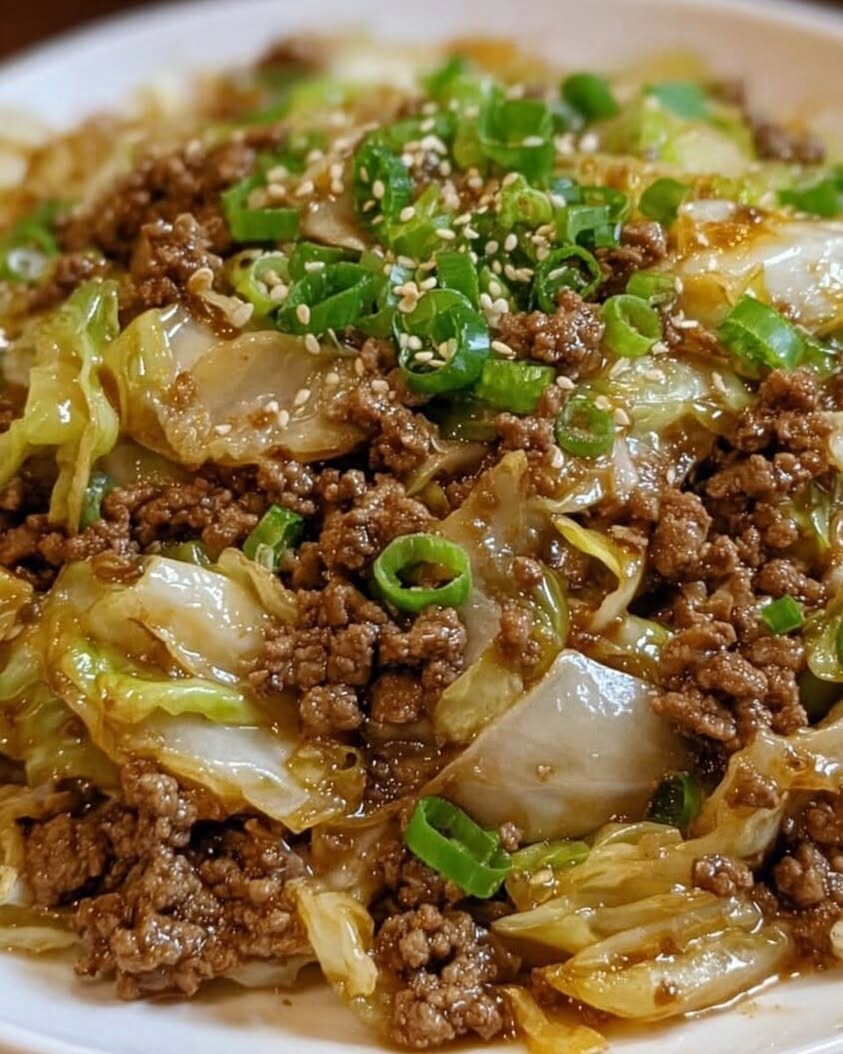
- Visual Appeal: The vibrant green of the cabbage contrasts beautifully with the rich brown of the ground beef. A sprinkle of sesame seeds or sliced green onions adds a pop of color and elegance. The dish looks appetizing and fresh, with a glossy sheen from the sauce.
- Skill Level Needed: This recipe is perfect for beginners and experienced cooks alike. The steps are straightforward, and the cooking process is fast. You only need to manage a hot pan and stir ingredients together, making it an excellent choice for building confidence in the kitchen.
- Special Equipment: A large skillet or wok is the primary tool needed for this recipe. A wooden spoon or spatula is useful for breaking up the meat and stirring the cabbage. No other special equipment is required, keeping the process simple and accessible.
Recipe Overview
- Difficulty Level: I rated this Ground Beef & Cabbage Stir Fry as easy because the techniques are basic and the ingredients are simple. You do not need any advanced knife skills or cooking methods. The entire process involves browning meat, softening vegetables, and combining them with a sauce. Even a novice cook can achieve great results on the first try.
- Category: This recipe falls under the category of stir-fries and one-pan meals. It is a main course that can be served with rice or noodles. It also works well as a filling for lettuce wraps or as a topping for baked potatoes. Its versatility makes it suitable for many different meal occasions.
- Cuisine: The flavors are inspired by Asian-American cooking, drawing from Chinese stir-fry techniques and Japanese ingredients like soy sauce and sesame oil. It is not tied to a single authentic tradition but rather reflects a fusion style that is popular in many American homes. The use of cabbage is common in many Asian cuisines, and this recipe honors that simplicity.
- Cost: This is an extremely budget-friendly meal. Ground beef is generally affordable, and cabbage is one of the cheapest vegetables available. The pantry ingredients like soy sauce and garlic add minimal cost. You can easily feed a family of four for under ten dollars, making it a great choice for saving money.
- Season: While this dish can be enjoyed year-round, it is especially appealing during the colder months. Cabbage is a winter vegetable, and the hearty, warm flavors are perfect for chilly evenings. It is also a great springtime meal when you crave something light but still satisfying. The ingredients are always readily available regardless of the season.
- Occasion: This Ground Beef & Cabbage Stir Fry is ideal for busy weeknights when time is short. It is also a fantastic option for meal prepping because it stores well. It can be served for a casual family dinner or a quick lunch. It is not fancy enough for a formal dinner party, but it is perfect for any night you need a reliable, delicious meal.
Why You Will Love This Recipe
The taste of this Ground Beef & Cabbage Stir Fry is simply addictive. The savory beef mingles with the slightly sweet cabbage, creating a harmony of flavors that feels both familiar and exciting. The sauce coats every piece of meat and vegetable, ensuring each bite is packed with seasoning. The texture is also a major highlight because the cabbage stays crunchy while the beef remains tender. This combination of taste and texture makes it a meal you will crave again and again.
Convenience is another huge benefit of this recipe. The total time from start to finish is only twenty-five minutes, which includes chopping the cabbage and cooking everything. There is no marinating required, and the cleanup is minimal since you only use one pan. This makes it the perfect solution for those evenings when you are tired and hungry. You can have a hot, homemade dinner on the table faster than you could order takeout.
Nutritionally, this dish offers a great balance of protein and vegetables. Ground beef provides high-quality protein and essential nutrients like iron and B vitamins. Cabbage is low in calories but high in fiber, vitamin C, and vitamin K. Together, they create a meal that is filling without being heavy. This makes it a smart choice for anyone looking to eat healthier without sacrificing flavor.
This Ground Beef & Cabbage Stir Fry is also wonderful for entertaining, though it is simple. You can double the recipe easily to feed a crowd, and it is a dish that appeals to most palates. It is a safe bet for potlucks or casual get-togethers because it is not overly spicy or exotic. People appreciate a hearty, comforting meal that they can enjoy without fuss. Serving it with rice and a side of pickled vegetables makes it feel like a special occasion.
Finally, the cost-effectiveness of this recipe cannot be overstated. Ground beef and cabbage are among the most affordable ingredients at the grocery store. You can often find cabbage for less than a dollar per head, and ground beef is frequently on sale. This means you can stretch your food budget while still eating delicious, home-cooked meals. It is a win-win situation for your wallet and your taste buds.
Historical Background and Cultural Significance
The combination of ground meat and cabbage appears in many cultures around the world, from Eastern European stuffed cabbage rolls to Korean japchae. This Ground Beef & Cabbage Stir Fry draws inspiration from the quick cooking methods of Asian stir-fries. Stir-frying became popular in the United States in the mid-20th century as interest in Chinese cuisine grew. Cooks adapted traditional techniques to use readily available American ingredients, giving rise to dishes like this one.
Cabbage itself has a long history, cultivated for thousands of years across Europe and Asia. It was valued for its long storage life and nutritional density, especially during winter months. In many cultures, cabbage is a symbol of prosperity and health because of its hardiness. This dish continues that tradition by using cabbage as a central component, turning a humble vegetable into a star ingredient.
The recipe has evolved as home cooks have experimented with different seasonings and protein sources. Originally, such stir-fries might have used pork or chicken, but ground beef became a popular substitute due to its availability and flavor. The use of soy sauce and sesame oil reflects the influence of Japanese and Chinese cuisines on American home cooking. Over time, versions of this stir fry have appeared in cookbooks and food blogs, each with its own twist.
Regional variations of this dish can be found across the United States. In the South, cooks might add a bit of hot sauce or bacon for extra flavor. In the Midwest, where cabbage is a staple, it is often served with egg noodles instead of rice. On the West Coast, you might find additions like bok choy or broccoli. This adaptability is a testament to the recipe’s versatility and its ability to fit into different culinary traditions.
Ingredient Deep Dive
Ground beef is the heart of this stir fry, and its history is deeply tied to American food culture. The advent of the meat grinder in the 19th century made ground beef accessible to home cooks. It is a rich source of heme iron, which is easily absorbed by the body, and provides complete protein. When selecting ground beef, look for a blend with about 80 to 85 percent lean meat for the best flavor and texture. Store it in the coldest part of your refrigerator and use it within two days of purchase. If you need a substitute, ground turkey or ground pork work beautifully in this recipe.
Cabbage is the other star, and it has been a dietary staple in many parts of the world for centuries. It is packed with vitamin C, vitamin K, and fiber, which support immune function and digestion. When shopping, choose heads of cabbage that feel dense and heavy for their size, with no wilting outer leaves. Store cabbage in the refrigerator, wrapped loosely in plastic, and it will keep for several weeks. For a different flavor, you can use green cabbage, savoy cabbage, or even napa cabbage, which is more delicate and sweeter.
Soy sauce provides the essential umami base for the sauce. It is made from fermented soybeans and has been used in Asian cuisine for over two thousand years. Soy sauce adds depth and saltiness to the dish, and it contains antioxidants that may have health benefits. When buying, look for naturally brewed soy sauce without caramel coloring. Store it in a cool, dark place, and it will last for months. For a gluten-free option, tamari is an excellent substitute with a similar flavor profile.
Garlic and ginger are the aromatic backbone of this stir fry. Garlic has been treasured for its pungent flavor and medicinal properties since ancient times. Ginger adds a warm, slightly spicy note that brightens the entire dish. Both are rich in compounds that support cardiovascular health and reduce inflammation. Choose firm heads of garlic and smooth-skinned ginger roots. Store them in a cool, dry place, but ginger is best kept in the refrigerator. Fresh aromatics are always preferable, but in a pinch, you can use a small amount of dried versions.
Common Mistakes to Avoid
- Overcrowding the pan is a frequent error when making a stir fry. If you add too much cabbage at once, it will steam instead of sear. This leads to a watery, limp texture. Cook the cabbage in batches if necessary to ensure it gets nice browning.
- Not draining the fat after browning the beef can make the dish greasy. Ground beef releases a lot of fat, which can make the sauce oily. Pour off all but about a tablespoon of fat before adding the aromatics. This keeps the final dish light and flavorful.
- Adding cabbage too early in the cooking process is another mistake. The cabbage needs only a few minutes to cook. If you add it when the beef is still raw, it will become mushy. Wait until the beef is fully browned before adding the vegetables.
- Skipping the step of seasoning the beef is a missed opportunity. Just a pinch of salt and pepper while browning enhances the meat’s natural flavor. Seasoning at the beginning builds a deeper taste throughout the dish. Do not rely solely on the sauce for flavor.
- Using low-quality soy sauce can ruin the balance of the dish. Cheap soy sauces are often overly salty with a harsh aftertaste. Invest in a good-quality naturally brewed soy sauce for the best results. It makes a noticeable difference in the final flavor.
- Not prepping all ingredients before starting is a common pitfall. The cooking process moves very fast once you begin. Having everything chopped and measured ensures you do not burn anything. Mise en place is essential for a smooth cooking experience.
- Overcooking the cabbage until it turns completely soft and translucent is undesirable. You want the cabbage to retain some crunch and color. Cook it only until it has wilted slightly, which takes about three to four minutes. This preserves its texture and nutritional value.
- Forgetting to taste and adjust seasoning is a crucial step that many skip. The amount of soy sauce you need depends on the saltiness of your beef and your personal preference. Always taste the finished dish and add a bit more soy sauce, salt, or acid if needed. This ensures a perfectly balanced plate.
Essential Techniques
Properly browning the ground beef is a foundational skill that greatly affects the flavor of this stir fry. When you add the beef to a hot pan, let it cook undisturbed for a minute or two before breaking it apart. This allows the meat to develop a brown crust through the Maillard reaction, which adds rich, savory notes. If you stir too aggressively at the start, the meat will steam and turn gray instead of brown. Mastering this technique elevates the entire dish from good to great.
Cutting the cabbage into uniform pieces is another key technique. Aim for strips about one inch wide, as this ensures even cooking. If the pieces are too large, they will take longer to soften, and smaller pieces can burn quickly. A sharp chef’s knife makes this task easy and safe. The consistency in size guarantees that every bite has the same perfect texture. It also creates a more visually appealing final dish.
Managing the heat level throughout the cooking process is crucial for a successful stir fry. Start with medium-high heat to brown the beef, then reduce the heat slightly when adding aromatics to prevent burning. When you add the cabbage, you can increase the heat back to medium-high to encourage quick wilting. This control over temperature prevents scorching and ensures even cooking. Pay attention to the sizzle; if the pan sounds too quiet, it may need more heat.
Building the sauce directly in the pan is a technique that maximizes flavor. After you remove the beef and cabbage, the pan will have flavorful browned bits stuck to the bottom. This is called fond, and it is pure flavor. When you add the soy sauce mixture and let it bubble, it deglazes the pan, incorporating those bits into the sauce. This step creates a cohesive, deeply seasoned coating for all the ingredients. It is a simple yet powerful way to elevate a quick stir fry.
Pro Tips for Perfect Ground Beef & Cabbage Stir Fry
For the best texture, use a very hot pan and work quickly. A hot pan ensures the cabbage sears rather than steams, preserving its crunch. Do not be afraid of a little char on the cabbage; it adds a smoky flavor.
Season the ground beef generously with salt and pepper before you start cooking. This initial seasoning builds flavor from the inside out. You can always adjust the final saltiness with soy sauce later, but starting with well-seasoned meat is essential.
Add a splash of rice vinegar or a squeeze of lime juice at the end for a pop of acidity. This brightens all the flavors and balances the richness of the beef. A little acid goes a long way in making the dish taste more vibrant.
For a nuttier flavor, toast your sesame seeds in a dry pan before using them as a garnish. This takes only a minute and releases their natural oils. Sprinkle them over the finished dish for a delightful crunch and visual appeal.
If you want a thicker sauce, mix a teaspoon of cornstarch with two tablespoons of cold water to make a slurry. Stir this into the pan during the last minute of cooking. The sauce will quickly thicken and cling beautifully to the beef and cabbage.
Do not skip the step of letting the cooked stir fry rest for a minute before serving. This allows the flavors to meld together and the sauce to settle. The dish will taste more cohesive and satisfying.
Variations and Adaptations
Regional variations of this stir fry are common across the United States. In the South, cooks might add a teaspoon of smoked paprika or a dash of cayenne for a subtle smoky heat. In the Pacific Northwest, using savoy cabbage or adding a handful of fresh spinach at the end is popular. These small tweaks reflect local ingredient preferences and add a unique personality to the dish.
Seasonal adaptations can make this recipe shine all year long. In the summer, you can substitute shredded zucchini for half the cabbage for a lighter, more garden-fresh dish. In the winter, adding some shredded kale or Brussels sprouts can make it even heartier. You can also incorporate seasonal herbs like fresh cilantro or basil for a different aroma.
Dietary modifications are easy to implement. For a gluten-free version, simply use tamari or coconut aminos instead of regular soy sauce. To make it dairy-free, you already have a compatible recipe since there is no dairy. For a low-carb or keto-friendly meal, serve the stir fry over cauliflower rice or steamed broccoli instead of regular rice.
Flavor variations are endless, so do not be afraid to experiment. Try adding a tablespoon of gochujang or sriracha for a spicy Korean-inspired kick. A drizzle of hoisin sauce at the end adds a sweet, tangy glaze. For a more savory depth, a teaspoon of fish sauce or a splash of Worcestershire sauce can work wonders. Each addition changes the personality of the dish while keeping it familiar.
Serving and Presentation Guide
Plating this Ground Beef & Cabbage Stir Fry can be done simply or elegantly. For a family meal, serve it directly from the pan into bowls over steamed rice. For a more polished presentation, use a large platter and mound the stir fry in the center. Spoon any remaining sauce over the top to keep it moist and glossy.
Garnishing is a simple way to elevate the dish visually. A sprinkle of toasted sesame seeds adds a nutty flavor and a pleasing aesthetic. Thinly sliced green onions provide a fresh, mild onion bite and a pop of green. A light drizzle of sesame oil just before serving adds aroma and a beautiful sheen.
Traditional accompaniments include steamed jasmine rice or brown rice to soak up the delicious sauce. You can also serve it with lo mein noodles or even over a bed of crispy fried rice. For a low-carb option, try serving it with cauliflower rice or in lettuce cups. The versatility of this stir fry makes it a perfect partner for many different bases.
Modern serving suggestions include using the stir fry as a filling for burritos or tacos. It also works well as a topping for baked potatoes or sweet potatoes. For a fun appetizer, serve small portions in wonton cups or on top of crispy rice crackers. The possibilities are limited only by your creativity.
Wine and Beverage Pairing
Wine pairing for this savory stir fry is delightful. A light to medium-bodied red wine like a Pinot Noir or a Gamay works well because they complement the savory flavors without overpowering them. The natural acidity in these wines cuts through the richness of the beef and sauce. For white wine lovers, a dry Riesling or a Sauvignon Blanc offers a crisp contrast that highlights the ginger and garlic.
Non-alcoholic alternatives are equally satisfying. A chilled green tea with a hint of jasmine is a classic pairing that cleanses the palate. Sparkling water with a splash of lime provides a refreshing, palate-cleansing effect. A cold ginger ale or ginger beer also echoes the ginger in the dish, creating a harmonious flavor experience.
Temperature considerations for beverages are important. Cold drinks contrast nicely with the warm, savory stir fry. For wine, serve reds slightly below room temperature and whites well-chilled. For tea, an iced version is preferable, but a hot cup of oolong tea can also be comforting in cooler weather.
Storage and Shelf Life
Proper storage is key to enjoying leftovers of this Ground Beef & Cabbage Stir Fry. Allow the dish to cool completely to room temperature before storing. Place it in an airtight container to prevent moisture loss and absorption of other odors. It can be safely refrigerated for up to four days. The flavors often meld and improve overnight.
Temperature requirements for storage are straightforward. Keep the stir fry in the refrigerator at or below 40 degrees Fahrenheit. If you are not planning to eat it within four days, consider freezing it. For best quality, consume frozen stir fry within three months. Thaw it overnight in the refrigerator before reheating.
Container recommendations prioritize airtight options. Glass containers with snap-lock lids are excellent because they are non-porous and do not absorb stains. Plastic containers are also fine, but ensure they are BPA-free. Leaving the stir fry in the pan to cool and then covering it with foil is not ideal because it can lead to bacterial growth and moisture issues.
Signs of spoilage include an off smell, visible mold, or a slimy texture on the meat or cabbage. If you notice any of these, discard the dish immediately. When reheating, always ensure the internal temperature reaches 165 degrees Fahrenheit to kill any potential bacteria. Trust your senses; if something seems off, it is better to be safe.
Make Ahead Strategies
You can prepare components of this stir fry ahead to save time on busy evenings. Chop the cabbage and store it in an airtight bag or container in the refrigerator for up to three days. Mince the garlic and ginger, and store them together in a small container. Measure out the soy sauce and other seasonings. This prep work reduces the active cooking time to just the final assembly and stir-frying.
Storage between steps is straightforward. The prepped cabbage can be kept in the crisper drawer of your refrigerator. The aromatics and sauce ingredients can be left on the counter for a few hours, but it is safer to refrigerate them. When you are ready to cook, simply pull everything out and start. This strategy makes the entire process feel almost effortless.
Quality impact assessment is generally positive for this recipe. Pre-chopped cabbage does lose a bit of its initial crunch over time, but the difference is minimal. The flavors of the garlic and ginger are preserved well when stored properly. The final dish will still be delicious and satisfying, even with pre-prepped ingredients.
Assembly tips include cooking the beef and cabbage as directed, but stopping just before the cabbage is fully wilted. Then, you can quickly finish it with the sauce when you are ready to eat. Alternatively, you can cook the entire dish and simply reheat it. The stir fry reheats beautifully, so either method works well.
Scaling Instructions
Halving the recipe is simple and works perfectly for two servings. Use about half a pound of ground beef and half a medium head of cabbage. Reduce the soy sauce to about two tablespoons and the other seasonings accordingly. The cooking time remains similar, so watch closely to avoid overcooking. This is ideal for a small household or a single meal.
Doubling or tripling the recipe is also easy, but it requires some equipment adjustments. Use the largest skillet or wok you have to avoid overcrowding. Alternatively, cook the beef and cabbage in batches to ensure proper browning. Increase the cooking time by a few minutes per batch. The sauce quantities scale linearly, so multiply by two or three as needed.
Timing modifications are necessary when scaling up. Because of the larger volume, the pan will take a bit longer to come back up to temperature after adding ingredients. Be patient and avoid rushing. The cabbage may need an extra minute or two to wilt properly. Taste and adjust seasoning at the end, as the sauce might need a slight increase proportionally.
Storage considerations become more important when scaling up. If you make a large batch, portion it into smaller containers for easier reheating and to minimize waste. The leftovers will still be good for up to four days in the refrigerator. Freezing is also an option for larger batches, allowing you to have quick meals ready for future busy evenings.
Nutritional Deep Dive
The macro breakdown of this Ground Beef & Cabbage Stir Fry is well-balanced for a main dish. A typical serving provides about 25 to 30 grams of protein from the beef, which is excellent for satiety and muscle repair. The carbohydrates come primarily from the cabbage and any added sugar, totaling around 15 grams per serving. The fat content ranges from 15 to 20 grams, depending on the leanness of your beef. This makes it a filling meal that supports sustained energy levels.
Micronutrient analysis reveals a wealth of vitamins and minerals. Cabbage is an excellent source of vitamin C, which supports immune function, and vitamin K, which is crucial for blood clotting and bone health. Ground beef provides significant amounts of iron, zinc, and B vitamins, especially B12. The garlic and ginger add compounds that have anti-inflammatory and antioxidant properties. This dish is a nutritional powerhouse in a simple package.
Health benefits of this stir fry include its high protein content, which aids in muscle maintenance and weight management. The fiber in the cabbage promotes digestive health and helps you feel full longer. The iron from the beef supports healthy blood oxygen transport. The dish is relatively low in added sugar and contains no artificial ingredients. It is a clean, whole-food meal that supports overall wellness.
Portion analysis is important for managing caloric intake. A serving of about one and a half cups of the stir fry, without rice, contains approximately 350 to 400 calories. If you add a cup of cooked rice, the total can reach 500 to 600 calories. Adjust portions based on your activity level and dietary goals. This meal is satisfying enough to prevent overeating.
Dietary Adaptations
For a gluten-free adaptation, this recipe is already close to perfect. The only potential source of gluten is the soy sauce. Simply replace it with tamari or coconut aminos, which are naturally gluten-free. Ensure all other ingredients are certified gluten-free if you have severe sensitivity. The taste difference is negligible, and the dish remains incredibly flavorful.
This recipe is naturally dairy-free, so no modifications are needed for that dietary requirement. All the ingredients, including the beef, cabbage, and seasonings, contain no dairy. It is a safe and delicious choice for anyone avoiding lactose or casein. You can enjoy it without any substitutions.
For a vegan adaptation, you need to replace the ground beef. Use a plant-based ground meat substitute, crumbled tofu, or cooked lentils. The cooking process remains the same, but you may need to adjust the seasoning. Add a bit of nutritional yeast or a splash of mushroom broth for extra umami. This version is still hearty and packed with flavor.
For a low-carb or keto-friendly version, the dish is already ideal. The cabbage has minimal net carbs, and the beef is high in fat and protein. Serve it without rice or with cauliflower rice. You can also increase the fat by using a fattier ground beef. It fits perfectly into a low-carb lifestyle without any changes to the core recipe.
Troubleshooting Guide
If your stir fry turns out watery, the pan was likely overcrowded or not hot enough. The cabbage releases water as it cooks, but high heat helps it evaporate quickly. Next time, cook in smaller batches and ensure the pan is screaming hot before adding anything. You can also let the cooked vegetables drain briefly in a colander before returning them to the pan.
If the flavors taste flat or unbalanced, you might need to adjust the seasoning. Add a pinch more salt or a splash of soy sauce to boost the umami. A squeeze of fresh lime juice or a dash of rice vinegar can brighten the flavor profile significantly. Do not underestimate the power of a little acid to wake up a dish.
If the beef is tough or dry, it may have been overcooked. Ground beef cooks quickly, and overcooking it squeezes out all the moisture. Cook it just until no longer pink, then remove it from the pan. Combine it back with the sauce and vegetables only at the end. This ensures it stays tender and juicy.
If the garlic burns and turns bitter, the pan was too hot or the garlic was added too early. Garlic has a low burning point, so it should be added only after the beef is removed and the heat is lowered. Stir it constantly for about thirty seconds before adding the cabbage. If it burns, start over with fresh garlic and lower the heat.
Recipe Success Stories
One reader, Maria from Chicago, shared that this Ground Beef & Cabbage Stir Fry became her go-to busy night recipe. She loved how fast it came together and that her picky kids actually ate the cabbage without complaint. She has since added variations like shredded carrots and frozen peas to boost the vegetables. Her family now requests it weekly, and she feels proud of serving a healthy, homemade meal.
A variation success story comes from David, a college student who adapted the recipe for his dorm kitchen. He uses pre-cooked beef crumbles and bagged coleslaw mix to further reduce prep time. He serves it over instant rice and has even used the leftovers as a filling for omelets. He appreciates that the recipe is forgiving and works with whatever he has on hand.
Another reader, Sarah, reported that she doubled the recipe for a potluck at work. She served it with white rice and a side of kimchi. It was a huge hit, and her coworkers asked for the recipe. She felt that the dish traveled well and was still delicious at room temperature. This success story proves the recipe is perfect for sharing and entertaining.
Photography tips from several readers highlight the importance of lighting. They recommend taking photos near a window with natural light for the best colors. A shallow bowl with a dark rim helps the vibrant greens and browns pop. A simple garnish of sesame seeds and scallions makes a big difference in presentation. These small efforts result in beautiful photos that do the dish justice.
Frequently Asked Questions
1. Can I use ground turkey instead of beef? Yes, you can easily substitute ground turkey for the beef in this stir fry. The cooking time remains the same, and the flavor is still delicious. You may want to add an extra tablespoon of oil because turkey is leaner. The overall dish will be slightly lighter but just as satisfying.
2. How do I prevent the cabbage from becoming too soggy? To keep cabbage from getting soggy, ensure your pan is very hot before adding it. Cook it quickly over high heat for only about three to four minutes. Avoid covering the pan, as that traps steam and makes it limp. These steps will maintain a pleasant crunch.
3. Can I add other vegetables to this stir fry? Absolutely. This recipe is very flexible and welcomes additions like shredded carrots, bell peppers, or snap peas. Add firmer vegetables like carrots at the same time as the cabbage. Softer vegetables like bell peppers can be added a minute later. This increases the nutritional value and variety.
4. Is this recipe spicy? The base recipe is not spicy, but it includes an optional pinch of red pepper flakes. If you prefer a mild dish, simply omit them. For more heat, you can add sriracha, gochujang, or fresh chili peppers. You have full control over the spice level.
5. How can I make this dish ahead of time? You can cook the entire stir fry and reheat it later. For best results, slightly undercook the cabbage so it retains some crunch upon reheating. Cool the dish completely before storing it in an airtight container. Reheat it in a hot skillet for the best texture.
6. Can I freeze this stir fry? Yes, you can freeze this dish for up to three months. Cool it completely, then portion it into freezer-safe bags or containers. When ready to eat, thaw it overnight in the refrigerator. Reheat it in a skillet or microwave until steaming hot.
7. What is a good substitute for soy sauce? A good substitute for soy sauce is tamari, which is gluten-free and has a similar flavor. Coconut aminos are another option, though they are slightly sweeter. You can also use a combination of beef broth and a little salt. Each substitute will slightly alter the taste.
8. Can I use red cabbage instead of green? Yes, red cabbage works well in this recipe and adds a beautiful color. It is slightly more dense than green cabbage, so it may take an extra minute to cook. The flavor is very similar, and the final dish will be visually striking. It is a great option for variety.