Grilled Flank Steak with Balsamic Caprese Twist: A Summer Dinner That Steals the Show
Grilled Flank Steak with Balsamic Caprese Twist brings together two of summer’s greatest culinary pleasures on a single platter. Imagine a smoky, char-kissed flank steak sliced thin against the grain, fanned out over juicy heirloom tomatoes, creamy fresh mozzarella, and fragrant basil leaves, then finished with a glossy drizzle of aged balsamic reduction. This Grilled Flank Steak with Balsamic Caprese Twist recipe captures the essence of Italian caprese salad while adding the hearty, protein-rich satisfaction of perfectly grilled beef. The contrast of warm steak against cool, fresh cheese and tomatoes creates a dish that feels both indulgent and refreshing at the same time.
If you have been searching for a grilled flank steak recipe that delivers restaurant-quality results without requiring professional training, this is the one. The marinade comes together in minutes with pantry staples, and the grill does most of the heavy lifting. Meanwhile, the balsamic caprese topping requires zero cooking, so you simply slice, arrange, and drizzle while the steak rests. This balsamic caprese flank steak works beautifully for weeknight dinners, weekend cookouts, or any gathering where you want to impress without stress. The entire process takes under 30 minutes from start to finish, which means you can serve a stunning meal even on your busiest evening.
What makes this Grilled Flank Steak with Balsamic Caprese Twist truly special is the way each element complements the others. The tangy balsamic marinade tenderizes the beef while infusing it with deep, savory notes. Grilling over high heat creates a caramelized crust that locks in juices. The caprese components add brightness, creaminess, and herbal freshness that cut through the richness of the meat. Every bite delivers a symphony of flavors and textures that will have your family and guests asking for the recipe. Whether you are a seasoned griller or a curious beginner, this dish rewards you with consistently delicious results and a presentation that looks like it came straight from a food magazine.
Quick Recipe Highlights
- Flavor Profile: The grilled flank steak offers a robust, savory taste with smoky char and tangy balsamic undertones. The caprese topping adds bright acidity from ripe tomatoes, creamy richness from fresh mozzarella, and a peppery sweetness from fresh basil. A final drizzle of balsamic glaze ties everything together with a sweet-tart finish.
- Texture: The steak provides a tender, juicy bite when sliced properly against the grain. Creamy mozzarella and soft, ripe tomatoes contrast with the slight chew of the grilled beef. Crisp basil leaves and the glossy glaze add pleasant textural variety to each forkful.
- Aroma: Grilled beef carries an irresistible smoky fragrance that fills the air. Fresh basil releases a sweet, herbaceous scent that pairs beautifully with the tangy balsamic notes. Ripe tomatoes contribute an earthy, garden-fresh aroma that makes the dish feel like summer on a plate.
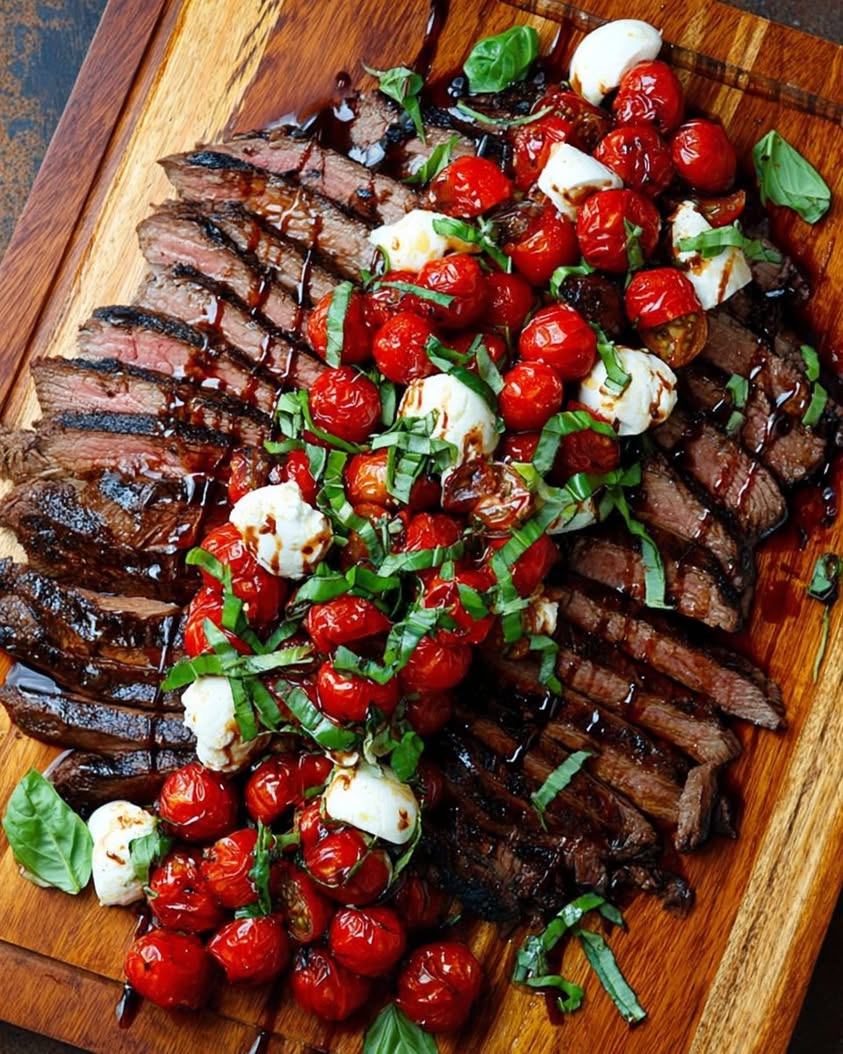
- Visual Appeal: The charred, deeply browned steak slices fan out beautifully against a bed of red tomatoes and white mozzarella. Bright green basil leaves and a dark, glossy balsamic drizzle create a striking color contrast. The finished platter looks vibrant, abundant, and utterly inviting.
- Skill Level Needed: This recipe suits beginners because it relies on simple grilling and assembly rather than complex techniques. The most important skill involves slicing the steak against the grain, which takes only a moment to learn. Anyone comfortable with basic kitchen tasks can execute this dish confidently.
- Special Equipment: You will need a grill, either gas or charcoal, and a sharp chef’s knife for slicing the steak. A small saucepan helps reduce the balsamic glaze to the right consistency. A large serving platter and tongs round out the essential tools for this grilled flank steak recipe.
Recipe Overview
- Difficulty Level: This Grilled Flank Steak with Balsamic Caprese Twist earns its easy rating because the marinade requires only whisking, and the grill handles the cooking. The caprese elements need no cooking at all, just slicing and arranging. The single technique that demands attention is slicing against the grain, which ensures tenderness. Overall, the recipe flows smoothly and suits cooks at every experience level.
- Category: This dish works as a main course for dinner and doubles as an impressive entrée for summer entertaining. You can serve it as the centerpiece of a barbecue spread or as a plated dinner for a small gathering. It also functions beautifully as a high-protein meal prep option when stored properly.
- Cuisine: The recipe draws inspiration from Italian culinary tradition through its caprese components, which originated on the island of Capri. Grilled flank steak brings a distinctly American steakhouse sensibility to the plate. The balsamic marinade nods to the Emilia-Romagna region of Italy, famous for its aged balsamic vinegar. This fusion creates a dish that feels both familiar and refreshingly global.
- Cost: A flank steak typically costs between $8 and $14 per pound, making it one of the more affordable beef cuts for entertaining. Fresh mozzarella, tomatoes, and basil add modest cost, especially during summer when tomatoes peak in flavor and price. Pantry staples like balsamic vinegar, olive oil, garlic, and herbs keep the overall budget reasonable for a special meal.
- Season: Summer is the ideal season for this Grilled Flank Steak with Balsamic Caprese Twist because tomatoes and basil reach their peak. Outdoor grilling matches the warm weather and relaxed entertaining style of the season. However, you can prepare the steak on an indoor grill pan year-round and use greenhouse tomatoes for satisfying results in cooler months.
- Occasion: This dish shines at backyard barbecues, family dinners, and casual dinner parties with friends. Its impressive presentation suits celebratory occasions like birthdays or anniversaries without demanding hours in the kitchen. Weeknight cooks also appreciate how quickly the recipe comes together after a busy day.
Why You’ll Love This Recipe
The taste and texture appeal of this Grilled Flank Steak with Balsamic Caprese Twist comes from layering complementary flavors and contrasting textures. The balsamic marinade infuses the beef with tangy depth while a hot grill creates a savory, caramelized crust. Slicing the steak thin against the grain yields tender, juicy bites that melt in your mouth. Meanwhile, the cool, creamy mozzarella and sweet, acidic tomatoes provide a refreshing counterpoint to the rich meat. Fresh basil adds an herbal lift, and the balsamic glaze brings a glossy, sweet-tart finish that elevates the entire dish.
Convenience and preparation benefits make this recipe a weeknight hero. You can whisk the marinade in under five minutes, and the steak can soak for as little as 30 minutes or as long as overnight. Grilling takes just 10 to 12 minutes, and the caprese topping requires only slicing and arranging. Cleanup stays minimal because the grill and a single platter do most of the work. Even better, you can prepare the balsamic glaze ahead of time, which means the final assembly takes almost no effort when dinner time arrives.
Nutritional advantages give this grilled flank steak recipe a place in a balanced eating plan. Flank steak delivers an excellent source of lean protein, iron, zinc, and B vitamins, which support muscle function and energy metabolism. Fresh tomatoes provide vitamin C, potassium, and the antioxidant lycopene, while basil adds vitamin K and plant-based antioxidants. Mozzarella contributes calcium and protein, and olive oil supplies heart-healthy monounsaturated fats. The dish satisfies hunger deeply, which helps prevent overeating later.
Social and entertaining value sets this Grilled Flank Steak with Balsamic Caprese Twist apart from ordinary steak dinners. The finished platter looks dramatic and abundant, the kind of centerpiece that draws compliments before anyone takes a bite. Because the recipe scales easily, you can double it for a party without extra stress. Guests with different preferences can customize their portions by adding more tomatoes or extra cheese, which makes the dish feel personal and inclusive. It also pairs famously with wine, which makes it a natural choice for dinner parties.
Cost-effectiveness and accessibility round out the reasons this recipe deserves a spot in your rotation. Flank steak remains significantly more affordable than premium cuts like ribeye or tenderloin while delivering impressive flavor. The caprese ingredients are budget-friendly, especially in summer, and the marinade uses pantry staples you likely already own. The recipe requires no specialty equipment beyond a basic grill and knife, making it accessible to home cooks at every level. You get a meal that tastes expensive without straining your grocery budget.
Historical Background and Cultural Significance
The origin story of this Grilled Flank Steak with Balsamic Caprese Twist begins with two separate culinary traditions that eventually merged on the modern American table. Caprese salad traces its roots to the island of Capri in Italy’s Campania region, where cooks celebrated the colors of the Italian flag with tomato, mozzarella, and basil. Flank steak, meanwhile, has long been a staple of American and Latin American cooking, prized for its bold beef flavor and affordability. Balsamic vinegar has been produced in Modena, Italy, for centuries, where families guard their aging barrels with pride. Combining these elements reflects the modern American approach of blending global influences into creative new dishes.
Cultural importance surrounds both sides of this recipe in meaningful ways. In Italy, caprese salad represents simplicity and respect for peak-season ingredients, a philosophy that celebrates minimal interference with excellent produce. Flank steak holds cultural significance in American barbecue traditions and in Latin American cuisines, where cuts like arrachera appear in grilled favorites. Balsamic vinegar carries the weight of Italian culinary heritage, with traditional producers following methods refined over generations. By bringing these traditions together, this dish honors each one while creating something new and inviting.
The evolution of the recipe reflects broader changes in how Americans cook and eat at home. Over the past few decades, home cooks have embraced global flavors and begun combining cuisines freely. Grilling has grown into a year-round activity, and interest in leaner cuts of beef has risen alongside health-conscious eating trends. Social media has accelerated this evolution by spreading visually striking dishes like this one to millions of viewers. The modern version of this recipe reflects all these trends, making it a product of its time while staying rooted in tradition.
Regional variations of this dish appear across the United States, each adding local character. In California, cooks often add avocado slices and use local heirloom tomatoes for extra richness. In Texas, some versions incorporate a smoky rub or a touch of chipotle in the glaze. In the Northeast, where summer tomatoes shine, cooks keep the caprese elements classic and let the produce speak for itself. Southern cooks sometimes add a splash of bourbon to the balsamic glaze for a sweeter, deeper finish. These variations show how a single recipe can adapt to local tastes while keeping its core identity intact.
Ingredient Deep Dive
Flank Steak. Flank steak comes from the abdominal muscles of the cow, which makes it lean and intensely flavored. Historically, butchers and home cooks prized this cut for its affordability and versatility, and it appears in dishes from fajitas to London broil. Nutritionally, flank steak delivers high-quality protein with less fat than many other beef cuts, along with iron, zinc, and vitamin B12. Choose a steak with even thickness and a bright red color, and look for fine grain lines that indicate tenderness potential. Store it in the coldest part of your refrigerator and use it within three to five days of purchase, or freeze it for up to three months. If flank steak is unavailable, skirt steak or sirloin flap make excellent substitutes with similar texture and flavor.
Flank steak rewards proper handling more than most cuts, which is why preparation matters so much. Marinating introduces acid and enzymes that help tenderize the meat’s fibrous structure. The grain direction matters enormously, and cooking the steak to medium-rare to medium keeps it juicy. Always rest the steak before slicing so the juices redistribute, and cut firmly against the grain. These steps transform an inexpensive cut into a tender, memorable centerpiece.
Balsamic Vinegar. Balsamic vinegar originated in Modena, Italy, where producers make it from cooked grape must aged in wooden barrels for years. Traditional balsamic carries cultural prestige, while commercial versions offer accessible tanginess for everyday cooking. Nutritionally, balsamic vinegar contains antioxidants and may support healthy blood sugar responses when consumed with meals. Select a vinegar with moderate acidity and a syrupy consistency for glazes, and avoid overly cheap products with added caramel color. Store balsamic in a cool, dark pantry and it will keep for years. In a pinch, red wine vinegar with a pinch of sugar works as a substitute, though the flavor profile shifts slightly.
Fresh Mozzarella. Fresh mozzarella comes from Campania, Italy, where cheesemakers craft it from whole milk and enjoy it within hours of production. Culturally, it symbolizes Italian freshness and simplicity, and it stars in caprese salad alongside tomatoes and basil. Mozzarella provides calcium, protein, and moderate fat, making it satisfying and nourishing. Choose mozzarella that feels soft and springs back when pressed, and check that it sits in fresh brine or water. Keep it refrigerated and use it within a few days for the best flavor and texture. Burrata offers a creamy substitute, and sliced provolone works if you need a firmer option.
Heirloom Tomatoes. Heirloom tomatoes carry generations of history, with seed varieties passed down through families and communities. They represent agricultural diversity and the slow food movement’s celebration of flavor over uniformity. Tomatoes supply vitamin C, potassium, and lycopene, an antioxidant linked to heart health. Choose tomatoes that feel heavy for their size and smell sweet at the stem. Store them at room temperature and never refrigerate them, which dulls their flavor and mealy texture. If heirlooms are unavailable, vine-ripened beefsteak or Campari tomatoes make fine substitutes.
Fresh Basil. Basil originated in Asia and the Mediterranean, and it holds sacred status in Italian cooking, where it symbolizes love and culinary devotion. Nutritionally, basil provides vitamin K, antioxidants, and antibacterial compounds. Select basil with bright green leaves and no dark spots, and store it in a glass of water at room temperature or wrapped in damp paper towels in the refrigerator. Handle basil gently and add it at the end of cooking to preserve its aromatic oils. Thai basil or oregano can substitute in a pinch, though the flavor shifts noticeably.
Common Mistakes to Avoid
- Slicing the steak with the grain instead of against it. This mistake creates chewy, tough bites no matter how well you cook the meat. Always identify the grain lines and cut perpendicular to them for maximum tenderness.
- Skipping the rest period after grilling. Resting allows juices to redistribute throughout the steak, and cutting too early wastes all that flavorful moisture. Give the steak at least five to ten minutes of rest before slicing.
- Overcooking the flank steak past medium. Flank steak has little fat, so it dries out quickly beyond medium doneness. Aim for medium-rare at 130 to 135 degrees Fahrenheit internal temperature for the juiciest results.
- Using cold mozzarella straight from the refrigerator. Cold cheese mutes its creamy flavor and firm texture, which throws off the balance of the dish. Let mozzarella sit at room temperature for 20 to 30 minutes before assembling.
- Refrigerating tomatoes before serving. Cold temperatures destroy tomato flavor and create a mealy texture. Keep tomatoes on the counter and slice them just before plating.
- Marinating the steak for too long in a highly acidic mixture. Excessive acid breaks down the meat’s surface and creates a mushy texture. Keep marination to between 30 minutes and 12 hours for the best results.
- Drizzling the balsamic glaze too early. The glaze can bleed into the cheese and tomatoes, muddying the presentation. Drizzle just before serving so every element stays distinct and beautiful.
- Crowding the platter or slicing the steak too thick. Thick slices feel chewy, and overcrowding makes the dish look messy. Slice thin, arrange in loose folds, and let each component breathe.
- Using dried basil instead of fresh. Dried basil lacks the bright, aromatic punch that defines caprese flavor. Fresh basil is essential, so buy it the same day you plan to serve the dish.
- Grilling on a dirty grate or at uneven temperatures. Residue from previous meals transfers unpleasant flavors, and hot spots cause uneven cooking. Clean the grill thoroughly and set up a two-zone fire for control.
Essential Techniques
Marinating for Tenderness and Flavor. Marinating accomplishes two goals at once by adding flavor to the surface and gently tenderizing the meat’s fibers. Whisk the marinade until it emulsifies, then submerge the steak completely and refrigerate it in a sealed bag or dish. Turn the steak once halfway through so every side contacts the marinade. Watch for visual cues like a slightly opaque surface and a glossy sheen that indicates the acid has begun working. Avoid over-marinating past 12 hours, which can make the texture grainy.
Grilling Over High Heat. High heat creates the char and caramelization that give grilled flank steak its signature appeal. Preheat the grill for at least 10 minutes, and oil the grates to prevent sticking. Place the steak over direct heat and leave it undisturbed for the first few minutes so a crust can form. Watch for beads of moisture rising to the surface and for grill marks that turn deep brown. Use an instant-read thermometer rather than relying on time alone. Move the steak to a cooler zone if flare-ups occur or if the exterior browns before the interior reaches target temperature.
Resting the Meat. Resting matters because it allows muscle fibers to relax and juices to redistribute evenly. Skip this step and the juices run out onto the cutting board, leaving dry meat behind. Transfer the steak to a clean cutting board and tent it loosely with foil, never tightly wrapped, which steams the crust. Wait five to ten minutes for a flank steak, and use the time to arrange the caprese ingredients. Press gently with a finger and feel for a slight springiness that signals readiness. The internal temperature will rise a few degrees during the rest.
Slicing Against the Grain. Slicing against the grain shortens the muscle fibers, which makes each bite tender and easy to chew. Locate the grain by looking for parallel lines running the length of the steak. Hold your knife perpendicular to those lines and cut thin slices at a slight angle for wider pieces. Watch for slices that hold together yet separate easily when pulled. A sharp knife makes clean cuts, so sharpen before slicing and let the blade do the work without pressing hard.
Pro Tips for Perfect Grilled Flank Steak with Balsamic Caprese Twist
Choose a steak of even thickness so it cooks uniformly across the surface. A flank steak that tapers dramatically from one end to the other creates uneven doneness, with one portion overcooked and another raw. Ask your butcher for a center-cut piece or trim the thin tail for another use.
Salt the steak generously about 40 minutes before grilling, or right before it hits the heat. Salting early draws moisture to the surface and then reabsorbs it as seasoned brine, which seasons the meat deeply. If you are short on time, salt immediately before grilling for surface seasoning and good crust.
Build a two-zone fire on your grill for maximum control. Place coals or burners on one side for searing and leave the other side cooler for finishing. If the steak browns too quickly, slide it to the cooler side to finish cooking gently without burning.
Reduce the balsamic glaze slowly over medium-low heat and stir frequently. High heat scorches the sugars and creates a bitter taste, while a gentle simmer develops a syrupy consistency. The glaze is ready when it coats the back of a spoon and drips slowly.
Slice the tomatoes just before serving and season them lightly with salt and a few drops of olive oil. This brief seasoning draws out their juices and amplifies their sweetness. Do not assemble the caprese base more than 20 minutes ahead or the tomatoes will water out.
Let the mozzarella come to room temperature for maximum creaminess and flavor. Cold mozzarella tastes rubbery and mutes the overall dish. Tear it into irregular pieces rather than slicing for a rustic look that holds dressing beautifully.
Use a platter with a slight rim to catch the tomato juices and balsamic drizzle. The collected juices make an excellent sauce, and the rim keeps your table clean. Alternatively, serve on a cutting board lined with parchment for easy cleanup.
Add a pinch of flaky sea salt over the finished platter just before serving. Flaky salt provides tiny bursts of seasoning that enhance the tomatoes and beef. Finish with a crack of black pepper and a few extra basil leaves for freshness and visual punch.
Variations and Adaptations
Regional Variations. In Italy, a cook might serve the steak with a classic caprese on the side rather than on top, keeping each element distinct. Latin American cooks often swap the balsamic for chimichurri and add grilled peppers, creating a vibrant fusion. In the American South, a touch of bourbon or honey in the glaze adds warmth and sweetness. California versions frequently include avocado and a squeeze of lime for a bright, modern twist. These regional takes show how the recipe adapts to local palates while keeping its core identity.
Seasonal Adaptations. During summer, use the ripest heirloom tomatoes and abundant garden basil for peak flavor. In cooler months, roast cherry tomatoes briefly to concentrate their sweetness and use greenhouse basil. Fall versions can incorporate a balsamic-fig glaze for deeper, richer notes. Springtime cooks might add arugula and shaved parmesan for a peppery, fresh variation. These adjustments keep the dish relevant and delicious all year long.
Dietary Modifications. For a dairy-free version, omit the mozzarella and add extra tomatoes or drizzle with a dairy-free pesto. A low-carb approach keeps the dish nearly intact since it already contains minimal carbohydrates. For a gluten-free version, verify that your balsamic vinegar contains no added gluten, which is rare but possible. Keto diners can enjoy the recipe as written because flank steak and caprese ingredients fit the macronutrient profile beautifully.
Flavor Variations. Swap the balsamic glaze for a red wine reduction with shallots for an elegant, savory finish. Add a smear of pesto under the steak for a basil-forward punch. A drizzle of hot honey introduces sweet heat that plays beautifully with the creamy mozzarella. Smoked paprika in the marinade deepens the grilled flavor even further. Each variation offers a new personality while keeping the recipe’s structure intact.
Texture Modifications. Add toasted pine nuts or crispy shallots for crunch against the soft cheese and tomatoes. A handful of arugula brings peppery freshness and a bit of bite. Crusty grilled bread served alongside soaks up the juices and adds satisfying chew. For a lighter texture, serve the steak over greens instead of a platter. These tweaks let you tailor the dish to your mood and menu.
Presentation Alternatives. Arrange the components on a large wooden board for a rustic, family-style presentation. For individual plates, fan the steak over a single large tomato slice and top with mozzarella and basil for a composed look. A shallow bowl collects the juices and makes the dish feel saucy and abundant. Skewers of steak, tomato, and mozzarella make elegant appetizer bites for parties.
Serving and Presentation Guide
Plating techniques matter because we eat with our eyes first, and this dish deserves a beautiful presentation. Fan the sliced steak in overlapping layers across the center of a large platter. Tuck tomato slices and torn mozzarella around and beneath the beef so the colors alternate. Scatter basil leaves generously, then drizzle the balsamic glaze in thin ribbons across the top. A final sprinkle of flaky salt and cracked pepper finishes the platter with polish.
Garnishing ideas should enhance rather than overwhelm the dish. Fresh basil leaves remain the most authentic choice, but small sprigs of oregano or a few edible flowers add charm. A scattering of toasted pine nuts or a light dusting of parmesan offers extra texture and flavor. Drizzle a little extra olive oil over the cheese for a glossy sheen. Keep garnishes minimal so the natural beauty of the tomatoes and steak shines through.
Traditional accompaniments include crusty Italian bread, a simple green salad, and roasted potatoes. Caprese salad often appears alongside grilled meats in Italian-American meals, so a side of extra tomatoes and mozzarella feels natural. Grilled vegetables like zucchini and bell peppers complement the smoky steak beautifully. A bowl of farro or orzo rounds out the meal for heartier appetites.
Modern serving suggestions lean toward lighter, brighter sides. Arugula with shaved parmesan and lemon dresses up the plate without weighing it down. Grilled corn with herb butter adds a summery touch, while a watermelon and feta salad brings refreshing contrast. Cauliflower rice or quinoa bowls turn the dish into a nutritious grain bowl meal. Choose sides that echo the Mediterranean flavors already on the platter.
Temperature considerations play a key role in the final quality of the dish. Serve the steak warm or at room temperature after resting, never piping hot from the grill. The mozzarella and tomatoes should stay cool or at room temperature, creating a pleasant contrast. Warm plates help the steak retain heat during serving, especially at outdoor gatherings. Avoid refrigerating the assembled platter, which dulls flavors and toughens the cheese.
Portion control tips help you serve the dish efficiently at gatherings. Plan roughly six ounces of raw steak per person for a satisfying main portion, or four ounces if serving with abundant sides. Provide extra caprese components so guests can pile on tomatoes and cheese to their taste. Slice thin so portions look generous and stretch further. Leftovers make excellent next-day lunches over greens.
Wine and Beverage Pairing
Wine pairings for this grilled flank steak favor medium to full-bodied reds with enough acidity to match the balsamic. A Chianti Classico brings bright cherry notes and earthy undertones that echo the Italian inspiration of the dish. Cabernet Sauvignon offers structure and dark fruit that stands up to grilled beef, while a Syrah adds peppery depth. A dry rosé works surprisingly well in summer, with its bright acidity cutting through the richness of the cheese. Medium-bodied Tempranillo or a Barbera offer excellent value and food-friendly balance.
Non-alcoholic alternatives keep the meal festive and inclusive. Sparkling water with lemon and basil feels refreshing and echoes the dish’s garden flavors. A tomato-infused virgin cocktail or a balsamic shrub spritzer brings tangy complexity without alcohol. Iced tea with mint or a hibiscus cooler provides acidity and color that match the plate. For something richer, a chilled cucumber-lime agua fresca cools the palate beautifully.
Coffee and tea pairings rarely accompany a main course like this, but a light-bodied black tea or an Italian amaro-style decaffeinated tea can serve as a fine after-dinner companion. Avoid heavy, bitter coffee with the meal, as it competes with the balsamic’s tang. If serving espresso after dinner, choose a medium roast with chocolate notes to complement the beef.
Temperature considerations apply to beverages as well as food. Serve reds slightly below room temperature, around 60 to 65 degrees Fahrenheit, to keep them refreshing in warmer weather. Whites and rosés should come from the refrigerator but not be icy cold, which mutes their aromatics. For non-alcoholic drinks, plenty of ice and fresh garnishes keep things lively. Match the beverage temperature to the outdoor setting for a comfortable experience.
Serving suggestions include offering a small wine selection so guests can choose their preference. Set up a self-serve station with a bottle of red, a bottle of rosé, and a pitcher of non-alcoholic spritzer. Provide stemless glasses for casual outdoor gatherings and stemmed glasses for more formal seated dinners. Chill white and rosé options in an ice bucket nearby, and keep a bottle of sparkling water on the table.
Storage and Shelf Life
Storage methods dictate how well leftovers hold up for future meals. Store the steak separately from the caprese components, because the tomatoes release moisture that makes the meat soggy and the cheese watery. Place sliced steak in an airtight container and refrigerate it within two hours of serving. Keep tomatoes at room temperature if possible, or refrigerate slices in a separate container if necessary. Basil stores best at room temperature in a glass of water, though it will not last long once exposed to air and moisture.
Temperature requirements remain simple because the cooked steak should sit in the refrigerator at or below 40 degrees Fahrenheit. Never freeze assembled caprese components, as the tomatoes and mozzarella break down when thawed. Use refrigerated leftovers within three to four days for optimal quality and safety. Avoid leaving the assembled platter at room temperature for more than two hours during warm weather.
Container recommendations include glass or high-quality plastic containers with tight lids for the steak. Use small, shallow containers to cool the meat quickly and evenly. Wrap basil stems in a damp paper towel and place them in a loosely closed bag in the refrigerator. Keep balsamic glaze in a small jar at room temperature for weeks, making future meal assembly easy.
Signs of spoilage include a sour smell, sticky or slimy surfaces on the meat, and mold on the cheese or tomatoes. Any of these warning signs means you should discard the item without tasting it. Leftover steak that develops a grayish color or slick texture should also be discarded. When in doubt, throw it out, because food safety always takes priority over saving a few bites.
Reheating instructions focus on gentle methods that preserve moisture in the steak. Warm slices in a skillet over medium-low heat for just one to two minutes per side. Microwaving quickly toughens lean beef, so use it only briefly if necessary. Better yet, enjoy leftover steak cold over salad, which actually pairs beautifully with the balsamic and caprese components. Add fresh tomatoes, basil, and mozzarella only at serving time.
Freezing guidelines allow you to store cooked flank steak for up to three months. Wrap individual portions tightly in plastic wrap and then in foil or a freezer bag to prevent freezer burn. Thaw overnight in the refrigerator before reheating or slicing for cold salads. Do not freeze the mozzarella or tomatoes, as their textures will suffer badly. The balsamic glaze freezes well in small containers and thaws quickly at room temperature.
Make Ahead Strategies
Prep timeline planning lets you spread the work across hours or days for stress-free entertaining. Whisk the marinade and marinate the steak the night before, which deepens flavor beautifully. Make the balsamic glaze up to one week ahead and store it in a small jar at room temperature. Slice tomatoes and mozzarella only an hour before serving, and pick basil leaves just before you plate. These steps mean the final execution takes only 20 minutes.
Storage between steps keeps each component at its best. Keep the marinated steak in a sealed bag in the refrigerator, turning occasionally. Refrigerate the glaze in a covered jar, and hold the mozzarella in its liquid in the coldest part of the fridge. Tomatoes stay on the counter, out of direct sunlight. Basil can sit in a glass of water on the counter covered loosely with a plastic bag.
Quality impact assessment shows that making components ahead improves rather than harms most elements. Marinating overnight intensifies flavor and tenderness, and making the glaze ahead lets it cool to the perfect drizzling consistency. Pre-sliced cheese and tomatoes lose some freshness within hours, so slice them close to serving time. Pre-grilling the steak and serving it chilled for a steak salad works brilliantly for meal prep.
Assembly tips emphasize layering in the right order for the best result. Start with the tomatoes as a bed, then add the mozzarella, then layer the warm steak on top, and finish with basil and glaze. This arrangement lets the steak’s juices mingle with the cheese and tomatoes without making them soggy. Add flaky salt and pepper at the very end. Serve immediately for the best contrast of temperatures.
Reheating guidelines for the steak favor gentle methods to preserve tenderness. Use a skillet over medium-low heat, or slice thin and let it come to room temperature for 15 minutes before serving. Avoid high heat and long cooking times, which dry out the lean meat. Do not reheat the cheese or tomatoes; keep them cool and fresh for a better contrast. This approach works especially well for meal prep lunches.
Fresh element additions ensure leftovers taste fresh and appealing. Add new basil leaves, a drizzle of fresh olive oil, and a squeeze of lemon or a few drops of balsamic glaze. Toss leftover steak with arugula, cherry tomatoes, and mozzarella for a quick salad. Add freshly cracked pepper just before eating to lift the flavors. These simple additions make leftovers feel new again.
Scaling Instructions
Halving the recipe works easily for a dinner for two or three people. Use one flank steak around one pound and cut the marinade ingredients in half, keeping the ratios intact. Reduce the balsamic glaze by half but watch it closely, because smaller volumes reduce faster and burn more readily. Keep the caprese components generous, since tomatoes and mozzarella disappear quickly. The cooking time stays the same per side because steak thickness determines timing, not total quantity.
Doubling or tripling the recipe requires planning for grill space and platter size. Marinate multiple steaks in separate bags so each one contacts the marinade evenly. Grill in batches rather than crowding the grate, keeping finished steaks warm in a low oven set to 200 degrees Fahrenheit. Use a large platter or two platters so the presentation stays abundant and beautiful. Prepare extra balsamic glaze in a larger saucepan, which reduces more slowly and forgivingly.
PrintGrilled Flank Steak with Balsamic Caprese Twist
- Total Time: 45 minutes
- Yield: 4
Description
A tender grilled flank steak topped with a fresh caprese-inspired mixture of cherry tomatoes, mozzarella, basil, and a tangy balsamic glaze.
Ingredients
- 1 1/2 pounds flank steak
- Salt and pepper to taste
- 2 tablespoons olive oil
- 1 cup cherry tomatoes, halved
- 8 ounces fresh mozzarella balls (bocconcini), halved
- 1/4 cup fresh basil leaves, torn
- 2 tablespoons balsamic glaze
Instructions
- Preheat grill to medium-high heat. Season flank steak generously with salt and pepper on both sides.
- Grill steak for 6-8 minutes per side for medium-rare, or until desired doneness. Remove from grill and let rest for 10 minutes.
- While steak rests, combine cherry tomatoes, mozzarella, and basil in a bowl. Drizzle with olive oil and toss gently.
- Slice steak against the grain into thin strips. Arrange on a platter and top with the caprese mixture. Drizzle with balsamic glaze and serve.
Notes
You can customize the seasonings to taste.
- Prep Time: 15 minutes
- Cook Time: 30 minutes
- Method: Main
- Cuisine: American