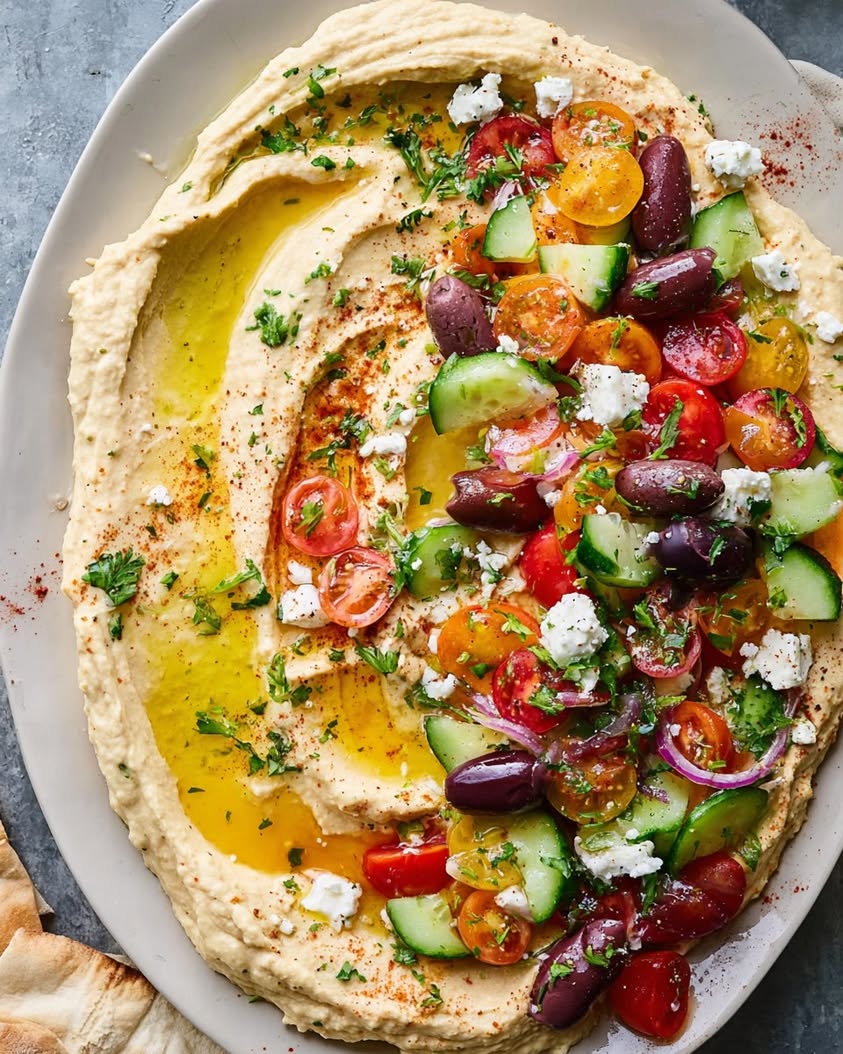
Greek Style Loaded Hummus: The Ultimate Healthy Party Appetizer
Imagine a creamy, dreamy bowl of hummus, perfectly swirled and topped with a colorful mosaic of Mediterranean ingredients. This Greek Style Loaded Hummus is not just a dip, it is a full experience. You get the smooth, rich base of classic hummus, then you discover a world of textures and flavors on top. Think briny kalamata olives, tangy feta cheese, sun-dried tomatoes, and crisp cucumbers, all drizzled with a bright lemon-herb vinaigrette. This is the ultimate healthy party appetizer that will steal the show at your next gathering. It is the perfect balance of savory, tangy, and fresh elements that everyone will adore.
This loaded hummus recipe transforms a simple side dish into the main event. Because the toppings are so varied and colorful, this platter becomes an interactive food experience. Your guests can scoop up different combinations with each bite. Furthermore, the preparation is surprisingly simple, requiring mostly chopping and assembling. You can even make most of the components ahead of time. Moreover, this dish is naturally gluten-free and packed with plant-based protein and healthy fats. Whether you serve it as a stunning appetizer for a dinner party or a satisfying snack for a movie night, this Greek Style Loaded Hummus consistently delivers incredible flavor and impressive visual appeal.
The secret to this recipe lies in the quality of its components. You start with a base of ultra-smooth hummus, either homemade or a high-quality store-bought version. Then you layer on fresh, vibrant vegetables and Mediterranean staples. The crunchy cucumbers and radishes contrast perfectly with the soft, creamy hummus and salty feta cheese. Additionally, a sprinkle of fresh dill or mint adds a burst of herbaceous aroma. As a result, every forkful or pita chip dip is a journey. This dish is a celebration of fresh, simple ingredients that come together to create something extraordinarily delicious.
Quick Recipe Highlights
- Flavor Profile: This loaded hummus offers a symphony of flavors. The creamy, nutty base is brightened by tangy feta and lemon. Salty olives and sun-dried tomatoes provide a rich umami punch, while fresh cucumber and herbs add a crisp, clean finish.
- Texture: The texture is a delightful contrast of smooth and crunchy. The hummus itself is velvety and luscious. The toppings, including diced cucumber, radish, and toasted pine nuts, provide a satisfying crunch that makes each bite interesting.
- Aroma: You will be greeted by the earthy scent of chickpeas and tahini, which is elevated by fresh dill and mint. The lemon juice and olive oil add a bright, citrusy note that is incredibly inviting.
- Visual Appeal: This dish is a feast for the eyes. The creamy beige hummus is a perfect canvas for a vibrant topping arrangement. You see pops of red from tomatoes, deep purple from olives, green from herbs and cucumber, and white from feta cheese.
- Skill Level Needed: This recipe is perfect for beginners and experienced cooks alike. There is no complex cooking involved. The main task is chopping ingredients and assembling the platter, making it incredibly approachable.
- Special Equipment: You will need a food processor if you make the hummus from scratch. For this loaded version, you only need a good chef’s knife, a cutting board, and a serving platter or shallow bowl.
Recipe Overview
- Difficulty Level: This recipe is rated easy because it requires very few cooking techniques. The most challenging part is making hummus from scratch, which is still straightforward. The assembly process is simply layering and garnishing. Consequently, it is a stress-free recipe for any cook.
- Category: This dish falls into the appetizer, snack, and side dish categories. It works beautifully as a party dip, a light lunch, or a component of a mezze platter. It is versatile enough for any meal or occasion.
- Cuisine: This recipe draws heavily from Greek and broader Mediterranean culinary traditions. Hummus itself has roots in the Middle East, but the toppings here, like feta, olives, and oregano, are classic Greek flavors. This fusion creates a vibrant and modern dish that honors its origins.
- Cost: Making this loaded hummus is very cost-effective. Canned chickpeas, tahini, and fresh vegetables are generally inexpensive. The most expensive items might be feta cheese and high-quality olive oil, but you use them in small amounts. Overall, it is a budget-friendly way to feed a crowd.
- Season: While you can enjoy this dish year-round, it is best in the summer and early fall. This is when cucumbers, tomatoes, and fresh herbs are at their peak flavor. The bright, fresh flavors also make it a perfect antidote to heavy winter meals.
- Occasion: This recipe is ideal for parties, potlucks, game day gatherings, and holiday appetizers. It also makes a fantastic meal prep option for healthy lunches. Its beautiful presentation makes it perfect for any special occasion when you want to impress guests.
Why You’ll Love This Recipe
First and foremost, the taste and texture of this loaded hummus are completely addictive. The creamy base provides a perfect foil for the tangy, salty, and crunchy toppings. You get a burst of flavor and a satisfying crunch in every single bite. The combination of smooth hummus, briny olives, and fresh cucumber is a classic Mediterranean flavor profile that never gets old. Moreover, the acidity from the lemon vinaigrette cuts through the richness, making it light and refreshing. It is a deeply satisfying dish that feels both indulgent and healthy at the same time.
In addition to its incredible flavor, this recipe is incredibly convenient to prepare. You can make the hummus a day or two ahead and store it in the refrigerator. Then, you only need to chop the vegetables, which takes about 15 minutes, and assemble the dish right before serving. Because the toppings are fresh and raw, there is no cooking involved. This makes it an ideal choice for busy weeknights or last-minute entertaining. You can even use high-quality store-bought hummus to cut the prep time to almost zero. It offers the perfect combination of impressive results and minimal effort.
From a nutritional perspective, this Greek Style Loaded Hummus is a powerhouse of healthy ingredients. Chickpeas are loaded with plant-based protein and fiber, which keep you full and satisfied. Tahini provides healthy fats and calcium, while vegetables add vitamins, minerals, and antioxidants. The olive oil is rich in monounsaturated fats, which are excellent for heart health. Therefore, you can enjoy this communal appetizer without any guilt. It is a wonderful way to get a serving of vegetables and legumes in a delicious and fun format. This is a smart, nutrient-dense choice for any health-conscious eater.
Furthermore, this recipe is a star when it comes to social and entertaining value. It creates a beautiful, shareable centerpiece for a table. Guests love the interactive nature of scooping and dipping from a communal bowl. The vibrant colors and artful arrangement spark conversation and make the food the highlight of the party. Serving this loaded hummus shows your guests that you care about their food experience. It elevates a simple party platter into something memorable and special. It encourages people to gather around and enjoy food together.
Finally, this loaded hummus is incredibly cost-effective and accessible. Chickpeas, vegetables, and basic pantry staples are very inexpensive. You can feed a large group for a fraction of the cost of a platter from a restaurant. Additionally, the ingredients are commonly available at any grocery store. There are no exotic or hard-to-find items required. This makes it a practical and reliable recipe for any home cook. It proves that you do not need expensive ingredients or complicated techniques to create something spectacular and delicious that everyone will love.
Historical Background and Cultural Significance
Hummus has ancient roots that trace back to the Levant region of the Middle East. For centuries, chickpeas, tahini, lemon, and garlic have been staples in the diets of countries like Lebanon, Israel, Palestine, Syria, and Egypt. The exact origin is hotly debated, but the earliest known recipes for a similar dish appear in 13th-century cookbooks from Cairo. Yet hummus was not just a food; it was a symbol of hospitality and communal eating. Families would gather around a large bowl of hummus, tearing off pieces of warm pita bread to scoop up the creamy dip. This tradition of sharing food from a common vessel fostered connection and conversation, a practice that remains deeply important today.
The cultural importance of hummus extends beyond its role as a simple meal. It has become a symbol of national pride and identity in several Middle Eastern countries. In fact, Lebanon famously holds the Guinness World Record for the largest plate of hummus, weighing over 10,000 kilograms. This competitive spirit reflects the deep affection people have for this dish. Moreover, hummus has become a bridge food, connecting diverse cultures across the globe. It is now a beloved staple in Western kitchens, found in nearly every grocery store. Its ability to adapt and incorporate local flavors, like the Greek toppings in this recipe, shows its incredible versatility and universal appeal.
The evolution of this loaded hummus recipe is a natural progression of the classic dip. Traditionally, hummus is served simply with a drizzle of olive oil and a sprinkle of paprika. However, as it gained popularity in the West, chefs and home cooks began to experiment. The loaded hummus trend started in Israel and quickly spread to the United States. People began adding whole chickpeas, ground lamb, mushrooms, or vegetables on top. This recipe takes inspiration from the Greek islands, where fresh vegetables, brined olives, and tangy feta cheese are abundant. The result is a modern, fusion dish that respects the creamy foundation while celebrating local Mediterranean ingredients.
Regional variations of loaded hummus are vast and exciting. In many parts of the Middle East, the toppings often include ful (fava beans), sautéed mushrooms, or spicy ground beef. In Turkey, you might find hummus topped with pastirma (cured beef) and melted butter. Israeli versions often feature whole chickpeas, pine nuts sautéed in butter, and a sprinkle of sumac. This Greek Style Loaded Hummus is a distinct and refreshing twist within this landscape. It emphasizes the fresh, crisp, and herby qualities of Greek cuisine. By using ingredients like feta, kalamata olives, and a lemon-oregano vinaigrette, this variation provides a bright, tangy, and briny flavor profile that stands out from its richer, heartier cousins.
Ingredient Deep Dive
Chickpeas (Garbanzo Beans): Chickpeas are the foundation of hummus and have been cultivated for over 7,000 years in the Middle East. Nutritionally, they are a superstar. They are packed with plant-based protein, dietary fiber, folate, iron, and manganese. This combination promotes healthy digestion, stable blood sugar levels, and heart health. When selecting chickpeas for hummus, you have two excellent options. Dried chickpeas, which you must soak overnight and cook until tender, create the silkiest, most flavorful hummus. However, canned chickpeas offer incredible convenience. To use canned chickpeas, look for low-sodium options and drain them well. Then, you can peel them for an even smoother texture. Store unopened cans in your pantry for up to a year. Cooked chickpeas will keep in the refrigerator for up to five days. For a substitution, you can use white beans or cannellini beans for a creamier, slightly milder hummus.
Tahini: Tahini is a paste made from toasted, ground sesame seeds, and it is a critical ingredient in authentic hummus. It provides a nutty, slightly bitter depth of flavor and a luxurious, velvety texture. The history of tahini dates back to ancient Persia, where it was used in various dishes. It is rich in healthy fats, particularly omega-3 and omega-6 fatty acids, as well as calcium, phosphorus, and thiamine. When selecting tahini, choose a brand that has a smooth, pourable consistency. Some cheaper brands can be thick and clumpy. You should always stir the tahini well before using it because the oil tends to separate. Store tahini in a cool, dark pantry after opening, and it will last for several months. If you cannot use tahini, you can substitute it with well-stirred natural peanut butter or sunflower seed butter, though the flavor will change significantly.
Feta Cheese: Feta is a brined curd white cheese from Greece, traditionally made from sheep’s milk or a mixture of sheep’s and goat’s milk. It has a tangy, salty, and slightly tangy flavor that is absolutely essential for this Greek-style dish. Its crumbly yet creamy texture provides a wonderful contrast to the smooth hummus. Feta is a good source of calcium, protein, and vitamin B12. It also contains probiotics that are beneficial for gut health. When buying feta, opt for a block packed in brine for the best flavor and texture. Crumbled feta is convenient but can be more dry and salty. You should store feta in its brine in the refrigerator and consume it within a week of opening. For a dairy-free option, you can use a high-quality vegan feta made from almonds or tofu, but the flavor profile will be different. A simple substitute is marinated tofu, crumbled and seasoned with lemon juice and salt.
Kalamata Olives: These almond-shaped purple-black olives are named after the city of Kalamata in Greece. They are known for their rich, fruity, and slightly tangy flavor. Cured in red wine vinegar or olive oil, they have a distinct taste that adds a briny, salty punch to the loaded hummus. Nutritionally, they are a good source of vitamin E, iron, and copper, and they contain healthy monounsaturated fats and antioxidants. When selecting Kalamata olives, look for those packed in brine or olive oil, as they have the best flavor and texture. Avoid pre-pitted olives if possible, as they can sometimes be mushy. You can pit them yourself quickly. Store them in their brine in the refrigerator for up to a month. If you cannot find Kalamata olives, you can substitute them with oil-cured black olives or Castelvetrano olives, which are milder and sweeter. For a less salty option, rinse them briefly before adding them to the platter.
English Cucumber: An English cucumber, also known as a hothouse cucumber, is long, slender, and has fewer seeds than a regular cucumber. It also has a thin, edible skin that does not require peeling. Its crisp, refreshing texture and mild flavor are perfect for balancing the rich hummus and salty toppings. Cucumbers are over 95% water, making them incredibly hydrating and low in calories. They also contain vitamin K and several antioxidants. When selecting an English cucumber, choose one that is firm, dark green, and free of soft spots or wrinkles. You should store it in the refrigerator in a plastic bag for up to a week. Because of its high water content, cucumber can make the hummus watery if left on top too long. Therefore, it is best to add it just before serving. A good substitute is a Persian cucumber, which is similar in texture, or you can use a regular cucumber after peeling and seeding it.
Sun-Dried Tomatoes: Sun-dried tomatoes are ripe tomatoes that have been dried in the sun to concentrate their flavor. They have a sweet, intense, and slightly tangy taste that adds a wonderful depth of flavor to the loaded hummus. They also provide a chewy texture that contrasts well with the creamy hummus and crunchy vegetables. Nutritionally, they are rich in lycopene, a powerful antioxidant linked to heart health and cancer prevention. They also provide vitamin C, potassium, and fiber. When buying sun-dried tomatoes, you have two main types: dry-packed and oil-packed. Oil-packed tomatoes are softer and ready to use. Dry-packed tomatoes need to be rehydrated in hot water for about 20 minutes before using. You should store oil-packed tomatoes in their oil in the refrigerator. Dry-packed tomatoes should be kept in an airtight container in a cool, dark place. A good substitute is roasted red peppers, which provide a similar sweetness and texture.
Red Onion: Red onion has a sharp, pungent flavor when raw, but it adds a lovely bite and color to the loaded hummus. Soaking sliced red onion in cold water for 10 minutes will mellow its bite. It is an excellent source of quercetin, an antioxidant with anti-inflammatory properties. It also contains fiber and vitamin C. When selecting a red onion, choose one that is firm, heavy for its size, and has dry, papery skin. You can store it in a cool, dark, well-ventilated place for several weeks. For a milder flavor, you can substitute with shallots or sweet Vidalia onion. For a completely different texture, you could use pickled red onions for a tangy, acidic pop.
Fresh Herbs (Dill, Mint, Parsley): Fresh herbs are vital for adding brightness and aromatic complexity to this dish. Dill offers a fresh, slightly grassy flavor that pairs beautifully with cucumber and lemon. Mint provides a cool, sweet note that cuts through the richness. Parsley adds a bright, clean, and slightly peppery finish. All of these herbs are rich in antioxidants and vitamins. When selecting fresh herbs, look for bright, perky leaves without any wilting or yellowing. You should store them in the refrigerator with their stems in a glass of water and a plastic bag over the top. They will last for about a week. If you must use dried herbs, reduce the amount to one-third of what is called for. The flavor will be less vibrant, but it will still work in a pinch. A wonderful substitution for the combination is fresh oregano or chives.
Common Mistakes to Avoid
- Using cold hummus straight from the refrigerator is a common oversight. Chilled hummus will have a stiff, unyielding texture that does not spread well. You should always let your hummus sit at room temperature for at least 20 minutes before spreading it onto the platter to allow it to soften.
- Adding the cucumber and other watery vegetables too early is a critical error. The salt in the feta and olives will draw out moisture from the cucumbers and tomatoes, creating a watery mess. You must add these fresh, watery toppings just before serving to keep the dish crisp and the hummus creamy.
- Pouring the dressing over the entire platter at once can drown the toppings. The heavy dressing can make the hummus base watery and overly oily. Instead, you should drizzle the dressing sparingly around the edges or over specific components, allowing guests to mix as they like.
- Skipping the step of seasoning the hummus layers can lead to a bland final dish. The plain hummus needs to be seasoned well with salt, pepper, and a squeeze of lemon juice. You must taste and adjust the seasoning of the hummus base before adding the toppings.
- Cutting all the vegetables into uneven or very large pieces affects the eating experience. Large chunks are difficult to scoop up with a pita chip. You need to dice all the vegetables into small, uniform, bite-sized pieces so each bite has a bit of everything.
- Forgetting to peel the chickpeas for the hummus base can result in a grainy texture. The skins of chickpeas are tough and can remain intact even after blending. You should peel them for a luxuriously smooth and creamy hummus. This small step makes a huge difference.
- Using low-quality tahini is a mistake that will impact the entire dish. Some brands of tahini are bitter, thick, and clumpy. You must invest in a high-quality, well-stirred tahini for a smooth and nutty flavor. A bad tahini can ruin an otherwise perfect hummus.
- Over-processing the hummus is a surprising pitfall that can make it gummy. Blending the hummus for too long generates heat, which can break down the emulsion and create a gluey texture. You should blend it just until it is completely smooth and creamy, stopping to scrape down the sides.
- Not considering the saltiness of the toppings can lead to an overly salty dish. Kalamata olives and feta cheese are already very salty. You must be very careful when adding extra salt to the hummus base or the vinaigrette. It is always better to under-salt and adjust later.
- Leaving the loaded hummus at room temperature for longer than two hours is a food safety concern. Because it contains dairy and perishable vegetables, you should not leave it out for too long. You should plan to serve it within the first hour or place it back in the refrigerator.
Essential Techniques
Preparing Ultra-Smooth Hummus: This is the most important technique for the entire dish. First, you must start with warm ingredients. If you are using canned chickpeas, heat them in their liquid on the stovetop or in the microwave for two minutes. This softens the skins and makes them easier to remove and blend. Then, drain them and peel the skins by pinching each chickpea between your thumb and forefinger. This step removes the fibrous outer layer, ensuring a silky smooth texture. Next, blend the peeled chickpeas with the garlic and lemon juice in a food processor until they form a dry paste. This breaks down the chickpeas before you add the liquids, which prevents a grainy result. Finally, you add the tahini and a few ice cubes while processing. The ice keeps the mixture cool, which helps create a light, airy, and incredibly creamy hummus. You can see the texture change from a thick paste to a luscious, smooth cream. This is the visual cue that you have achieved perfect hummus.
Building the Loaded Platter: This technique is all about visual appeal and functional eating. You start by spreading the hummus in a shallow bowl or on a large platter. Use the back of a spoon to create swirling patterns and indentations. These wells will help hold the dressing and toppings in place. It also makes the dish look more rustic and inviting. Next, you layer the ingredients strategically. Start with the larger, heavier items like the crumbled feta cheese and halved olives. Then, you scatter the smaller, lighter ingredients like the diced cucumber, chopped sun-dried tomatoes, and red onion. Finally, you sprinkle the fresh herbs and toasted pine nuts over the top. This layering ensures that every scoop will get a bit of every topping. The final touch is drizzling the lemon-oregano vinaigrette in the swirls you made earlier. This technique creates a beautiful, balanced, and easy-to-eat platter.
Creating the Lemon-Oregano Vinaigrette: A simple vinaigrette is the secret to tying all the flavors together. The technique is a basic emulsion. You start by mincing one small clove of garlic very finely or pressing it through a garlic press. You put this in a small bowl with a pinch of salt and a teaspoon of dried oregano. Then, you whisk in two tablespoons of fresh lemon juice until the salt dissolves. Now, you slowly drizzle in about one-quarter cup of extra-virgin olive oil while whisking constantly. The key is to add the oil very slowly at first, drop by drop, so it emulsifies with the lemon juice. If you add it too quickly, the vinaigrette will separate. You continue whisking until the mixture is thick and slightly opaque. You can taste it and adjust the salt and pepper. The visual cue is a shiny, unified dressing that coats the back of a spoon. This vinaigrette provides a bright, acidic counterpoint to the rich hummus and salty toppings.
Pro Tips for Perfect Greek Style Loaded Hummus
For the best possible hummus base, always warm your chickpeas before processing them. This softens the starches and makes the hummus much silkier. Also, do not skip peeling the skins. It is a tedious task, but it is the single most important step for achieving a smooth, creamy hummus that will impress everyone.
When building the platter, think about contrast. You want a variety of colors and textures in every bite. Therefore, dice your vegetables into small, uniform pieces. Larger chunks are hard to scoop. Smaller pieces ensure that each pita chip or cracker gets a perfect balance of hummus and toppings.
To prevent a soggy platter, you must drain your sun-dried tomatoes well before using them. If they are packed in oil, pat them dry with a paper towel. For cucumber, you can even scoop out the watery seeds with a spoon before dicing. This will prevent the liquid from seeping into the hummus and making it watery.
Let your hummus come to room temperature before serving. Cold hummus will taste starchy and have a firm, pasty texture. Allowing it to sit out for 20 minutes will restore its creamy, lush texture and allow the flavors to bloom and become more pronounced.
For an extra layer of texture and flavor, toast your pine nuts or walnuts in a dry pan over medium heat for two to three minutes. Watch them carefully, as they burn quickly. The toasting process releases their natural oils, making them nuttier, richer, and incredibly aromatic.
Do not be afraid to customize the toppings to your taste. If you love a bit of heat, add some sliced pepperoncini or a sprinkle of red pepper flakes. If you want more protein, add some grilled chicken or lamb. This recipe is a fantastic canvas for your creativity.
For the most beautiful presentation, use a large, shallow bowl or a wooden serving board. Spread the hummus right to the edges. This gives you a wide surface area to arrange all the colorful toppings. The wider the platter, the more impressive the visual impact will be.
Finally, ensure you have enough dippers for your crowd. Pita chips, tortilla chips, cucumber slices, and bell pepper strips all work wonderfully. You want to have a variety of options for texture and flavor. Make sure you have at least two to three dippers per serving.
Variations and Adaptations
Regional Variations: You can easily adapt this loaded hummus to reflect different Mediterranean regions. For an Israeli-style version, top the hummus with whole cooked chickpeas, a drizzle of tahini sauce, and a heavy sprinkle of paprika, cumin, and chopped parsley. For a Lebanese-inspired variation, add ground lamb or beef that has been sautéed with pine nuts and allspice. If you want a more North African twist, you can top the hummus with harissa paste, roasted red peppers, and cured olives. Each regional spin uses the same basic hummus base but offers a completely different flavor profile.
Seasonal Adaptations: The beauty of this recipe is that you can change the toppings based on what is fresh at the market. In the summer, you can use heirloom cherry tomatoes, grilled corn, and fresh basil. During the fall, you can add roasted butternut squash cubes, pomegranate arils, and toasted pumpkin seeds. In the spring, you can use fresh peas, roasted asparagus, and a drizzle of mint chimichurri. Each seasonal version brings a unique flavor and color palette to the dish.
Dietary Modifications: This recipe is naturally gluten-free and vegetarian. To make it vegan, simply omit the feta cheese or use a high-quality vegan feta alternative. For a dairy-free version, you can use a plant-based yogurt or a sprinkle of nutritional yeast as a substitute for feta. You must also ensure that the pita chips you use to dip are gluten-free. If you need a nut-free version, simply omit the pine nuts and use toasted sunflower seeds or pumpkin seeds instead.
Flavor Variations: You can dramatically change the flavor of the loaded hummus by altering the dressing and seasonings. For a spicy version, mix a tablespoon of harissa paste into the hummus base and drizzle the top with chili oil. For a smoky version, you can add smoked paprika to the hummus and use chipotle peppers in the vinaigrette. For a roasted garlic version, you can blend several cloves of roasted garlic into the hummus base for a sweet, mellow, and deeply savory flavor.
Texture Modifications: If you prefer a chunkier texture, you can fold a handful of whole chickpeas into the hummus base before spreading it. For a lighter, more airy hummus, you can add a pinch of baking soda to the chickpeas while cooking them. This will break down their skins and make them incredibly soft. For an even more decadent texture, you can swirl some plain Greek yogurt into the hummus just before serving, adding a tangy, creamy dimension.
Presentation Alternatives: Instead of a large platter, you can serve this loaded hummus in individual small bowls or jars for a personalized presentation. You can also use it as a filling for pita pockets or as a spread for wraps and sandwiches. Another option is to layer the hummus and toppings in a clear glass dish to show off the beautiful layers. You can even serve it as a dip alongside grilled meats or fish for a complete meal.
Serving and Presentation Guide
For a stunning presentation, you should use a large, shallow, rimmed platter or a wooden board. Spread the hummus evenly, leaving a two-inch border around the edge. Use the back of a large spoon to create beautiful swirling patterns and deep wells in the hummus. These wells are not just decorative; they will hold the vinaigrette and smaller toppings. You then arrange your toppings in sections or scatter them artfully. You can create a pattern, like a wheel with different toppings in each section, or you can create a rustic, free-form scatter. The key is to create visual interest and make sure the colors pop against the creamy hummus.
Garnishing is where you can add the final touch of elegance. A generous drizzle of high-quality extra-virgin olive oil over the entire platter makes it look glossy and inviting. A sprinkle of flaky sea salt and fresh cracked black pepper adds a final layer of flavor and visual appeal. You can also add a handful of whole fresh herbs, like a few sprigs of dill or a small bunch of mint, for a pop of green. Edible flowers, like nasturtiums or chive blossoms, can add an unexpected touch of beauty for special occasions.
Traditional accompaniments are the best way to enjoy this dish. Warm pita bread, cut into triangles, is the classic dipper. You can also serve it with warm naan, crispy lavash, or crunchy pita chips. Fresh vegetable crudités, like carrot sticks, celery sticks, bell pepper slices, and cucumber rounds, offer a low-carb and crunchy alternative. A side of extra lemon wedges and a bowl of extra olives are nice additions. For a more substantial meal, you can serve it alongside a Greek salad, grilled lamb chops, or falafel.
Modern serving suggestions are great for a contemporary twist. You can serve the loaded hummus in individual glass jars or small clay pots for a charming, deconstructed look. This is perfect for parties where guests can grab their own. For a brunch or a light lunch, you can spread the hummus thickly on toasted sourdough bread and top it with the vegetables and feta. For an elegant cocktail party, you can create tiny bite-sized cups by using endive leaves or cucumber rounds as the dippers.
Wine and Beverage Pairing
When pairing wine with this loaded hummus, you want to look for something that can complement the richness of the hummus and the brininess of the olives and feta. A crisp, dry white wine like an Assyrtiko from Greece is a fantastic choice. Its high acidity and citrus notes cut through the creaminess of the hummus and match the lemon in the vinaigrette. A Sauvignon Blanc from New Zealand or a dry Riesling from Germany also work beautifully. Their bright, herbal qualities echo the fresh dill and mint in the dish. For a red wine, a light-bodied, chilled option is best. A Pinot Noir from Oregon or a Beaujolais from France, served slightly chilled, offers a fruity, low-tannin profile that will not overpower the delicate flavors.
For non-alcoholic alternatives, you have many excellent options. A sparkling water with a splash of lemon or lime is a simple and palate-cleansing choice. For something more elaborate, try a homemade lemonade or an iced herbal tea. A tall glass of iced mint tea is especially refreshing and echoes the fresh mint in the recipe. Many Mediterranean sodas, like a blood orange soda or a pomegranate spritzer, are sweet and tangy, which pairs wonderfully with the salty, savory flavors. A cold glass of ayran, a traditional Turkish yogurt drink, is also a phenomenal match, as its tangy, creamy profile mirrors the feta and hummus.
Storage and Shelf Life
Proper storage of this loaded hummus is crucial because the toppings will degrade the base. The most important rule is to store the hummus and the toppings separately if you have leftovers. The hummus alone will keep in the refrigerator for up to five days. You should transfer it to an airtight container and place a layer of plastic wrap directly on its surface before sealing the lid. This prevents a skin from forming. The fresh vegetables and herbs should be stored separately in a paper towel-lined container to absorb excess moisture. They will last for one to two days. The feta cheese and olives can be stored together in a small airtight container.
Temperature requirements are straightforward. The assembled platter should never be left at room temperature for more Print
Greek Style Loaded Hummus
- Total Time: 15 minutes
- Yield: 4
Description
A creamy, flavorful hummus topped with classic Greek ingredients like olives, feta, and cherry tomatoes, perfect for a healthy appetizer or snack.
Ingredients
- 1 can (15 oz) chickpeas, drained and rinsed
- 1/4 cup tahini
- 3 tablespoons lemon juice
- 2 tablespoons olive oil, plus more for drizzling
- 1 clove garlic, minced
- 1/2 teaspoon ground cumin
- Salt to taste
- 1/4 cup water (or as needed for consistency)
- 1/4 cup crumbled feta cheese
- 1/4 cup Kalamata olives, halved
- 1/4 cup cherry tomatoes, halved
- 2 tablespoons chopped fresh parsley
- 1 tablespoon chopped fresh dill
- 1 tablespoon capers (optional)
- Paprika for garnish
Instructions
- In a food processor, combine the chickpeas, tahini, lemon juice, olive oil, garlic, cumin, and salt. Blend until smooth, adding water a little at a time until desired consistency is reached.
- Transfer the hummus to a serving bowl or plate, spreading it evenly.
- Top with feta cheese, olives, cherry tomatoes, parsley, dill, and capers if using.
- Drizzle with olive oil and sprinkle with paprika.
- Serve immediately with pita bread, crackers, or fresh vegetables.
Notes
You can customize the seasonings to taste. For a smokier flavor, try adding a pinch of smoked paprika to the hummus.
- Prep Time: 15 minutes
- Cook Time: 0 minutes
- Method: Appetizer
- Cuisine: Greek