Authentic Greek Potato Salad Recipe with Lemon and Fresh Herbs: A Taste of the Mediterranean Sun
Imagine a potato salad that breaks all the rules. Forget the heavy, mayonnaise-laden versions. Instead, picture tender, warm potatoes soaking up a vibrant, sun-kissed dressing of extra virgin olive oil and freshly squeezed lemon juice. This authentic Greek potato salad recipe with lemon and fresh herbs is a revelation. It captures the essence of Mediterranean cooking, where simple, high-quality ingredients create extraordinary flavors. The result is a dish that feels both rustic and elegant, perfect for a casual family dinner or a festive gathering.
This Greek potato salad, known as “Patatosalata,” is a staple on taverna tables across Greece. It is a celebration of texture and brightness. The potatoes are typically boiled until just fork-tender, then dressed while still warm to absorb the lemony vinaigrette deeply. Generous handfuls of fresh dill, parsley, and red onion add layers of aroma and a delightful crunch. Consequently, every bite is a harmonious balance of creamy, tangy, and herbaceous notes. This recipe is not just a side dish; it is a transportive experience that brings the flavors of a Greek island summer to your table, no matter the season.
The beauty of this authentic Greek potato salad recipe lies in its versatility and healthful profile. It is naturally vegan and gluten-free, making it an inclusive option for various dietary needs. Furthermore, it relies on the holy trinity of Greek cuisine: olive oil, lemon, and oregano. These ingredients work in concert to create a dressing that is both light and intensely flavorful. Ultimately, this dish proves that you do not need complicated techniques or a long list of ingredients to make something truly memorable and delicious.
Quick Recipe Highlights
- Flavor Profile: This authentic Greek potato salad recipe delivers a powerful, tangy punch from fresh lemon juice, balanced by the fruity richness of extra virgin olive oil. Earthy oregano and the subtle anise note of fresh dill create a complex, herbaceous backdrop that is distinctly Mediterranean.
- Texture: The salad features creamy, soft potato cubes that gently yield to the bite. Contrasting this are the crisp, sharp bits of red onion and the slight chew of Kalamata olives, providing a satisfying and varied mouthfeel in every forkful.
- Aroma: As soon as you mix the dressing, the kitchen fills with the bright, zesty scent of lemon and the grassy, peppery fragrance of extra virgin olive oil. The fresh herbs, especially dill and parsley, release their green, aromatic oils, creating an irresistibly fresh and inviting smell.
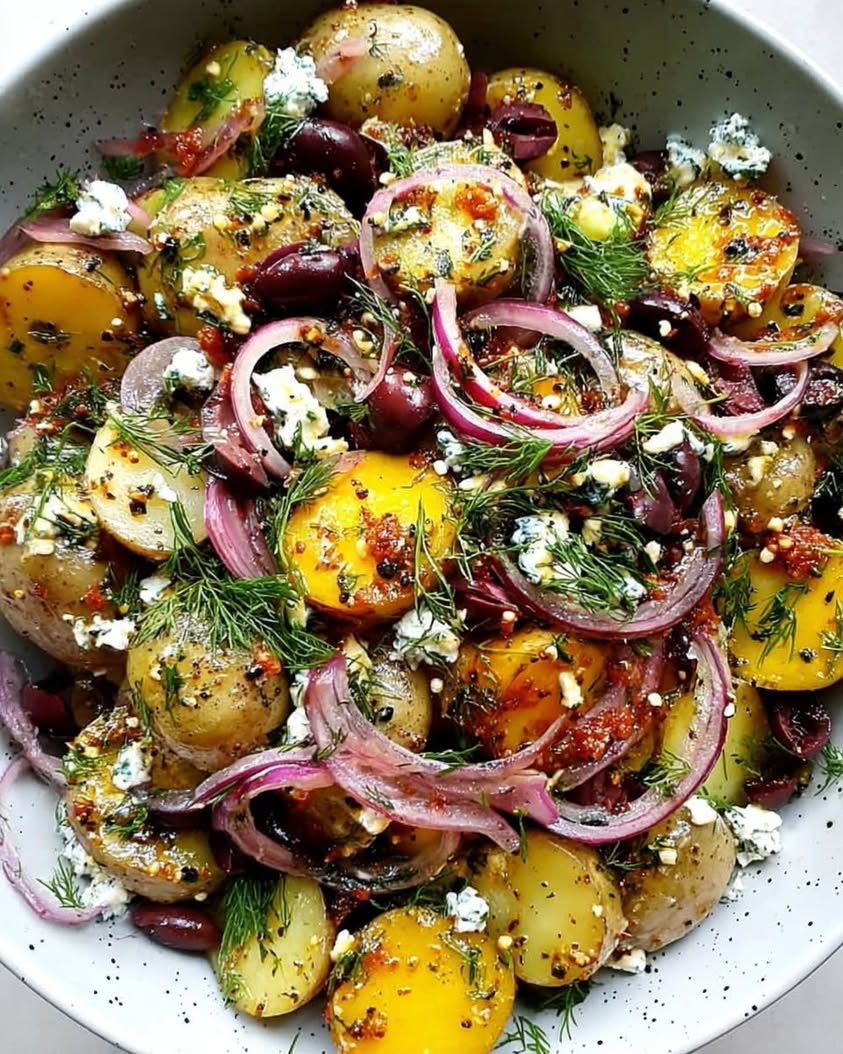
- Visual Appeal: The salad is a vibrant mosaic of colors. You see the golden yellow of the potatoes, the deep purple of red onion, the black of Kalamata olives, and the brilliant green of fresh herbs. A final drizzle of olive oil makes the whole dish glisten appealingly.
- Skill Level Needed: This is a beginner-friendly recipe. The primary skills required are basic knife work for chopping and the ability to boil potatoes to the perfect tenderness. No fancy techniques are needed, making it accessible for cooks of all levels.
- Special Equipment: You only need a large pot for boiling the potatoes, a sharp knife, a cutting board, and a mixing bowl. A citrus juicer is helpful for extracting maximum juice from the lemons, but a fork works in a pinch.
Recipe Overview
- Difficulty Level: We rate this authentic Greek potato salad recipe as “Easy.” The steps are straightforward and sequential. You simply boil, chop, whisk, and combine. There is no intricate timing or advanced culinary technique required. The most critical step is cooking the potatoes correctly, which is a fundamental skill most home cooks already possess.
- Category: This dish falls squarely into the side dish category, perfect for complementing grilled meats, fish, or vegetarian mains. However, it is substantial enough to be a light main course when served with crusty bread, feta cheese, and a simple tomato salad for a complete Mediterranean meal.
- Cuisine: This is a classic example of Greek cuisine, which emphasizes fresh, local ingredients, simple preparation, and bold, clean flavors. It reflects the culinary philosophy of the Mediterranean diet, where vegetables, olive oil, and herbs are the stars of the show.
- Cost: This is an incredibly economical recipe to prepare. Potatoes, onions, and lemons are budget-friendly staples. The primary cost comes from quality extra virgin olive oil and Kalamata olives. Overall, you can feed a crowd for a very reasonable price, making it perfect for potlucks and parties.
- Season: While delicious year-round, this authentic Greek potato salad recipe truly shines in the spring and summer. It is ideal for picnics, barbecues, and outdoor dining because it contains no mayonnaise, so it is safer in warmer weather. The bright, fresh flavors also pair perfectly with seasonal grilled foods.
- Occasion: This salad is incredibly versatile for any occasion. Serve it at a casual weeknight dinner, a festive holiday spread like Easter or a summer BBQ, or as part of a mezze platter for entertaining. Its crowd-pleasing flavor and simple elegance make it suitable for almost any event.
Why You’ll Love This Recipe
First and foremost, the taste and texture of this authentic Greek potato salad recipe are utterly captivating. The warm potatoes act like little sponges, soaking up the vibrant lemon and olive oil dressing, ensuring every bite is bursting with flavor. The creamy interior of the potato contrasts beautifully with the crisp red onion and the briny pop of a Kalamata olive. Meanwhile, the fresh dill and parsley add a layer of garden-fresh aroma that makes the dish taste alive and incredibly refreshing. This is a potato salad that feels light yet satisfying, a welcome departure from heavier, more traditional versions.
From a convenience standpoint, this recipe is a dream. It comes together in about 40 minutes with minimal active cooking time. You can easily boil the potatoes and prepare the dressing simultaneously. Moreover, it requires no special equipment or hard-to-find ingredients. Everything you need is likely already in your pantry or available at any local grocery store. This simplicity means you can whip up an impressive side dish without stress, even on a busy weeknight. Additionally, the salad can be made a few hours ahead, allowing the flavors to meld and develop even further.
Nutritionally, this authentic Greek potato salad recipe is a powerhouse. It is packed with heart-healthy monounsaturated fats from extra virgin olive oil, a cornerstone of the renowned Mediterranean diet. The fresh lemon juice provides a dose of vitamin C and aids in iron absorption from the herbs. Potatoes themselves are a good source of vitamin C, potassium, and fiber, especially if you leave the skins on. Unlike mayonnaise-based salads, this version contains no dairy or eggs, making it naturally vegan and lower in saturated fat. Consequently, it is a side dish you can feel genuinely good about serving.
The social and entertaining value of this dish is immense. Its bright, colorful presentation is instantly appealing on a buffet table. Because it is served at room temperature, it eliminates the last-minute stress of timing a hot side dish. It pairs wonderfully with a vast array of main courses, from simple grilled chicken to elaborate leg of lamb. Furthermore, its unique flavor profile often becomes a conversation starter, introducing guests to the delightful simplicity of Greek home cooking. It is a guaranteed crowd-pleaser that will have people asking for the recipe.
Finally, the cost-effectiveness and accessibility of this authentic Greek potato salad recipe cannot be overstated. Potatoes are one of the most affordable vegetables available. You can customize it based on what you have; for instance, yellow onions can stand in for red, and other herbs like mint or oregano can be used. This flexibility makes it a fantastic “clean out the fridge” recipe. You can easily double or triple the recipe to feed a large group without breaking the bank. Ultimately, it delivers restaurant-quality flavor and presentation for a fraction of the cost, proving that eating well does not have to be expensive.
Historical Background and Cultural Significance
The origin of potato salad in Greece is a relatively modern story intertwined with the introduction of the potato itself. Potatoes were not native to Europe or the Mediterranean; they were brought from the Americas. Initially, they gained slow acceptance in Greece. However, by the 19th and 20th centuries, potatoes became a cultivated staple due to their hardiness and ability to grow in varied soils. Greek cooks, masters of creating magnificent dishes from simple ingredients, naturally incorporated the potato into their culinary tradition. They applied their foundational flavor principles—lemon, olive oil, and herbs—to this new tuber, giving birth to the Patatosalata we know today.
This authentic Greek potato salad recipe holds significant cultural importance as a quintessential “taverna” food. In Greece, tavernas are casual, family-run restaurants serving home-style cooking. A plate of this potato salad, along with other mezze like tzatziki and dolmades, is a common sight on their tables. It represents the Greek philosophy of “philoxenia,” or friendliness to strangers, where sharing food is central to hospitality. The salad is rarely the main event but is an essential component of a shared meal, encouraging conversation and connection. It embodies the relaxed, communal dining experience that is at the heart of Greek culture.
The evolution of the recipe is a testament to regional ingredient availability and family tradition. While the core of lemon, oil, and oregano remains constant, the supporting cast varies. In some coastal villages, you might find capers added for a extra briny note. Inland, families might use more wild oregano or thyme. The type of potato can also differ; some prefer waxy varieties that hold their shape, while others use floury potatoes that break down slightly to thicken the dressing. These subtle variations mean that every family and every region has its own “authentic” version, passed down through generations and adapted with personal touches.
Regional variations across Greece and the diaspora are fascinating. On the island of Crete, they might add a handful of chopped wild greens (horta). In Cyprus, a similar potato salad might include a pinch of cumin or coriander. Greek-American adaptations sometimes incorporate a small amount of mayonnaise for creaminess, blending the old-world and new-world traditions. The authentic Greek potato salad recipe, therefore, is not a rigid formula but a flexible template. It is a dish that travels well and adapts, much like the Greek people themselves, while always retaining its soulful connection to the sun-drenched flavors of the Mediterranean.
Ingredient Deep Dive
Potatoes: We recommend Yukon Gold potatoes for this authentic Greek potato salad recipe. They have a naturally buttery flavor and a waxy yet creamy texture that holds its shape when boiled but still feels tender. Potatoes are a fantastic source of vitamin C, potassium, and vitamin B6. Their skin provides valuable dietary fiber. When selecting, choose firm potatoes without green spots or sprouts. Store them in a cool, dark, well-ventilated place—not in the refrigerator. For a different texture, you can substitute with red-skinned potatoes or even small fingerlings, cut to a similar size.
Extra Virgin Olive Oil: This is the non-negotiable heart of the dressing. Extra virgin olive oil (EVOO) is the first cold pressing of olives, retaining the most flavor and health benefits. It is rich in antioxidants and monounsaturated fats. Its fruity, peppery notes are essential for authentic flavor. Always choose a bottle labeled “extra virgin” and preferably from a single region like Greece or Italy. Store it in a cool, dark cupboard away from heat and light. Do not substitute with refined or “light” olive oil, as they lack flavor. In a pinch, a good quality avocado oil could work, but it will alter the classic taste.
Fresh Lemon Juice: The sharp, bright acidity of fresh lemon juice is what makes this salad sing. It balances the richness of the oil and cuts through the starchiness of the potatoes. Bottled juice simply cannot compare, as it lacks the vibrant, floral top notes of fresh lemons. Lemons are packed with vitamin C and citric acid. Choose heavy, firm lemons with smooth, bright yellow skin; they yield more juice. Roll them on the counter while pressing down before cutting to maximize juice extraction. For a slightly different citrus note, you could use a combination of lemon and a small amount of fresh orange juice.
Fresh Dill & Parsley: Dill is the signature herb in this authentic Greek potato salad recipe, providing a distinctive, fresh aroma reminiscent of anise and celery. Flat-leaf (Italian) parsley adds a clean, peppery green note. Both herbs are rich in vitamins A, C, and K, and contain beneficial antioxidants. Look for bright green, perky bunches without wilting or yellowing. To store, trim the stems, place them in a glass of water (like a bouquet), and loosely cover with a plastic bag in the fridge. If dill is unavailable, you can increase the parsley or add fresh oregano or mint for a different but still delicious herbal profile.
Red Onion & Kalamata Olives: Red onion provides crucial crunch and a sharp, sweet bite that mellows slightly in the acidic dressing. Kalamata olives, with their deep purple color, meaty texture, and winey flavor, add a salty, umami-rich element that elevates the entire dish. Red onions contain quercetin, a powerful antioxidant. Always buy olives from the brine bar or in jars, avoiding canned black olives which are bland. If you cannot find Kalamatas, other brine-cured olives like Gaeta or Niçoise are good substitutes. For a milder onion flavor, you can soak the sliced red onion in cold water for 10 minutes before adding it to the salad.
Common Mistakes to Avoid
- Using the Wrong Potato: A common error is using a very starchy potato like a Russet. These tend to fall apart completely when boiled for salad, creating a mushy texture. Always opt for waxy or all-purpose varieties like Yukon Gold or red potatoes that hold their shape.
- Overcooking the Potatoes: Boiling the potatoes until they are falling apart is a critical mistake. You want them tender enough to pierce easily with a fork but still firm. Test them a few minutes before the suggested time to ensure perfect texture.
- Dressing Cold Potatoes: Pouring the vibrant lemon dressing over cold potatoes is a missed opportunity. The warm potatoes absorb the dressing much more effectively, becoming flavor-packed throughout. Always dress them within minutes of draining.
- Using Bottled Lemon Juice: The flavor difference between fresh and bottled lemon juice is dramatic. Bottled juice often has a flat, metallic, or overly sour taste that will dominate the salad unpleasantly. Fresh juice is brighter and more complex.
- Skimping on the Olive Oil: Do not use a subpar or “light” olive oil. The oil is a primary flavor component, not just a lubricant. A robust, fruity extra virgin olive oil makes all the difference in achieving an authentic taste.
- Chopping Herbs Too Early: If you chop your fresh dill and parsley hours in advance, they will wilt and lose their vibrant color and much of their aromatic potency. Chop them just before you are ready to mix the salad.
- Not Seasoning in Layers: Seasoning only at the end results in bland potatoes. Salt the boiling water generously (it should taste like the sea). Then, season the dressing, and finally, taste and adjust the finished salad. This builds depth of flavor.
- Skipping the Resting Time: Serving the salad immediately after mixing is fine, but it benefits hugely from 30-60 minutes at room temperature. This allows the flavors to marry and the potatoes to fully absorb the dressing.
- Storing it Incorrectly: Do not store this salad in the refrigerator for more than a day or two before serving, as the potatoes can become hard and the herbs wilt. If you must make it ahead, store the components separately and combine a few hours before serving.
Essential Techniques
Boiling Potatoes to Perfect Tenderness: This is the most crucial technique for your authentic Greek potato salad recipe. Start by cutting the potatoes into uniform, bite-sized cubes so they cook evenly. Place them in a pot of cold, generously salted water. Bringing them to a boil from cold ensures they heat through uniformly. Once boiling, reduce to a simmer. A violent boil can cause the potatoes to break apart. Test for doneness by piercing a cube with a fork or the tip of a knife; it should slide in with slight resistance. Immediately drain and let them steam-dry in the colander for a minute. This step prevents a watery salad.
Creating an Emulsified Vinaigrette: While a simple whisking of oil and lemon works, taking a moment to create a temporary emulsion makes a better dressing. In a bowl, combine the lemon juice, mustard (if using), oregano, salt, and pepper. Whisk vigorously. Then, while continuously whisking, slowly drizzle in the extra virgin olive oil in a thin, steady stream. The mixture will thicken slightly and become cloudy, meaning the oil is suspended in the lemon juice. This emulsion helps the dressing cling to the potatoes more evenly and provides a more cohesive flavor in every bite.
Balancing Acid and Fat: Mastering the lemon-to-oil ratio is key to the signature flavor. The dressing should be tangy but not mouth-puckeringly sour, rich but not greasy. Always taste your dressing before adding it to the potatoes. Dip a small piece of potato or bread into it. It should make your taste buds perk up. If it’s too sharp, add a bit more oil. If it’s bland, add a squeeze more lemon or a pinch of salt. Remember, the potatoes will temper the acidity slightly, so the dressing can be a touch bold on its own.
Pro Tips for Perfect Authentic Greek Potato Salad
First, salt your potato boiling water aggressively. It should taste like seawater. This is your only chance to season the potato from the inside out, which is fundamental for a flavorful salad.
Let the boiled potatoes steam-dry in the colander for a full 2-3 minutes after draining. This evaporates excess surface water, preventing a diluted, runny dressing.
For an extra flavor boost, add a whole, peeled garlic clove to the pot while boiling the potatoes. Remove it before dressing; it will have infused the potatoes with a subtle, sweet garlic essence.
If your red onion is particularly pungent, soak the sliced pieces in a bowl of ice water for 10-15 minutes before adding to the salad. This tames the sharp bite while keeping the crunch.
Use a microplane to zest one of the lemons before juicing it, and add the zest to the dressing. The aromatic oils in the zest add an incredible depth of lemon flavor without extra acidity.
For a beautiful presentation, reserve a small handful of your chopped fresh herbs. Sprinkle them over the top of the finished salad just before serving for a vibrant, fresh-looking garnish.
If making ahead, combine the warm potatoes and dressing, then let cool to room temperature. Only fold in the fresh herbs, olives, and onion an hour before serving to maintain their texture and color.
Always use a rubber spatula or your hands to gently fold the salad ingredients together. Avoid vigorous stirring, which can break down the tender potato cubes.
Variations and Adaptations
Regional Variations: Across Greece, this authentic Greek potato salad recipe adapts to local tastes. In Crete, you might find a handful of chopped wild greens (horta) like dandelion or amaranth stirred in. On some islands, a tablespoon of capers replaces or joins the olives for a different briny note. In the north, a pinch of dried mint might be used alongside or instead of dill.
Seasonal Adaptations: In spring, add a cup of fresh, blanched peas or chopped asparagus tips. For summer, incorporate sweet cherry tomatoes and fresh basil. In autumn, roasted red peppers or a sprinkle of smoked paprika can add warmth. In winter, it pairs beautifully with roasted root vegetables like parsnips or carrots added to the mix.
Dietary Modifications: This salad is naturally vegan and gluten-free. For a protein boost to make it a main dish, add a can of drained chickpeas or white beans. For a pescatarian version, flake in some grilled or canned tuna or add anchovy fillets minced into the dressing.
Flavor Variations: Add a teaspoon of Dijon mustard to the dressing for tangy complexity. For a creamier version, stir in ¼ cup of plain Greek yogurt or vegan mayonnaise at the end. A pinch of red pepper flakes or a finely chopped fresh chili can introduce a gentle heat.
Texture Modifications: For more crunch, add toasted pine nuts or slivered almonds. For a smoother, more cohesive salad, mash a few of the warm potato cubes into the dressing before mixing with the rest, creating a thicker sauce that clings beautifully.
Presentation Alternatives: Serve it in individual lettuce cups or endive spears for a chic appetizer. Alternatively, present it on a large platter garnished with whole sprigs of dill, lemon wedges, and a ring of sliced cucumbers and tomatoes for a stunning centerpiece.
Serving and Presentation Guide
Plating Techniques: For a family-style presentation, use a wide, shallow bowl or a large platter. Mound the salad gently in the center, allowing some of the colorful olives and onions to peek out from the sides. The wide surface area showcases the beautiful ingredients. For individual servings, use a ring mold to create a neat, cylindrical tower on each plate, then carefully lift the mold away.
Garnishing Ideas: A final drizzle of high-quality extra virgin olive oil over the top adds a beautiful sheen. Sprinkle with a pinch of flaky sea salt, cracked black pepper, and a light dusting of dried oregano. Adding whole Kalamata olives and lemon wedges around the edge of the platter is both decorative and functional.
Traditional Accompaniments: In Greece, this authentic Greek potato salad recipe is often part of a mezze spread. Serve it alongside other classics like tzatziki, hummus, dolmades (stuffed grape leaves), grilled halloumi cheese, and warm pita bread. It also pairs perfectly with simply grilled whole fish, lamb chops, or chicken souvlaki.
Modern Serving Suggestions: For a light lunch, serve a generous scoop over a bed of peppery arugula with crumbled feta cheese on top. It also makes an excellent filling for a wrap or pita sandwich, especially with added greens and a dollop of tzatziki. Consider it as a vibrant side for burgers or grilled sausages at a summer barbecue.
Temperature Considerations: This salad is best served at cool room temperature. If refrigerated, take it out at least 30 minutes before serving to allow the olive oil to loosen up and the flavors to become vibrant again. The cold dulls the flavors and hardens the olive oil.
Portion Control Tips: As a side dish, plan for about ¾ to 1 cup per person. If serving as part of a large mezze spread with many other dishes, ½ cup portions are sufficient. When it’s a main course (with added protein like beans or tuna), 1.5 to 2 cups per person is appropriate.
Wine and Beverage Pairing
Wine Pairings: The bright acidity and herbal notes of this authentic Greek potato salad recipe call for wines with similar characteristics. A crisp, dry Greek white wine like Assyrtiko from Santorini is a perfect match; its citrus and mineral notes echo the lemon and salt. Alternatively, a Sauvignon Blanc from New Zealand or a Vermentino from Italy also pair beautifully. For a light red option, a slightly chilled Greek Xinomavro or a Beaujolais Villages works well, as their bright red fruit and low tannins won’t clash with the salad’s acidity.
Non-Alcoholic Alternatives: Sparkling water with a squeeze of lemon or lime and a sprig of mint is a refreshing, palate-cleansing choice. For something more elaborate, a homemade lemonade or a cucumber-mint cooler complements the Mediterranean flavors. Iced herbal teas, like chamomile or lemon verbena, are also excellent, non-caffeinated options.
Coffee/Tea Pairings: While not a typical pairing for the meal itself, a strong Greek coffee or a cup of mint tea served after the meal is a wonderful traditional way to finish. The bitterness of the coffee or the soothing quality of the mint tea provides a pleasant contrast and aids digestion.
Temperature Considerations: All beverages should be served well-chilled. The salad’s refreshing quality is enhanced by cold, crisp drinks. If serving wine, whites should be at 45-50°F, and light reds, if chilled, should be around 55°F.
Serving Suggestions: Offer a variety of beverages to cater to different preferences. Always have plenty of cold water on the table. If serving wine, consider decanting it slightly before chilling to allow it to open up, enhancing its aromatic pairing with the fresh herbs in the salad.
Storage and Shelf Life
Storage Methods: Store any leftover authentic Greek potato salad in an airtight container in the refrigerator. Glass containers are ideal as they do not retain odors. Press a piece of plastic wrap directly onto the surface of the salad before sealing the lid to minimize oxidation and exposure to air, which can cause the herbs to discolor and the potatoes to dry out.
Temperature Requirements: This salad must be kept refrigerated at 40°F or below if not consuming within 2 hours of preparation. Do not leave it sitting out at room temperature for extended periods, especially in warm weather, as the potatoes can become a breeding ground for bacteria despite the acidic dressing.
Container Recommendations: Use a container that is just the right size for the amount of leftovers to minimize empty air space. A shallow container is better than a deep one, as it allows the salad to cool more quickly and evenly in the refrigerator.
Signs of Spoilage: Discard the salad if you notice an off or sour smell that is different from the bright lemon and herb aroma. Visible mold, an excessively slimy texture on the potatoes, or a significant change in color (like darkening herbs or greyish potatoes) are all clear indicators that the salad is no longer safe to eat.
Reheating Instructions: This salad is not meant to be reheated. It is designed to be served at cool room temperature. If it is too cold from the fridge, simply let it sit out for 20-30 minutes to take the chill off before serving again. Reheating would cook the fresh herbs and ruin the texture.
Freezing Guidelines: Freezing is not recommended for this authentic Greek potato salad recipe. The high water content in the potatoes and fresh vegetables causes them to become mushy and watery upon thawing. The emulsion in the dressing will break, and the herbs will turn black and lose all flavor. It is best enjoyed fresh.
Make Ahead Strategies
Prep Timeline: You can prepare components of this authentic Greek potato salad recipe up to 24 hours in advance. Boil and cube the potatoes, let them cool completely, and store them in an airtight container in the fridge. Prepare the dressing and store it separately in a jar in the refrigerator. Chop the onions and store them in water in the fridge. Keep the olives and herbs whole until the final assembly.
Storage Between Steps: Keep all components chilled until you are ready to assemble. The cold potatoes will need to be brought back to near room temperature for best flavor absorption. You can spread them on a baking sheet for 15-20 minutes to speed this up. Shake the dressing jar vigorously to re-emulsify it before using.
Quality Impact Assessment: Making the potatoes a day ahead has minimal impact on flavor but can slightly firm up their texture. The dressing’s flavors will actually meld and improve overnight. The key to maintaining quality is keeping the fresh elements—herbs and onions—crisp and adding them at the last possible moment.
Assembly Tips: For best results, combine the room-temperature potatoes and the shaken dressing in your serving bowl. Toss gently to coat. Let this mixture sit for 15-30 minutes so the potatoes can absorb the dressing. Then, just before serving, fold in the drained red onions, olives, and freshly chopped herbs.
Reheating Guidelines: As noted, do not reheat. The goal is to bring the assembled salad from fridge-cold to cool room temperature. If you must assemble completely ahead, let the whole salad sit out for 45-60 minutes before serving, gently folding once or twice to redistribute the dressing that may have settled.
Fresh Element Additions: If you’ve made the salad fully ahead and refrigerated it, the herbs will wilt. To revive it, give it a final stir and garnish with a fresh sprinkle of chopped herbs just before serving. A fresh drizzle of olive oil and a squeeze of lemon can also brighten it up.
Scaling Instructions
Halving the Recipe: Halving this authentic Greek potato salad recipe is straightforward. Simply divide all ingredient quantities by two. Use a medium-sized pot for boiling the potatoes to ensure they are still submerged. The dressing will be a smaller volume, so whisk it in a small bowl or shake it in a jar. All cooking times remain the same; just keep a closer eye on the smaller batch of potatoes to prevent overcooking.
Doubling or Tripling: For a crowd, doubling or tripling works perfectly. Use a very large pot or boil the potatoes in batches to avoid overcrowding, which leads to uneven cooking. When making a large batch of dressing, consider using a blender or food processor to emulsify it easily. Mix the salad in the largest bowl you have, or mix directly in a clean, food-safe storage container to save on dishes.
Equipment Adjustments: Scaling up requires larger equipment: a bigger pot, a larger mixing bowl, and a larger serving platter. For very large batches, you may need to use two pots on separate burners. Ensure your mixing bowl is large enough to toss the salad without spilling; a stockpot can sometimes serve as a mixing bowl for huge quantities.
Timing Modifications: The prep time for chopping herbs and onions will increase linearly. The boiling time for the potatoes may increase slightly if the pot is very full, as it will take longer for the water to return to a boil after adding the potatoes. Start checking for doneness at the original time but be prepared to add a few extra minutes.
Storage Considerations: A large batch will last the same amount of time in the fridge—2-3 days. It’s best stored in several smaller containers rather than one gigantic one. This makes it easier to cool quickly (important for food safety) and allows you to take out only what you need for a meal without disturbing the whole batch.
Nutritional Deep Dive
Macro Breakdown: A serving of this authentic Greek potato salad recipe is a balanced source of macronutrients. The primary carbohydrates come from the potatoes, providing sustained energy. The generous amount of extra virgin olive oil contributes healthy monounsaturated fats, which are beneficial for heart health. The salad contains a modest amount of plant-based protein from the potatoes and herbs. It is naturally low in saturated fat and contains no cholesterol.
Micronutrient Analysis: This dish is rich in several key vitamins and minerals. Potatoes provide vitamin C, B6, and potassium. Fresh lemon juice is an excellent source of vitamin C. The herbs, particularly parsley, are packed with vitamins A, C, and K, as well as folate. Olive oil contains vitamin E and various polyphenols, which are potent antioxidants.
Health Benefits: Consuming this salad supports heart health due to the monounsaturated fats in olive oil. The antioxidants from the lemon, herbs, and olive oil combat oxidative stress and inflammation. The fiber from the potato skins (if left on) and vegetables promotes digestive health. The ingredients collectively align with the principles of the Mediterranean diet, which is associated with longevity and reduced risk of chronic disease.
Dietary Considerations: This recipe is inherently vegan, gluten-free, dairy-free, and egg-free, making it suitable for many common dietary restrictions. It is also nut-free and soy-free. However, those on a strict low-carb or keto diet may need to adjust the portion size due to the potato content.
Portion Analysis: A standard serving (about 1 cup) is a satisfying side dish that complements a protein without being overly heavy. Because it is nutrient-dense and flavorful, you are likely to feel satisfied with a reasonable portion, which helps with overall calorie management.
Weight Management Tips: For those watching calories, you can slightly reduce the amount of olive oil by a tablespoon or two—though this will impact the authentic flavor and mouthfeel. Increasing the proportion of non-starchy vegetables like added cucumbers, tomatoes, or bell peppers can bulk up the salad for more volume with fewer calories per bite.
Dietary Adaptations
Gluten-free: This authentic Greek potato salad recipe is naturally gluten-free as it contains no wheat, barley, or rye products. Always double-check that your mustard (if used) is certified gluten-free, as some brands may contain trace amounts from additives or vinegar sources.
Dairy-free: The recipe contains no dairy ingredients. It is safe for those with lactose intolerance or a dairy allergy. For Print
Greek Potato Salad
- Total Time: 45 minutes
- Yield: 4
Description
A vibrant and tangy potato salad with Mediterranean flavors, featuring tender potatoes, crisp vegetables, and a zesty lemon-herb dressing.
Ingredients
- 2 lbs baby potatoes, halved
- 1/2 cup red onion, finely chopped
- 1 cup cucumber, diced
- 1 cup cherry tomatoes, halved
- 1/2 cup Kalamata olives, pitted and sliced
- 1/2 cup feta cheese, crumbled
- 1/4 cup fresh dill, chopped
- 1/4 cup fresh parsley, chopped
- 1/4 cup extra virgin olive oil
- 3 tbsp fresh lemon juice
- 2 cloves garlic, minced
- 1 tsp dried oregano
- Salt and black pepper to taste
Instructions
- Place the halved baby potatoes in a large pot of salted water. Bring to a boil and cook until tender, about 15-20 minutes. Drain and let cool slightly.
- In a large bowl, combine the red onion, cucumber, cherry tomatoes, Kalamata olives, feta cheese, dill, and parsley.
- In a small bowl, whisk together the olive oil, lemon juice, minced garlic, oregano, salt, and pepper to make the dressing.
- Add the warm potatoes to the vegetable mixture. Pour the dressing over and gently toss to combine, being careful not to break the potatoes.
- Cover and refrigerate for at least 1 hour to allow flavors to meld. Serve chilled or at room temperature.
Notes
You can customize the seasonings to taste.
- Prep Time: 15 minutes
- Cook Time: 30 minutes
- Method: Side
- Cuisine: Greek