The Ultimate Guide to Building a Stunning Greek Feta Salad Tower
Greek Feta Salad Tower brings a modern twist to the beloved classic, transforming a simple salad into an impressive centerpiece. Imagine layers of crisp romaine lettuce, juicy tomatoes, crunchy cucumbers, and tangy Kalamata olives, all stacked high with creamy feta cheese. This Greek Feta Salad Tower elevates your dining experience with its stunning presentation and fresh Mediterranean flavors. The first time you build a Greek Feta Salad Tower, you realize it is more than just a salad; it is an edible sculpture that wows guests and makes weeknight dinners feel special. Each layer offers a burst of flavor, from the briny olives to the herbaceous oregano dressing that ties everything together beautifully. You will love how easy it is to assemble this showstopper without turning on the oven, ensuring you spend less time cooking and more time enjoying good company. Precision in layering creates that iconic tall structure, and the payoff is a dish that looks as wonderful as it tastes.
Using fresh, high-quality ingredients is the secret to building a memorable Greek Feta Salad Tower, and this recipe guides you through every step. You can find most items at your local grocery store, including ripe cherry tomatoes, English cucumbers, and a block of genuine feta cheese. The Greek Feta Salad Tower works perfectly as a light lunch, a side dish for grilled meats, or even a starter for a Mediterranean-themed dinner party. Its vibrant colors and towering height make it an irresistible conversation starter when you serve it to guests. Moreover, because you can prepare components ahead of time, this recipe fits neatly into your busy schedule without sacrificing quality or taste. As you chop vegetables, whisk dressing, and layer ingredients, you will appreciate how each element contributes to the overall harmony of the dish. Once you try it, this Greek Feta Salad Tower will likely become a regular feature in your meal rotation. Learning to build this tower teaches you essential skills like balancing flavors and creating visual appeal with simple ingredients.
Quick Recipe Highlights
- Flavor Profile: The Greek Feta Salad Tower delivers a perfect balance of salty, tangy, and fresh flavors. Creamy feta cheese provides richness while the lemon-oregano dressing adds a bright citrus note. Briny olives and sweet tomatoes enhance the overall savory experience with every bite.
- Texture: You will enjoy an invigorating combination of crunchy cucumbers, crisp romaine, and tender feta crumbles in this tower. Soft tomatoes offer juicy bursts between the firmer layers, and the olives add a pleasant chewiness. The contrast of smooth dressing against crunchy vegetables keeps each bite interesting.
- Aroma: The aromatic notes of fresh oregano and lemon zest rise from this Greek Feta Salad Tower when you serve it. Ripe tomatoes and crisp cucumbers contribute clean, garden-fresh scents that evoke memories of summer meals. Garlic in the dressing adds a subtle warmth without overwhelming the other aromas.
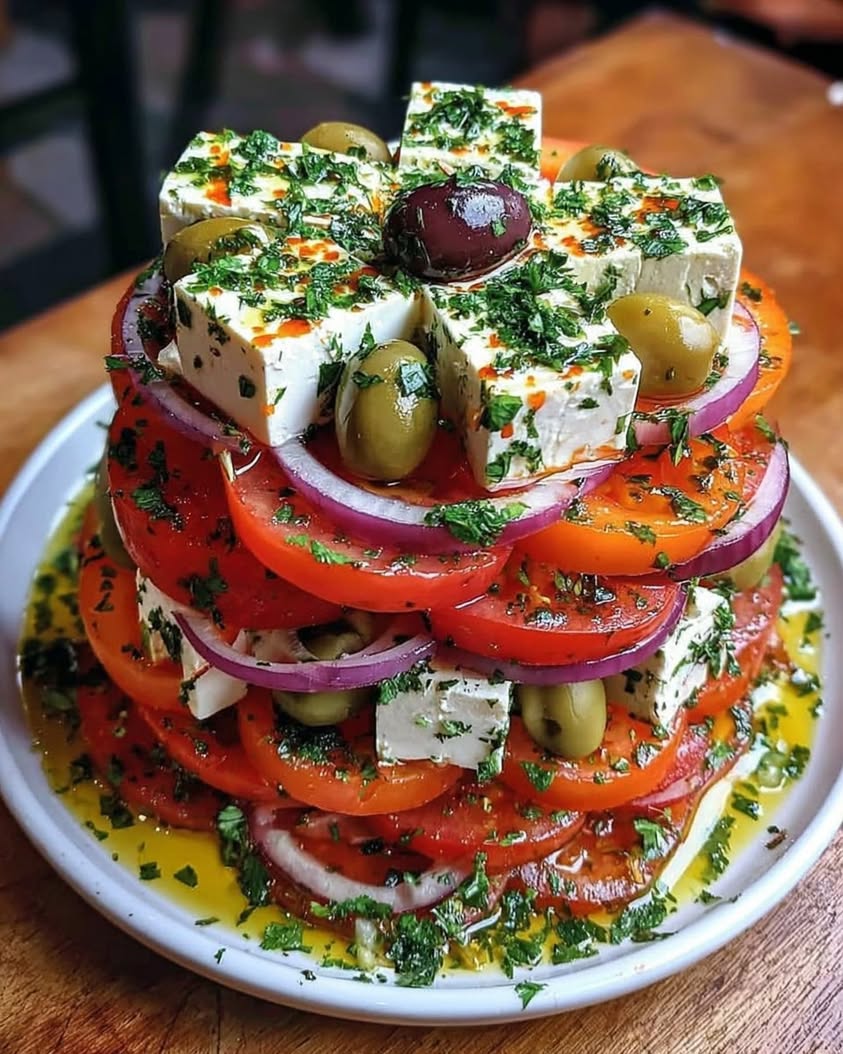
- Visual Appeal: This salad stands tall and proud, with vivid red tomatoes, deep green cucumbers, and white feta cheese creating striking color contrasts. The tall layers make the dish look almost architectural, and a sprinkle of dried oregano on top adds a finishing touch. Served on a large white platter, it becomes the centerpiece of your table.
- Skill Level Needed: Building a Greek Feta Salad Tower requires only basic knife skills and patience for layering ingredients. You do not need any advanced cooking techniques to master this recipe. Even beginners can achieve impressive results with careful attention to the layering order and dressing distribution.
- Special Equipment: A long, serrated knife helps slice tomatoes and cucumbers uniformly for even layers. A wide, flat serving plate provides a stable base for the towering structure. You might also use a small whisk or fork for emulsifying the dressing.
Recipe Overview
- Difficulty Level: This Greek Feta Salad Tower rates as medium difficulty primarily because of the careful stacking required to keep it stable. You must slice vegetables to uniform thickness and arrange them in a balanced pattern. The actual tasks are straightforward, but the final assembly demands a steady hand and patience. Once you practice a few times, the process becomes intuitive and quick.
- Category: It fits perfectly into the salad category but also functions as an appetizer or side dish for grilled proteins. You can serve it as a light main course on warm days when a heavy dinner feels undesirable. Its versatility means you can pair it with almost any Mediterranean-inspired meal for a cohesive dining experience.
- Cuisine: This recipe draws directly from Greek culinary traditions, emphasizing fresh vegetables, olive oil, and salty cheese. The Mediterranean influence shines through the use of oregano, lemon, and Kalamata olives, which are staples in Greek cooking. Some variations incorporate regional touches like capers or roasted peppers, but this version stays true to classic Greek flavors.
- Cost: The ingredients for this Greek Feta Salad Tower are generally affordable, with feta cheese being the pricier component. You can expect to spend around eight to twelve dollars for a batch serving four people. Buying vegetables in season reduces costs while ensuring optimal flavor and freshness for your tower.
- Season: This salad highlights summer produce when tomatoes and cucumbers are at their peak ripeness and flavor. You can still enjoy it year-round by sourcing quality hothouse vegetables from your grocery store. Spring and fall also offer excellent alternatives with seasonal variations like roasted beets or shaved fennel.
- Occasion: The Greek Feta Salad Tower shines at dinner parties, holiday gatherings, and backyard barbecues where presentation matters. It works equally well for casual family dinners when you want something beautiful without much effort. Birthdays, anniversaries, and summer picnics all benefit from this visually striking dish.
Why You Will Love This Greek Feta Salad Tower
First, the taste and texture appeal of this Greek Feta Salad Tower will absolutely captivate your palate with every forkful. The creamy feta cheese melts slightly against the cool, crisp romaine lettuce, creating a luxurious mouthfeel that contrasts beautifully with crunchy cucumbers. You experience the briny kick of Kalamata olives alongside sweet tomato bursts that dance together in harmony. The lemony oregano dressing ties everything together, ensuring no single flavor overwhelms another. This careful balance makes the dish satisfying without feeling heavy or overly rich. You can enjoy a generous portion and still feel light and energized after the meal. The layering technique gives you the perfect ratio of ingredients in each bite, so you never get a mouthful of just one component. Many people find that this Greek Feta Salad Tower makes them actually look forward to eating their greens.
Second, the convenience and preparation benefits of this recipe will save you time and mental energy on busy days. You do not need to turn on the stove, oven, or any heating element, which keeps your kitchen cool during summer months. The entire process involves chopping vegetables, whisking a simple dressing, and stacking ingredients in a thoughtful order. You can complete the prep in under thirty minutes, making it an excellent choice for last-minute entertaining. Cleanup is minimal since you only use a cutting board, knife, bowl, and serving platter. The ingredients hold up well in the refrigerator for a few hours after assembly, though you should dress the tower just before serving. This flexibility means you can prepare components in advance and assemble when your guests arrive. You truly can have a stunning centerpiece without spending all day in the kitchen.
Third, the nutritional advantages of this Greek Feta Salad Tower support a balanced diet while still feeling indulgent. Feta cheese provides protein and calcium for strong bones and muscles, while the vegetables deliver essential vitamins A, C, and K. The olive oil in the dressing offers heart-healthy monounsaturated fats that help reduce inflammation. This meal contains fewer calories than many cooked dinner options, making it suitable for weight maintenance or loss goals. You get plenty of dietary fiber from the romaine and cucumbers, which aids digestion and promotes fullness. The antioxidants from tomatoes and olives protect your cells from oxidative stress over time. You can adjust the cheese quantity to meet your specific dietary needs without compromising taste. This recipe proves that healthy food can still be exciting and delicious.
Fourth, the social and entertaining value of a Greek Feta Salad Tower cannot be overstated for anyone who loves hosting. When you bring this tower to the table, your guests will audibly gasp at its height and beauty. It serves as a natural conversation starter, giving you a story to share about its origins and preparation. You can customize the tower with personal touches like edible flowers or extra herbs to match your party theme. Its shareable nature encourages guests to serve themselves, which creates a relaxed, communal atmosphere. The bright colors and fresh flavors appeal to almost everyone, including picky eaters and adventurous foodies alike. You look like a culinary genius without spending hours on complex techniques. This dish transforms ordinary dinner parties into memorable events that people will talk about.
Fifth, the cost-effectiveness and accessibility of ingredients make this recipe a smart choice for budget-conscious cooks. Most components like romaine lettuce, tomatoes, and cucumbers cost very little, especially when you buy them in season. You can find feta cheese at almost any grocery store, often for around four to six dollars per block. Kalamata olives add rich flavor in small quantities, so one jar lasts for multiple recipes. The dressing ingredients like olive oil, lemon juice, and dried oregano are pantry staples you likely already own. Compared to restaurant versions, homemade towers cost a fraction of the price while allowing you to control quality and portion size. You can also substitute ingredients based on what is on sale at your local market. This Greek Feta Salad Tower proves that impressive meals do not require expensive specialty items.
Historical Background and Cultural Significance
The Greek Feta Salad Tower draws inspiration from the traditional Greek horiatiki salad, which translates to village salad in English. For centuries, Greek farmers and villagers enjoyed simple salads made from whatever vegetables grew in their gardens during summer months. These original salads included tomatoes, cucumbers, onions, olives, and a generous slab of feta cheese on top. The modern Greek Feta Salad Tower reimagines this rustic dish into an elegant, vertical presentation that appeals to contemporary diners. This evolution reflects broader trends in Mediterranean culinary culture, where chefs reinterpret classic dishes for new generations. The tower form highlights the beauty and freshness of the ingredients in a way that traditional flat salads cannot achieve.
In Greek culture, sharing food represents hospitality and community, values that this tower embodies perfectly. The act of building a tall structure together or serving it at a gathering reinforces connections between people. Greek cuisine emphasizes simplicity and quality, allowing the natural flavors of each ingredient to shine through. The feta cheese in this salad holds special cultural importance as a protected designation of origin product in Greece. It must be made from sheep milk or a mixture with goat milk in specific regions to earn its name. The tower honors this heritage while adding a playful modern twist that still respects traditional flavor combinations.
The recipe has evolved significantly from its rustic village origins through various culinary influences over the decades. Tourist demand in Greece during the mid-twentieth century encouraged restaurants to standardize and present salads more attractively. Chefs began experimenting with deconstructed presentations and layered salads to emphasize ingredient quality. The Greek Feta Salad Tower emerged in the early 2000s as part of a broader food trend toward vertical plating. This evolution demonstrates how traditional dishes can adapt to changing aesthetic preferences without losing their soul. The tower version maintains all the key components of the original, only rearranged for maximum visual impact.
Regional variations of the Greek Feta Salad Tower exist throughout Greece and the broader Mediterranean region. In the coastal areas, cooks might add grilled octopus or shrimp to transform it into a main course. Cretan versions often include dakos barley rusks for added crunch and local cheese varieties like graviera. In the Ionian islands, cooks incorporate local olives and capers for a brinier flavor profile. Cypriot interpretations feature halloumi cheese grilled separately and layered on top instead of traditional feta. These variations highlight how the tower concept allows for personal expression while honoring local ingredients. Each region puts its unique stamp on the dish, creating endless possibilities for exploration.
Ingredient Deep Dive for Greek Feta Salad Tower
Feta cheese stands as the star ingredient of your Greek Feta Salad Tower, with its rich history dating back to ancient Greece. Legend claims that the cheese originated when shepherds stored milk in sheep stomachs, discovering curds and whey by accident. Feta provides an excellent source of calcium, protein, and phosphorus, supporting bone health and muscle function. When selecting feta, look for blocks stored in brine rather than pre-crumbled varieties for superior texture and flavor. The cheese should feel firm yet creamy, with a tangy, salty taste that defines Greek cuisine. Store your feta submerged in brine in an airtight container inside the refrigerator for up to several weeks. For substitutions, you could use goat cheese for a milder flavor or vegan feta alternatives for dairy-free diets.
Kalamata olives contribute a distinctive briny, fruity note that balances the fresh vegetables in this tower. These deep purple olives originate from the Peloponnese region of Greece, where they have been cultivated for thousands of years. Olives provide heart-healthy monounsaturated fats and antioxidants that reduce inflammation and lower cholesterol. When choosing Kalamata olives, look for ones that are plump and glossy with no signs of wrinkling or shrinkage. You can find them pitted or whole, but pitted ones save prep time for this recipe. Store opened olive jars in the refrigerator for up to several months, ensuring the brine completely covers them. If you cannot find Kalamata olives, Castelvetrano or Niçoise olives offer suitable alternatives with different flavor profiles.
Romaine lettuce forms the structural base of your Greek Feta Salad Tower, providing a sturdy platform for the other ingredients. Its crisp texture and mild flavor allow the more assertive components like olives and dressing to shine through. Romaine originated in the eastern Mediterranean region and has been cultivated since ancient Egyptian times. This lettuce variety supplies vitamin A for eye health, vitamin K for blood clotting, and folate for cell growth. Choose romaine heads with deep green leaves that feel crisp and heavy for their size, avoiding any wilted or yellowed sections. Store romaine in the refrigerator crisper drawer wrapped in a damp paper towel for up to five days. If romaine is unavailable, you could use iceberg lettuce for extra crunch or butter lettuce for a softer texture.
Cucumbers add refreshing crunch and hydration to your Greek Feta Salad Tower, making each bite feel clean and invigorating. English cucumbers work best because they have thin skins and fewer seeds, requiring less preparation. Cucumbers originated in India thousands of years ago and spread to Greece via trade routes, becoming essential in summer salads. They contain high water content for hydration and provide vitamin K, potassium, and antioxidants. Select cucumbers that are firm with bright green color and no soft spots or yellowing areas. Store cucumbers in the refrigerator crisper drawer, but use them within a week for best texture. Persian or Kirby cucumbers make good substitutes if English cucumbers are not available at your market.
Tomatoes bring sweetness and acidity to your Greek Feta Salad Tower, creating juicy pockets that contrast with the other textures. Cherry or grape tomatoes work particularly well because they hold their shape during slicing and stacking. Tomatoes originated in South America and traveled to Europe through Spanish explorers, eventually becoming central to Mediterranean cuisine. They provide lycopene, an antioxidant linked to reduced cancer risk and improved heart health. Choose tomatoes that feel heavy for their size with deep red color and a sweet, earthy aroma at the stem end. Store ripe tomatoes at room temperature away from direct sunlight for best flavor, never refrigerate them. Roma tomatoes offer a firmer texture with less juice, making them another excellent choice for building your tower.
Common Mistakes to Avoid with Greek Feta Salad Tower
- Slicing vegetables unevenly causes your Greek Feta Salad Tower to lean or collapse as you build it higher. Each tomato slice and cucumber piece needs to be similar in thickness for stable stacking. Take your time with a sharp knife to ensure consistent pieces, and use a mandoline if you want perfect uniformity.
- Overdressing the salad before assembly leads to a soggy base that cannot support the weight of higher layers. Apply dressing sparingly between layers and reserve extra for drizzling on top just before serving. This approach keeps the tower crisp while still delivering flavor throughout every bite.
- Using pre-crumbled feta cheese creates a messy tower that lacks the structural integrity of block feta. Pre-crumbled cheese contains anti-caking agents that prevent it from adhering to the vegetables properly. Always buy a block of feta and crumble it yourself for better texture and taste in your tower.
- Stacking ingredients too high without a stable base results in a toppled tower before you even bring it to the table. Ensure your bottom layer covers a wide area on the serving platter and use larger pieces there for support. A broad foundation allows you to build higher without risking collapse during serving.
- Omitting salt from the tomato layer makes the overall Greek Feta Salad Tower taste flat and underseasoned. Salt draws out the tomatoes natural juices and enhances their sweetness, which balances the salty feta and olives. Sprinkle a tiny pinch of flaky salt on your tomato slices before adding them to the stack.
- Pressing down on the layers to compact the tower causes the vegetables to release too much liquid and creates instability. Let the ingredients settle naturally under their own weight without forcing them together. Gentle handling preserves the integrity of each component and maintains the towers height.
- Choosing overripe tomatoes leads to a messy tower that releases excessive juice and stains the other ingredients. Overripe tomatoes also lose their firm texture, making them difficult to slice cleanly for even layers. Select tomatoes that are ripe but still give slightly when squeezed rather than feeling mushy.
- Neglecting to pat dry your lettuce and cucumbers introduces excess water that dilutes the dressing flavors. Moisture from washed vegetables can seep into the tower and make it soggy within minutes. Use a salad spinner or paper towels to thoroughly dry all produce before starting assembly.
- Using a plate that is too small for your tower causes ingredients to spill over the edges and creates a messy presentation. Choose a platter that is at least ten inches in diameter for a four-serving tower. A larger plate also gives you room for garnishes and extra dressing around the base.
- Adding olives whole instead of slicing them creates awkward lumps that disrupt the even layers of your tower. Sliced olives distribute more evenly across each tier and release their flavor gradually. Slice each olive into three or four rounds for the best integration into the stack.
Essential Techniques for Building a Greek Feta Salad Tower
Mastering the technique of uniform vegetable slicing ensures your Greek Feta Salad Tower stands tall and looks professional. This skill matters because uneven pieces create gaps in the layers and cause instability as you build higher. To master it, use a sharp chef knife and hold the vegetable firmly on the cutting board with your fingers curled under. For cucumbers, slice them into rounds about one-quarter inch thick, rotating the cucumber to maintain even thickness. For tomatoes, cut cherry tomatoes in half lengthwise or quarter them if they are larger for consistent shapes. The visual cue for success is seeing all your slices match in thickness when you line them up side by side. Practice this technique on a few extra vegetables until you feel confident in your consistency.
Properly layering ingredients in the correct order builds structural integrity into your Greek Feta Salad Tower and prevents collapse. The order matters because heavier ingredients should sit at the bottom while lighter ones go on top for balance. Start with a wide base of romaine leaves arranged like a star on the platter, then add a layer of feta crumbles. Follow with cucumber slices arranged in a concentric circle, then tomatoes scattered evenly over the surface. Add olives, onion slices if using, and a light drizzle of dressing before repeating the layers. Common pitfalls include putting tomatoes too low where their juices make the lettuce soggy, or stacking feta too early where it squishes out. The visual cue for success is a tower that stands straight with each layer visible from the side.
Emulsifying the dressing correctly creates a cohesive vinaigrette that coats every ingredient in your Greek Feta Salad Tower evenly. This technique matters because a well-emulsified dressing stays suspended rather than separating into oil and vinegar pools. To master it, combine lemon juice, oregano, garlic, salt, and pepper in a bowl, then slowly drizzle olive oil while whisking vigorously. The whisking action creates temporary bonds between the oil and acid molecules, forming a creamy emulsion. Common pitfalls include adding oil too quickly, which breaks the emulsion, or using cold ingredients that prevent proper mixing. The visual cue for success is a dressing that looks opaque and creamy when you lift the whisk, rather than separate layers of oil and liquid.
Managing ingredient moisture through proper preparation ensures your Greek Feta Salad Tower stays crisp and holds its shape for hours. This technique matters because excess water from washed vegetables dilutes the dressing and makes the tower soggy. To master it, wash all produce at least thirty minutes before assembly and let it air dry on a clean kitchen towel. For lettuce, use a salad spinner to remove as much water as possible, then pat with paper towels for extra dryness. Slice cucumbers and tomatoes just before assembly to minimize their natural moisture release over time. Common pitfalls include rushing the drying process and adding wet vegetables directly to the tower. The visual cue for success is seeing no water droplets on your cutting board after you finish slicing each vegetable.
Pro Tips for Perfect Greek Feta Salad Tower
Chill your serving platter in the refrigerator for fifteen minutes before you start building your Greek Feta Salad Tower. The cool surface helps keep the vegetables crisp and slows down moisture release from the tomatoes and cucumbers. This small step makes a noticeable difference in how long your tower maintains its structure on the table. You can also chill the ingredients themselves for ten minutes before assembly for the same benefit.
Use a ring mold or springform pan for your first attempt to create perfectly uniform layers in your tower. Place the mold on your serving plate and layer ingredients inside, then lift it off carefully for a clean shape. Once you gain confidence, you can build freehand and achieve even more organic, rustic results. The mold technique guarantees success for dinner party preparations where appearance really matters.
Toast some pine nuts or walnuts in a dry skillet until golden and fragrant, then sprinkle them over the top of your tower. The added crunch and nutty flavor complement the creamy feta and fresh vegetables beautifully. This garnish elevates your Greek Feta Salad Tower from simple to sophisticated without much extra effort. You can prepare the nuts up to a week in advance and store them in an airtight container.
Season each layer individually with a tiny pinch of salt and pepper as you build the tower rather than seasoning only the dressing. Layered seasoning ensures every bite tastes balanced instead of relying on the dressing to carry all the flavor. This technique elevates your Greek Feta Salad Tower because the seasoning penetrates each vegetable rather than sitting on the surface. Use a light hand because feta and olives already contribute significant saltiness to the dish.
Consider adding a layer of thinly sliced red onion for sharp, pungent notes that cut through the richness of the feta cheese. Soak the onion slices in ice water for ten minutes before using them to mellow their sharp bite. Drain them well and pat dry before incorporating them into your tower for the best results. This addition offers a classic Greek flavor that many traditional versions include for depth.
Dress the tower sparingly between layers and reserve most of the dressing for the top and surrounding plate. This approach prevents the tower from becoming soggy while still ensuring every layer gets some dressing. Drizzle extra dressing around the base of the tower so guests can add more according to their preference. The visual effect of dressing pooling around the base also looks appealing on the serving plate.
Variations and Adaptations for Greek Feta Salad Tower
Regional variations of the Greek Feta Salad Tower let you explore different Mediterranean flavor profiles with minimal effort. For a Cypriot twist, substitute halloumi cheese that you have pan-seared until golden on both sides for the traditional feta. The halloumi adds a salty, chewy texture that contrasts wonderfully with the crisp vegetables in the tower. You could also add grilled vegetables like zucchini and eggplant for a version that feels heartier and more substantial. Some regions incorporate roasted red peppers or artichoke hearts for sweetness and tang. Each regional variation honors local ingredients while maintaining the core concept of a layered Mediterranean salad. Experimenting with these versions keeps the recipe exciting and lets you travel through flavors without leaving your kitchen.
Seasonal adaptations allow you to enjoy this Greek Feta Salad Tower throughout the year by swapping in available produce. In spring, use fresh asparagus spears blanched until tender-crisp and sliced radishes for a peppery crunch. Summer offers the classic bounty of sun-ripened tomatoes, cucumbers, and fresh herbs like dill or mint. Fall brings roasted butternut squash cubes and pomegranate arils for sweet, tangy notes that pair well with feta. Winter versions could include shaved fennel bulb, blood oranges, and toasted walnuts for brightness and texture. Each seasonal adaptation keeps the tower relevant and delicious no matter the month.
Dietary modifications make the Greek Feta Salad Tower accessible to people with various food restrictions and preferences. For a dairy-free version, substitute high-quality vegan feta made from cashews or tofu that crumbles similarly to traditional cheese. Gluten-free diners can enjoy this recipe as written since none of the traditional ingredients contain gluten. Low-carb adaptations reduce the tomatoes slightly and increase cucumber and lettuce proportions to keep carbohydrate content manageable. Keto dieters might add extra olive oil and increase feta portions while minimizing tomato quantity for lower sugar intake. Paleo versions work well with the original ingredients since all components fit this ancestral eating pattern.
Flavor variations transform the Greek Feta Salad Tower into entirely new taste experiences with creative ingredient swaps. Try using sun-dried tomatoes in oil for a more intense, concentrated tomato flavor that stands out against the feta. Add a drizzle of balsamic glaze on top for sweet acidity that complements the briny olives in the tower. Include fresh herbs like basil, mint, or dill between layers for fragrant bursts that surprise and delight your palate. You could also incorporate marinated artichoke hearts or roasted red peppers for a Mediterranean twist. These flavor variations ensure you never get bored with the same recipe.
Serving and Presentation Guide
Plating techniques for your Greek Feta Salad Tower focus on creating height and visual drama while maintaining stability for serving. Start with a large, flat white platter that contrasts beautifully with the colorful ingredients of your tower. Arrange the layers in concentric circles if building freehand, or use a ring mold for perfect symmetry. As you stack, occasionally step back to check that the tower remains straight and centered on the plate. When you finish the tower, gently wipe any dressing drips from the platter edge with a clean paper towel. The final presentation should look intentional and polished, as if prepared by a professional chef. A slightly imperfect tower with rustic edges also has appeal and can feel more approachable for casual gatherings.
Garnishing ideas elevate the visual appeal of your Greek Feta Salad Tower and add final flavor touches. Sprinkle dried oregano or fresh thyme leaves over the top for an herbaceous finish that signals Greek cuisine. Add a few whole Kalamata olives around the base of the tower for color contrast and extra briny bites. Fresh edible flowers like nasturtiums or borage blossoms bring unexpected beauty and a mild peppery taste. A final drizzle of extra virgin olive oil over the entire tower adds shine and richness before serving. These garnishes should enhance rather than overwhelm the clean lines of your tower design.
Traditional accompaniments for a Greek Feta Salad Tower include warm pita bread or crusty sourdough for scooping up ingredients. You might also serve it alongside grilled lamb chops, chicken souvlaki, or roasted fish for a complete Mediterranean meal. Hummus, tzatziki, or baba ghanoush on the same platter create a mezze spread that guests love to explore. Olives, pickled peppers, and marinated artichokes arranged around the tower add variety to the overall presentation. These accompaniments extend the Greek theme and make your meal feel more substantial and festive.
Modern serving suggestions encourage you to think beyond the traditional salad format for your tower. Serve individual towers on small plates for a dramatic starter at dinner parties, using a biscuit cutter for perfect shapes. Deconstruct the tower on a large wooden board for a grazing-style presentation that lets guests pick and choose components. Use the salad as a filling for pita sandwiches by layering ingredients inside warm pocket bread. These modern approaches keep the recipe fresh and adaptable for different dining situations and preferences.
Temperature considerations matter for the best Greek Feta Salad Tower experience, especially regarding ingredient serving temperature. Serve the assembled tower immediately or within thirty minutes to maintain vegetable crispness and prevent sogginess. Keep the dressing refrigerated until just before serving if you plan to drizzle it at the table. Room temperature feta cheese tastes creamier and more flavorful than cold feta straight from the refrigerator. Allow your feta to sit out for fifteen minutes before crumbling to achieve optimal texture and taste in your tower.
Portion control tips help you serve this impressive dish appropriately for various group sizes and appetites. For a main course serving, estimate one quarter of the tower per person when serving four people total. As a side dish, one sixth of the tower provides a generous portion alongside other courses. If you serve multiple appetizers, one eighth of the tower works well for each guest at a party. You can build smaller towers using a narrower ring mold for individual servings at more formal events. Adjust ingredient quantities proportionally based on your serving size needs for this recipe.
Wine and Beverage Pairing
Wine pairings for your Greek Feta Salad Tower emphasize bright acidity and herbal notes that complement the fresh ingredients beautifully. A crisp Assyrtiko from Santorini offers citrus and mineral flavors that cut through the creamy feta cheese. Vermentino from Italy provides similar bright acidity with notes of green apple and white flowers that match the salad. A dry rosé from Provence brings strawberry and herb flavors that bridge the vegetables and salty components. Sauvignon Blanc from New Zealand adds zesty lime and grassy notes that highlight the lemon dressing. Each wine choice enhances specific elements of the tower without overwhelming the delicate flavors. Serve these wines well-chilled around forty-five degrees Fahrenheit for maximum refreshment.
Non-alcoholic alternatives ensure everyone can enjoy a perfect beverage pairing with your Greek Feta Salad Tower. A sparkling water with a squeeze of fresh lemon and a sprig of mint offers a clean, refreshing accompaniment. Seedlip Garden 108, a non-alcoholic spirit, mixed with tonic water and cucumber slices mimics a gin and tonic beautifully. Kombucha in flavors like lemon-ginger or elderflower provides pleasant acidity and slight effervescence that cleanses the palate. Mint and lime iced tea, brewed strong and served over ice, offers herbal notes that echo the oregano in the dressing. These non-alcoholic options allow designated drivers and health-conscious guests to feel included in the pairing experience.
Temperature considerations for beverages served alongside your Greek Feta Salad Tower affect how the flavors interact during the meal. White wines and rosés should be served between forty-five and fifty degrees Fahrenheit for optimal acidity and refreshment. Red wines like a light-bodied Pinot Noir can be served slightly cool around fifty-five degrees to complement the salad. Sparkling waters and sodas taste best over ice, while still waters should be served cool but not icy. Keep your beverages chilled until serving time to provide maximum contrast with the room-temperature ingredients in the tower.
Storage and Shelf Life
Storage methods for leftover Greek Feta Salad Tower require careful handling because the assembled salad does not hold up well overnight. The best approach is to store the components separately before assembly if you plan to make the tower ahead of time. Keep chopped lettuce, sliced cucumbers, and halved tomatoes in separate airtight containers in the refrigerator. Store the feta cheese in its brine or wrapped tightly in plastic wrap to prevent drying out. The prepared dressing should be stored in a sealed jar or bottle in the refrigerator for up to one week. When you are ready to serve, simply assemble the tower fresh for the best texture and flavor experience possible.
Temperature requirements for storing the ingredients of your Greek Feta Salad Tower ensure food safety and quality preservation. All vegetables should be kept at refrigerator temperature between thirty-four and forty degrees Fahrenheit. Feta cheese also requires refrigeration, ideally submerged in brine to maintain its creamy texture. Olives can be stored at room temperature only if they are pasteurized and the brine remains sealed otherwise refrigerate them. Dressing containing fresh garlic or lemon juice should always be refrigerated to prevent bacterial growth. Never leave assembled tower components at room temperature for longer than two hours for food safety reasons.
Container recommendations for storing your salad ingredients focus on preventing moisture loss and flavor transfer between items. Use glass or BPA-free plastic containers with tight-fitting lids to keep vegetables crisp and fresh. Lettuce benefits from breathable containers or plastic bags with small holes to allow air circulation while retaining humidity. Cucumbers and tomatoes should be stored separately because ethylene gas from tomatoes can cause cucumbers to spoil faster. Feta cheese stores best in its original brine inside a glass jar or plastic container placed in the refrigerator door. Proper containers extend the shelf life of your ingredients by several days for convenient meal prep.
Signs of spoilage in your Greek Feta Salad Tower ingredients help you determine when to discard items for safety. Lettuce that appears slimy, brown, or smells sour should be thrown away immediately. Cucumbers with soft spots, wrinkled skin, or an unpleasant odor indicate they have passed their peak freshness. Tomatoes showing mold, leaking juice excessively, or feeling mushy to the touch are no longer suitable for consumption. Feta cheese that develops an off smell, visible mold beyond the surface, or a slimy texture should be discarded. When in doubt about any ingredient freshness, it is safer to replace it with fresh produce for your tower.
Make Ahead Strategies
Prep timeline for your Greek Feta Salad Tower allows you to complete most work several hours before serving without quality loss. You can wash and dry all vegetables up to one day in advance, storing them separately in the refrigerator. Slice cucumbers and chop lettuce up to four hours before assembly to maintain their crisp texture. Cut tomatoes no more than two hours ahead to prevent them from releasing too much juice and becoming watery. Prepare the dressing up to one week in advance and store it in a sealed jar in Print
Greek Feta Salad Tower
- Total Time: 15 minutes
- Yield: 2
Description
A stunning layered Greek salad featuring fresh vegetables, tangy feta cheese, and a zesty lemon-oregano dressing, served as a vertical tower.
Ingredients
- 2 large ripe tomatoes, sliced into 1/4-inch rounds
- 1 large cucumber, sliced into 1/4-inch rounds
- 1 medium red onion, thinly sliced
- 1/2 cup pitted Kalamata olives, halved
- 8 oz block of feta cheese, sliced into 1/4-inch slabs
- 1/4 cup extra virgin olive oil
- 2 tablespoons freshly squeezed lemon juice
- 1 teaspoon dried oregano
- Salt and black pepper to taste
- Fresh mint leaves for garnish
Instructions
- Prepare the dressing: In a small bowl, whisk together the olive oil, lemon juice, dried oregano, and a pinch of salt and pepper. Set aside.
- Layer the salad: On a serving plate, start with a slice of tomato, then a slice of cucumber, a slice of red onion, a few olive halves, and a slice of feta cheese. Repeat the layers, pressing gently to keep the tower stable. End with a layer of feta on top.
- Drizzle the dressing evenly over the tower and allow it to seep down through the layers.
- Garnish with fresh mint leaves and serve immediately or refrigerate for 15 minutes to allow flavors to meld.
Notes
You can customize the seasonings to taste. Add a sprinkle of sumac or a pinch of black pepper for an extra kick.
- Prep Time: 15 minutes
- Cook Time: 0 minutes
- Method: Appetizer
- Cuisine: Greek