Greek Chicken Souvlaki Bowls with Creamy Garlic Sauce: A Flavorful Weeknight Feast
Imagine a meal that transports you straight to a sun-drenched taverna in the Mediterranean. That is the exact experience these Greek Chicken Souvlaki Bowls with Creamy Garlic Sauce deliver. This recipe masterfully combines marinated, grilled chicken with crisp vegetables and fluffy rice. Ultimately, everything gets crowned with a tangy, irresistible garlic yogurt sauce. Consequently, you get a balanced, healthy, and explosively flavorful dinner in one beautiful bowl.
Furthermore, this dish is a fantastic solution for busy weeknights. The preparation is straightforward, and the cooking process is quick. Meanwhile, the marinade works its magic, infusing the chicken with authentic Greek flavors like lemon, oregano, and garlic. As a result, even on your most hectic evening, you can create a restaurant-quality meal that feels both special and comforting. This recipe truly proves that delicious, wholesome food does not have to be complicated.
Additionally, the beauty of these Greek Chicken Souvlaki Bowls lies in their versatility. You can easily customize the components based on your preferences or what you have on hand. For instance, swap the rice for quinoa or a bed of greens. Alternatively, add different vegetables like roasted peppers or kalamata olives. Therefore, this recipe becomes a reliable template for endless delicious variations, ensuring it never gets boring.
Quick Recipe Highlights
- Flavor Profile: These Greek Chicken Souvlaki Bowls offer a bright and herbaceous taste. The chicken features zesty lemon and earthy oregano, while the creamy garlic sauce adds a cool, tangy contrast. Finally, fresh vegetables provide a clean, crisp finish.
- Texture: This dish is a delightful textural journey. You get tender, juicy chicken alongside crisp cucumber and crunchy red onion. Meanwhile, the fluffy rice and creamy sauce create a perfectly balanced and satisfying mouthfeel in every bite.
- Aroma: The scent of grilling chicken marinated in garlic, lemon, and oregano is unmistakably Mediterranean. As the chicken cooks, it releases an herbaceous and savory fragrance that will make your kitchen smell incredible.
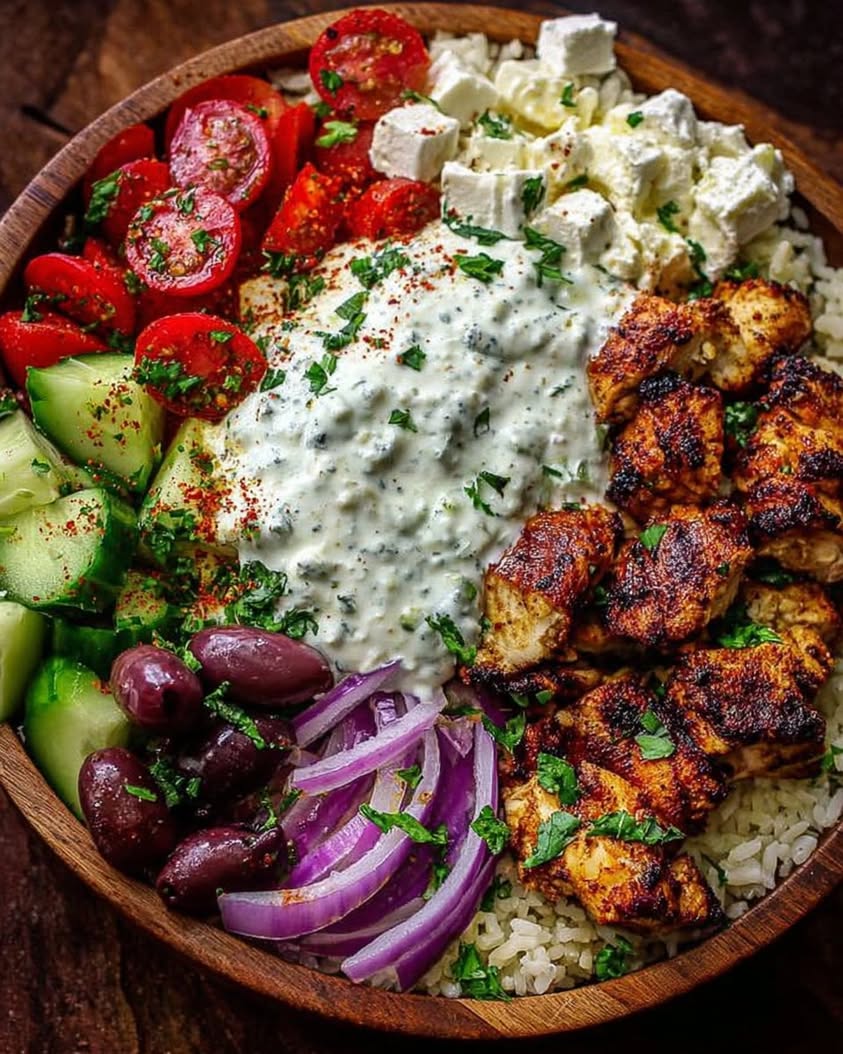
- Visual Appeal: These bowls are a feast for the eyes with their vibrant colors. The golden-brown chicken sits against white rice and red onion, while bright green herbs and a white sauce create a stunning, Instagram-worthy presentation.
- Skill Level Needed: This is a beginner-friendly recipe. The techniques involve simple chopping, mixing a marinade, and either grilling or pan-cooking chicken. No advanced culinary skills are required for success.
- Special Equipment: You only need basic kitchen tools. A grill pan, skillet, or outdoor grill works for the chicken. Additionally, you will need mixing bowls, a knife, and a cutting board. No specialty equipment is necessary.
Recipe Overview
- Difficulty Level: We rate this Greek Chicken Souvlaki Bowls recipe as easy. The steps are simple and sequential, with no complex techniques. Most of the active time involves prep work like chopping and mixing. Even novice cooks can achieve fantastic results with this straightforward guide.
- Category: This dish fits perfectly into the healthy dinner and meal prep categories. It is a complete, balanced meal with protein, carbs, and vegetables. Moreover, it is an excellent candidate for quick lunches and family-friendly weeknight meals.
- Cuisine: This recipe is firmly rooted in Greek and Mediterranean cuisine. It draws directly from the tradition of souvlaki, which are small pieces of grilled meat. The flavor profile celebrates classic Greek ingredients like lemon, oregano, garlic, and yogurt.
- Cost: Preparing these Greek Chicken Souvlaki Bowls is very cost-effective, especially compared to dining out. Chicken thighs or breasts, rice, and vegetables like cucumber and tomato are budget-friendly. The marinade and sauce use pantry staples, making this a frugal feast.
- Season: This recipe is fantastic year-round but shines in spring and summer. The fresh, bright flavors pair wonderfully with warmer weather. Conversely, it also brings a taste of sunshine to your table during colder months.
- Occasion: These bowls are incredibly versatile for any occasion. They are perfect for a casual weeknight family dinner, a healthy lunch prep, or even a casual gathering with friends. You can easily scale the recipe up for a crowd.
Why You’ll Love This Recipe
First and foremost, the taste and texture combination is absolutely unbeatable. Each component of these Greek Chicken Souvlaki Bowls serves a purpose. The marinated chicken is savory and juicy, while the cool, crisp vegetables provide refreshment. Meanwhile, the creamy garlic sauce ties everything together with its rich tanginess. Consequently, every forkful delivers a harmonious blend of flavors and satisfying textures that will keep you coming back for more.
Another significant benefit is the sheer convenience of this meal. You can prepare the marinade and chop vegetables ahead of time, streamlining the dinner process. Furthermore, the actual cook time for the chicken is under 15 minutes. Therefore, you can have a wholesome, homemade dinner on the table in well under an hour, making it a perfect solution for busy schedules.
From a nutritional standpoint, these bowls are a powerhouse. They offer a complete balance of lean protein from the chicken, complex carbohydrates from the rice, and a variety of vitamins from the fresh vegetables. The yogurt-based sauce adds probiotics and protein without the heaviness of mayo-based dressings. As a result, you get a meal that is both deeply satisfying and genuinely good for you.
Additionally, this recipe has tremendous social and entertaining value. The vibrant, colorful presentation is impressive and inviting. You can set up a “build-your-own-bowl” bar with all the components, allowing guests to customize their meals. This interactive element makes it a fun and stress-free option for hosting, as most of the work is done before guests arrive.
Finally, the cost-effectiveness and accessibility of the ingredients make this a staple-worthy recipe. You do not need any expensive or hard-to-find items. Basic spices, chicken, rice, and common vegetables create this extraordinary meal. Consequently, you can enjoy the flavors of a Greek holiday without leaving your kitchen or breaking your grocery budget.
Historical Background and Cultural Significance
The story of souvlaki stretches back to ancient Greece. References to meat cooked on skewers appear in the writings of Aristotle and other classical authors. Originally, this method of cooking was called “obelos,” named after the spits used. This simple, portable food was sustenance for soldiers and travelers. Over centuries, this cooking technique evolved and spread throughout the Mediterranean region, laying the foundation for dishes like kebabs and gyros.
In modern Greece, souvlaki holds a place of deep cultural significance. It is the quintessential Greek street food, found in every city and village. Typically, it consists of small pieces of meat—often pork, chicken, or lamb—marinated in olive oil, lemon, and oregano, then grilled over charcoal. It is commonly served wrapped in soft pita bread with tomatoes, onion, and tzatziki sauce. This dish represents communal eating, simplicity, and the vibrant flavors of Greek cuisine.
The evolution of the recipe into a “bowl” format is a more recent, health-conscious adaptation. While traditional souvlaki is often street food or fast food, the bowl presentation aligns with modern preferences for deconstructed, customizable, and nutrient-dense meals. This version maintains all the authentic flavors but presents them in a way that often feels lighter and allows for easier portion control and vegetable integration.
Regional variations of souvlaki exist throughout Greece. For example, in some areas, they use different herb blends or include a splash of local wine in the marinade. The accompanying sauces also vary; while tzatziki (yogurt, cucumber, and garlic) is most famous, some regions might use a simpler garlic sauce or a mustard-based dip. The bowl concept itself invites even more variation, allowing for the inclusion of different grains, greens, and seasonal vegetables.
Ingredient Deep Dive
Let us start with the star: chicken. In Greek cooking, both breast and thigh meat are used for souvlaki. Chicken thighs are often preferred for their higher fat content, which keeps them incredibly juicy during high-heat grilling. From a nutritional standpoint, chicken is an excellent source of lean protein and essential B vitamins. For the best results, look for organic or free-range chicken if possible, and always pat it dry before marinating to ensure a good sear.
Next, consider the marinade heroes: lemon juice and olive oil. Freshly squeezed lemon juice is non-negotiable; it provides the necessary acidity to tenderize the chicken and impart that classic bright flavor. Meanwhile, extra virgin olive oil carries the fat-soluble flavors of the herbs and garlic into the meat. Rich in heart-healthy monounsaturated fats, a good quality Greek olive oil adds authentic taste. Store both in a cool, dark place.
The herbaceous soul of this dish is dried oregano. Specifically, Greek oregano (rigani) is more robust and earthy than the common Mediterranean variety. It is a cornerstone of Greek cuisine, symbolizing joy and happiness. If you cannot find Greek oregano, standard dried oregano works perfectly. For the freshest flavor, crumble the dried leaves between your fingers before adding them to the marinade to release their essential oils.
Finally, the crowning glory: the creamy garlic sauce. Traditionally, this is a version of tzatziki, made with thick Greek yogurt, grated cucumber, garlic, lemon, and dill. Greek yogurt is key for its high protein content and thick, strained texture that prevents a watery sauce. The garlic should be finely minced or pressed for the most potent flavor. For a truly authentic touch, some add a drizzle of olive oil on top before serving.
Common Mistakes to Avoid
- Using Bottled Lemon Juice: This is a major flavor killer. Bottled juice lacks the bright, fresh acidity of real lemon and can impart a bitter, chemical taste. Always use freshly squeezed lemon juice for both the marinade and the sauce.
- Skipping the Marinating Time: Rushing the marinating process means your chicken will lack depth of flavor. While 30 minutes is the minimum, aim for 2-4 hours, or even overnight, for the most flavorful and tender results.
- Overcrowding the Pan or Grill: When cooking the chicken, give each piece space. Overcrowding causes the meat to steam instead of sear, resulting in pale, boiled-tasting chicken without those desirable caramelized edges.
- Using Watery Yogurt: For the creamy garlic sauce, you must use thick, full-fat Greek yogurt. Regular yogurt or low-fat varieties will release too much water, creating a runny sauce that dilutes the flavors and makes your bowl soggy.
- Not Letting the Chicken Rest: After cooking, let the chicken rest for 5 minutes before slicing or serving. This allows the juices to redistribute throughout the meat. Cutting immediately causes all those flavorful juices to run out onto the cutting board.
- Forgetting to Season in Layers: Season every component. The chicken marinade needs salt, the rice should be cooked in salted water, and the vegetables can benefit from a light sprinkle. Building layers of seasoning is the secret to a truly flavorful bowl.
- Mincing Garlic Too Coarsely for the Sauce: Large chunks of raw garlic in the sauce can be overpowering and harsh. Take the time to finely mince, grate, or press the garlic so it integrates smoothly and evenly into the yogurt.
- Using Old, Stale Spices: Dried oregano loses its potency over time. If your spices have been in the cabinet for over a year, they likely contribute very little flavor. Invest in fresh dried herbs for the most vibrant taste.
Essential Techniques
Mastering the marinade is your first essential technique. A good marinade has three components: acid (lemon juice) to tenderize, oil to carry flavor and retain moisture, and seasonings. Combine these thoroughly before adding the chicken. Ensure each piece is well-coated, then marinate in the refrigerator, not on the counter. This technique infuses the chicken with flavor and starts the tenderizing process, guaranteeing a more delicious final product.
Next, perfect your high-heat cooking method. Whether using a grill, grill pan, or skillet, preheat it until it is very hot. Pat the marinated chicken pieces dry before adding them to the pan; this promotes browning instead of steaming. Do not move the chicken immediately; let it sear for a few minutes to develop a golden-brown crust. This technique, known as the Maillard reaction, creates complex, savory flavors and appealing texture.
Preparing the vegetables correctly is another key technique. For the best texture and presentation, dice the cucumber and tomato into even, bite-sized pieces. Soak the sliced red onion in ice water for 10 minutes; this simple step tames its sharp bite and makes it pleasantly crisp. These small preparation details ensure each vegetable component is refreshing and contributes positively to the overall bowl experience.
Finally, achieving the perfect creamy garlic sauce consistency is crucial. Start by salting the grated cucumber and letting it drain in a colander for 10-15 minutes. Then, squeeze out the excess water with your hands or a clean towel. This prevents a watery sauce. Mix the drained cucumber with thick Greek yogurt, garlic, lemon, and herbs. Let the sauce rest in the fridge for at least 30 minutes before serving; this allows the flavors to meld beautifully.
Pro Tips for Perfect Greek Chicken Souvlaki Bowls
For maximum flavor, marinate the chicken overnight. The longer marinating time allows the lemon and herbs to penetrate deeply. This results in exceptionally tender and flavorful chicken that tastes like it came from a professional kitchen.
If using wooden skewers, soak them in water for at least 30 minutes before threading the chicken. This prevents them from burning on the grill or in the oven. Alternatively, you can cook the chicken pieces directly in a hot pan without skewers for easier flipping.
Warm your pita bread if serving on the side. Briefly heat it in a dry skillet, on the grill, or in the oven. Warm pita is more pliable and fragrant, making it perfect for scooping up the delicious components of your bowl.
Add a pinch of sugar to your tomato and cucumber salad. A tiny amount of sugar balances the acidity from the lemon and the sharpness of the onion, rounding out the flavors of the fresh vegetables perfectly.
Reserve a little of the fresh herbs for garnish. Sprinkling extra dill or parsley over the assembled bowls just before serving adds a burst of fresh color and a final layer of bright flavor that makes the dish pop.
If meal prepping, store the sauce and the chopped vegetables separately from the rice and chicken. Assemble the bowls just before eating. This keeps the rice from getting soggy and the vegetables perfectly crisp.
Variations and Adaptations
For regional variations, try using different proteins. Traditional Greek pork souvlaki is incredibly popular. Lamb also makes a fantastic, slightly gamier alternative. For a seafood twist, use large shrimp or firm fish like swordfish or halibut, adjusting the marinating time to just 30 minutes to prevent the acid from cooking the seafood.
Seasonal adaptations are easy with this bowl format. In summer, add grilled zucchini, eggplant, or bell peppers. During fall, incorporate roasted sweet potatoes or Brussels sprouts. For winter, use hearty kale instead of lettuce. This flexibility lets you enjoy the core recipe year-round with the best produce each season offers.
Dietary modifications are straightforward. For a gluten-free version, ensure your spices are certified GF and serve the bowl over rice or a bed of greens instead of pita. To make it dairy-free, substitute the yogurt in the sauce with a thick, plain vegan yogurt or a tahini-lemon sauce. For a low-carb or keto adaptation, replace the rice with cauliflower rice and increase the healthy fats with extra olives and avocado.
Experiment with flavor variations in the marinade. Add a teaspoon of smoked paprika for depth, a tablespoon of honey for sweetness, or some chopped fresh rosemary for a piney note. You can also change the sauce by adding mint to the dill, or by making a spicy version with a pinch of cayenne or a spoonful of harissa.
Serving and Presentation Guide
Plating is key for visual appeal. Start with a base of fluffy rice or grains in a wide, shallow bowl. Arrange the sliced chicken attractively on one side. Then, artfully group the diced tomatoes, cucumbers, and onions in separate piles around the bowl. This organized, colorful presentation is far more enticing than a mixed pile.
Garnishing adds the final professional touch. Drizzle the creamy garlic sauce generously over the chicken and vegetables. Sprinkle with fresh chopped dill or parsley and a few crumbles of feta cheese if desired. Add a lemon wedge on the side for an extra squeeze of brightness. A final drizzle of high-quality extra virgin olive oil adds shine and richness.
Traditional accompaniments include warm pita bread or pita chips for scooping. A simple Greek salad on the side is also perfect. For a more substantial spread, add sides like dolmades (stuffed grape leaves), marinated gigante beans, or a bowl of olives. These elements turn the meal into a true Mediterranean feast.
Consider temperature for optimal enjoyment. Serve the bowls immediately after assembling. The chicken should be hot, the rice warm, and the vegetables cool and crisp. The sauce should be chilled. This contrast in temperatures makes the eating experience dynamic and refreshing, especially on a warm day.
Wine and Beverage Pairing
For wine pairings, look to Greece itself. A crisp, Assyrtiko from Santorini is a classic match. Its high acidity and citrus notes complement the lemon in the dish beautifully. Alternatively, a Greek Rosé or a light, fruity red like a Beaujolais works well with the charred chicken and savory elements. The goal is a wine that refreshes the palate without overpowering the herbs and garlic.
Non-alcoholic alternatives are just as important. Freshly squeezed lemonade with a sprig of mint is a fantastic choice. Sparkling water with a slice of lemon or cucumber is always refreshing. For something more traditional, try a glass of chilled Greek mountain tea, which has a subtle, herbal flavor that pairs wonderfully with the meal.
If you prefer beer, a light lager or pilsner is an excellent pairing. The crisp, clean taste cuts through the richness of the garlic sauce and cleanses the palate. A wheat beer with citrus notes can also harmonize with the lemon and herb flavors in the chicken marinade.
Storage and Shelf Life
Store all components separately in airtight containers in the refrigerator. The cooked chicken and rice will keep for 3-4 days. The chopped vegetables (tomato, cucumber, onion) are best used within 1-2 days for optimal crispness. The creamy garlic sauce can be stored for up to 5 days, as the yogurt acts as a preservative.
For reheating, gently warm the chicken and rice in the microwave or a skillet with a splash of water to prevent drying out. It is best to add the cold vegetables and sauce after reheating the warm components. This maintains the desired temperature contrast and prevents the vegetables from becoming wilted.
Freezing is possible but with caveats. You can freeze the cooked, marinated chicken for up to 3 months. Thaw in the refrigerator overnight before reheating. Do not freeze the assembled bowls, the fresh vegetables, or the yogurt sauce, as their textures will degrade significantly upon thawing.
Make Ahead Strategies
You can prep nearly this entire meal in advance. Marinate the chicken up to 24 hours ahead. Cook the rice 1-2 days in advance. Chop the vegetables (except the tomato, which can get mushy) and store them in separate containers. Make the creamy garlic sauce up to 3 days ahead; its flavor actually improves with time.
For a streamlined dinner, simply cook the chicken when ready to eat. While it cooks, you can quickly dice the tomato and assemble the bowls with your pre-prepped components. This strategy turns a 45-minute recipe into a 15-minute assembly job, making weeknight dinners effortless.
If meal prepping for lunches, pack the chicken, rice, and vegetables in one container, and the sauce in a small separate container. Assemble and add the sauce just before eating to keep everything fresh and prevent sogginess. This ensures your lunch tastes as good as it did on day one.
Scaling Instructions
Halving the recipe is simple for smaller households. Use half of all ingredients. The marinating and cooking times remain the same. Be mindful that a smaller amount of chicken may cook slightly faster, so check for doneness a minute or two earlier to avoid overcooking.
Doubling or tripling for a crowd is easy. Use a large bowl or zip-top bag for marinating the increased chicken quantity. You may need to cook the chicken in batches to avoid overcrowding the pan, which is crucial for proper browning. Keep cooked batches warm in a low oven (200°F) while you finish the rest.
When scaling up, consider making the sauce in a larger batch in a single bowl. The flavor development for the sauce benefits from sitting, so making a big batch ahead of time is actually advantageous. For the vegetables, a simple salad spinner or large colander is perfect for washing and draining larger quantities of cucumber and tomatoes.
Nutritional Deep Dive
This bowl offers an excellent macro balance. The chicken provides high-quality protein for muscle repair and satiety. The rice offers complex carbohydrates for sustained energy. The vegetables contribute fiber, vitamins, and antioxidants. The olive oil and yogurt sauce add healthy fats. Together, they create a meal that stabilizes blood sugar and keeps you full for hours.
Micronutrient analysis reveals a wealth of benefits. Tomatoes provide lycopene, cucumbers offer hydration and vitamin K, and onions contain quercetin. The garlic in the sauce is renowned for its allicin content, which has immune-boosting properties. Greek yogurt is rich in calcium, protein, and probiotics for gut health.
For weight management, this bowl is a fantastic choice. The high protein and fiber content promote feelings of fullness, which can help prevent overeating. You can easily adjust portions—a little less rice, a little more chicken and vegetables—to align with specific calorie goals without sacrificing flavor or satisfaction.
Dietary Adaptations
For a gluten-free version, the recipe is naturally compliant if you omit pita bread or use a certified gluten-free pita. Double-check that your dried herbs and spices are not processed in facilities with gluten. Serve over rice or quinoa for a safe and delicious base.
To make it dairy-free, replace the Greek yogurt in the sauce. Use a thick, plain, unsweetened vegan yogurt made from coconut or almonds. Alternatively, create a tahini sauce by mixing tahini with lemon juice, water, and garlic until smooth. Both options provide the creamy, tangy element essential to the dish.
For a vegan adaptation, replace the chicken with marinated and grilled chickpeas, extra-firm tofu, or seitan. Use the dairy-free sauce option above. Increase the vegetable portions and add hearty elements like roasted cauliflower or lentils to ensure the bowl remains filling and protein-rich.
For a low-carb or keto diet, substitute the rice with cauliflower rice. Ensure the marinade does not contain honey or sugar. Use full-fat Greek yogurt for the sauce, and load up on non-starchy vegetables. You can also add high-fat toppings like avocado slices or extra olives to meet your macronutrient needs.
Troubleshooting Guide
If your chicken is dry, the likely culprit is overcooking. Chicken breasts cook quickly; use a meat thermometer and remove them from heat at 165°F. They will continue to cook slightly while resting. For thighs, cook to 175°F for tenderness. Next time, consider using thigh meat or brining the breasts briefly before marinating.
If your sauce is too runny, you can fix it. Strain the watery yogurt through a cheesecloth-lined sieve for 30 minutes. For the cucumber, always salt, drain, and squeeze it thoroughly. If the sauce is already made, you can thicken it by stirring in a spoonful of mayonnaise or a little more Greek yogurt.
If the flavors taste bland, you probably underseasoned. Remember to season in layers: salt in the marinade, salt in the rice water, and a pinch on the fresh vegetables. The sauce also needs adequate salt and lemon to balance the yogurt. Taste each component as you go and adjust before assembling.
If your vegetables are soggy, you may have chopped them too far in advance or stored them incorrectly. Chop tomatoes just before serving. Store chopped cucumber in an airtight container with a paper towel to absorb excess moisture. Soak onion in ice water to crisp it up if it has softened.
Recipe Success Stories
Many home cooks have shared how this recipe became a weekly staple in their homes. One reader reported that her picky children now request “Greek bowls” every Tuesday. She loves that she can hide extra vegetables in the rice, and the creamy garlic sauce is a universal hit. The deconstructed nature lets everyone build their perfect bite.
Others have found brilliant variations. A community member created a “meal prep Sunday” version where she portions everything into containers, using the sauce as a dressing for a side salad later in the week. Another cook added a spoonful of sun-dried tomato paste to the chicken marinade for an extra umami punch, a tip that has since been adopted by many.
Photography tips from successful makers emphasize natural light. They suggest assembling the bowl with the vibrant ingredients visible at the top, not buried. A drizzle of sauce, a sprinkle of herbs, and a lemon wedge placed strategically make for a beautiful, inviting photo that captures the essence of this fresh, healthy meal.
Frequently Asked Questions
Can I use chicken breasts instead of thighs? Absolutely. Chicken breasts work well but require careful attention to avoid drying out. Pound them to an even thickness for uniform cooking, and do not overcook. Use a meat thermometer and remove from heat at 165°F.
How long can I marinate the chicken? You can marinate it for up to 24 hours for maximum flavor. For more than 2 hours, it is best to use chicken thighs, as the acid in the lemon juice can start to break down the proteins in breasts, giving them a slightly mealy texture if marinated too long.
What can I use if I don’t have Greek yogurt? You can strain regular plain yogurt through a cheesecloth for a few hours to thicken it. Alternatively, use sour cream or a combination of mayonnaise and a little lemon juice for a different, but still creamy, sauce base.
Can I cook this indoors? Yes. A grill pan or a regular heavy-bottomed skillet over medium-high heat works perfectly. You will still get excellent color and flavor. You can also broil the chicken on a sheet pan for a few minutes per side.
Is this recipe good for meal prep? It is excellent for meal prep. Store all components separately and assemble just before eating. The chicken and rice reheat well, and the sauce keeps for days. This makes for healthy, grab-and-go lunches all week.
Can I make it ahead for a party? Definitely. Prep all components ahead of time. Keep the chicken warm in a low oven or reheat it quickly before serving. Set up a bowl bar with all the ingredients and let guests assemble their own, which is fun and interactive.
What’s a good substitute for dried oregano? If you have fresh oregano, use one tablespoon chopped fresh for every teaspoon of dried. You can also use dried marjoram, which is sweeter, or an Italian herb blend in a pinch, though the flavor profile will shift slightly.
My sauce is too garlicky. How can I fix it? Balance it by adding more yogurt and a bit more lemon juice. You can also add a pinch of sugar to counteract the sharpness. For next time, start with one clove of garlic and add more to taste after the sauce has rested.
Can I freeze the leftovers? You can freeze the cooked chicken successfully. Thaw in the refrigerator and reheat gently. Do not freeze the sauce, rice, or fresh vegetables, as their textures will become unpleasantly watery or mushy upon thawing.
What other vegetables can I add? Grilled bell peppers, zucchini, or red onion are fantastic. Kalamata olives and pepperoncini add a briny, tangy element. For a green, try adding a handful of baby spinach or arugula to the bowl before the hot ingredients to wilt it slightly.
Additional Resources
If you loved these Greek Chicken Souvlaki Bowls, explore other Mediterranean recipes. Try your hand at authentic Greek salad, spanakopita (spinach pie), or lemon-herb roasted potatoes. Mastering these dishes will help you build a repertoire of healthy, flavorful meals that celebrate this vibrant cuisine.
For technique guides, look for resources on how to properly grill chicken, how to cook perfect fluffy rice every time, and how to make various yogurt-based sauces. Understanding these foundational skills will make you more confident and allow you to adapt countless other recipes.
Learn more about key ingredients. Discover the different types of olive oil and their best uses. Explore the world of Greek cheeses like feta, halloumi, and kefalotyri. Understanding these ingredients deepens your appreciation for the cuisine and inspires further culinary creativity in your kitchen.
PrintGreek Chicken Souvlaki Bowls with Garlic Sauce
- Total Time: 45 minutes
- Yield: 4
Description
A vibrant and flavorful Mediterranean-inspired bowl featuring tender marinated chicken skewers, fresh vegetables, and a creamy garlic sauce, served over fluffy rice or greens.
Ingredients
- 1.5 lbs boneless, skinless chicken breast, cut into 1-inch cubes
- 1/4 cup olive oil
- 2 tbsp lemon juice
- 2 cloves garlic, minced
- 1 tsp dried oregano
- 1/2 tsp paprika
- Salt and black pepper to taste
- 4 cups cooked rice or quinoa
- 1 cucumber, diced
- 1 cup cherry tomatoes, halved
- 1/2 red onion, thinly sliced
- 1/2 cup pitted Kalamata olives
- 1/2 cup crumbled feta cheese
- For the garlic sauce: 1 cup Greek yogurt, 2 cloves garlic, minced, 1 tbsp lemon juice, 1 tbsp chopped fresh dill, Salt to taste
Instructions
- In a bowl, whisk together olive oil, lemon juice, minced garlic, oregano, paprika, salt, and pepper. Add chicken cubes, toss to coat, and marinate for at least 30 minutes in the refrigerator.
- Thread marinated chicken onto skewers. Grill or pan-sear over medium-high heat for 8-10 minutes, turning occasionally, until cooked through and slightly charred.
- While chicken cooks, prepare the garlic sauce by combining Greek yogurt, minced garlic, lemon juice, dill, and salt in a small bowl. Mix well and refrigerate until ready to serve.
- Assemble bowls by dividing cooked rice or quinoa among four bowls. Top with grilled chicken, cucumber, tomatoes, red onion, olives, and feta cheese.
- Drizzle garlic sauce over each bowl and serve immediately.
Notes
You can customize the seasonings to taste.
- Prep Time: 15 minutes
- Cook Time: 30 minutes
- Method: Main
- Cuisine: Greek