The Ultimate Greek Chicken Meatballs with Creamy Homemade Tzatziki Recipe
Imagine biting into a perfectly tender, golden-brown meatball that bursts with the bright flavors of lemon, oregano, and fresh mint. This Greek chicken meatballs with creamy homemade tzatziki recipe delivers that exact experience, transforming simple, wholesome ingredients into a Mediterranean masterpiece. These juicy chicken meatballs, paired with a thick, garlicky cucumber yogurt sauce, offer a taste of the Greek islands right in your own kitchen. The combination of lean ground chicken, aromatic herbs, and a rich, cool tzatziki creates a balanced dish that is both satisfying and refreshing. Each bite provides a delightful contrast between the warm, savory meatball and the cool, tangy sauce.
What makes this Greek chicken meatballs with creamy homemade tzatziki recipe truly special is its incredible versatility and ease of preparation. It is a perfect weeknight dinner that comes together in under 40 minutes, yet it feels like a special occasion meal. The meatballs are baked, not fried, making them healthier without sacrificing any of that juicy texture or deep flavor. The homemade tzatziki, made from thick Greek yogurt, grated cucumber, and fresh dill, is the ideal complement, adding a layer of creamy, tangy goodness. This dish is a staple in Mediterranean cooking, renowned for its bright, clean flavors and its ability to please a crowd, from picky eaters to seasoned food lovers.
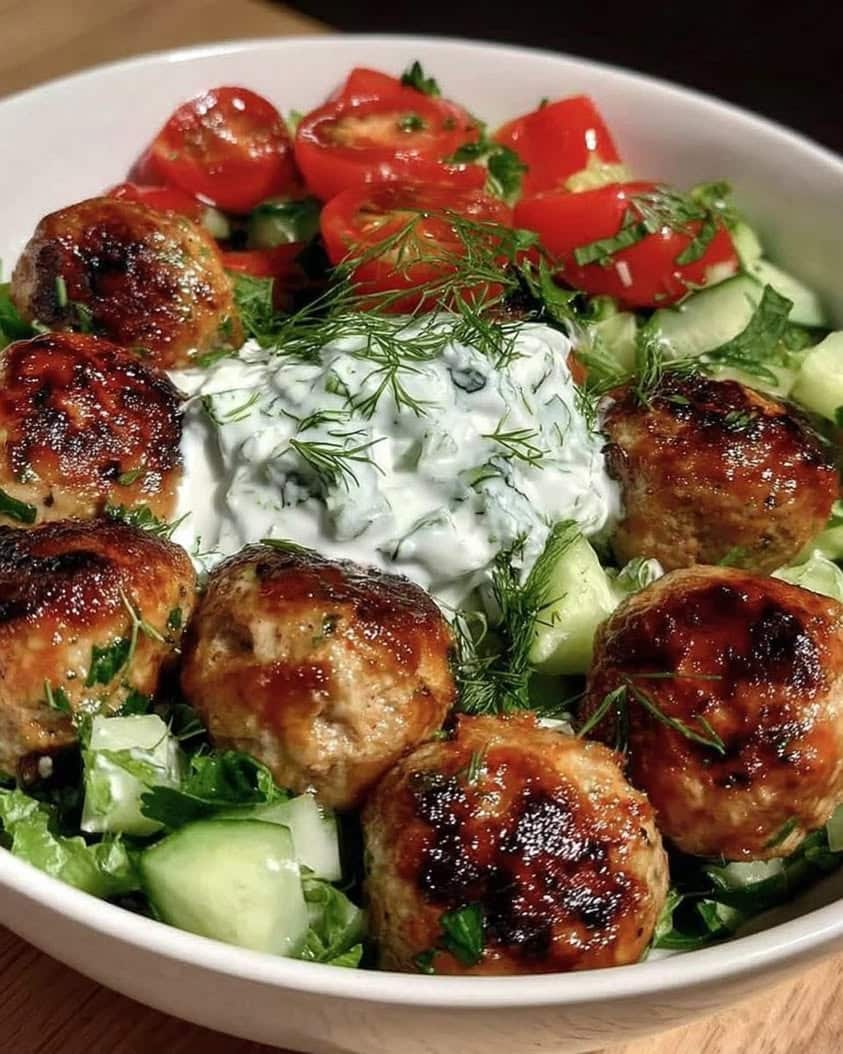
The sensory experience of this meal is truly remarkable. The aroma of oregano and garlic fills your kitchen as the meatballs bake, promising a delicious, comforting dinner. When you plate the meal, the vibrant colors are stunning: the golden-brown meatballs against the bright white tzatziki, punctuated with flecks of green herbs. The first bite delivers a satisfying texture contrast: the tender, almost creamy interior of the chicken meatball gives way to a slightly crisp exterior. Then, the cool, velvety tzatziki coats your palate, cutting through the richness with its bright, acidic notes. This Greek chicken meatballs with creamy homemade tzatziki recipe is more than just a meal; it is an experience that transports you to a sun-drenched taverna by the sea.
Quick Recipe Highlights
- Flavor Profile: This dish features a bright, herbaceous, and savory flavor profile. The chicken meatballs are seasoned with classic Greek spices like oregano, mint, and garlic, balanced by the zest of lemon. The creamy homemade tzatziki adds a tangy, cool, and refreshing counterpoint that ties everything together beautifully.
- Texture: The meatballs are incredibly tender and juicy on the inside, with a lightly browned and slightly crisp exterior from baking. The tzatziki is thick, creamy, and smooth, with a pleasant crunch from the grated cucumber. The combination of warm, soft meatball and cool, creamy sauce creates a perfect mouthfeel.
- Aroma: The dominant aromas are garlic and oregano, which fill the kitchen with a fragrant, savory warmth. As the meatballs bake, you will also detect the subtle sweetness of onion and the fresh, citrusy notes of lemon zest. The tzatziki offers a clean, dill-forward aroma that is bright and inviting.
- Visual Appeal: The presentation is vibrant and inviting. The golden-brown, perfectly round meatballs are beautifully contrasted against the pristine white of the tzatziki sauce. A sprinkle of fresh dill and a drizzle of olive oil add a touch of elegance, while a side of fresh pita and tomatoes completes the colorful Mediterranean plate.
- Skill Level Needed: This is a very approachable recipe for cooks of all skill levels. The techniques involved are straightforward: mixing, forming meatballs, and baking. The tzatziki is a simple no-cook sauce that only requires grating and stirring. Even a beginner cook can achieve excellent results with this recipe.
- Special Equipment: You will need a standard baking sheet lined with parchment paper or a silicone baking mat. A box grater or a food processor with a grating disc is essential for preparing the cucumber for the tzatziki. A large mixing bowl for the meatball mixture is also necessary.
Recipe Overview
- Difficulty Level: We rate this recipe as Easy because it involves minimal complex culinary techniques. The primary tasks are mixing ingredients, shaping meatballs, and baking them in the oven. The tzatziki is made by simply combining ingredients, requiring no heat or special skill. There is no need for deep-frying, complex sauce reductions, or advanced plating, making it perfect for a relaxed weeknight meal.
- Category: This dish fits perfectly into the main course category for dinner. It can also be served as an appetizer or meze for a party or gathering. It is a versatile recipe that shines as a quick, healthy family dinner or as part of a larger Mediterranean-themed spread.
- Cuisine: This recipe is firmly rooted in Greek cuisine, drawing on the foundational flavors of the Mediterranean diet. The use of oregano, mint, lemon, garlic, and yogurt is quintessentially Greek. It reflects the emphasis on fresh, wholesome ingredients and simple preparations that are the hallmark of Greek home cooking.
- Cost: The cost of this dish is low to moderate. Ground chicken is generally very affordable, especially when compared to beef or lamb. Greek yogurt and cucumbers are budget-friendly staples. The dried herbs and spices are pantry essentials you likely already have. Overall, this is a cost-effective way to create a delicious and impressive meal.
- Season: While delicious year-round, this dish is particularly wonderful in the spring and summer. The fresh, bright flavors of lemon, mint, and cucumber are refreshing during warmer months. The cool tzatziki is the perfect antidote to a hot day, and the light, healthy nature of the meatballs makes them a perfect choice for warmer-weather eating.
- Occasion: This recipe is suitable for a wide range of occasions. It is a fantastic choice for a simple family dinner, a casual weekend lunch, or a healthy meal prep option. It also shines as a party appetizer for a game day gathering or a festive Mediterranean dinner party with friends and family.
Why You’ll Love This Recipe
The taste and texture of these Greek chicken meatballs are simply irresistible. The lean chicken stays remarkably moist thanks to the addition of grated onion and a touch of olive oil, while the blend of oregano, mint, and garlic creates a deeply savory and aromatic flavor. The real star is the creamy homemade tzatziki, which is thick, tangy, and perfectly complementing the warm meatballs. Each mouthful is a study in contrasts: the juicy, savory meatball and the cool, refreshing sauce create a harmony that will make you feel like you are dining in a seaside Greek taverna.
From a convenience standpoint, this recipe is a game-changer for busy weeknights. You can have the entire meal, from start to finish, on the table in less than 40 minutes. The meatballs are baked in the oven, which means there is no standing over a hot stove or dealing with messy splattering oil. The tzatziki requires no cooking at all, just a simple stir of ingredients. This means you can prepare a healthy, impressive dinner with very little active effort, leaving you more time to relax and enjoy your meal.
Looking at the nutritional advantages, this recipe is a powerhouse of clean, lean protein. Ground chicken is a fantastic source of protein, which is essential for muscle building and keeping you full and satisfied. The Greek yogurt in the tzatziki is packed with probiotics for gut health and calcium for strong bones. The cucumbers and herbs add a dose of vitamins and hydration. Furthermore, by baking instead of frying, you are significantly reducing the amount of added fat, making this a guilt-free, wholesome meal that aligns beautifully with a balanced, healthy diet.
For social and entertaining value, this Greek chicken meatballs with creamy homemade tzatziki recipe is a sure crowd-pleaser. The dish is naturally gluten-free and can be easily adapted for various dietary needs, making it a safe and welcome choice for guests. It looks incredibly impressive when served on a large platter, with the meatballs nestled next to a bowl of tzatziki and a pile of warm pita bread. It encourages a communal, sharing-style meal that is perfect for parties and gatherings, allowing your guests to build their own plates and interact with the food.
Finally, the cost-effectiveness and accessibility of this recipe are major wins. All the main ingredients are readily available at any standard grocery store. Ground chicken is one of the most budget-friendly meat options, and staples like yogurt, cucumber, and dried herbs are equally affordable. This means you can create a dish that tastes like it belongs in a high-end restaurant without breaking your grocery budget. It is a fantastic way to enjoy elevated, flavorful cooking without the high cost associated with gourmet ingredients or takeout.
Historical Background and Cultural Significance
The origins of meatballs, or keftedes as they are known in Greece, are ancient and deeply rooted in the Mediterranean region. The concept of combining ground meat with spices and binders dates back to antiquity, with early versions appearing in Persian and Arab cookbooks. The Greeks perfected their own version, called keftedes, which are traditionally made with ground lamb or beef and heavily seasoned with herbs. These small, savory spheres were a practical way to stretch expensive meat and utilize every part of the animal, a hallmark of resourceful peasant cooking that evolved into a celebrated culinary tradition.
In Greek culture, food is central to community, family, and celebration, and keftedes hold a special place. They are a staple of the meze table, a collection of small dishes shared among friends and family over drinks and conversation. This tradition of sharing food, known as filoxenia, is a cornerstone of Greek hospitality. Serving these meatballs with a side of creamy tzatziki is a common practice, as the yogurt sauce provides a refreshing counterpoint to the rich, herby meat. The dish represents not just a meal, but a social ritual of connection and generosity.
The evolution of this recipe from traditional lamb keftedes to these modern Greek chicken meatballs reflects a contemporary shift towards healthier, leaner eating without sacrificing flavor. While the classic version remains beloved, the adaptation using ground chicken is a natural progression in response to modern dietary preferences. The use of mint and oregano, however, remains a direct link to ancient Greek culinary traditions, showcasing how core flavor profiles can persist across millennia. This modern twist honors the past while making the dish more accessible and appealing to a health-conscious audience.
Across the Greek islands and the mainland, you will find numerous regional variations of keftedes. On the island of Lesbos, for example, you might find meatballs made with cumin and allspice, while in the Peloponnese, pine nuts and raisins are common additions. The use of stale bread soaked in milk or water as a binder is a classic technique. In coastal areas, seafood versions are popular. This Greek chicken meatballs recipe, while a modern interpretation, pays homage to this rich diversity by using the classic, unifying herbs and principles of Greek cookery that have been passed down through generations.
Ingredient Deep Dive
Ground chicken is the lean, protein-rich foundation of this dish. Historically, chicken was a more affordable and accessible meat in many American households compared to traditional lamb or beef, leading to this modern adaptation. From a nutritional standpoint, ground chicken provides a high-quality, complete protein source, which is vital for muscle repair and satiety. It is also generally lower in saturated fat than ground beef or lamb. For selection, look for ground chicken with a pinkish color and a fresh, neutral scent. A package with a slightly higher fat content (93/7) will yield juicier meatballs. Store it in the coldest part of your refrigerator and use it within one to two days of purchase, or freeze it for up to three months.
Greek yogurt is the star of the creamy homemade tzatziki, providing its signature thick, rich texture and tangy flavor. Its cultural significance in Greece is immense, as yogurt is a staple food used in both savory and sweet dishes. Nutritionally, Greek yogurt is a probiotic powerhouse, full of beneficial bacteria that support gut health. It is also an excellent source of calcium and protein. For the best results, always use full-fat, plain Greek yogurt, as it will yield a thicker, creamier tzatziki that will not become watery. Low-fat versions will work but will result in a thinner sauce. Store yogurt in the refrigerator and check the expiration date.
Cucumbers provide the essential freshness and crunch in the tzatziki. In Greek cuisine, cucumbers are a symbol of coolness and hydration, often paired with creamy yogurt to create a balanced sauce. They are very low in calories and a good source of vitamin K. For selection, choose English or hothouse cucumbers, which have fewer seeds and a thinner skin, requiring less preparation. The key step is to grate the cucumber, salt it, and then squeeze out as much water as possible. This prevents the tzatziki from becoming watery and ensures a thick, creamy consistency. Store fresh cucumbers in the vegetable crisper drawer of your refrigerator.
Fresh dill is a quintessential herb in Greek cooking, lending a bright, slightly sweet, and anise-like flavor to the tzatziki. In ancient Greece, dill was considered a symbol of wealth and was used in various rituals. Today, it is prized for its aromatic qualities and its ability to complement the rich flavors of yogurt and garlic. Dill is also a good source of antioxidants. When selecting fresh dill, look for vibrant green, feathery fronds that are not wilted or yellow. To store it, trim the stems and place them in a glass of water, covering the top loosely with a plastic bag, and refrigerate for up to a week. Dried dill can be substituted in a pinch, but fresh dill provides a much brighter flavor.
Dried oregano is the backbone of the Greek flavor profile in the meatballs. This herb is synonymous with Greek cuisine and is a fundamental component of the Greek landscape, growing wild on sun-drenched hillsides. It is a powerful antioxidant and has antimicrobial properties. The key is to use high-quality Greek oregano, which has a more pungent and peppery flavor than other varieties. When cooking, it is important to rub the dried oregano between your palms before adding it to the meatball mixture. This releases its essential oils and aromas, resulting in a much more intense and flavorful final dish.
Common Mistakes to Avoid
- Using ground chicken that is too lean is a common mistake. Chicken breast that is 99% lean will produce very dry, tough meatballs. Opt for a blend with a bit of thigh meat or a 93/7 lean-to-fat ratio for moisture.
- Overmixing the meatball mixture is a critical error. Mixing too vigorously develops the protein gluten, resulting in dense, tough meatballs. Combine the ingredients gently until they are just incorporated.
- Skipping the step of grating and draining the cucumber for the tzatziki is a frequent problem. If you do not remove the excess water, your tzatziki will be thin, watery, and lack that signature creamy texture.
- Using dried mint instead of fresh mint can alter the flavor profile. Fresh mint provides a bright, cool, and floral note that is essential for the authentic taste. Dried mint can taste slightly hay-like and less vibrant.
- Not seasoning the meat mixture adequately is a mistake. Chicken is relatively bland on its own, so you need to be generous with the salt, pepper, and dried herbs to build a deep, savory flavor.
- Overcrowding the baking sheet is a common oversight. If the meatballs are too close together, they will steam instead of brown, resulting in a pale, unappetizing exterior. Leave at least an inch of space between each meatball.
- Underbaking the meatballs is a risk that leads to a raw center. Use a meat thermometer to ensure they reach an internal temperature of 165 degrees Fahrenheit for food safety and optimal texture.
- Adding the garlic too early to the tzatziki is a small detail that matters. If the tzatziki sits for a while, the garlic flavor can become harsh and overpowering. For the best flavor, add it just before serving.
- Using a metal bowl for the tzatziki can sometimes give a metallic taste. It is best to use a glass, ceramic, or plastic bowl to prepare and store the sauce, preserving the pure, clean flavors.
- Forgetting to let the meatballs rest after baking is a mistake. Allowing them to rest for 5 minutes after they come out of the oven helps the juices redistribute, ensuring they stay moist and tender when you serve them.
Essential Techniques
Mastering the technique of properly draining the cucumber is the single most important step for a perfect creamy homemade tzatziki. After grating the cucumber on the large holes of a box grater, you must toss it with a generous pinch of salt. The salt draws out the excess water through osmosis. Let it sit for at least 10 minutes, then transfer the grated cucumber to a clean kitchen towel, cheesecloth, or a fine-mesh sieve. Squeeze and wring out as much liquid as you can. The more water you remove, the thicker and creamier your tzatziki will be. This simple step is the difference between a watery dip and a luxurious sauce.
Gently combining the meatball ingredients is a crucial skill that ensures a tender, juicy result. Place all the ingredients for the meatballs except the panko breadcrumbs into a large bowl. Using your hands, start to mix everything together very gently, just until the chicken is evenly distributed with the herbs and aromatics. Then, add the breadcrumbs and continue to mix gently until the mixture just holds together. You should still be able to see small flecks of the different ingredients. Overworking the meat at this stage will develop the protein, leading to a dense, tough, and compact final product. A light, almost shaggy mixture is the goal.
The technique of shaping uniform meatballs is essential for even cooking. Lightly wet your hands with cold water or a little olive oil to prevent the mixture from sticking to your skin. Using a small cookie scoop or your hands, portion out equal amounts of the meat mixture. Roll each portion gently between your palms to form a smooth ball. Avoid pressing too hard, which will compact the meat. Aim for meatballs that are all the same size, approximately 1.5 inches in diameter. This uniformity ensures that every meatball cooks at the same rate, preventing some from being overdone while others are still raw in the center.
Pro Tips for Perfect Greek Chicken Meatballs
For extra juicy meatballs, consider adding a small amount of grated onion that has been squeezed of its juice. The onion adds moisture and sweetness without making the mixture too wet. You can also add a tablespoon of olive oil to the mixture for additional richness. For the best flavor development, season the meat mixture and let it rest in the refrigerator for 15 to 20 minutes before forming the meatballs. This allows the flavors to meld and the breadcrumbs to fully absorb the moisture, resulting in a more cohesive and flavorful bite.
When baking the Greek chicken meatballs, line your baking sheet with parchment paper or a silicone baking mat for easy cleanup. For a deeper golden-brown color, lightly brush the meatballs with a little olive oil before placing them in the oven. You can also switch the oven to broil for the last 1 to 2 minutes of cooking to get an even more browned, slightly crispy exterior, but watch them carefully to prevent burning. Always use an instant-read thermometer to check for doneness, as oven temperatures can vary. The meatballs are safe to eat when the internal temperature reaches 165 degrees Fahrenheit.
For the creamiest homemade tzatziki, ensure your Greek yogurt is very cold. Using full-fat yogurt is non-negotiable for the best texture. After you have drained the cucumber, you can also place the finished tzatziki in a cheesecloth-lined strainer set over a bowl for an hour in the refrigerator. This will remove even more whey, creating an incredibly thick, dip-like consistency. For the best flavor, let the tzatziki rest in the refrigerator for at least 30 minutes before serving to allow the flavors to meld. The garlic and dill will infuse the creamy yogurt beautifully during this time.
Variations and Adaptations
For regional variations, you can incorporate flavors from different parts of Greece. To mimic the style from the island of Skiathos, try adding a pinch of ground cinnamon and allspice to the meatball mixture. For a Cretan twist, include some fresh chopped mint and a generous amount of crumbled feta cheese inside the meatballs, which will create a deliciously melty center. You can also experiment with adding finely chopped sun-dried tomatoes or Kalamata olives to the mixture for a more intense, briny flavor that reflects the cuisine of the southern Peloponnese.
Seasonal adaptations are easy to make with this recipe. In the summer, serve the Greek chicken meatballs with a side of grilled vegetables like zucchini, bell peppers, and cherry tomatoes, all drizzled with olive oil. In the winter, you can serve them over a bed of warm, herbed quinoa or with a side of roasted root vegetables like carrots and parsnips. Adding a handful of fresh spinach to the serving platter during the spring provides a pop of color and a dose of greens. In the fall, a sprinkle of pomegranate seeds over the tzatziki adds a festive, sweet-tart crunch.
Dietary modifications are straightforward. To make this recipe gluten-free, ensure you use certified gluten-free panko breadcrumbs or substitute them with an equal amount of almond flour or crushed pork rinds for a low-carb option. For a completely dairy-free version, substitute the Greek yogurt in the tzatziki with a thick, unsweetened coconut or cashew-based yogurt, and use a dairy-free milk to soak the breadcrumbs if needed. While the flavor will change, the creamy texture can be preserved with the right dairy-free yogurt choice. This makes the dish accessible to those with lactose intolerance or dairy allergies.
For flavor variations, try adding a teaspoon of smoked paprika or a pinch of red pepper flakes to the meatball mixture for a smoky or spicy kick. Swapping the fresh dill in the tzatziki for fresh mint creates a completely different, but equally delicious, flavor profile. You can also add a clove of roasted garlic to the tzatziki for a sweeter, mellower garlic flavor. For a more acidic and citrusy note, increase the amount of lemon zest in the meatballs and add a squeeze of fresh lemon juice to the tzatziki just before serving.
Serving and Presentation Guide
For an elegant plated presentation, place a generous dollop of creamy homemade tzatziki in the center of a warm plate. Arrange three or four Greek chicken meatballs artfully on top of the sauce. Drizzle a little extra virgin olive oil over the meatballs and sauce, and finish with a sprinkle of fresh dill or mint. You can also add a few lemon wedges on the side for an extra pop of color and a bright squeeze of citrus. This presentation highlights the vibrant colors and textures of the dish beautifully.
Garnishing ideas can elevate the visual appeal significantly. A sprinkle of crumbled feta cheese adds a salty, creamy element and a striking white contrast. A few Kalamata olives placed around the plate provide a touch of briny flavor and deep purple color. Thinly sliced red onion rings or a sprinkle of sumac can add a tangy, slightly sour note and a beautiful ruby hue. For a touch of freshness, add a few small sprigs of fresh dill or a handful of microgreens on top.
Traditional accompaniments for this dish include warm, soft pita bread that is perfect for scooping up the meatballs and tzatziki. A classic Greek salad with tomatoes, cucumbers, red onion, and feta is a natural pairing. Roasted or grilled lemon potatoes are another excellent side dish that soaks up the delicious sauce. For a lighter option, serve the meatballs and tzatziki over a bed of fresh greens with a simple lemon vinaigrette, creating a hearty and healthy main course salad.
Wine and Beverage Pairing
A crisp, dry white wine is the ideal companion for this dish. A glass of Assyrtiko from Santorini is a classic Greek choice, offering high acidity and mineral notes that cut through the richness of the meatballs and complement the tangy tzatziki. A Sauvignon Blanc from New Zealand or a dry Vinho Verde from Portugal offers similar bright, citrusy flavors. For a slightly fruity option, a dry Riesling or a Pinot Grigio works wonderfully, highlighting the herbal notes in the meatballs.
For non-alcoholic alternatives, a sparkling water with a squeeze of fresh lemon or lime is a simple, refreshing choice that cleanses the palate. An iced herbal tea, such as mint or chamomile, mirrors the fresh herb flavors in the dish. A traditional Greek frappe or a glass of cold-brew coffee offers a bitter, robust contrast to the creamy sauce. For a festive touch, a simple spritzer made with soda water and a splash of pomegranate or cranberry juice adds a beautiful color and a touch of sweetness.
Storage and Shelf Life
To store leftover Greek chicken meatballs, let them cool completely to room temperature. Place them in an airtight container, separating layers with parchment paper to prevent sticking, and store them in the refrigerator. The meatballs will stay fresh and delicious for up to four days. The creamy homemade tzatziki should also be stored in a separate airtight container in the refrigerator. It will keep well for up to three days, though it may release a little water, which can be stirred back in before serving.
For reheating, the best method is to use a 350 degree Fahrenheit oven. Place the meatballs on a baking sheet and heat them for 5 to 7 minutes, or until warmed through. This method helps restore their slightly crisp exterior. You can also reheat them in a skillet over medium heat with a splash of water or chicken broth, covered, for a few minutes. The microwave should be a last resort, as it can make the meatballs tough and rubbery. The tzatziki should be served cold and should never be reheated, as the yogurt will separate and become watery.
Make Ahead Strategies
This Greek chicken meatballs with creamy homemade tzatziki recipe is perfect for make-ahead meal planning. You can prepare the meatball mixture up to 24 hours in advance. Simply shape the meatballs and place them on a parchment-lined baking sheet. Cover the sheet tightly with plastic wrap and store it in the refrigerator. The tzatziki can be made up to two days in advance, which actually helps the flavors meld and develop more complexity. Store it in a sealed container in the refrigerator.
When you are ready to cook, simply remove the meatballs from the refrigerator and bake them according to the recipe instructions. You may need to add an extra minute or two to the cooking time if the meatballs start from a colder temperature. If you are short on time, you can also form the meatballs and freeze them on the baking sheet. Once frozen solid, transfer them to a freezer-safe bag or container. You can bake them directly from frozen, adding about 5 to 8 minutes to the total cooking time. This allows for an incredibly quick and convenient meal on a busy night.
Scaling Instructions
To halve this recipe for two servings, simply divide all the ingredients by two. For the tzatziki, you will need about half a cucumber and half a cup of yogurt. The baking time will remain largely the same, though you should start checking for doneness a minute or two earlier since fewer meatballs will cook faster. For the meatballs, you can bake them on a quarter-sheet pan. The key to scaling down the meatballs is to ensure your egg-to-breadcrumb ratio remains consistent; using a small egg or beating the egg first and using half of it will work best.
Doubling or tripling the recipe for a crowd is very straightforward. Simply multiply all the ingredients by two or three. The biggest consideration is cooking equipment. You will likely need two or three baking sheets to avoid overcrowding the pan. Rotate the pans between the upper and lower oven racks halfway through the baking time to ensure even browning. The baking time will remain approximately the same. For the tzatziki, a large bowl is required. This recipe scales exceptionally well, making it a fantastic choice for parties or large family gatherings.
Nutritional Deep Dive
This dish provides a fantastic macro-nutrient balance for a satisfying and healthy meal. One serving (approximately 4 meatballs with 1/4 cup of tzatziki) contains about 350 to 400 calories. It is high in protein, offering roughly 35 to 40 grams from the chicken and Greek yogurt, which is excellent for satiety and muscle health. The fat content is moderate, around 15 to 20 grams, largely from the olive oil and full-fat yogurt, which are healthy sources of unsaturated fats. The carbohydrate content is relatively low, about 10 to 15 grams, primarily coming from the small amount of breadcrumbs and the natural sugars in the yogurt and cucumber.
From a micronutrient perspective, this meal is rich in several beneficial nutrients. The Greek yogurt is an excellent source of calcium and vitamin B12. The cucumber provides vitamin K and a good amount of hydration. Garlic and herbs like dill and oregano are packed with antioxidants that help fight inflammation and support the immune system. This meal is naturally low in sugar and high in protein, making it an excellent choice for weight management and maintaining stable blood sugar levels. It is a nutrient-dense, whole-food based meal that aligns perfectly with the principles of the Mediterranean diet.
Dietary Adaptations
For a gluten-free adaptation, simply replace the panko breadcrumbs with certified gluten-free breadcrumbs or almond flour. For the meatballs, you can also use crushed pork rinds for a low-carb, gluten-free option. Ensure all other ingredients, such as dried spices, are labeled gluten-free. The tzatziki is naturally gluten-free, making this an easy adaptation for those with celiac disease or a gluten sensitivity. The texture of the meatballs will remain tender and juicy with these substitutions.
For a dairy-free adaptation, the primary change is in the tzatziki. Replace the Greek yogurt with a thick, plain, unsweetened dairy-free yogurt made from coconut, cashew, or soy. Look for one with a very thick consistency, similar to Greek yogurt. The flavor will be slightly different, but it will still be creamy and tangy. The meatballs themselves are naturally dairy-free, so no other changes are needed. For a vegan version, you can substitute the ground chicken with a plant-based ground meat alternative and use a flax egg as a binder, though the texture and flavor will change significantly.
Troubleshooting Guide
If your meatballs are dry, the most likely culprit is using ground chicken that is too lean. Next time, choose a blend with a higher fat content, or add a tablespoon of olive oil or a grated, squeezed onion to the mixture. Another reason could be overbaking. Use a meat thermometer to ensure you are not cooking them past 165 degrees Fahrenheit. The resting time after baking is also crucial for allowing juices to redistribute, so do not skip that step.
If your tzatziki is watery, you did not squeeze enough water out of the grated cucumber. This is the most common issue. To fix it, you can scrape the tzatziki into a cheesecloth-lined sieve set over a bowl and let it drain in the refrigerator for an hour. You can also stir in a little more thick Greek yogurt to help thicken it. For future batches, be much more aggressive when wringing out the cucumber; you want it to feel almost dry to the touch before adding it to the yogurt.
Recipe Success Stories
We have received wonderful feedback from our readers about this recipe. One home cook shared that this Greek chicken meatballs with creamy homemade tzatziki recipe has become her go-to for dinner parties because it is so easy to double and always impresses her guests. Another reader said the creamy homemade tzatziki was a revelation, as it was far superior to any store-bought version she had tried. Many readers have commented on how the simple technique of draining the cucumber transformed their tzatziki from a watery mess into a thick, restaurant-quality sauce.
Several readers have shared their own creative adaptations. One person added a pinch of cayenne pepper to the meatball mixture for a spicy kick, which they reported was a huge hit with their family. Another reader who follows a dairy-free diet used a thick coconut yogurt for the tzatziki and said it worked perfectly, giving the sauce a lovely subtle coconut flavor that paired beautifully with the herbs. We have also seen beautiful photos of this dish being served as part of a larger meze spread, with olives, feta, and grilled pita bread, which is a wonderful testament to its versatility and visual appeal.
Frequently Asked Questions
Q: Can I use ground turkey instead of ground chicken?
A: Yes, ground turkey is an excellent substitute. It has a very similar fat content and texture to ground chicken. Look for a blend that includes some dark meat for the best moisture content. Follow the recipe exactly as written, as the cooking time and techniques remain the same.
Q: Can I fry these meatballs instead of baking them?
A: Absolutely. To fry them, heat about 1/4 inch of olive oil in a large skillet over medium heat. Cook the meatballs in batches, turning them occasionally, for about 8 to 10 minutes, or
Print
Greek Chicken Meatballs with Homemade Tzatziki
- Total Time: 35 minutes
- Yield: 4
Description
Juicy and flavorful chicken meatballs seasoned with Mediterranean herbs, served with a cool and creamy homemade tzatziki sauce. Perfect for a healthy and delicious main course.
Ingredients
- 1 lb ground chicken
- 1/2 cup breadcrumbs
- 1/4 cup finely chopped red onion
- 2 cloves garlic, minced
- 1 large egg, lightly beaten
- 1 teaspoon dried oregano
- 1 teaspoon dried mint
- 1/2 teaspoon salt
- 1/4 teaspoon black pepper
- 2 tablespoons olive oil
- 1 cup plain Greek yogurt
- 1/2 cucumber, grated and drained
- 1 tablespoon lemon juice
- 1 tablespoon chopped fresh dill
- 1 small clove garlic, minced (for tzatziki)
- Salt to taste
Instructions
- In a large bowl, combine ground chicken, breadcrumbs, red onion, 2 minced garlic cloves, egg, oregano, mint, 1/2 teaspoon salt, and pepper. Mix gently until just combined.
- Form the mixture into 1-inch meatballs (about 20–24).
- Heat olive oil in a large skillet over medium heat. Add meatballs in batches, cooking until browned on all sides and cooked through, about 10–12 minutes total. Remove and set aside.
- To make the tzatziki: In a medium bowl, combine Greek yogurt, grated cucumber, lemon juice, dill, 1 small minced garlic clove, and salt to taste. Stir well.
- Serve the meatballs warm with a generous dollop of tzatziki on top or on the side.
Notes
You can customize the seasonings to taste. For a gluten-free version, use gluten-free breadcrumbs. Tzatziki can be made ahead and refrigerated for up to 2 days.
- Prep Time: 20 minutes
- Cook Time: 15 minutes
- Method: Main
- Cuisine: Greek