The Best Greek Chicken Meatballs with Creamy Homemade Tzatziki Recipe
When you crave a Mediterranean dinner that feels both indulgent and wholesome, this Greek Chicken Meatballs with Creamy Homemade Tzatziki Recipe delivers every time. Picture tender, juicy meatballs infused with garlic, oregano, and fresh mint, each bite bursting with authentic Greek flavor. The creamy homemade tzatziki, with its cool cucumber and tangy yogurt, balances the savory richness of the chicken perfectly. This dish brings the bright, sun-drenched tastes of Greece right into your kitchen without requiring a plane ticket or a complicated shopping list.
The magic of this recipe lies in its simplicity and depth. Ground chicken stays remarkably moist when you combine it with grated onion, breadcrumbs, and a whisper of olive oil. The herbs do not just sit on the surface; they permeate every bite, creating a fragrant aroma that fills your home. Pair that with a tzatziki sauce you whip up in minutes, and you have a meal that impresses guests and satisfies weeknight cravings. Whether you serve these over a Greek salad, tucked into warm pita, or alongside roasted potatoes, the combination never fails to please.
Beyond the incredible taste, this recipe offers practical benefits that make it a repeat favorite. The preparation moves quickly, and the ingredients are easy to find at any standard grocery store. You can prepare the meatball mixture and the tzatziki ahead of time, which makes weeknight cooking a breeze. Because the recipe uses lean ground chicken, you get a high-protein meal that feels light yet satisfying. This is comfort food with a fresh, bright twist that you will want to make again and again.
Quick Recipe Highlights
- Flavor Profile: This recipe delivers a bright, herb-forward taste with notes of garlic, lemon, and mint. The feta cheese adds a salty tang, while the tzatziki provides a cool, creamy counterpoint that ties everything together.
- Texture: The meatballs come out tender and juicy on the inside with a lightly browned, crispy exterior. The tzatziki offers a smooth, velvety consistency with small bits of cucumber for a refreshing crunch.
- Aroma: As the meatballs cook, the scents of oregano, garlic, and lemon fill your kitchen. The tzatziki contributes a fresh, dill-forward aroma that hints at the creamy delight to come.
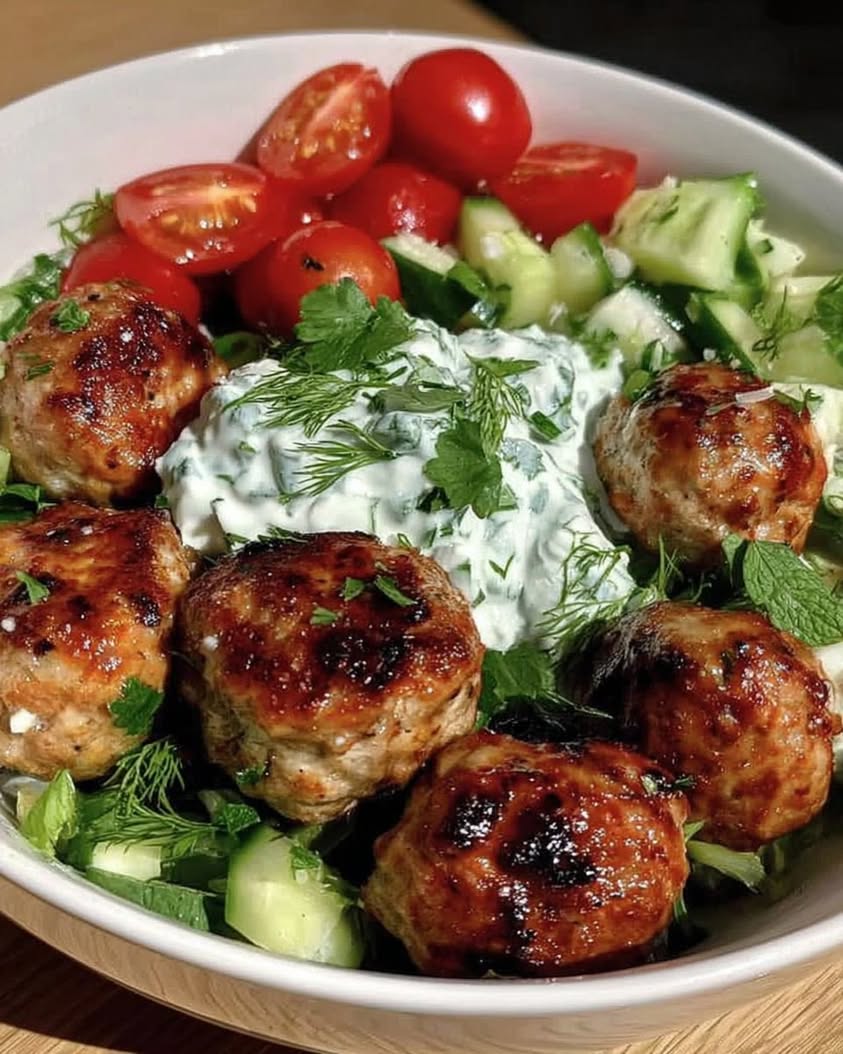
- Visual Appeal: Golden brown meatballs rest on a bed of white tzatziki, dotted with green herbs and flecks of red pepper. The contrast of colors makes for an appetizing presentation on any plate.
- Skill Level Needed: This recipe suits beginners and experienced cooks alike. The techniques are straightforward, and the steps are clearly defined, making it easy to achieve great results on the first try.
- Special Equipment: You will need a large mixing bowl, a box grater, a rimmed baking sheet, and a skillet or cast-iron pan. A food processor can speed up grating the onion and cucumber if you prefer.
Recipe Overview
- Difficulty Level: This recipe earns an easy rating because the steps are simple and forgiving. The meatball mixture comes together in one bowl, and shaping them requires no special technique. Even if your meatballs are slightly uneven in size, they will cook evenly and taste delicious. The tzatziki is a simple stir-together sauce that requires no cooking at all.
- Category: These Greek chicken meatballs work perfectly as an appetizer, a main course, or a meal prep component. You can serve them with rice, on a salad, or in a wrap for a complete lunch or dinner. They also shine as a party bite when served on skewers with a dollop of tzatziki.
- Cuisine: This recipe draws from traditional Greek cuisine, which emphasizes fresh herbs, olive oil, yogurt, and lean meats. Greek cooking relies on simple, high-quality ingredients that let natural flavors shine. The combination of lemon, oregano, and mint is a hallmark of this culinary tradition.
- Cost: The ingredients for this recipe are budget-friendly and widely available. Ground chicken, yogurt, cucumber, and fresh herbs cost relatively little, especially when you buy in season. Feta cheese is the most expensive item, but a small amount goes a long way. Overall, you can feed a family of four for under fifteen dollars.
- Season: While enjoyable year-round, this recipe truly shines in the spring and summer months. Fresh mint and cucumber are at their peak during warmer weather, and the light, refreshing flavors suit hot days. However, the comforting nature of meatballs makes them welcome in cooler seasons as well.
- Occasion: These Greek chicken meatballs are versatile enough for casual weeknight dinners, backyard barbecues, or even elegant dinner parties. They are a hit at potlucks and game day gatherings because they travel well and taste great at room temperature. The bright flavors also make them a wonderful choice for Easter brunch or a Mediterranean-themed dinner party.
Why You Love This Recipe
Taste and texture are the primary reasons you will return to this recipe again and again. The meatballs are incredibly juicy, thanks to the grated onion and a touch of olive oil that keep the lean ground chicken from drying out. The herbs create a complex flavor profile that feels both familiar and exotic. When you dip each bite into the creamy tzatziki, the cool yogurt and tangy lemon cut through the richness perfectly. That combination of warm, savory meatballs and cold, refreshing sauce is pure culinary magic.
Convenience plays a major role in making this recipe a staple in your home. The entire process takes about forty minutes from start to finish, with active prep time under twenty minutes. You can mix the meatball ingredients in a single bowl, which means minimal cleanup. The tzatziki comes together while the meatballs bake or fry, saving you extra steps. Because the recipe is straightforward, you can easily double it for a crowd or halve it for a quieter night in.
Nutritional advantages make this meal a smart choice for your weekly rotation. Ground chicken provides lean protein that supports muscle health and keeps you feeling full. Greek yogurt offers probiotics and calcium, which benefit your digestive system and bones. Cucumber adds hydration and vitamins, while garlic and herbs contribute antioxidants. This dish delivers a balanced macronutrient profile with fewer calories than traditional beef or lamb meatballs.
Social and entertaining value cannot be overstated for this recipe. Guests always appreciate homemade dips and meatballs, and this combination feels special without being fussy. You can prepare everything in advance and simply reheat the meatballs before serving. The vibrant colors and fresh aromas create an inviting atmosphere that encourages people to gather around. This dish also travels well to picnics and potlucks, where it always receives compliments.
Cost-effectiveness and accessibility ensure that this recipe fits into your budget and schedule. All ingredients are available at standard supermarkets, and most are pantry staples. The total cost is surprisingly low for the quality and quantity of food you produce. You can often find ground chicken on sale, and Greek yogurt is a common refrigerator item. This makes the recipe a realistic option for busy families who want to eat well without breaking the bank.
Historical Background and Cultural Significance
Meatballs, or keftedes, hold a cherished place in Greek culinary history that stretches back thousands of years. Ancient Greeks prepared small fried meat patties seasoned with herbs and spices, which they served during festivals and family gatherings. Over time, these evolved into the modern keftedes we know today, with regional variations appearing across the Greek mainland and islands. The addition of breadcrumbs and yogurt reflects both practical food preservation methods and the Greek love for resourceful cooking.
Cultural importance of meatballs in Greek society cannot be overstated. They appear at nearly every celebration, from Easter feasts to weddings and baptisms. Each family passes down its own recipe, with slight tweaks in herbs or ratios that make the dish uniquely theirs. The act of shaping meatballs together often becomes a family bonding activity, with grandparents teaching younger generations the proper technique. This communal aspect reinforces the Greek value of togetherness around the table.
Evolution of this recipe shows how Greek cuisine has adapted to modern tastes and available ingredients. Traditional keftedes used lamb or beef, but chicken has become a popular leaner alternative in recent decades. The tzatziki sauce, once a simple yogurt and cucumber mixture, now includes lemon juice and fresh dill for added brightness. Cooks have also experimented with baking instead of frying to create a healthier version that retains all the flavor. These adaptations keep the tradition alive while meeting contemporary dietary preferences.
Regional variations highlight the diversity within Greek cooking. In Crete, cooks often add mint and a touch of cinnamon to their meatballs. On the islands, they might include grated tomato or a splash of ouzo for a distinctive flavor. Northern Greece sees versions with bulgur wheat instead of breadcrumbs, reflecting Turkish influences. This recipe pulls from the classic Athenian style, which balances herbs and garlic for a universally appealing taste. Understanding these regional differences enriches your appreciation for the dish.
Ingredient Deep Dive
Ground Chicken: Ground chicken offers a lean, mild base that absorbs flavors beautifully. In Greek cooking, poultry became more common in the twentieth century as refrigeration and poultry farming expanded. Nutritionally, ground chicken provides high-quality protein with less saturated fat than beef or lamb. Select ground chicken with a moderate fat content, around seven to ten percent, to ensure juiciness in the final meatballs. Store it in the coldest part of your refrigerator and use it within two days of purchase. For a substitute, ground turkey works equally well, though you may need to add a touch more olive oil for moisture.
Greek Yogurt: Greek yogurt is the cornerstone of tzatziki and adds tangy richness to the dish. This strained yogurt originated in Greece and the Middle East, where it was developed to preserve milk in warm climates. It contains probiotics that support gut health and provides calcium for strong bones. When shopping, choose full-fat Greek yogurt for the creamiest tzatziki, as low-fat versions can be watery. Strain the yogurt through cheesecloth for an hour if it seems thin. Plain whole milk yogurt from any brand works in a pinch, but the Greek variety produces the thickest sauce.
Cucumber: Cucumber brings refreshing crunch and moisture to both the meatballs and the tzatziki. In Greek cuisine, cucumber is a staple vegetable used in salads, dips, and cold soups. It is low in calories and high in water content, making it hydrating and light. Select firm, dark green cucumbers without soft spots or wrinkles. English cucumbers are ideal because they have fewer seeds and thin skin. If using standard cucumbers, peel them and remove the seeds to prevent excess water in your tzatziki. Zucchini can substitute in a pinch, though it will alter the flavor slightly.
Fresh Mint: Fresh mint adds a cooling, aromatic note that defines Greek meatballs. This herb has been used in Mediterranean cooking since ancient times for its digestive and refreshing qualities. Mint is rich in antioxidants and can help soothe an upset stomach. Choose bunches with bright green leaves and no signs of wilting or yellowing. Wrap fresh mint in a damp paper towel and store it in a plastic bag in the refrigerator for up to a week. Dried mint works if fresh is unavailable, but use one-third of the amount since dried herbs are more concentrated.
Feta Cheese: Feta brings a salty, tangy creaminess that elevates the meatball mixture. Originating in Greece, feta is a brined curd white cheese made from sheep or goat milk. It adds calcium and protein while contributing a distinctive flavor that cannot be replicated. Look for blocks of feta stored in brine rather than pre-crumbled versions, which tend to be drier. Store feta in its brine in the refrigerator, and it will keep for several weeks. For a dairy-free alternative, use a plant-based feta or omit it entirely, though you will lose some saltiness.
Common Mistakes to Avoid
- Using lean ground chicken without added fat leads to dry, crumbly meatballs because the meat lacks enough fat to stay moist. Always choose ground chicken with some fat content or add a tablespoon of olive oil to the mixture.
- Skipping the step of grating and squeezing the onion releases excess water that can make meatballs soggy. Grate the onion on a box grater, then use your hands to squeeze out the liquid before adding it to the mixture.
- Overmixing the meatball ingredients creates tough, dense meatballs because the proteins tighten. Mix gently with your hands just until everything combines, then stop immediately.
- Not chilling the meatball mixture before shaping can cause them to fall apart during cooking. Refrigerate the mixture for fifteen minutes to firm it up and make shaping easier.
- Using a non-stick pan over high heat prevents proper browning because the surface never gets hot enough for a good sear. Use cast iron or stainless steel and heat the oil until it shimmers before adding the meatballs.
- Skipping the step of salting and draining cucumber for tzatziki results in a watery sauce. Salt the grated cucumber, let it sit for ten minutes, then squeeze out the liquid thoroughly before mixing with yogurt.
- Using pre-minced garlic from a jar gives a harsh, bitter flavor that overwhelms the dish. Fresh garlic cloves provide a milder, sweeter taste that complements the herbs perfectly.
- Overcooking the meatballs leads to dry, tough results even if you started with moist ingredients. Cook them until they reach an internal temperature of 165 degrees Fahrenheit and remove them from heat immediately.
- Making tzatziki too far in advance causes it to thin out as the cucumber releases more water. Prepare the tzatziki no more than one day ahead, and stir it well before serving.
- Not tasting the meatball mixture before cooking can result in underseasoned meatballs. Pan-fry a small test piece to check the seasoning level and adjust salt and herbs as needed.
Essential Techniques
Grating and Draining the Onion: Grating the onion instead of chopping it releases more moisture and integrates the onion more evenly into the meat. This technique ensures every bite has a consistent onion flavor without chunks that can make the meatballs fall apart. To master this, use the large holes of a box grater and grate the onion directly over a bowl. Then, transfer the grated onion to a clean kitchen towel and twist it tightly to extract as much liquid as possible. This step is non-negotiable because the extra water would make your meatballs soggy. You will notice the grated onion becomes almost dry and flaky, which is exactly what you want.
Shaping Uniform Meatballs: Consistent size ensures even cooking so that all meatballs finish at the same time. Use a small cookie scoop or a tablespoon measure to portion the mixture, then roll each portion between your palms until smooth. Dampen your hands with a little water to prevent sticking and create a more uniform shape. Aim for meatballs about one and a half inches in diameter, which cook through in about fifteen to eighteen minutes. If the mixture sticks excessively, chill it for ten minutes to firm it up. Uniform meatballs also look more professional and appetizing on the plate.
Browning for Flavor: Proper browning creates a savory crust that adds depth and texture to the meatballs. The Maillard reaction, which occurs when proteins and sugars are exposed to high heat, produces complex flavors that cannot be achieved through baking alone. Heat your pan over medium-high heat and add enough olive oil to coat the bottom generously. Do not overcrowd the pan; work in batches if necessary to maintain the pan temperature. Flip the meatballs gently with tongs when the first side is deeply golden, which takes about three to four minutes. You will know they are ready when they release easily from the pan without sticking.
Pro Tips for Perfect Greek Chicken Meatballs with Creamy Homemade Tzatziki Recipe
Always toast your breadcrumbs in a dry skillet for two minutes before adding them to the meatball mixture. This extra step adds nutty flavor and helps the breadcrumbs absorb moisture better. You will notice the meatballs stay more tender and have a richer taste.
Let the meatball mixture rest in the refrigerator for at least thirty minutes before shaping. This allows the breadcrumbs to fully hydrate and the flavors to meld together. The chilled mixture is also easier to handle and less likely to stick to your hands.
Use a microplane to zest your lemon directly into the meatball mixture before juicing it. The lemon zest contains essential oils that provide intense citrus flavor without the acidity of the juice. This adds brightness without making the mixture too wet.
Reserve a few tablespoons of the tzatziki to drizzle over the meatballs just before serving. This adds a fresh, cold contrast to the warm meatballs and makes the presentation look more polished. The extra sauce also ensures every bite gets plenty of creamy goodness.
Cook your meatballs in a single layer and avoid moving them too much in the pan. Let them develop a deep, golden crust on the first side before flipping, which takes about four minutes. This patience pays off with a beautiful color and a better texture.
Make double the tzatziki sauce because everyone always wants more. It keeps well in the refrigerator for up to five days and works as a dip for vegetables, a spread for sandwiches, or a sauce for grilled meats. You will find yourself using it on everything.
Serve these meatballs with warm pita bread and a simple Greek salad for a complete meal that feels like a restaurant experience. The combination of textures and temperatures makes each bite exciting. Your family will request this meal on a regular basis once they taste it.
Variations and Adaptations
Regional Variations: In the Peloponnese region, cooks often add a pinch of cinnamon to the meatball mixture for warmth. The island of Crete uses fresh thyme instead of mint for a more earthy profile. Northern Greek versions incorporate bulgur wheat and cumin, reflecting Turkish influences. Each regional twist offers a new way to experience the basic formula. You can experiment with these variations to find your personal favorite.
Seasonal Adaptations: In summer, add fresh chopped tomatoes or grated zucchini to the meatball mixture for extra moisture. During fall, swap the mint for fresh sage and serve the meatballs with roasted root vegetables. Springtime calls for fresh peas or asparagus folded into the meatballs for a pop of green. Winter versions can include a pinch of nutmeg and serve the meatballs in a warm tomato sauce. These seasonal changes keep the recipe exciting throughout the year.
Dietary Modifications: For a gluten-free version, substitute almond flour or gluten-free breadcrumbs for the regular breadcrumbs. Ensure your Greek yogurt is certified gluten-free if you have celiac disease. For dairy-free needs, use a plant-based yogurt for the tzatziki and omit the feta cheese from the meatballs. The flavor will change slightly, but the result remains delicious and satisfying. These modifications allow everyone to enjoy the dish regardless of dietary restrictions.
Flavor Variations: Add a teaspoon of smoked paprika to the meatball mixture for a subtle smokiness. Stir in a tablespoon of capers or chopped kalamata olives for a briny kick. For heat, incorporate a finely chopped serrano chili or a pinch of red pepper flakes. These small additions create entirely new flavor profiles while maintaining the essential character of the dish.
Texture Modifications: For a smoother texture, pulse the meatball ingredients in a food processor until finely ground but not pasty. This works especially well if you are using a food processor to grate the onion and cucumber anyway. For a chunkier texture, fold in finely chopped walnuts or pine nuts before shaping. These nuts add a pleasant crunch that contrasts with the tender meatballs.
Presentation Alternatives: Serve the meatballs on wooden skewers for an easy appetizer at parties. Arrange them on a platter with the tzatziki in a separate bowl for dipping. For a main course, place the meatballs over a bed of lemon rice or quinoa. You can also serve them in warm pita pockets with lettuce, tomato, and a generous drizzle of tzatziki for a handheld meal.
Serving and Presentation Guide
Plating these meatballs with intention elevates the entire dining experience. Start by spreading a generous swoop of creamy homemade tzatziki across the center of each plate. Arrange five to six meatballs in a slightly overlapping line over the sauce. This creates a visually striking contrast between the golden meatballs and the white sauce. Finish with a light sprinkle of fresh dill or mint leaves and a few crumbles of extra feta cheese for color.
Garnishing ideas that add visual appeal include a drizzle of good olive oil over the tzatziki and a pinch of smoked paprika or sumac. Thin slices of lemon or a few whole mint leaves add freshness and color. Toasted pine nuts or chopped pistachios scattered over the top bring a welcome crunch and nutty flavor. Keep the garnishes simple so they enhance rather than overwhelm the dish.
Traditional accompaniments for Greek chicken meatballs include warm pita bread, a Greek salad, and lemon roasted potatoes. The pita is perfect for scooping up the tzatziki and soaking up any juices from the meatballs. A Greek salad with tomatoes, cucumber, olives, and feta adds freshness and acidity. Roasted potatoes seasoned with oregano and lemon make a hearty side that turns this into a complete meal.
Modern serving suggestions include placing the meatballs over a grain bowl with quinoa, spinach, cherry tomatoes, and avocado. You can also serve them as sliders on small brioche buns with tzatziki and pickled red onions. For a light lunch, chop the meatballs and toss them into a mixed green salad with a lemon vinaigrette. These contemporary presentations keep the dish fresh and versatile.
Temperature considerations matter for the best eating experience. Serve the meatballs hot from the pan or oven, ideally within ten minutes of cooking. The tzatziki should be cold, straight from the refrigerator, to provide a temperature contrast. If you are preparing ahead of time, reheat the meatballs in a 350 degree oven for about ten minutes. Avoid microwaving, as it can make them rubbery.
Portion control tips help you serve the right amount for different occasions. For an appetizer, plan on three to four meatballs per person. For a main course, six to eight meatballs with sides make a satisfying meal. When serving as part of a buffet, estimate about five meatballs per person since guests will likely take a variety of dishes. These guidelines ensure you have enough food without excessive waste.
Wine and Beverage Pairing
Wine pairings for these Greek chicken meatballs should complement the bright, herby flavors without overpowering them. A crisp, dry Assyrtiko from Santorini offers citrus notes and a mineral finish that cuts through the richness of the meatballs and tzatziki. Alternatively, a unoaked Chardonnay or a dry Sauvignon Blanc provides similar acidity and fruitiness. For red wine lovers, a light-bodied Grenache or a chilled Beaujolais works well because they do not overwhelm the delicate chicken.
Non-alcoholic alternatives can be just as enjoyable with this dish. A sparkling water with a squeeze of lemon and a sprig of mint echoes the flavors in the meal. Iced green tea with a touch of honey provides a refreshing, slightly sweet counterpoint. For a festive option, mix pomegranate juice with sparkling water and a splash of lime for a mocktail that feels special. These beverages keep the focus on the food while offering a satisfying drink.
Coffee and tea pairings can work if you serve these meatballs as part of a brunch or light dinner. A cup of strong Greek coffee, served with a glass of cold water, provides a bold contrast to the creamy tzatziki. Herbal teas like chamomile or peppermint accentuate the fresh mint and dill in the dish. These pairings are less traditional but can be delightful for those who prefer them.
Temperature considerations for beverages matter as much as the pairings themselves. Serve white wines and sparkling waters well-chilled, between 45 and 50 degrees Fahrenheit. Red wines should be slightly cool, around 55 degrees, especially if you choose a lighter style. Mocktails and sodas should be icy cold to contrast with the warm meatballs. These small details make the overall dining experience more cohesive and enjoyable.
Serving suggestions include offering a small glass of ouzo or tsipouro as an apéritif before the meal. These anise-flavored spirits are traditional in Greece and prepare the palate for the meal ahead. For a wine pairing, pour the Assyrtiko first and let guests enjoy it as they eat. These touches add an authentic Greek element to your dinner party that guests will remember.
Storage and Shelf Life
Proper storage methods ensure your Greek chicken meatballs stay fresh and safe to eat. After cooking, let the meatballs cool completely at room temperature for no more than two hours. Transfer them to an airtight container and layer them with parchment paper to prevent sticking. Store the meatballs in the refrigerator for up to four days. The tzatziki should be stored separately in its own airtight container to prevent it from thinning out.
Temperature requirements are critical for food safety. Keep your refrigerator at 40 degrees Fahrenheit or below to slow bacterial growth. The tzatziki should be stored in the coldest part of the refrigerator, typically the back of a shelf. If you are traveling with these items, use a cooler with ice packs to maintain safe temperatures. Never leave cooked meatballs or tzatziki at room temperature for more than two hours.
Container recommendations focus on maintaining quality and preventing odor transfer. Glass containers with tight-fitting lids are ideal because they do not absorb smells and are easy to clean. For the tzatziki, a glass jar or plastic container works well as long as it seals tightly. Avoid storing the meatballs in aluminum containers, as the acid from lemon juice can react with the metal. Label containers with the date so you can track freshness.
Signs of spoilage to watch for include off smells, slimy texture, or visible mold. The meatballs should smell fresh and savory, not sour or ammonia-like. Toss them if they develop a sticky or tacky surface or if the texture becomes mushy. The tzatziki may separate slightly upon standing, which is normal, but it should not have a watery layer on top or a sour smell beyond the natural yogurt tang.
Reheating instructions help you restore the meatballs to their original texture. Preheat your oven to 350 degrees Fahrenheit and place the meatballs on a baking sheet. Cover them loosely with foil to prevent drying and heat for about ten minutes. You can also reheat them in a skillet over medium heat with a splash of water or broth, covered, for five minutes. Avoid the microwave, as it toughens the meatballs and makes them rubbery.
Freezing guidelines allow you to prepare these meatballs well in advance. Cool the cooked meatballs completely, then arrange them in a single layer on a baking sheet and freeze for two hours. Transfer the frozen meatballs to a freezer-safe bag or container for up to three months. The tzatziki does not freeze well because the yogurt separates and becomes grainy upon thawing. Thaw frozen meatballs in the refrigerator overnight before reheating.
Make Ahead Strategies
A successful prep timeline starts with making the tzatziki up to two days in advance. Combine the yogurt, grated cucumber, garlic, dill, lemon juice, and salt, then refrigerate in a sealed container. The flavors meld and develop overnight, resulting in a more cohesive sauce. You can also grate the onion for the meatballs and squeeze out the liquid, storing it in a sealed container in the refrigerator for one day. This saves about ten minutes on cooking day.
Storage between steps requires careful planning to maintain quality. If you are making the meatball mixture the day before, shape the meatballs and arrange them on a parchment-lined baking sheet. Cover the sheet tightly with plastic wrap and refrigerate for up to twenty-four hours. This allows the flavors to deepen and the breadcrumbs to fully hydrate. Do not store the unbaked mixture in a bowl because it will be harder to shape later.
Quality impact assessment shows that make-ahead preparations actually improve the final dish. The meatballs become more flavorful as the herbs and garlic infuse the meat overnight. The tzatziki thickens and develops a more complex tang when given time to meld. However, the meatballs are best when cooked fresh, as reheating can slightly dry them out. The trade-off is worth it for the convenience factor, especially when hosting a dinner party.
Assembly tips include removing the meatballs from the refrigerator thirty minutes before cooking so they come to room temperature. This helps them cook more evenly and prevents the centers from remaining cold. While they sit, prepare any sides or garnishes you plan to serve. When you are ready to cook, heat your pan over medium-high heat and proceed with the recipe as written. The assembly process is streamlined because most of the work is already done.
Reheating guidelines for make-ahead meatballs focus on preserving moisture. The best method is to reheat them in a 350 degree oven for about ten minutes, covered with foil. Alternatively, you can reheat them in a skillet with a splash of chicken broth or water, covered, over medium heat. The steam helps rehydrate the meatballs and restore their tenderness. Always reheat the meatballs to an internal temperature of 165 degrees Fahrenheit before serving.
Fresh element additions like a final squeeze of lemon juice or a sprinkle of fresh herbs brighten the dish after reheating. Add these just before serving to restore the fresh, vibrant flavor. You can also quickly chop a bit more fresh dill or mint to stir into the tzatziki before serving. These small touches make a big difference in the final presentation and taste.
Scaling Instructions
Halving the recipe is straightforward and works well for smaller households. Use one pound of ground chicken instead of two and adjust the other ingredients by half. The breadcrumbs and herbs scale easily, but be careful with the egg, which should be lightly beaten and then only half of it used. The remaining half can be stored in a sealed container for another recipe. Halving the tzatziki is simple because the yogurt is easy to measure and the cucumber can be half of a standard cucumber.
Doubling or tripling this recipe for a crowd requires some adjustments to your technique. You will need to cook the meatballs in multiple batches to avoid overcrowding the pan, which leads to steaming instead of browning. Keep the cooked meatballs warm in a 200 degree oven while you finish the remaining batches. The tzatziki can be doubled easily in a larger bowl, but make sure to drain the cucumber thoroughly so the sauce does not become watery. Plan on an extra ten minutes of cooking time per batch.
Equipment adjustments become important when you scale up. Use a large Dutch oven or a deep skillet to accommodate more meatballs at once. If you are baking the meatballs instead of frying, you may need two baking sheets to avoid overcrowding. A stand mixer with a paddle attachment can help mix a doubled batch of the meatball mixture evenly. For the tzatziki, a large bowl and a whisk are all you need, but a food processor can speed up the cucumber grating process.
Timing modifications for larger batches focus on even cooking. The cooking time per batch remains the same, about fifteen to eighteen minutes, but the total time increases with each additional batch. Bake instead of fry for faster execution: arrange the meatballs in a single layer on a parchment-lined baking sheet and bake at 400 degrees for about twenty minutes. This method requires less active attention and delivers consistently cooked meatballs. The total time for a doubled batch is about forty-five minutes.
Storage considerations for scaled recipes are important for leftovers. Double or triple batches produce plenty of extras that freeze well. Cool the meatballs completely before portioning them into freezer bags for up to three months. The tzatziki does not freeze well, so make only as much as you will use within a few days. Label all containers with the date and quantity so you know exactly what you have.
Nutritional Deep Dive
The macro breakdown for this Greek chicken meatballs with creamy homemade tzatziki recipe is well-balanced for a satisfying meal. A serving of five meatballs with two tablespoons of tzatziki contains approximately 35 grams of protein, 18 grams of fat, and 12 grams of carbohydrates. The protein comes primarily from the chicken and Greek yogurt, which support muscle repair and satiety. The fat content includes heart-healthy olive oil and the natural fats in yogurt and chicken, while the carbohydrates are mostly from breadcrumbs and the small amount of natural sugars in yogurt.
Micronutrient analysis reveals several important vitamins and minerals in this dish. The chicken provides B vitamins, particularly niacin and B6, which support energy metabolism. Greek yogurt is rich in calcium and phosphorus for bone health, as well as riboflavin for energy production. Cucumber contributes vitamin K and small amounts of vitamin C and potassium. Garlic and herbs provide antioxidants like allicin and flavonoids that support immune function. This dish is also a good source of selenium from the chicken, which acts as an antioxidant.
Health benefits of this recipe include support for muscle maintenance, bone health, and digestive wellness. The high protein content helps preserve lean muscle mass, especially when paired with regular exercise. Calcium from the yogurt and feta supports strong bones and teeth, while the probiotics in yogurt promote a healthy gut microbiome. The olive oil provides monounsaturated fats that support heart health when used in moderation. This dish fits into a balanced diet that prioritizes whole, nutrient-dense ingredients.
Dietary considerations include the moderate sodium content from the feta cheese and added salt Print
Greek Chicken Meatballs with Homemade Tzatziki
- Total Time: 35 minutes
- Yield: 4
Description
Juicy and flavorful Greek chicken meatballs served with a refreshing homemade tzatziki sauce. Perfect for a healthy and satisfying meal.
Ingredients
- 1 lb ground chicken
- 1/2 cup breadcrumbs
- 1/4 cup finely chopped red onion
- 2 cloves garlic, minced
- 1 large egg
- 1 tsp dried oregano
- 1/2 tsp dried mint
- 1/2 tsp salt
- 1/4 tsp black pepper
- 1 tbsp olive oil
- 1 cup plain Greek yogurt
- 1/2 cucumber, grated and squeezed dry
- 1 tbsp lemon juice
- 1 tbsp chopped fresh dill
- 1/2 tsp salt
- 1/4 tsp black pepper
Instructions
- Preheat oven to 400°F (200°C). Line a baking sheet with parchment paper.
- In a large bowl, combine ground chicken, breadcrumbs, red onion, garlic, egg, oregano, mint, salt, and pepper. Mix until well combined.
- Form mixture into 1-inch meatballs and place on the prepared baking sheet. Drizzle with olive oil.
- Bake for 18-20 minutes, or until meatballs are cooked through and golden brown.
- While meatballs bake, prepare tzatziki: In a bowl, mix Greek yogurt, grated cucumber, lemon juice, dill, salt, and pepper. Stir until combined.
- Serve meatballs warm with tzatziki sauce on the side.
Notes
You can customize the seasonings to taste. For a gluten-free version, use gluten-free breadcrumbs.
- Prep Time: 15 minutes
- Cook Time: 20 minutes
- Method: Main
- Cuisine: Greek