Greek Chicken Meatballs with Tzatziki: A Healthy Mediterranean Meal
Imagine biting into a tender, herb-infused chicken meatball that bursts with Mediterranean flavor. The aroma of oregano and garlic fills your kitchen as these golden bites sizzle to perfection. Pair them with a cool, creamy homemade tzatziki sauce, and you have a meal that feels both indulgent and wholesome. This Greek Chicken Meatballs with Tzatziki: A Healthy Mediterranean Meal delivers on every front, offering a delightful balance of savory and tangy notes. Whether you are cooking for a busy weeknight or hosting a casual dinner party, these meatballs bring a touch of Greece to your table.
The magic of this recipe lies in its simplicity. Ground chicken stays incredibly moist when mixed with breadcrumbs, fresh herbs, and a hint of lemon zest. The tzatziki sauce, made from Greek yogurt, cucumber, and dill, provides a refreshing contrast. Together, they create a dish that is light yet satisfying, making it a perfect choice for those seeking a healthier option without sacrificing taste. Every bite offers a journey through the sun-drenched hills of the Mediterranean, where fresh ingredients and bold flavors reign supreme.
You will find that this dish is surprisingly easy to prepare. The meatballs come together in one bowl, and the sauce requires just a few minutes of stirring. As you cook, the kitchen fills with a comforting scent that promises a rewarding meal. For best results, use high-quality ingredients like full-fat Greek yogurt and freshly squeezed lemon juice. These small touches elevate the final dish, ensuring that each component shines. Now, let us dive into the details of crafting this Greek Chicken Meatballs with Tzatziki: A Healthy Mediterranean Meal.
Quick Recipe Highlights
- Flavor Profile: The meatballs offer a savory base with bright notes of lemon and oregano. The tzatziki adds a creamy, tangy finish that balances the richness of the chicken.
- Texture: These meatballs are tender on the inside with a lightly crisp exterior. The sauce provides a smooth, cooling contrast.
- Aroma: Garlic and herbs create an inviting fragrance that builds anticipation. The cucumber in the tzatziki adds a fresh, clean scent.
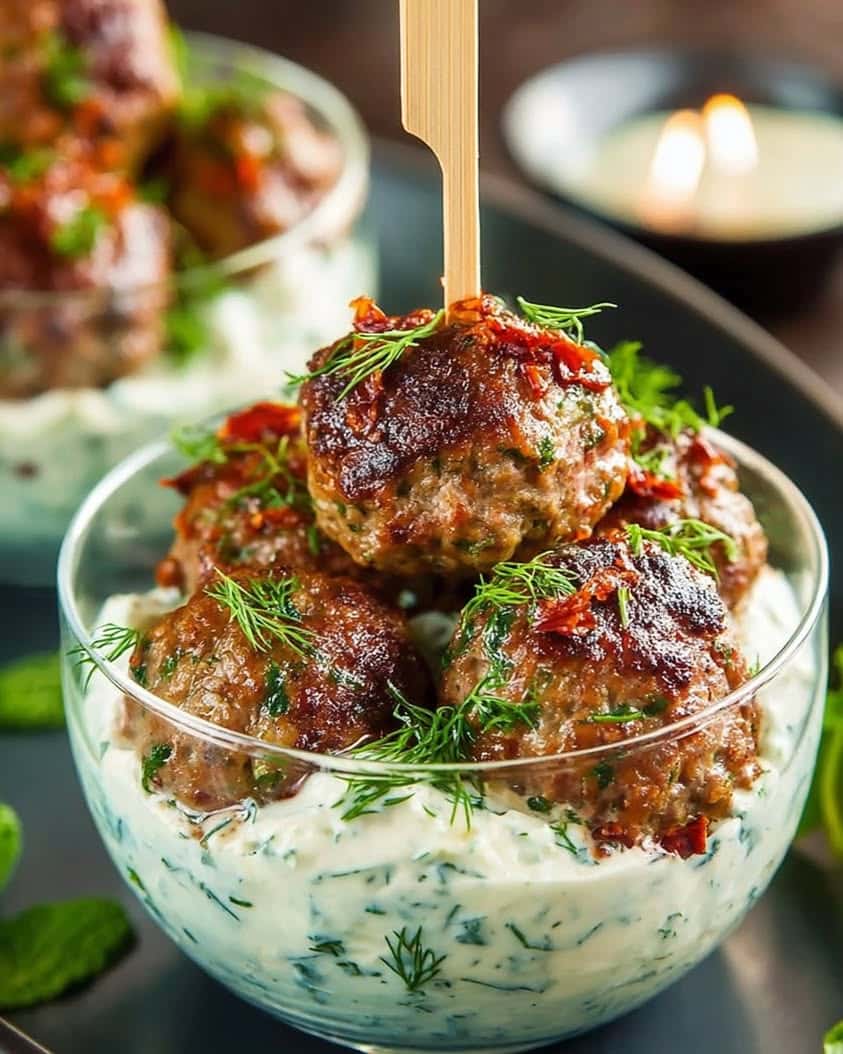
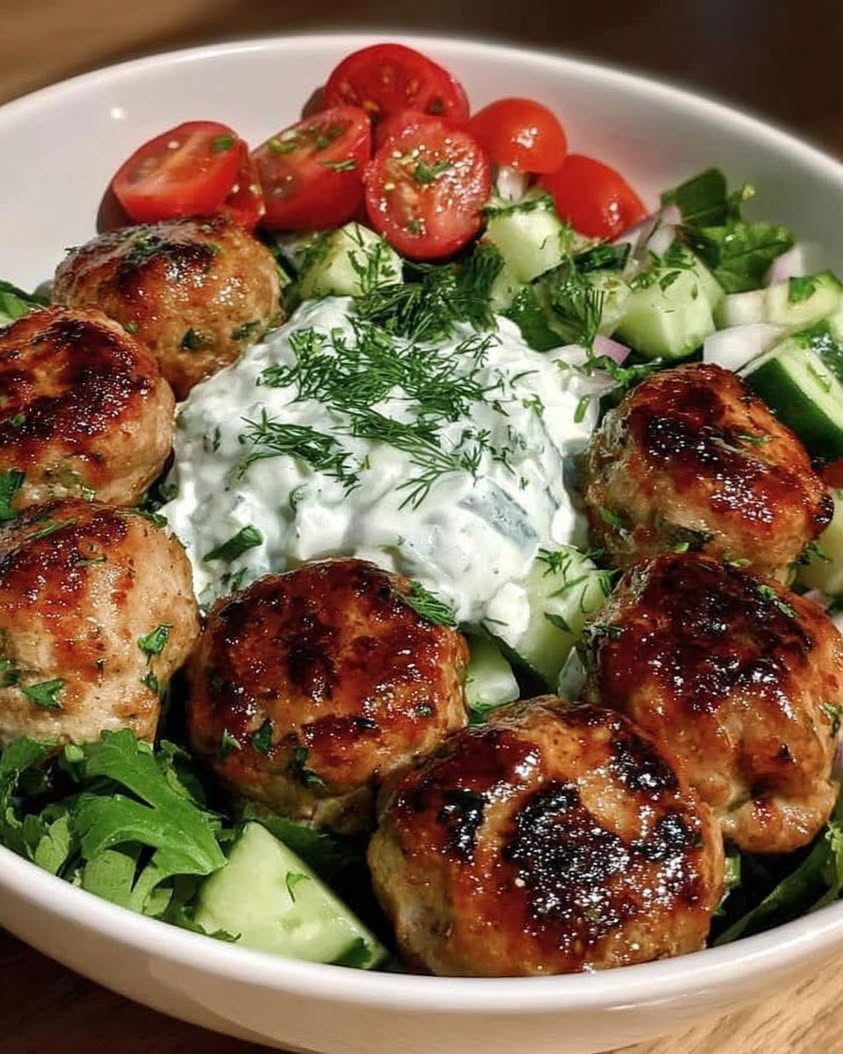
- Visual Appeal: Golden-brown meatballs rest on a bed of creamy white sauce, garnished with fresh dill. The presentation is simple yet elegant.
- Skill Level Needed: This recipe requires basic cooking skills like mixing and pan-frying. Anyone comfortable in the kitchen can succeed.
- Special Equipment: You need a box grater for the cucumber and a large skillet for browning the meatballs. A mixing bowl is essential.
Recipe Overview
- Difficulty Level: This recipe earns a medium rating because of the hands-on step of shaping and cooking the meatballs. However, the process is straightforward, and the results are forgiving.
- Category: This dish works well as an appetizer, main course, or part of a mezze platter. It fits into the broader category of Mediterranean comfort food.
- Cuisine: Greek cuisine emphasizes fresh ingredients, herbs, and yogurt. This recipe draws directly from that tradition, focusing on simplicity and vibrant flavors.
- Cost: Ground chicken is affordable, and most ingredients like yogurt and cucumbers are pantry staples. The total cost is low, making it budget-friendly.
- Season: This dish shines in spring and summer when cucumbers are at their peak. However, it is equally enjoyable year-round as a lighter meal option.
- Occasion: Serve it for a family dinner, a casual gathering, or even a meal prep session. It also works well for potlucks and picnics.
Why You Will Love This Recipe
The taste and texture of these meatballs are simply irresistible. Each bite delivers a juicy, herb-packed center that pairs perfectly with the cool tzatziki. The combination of savory meat and tangy sauce creates a balanced flavor that satisfies cravings without feeling heavy. You will appreciate how the ingredients meld together, offering a complex taste from simple components.
Convenience is another major benefit. This recipe requires minimal prep work, and the cooking time is short. You can have a delicious meal on the table in under an hour. The meatballs freeze well too, making them a great option for busy weeks. Just reheat and serve with fresh sauce for an instant dinner.
Nutritionally, this dish is a winner. Ground chicken is leaner than beef or pork, providing high-quality protein with less saturated fat. The Greek yogurt in the tzatziki adds probiotics and calcium, while cucumbers offer hydration and fiber. This meal supports a balanced diet without compromising on flavor.
For social gatherings, this recipe is a crowd-pleaser. Guests love the interactive nature of dipping meatballs into sauce. It is a fantastic conversation starter, especially when you mention it is homemade. The vibrant colors and aromas also make the table more inviting.
Finally, the cost-effectiveness of this meal cannot be overstated. Most ingredients are inexpensive and readily available. You can easily double the batch for leftovers or parties. This Greek Chicken Meatballs with Tzatziki: A Healthy Mediterranean Meal proves that healthy eating does not have to break the bank.
Historical Background and Cultural Significance
Meatballs, or keftedes, have a long history in Greek cuisine. They date back to ancient times when cooks mixed minced meat with herbs and spices. Over centuries, regional variations emerged, with each area adding its own touch. Today, they remain a beloved staple in Greek households and tavernas alike.
Cultural importance of tzatziki is equally deep. This yogurt-based sauce has been a part of Mediterranean diets for thousands of years. It pairs with grilled meats, vegetables, and breads. In Greece, it is often served as a meze, a small dish meant for sharing. The combination of tangy yogurt and crisp cucumber is refreshing in warm weather.
The evolution of this recipe reflects modern dietary preferences. Traditional keftedes often use lamb or beef, but chicken offers a lighter alternative. Home cooks have adapted the classic formula to suit healthier lifestyles. This adaptation maintains the authentic flavor profile while reducing fat content.
Regional variations across Greece include adding different herbs like mint or parsley. Some versions incorporate grated onion or tomato paste. Each family may have its own secret ingredient passed down through generations. This recipe honors that tradition while simplifying the process for today as busy cook.
Ingredient Deep Dive
Ground chicken is the star of this dish. It has a mild flavor that absorbs herbs well, making it versatile. Nutritionally, it provides lean protein, B vitamins, and selenium. When selecting ground chicken, look for packages with a uniform color and no off smells. Store it in the coldest part of the fridge and use within two days. For a substitute, ground turkey works perfectly, or you can use ground pork for a richer taste.
Greek yogurt forms the base of the tzatziki sauce. Its thick, creamy consistency is essential for the sauce. Full-fat yogurt offers the best texture and flavor, but low-fat versions work if you prefer. Greek yogurt is rich in protein, calcium, and probiotics that support gut health. When buying, choose plain yogurt without added sugars. Always store it in the refrigerator, and use it before the expiration date for best results.
Fresh herbs like dill and oregano bring the Mediterranean flavor to life. Dill adds a delicate anise note, while oregano provides earthy warmth. These herbs are packed with antioxidants and anti-inflammatory compounds. When buying fresh dill, look for bright green fronds without wilting. Store it in a damp paper towel inside a plastic bag in the fridge. You can substitute dried herbs, but use half the amount as dried flavors are more concentrated.
Cucumber adds crunch and freshness to the tzatziki. English cucumbers are ideal because they have thinner skins and fewer seeds. If using regular cucumbers, peel them and scoop out the seeds. Cucumbers are hydrating and low in calories, making them a great addition. Store them in the refrigerator, and use within a week. For a different texture, you can grate zucchini instead.
Lemon juice brightens both the meatballs and the sauce. It adds acidity that balances richness and helps tenderize the chicken. Freshly squeezed juice is preferable for its vibrant flavor. Lemons are high in vitamin C and antioxidants. Store them at room temperature for up to a week, or refrigerate for longer freshness. You can substitute with white wine vinegar if needed.
Common Mistakes to Avoid
- Overmixing the meatball mixture can make the meatballs tough. Mix just until the ingredients are combined gently.
- Skipping the step of salting and draining the cucumber leads to watery tzatziki. Always squeeze out excess moisture before mixing.
- Using low-fat yogurt results in a thin sauce that separates easily. Stick with full-fat Greek yogurt for the best consistency.
- Overcooking the meatballs dries them out. Cook until they reach an internal temperature of 165 degrees Fahrenheit, then remove them from heat.
- Not using enough seasoning leaves the meatballs bland. Taste the mixture before cooking by frying a small test patty.
- Packing the meatballs too tightly creates dense, heavy bites. Shape them loosely for a lighter texture.
- Forgetting to oil the pan causes sticking. Use a generous amount of olive oil for a golden crust.
- Adding the tzatziki too early makes the sauce watery. Serve it on the side or add it just before eating.
- Using dried herbs in the sauce yields a less fresh flavor. Always use fresh dill and mint for the tzatziki.
- Neglecting to rest the cooked meatballs lets juices escape. Let them sit for a few minutes before serving.
Essential Techniques
Properly draining the cucumber is crucial for successful tzatziki. Grate the cucumber using a box grater, then place the shreds in a clean kitchen towel. Twist the towel tightly to extract as much liquid as possible. This step prevents the sauce from becoming watery and ensures a thick, creamy consistency. The goal is to remove about half the original weight of the cucumber.
Forming the meatballs correctly affects both texture and cooking time. Use a light touch when shaping each portion into a ball. Roll them gently between your palms until they hold together without cracking. For even cooking, make all meatballs the same size, about one and a half inches in diameter. This uniformity ensures they cook through at the same rate.
Browning the meatballs properly develops flavor and creates a nice crust. Heat the skillet over medium-high heat until the oil shimmers. Add the meatballs in a single layer without crowding them. Let them cook undisturbed for a few minutes to develop a golden-brown sear. Then, rotate them gently to brown all sides evenly.
Pro Tips for Perfect Greek Chicken Meatballs with Tzatziki: A Healthy Mediterranean Meal
Chill the meatball mixture for 15 minutes before shaping. This step firms up the fat, making the balls easier to handle and less likely to fall apart during cooking. It also helps the flavors meld together.
Use a small cookie scoop to portion the meatballs evenly. This tool saves time and ensures uniform sizes. Alternatively, wet your hands slightly with water to prevent the mixture from sticking to your fingers.
Toast the breadcrumbs in a dry pan before adding them to the mixture. This simple step adds a nutty depth to the meatballs. It also helps absorb moisture, keeping the texture light.
Add a pinch of sugar to the tzatziki sauce. A tiny amount balances the tanginess of the yogurt and brightens the overall flavor. Do not skip this small but impactful addition.
Let the cooked meatballs rest on a wire rack instead of paper towels. This keeps the bottoms from becoming soggy. The rack allows air to circulate, preserving the crispy exterior.
For extra flavor, marinate the ground chicken in lemon juice and herbs for 30 minutes before mixing with the other ingredients. This step infuses the meat deeply with Mediterranean notes.
Variations and Adaptations
Regional variations of keftedes often include different herbs and spices. In some parts of Greece, cooks add ground cumin or cinnamon for warmth. Others incorporate chopped fresh mint for a cooling effect. You can experiment by adding a teaspoon of smoked paprika or Aleppo pepper for gentle heat.
Seasonal adaptations are easy to implement. In summer, add grated zucchini or chopped fresh tomatoes to the meatball mixture. In winter, incorporate roasted red peppers or sun-dried tomatoes for concentrated flavor. These additions boost moisture and add color.
Dietary modifications allow more people to enjoy this dish. For a gluten-free version, use almond flour or gluten-free breadcrumbs. For a dairy-free tzatziki, substitute the yogurt with a coconut-based alternative and use a bit of lemon juice for tang.
Flavor variations include swapping the herbs entirely. Try using basil and parsley for an Italian twist, or cilantro and lime for a Mexican-inspired version. The base recipe is versatile enough to handle these changes.
Texture modifications can suit different preferences. For a finer texture, pulse the meat mixture in a food processor until smooth. For a chunkier bite, leave the onions and herbs more coarsely chopped. Each approach offers a different mouthfeel.
Presentation alternatives include baking the meatballs instead of pan-frying them. Arrange them on a parchment-lined baking sheet and bake at 400 degrees Fahrenheit for 18 minutes. This method is hands-off and works well for large batches.
Serving and Presentation Guide
Plating these meatballs beautifully enhances the dining experience. Arrange them on a large platter with a generous dollop of tzatziki in the center for dipping. For a main course, serve them over a bed of fluffy couscous or quinoa.
Garnishing ideas add visual appeal. Sprinkle fresh dill, a pinch of paprika, and a few lemon wedges around the platter. Edible flowers like chive blossoms add a pop of color and a mild onion flavor.
Traditional accompaniments include warm pita bread, olives, and a Greek salad. These sides round out the meal and add variety. They also provide different textures and flavors that complement the meatballs.
Modern serving suggestions might include using the meatballs in a wrap with lettuce, tomato, and tzatziki. You can also serve them over a grain bowl or as part of a lettuce wrap for a low-carb option. These ideas keep the dish fresh and adaptable.
Temperature considerations matter for the best experience. Serve the meatballs hot from the skillet, while the tzatziki remains chilled. This contrast in temperatures makes each bite more interesting and satisfying.
Portion control tips help with meal planning. For a main course, plan for five to six meatballs per person. For appetizers, three to four meatballs per person suffice. The tzatziki recipe yields about one cup, which is enough for generous dipping.
Wine and Beverage Pairing
Wine pairings for this dish focus on bright, acidic whites. A crisp Assyrtiko from Greece has citrus notes that cut through the richness of the meatballs. Alternatively, a Sauvignon Blanc with herbal undertones complements the oregano and dill.
Non-alcoholic alternatives include sparkling water with a squeeze of lemon or lime. Mint iced tea is another excellent choice, as the herbal notes echo the flavors in the dish. For a more sophisticated option, try a kombucha with ginger and lemon.
If you prefer red wine, choose a light-bodied option like a Pinot Noir. Its fruity profile and low tannins do not overwhelm the chicken. A Beaujolais also works well with its bright berry flavors.
Temperature considerations for beverages keep the meal refreshing. Serve white wines and sparkling water well-chilled. Red wines should be slightly cool, around 55 degrees Fahrenheit, to maintain their freshness.
Serving suggestions include offering a beverage bar for guests. Provide a selection of wines, infused waters, and herbal teas. This interactive approach lets everyone choose their preferred pairing.
Storage and Shelf Life
Proper storage methods keep the meatballs fresh for several days. Place cooled meatballs in an airtight container and refrigerate them within two hours of cooking. They remain good for up to four days, though the texture is best within the first two.
Temperature requirements are crucial for food safety. Keep the refrigerator temperature at or below 40 degrees Fahrenheit. For longer storage, freeze the meatballs in a single layer on a baking sheet, then transfer them to a freezer-safe bag.
Container recommendations prioritize airtight seals. Glass containers with locking lids work well for refrigeration. For freezing, use heavy-duty freezer bags and remove as much air as possible to prevent freezer burn.
Signs of spoilage include a sour smell, slimy texture, or mold growth. If you notice any of these signs, discard the meatballs immediately. The tzatziki sauce should also be discarded if it separates excessively or develops an off odor.
Reheating instructions ensure the meatballs remain tender. Place them in a skillet over medium-low heat with a splash of water, cover, and heat through for about five minutes. Alternatively, microwave them in 30-second intervals.
Freezing guidelines extend the shelf life up to three months. Thaw frozen meatballs in the refrigerator overnight before reheating. The tzatziki sauce does not freeze well, so make it fresh when ready to serve.
Make Ahead Strategies
A prep timeline simplifies your cooking day. The day before, prepare the tzatziki sauce and store it in the refrigerator. You can also mix the meatball ingredients, shape them, and refrigerate them on a baking sheet covered with plastic wrap.
Storage between steps requires some planning. Place the shaped meatballs on a parchment-lined baking sheet and cover them tightly. Refrigerate them for up to 24 hours before cooking. This resting period allows the flavors to develop further.
Quality impact assessment shows that make-ahead meatballs actually benefit from resting. The herbs have time to infuse the meat, and the texture firms up slightly. The tzatziki sauce also improves as the flavors meld overnight.
Assembly tips for serving day include taking the meatballs out of the fridge 15 minutes before cooking. This step lets them come to room temperature, ensuring even cooking. The tzatziki sauce can be stirred and transferred to a serving bowl.
Reheating guidelines for leftovers work well for planned meals. Reheat only the amount you need to prevent drying out the rest. The tzatziki sauce should remain cold and added just before eating.
Fresh element additions just before serving include a final sprinkle of fresh dill and a squeeze of lemon juice. These last-minute touches brighten the dish and make it taste freshly made.
Scaling Instructions
Halving the recipe is straightforward. Use one pound of ground chicken and reduce all other ingredients by half. Keep the cooking time the same, but check for doneness a few minutes early as the meatballs will be smaller.
Doubling or tripling the recipe requires a larger skillet or multiple batches. Use a heavy-bottomed pot or Dutch oven if you have one. You may need to cook the meatballs in batches to avoid overcrowding, which prevents proper browning.
Equipment adjustments for larger batches include using a rimmed baking sheet for baking. This method is faster and more uniform than pan-frying multiple batches. Adjust the oven rack to the middle position for even heat distribution.
Timing modifications for scaled recipes depend on the cooking method. For pan-frying, allow an extra five minutes for each additional batch. For baking, the time remains the same, but you might need to rotate the pan halfway through.
Storage considerations for larger batches involve portioning the meatballs into meal-sized bags before freezing. This approach allows you to thaw only what you need. Label each bag with the date and number of meatballs inside.
Nutritional Deep Dive
Macro breakdown for a serving of five meatballs with two tablespoons of tzatziki includes approximately 350 calories, 30 grams of protein, 20 grams of fat, and 10 grams of carbohydrates. The protein content makes this a satisfying meal choice.
Micronutrient analysis reveals a good source of calcium from the yogurt and vitamin C from the lemon juice. The herbs provide small amounts of iron and antioxidants. This dish supports overall health with essential nutrients.
Health benefits of this meal include supporting muscle repair and satiety from the protein. The probiotics in the yogurt aid digestion, while the cucumber contributes hydration. The herbs offer anti-inflammatory properties.
Dietary considerations for this recipe are favorable. It is naturally low in added sugars and contains no artificial ingredients. For those watching sodium, consider reducing the added salt in the meatballs.
Portion analysis helps with weight management. The serving size is generous enough to satisfy hunger without overloading calories. Pairing the meatballs with vegetables increases volume without adding many calories.
Weight management tips include serving the meatballs over a large bed of greens. This addition increases fiber and volume, helping you feel fuller longer. The protein also supports muscle mass during weight loss.
Dietary Adaptations
For a gluten-free version, replace the breadcrumbs with almond flour or crushed pork rinds. These alternatives bind the meatballs without compromising texture. Use gluten-free pita or lettuce wraps for serving.
A dairy-free adaptation requires careful substitutions. Use a thick coconut yogurt or cashew cream for the tzatziki. Add extra lemon juice and a pinch of salt to mimic the tanginess. The meatballs themselves remain dairy-free.
A vegan version transforms the dish entirely. Use a plant-based ground meat substitute, add ground flaxseed as a binder, and use vegan yogurt for the sauce. The flavor profile remains Mediterranean, though the texture will differ.
A low-carb adaptation focuses on the protein and fat content. Omit the breadcrumbs and use almond flour instead. Serve the meatballs with extra tzatziki and cucumber slices for dipping.
A keto-friendly version aligns with low-carb principles. Use pork rind crumbs or coconut flour as the binder. The high fat content from the yogurt and olive oil supports ketogenic macronutrient ratios.
A paleo adaptation avoids grains and dairy. Use tapioca flour or coconut flour for the meatballs, and make the sauce with coconut cream, lemon juice, and herbs. This version stays within paleo guidelines.
A low-FODMAP option addresses digestive sensitivities. Use garlic-infused oil instead of fresh garlic, and omit the onion. Choose lactose-free yogurt or a dairy-free alternative. These swaps reduce fermentable carbohydrates.
Troubleshooting Guide
Texture issues like dry meatballs usually result from overcooking. Use an instant-read thermometer to check for doneness. If the mixture feels dry before cooking, add a tablespoon of olive oil or a beaten egg.
Flavor balance problems often stem from under-seasoning. The mixture should taste slightly salty and herb-forward before cooking. Always fry a small test patty to adjust seasonings before shaping all the meatballs.
Temperature problems like burning on the outside while raw inside happen with high heat. Lower the heat to medium and cook the meatballs more slowly. Covering the pan for the last few minutes helps them cook through evenly.
Equipment challenges like a sticky skillet can be solved by using a non-stick pan or adding more oil. If the meatballs stick, let them cook undisturbed for a longer time before trying to flip them.
Ingredient substitutions like using low-fat yogurt cause the tzatziki to separate. If this happens, whisk in a teaspoon of cornstarch slurry to stabilize it. Alternatively, use the sauce immediately to avoid separation.
Timing concerns like running out of time can be managed by baking the meatballs instead of pan-frying. This hands-off method frees you up to prepare sides. The baking time is similar but requires less attention.
Recipe Success Stories
Community feedback for this recipe has been overwhelmingly positive. One reader shared that her picky children devoured the meatballs with extra tzatziki. Another mentioned using this dish for meal prep, saying it held up well all week.
Variation successes include a reader who added crumbled feta cheese to the meatball mixture. She reported that the cheese added a salty, creamy element that her family loved. This modification has become a favorite among commenters.
Adaptation stories highlight the recipe as flexibility. A gluten-free baker swapped in chickpea flour for breadcrumbs and found the texture even better. She now makes this version exclusively for her family.
Reader suggestions include adding a pinch of cayenne pepper for heat. Many have tried this and reported that the subtle spice elevates the overall dish. Another suggestion was to serve the meatballs with roasted vegetables for a complete meal.
Photography tips from food bloggers recommend natural lighting for the best shots. Place the platter near a window and use a neutral background. A sprinkle of fresh dill and a lemon wedge add color and interest to the photo.
Frequently Asked Questions
Can I use ground turkey instead of chicken? Yes, ground turkey is an excellent substitute. It has a similar fat content and flavor profile, making it a direct swap in this recipe. The cooking time remains the same.
How do I prevent the meatballs from falling apart? Make sure the mixture is well-chilled before shaping. Also, do not skip the breadcrumbs and egg, as they act as binders. Handle the meatballs gently during cooking.
Can I bake these meatballs instead of frying them? Absolutely. Arrange them on a parchment-lined baking sheet and bake at 400 degrees Fahrenheit for 18 minutes. Flip them halfway through for even browning.
How long does the tzatziki sauce last in the fridge? The sauce stays fresh for up to four days when stored in an airtight container. Stir it before serving, as some separation may occur.
Can I freeze the cooked meatballs? Yes, freeze them in a single layer on a baking sheet, then transfer to a freezer bag. They keep for up to three months. Thaw overnight in the refrigerator before reheating.
What can I serve with these meatballs besides pita? Try serving them over a Greek salad, with roasted potatoes, or inside a lettuce wrap. They also work well with rice pilaf or couscous.
Is this recipe suitable for a low-carb diet? With modifications, yes. Use almond flour instead of breadcrumbs, and serve the meatballs with extra tzatziki and cucumber slices. The recipe is naturally low in carbohydrates.
Can I make the meatballs spicy? Add a half teaspoon of crushed red pepper flakes or a pinch of cayenne to the mixture. This addition provides a gentle heat that complements the herbs.
Why is my tzatziki sauce watery? You likely did not drain the cucumber enough. Grate the cucumber, then squeeze out the liquid using a clean kitchen towel. This step is essential for a thick sauce.
Can I use dried herbs instead of fresh? You can, but the flavor will be less vibrant. Use half the amount of dried herbs, and add them early in the process to allow them to rehydrate. Fresh herbs are preferred for the best result.
How do I know when the meatballs are cooked through? Use an instant-read thermometer inserted into the center. The internal temperature should reach 165 degrees Fahrenheit. Cut one open to check if you do not have a thermometer.
Can I prepare this recipe a day ahead? Yes, shape the meatballs and prepare the sauce up to 24 hours in advance. Store them separately in the refrigerator. Cook the meatballs just before serving for the best texture.
Additional Resources
Related recipes that complement this dish include a classic Greek salad with feta and olives, or a simple lemon rice pilaf. These sides share the Mediterranean theme and are easy to prepare alongside the meatballs. You might also enjoy a spanakopita recipe for a more elaborate meal.
Technique guides on the blog cover proper knife skills for dicing herbs and how to grate cucumbers efficiently. These guides help streamline your prep work and ensure consistent results. Learning these fundamentals improves your overall cooking confidence.
Ingredient information about Greek yogurt explains the difference between Greek and regular yogurt. Greek yogurt undergoes a straining process that removes whey, resulting in a thicker, creamier product. This knowledge helps you choose the right product for sauces and dips.
Equipment recommendations include a good quality non-stick skillet for easy browning and cleanup. A box grater is essential for the cucumber, and a fine-mesh strainer helps with draining dairy. Investing in these tools makes Mediterranean cooking simpler.
Seasonal variations of this recipe can incorporate spring vegetables like asparagus or artichokes. For fall, add roasted butternut squash cubes to the serving platter. These seasonal touches keep the dish interesting throughout the year.
This Greek Chicken Meatballs with Tzatziki: A Healthy Mediterranean Meal is a versatile and delicious addition to your recipe collection. It offers a perfect balance of flavor, nutrition, and convenience. Try it tonight and experience the joy of Greek cooking at home.
PrintGreek Chicken Meatballs with Homemade Tzatziki
- Total Time: 35 minutes
- Yield: 4
Description
Juicy, flavorful chicken meatballs seasoned with Mediterranean herbs and spices, served with a cool, creamy homemade tzatziki sauce.
Ingredients
- 1 lb ground chicken
- 1/2 cup breadcrumbs
- 1/4 cup finely chopped red onion
- 2 cloves garlic, minced
- 1 large egg
- 1 teaspoon dried oregano
- 1 teaspoon dried dill
- 1/2 teaspoon salt
- 1/4 teaspoon black pepper
- 1 cup Greek yogurt
- 1/2 cucumber, grated and drained
- 1 tablespoon lemon juice
- 1 tablespoon olive oil
- 1 clove garlic, minced (for tzatziki)
- Salt and pepper to taste
Instructions
- Preheat oven to 400°F (200°C) and line a baking sheet with parchment paper.
- In a large bowl, combine ground chicken, breadcrumbs, red onion, 2 cloves garlic, egg, oregano, dill, 1/2 teaspoon salt, and 1/4 teaspoon pepper. Mix until just combined.
- Shape mixture into 1-inch meatballs and place on prepared baking sheet.
- Bake for 18-20 minutes, until golden and cooked through (internal temperature reaches 165°F).
- Meanwhile, prepare tzatziki: In a medium bowl, combine Greek yogurt, grated cucumber, lemon juice, olive oil, and 1 clove garlic. Season with salt and pepper to taste. Stir well.
- Serve meatballs warm with tzatziki sauce on the side.
Notes
You can customize the seasonings to taste.
- Prep Time: 15 minutes
- Cook Time: 20 minutes
- Method: Main
- Cuisine: Greek