Golden Mediterranean Salmon Patties with Spinach, Creamy Feta and Fresh Herbs: A Weeknight Dinner Worth Craving
These Golden Mediterranean Salmon Patties with Spinach, Creamy Feta and Fresh Herbs deliver everything you want in a weeknight dinner: crispy edges, a tender center, and bold flavor in every bite. Therefore, if you have been searching for a salmon patty recipe that feels fresh and exciting, this is the one. The patties combine flaky salmon with wilted spinach, briny feta, and a generous handful of fresh dill and parsley. As a result, each bite tastes bright, savory, and unmistakably Mediterranean.
Moreover, this recipe comes together in just over thirty minutes, which makes it ideal for busy evenings. You simply mix the ingredients, shape the patties, and pan-sear them until golden. Meanwhile, the creamy feta melts slightly into the salmon mixture and keeps every patty moist. Since the recipe uses pantry-friendly staples plus fresh herbs, you can whip it up on short notice. These salmon patties with spinach also appeal to picky eaters because the flavors stay balanced rather than fishy.
In addition, this dish works beautifully as a light main course, a party appetizer, or a meal-prep staple. You can serve the patties over a Greek salad, tuck them into pita bread, or pair them with roasted vegetables. Consequently, they fit nearly any occasion. The fresh herbs and lemon zest lift the rich salmon, while the feta adds a creamy, tangy contrast. Ultimately, these Golden Mediterranean Salmon Patties with Spinach, Creamy Feta and Fresh Herbs prove that healthy seafood dinners can taste indulgent and satisfying.
Quick Recipe Highlights
- Flavor Profile: These patties taste savory, bright, and slightly briny from the feta. Lemon zest and fresh dill add a clean, herbal finish. A subtle garlic note rounds out the richness of the salmon.
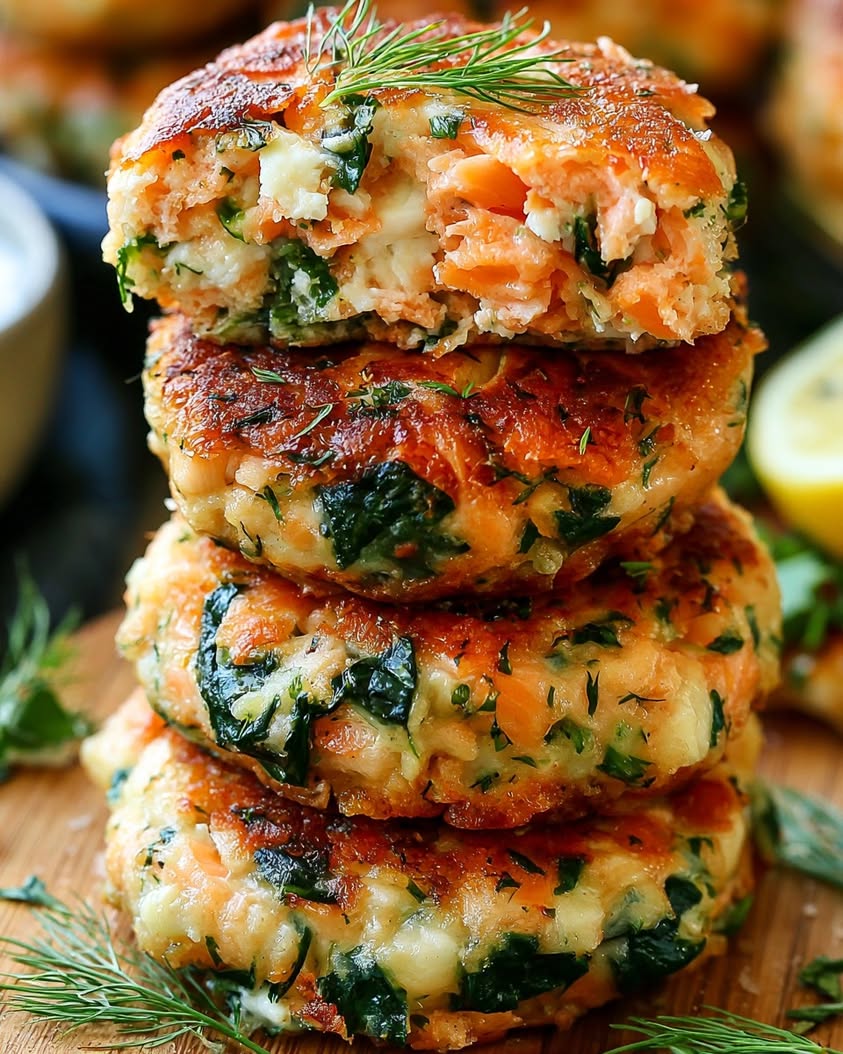
- Texture: The exterior turns crisp and golden in the skillet. Inside, the patties stay tender and moist thanks to the salmon and feta. Wilted spinach adds a soft, pleasant bite without making the mixture soggy.
- Aroma: Fresh dill and parsley fill the kitchen as the patties sear. The scent of garlic and lemon mingles with the toasted breadcrumbs. Overall, the aroma feels fresh, coastal, and inviting.
- Visual Appeal: A golden crust contrasts beautifully with the green spinach and white feta flecks. Fresh herb garnishes add a bright pop of color. Served on a white plate with lemon wedges, the patties look restaurant-worthy.
- Skill Level Needed: This recipe suits beginners because it requires no advanced technique. You simply chop, mix, shape, and pan-sear. Anyone comfortable with a skillet can master these patties on the first try.
- Special Equipment: A large nonstick or cast-iron skillet does most of the work. You also need a mixing bowl, a spatula, and a cutting board. A fish spatula helps flip the patties gently, though a regular spatula works fine.
Recipe Overview
- Difficulty Level: I rate this recipe Easy because the steps stay straightforward from start to finish. You do not need knife skills beyond basic chopping, and the cooking happens in one pan. The only real skill involves flipping the patties without breaking them, and a gentle hand solves that. Therefore, even new cooks can serve impressive results.
- Category: These patties work as a main course, an appetizer, or a protein-packed lunch. They also fit nicely into meal-prep routines because they reheat well. You can serve them for brunch alongside eggs or for dinner with a crisp salad.
- Cuisine: The recipe draws inspiration from Mediterranean coastal cooking, where seafood, herbs, and feta appear often. Greek and Italian kitchens both influence the flavor profile. The combination of dill, lemon, and feta nods to Greek cuisine, while the breadcrumb binder reflects Italian fish cake traditions. Together, they create a dish that feels sun-drenched and coastal.
- Cost: A pound of salmon costs roughly eight to twelve dollars depending on the season and source. The remaining ingredients, including spinach, feta, herbs, and pantry staples, add another five to seven dollars. Overall, the recipe feeds four people for about fifteen to nineteen dollars, which makes it affordable for a seafood dinner.
- Season: These patties shine year-round, although they taste best in spring and summer when fresh dill and parsley peak. During cooler months, you can use frozen spinach and dried herbs with good results. The bright lemon flavor also brings a welcome lift to winter tables.
- Occasion: Serve these patties for casual weeknight dinners, weekend lunches, or holiday appetizer spreads. They also work well for potlucks because they hold up at room temperature. For a special touch, plate them for a date-night dinner with a glass of white wine.
Why You’ll Love This Recipe
First, the taste and texture make this recipe a standout. The crispy golden crust gives way to a tender, flaky interior loaded with savory salmon. Meanwhile, the feta melts into creamy pockets that surprise you in the best way. Fresh dill and parsley keep each bite bright rather than heavy. Because the patties sear in olive oil, they develop a restaurant-quality crust at home. Consequently, you get contrast in every single bite, and that contrast keeps people coming back for more.
Second, convenience sets this recipe apart from fussier seafood dishes. You need one bowl and one skillet, which means minimal cleanup afterward. The whole process takes about thirty minutes from start to finish. Additionally, the ingredients come from any well-stocked grocery store, so no specialty shopping trip is required. You can also shape the patties ahead of time and cook them later. Therefore, this dish fits seamlessly into hectic schedules without sacrificing quality.
Third, the nutritional profile gives you plenty to feel good about. Salmon delivers omega-3 fatty acids, high-quality protein, and vitamin D. Spinach adds iron, calcium, and fiber, while feta contributes calcium and a satisfying richness. Since you pan-sear rather than deep-fry, the patties stay relatively light. As a result, you get a protein-packed meal that supports heart health and steady energy. Many readers tell me this recipe has become their favorite way to eat more fish.
Fourth, these patties shine at social gatherings. They look impressive on a platter, and guests love the Mediterranean flavor profile. You can serve them as sliders, appetizers, or part of a mezze spread with hummus and tzatziki. Because they taste great warm or at room temperature, they suit buffets and potlucks perfectly. Moreover, the recipe doubles easily for a crowd. Consequently, hosts can feed a group without spending hours in the kitchen.
Finally, cost-effectiveness makes this recipe a smart choice for weeknight cooking. Salmon patties stretch a pound of fish to feed four people generously. The binder, vegetables, and herbs add volume without adding much expense. Compared to restaurant seafood dishes, this homemade version saves significant money. In addition, the leftovers reheat beautifully, which stretches your dollar even further. Ultimately, you get a budget-friendly meal that tastes anything but cheap.
Historical Background and Cultural Significance
Fish cakes and patties have fed coastal communities for centuries, and the tradition runs deep in Mediterranean cooking. Greek and Italian cooks have long combined leftover fish with breadcrumbs, herbs, and cheese to create satisfying meals. These mixtures prevented waste and turned small amounts of expensive seafood into filling dishes. Over time, each region developed its own signature version. The Mediterranean salmon patty therefore carries that practical, resourceful spirit into the modern kitchen.
In Greece, seafood plays a central role in both everyday meals and religious observances. During Lent and fasting periods, families serve fish dishes with vegetables and herbs rather than meat. The combination of dill, lemon, and feta reflects that culinary heritage closely. Similarly, Italian coastal kitchens feature polpette di pesce, or fish balls, seasoned with parsley and parmesan. These patties draw from both traditions, and the result feels authentically rooted in Mediterranean food culture.
The recipe has evolved as salmon became more widely available and affordable. Historically, Mediterranean cooks used local fish such as sardines, anchovies, and cod. Modern cooks swapped in salmon for its rich flavor and reliable texture. Meanwhile, canned salmon offers a convenient shortcut that many home cooks appreciate. Consequently, the dish adapts easily to what your pantry and budget allow. This flexibility has helped the recipe spread far beyond the Mediterranean.
Regional variations abound today. Greek versions lean heavily on dill and feta, while Italian versions favor parsley and parmesan. Middle Eastern cooks might add cumin and serve the patties with tahini sauce. In the United States, salmon patties have long appeared on Southern tables, usually with cornmeal and without the Mediterranean flair. This particular recipe bridges those traditions and gives the classic patty a fresh, herb-forward identity.
Ingredient Deep Dive
Salmon
Salmon holds a place of honor in coastal cooking around the world, and its cultural significance runs deep in regions like the Pacific Northwest and Scandinavia. The fish symbolizes abundance and has sustained communities for generations. In Mediterranean-inspired dishes, salmon brings a rich, buttery flavor that pairs beautifully with herbs and citrus. Nutritionally, salmon offers an exceptional source of omega-3 fatty acids, which support heart and brain health. It also delivers high-quality protein, vitamin D, and selenium, and these nutrients make it one of the most recommended fish for regular consumption.
When selecting salmon, look for fresh fillets with a clean scent and firm, moist flesh. Wild-caught salmon tends to have a deeper color and leaner texture, while farmed salmon offers more fat and a milder taste. For this recipe, either works well, although canned salmon provides a budget-friendly shortcut. Store fresh salmon in the coldest part of your refrigerator and cook it within a day or two. If you need a substitute, trout, cod, or canned tuna can stand in, though the flavor will shift slightly.
Spinach
Spinach has fed Mediterranean tables since ancient Persia, and it later became a staple across Europe and the Middle East. It symbolizes strength in folklore and appears in countless traditional dishes from spanakopita to saag. In this recipe, spinach adds color, moisture, and a mild earthy flavor. Nutritionally, spinach delivers iron, calcium, vitamin K, and folate in every serving. It also contributes fiber and antioxidants that support overall wellness.
Choose fresh spinach with crisp, dark green leaves and no signs of wilting. Baby spinach works beautifully here because it wilts quickly and has a tender texture. If fresh spinach is unavailable, frozen spinach makes a fine substitute after you thaw and squeeze out the excess water. Store fresh spinach in a sealed bag in the refrigerator and use it within a few days. When you wilt the spinach for this recipe, squeeze out any liquid so the patties hold together.
Feta
Feta originated in Greece and holds protected designation status in the European Union, which reflects its cultural importance. Traditionally made from sheep’s milk or a blend with goat’s milk, feta brings a tangy, salty punch to Mediterranean dishes. Its creamy texture melts slightly when heated, and it creates pockets of richness inside the patties. Nutritionally, feta provides calcium, protein, and vitamin B12, although it also contains significant sodium. Therefore, taste your mixture before adding extra salt.
Look for feta packed in brine rather than dry-packaged versions, because the brined variety tends to taste fresher and creamier. Crumbled feta saves time, but a block you crumble yourself offers better texture and flavor. Store feta in its brine in the refrigerator and use it within a week after opening. If you need a substitute, goat cheese, ricotta salata, or a firm sheep’s milk cheese can work in a pinch, though each brings a different character.
Fresh Herbs
Fresh dill and parsley anchor the flavor of these patties and connect the dish to Greek and Levantine cooking traditions. Dill has seasoned Mediterranean food for centuries and pairs famously with seafood. Parsley, meanwhile, appears in nearly every regional cuisine around the Mediterranean. Together, they add brightness, freshness, and complexity. Both herbs also provide vitamin K, vitamin C, and antioxidants that support health.
Choose dill with feathery, bright green fronds and parsley with crisp stems and vibrant leaves. Wash the herbs well, then dry them thoroughly before chopping so excess water does not sog the patties. Store herbs with their stems in a glass of water or wrapped in damp paper towels in the refrigerator. If fresh herbs are unavailable, use dried versions at one-third the quantity, though the flavor will be less vibrant.
Breadcrumbs
Breadcrumbs act as the binder that holds these patties together, and they reflect a long tradition of stretching ingredients in Mediterranean kitchens. Panko breadcrumbs offer a light, airy texture that produces a crispier crust. Regular breadcrumbs work fine as well. If you follow a gluten-free diet, certified gluten-free breadcrumbs or crushed gluten-free crackers make excellent substitutes. For a lower-carb option, you can use crushed pork rinds or almond flour, though the texture will differ.
Store breadcrumbs in an airtight container in a cool, dry pantry, where they keep for months. Season them lightly with salt, pepper, and perhaps a pinch of paprika before mixing. Additionally, if your mixture feels too wet, add an extra tablespoon of breadcrumbs rather than reshaping the patties repeatedly. This small adjustment helps the patties hold their shape during searing.
Common Mistakes to Avoid
- Using wet spinach: If you skip squeezing the water out of the wilted spinach, the patties turn soggy and fall apart. Always press the spinach in a clean towel until it feels nearly dry. This step takes a minute but makes a huge difference.
- Overmixing the salmon: Stirring the mixture too aggressively breaks down the fish and creates a dense, pasty texture. Therefore, fold the ingredients gently until they just combine. You want visible flakes of salmon throughout.
- Neglecting to chill the mixture: Warm patties fall apart in the pan. Chill the mixture for at least fifteen minutes before shaping so the breadcrumbs hydrate and the patties firm up. This short rest improves both texture and cohesion.
- Skipping the salt taste test: Because feta brings saltiness, tasting your mixture before adding more salt prevents over-seasoning. Cook a small spoonful of the mixture in the skillet and taste it. Then adjust the seasoning accordingly.
- Crowding the pan: If you add too many patties at once, the temperature drops and the crust turns pale and greasy. Cook the patties in batches with space between them. Consequently, each patty gets the golden crust it deserves.
- Flipping too soon: Patties need time to form a crust before they release easily from the pan. Wait until the edges look opaque and golden, about three to four minutes. Rushing the flip often results in broken patties.
- Using high heat: Cooking over medium heat gives the patties time to heat through without burning the outside. High heat browns the exterior too fast and leaves the center cold. Patience pays off with a juicy, evenly cooked result.
- Forgetting to drain canned salmon: If you use canned salmon, remove the skin and bones only if you prefer, then drain well. Excess liquid undermines the binder. In addition, flake the fish with a fork rather than blending it smooth.
- Making the patties too large: Oversized patties cook unevenly and may break when flipped. Aim for uniform patties about three inches wide and half an inch thick. Consistent size ensures even cooking across the batch.
- Serving straight from the pan without resting: A brief rest lets the juices redistribute and the crust set. Wait two minutes before plating. This small pause improves flavor and prevents the patties from shedding moisture.
Essential Techniques
Wringing Out the Spinach
Removing excess water from spinach ranks among the most important steps in this recipe. Instead of rushing, you should take the time to wring it thoroughly. Here is why it matters: water causes the patties to steam rather than sear, which results in a soggy texture. To master this technique, place the wilted spinach in a clean kitchen towel and twist firmly over the sink until no more drips fall. A common pitfall involves under-squeezing because the spinach feels dry on the surface. You will know you have succeeded when the spinach appears compact and holds together in a ball.
Gently Folding the Salmon Mixture
Gentle folding protects the flaky texture that makes these patties special. Overmixing creates a dense, paste-like result, so you need to work with a light hand. This technique is important because the mouthfeel of the finished patty depends on it. To master folding, use a rubber spatula and lift the mixture from the bottom of the bowl, turning it over rather than stirring. Stop as soon as the ingredients come together. A common pitfall involves impatience, so resist the urge to mash everything smooth. You will know you have succeeded when you can still see distinct flakes of salmon and pieces of feta.
Pan-Searing at the Right Temperature
Pan-searing builds the golden crust that makes these patties irresistible. Temperature control matters here because too hot burns the outside, while too cool prevents browning. To master this technique, preheat the skillet over medium heat for two minutes before adding oil, then wait until the oil shimmers. Add the patties and leave them alone for three to four minutes. A common pitfall involves adjusting the heat too often, so set the burner and trust the process. You will know you have succeeded when the edges look deep golden and the patties release easily with a gentle nudge.
Chilling Before Cooking
The chill step binds the patties and prevents them from breaking apart. This technique is important because warm mixtures struggle to hold their shape. To master it, cover the bowl and refrigerate for at least fifteen minutes, or up to a few hours. A common pitfall involves skipping the chill when you feel rushed, which often leads to frustration at the stove. You will know you have succeeded when the mixture feels firmer and shapes cleanly in your hands. Consequently, the patties hold together beautifully during the flip.
Pro Tips for Perfect Golden Mediterranean Salmon Patties with Spinach, Creamy Feta and Fresh Herbs
- Use a fish spatula for flipping because its thin, flexible edge slides under delicate patties easily. This tool reduces the risk of breakage. If you do not own one, a thin metal spatula works as a close second.
- Line a plate with paper towels before cooking so the finished patties can drain. Excess oil drips away, and the crust stays crisp. This step takes seconds and improves the final texture.
- Add a tablespoon of mayonnaise or Greek yogurt to the mixture for extra moisture and richness. The binder becomes more cohesive, and the patties taste even creamier. The extra tang complements the feta nicely.
- Press the patties to an even thickness so they cook at the same rate. Uneven patties develop raw centers or burnt edges. Aim for a consistent half-inch thickness across each one.
- Taste the raw mixture by cooking a small spoonful in the pan before shaping the rest. This quick test lets you adjust salt, herbs, or lemon before committing. Your seasoning accuracy will improve dramatically with this habit.
- Serve the patties immediately after a short rest so the crust stays at its crispiest. However, they taste excellent at room temperature too. If you hold them, keep them uncovered so steam does not soften the crust.
- Zest the lemon directly into the bowl so the aromatic oils land on the salmon mixture rather than the cutting board. The zest brightens every bite. Use a microplane for the finest, most fragrant result.
- Toast the breadcrumbs lightly before mixing them in for deeper flavor. A minute in a dry skillet brings out their nutty notes. This small step elevates the overall taste significantly.
Variations and Adaptations
Regional Variations
Greek cooks often lean into dill, lemon, and feta, and they may serve the patties with tzatziki sauce. For an Italian twist, swap the dill for basil and use parmesan in place of feta. Middle Eastern versions might add cumin, coriander, and a pinch of harissa for warmth. North African kitchens could fold in preserved lemon and serve with a spicy tomato sauce. Each regional adaptation keeps the Mediterranean spirit while shifting the flavor profile, so you can travel the coastline without leaving your kitchen.
Seasonal Adaptations
During spring, use the freshest dill and parsley you can find because their flavor peaks in cool weather. Summer calls for added lemon zest and zest-forward sauces like lemon yogurt. In autumn, consider adding grated sweet potato or pumpkin to the mixture for moisture and seasonal flavor. Winter cooking benefits from dried herbs and frozen spinach, which keep the recipe accessible year-round. Consequently, the dish never feels out of place on the table.
Dietary Modifications
For a dairy-free version, replace the feta with a dairy-free cheese or omit it and add extra fresh herbs. Gluten-free diners can use certified gluten-free panko or crushed rice crackers as the binder. If you need an egg-free binder, a flax egg or a few tablespoons of mayonnaise work well. Each swap changes the texture slightly, so test the mixture with a small cooked spoonful before shaping the whole batch.
Flavor Variations
Add a teaspoon of Dijon mustard for a sharper, more rounded flavor. Smoked paprika brings warmth and a hint of color to the crust. If you love heat, fold in chopped jalapeno or a pinch of red pepper flakes. A splash of Worcestershire sauce deepens the umami and pairs surprisingly well with the salmon. Therefore, you can customize the flavor without changing the recipe’s structure.
Texture Modifications
For a crispier crust, double-dredge the patties in breadcrumbs before searing. If you prefer a softer texture, reduce the breadcrumbs by a tablespoon and add a bit more mashed canned salmon. Adding finely grated vegetables like zucchini or carrot increases moisture and tenderness. Crushed nuts such as pistachios mixed into the breading create an unexpected crunch. Each adjustment gives the patties a distinct personality while keeping the core recipe intact.
Presentation Alternatives
Serve the patties as sliders on toasted brioche buns with a dollop of tzatziki. Alternatively, place them atop a bed of baby greens for a low-carb lunch. For an appetizer spread, shape smaller patties and skewer them with toothpicks. You can also crumble leftover patties into a grain bowl with quinoa and roasted vegetables. The presentation options remain virtually endless, so the dish never grows boring.
Serving and Presentation Guide
Plating Techniques
A simple, clean plate showcases the golden crust and herb-flecked interior beautifully. Place two patties slightly off-center on a white or light-colored plate. Use a small offset spatula to transfer them gently so the crust stays intact. Add a swoosh of tzatziki or lemon yogurt beneath the patties for a restaurant-inspired touch. Finally, leave negative space around the food so the colors pop and the presentation feels intentional rather than cluttered.
Garnishing Ideas
Scatter fresh dill fronds and small parsley leaves over the warm patties. Add a few crumbles of feta and a curl of lemon zest for visual interest. Toasted sesame seeds or a dusting of sumac add texture and a vibrant red hue. A drizzle of high-quality olive oil finishes the plate with a glossy sheen. Because the garnishes echo the ingredients, the dish looks cohesive and polished.
Traditional Accompaniments
Serve the patties with classic Mediterranean sides such as tzatziki, hummus, or a simple cucumber and tomato salad. Warm pita bread rounds out the plate and invites scooping. Orzo salad with herbs and lemon makes a hearty companion for hungry diners. A bowl of Kalamata olives adds briny contrast. Together, these sides create a mezze-style spread that feels generous and festive.
Modern Serving Suggestions
For a modern grain bowl, layer farro, roasted vegetables, and patties in a shallow bowl with a lemon tahini drizzle. Sliders on brioche buns with pickled red onions appeal to casual gatherings. You can also serve the patties over zoodles with a light herb vinaigrette for a clever low-carb dinner. Each modern approach keeps the Mediterranean flavors intact while updating the presentation.
Temperature Considerations
These patties taste best when served warm, about two minutes out of the pan. However, they also shine at room temperature, which makes them ideal for buffets and picnics. Avoid serving them cold straight from the refrigerator because the flavors mute and the texture stiffens. If you need to hold them, keep them in a warm oven at 200 degrees for up to twenty minutes. Reheat leftovers gently in a skillet to restore the crust.
Portion Control Tips
Plan for two to three patties per person for a main course, depending on appetite and sides. For appetizers, count on one to two patties per guest. Use an ice cream scoop to portion the mixture evenly, which keeps the sizes consistent. Smaller patties cook faster, so adjust the timing accordingly. Thoughtful portioning prevents waste and helps guests serve themselves comfortably.
Wine and Beverage Pairing
Wine Pairings
A crisp white wine complements the rich salmon and tangy feta beautifully. Sauvignon Blanc offers bright citrus notes and refreshing acidity that cut through the richness. Assyrtiko, a Greek white grape, brings a mineral edge and coastal character that feels made for this dish. Albariño provides a similar bright, saline quality at an approachable price. For red wine lovers, a light Pinot Noir works surprisingly well because its low tannins let the herbs shine.
Non-Alcoholic Alternatives
Sparkling water with lemon and fresh mint gives a refreshing, zero-proof option. Iced green tea with a touch of honey offers gentle bitterness that balances the feta. A homemade cucumber cooler with lime and basil feels festive and pairs nicely with the Mediterranean flavors. For something richer, a cold-pressed carrot and orange juice brings natural sweetness. Each option keeps the meal feeling special without alcohol.
Coffee and Tea Pairings
These patties do not typically pair with coffee, since the flavors clash a bit. However, a light herbal tea such as dill or mint tea makes a lovely after-dinner sip. Green tea with lemon pairs well if you serve the patties for brunch. Iced hibiscus tea offers tartness that mirrors the lemon. Therefore, choose herbal or green teas rather than dark roasts for this dish.
Temperature Considerations
Serve white wines well-chilled, around 45 to 50 degrees, to preserve their crispness. Red wines should sit slightly below room temperature for maximum enjoyment. Cold beverages refresh the palate between bites of rich salmon. If you serve room-temperature water, add plenty of ice on warm days. Temperature details like these elevate a simple dinner into a thoughtful experience.
Serving Suggestions
Pour a glass of wine or a sparkling mocktail as guests sit down. Offer water with lemon at the table throughout the meal. Keep bottles in a cooler or ice bucket to maintain proper temperature. Pair the beverage choice with the side dishes for a cohesive experience. These small touches make the meal feel complete and memorable.
Storage and Shelf Life
Storage Methods
Place cooled patties in an airtight container in a single layer or with parchment between layers. This prevents them from sticking together and losing their crust. Store them in the refrigerator for up to three days. For longer storage, wrap each patty individually in plastic wrap before placing them in a container. Label the container with the date so you remember when you made them.
Temperature Requirements
Keep stored patties at or below 40 degrees Fahrenheit for food safety. Do not leave them at room temperature for more than two hours. If you plan to transport them, use an insulated cooler with ice packs. Place them in the coldest part of the refrigerator rather than the door. Consistent cold temperatures preserve both flavor and texture.
Container Recommendations
Glass containers with tight-fitting lids work best because they do not absorb odors or stain. BPA-free plastic containers also work well for short-term storage. Avoid open bowls covered with foil because they allow air and moisture exchange. If you stack patties, use parchment paper between each layer. Proper containers keep the patties fresh and ready to reheat.
Signs of Spoilage
Discard any patties that develop a sour smell or a slimy surface. Visible mold or a change in color also signals spoilage. If the patties feel sticky or leave an off odor after reheating, throw them out. Never taste questionable food to check freshness. When in doubt, err on the side of caution and discard the food.
Reheating Instructions
Reheat patties in a skillet over medium heat for two to three minutes per side. This method restores the crispy crust better than the microwave. If you use the microwave, place the patties on a paper towel and heat in short intervals. For oven reheating, warm at 350 degrees for eight to ten minutes on a baking sheet. Regardless of method, check that the patties are heated through before serving.
Freezing Guidelines
Freeze cooked patties for up to two months in a freezer-safe container or bag. Place parchment between layers to prevent sticking. You can also freeze the uncooked mixture or shaped raw patties for future cooking. Thaw frozen patties overnight in the refrigerator before reheating. Therefore, make a double batch and freeze half for a future easy dinner.
Make Ahead Strategies
Prep Timeline
You can chop the herbs, crumble the feta, and wilt the spinach a day ahead. Store each component separately in the refrigerator so they stay fresh. On cooking day, mix everything together and chill for fifteen minutes. This timeline splits the work across two days and keeps the final assembly quick. Consequently, dinner lands on the table in under twenty minutes on the second day.
Storage Between Steps
Keep the cooked mixture covered and refrigerated if you plan to shape it later. The binder hydrates and the flavors meld, which actually improves the taste. You can shape the patties and refrigerate them for up to twenty-four hours before cooking. Place them on a parchment-lined sheet pan and cover tightly. This approach makes entertaining easier because the work happens ahead of time.
Quality Impact Assessment
Make-ahead steps barely affect the quality of the finished dish. In fact, the flavors often improve after a short rest in the refrigerator. The only step that suffers with advance preparation involves the crisp crust, which fades after a day. However, reheating in a skillet quickly restores it. Therefore, the make-ahead approach delivers nearly identical results to cooking everything at once.
Assembly Tips
Set up a station with the salmon mixture, a bowl of water for wetting your hands, and a parchment-lined sheet pan. Wet hands prevent the mixture from sticking as you shape. Use a gentle, cupped motion to form even patties. Place them directly on the pan without pressing too hard. A tidy assembly station keeps the process smooth and stress-free.
Reheating Guidelines
Reheat assembled patties in a skillet over medium heat for the best crust. Add a small drizzle of olive oil to the pan for extra browning. Cover the pan for the first minute to heat the center, then uncover to crisp the outside. Check the center with an instant-read thermometer if you want perfect results. These steps keep the patties juicy inside and crispy outside.
Fresh Element Additions
Add fresh herbs and lemon zest just before serving if you made the mixture ahead. These bright elements lose their punch over time. A squeeze of fresh lemon juice over the warm patties revives the flavor instantly. Crumbled feta on top adds a fresh, creamy finish. Therefore, save a small handful of herbs and feta for garnishing at the last moment.
Scaling Instructions
Halving the Recipe
Halve all ingredients except the egg, which is hard to divide evenly. Beat one egg and use about half of it, or use the whole egg and add a tablespoon more breadcrumbs. Cooking time stays the same because the patty size does not change. The smaller batch yields two servings, which suits couples or small households. All other steps remain identical.
Doubling or Tripling
Doubling or tripling the recipe works smoothly for parties and meal prep. Mix the full batch in a large bowl, working in batches if needed to avoid overmixing. Cook the patties in batches so the pan does not crowd. You may need to wipe the pan between batches to remove stray crumbs. Consequently, large batches cook just as evenly as small ones.
Equipment Adjustments
Use a larger skillet or two skillets when scaling up to speed the cooking process. A bigger mixing bowl prevents spills and gives you room to fold gently. If you double the recipe, keep the patties the same size so timing stays predictable. Sheet pans lined with parchment hold raw patties neatly before cooking. These adjustments keep the workflow efficient at any scale.
Timing Modifications
Scaling up increases total cooking time because you cook in batches. Add about five to eight minutes per extra batch. However, the per-patty cooking time stays the same regardless of batch size. Prep time also grows slightly with more chopping and mixing. Plan accordingly Print
Golden Mediterranean Salmon Patties with Spinach, Creamy Feta and Fresh Herbs
- Total Time: 25 minutes
- Yield: 4
Description
These golden pan-seared salmon patties are packed with fresh spinach, creamy feta, and fragrant Mediterranean herbs. A crispy exterior gives way to a moist, flavorful interior, making them perfect for a quick weeknight dinner or a special lunch.
Ingredients
- 1 lb (450g) cooked salmon, flaked
- 1 cup fresh spinach, finely chopped
- 1/2 cup crumbled feta cheese
- 1/4 cup chopped fresh herbs (dill, parsley, mint)
- 1/4 cup breadcrumbs
- 1 large egg, lightly beaten
- 2 tbsp olive oil
- 1 clove garlic, minced
- 1/2 tsp salt
- 1/4 tsp black pepper
- Lemon wedges for serving
Instructions
- In a large bowl, combine flaked salmon, chopped spinach, feta, fresh herbs, breadcrumbs, egg, garlic, salt, and pepper. Mix gently until well combined.
- Shape the mixture into 8 patties, about 1/2 inch thick.
- Heat olive oil in a large skillet over medium heat. Cook the patties for 3-4 minutes per side, until golden brown and heated through.
- Serve hot with lemon wedges.
Notes
You can customize the seasonings to taste.
- Prep Time: 15 minutes
- Cook Time: 10 minutes
- Method: Main
- Cuisine: Mediterranean