Golden Baked Brie with Caramelized Apples and Thyme: An Elegant Appetizer for Every Gathering
Golden Baked Brie with Caramelized Apples and Thyme brings a restaurant-quality appetizer right into your home kitchen. Therefore, you can impress your guests without stressing over complicated techniques. This recipe combines creamy melted brie, sweet caramelized apples, and earthy fresh thyme into one unforgettable dish. As a result, every bite delivers a perfect balance of flavors that feels both luxurious and comforting. Whether you host a holiday party or enjoy a quiet evening, this Golden Baked Brie with Caramelized Apples and Thyme fits beautifully.
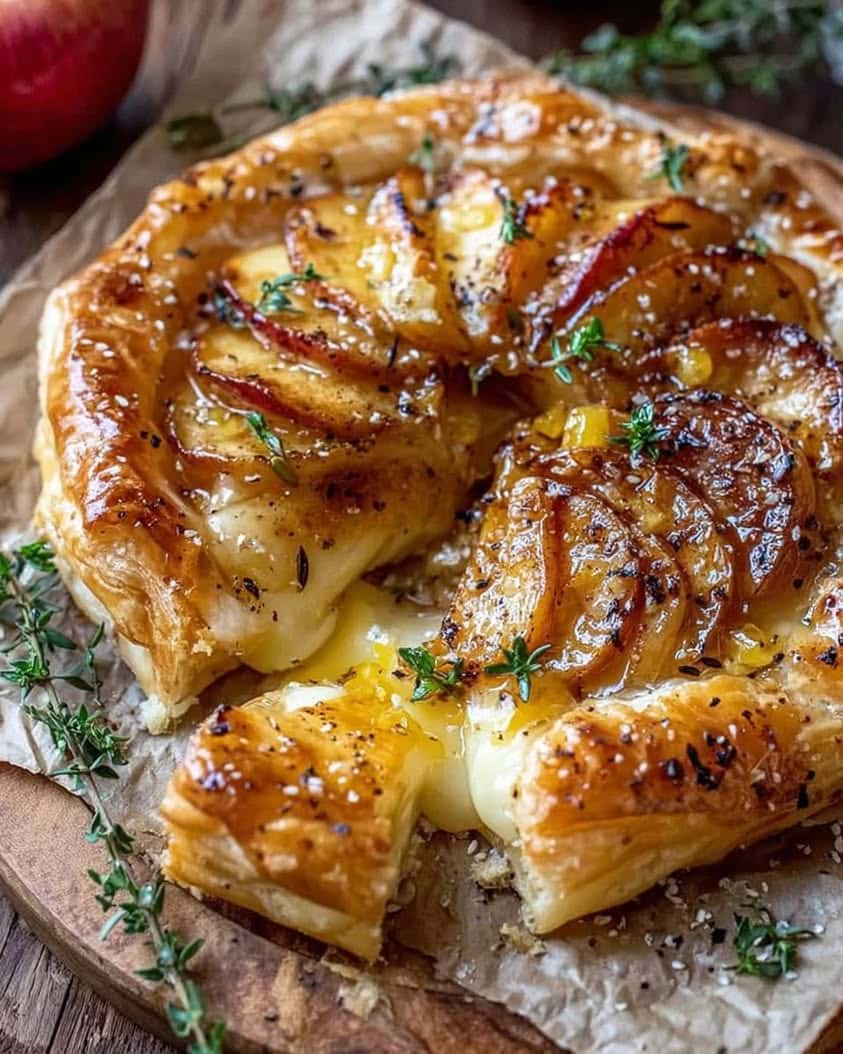
The warm, gooey cheese oozes out the moment you cut into the golden crust. Meanwhile, the caramelized apples add a tender, syrupy sweetness that contrasts the savory brie. The thyme contributes a subtle herbal note that elevates the entire dish beyond simple melted cheese. Moreover, the aroma fills your kitchen with a cozy, inviting scent that makes everyone gather around the table. Consequently, this Golden Baked Brie with Caramelized Apples and Thyme quickly becomes the star of any spread. You will love how a few humble ingredients create something truly spectacular.
Many people assume baked brie requires advanced culinary skills. However, this recipe proves otherwise. In fact, you need only basic kitchen tools and about forty minutes from start to finish. Additionally, the ingredient list stays short and affordable, so you can make it anytime. Because the steps are straightforward, even beginner cooks achieve impressive results. Ultimately, this Golden Baked Brie with Caramelized Apples and Thyme delivers elegance without effort, and that combination makes it a keeper in any recipe collection.
Quick Recipe Highlights
- Flavor Profile: This dish balances creamy, buttery brie with the deep sweetness of caramelized apples. The fresh thyme adds a gentle earthy and slightly peppery note. Together, these elements create a sophisticated yet approachable taste.
- Texture: The melted brie becomes silky and smooth beneath a delicate golden crust. Meanwhile, the apples offer a tender bite with a luscious caramel coating. The combination of soft cheese and slightly firm fruit creates a satisfying mouthfeel.
- Aroma: Warm caramel and butter dominate the nose as the apples cook down. The thyme releases a fragrant, herbal scent that cuts through the richness. Your kitchen will smell like a cozy autumn evening.
- Visual Appeal: The golden-brown pastry or breadcrumb topping looks rustic and inviting. Amber-colored apple slices drape over the melted cheese. A sprinkle of fresh thyme leaves adds a pop of green color.
- Skill Level Needed: This recipe suits beginners because it requires no advanced techniques. You simply caramelize apples, wrap or top the brie, and bake. As long as you watch the timing, you will achieve excellent results.
- Special Equipment: You need a baking sheet, a skillet, and parchment paper. A sharp knife helps score the brie rind if desired. No specialty tools are required, which makes this recipe accessible to everyone.
Recipe Overview
- Difficulty Level: This recipe earns an easy rating because the steps are simple and forgiving. Caramelizing apples takes patience but no special skill. Brie bakes quickly, so timing is the only real concern. Even a first-time cook can nail this dish.
- Category: This baked brie works as an appetizer, a party snack, or a holiday starter. It also functions as part of a cheese board or a light dessert. You can serve it for brunch alongside crusty bread and fruit.
- Cuisine: French cuisine inspires this dish through the use of brie, a classic soft-ripened cheese. However, the caramelized apples and thyme add an American comfort-food twist. This fusion makes the recipe feel both refined and homey.
- Cost: A wheel of brie typically costs between six and twelve dollars. Apples, butter, brown sugar, and fresh thyme add only a few more dollars. Overall, you can feed eight people for under fifteen dollars, which makes it very budget-friendly.
- Season: Fall and winter suit this recipe best because apples are in peak season. The warm, cozy flavors pair well with cool weather gatherings. However, you can make it year-round with quality grocery store apples.
- Occasion: Holidays like Thanksgiving, Christmas, and New Year’s Eve love this appetizer. Dinner parties, wine nights, and game days also welcome it. Any gathering that calls for something special yet simple works perfectly.
Why You’ll Love This Recipe
First and foremost, the taste and texture of this Golden Baked Brie with Caramelized Apples and Thyme will win you over instantly. The creamy brie melts into a luxurious pool of savory richness. Simultaneously, the caramelized apples deliver a sweet, buttery flavor that complements the cheese beautifully. The thyme ties everything together with its subtle herbal warmth. Because these flavors meld so well, every bite feels perfectly balanced and deeply satisfying.
Convenience also makes this recipe a standout choice for busy hosts. You need only fifteen minutes of prep time before the oven does the rest. Additionally, the ingredient list stays short, so shopping takes no time at all. Cleanup is minimal because you use just a skillet and a baking sheet. Therefore, you spend less time in the kitchen and more time with your guests.
Nutritionally, this dish offers more than empty calories. Brie provides protein, calcium, and vitamin B12, which support bone health and energy. Apples contribute dietary fiber and antioxidants that promote digestive wellness. Thyme adds vitamins C and A along with powerful plant compounds. Consequently, you can feel good about serving this indulgent yet nourishing appetizer.
Social and entertaining value runs high with this recipe. The dramatic presentation of a whole baked brie wheel creates a wow moment at the table. Guests love watching the cheese ooze out as you slice into it. Furthermore, the dish encourages sharing, which sparks conversation and connection. It becomes a centerpiece that brings people together around the table.
Finally, cost-effectiveness and accessibility make this recipe a smart choice. You do not need expensive ingredients or specialty equipment. Most grocery stores carry brie, apples, and fresh thyme year-round. Because the recipe serves eight generously, it delivers excellent value per serving. As a result, you can serve an elegant appetizer without stretching your budget.
Historical Background and Cultural Significance
Brie cheese traces its origins to the Brie region of northern France, where monks began making it as early as the eighth century. Legend suggests that Charlemagne himself fell in love with the creamy cheese during a visit. Over time, brie became known as the queen of cheeses and graced royal tables across Europe. Its soft, bloomy rind and rich interior made it a symbol of French culinary artistry.
Baking brie emerged later as a way to transform the cheese into a warm, shareable dish. French cooks often wrapped brie in puff pastry, creating a dish known as brie en croute. This technique spread to America in the late twentieth century through French-inspired restaurants. Home cooks then adopted and adapted the method, adding their own regional touches.
The addition of caramelized apples reflects a distinctly American embrace of sweet and savory combinations. Apple orchards across the United States provide abundant fruit each fall, which naturally pairs with warm spices and melted cheese. Thyme, a Mediterranean herb, rounds out the flavor with an earthy note that bridges the sweet and savory elements.
Today, variations of this dish appear on holiday tables, restaurant menus, and party spreads nationwide. Different regions add cranberries, pecans, honey, or figs to make the recipe their own. Despite these adaptations, the core combination of warm brie, sweet fruit, and fresh herbs remains beloved. This Golden Baked Brie with Caramelized Apples and Thyme carries that tradition forward with style.
Ingredient Deep Dive
Brie cheese serves as the heart of this recipe and carries centuries of French tradition. This soft-ripened cheese develops a white, edible rind that protects a creamy interior. When baked, the inside becomes molten and luxurious while the rind holds everything together. Choose a wheel that feels slightly soft to the touch but not runny. Avoid brie with brown spots or an ammonia smell, which signal overripeness.
Nutritionally, brie delivers healthy doses of protein, calcium, and phosphorus. It also contains vitamin B12 and riboflavin, which support energy metabolism. However, brie is rich in saturated fat, so moderation matters. Store brie in the refrigerator wrapped in parchment paper, not plastic, to let it breathe. For a dairy-free version, substitute with a plant-based cashew cheese that melts well.
Apples provide the sweet counterpoint that defines this dish. Varieties like Honeycrisp, Fuji, and Gala offer the best balance of sweetness and firmness. These apples hold their shape during caramelization instead of turning mushy. Historically, apples have symbolized abundance and temptation across many cultures. They also deliver fiber, vitamin C, and antioxidants that support heart health.
Choose apples that feel firm and heavy for their size with no soft spots. Store them in the crisper drawer of your refrigerator to maintain crispness for weeks. If you prefer a tarter flavor, Granny Smith apples work beautifully. For a pear variation, Bosc or Anjou pears substitute well and offer a similar texture.
Fresh thyme brings an herbal elegance that elevates the entire dish. This Mediterranean herb has been used since ancient times for cooking, medicine, and even courage. Its tiny leaves pack a concentrated flavor with notes of earth, mint, and pepper. Thyme also contains thymol, a compound with antibacterial properties.
Select thyme with bright green leaves and flexible stems for the best flavor. Avoid bunches with dry, brittle stems or brown spots. Store fresh thyme wrapped in a damp paper towel inside a plastic bag in the refrigerator. Dried thyme works in a pinch, but use only one-third the amount since its flavor is more concentrated.
Butter and brown sugar create the caramelization that makes the apples irresistible. Butter adds richness while brown sugar contributes molasses notes that deepen the sweetness. Together, they transform simple apple slices into a glossy, golden topping. For a lighter option, coconut oil and maple syrup provide a delicious alternative.
Common Mistakes to Avoid
- Overbaking the brie turns it into a liquid puddle that loses its shape. Check the cheese at the twenty-minute mark and remove it as soon as it feels soft. The center should jiggle slightly but not collapse.
- Undercaramelizing the apples leaves them crunchy and lacking sweetness. Cook them until they turn golden brown and release their natural sugars. Patience here rewards you with deep, rich flavor.
- Using cold brie straight from the refrigerator prevents even melting. Let the wheel sit at room temperature for thirty minutes before baking. This step ensures the center warms through evenly.
- Skipping the parchment paper causes the cheese to stick and burn on the baking sheet. Always line your pan for easy removal and cleanup. This small step saves you frustration later.
- Cutting the brie too early lets all the melted cheese escape. Wait at least five minutes after removing it from the oven. The brief rest allows the cheese to set slightly.
- Adding too much sugar to the apples overwhelms the natural fruit flavor. Start with a modest amount and taste as you go. You can always add more but cannot take it away.
- Choosing overripe apples results in a mushy texture that lacks bite. Select firm apples that hold their shape during cooking. This choice makes a noticeable difference in the final dish.
- Forgetting to score the rind prevents steam from escaping during baking. A few shallow cuts on top let the cheese breathe and melt evenly. This simple technique improves the final texture.
- Neglecting to trim thyme stems leaves tough, woody pieces in the dish. Strip the leaves from the stems before adding them. Your guests will appreciate the smoother eating experience.
- Serving the brie on a cold plate causes the cheese to firm up quickly. Warm your serving platter in the oven for a minute before plating. This keeps the cheese gooey and inviting.
Essential Techniques
Caramelizing apples ranks as the most important technique in this recipe. This process involves cooking apple slices with butter and sugar over medium heat until they turn golden brown. The heat triggers the Maillard reaction, which creates complex flavors and a glossy coating. Stir occasionally but not constantly, allowing the apples to develop color. You know the apples are ready when they feel tender and smell deeply sweet.
Scoring the brie rind helps the cheese release steam and melt uniformly. Use a sharp knife to make shallow cuts across the top in a crosshatch pattern. Do not cut all the way through, or the cheese will leak out during baking. These cuts also create attractive lines where the melted cheese peeks through. This small step takes seconds but improves both form and function.
Achieving the perfect melt requires balancing oven temperature and time. A moderate oven at 350 degrees Fahrenheit warms the cheese gently without burning the rind. Check the brie at eighteen minutes and look for a soft, yielding center. If it still feels firm, return it for a few more minutes. Overbaking ruins the texture, so stay attentive near the end.
Pro Tips for Perfect Golden Baked Brie with Caramelized Apples and Thyme
Start with a high-quality brie from a reputable cheese shop or grocery store. A better cheese makes a noticeable difference in flavor and texture. Ask your cheesemaker for a wheel that is ripe but not overripe. This single choice elevates the entire dish.
Caramelize the apples a day ahead and store them in the refrigerator. This step saves time on the day you serve the dish. Simply warm them in a skillet before topping the brie. The flavors actually deepen overnight.
Add a splash of bourbon or apple cider to the caramelized apples for extra depth. The alcohol cooks off, leaving behind a warm, sophisticated note. This small addition impresses guests without much effort. Apple cider offers a non-alcoholic option that works just as well.
Toast the walnuts or pecans before sprinkling them over the finished dish. Toasting brings out their natural oils and enhances crunch. A dry skillet over medium heat does the job in three minutes. This step adds both texture and visual appeal.
Let the baked brie rest for five to ten minutes before serving. This resting period allows the cheese to firm up slightly. As a result, it holds together better when you slice it. Your guests will appreciate the cleaner presentation.
Serve the brie on a warm platter to keep the cheese gooey throughout the meal. A cold plate causes the cheese to harden quickly. Warm your platter in a low oven for a minute or two. This small detail makes a big impression.
Pair the dish with crusty bread, water crackers, or sliced baguette. These neutral bases let the brie and apples shine without competing flavors. Avoid heavily seasoned crackers that overpower the cheese. Simple is best here.
Garnish with fresh thyme leaves right before serving for a pop of color. The heat of the dish releases the herb’s aroma at the table. This final touch adds freshness and visual appeal. It also signals to guests that the dish is ready to enjoy.
Variations and Adaptations
Regional variations of baked brie appear across the United States and Europe. In New England, cooks often add cranberries and maple syrup for a tart, autumnal twist. Southern versions sometimes incorporate pecans and bourbon for a richer flavor. Meanwhile, California chefs might use figs and honey to highlight local produce. Each region adapts the dish to its own pantry and palate.
Seasonal adaptations keep this recipe fresh throughout the year. In spring, swap apples for strawberries and rhubarb for a brighter profile. Summer welcomes peaches, nectarines, and fresh berries atop the warm cheese. Fall calls for apples, pears, and cranberries, while winter favors dried fruits and warm spices. These changes keep the dish relevant and exciting.
Dietary modifications allow nearly everyone to enjoy this recipe. For a gluten-free version, skip the pastry and serve the brie with gluten-free crackers. Dairy-free eaters can use a cashew-based cheese that melts well. Vegan cooks should choose plant-based butter and a vegan cheese alternative. These swaps maintain the spirit of the dish while meeting dietary needs.
Flavor variations let you customize the dish to your preferences. Add a drizzle of hot honey for a sweet and spicy kick. Sprinkle chopped rosemary instead of thyme for a piney note. Incorporate chopped garlic and sun-dried tomatoes for a savory Mediterranean spin. Each variation brings a new personality to the same base recipe.
Texture modifications address different preferences among your guests. For extra crunch, top the brie with toasted nuts or panko breadcrumbs. If you prefer a softer bite, skip the nuts and add extra caramelized apples. Wrapping the brie in puff pastry creates a crisp exterior that contrasts the gooey center. Choose the texture that suits your gathering.
Presentation alternatives range from rustic to refined. Serve the brie in a small cast-iron skillet for a farmhouse feel. Alternatively, plate it on a marble cheese board with fruit and crackers for elegance. Individual mini brie bites work well for cocktail parties. Each presentation style fits a different occasion.
Serving and Presentation Guide
Plating techniques matter when you want to impress your guests. Place the baked brie in the center of a large platter with the caramelized apples spooned over the top. Arrange crackers and bread slices in a fan around the cheese. This circular layout draws the eye to the centerpiece. Leave space between items so the plate feels clean and uncluttered.
Garnishing ideas range from simple to elaborate depending on the occasion. A sprig of fresh thyme on top adds instant elegance with minimal effort. Scatter pomegranate seeds around the plate for jewel-like pops of red. Toasted walnuts or pecans provide both texture and visual interest. Choose garnishes that complement the flavors in the dish.
Traditional accompaniments include crusty French baguette, water crackers, and sliced apples. These neutral bases let the brie and caramelized apples take center stage. Add a small dish of honey or fig jam for extra sweetness. A handful of grapes rounds out the plate beautifully.
Modern serving suggestions offer creative twists on the classic presentation. Serve the brie on a charcuterie board alongside prosciutto and salami. Pair it with a crisp green salad for a light lunch. Alternatively, spread the warm brie on toasted sourdough for a gourmet sandwich. These ideas extend the dish beyond the appetizer course.
Temperature considerations affect how the dish tastes and feels. Serve the brie warm but not piping hot so guests can eat it comfortably. The cheese should ooze slowly when cut, not run like water. If the brie cools too much, return it to the oven for a few minutes. Keeping it warm ensures the best experience.
Portion control tips help you manage the dish at larger gatherings. A whole wheel of brie serves eight as an appetizer with accompaniments. For a crowd, make two smaller wheels rather than one large one. This approach makes serving easier and keeps the cheese at the right temperature.
Wine and Beverage Pairing
Wine pairings for this Golden Baked Brie with Caramelized Apples and Thyme should balance the richness of the cheese. A crisp Chardonnay offers buttery notes that echo the brie’s creaminess. Alternatively, a dry Riesling provides bright acidity that cuts through the fat. For red wine lovers, a light Pinot Noir complements the earthy thyme without overpowering the dish.
Sparkling wines make excellent companions for baked brie. Champagne or Prosecco brings effervescence that refreshes the palate between bites. The bubbles cut through the richness and prepare you for the next taste. A dry sparkling cider also works beautifully for a non-alcoholic option.
Non-alcoholic alternatives ensure everyone can enjoy a thoughtful pairing. Sparkling apple cider mirrors the caramelized apples and adds festive flair. Unsweetened iced tea with lemon provides a clean, refreshing contrast. Sparkling water with a twist of orange offers a simple, elegant option.
Coffee and tea pairings suit this dish when served as a dessert or brunch item. A medium-roast coffee complements the caramel notes in the apples. Earl Grey tea adds a bergamot fragrance that lifts the thyme. Chai tea brings warm spices that echo the cozy nature of the dish.
Temperature considerations apply to beverages as well as the food. Serve white wines and sparkling options well chilled for maximum refreshment. Red wines taste best slightly below room temperature to preserve their fruit. Hot beverages should be served hot but not scalding to avoid numbing the palate.
Storage and Shelf Life
Storage methods for leftover baked brie require care because the cheese firms up as it cools. Transfer any remaining brie and apples to an airtight container within two hours of serving. Press plastic wrap directly onto the surface of the cheese to prevent a skin from forming. Refrigerate promptly and enjoy within three days for the best quality.
Temperature requirements for storage are straightforward. Keep the dish in the refrigerator at or below forty degrees Fahrenheit. Do not leave it at room temperature for more than two hours, as bacteria grow quickly. If the room is warm, reduce that window to one hour for safety.
Container recommendations focus on preventing moisture loss and odor absorption. Glass containers with tight-fitting lids work best because they do not retain smells. Avoid storing the brie near strong-smelling foods like onions or garlic. The cheese absorbs odors easily, which affects the flavor.
Signs of spoilage include a strong ammonia smell, visible mold beyond the rind, or a slimy texture. Some white mold on the rind is normal and safe to eat. However, fuzzy green or blue mold indicates the cheese has gone bad. When in doubt, throw it out.
Reheating instructions help you enjoy leftovers without ruining the texture. Place the brie in a 300-degree oven for eight to ten minutes until warm. Alternatively, microwave individual portions in ten-second bursts. Avoid overheating, which causes the cheese to separate and turn oily.
Freezing guidelines for baked brie are limited because dairy does not freeze well. The texture becomes grainy and watery after thawing, which diminishes quality. If you must freeze, do so before baking and wrap tightly in plastic and foil. Bake from frozen, adding ten minutes to the cooking time.
Make Ahead Strategies
Prep timeline planning makes hosting much easier. You can caramelize the apples up to three days in advance and store them in the refrigerator. Measure out the thyme leaves and toast the nuts ahead of time as well. On serving day, simply assemble and bake the brie in under thirty minutes.
Storage between steps keeps each component fresh and ready to use. Keep caramelized apples in a sealed container in the refrigerator. Store fresh thyme wrapped in a damp paper towel in the crisper drawer. Nuts stay fresh in an airtight jar at room temperature for up to two weeks.
Quality impact assessment shows that most components hold up well when prepped ahead. Caramelized apples actually deepen in flavor overnight. Thyme loses some potency after a few days, so add fresh leaves at serving time for the best aroma. Brie itself should stay refrigerated until thirty minutes before baking.
Assembly tips for make-ahead hosting involve layering components just before baking. Place the brie on the parchment-lined pan and spoon the apples over the top. Add nuts and thyme right before the dish goes into the oven. This sequence keeps textures crisp and flavors bright.
Reheating guidelines for pre-assembled brie call for a moderate oven at 325 degrees. Bake for twenty to twenty-five minutes until the cheese softens. Check at eighteen minutes to prevent overcooking. The lower temperature gently warms the dish without drying it out.
Fresh element additions at serving time bring the dish back to life. Sprinkle newly chopped thyme over the warm brie for a fragrant finish. Add a handful of fresh apple slices for crunch and color. A drizzle of honey or balsamic glaze adds shine and depth.
Scaling Instructions
Halving the recipe works well when you cook for a smaller group. Use a small four-ounce brie wheel and reduce the apples to one medium fruit. Cut the butter and sugar in half accordingly. Baking time drops to about twelve to fifteen minutes because the smaller wheel heats faster.
Doubling or tripling the recipe suits larger gatherings and holiday parties. Use two or three brie wheels and increase the apples proportionally. Bake them on separate pans to ensure even cooking. Alternatively, use a larger baking dish and arrange the wheels side by side.
Equipment adjustments become necessary when you scale the recipe. For larger batches, use a wide skillet to caramelize more apples at once. A half-sheet pan holds multiple brie wheels comfortably. Ensure your oven has enough space for proper air circulation around the pans.
Timing modifications apply when you change the batch size. Smaller batches cook faster, while larger batches may need a few extra minutes. Always check the brie at the earliest suggested time to avoid overcooking. Use the jiggle test to confirm the cheese is ready.
Storage considerations for scaled recipes follow the same rules as the original. Refrigerate leftovers in airtight containers and use within three days. Larger quantities may require multiple containers to cool properly. Divide the dish into smaller portions for faster cooling and safer storage.
Nutritional Deep Dive
Macro breakdown for this Golden Baked Brie with Caramelized Apples and Thyme shows a balance of fat, protein, and carbohydrates. Each serving provides roughly 220 calories, with about 16 grams of fat, 10 grams of protein, and 12 grams of carbohydrates. The fat comes primarily from the brie and butter, while the apples supply most of the carbs. This macronutrient profile makes the dish satisfying and energy-dense.
Micronutrient analysis reveals several important vitamins and minerals. Brie delivers calcium, phosphorus, vitamin B12, and riboflavin. Apples contribute vitamin C, potassium, and small amounts of vitamin A. Thyme adds vitamin K, iron, and manganese along with antioxidant compounds. Together, these nutrients support bone health, immunity, and cellular function.
Health benefits of the ingredients extend beyond basic nutrition. Apples provide soluble fiber called pectin, which supports digestive health and helps lower cholesterol. Thyme contains thymol, a compound with antimicrobial properties. Brie offers conjugated linoleic acid, which some studies link to reduced inflammation. Enjoying this dish in moderation fits into a balanced diet.
Dietary considerations include lactose, gluten, and calorie content. Brie contains lactose, though aged cheeses have less than fresh ones. The recipe includes butter and brown sugar, which add calories and saturated fat. Those with lactose intolerance or dairy allergies should choose suitable alternatives.
Portion analysis helps you manage calories without sacrificing enjoyment. A one-ounce serving of brie with two tablespoons of caramelized apples keeps calories reasonable. Pair the dish with vegetables or lean proteins to balance the meal. Smaller portions let you savor the flavors without overindulging.
Weight management tips include serving the brie with high-fiber crackers or vegetable sticks. These additions increase satiety and reduce overall calorie intake. Choose a lighter cheese alternative if you watch your fat intake. Moderation and mindful eating make this dish part of a healthy lifestyle.
Dietary Adaptations
Gluten-free adaptation is simple because the core recipe contains no wheat. Skip any puff pastry wrapper and serve the brie with gluten-free crackers or bread. Verify that all packaged ingredients carry a gluten-free label. This version tastes just as delicious as the original.
Dairy-free adaptation requires substituting the brie and butter with plant-based alternatives. Cashew cheese or almond-based brie-style products melt beautifully and offer a similar creaminess. Coconut oil or vegan butter replaces the dairy butter in the caramelized apples. The final dish delivers the same sweet and savory experience.
Vegan adaptation follows the dairy-free approach and eliminates all animal products. Choose a vegan cheese that melts well and a plant-based butter. Maple syrup or coconut sugar substitutes for honey if you use it. The result is a compassionate version that everyone can enjoy.
Low-carb adaptation reduces the sugar in the caramelized apples. Use a sugar substitute like erythritol or monk fruit sweetener. Serve the dish with low-carb crackers or vegetable slices. This version keeps the carb count low without sacrificing flavor.
Keto adaptation aligns with the low-carb approach and emphasizes healthy fats. Use full-fat brie and butter, and sweeten the apples with a keto-friendly sweetener. Limit the apples to a small portion to stay within your daily carb limit. Pair with pork rinds or cheese crisps for dipping.
Paleo adaptation excludes dairy and refined sugar. Use a paleo-friendly cheese alternative made from cashews and nutritional yeast. Sweeten the apples with raw honey or maple syrup, which paleo diets allow in moderation. Serve with almond flour crackers or sliced vegetables.
Low-FODMAP adaptation addresses digestive sensitivities. Apples contain excess fructose, which can trigger symptoms in some people. Substitute firm bananas or strawberries, which are low in FODMAPs. Choose a lactose-free cheese or a hard cheese like cheddar if brie causes issues.
Troubleshooting Guide
Texture issues with the brie often stem from overbaking or underbaking. If the cheese turns runny, you baked it too long; next time, check it earlier. If the center stays firm, return it to the oven for a few more minutes. The perfect brie jiggles slightly when you nudge the pan.
Flavor balance problems arise when one element dominates the dish. If the apples taste too sweet, add a squeeze of lemon juice to brighten them. If the thyme overwhelms the cheese, reduce the amount next time. Taste as you cook and adjust accordingly.
Temperature problems can ruin the presentation of the dish. If the brie cools too quickly, serve it on a warmed platter. If it burns on top, cover it loosely with foil during the last few minutes. An oven thermometer helps you verify your oven’s accuracy.
Equipment challenges include using the wrong pan or skillet. A nonstick skillet works best for caramelizing apples because they release easily. A light-colored baking sheet prevents the bottom of the brie from overbrowning. Invest in these basics for consistent results.
Ingredient substitutions can change the dish in unexpected ways. If you swap brie for camembert, expect a slightly earthier flavor. Replacing butter with oil alters the caramelization process. Test substitutions on a small batch before serving guests.
Timing concerns often arise when you juggle multiple dishes. Caramelize the apples ahead of time and reheat them just before baking. Set a timer for the brie so you do not forget it in the oven. Preparation and organization prevent last-minute stress.
Recipe Success Stories
Community feedback for this Golden Baked Brie with Caramelized Apples and Thyme has been overwhelmingly positive. Readers report that guests ask for the recipe before the plate even empties. Many say it has become a permanent fixture at their holiday gatherings. The combination of simple steps and impressive results keeps people coming back.
Variation successes include a reader who added cranberries and orange zest for a Thanksgiving version. Another swapped apples for pears and drizzled honey over the top. A third used a vegan cheese alternative and reported excellent results. These adaptations show how flexible the recipe truly is.
Adaptation stories highlight the dish’s versatility across occasions. One reader served it at a bridal shower and received rave reviews. Another made it for a cozy date night and paired it with a crisp white wine. A third brought it to a potluck and left with an empty plate. Each story reinforces the recipe’s universal appeal.
Reader suggestions include adding a pinch of cinnamon to the apples for warmth. Others recommend toasted pecans for crunch and a drizzle of balsamic glaze for tang. Some suggest serving the brie in individual ramekins for easy portioning. These ideas inspire new ways to enjoy the dish.
Photography tips from readers help others capture the dish beautifully. Shoot from a forty-five-degree angle to show the melted cheese oozing out. Use natural light near a window for the best color and texture. Include a hand reaching for a cracker to add a sense of action and warmth.
Frequently Asked Questions
Can I make this Golden Baked Brie with Caramelized Apples and Thyme ahead of time? Yes, you can prepare the caramelized apples up to three days in advance and store them in the refrigerator. Assemble and bake the brie just before serving for the best texture. This approach saves time on busy hosting days while keeping the dish fresh.
What is the best brie for baking? Choose a whole wheel of brie that feels slightly soft but not runny. Avoid pre-cut wedges because they melt unevenly. A quality double-cream or triple-cream brie delivers the richest, creamiest results.
Can I use dried thyme instead of fresh? Yes, but use only one-third the amount because dried thyme has a more concentrated flavor. Fresh thyme offers a brighter aroma and prettier presentation. If you have fresh available, it makes a noticeable difference.
How do I prevent the brie from leaking during baking? Score the top of the rind lightly with a knife to let steam escape. Do not cut all the way through the cheese. Keep the oven temperature moderate and check Print
Golden Baked Brie with Caramelized Apples and Thyme
- Total Time: 45 minutes
- Yield: 4
Description
A warm and gooey baked brie topped with sweet caramelized apples, fresh thyme, and a golden crust, perfect for a festive appetizer or a cozy gathering.
Ingredients
- 1 wheel (8 ounces) brie cheese
- 2 medium apples (such as Honeycrisp or Fuji), peeled, cored, and thinly sliced
- 2 tablespoons unsalted butter
- 2 tablespoons brown sugar
- 1 tablespoon fresh thyme leaves, plus extra for garnish
- 1 sheet puff pastry, thawed
- 1 egg, beaten (for egg wash)
- 1 tablespoon honey, for drizzling
- 1/4 cup chopped walnuts or pecans (optional)
Instructions
- Preheat oven to 400°F (200°C). Line a baking sheet with parchment paper.
- In a skillet over medium heat, melt butter. Add apples and brown sugar. Cook, stirring occasionally, until apples are tender and caramelized, about 8-10 minutes. Stir in thyme leaves. Remove from heat and let cool slightly.
- Roll out puff pastry on a lightly floured surface to a 10-inch square. Place brie wheel in the center. Top with half of the caramelized apples. Fold pastry over the brie, sealing edges. Brush with egg wash.
- Bake for 20-25 minutes, until pastry is golden brown and puffed. Let cool for 5 minutes.
- Transfer to a serving platter. Top with remaining caramelized apples, drizzle with honey, and garnish with fresh thyme and nuts, if desired. Serve warm with crackers or bread.
Notes
You can customize the seasonings to taste. For a sweeter version, add a drizzle of maple syrup. Serve with crusty bread or crackers.
- Prep Time: 15 minutes
- Cook Time: 30 minutes
- Method: Appetizer
- Cuisine: American