Irresistible Garlic Butter Steak Bites & Creamy Alfredo Rigatoni: A Decadent Weeknight Dinner
Imagine a symphony of flavors where perfectly seared steak bites meet a velvety, rich Alfredo sauce. This is not just a meal; it is an experience that transforms an ordinary weeknight into a special occasion. The Irresistible Garlic Butter Steak Bites & Creamy Alfredo Rigatoni recipe combines two beloved comfort foods into one stunning dish. You will find that the robust, savory notes of the garlic butter steak complement the smooth, decadent pasta beautifully. Each component brings its own charm to the table, creating a balanced and deeply satisfying dinner. Consequently, this recipe has quickly become a favorite for home cooks who crave restaurant quality without the fuss.
As you begin preparing this dish, you will appreciate the straightforward steps that lead to a remarkably complex flavor profile. You will use fresh garlic, high quality steak, and simple pantry staples to build layers of taste that impress. Moreover, the combination of textures is a highlight because the tender steak bites contrast with the al dente rigatoni. The creamy sauce clings to every groove of the pasta, ensuring each bite is packed with flavor. This recipe is reliable, so you can serve it confidently to family or guests. By the end, you will see why this harmonious pairing has captured so much attention in the culinary world.
The emotional appeal of this dish lies in its ability to comfort and delight simultaneously. Think about a cold evening when you crave something warm and indulgent; this is the solution. The aroma of garlic browning in butter will fill your kitchen with an irresistible invitation. Meanwhile, the sight of golden brown steak bites nestled among creamy rigatoni creates anticipation. You are not just feeding hunger but also nurturing the soul with a meal that feels like a warm hug. Therefore, mastering this Irresistible Garlic Butter Steak Bites & Creamy Alfredo Rigatoni recipe is a wonderful skill to add to your repertoire.
Quick Recipe Highlights
- Flavor Profile: This recipe delivers a robust interplay between savory, umami rich steak and a creamy, garlic infused Alfredo sauce. The butter adds a nutty richness that elevates the entire dish. You will taste a subtle sweetness from the heavy cream that balances the savory elements perfectly.
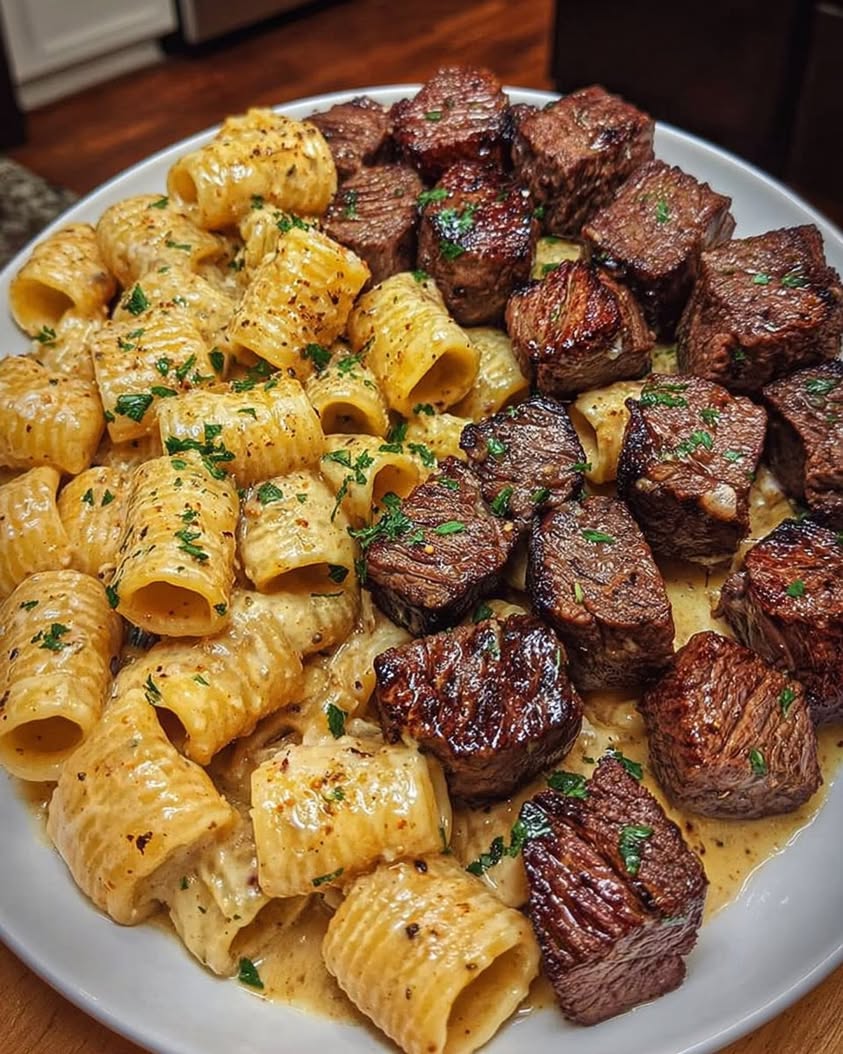
- Texture: You will experience a satisfying contrast with each forkful. The steak bites have a caramelized, slightly crisp exterior giving way to a tender, juicy center. The rigatoni pasta is cooked al dente, providing a gentle chew that holds the smooth, velvety Alfredo sauce in every tube.
- Aroma: The fragrance of fresh garlic and shallots sizzling in butter is the first welcoming note. As the steak sears, a rich, meaty aroma fills the air. Finally, the addition of heavy cream and Parmesan cheese creates a comforting, dairy forward scent that signals a luxurious meal.
- Visual Appeal: The finished dish is a study in beautiful contrasts. You see the deep, golden brown crust on the steak bites against the pristine white of the creamy Alfredo sauce. Flecks of fresh parsley and cracked black pepper provide bright, inviting accents that make the plate look professional.
- Skill Level Needed: This recipe is approachable for a confident beginner but satisfying for an experienced cook. You will learn essential skills like achieving a proper sear and building a quick pan sauce. With clear instructions, you can achieve excellent results on your first attempt.
- Special Equipment: You need a large, heavy bottomed skillet like cast iron or stainless steel for a good sear. A large pot for boiling pasta is essential, as well as a sharp knife for cutting the steak. You might also use a garlic press for convenience, but mincing by hand works well.
Recipe Overview
- Difficulty Level: I have labeled this recipe as Medium difficulty because it involves several components and requires careful timing. Searing the steak to the perfect doneness while simultaneously preparing the Alfredo sauce demands focus. However, the steps are straightforward, and the techniques are fundamental to many other recipes. Once you practice a few times, this dish will become second nature and feel much easier.
- Category: This dish fits perfectly into the main course category for either lunch or dinner. It is hearty enough to stand alone as a complete meal but also pairs well with a fresh green salad. You can classify it as comfort food, Italian American cuisine, or a decadent weeknight special. Its versatility makes it suitable for many dining occasions.
- Cuisine: The foundation of this recipe draws from classic Italian American culinary traditions. The creamy Alfredo sauce is a Roman invention, though the American version is richer with heavy cream. The garlic butter steak element adds a distinctly American steakhouse flair. Therefore, this fusion creates a modern, indulgent dish that feels both familiar and exciting.
- Cost: The total cost for this recipe is moderate, mainly driven by the quality of the steak. You can use a more affordable cut like sirloin or flank steak without sacrificing flavor if cooked properly. Parmesan cheese and heavy cream are the other pricier ingredients, but you need only small amounts. Overall, it is a budget friendly way to create a luxurious meal at home.
- Season: This dish is ideal for the cooler months of fall and winter when you crave something warm and hearty. The rich Alfredo sauce and satisfying steak provide comfort on a chilly evening. That said, you can serve it year round by pairing it with a seasonal vegetable like roasted asparagus in spring. It adapts well to any time of the year.
- Occasion: This recipe is perfect for several special occasions, including date nights, anniversaries, or dinner parties. It also makes a fantastic choice for a celebratory birthday dinner at home. Because it feels so special, you can even serve it for a holiday meal like Christmas or New Year’s Eve. It turns any day into a celebration.
Why You Will Love This Recipe
The taste and texture appeal of this dish is unmatched. The steak bites are seasoned simply with salt and pepper, allowing the natural flavor of the beef to shine. As they sear in the hot skillet, they develop a deep, savory crust that is enhanced by the garlic butter. The Alfredo sauce, on the other hand, is a study in creamy perfection. It coats the rigatoni evenly, delivering a smooth, rich sensation with every bite. The combination creates a luxurious mouthfeel that is both comforting and elegant, ensuring you savor each mouthful. You will find it hard to resist going back for seconds.
Convenience and preparation benefits make this recipe a winner for busy schedules. You only need one skillet for the steak and the sauce, which means less cleanup afterward. The total time from start to finish is just 35 minutes, so you can have a gourmet dinner on the table quickly. All the ingredients are easy to find at any grocery store, eliminating the need for specialty trips. Moreover, you can prep the steak and measure ingredients while the pasta water boils. This efficient workflow allows you to enjoy a high quality meal without spending hours in the kitchen.
Nutritional advantages may come as a surprising benefit of this rich dish. The steak provides a high quality source of protein, iron, and B vitamins, which support energy levels and muscle health. The heavy cream and Parmesan cheese offer calcium and healthy fats that help you feel full and satisfied. Additionally, the rigatoni provides complex carbohydrates for sustained energy throughout your evening. While this is an indulgent meal, it offers more nutritional value than heavily processed fast food alternatives. You can enjoy it as part of a balanced diet when paired with a side of vegetables.
Social and entertaining value skyrockets when you serve this meal. Guests will be immediately impressed by the beautiful presentation and incredible aroma wafting from the kitchen. The dish looks and tastes like a professional chef prepared it, making you appear like a culinary star. Furthermore, you can serve it directly from the skillet for a rustic, family style presentation that encourages sharing. This meal naturally sparks conversation about the flavors and techniques used. You will feel proud to present this centerpiece to your friends and family, strengthening bonds over a shared delicious experience.
Cost effectiveness and accessibility are two strong pillars of this recipe. You can create a luxurious tasting dinner for a fraction of what you would pay at a restaurant. Using affordable cuts of beef like sirloin or flank steak keeps the cost down while still yielding tender results. The pantry staples like pasta, garlic, and butter are very inexpensive. This leaves room in your budget to splurge on a good quality Parmesan cheese. Ultimately, you get a high reward meal that feels extravagant but remains accessible to any home cook on a reasonable budget.
Historical Background and Cultural Significance
The origins of the Alfredo sauce are steeped in Roman culinary history. The story begins in the early 20th century with a Roman restaurateur named Alfredo di Lelio. He created the sauce for his wife, Ines, who had lost her appetite after giving birth. He combined butter and Parmesan cheese with fettuccine, creating a simple yet nourishing dish. The pasta became famous when American tourists discovered it and brought the recipe home. Subsequently, the American version evolved to include heavy cream, creating the richer, thicker sauce we know today. This adaptation made Alfredo a staple in Italian American households across the United States.
Cultural importance of this combined dish lies in its representation of comfort and indulgence. The creamy Alfredo rigatoni represents a classic, beloved Italian American tradition that graces many holiday tables. The addition of garlic butter steak bites elevates the dish to a new level of decadence, symbolizing celebration and abundance. In many cultures, a rich meat and pasta combination signals a special meal shared among loved ones. This recipe honors that tradition by creating a dish that is meant to be enjoyed slowly and appreciatively. It connects us to the simple yet profound pleasure of sharing good food with good company.
The evolution of this recipe reflects modern culinary trends toward fusion and convenience. Originally, a steak and pasta combination might have been served separately, with the steak as a side. However, contemporary home cooks began searing steak bites and tossing them directly into the sauce for a one dish meal. This change not only saves time but also allows the flavors to meld together beautifully. As a result, the Irresistible Garlic Butter Steak Bites & Creamy Alfredo Rigatoni has emerged as a popular internet sensation. It captures the desire for quick, Instagram worthy meals without compromising on flavor or quality.
Regional variations of this dish exist across the United States, reflecting local tastes and ingredient availability. In the South, cooks might use a ribeye or add a pinch of cayenne for heat. On the West Coast, you might see the addition of sun dried tomatoes or fresh spinach for color and nutrition. In the Midwest, a simpler version using sirloin and a standard Alfredo sauce is common. Some regions prefer using fettuccine instead of rigatoni, though the tube shape holds the sauce well. These adaptations prove the recipe is versatile and welcomes creative input from any home cook.
Ingredient Deep Dive
Steak is the star of this recipe, and choosing the right cut is important for success. The cultural significance of beef in American cuisine is immense; it is often associated with prosperity and celebration. Nutritionally, beef is an excellent source of complete protein, zinc, and iron. It provides essential amino acids that support muscle repair and overall health. For this recipe, look for a cut like sirloin, flank steak, or New York strip that is about one inch thick. You want a cut that remains tender when cooked quickly over high heat. Marbling, or the thin lines of fat within the meat, adds flavor and juiciness to the final dish.
When selecting steak, look for pieces that have a bright, cherry red color and minimal browning. The meat should feel firm to the touch and have a fresh, clean smell. For storage, keep the steak in the coldest part of your refrigerator and cook it within two days. You can also freeze it for up to three months in an airtight, freezer safe bag. If you need a substitution, chicken breast or pork tenderloin work well. However, the flavor profile will shift significantly. For a vegetarian alternative, consider using portobello mushroom caps sliced into thick strips to mimic the texture.
Heavy cream is the backbone of the luxurious Alfredo sauce. Historically, cream based sauces have been a sign of wealth and richness in many European cuisines. The nutritional value of heavy cream lies in its fat soluble vitamins A, D, and E. It also provides a significant amount of energy through fat, which helps create a feeling of satisfaction. When selecting heavy cream, always choose a brand without thickeners or additives for the smoothest sauce. Store it in the coldest part of your refrigerator, and use it within a few days of opening. For a lighter option, you can substitute half and half, but the sauce will be thinner and less rich.
Parmesan cheese is crucial for adding unique umami depth to the Alfredo sauce. Its history dates back to medieval Italy, where it was known as Parmigiano Reggiano from the regions of Parma and Reggio Emilia. This cheese is packed with calcium and protein, making it a nutritious addition. For the best flavor, always buy a block of Parmesan and grate it fresh at home. Pre shredded cheese contains anti caking agents that prevent smooth melting. Store the block wrapped in wax paper inside a loosely sealed plastic bag in the refrigerator. You can substitute Pecorino Romano for a saltier, sharper flavor, or use Grana Padano for a more affordable alternative.
Garlic is the aromatic heart of both the steak bites and the Alfredo sauce. It has been used for thousands of years not only for its pungent flavor but also for its medicinal properties. Nutritionally, garlic contains allicin, a compound linked to boosting the immune system and reducing inflammation. When selecting garlic, look for firm, plump bulbs with tight, unbroken skin. Avoid any bulbs that feel soft or have sprouted green shoots. Store garlic in a cool, dark, and dry place with good air circulation; never refrigerate it. You can substitute garlic powder in a pinch, but the fresh flavor is far superior for this recipe.
Common Mistakes to Avoid
- Overcooking the steak is a frequent error that results in tough, chewy bites. You should sear the steak for only 2 to 3 minutes per side for medium rare. Use a meat thermometer to check for an internal temperature of 130 degrees Fahrenheit. Letting the steak rest before cutting is essential to keep the juices inside.
- Using cold steak directly from the refrigerator is a mistake that prevents a proper sear. Cold meat lowers the pan temperature, causing the steak to steam instead of brown. You should take the steak out of the fridge 20 minutes before cooking. This allows it to come to room temperature for even cooking.
- Overcrowding the skillet is a critical error when searing the steak bites. When too many pieces are in the pan, they release moisture and create steam. This prevents the beautiful golden crust from forming. You should sear the steak in a single layer and work in batches if necessary.
- Not salting the pasta water is a missed opportunity to add flavor. The pasta absorbs the salted water as it cooks, seasoning it from the inside. The water should taste like the sea, so add about one tablespoon of salt per gallon of water. This simple step elevates the entire dish.
- Adding the cheese to the sauce over high heat is a common cause for a grainy texture. High heat causes the protein in the cheese to seize and separate from the fat. You should always remove the pan from the heat before adding the Parmesan. Stir it in gently until it melts smoothly.
- Rinsing the cooked pasta is a mistake that removes the starch needed for the sauce to cling. The starch helps the Alfredo sauce adhere to the rigatoni and thickens it slightly. You should only drain the pasta and then add it directly to the sauce. Reserve some pasta water to adjust the consistency if needed.
- Using pre minced garlic from a jar is a shortcut that compromises flavor. This garlic often has a bitter, metallic taste and lacks the fresh pungency of whole cloves. You should always mince fresh garlic cloves for this recipe. The difference in taste is substantial and worth the extra effort.
- Not tasting and adjusting seasonings at the end is a mistake that leads to a bland dish. The flavors of the sauce and steak need final adjustments with salt and pepper. Remember that different brands of Parmesan have varying levels of saltiness. Always taste before serving and add a pinch of salt or fresh black pepper as needed.
- Using a nonstick skillet for searing the steak is a limitation for achieving a deep crust. Nonstick pans cannot reach the high temperatures needed for a good sear. A cast iron or stainless steel skillet is far superior for this task. The high heat creates the Maillard reaction that bakes the flavors.
- Forgetting to reserve pasta cooking water is a simple error that can ruin the sauce consistency. If the sauce becomes too thick after adding the pasta, you need a splash of starchy water. This water loosens the sauce without making it watery. Always scoop out a cup of pasta water before draining.
Essential Techniques
Mastering the sear is the most important technique for the steak bites. The Maillard reaction is a chemical process that occurs when protein and sugar are exposed to high heat. This reaction creates hundreds of new flavor compounds and a beautiful brown crust. To master this, you must ensure your skillet is smoking hot before adding the meat. Pat the steak bites completely dry with paper towels to remove surface moisture. When you add them to the pan, resist the urge to move them around; let them sit undisturbed for a full 2 to 3 minutes. You will see the edges brown and the meat release easily from the pan when it is ready to flip. A common pitfall is cooking the steak in too much oil, which prevents proper contact with the pan.
Building a smooth Alfredo sauce requires understanding the emulsion process. The key is to combine fat and water into a stable, cohesive sauce. You start by melting butter and cooking the garlic briefly to release its aroma without burning it. Then, you pour in the heavy cream and let it come to a gentle simmer. The cream will thicken slightly as the water evaporates. The critical moment comes when you add the Parmesan cheese. You must remove the pan from the heat first and then stir in the cheese gradually. The residual heat will melt the cheese perfectly without causing it to break. Visual cues for success include a glossy, uniform sauce that coats the back of a spoon. If the sauce looks greasy or separated, you have broken the emulsion, usually by adding too much heat.
Properly cooking the rigatoni pasta to al dente is another essential technique. The term al dente means to the tooth in Italian, indicating pasta that is firm but not hard. You should bring a large pot of generously salted water to a rolling boil before adding the pasta. Stir the pasta immediately to prevent it from sticking to the bottom of the pot. Cook it according to the package instructions, but start checking for doneness one minute before the recommended time. You want the pasta to have a slight resistance in the center when you bite into it. The importance of this step cannot be overstated because overcooked pasta becomes mushy and cannot support the weight of the sauce. Moreover, the firm texture of al dente pasta is more digestible and satisfying.
Pro Tips for Perfect Irresistible Garlic Butter Steak Bites & Creamy Alfredo Rigatoni
Always pat the steak bites completely dry before seasoning and searing them. Moisture on the surface creates steam that prevents the meat from browning. Use paper towels to thoroughly blot each piece of raw steak. This simple step ensures you achieve a deep, flavorful crust.
Use a high smoke point oil like avocado or canola oil for the initial sear. Butter burns at a lower temperature, so you add it later for flavor. Combine the steak bites with the oil in the hot pan first. Once you flip them, you can swirl in the butter and garlic for the final minute of cooking.
Do not skip resting the steak after you finish searing it. Transfer the cooked steak bites to a plate and let them rest for 5 minutes. This resting period allows the juices to redistribute throughout the meat. Cutting into the steak immediately will cause all those flavorful juices to run out onto the cutting board.
Grate your Parmesan cheese using a microplane or the fine side of a box grater. Finely grated cheese melts much more smoothly into the cream than coarsely grated shreds. The larger shreds can clump together and result in a lumpy sauce. Take the extra minute to grate it finely for a velvety texture.
Reserve more pasta water than you think you will need, at least one full cup. The starchy water is your secret weapon for adjusting sauce consistency. If the sauce thickens too much as it sits, add a splash to loosen it. This water also helps the sauce cling better to the rigatoni.
Season your Alfredo sauce with a pinch of freshly grated nutmeg. This is a classic addition that many home cooks overlook. Nutmeg adds a subtle, warm background note that enhances the creaminess of the cheese and cream. Use only a tiny amount, as nutmeg can be overpowering if you use too much.
Add a squeeze of fresh lemon juice right before serving the dish. The acidity cuts through the richness of the sauce and steak, brightening the overall flavor. A teaspoon of lemon juice can transform a heavy dish into a balanced one. Just be careful not to add too much, or the sauce will become thin.
For visual appeal and added texture, toast a small amount of panko breadcrumbs in butter. Sprinkle these golden crumbs over the top of the finished pasta. They add a delightful crunch that contrasts wonderfully with the creamy sauce and tender steak.
Variations and Adaptations
Regional variations across the United States add interesting twists to this classic dish. In the South, cooks often add a teaspoon of Creole seasoning to the steak for a spicy kick. Some New England versions include a handful of cooked lobster meat for a surf and turf experience. A Midwestern adaptation might swap the Alfredo sauce for a beer cheese sauce made with local craft beer. On the West Coast, adding roasted red peppers and artichoke hearts is popular. These variations show you can adapt the core recipe to feature local ingredients and flavors, making it uniquely yours.
Seasonal adaptations allow you to enjoy this dish year round with fresh produce. In the summer, you could toss in fresh cherry tomatoes that burst in the pan and add acidity. Fall adaptations call for adding roasted butternut squash cubes or sauteed mushrooms for earthy depth. During the spring months, incorporate fresh peas and asparagus tips for a vibrant, green addition. In the winter, a handful of wilted spinach or kale adds color and nutrients. These seasonal tweaks ensure your meal always feels fresh and appropriate for the current time of year.
Dietary modifications are easy to implement for different health needs. For a lower calorie version, substitute half of the heavy cream with whole milk or unsweetened almond milk. You can also use whole wheat or chickpea pasta for added fiber and protein. If you are avoiding dairy, use a store bought vegan Alfredo sauce or create one with cashew cream. For a lower fat option, use lean sirloin steak and trim off any visible fat. Each modification keeps the essence of the dish intact while catering to your specific dietary preferences.
Flavor variations are almost endless for this adaptable recipe. You can add a teaspoon of red pepper flakes to the garlic butter for a spicy version. Smoked paprika in the steak seasoning will add a deep, smoky note. For an herby flavor, stir in fresh basil or thyme at the end of cooking. A tablespoon of sun dried tomato pesto swirled into the sauce adds a tangy, concentrated tomato flavor. Experimenting with different herbs and spices will keep this recipe exciting every time you make it.
Texture modifications can change the entire eating experience of this dish. If you prefer a chunkier sauce, you can add sauteed mushrooms and onions to the Alfredo before adding the pasta. For a lighter texture, fold in a cup of fresh baby spinach until it wilts. You can also swap the rigatoni for a different pasta shape like pappardelle or casarecce. Adding a crunchy element like toasted pine nuts or walnuts on top is another great option. These changes ensure the dish never becomes boring.
Presentation alternatives can make this dish suitable for different occasions. For a family style dinner, serve the entire dish in a large, rustic skillet or bowl. For a more formal plated meal, twirl the pasta into a neat nest on the plate and place the steak bites on top. You can also serve the steak bites separately on a small platter alongside the pasta. A single serving in a shallow bowl with a drizzle of extra Alfredo sauce is elegant. Adjusting the presentation does not change the flavor but enhances the dining experience.
Serving and Presentation Guide
Plating techniques can elevate this dish from simple home cooking to restaurant quality. Start with a warm plate or bowl to keep the food hot longer. Use tongs to twirl a portion of the rigatoni into a neat nest in the center of the plate. Arrange the steak bites artfully around the top of the pasta. Finally, spoon a little extra Alfredo sauce over the steak and around the plate for a dramatic effect. This method ensures each element is visible and creates a visually appealing composition.
Garnishing ideas add the final touch of color and flavor to the dish. A generous sprinkle of freshly cracked black pepper provides visual contrast and a mild spice. Freshly chopped Italian parsley or chives add a pop of bright green. Shave additional Parmesan cheese over the top using a vegetable peeler for elegant curls. A very light dusting of smoked paprika can also add a beautiful red hue. These small touches show you have paid attention to detail and care about the final result.
Traditional accompaniments for this pasta dish usually involve a simple green salad. A crisp Caesar salad or arugula salad with a lemon vinaigrette cuts through the richness. Garlic bread or crusty bread is also a classic choice for sopping up any leftover sauce. A side of roasted broccoli or green beans adds color and nutritional balance. These sides form a complete, satisfying meal that is perfect for any occasion.
Modern serving suggestions can help you present this dish on social media or at a dinner party. Use a wide, shallow bowl to show off the pasta and steak in their full glory. Place a few whole rosemary sprigs on top for a rustic, aromatic garnish. You can also serve the dish in individual cast iron skillets for a trendy, personal touch. These modern trends make the meal feel cutting edge and exciting.
Temperature considerations are crucial for serving the best version of this dish. The pasta and sauce should be piping hot when served, while the steak should rest warm. If the dish sits too long, the Alfredo sauce will thicken and become sticky. You can keep it warm in a low oven (200 degrees Fahrenheit) for a short time. Serve the pasta immediately for the most satisfying temperature contrast.
Portion control tips help ensure everyone gets a balanced serving of pasta and meat. A good rule of thumb is to allocate roughly 6 ounces of raw steak per person and 2 ounces of dry pasta. This provides a substantial main course without being overly heavy. You can adjust these amounts based on your appetite and the sides you are serving.
Wine and Beverage Pairing
Wine pairings can greatly enhance the flavors of this rich, savory dish. A full bodied red wine like a Cabernet Sauvignon or Malbec is an excellent choice. The tannins in these wines cut through the fat in the steak and cream. They also complement the savory, umami notes of the beef and Parmesan. For a softer option, a Merlot or a Chianti Classico works beautifully. Serve the red wine slightly below room temperature, around 60 to 65 degrees Fahrenheit. This allows the wine to open up and release its full range of aromas.
Non alcoholic alternatives are plentiful for those who prefer not to drink wine. A high quality sparkling water with a squeeze of lemon or lime is a refreshing palate cleanser. A rich, dark grape juice can mimic the body of a red wine and stands up to the hearty dish. Iced tea with a hint of mint and lemon provides a clean, crisp contrast to the creamy sauce. For a festive touch, you can serve a non alcoholic sparkling cider that adds a touch of sweetness. These options ensure everyone can enjoy a beverage that pairs well.
Coffee or tea pairings are not typical for a main course, but they can work for a special brunch version of this dish. A strong, dark roast coffee with a chocolatey undertone can complement the savory steak. For tea, a robust black tea like English Breakfast or a smoky Lapsang Souchong can stand up to the bold flavors. Serve these beverages hot, and consider offering a splash of cream to tie the flavors together. This unusual pairing creates a unique and memorable dining experience.
Temperature considerations for beverages are important for the overall meal experience. Red wines should be served slightly cool, not room temperature, to prevent them from tasting flat. White wines and non alcoholic drinks should be served very cold to refresh the palate. Avoid serving any beverage that is too cold, as it can dull your taste buds. A balanced temperature ensures you taste both the food and the drink at their best.
Serving suggestions for beverages include using the correct glassware for wine. Use a large, tulip shaped glass for red wine to allow it to breathe. For non alcoholic drinks, a highball glass with ice is classic and appealing. Always pour wine to about one third of the glass to allow room for swirling. These small details show your guests you have thoughtfully curated their experience.
Storage and Shelf Life
Storage methods for leftover Irresistible Garlic Butter Steak Bites & Creamy Alfredo Rigatoni are straightforward. You should allow the dish to cool completely to room temperature before storing. Separate the steak bites from the pasta if possible to prevent them from becoming soggy. However, if they are already mixed, you can store them together. Transfer the leftovers to an airtight container to prevent them from absorbing other odors in the refrigerator.
Temperature requirements are critical for food safety. You must place the leftovers in the refrigerator within two hours of cooking. The refrigerator temperature should be at or below 40 degrees Fahrenheit to inhibit bacterial growth. Store the container on a middle shelf where the temperature is most consistent. Do not store it in the door where temperatures fluctuate more frequently.
Container recommendations prioritize airtight and moisture proof options. Glass containers with tight fitting lids are ideal because they do not absorb stains or odors. BPA free plastic containers are a lighter alternative and stack easily. You can also use heavy duty zip top freezer bags, pressing out as much air as possible before sealing. Avoid using metal containers, as the acidic elements in the sauce can react with the metal.
Signs of spoilage to watch for include an off or sour smell. If the cream sauce develops a pinkish or grayish hue, it may have turned. The presence of mold, even a small spot, means the entire dish should be discarded. A slimy texture on the steak or pasta is a clear indicator of spoilage. Trust your senses; if anything seems off, it is better to throw it away than risk food poisoning.
Reheating instructions require gentle heat to prevent the sauce from breaking. The best method is to reheat the pasta in a skillet over low heat with a splash of milk or cream. Stir frequently to distribute the heat evenly and prevent sticking. You can also reheat it in the microwave in 30 second intervals, stirring between each. If the sauce looks separated, whisking vigorously can sometimes bring it back together.
Freezing guidelines for this dish have significant limitations due to the dairy content. It is generally not recommended to freeze the Alfredo sauce, as it will become grainy and separated upon thawing. If you must freeze it, do so before adding the cheese, which breaks down most easily. The steak bites can be frozen separately for up to three months. Thaw them in the refrigerator overnight and then reheat them quickly in a hot skillet.
Make Ahead Strategies
A prep timeline can help you get this meal on the table faster on a busy evening. You can begin the prep work up to one day in advance by cutting the steak into bites. Store the raw steak pieces in a sealed container in the refrigerator until you are ready to cook. You can also grate the Parmesan cheese and mince the garlic ahead of time. Measuring out your pasta and cream into separate containers will also save minutes. This advance preparation makes the final cooking process much smoother and faster.
Storage between steps requires careful planning to maintain quality. If you cut the steak the day before, pat it dry again before cooking because it may have released moisture. Keep the prepped garlic and shallots in a small container in the fridge, but know that garlics flavor can mellow overnight. The grated Parmesan cheese can be stored in a zip top bag in the refrigerator. Do not combine wet and dry ingredients prematurely, as it can affect texture and freshness.
Quality impact assessment is important when making this dish ahead of time. The steak bites are best when cooked fresh, as they lose their crispy crust quickly. The Alfredo sauce is also best served immediately because it thickens as it sits. However, you can cook the pasta ahead of time and toss it with a little olive oil to prevent sticking. If you need to make the entire dish ahead, accept that the texture will be softer. It will still taste delicious, but it won’t have the same fresh magic.
Assembly tips for reheating a make ahead version involve adding moisture back into the sauce. When you reheat the pasta and sauce together, add a splash of reserved pasta water or milk. This will loosen the sauce and help it coat the pasta again. Heat the mixture gently over low heat, stirring constantly. You can add the steak bites at the very end to warm them through without overcooking them.
Reheating guidelines specify using a low and slow approach to salvage the texture. A double boiler or a heatproof bowl set over a pot of simmering water works well. This gentle heat prevents the dairy from curdling or breaking. If using a microwave, cover the bowl and use 50 percent power for longer Print
Garlic Butter Steak Bites & Creamy Alfredo Rigatoni
- Total Time: 35 minutes
- Yield: 4
Description
Tender seared steak bites in garlic butter served over a bed of creamy homemade Alfredo rigatoni. A rich and comforting one-pan meal that comes together quickly.
Ingredients
- 1 lb sirloin steak, cut into bite-sized cubes
- 3 tablespoons butter
- 4 cloves garlic, minced
- Salt and black pepper to taste
- 1/2 teaspoon red pepper flakes (optional)
- 8 oz rigatoni pasta
- 1 cup heavy cream
- 1/2 cup grated Parmesan cheese
- 1/4 cup chicken broth
- 1/2 teaspoon dried Italian seasoning
- Fresh parsley for garnish
Instructions
- Bring a large pot of salted water to a boil. Cook rigatoni according to package directions until al dente. Drain and set aside.
- Season steak cubes with salt, black pepper, and red pepper flakes. In a large skillet over medium-high heat, melt 2 tablespoons of butter. Add steak in a single layer and sear for 2-3 minutes per side until browned. Remove steak from skillet and set aside.
- Reduce heat to medium. Add remaining 1 tablespoon butter and minced garlic to the skillet. Sauté for 1 minute until fragrant.
- Pour in heavy cream, chicken broth, and Italian seasoning. Stir and bring to a gentle simmer. Whisk in Parmesan cheese until melted and smooth.
- Add cooked rigatoni and seared steak bites back into the skillet. Toss everything together until well coated in the sauce. Cook for 1-2 minutes to heat through.
- Serve immediately, garnished with fresh parsley.
Notes
You can customize the seasonings to taste. For a richer sauce, add an extra splash of cream or more Parmesan.
- Prep Time: 15 minutes
- Cook Time: 20 minutes
- Method: Main
- Cuisine: American