Garlic Butter Steak Bites and Creamy Alfredo Rigatoni: The Perfect Weeknight Dinner
Imagine tender, juicy steak bites seared to perfection in a rich garlic butter sauce, then paired with a velvety creamy Alfredo rigatoni that coats every noodle in pure comfort. This Garlic Butter Steak Bites and Creamy Alfredo Rigatoni recipe delivers a restaurant-quality meal right from your own kitchen. The contrast between the savory, charred steak and the smooth, indulgent pasta creates a symphony of flavors that will satisfy even the most discerning palate. Because this dish comes together in under 45 minutes, it works beautifully for busy weeknights when you crave something special without spending hours cooking. The aroma of garlic sizzling in butter mingling with simmering cream will fill your home, promising a meal that feels both luxurious and cozy. This recipe is designed to guide you through every step, ensuring perfect results each time.
Quick Recipe Highlights
- Flavor Profile: This dish offers a robust and savory taste experience. The steak bites deliver a rich, beefy flavor enhanced by garlic and butter, while the Alfredo sauce provides a creamy, slightly nutty counterpoint. A hint of parmesan adds depth and a touch of saltiness.
- Texture: You get a wonderful contrast in every bite. The steak bites are crusty on the outside and tender inside. The rigatoni pasta is perfectly al dente, providing a satisfying chew against the smooth, luscious Alfredo sauce.
- Aroma: The scent of garlic and butter sizzling together is the first welcoming note. As the steak sears, a savory, meaty aroma fills the kitchen. The Alfredo sauce then adds a creamy, cheesy fragrance that completes the comforting experience.
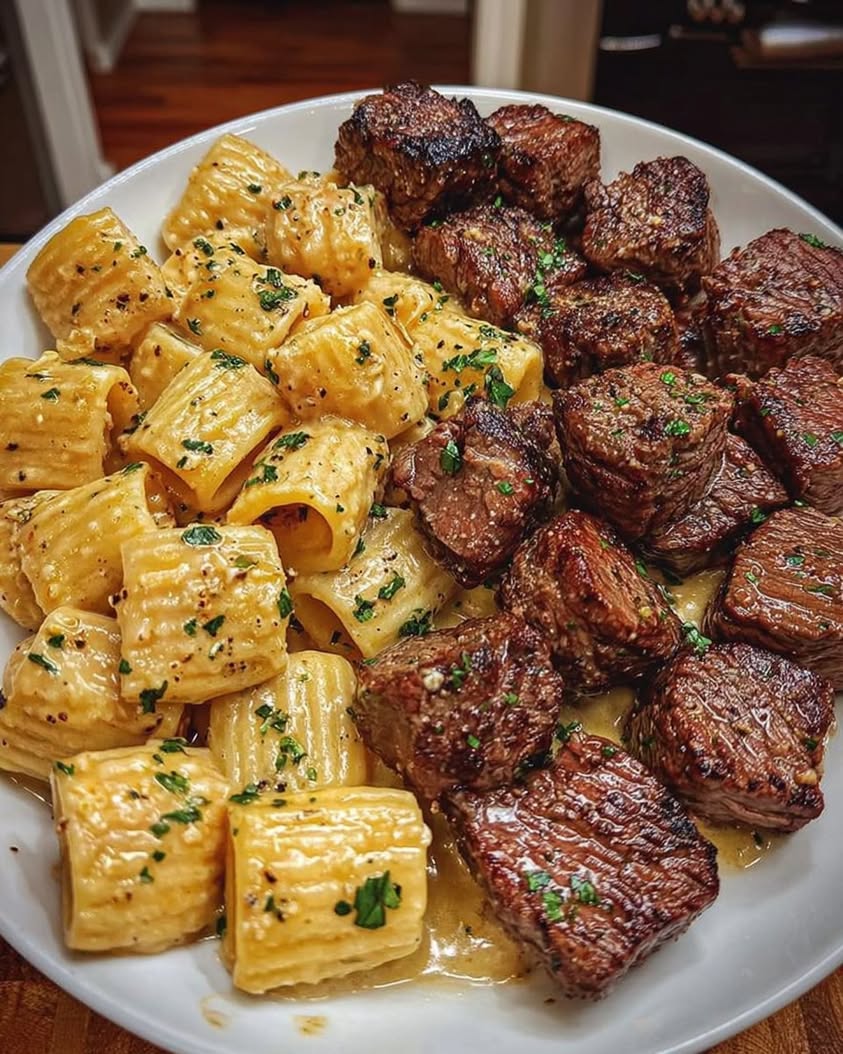
- Visual Appeal: The dish is a study in beautiful contrasts. Deeply browned steak bites sit atop a bed of glossy rigatoni pasta, all cloaked in a pale, creamy Alfredo sauce. A sprinkle of fresh parsley adds a pop of green for a finished look.
- Skill Level Needed: This recipe requires basic stovetop cooking skills. Success comes from managing heat properly to sear the steak without overcooking and whisking the sauce to prevent lumps. It is an excellent challenge for a confident home cook.
- Special Equipment: You will need a large, heavy-bottomed skillet or cast-iron pan for searing the steak and a large pot for boiling the pasta. A wooden spoon or spatula for stirring and a whisk for the sauce are also essential tools.
Recipe Overview
- Difficulty Level: We have classified this as an intermediate recipe due to the need for simultaneous multitasking. You must manage cooking the steak and the pasta, then create a smooth Alfredo sauce all within a short timeframe. Timing is critical for achieving the perfect doneness on the steak and the ideal sauce consistency. The steps are straightforward, but they require focused attention.
- Category: This recipe falls squarely into the main course category. It is a complete, hearty meal that combines protein and carbohydrates in one satisfying dish. It works wonderfully for a family dinner or a casual gathering with friends.
- Cuisine: This dish draws inspiration from classic Italian-American cuisine. The Alfredo sauce is a Roman staple brought to American popularity, while the garlic butter steak bites echo steakhouse traditions. The fusion creates a comforting, familiar meal that feels both classic and modern.
- Cost: The primary cost driver is the beef, which can vary depending on the cut you choose. Sirloin or ribeye offer great value for this recipe. The remaining ingredients, including pasta, cream, cheese, and butter, are pantry staples that are generally budget-friendly.
- Season: While delicious year-round, this dish is particularly appealing during cooler months. The rich, warm sauce and hearty steak provide a comforting meal on a cold evening. It also works well for a cozy Valentine’s Day dinner or a special winter gathering.
- Occasion: This recipe is perfect for a date night at home, a family celebration, or a stress-free dinner party. Its impressive appearance and deep flavors make it feel special, yet the simple preparation keeps you out of the kitchen. It is a fantastic choice for any occasion where you want to impress without undue stress.
Why You Will Love This Recipe
The taste and texture appeal of this Garlic Butter Steak Bites and Creamy Alfredo Rigatoni is undeniable. First, the steak bites are seared to create a deeply flavorful crust while remaining juicy and tender on the inside. Then, the creamy Alfredo sauce offers a rich, velvety smoothness that perfectly coats each piece of rigatoni. Consequently, every bite provides a satisfying contrast between the savory, slightly charred steak and the luscious, cheesy pasta. Furthermore, the garlic butter adds an aromatic richness that ties everything together beautifully. The flavors are balanced, never overpowering, and designed to please a wide range of palates.
The convenience and preparation benefits of this recipe are remarkable. It is a one-pan meal for the steak and sauce component, which means less cleanup. Additionally, the total time from start to finish is only 40 minutes, making it an excellent choice for busy weeknights. You can also prep many ingredients ahead of time, like cubing the steak and grating the cheese. This makes the cooking process even smoother and faster. Therefore, you can enjoy a gourmet-tasting dinner without spending hours in the kitchen, freeing up time for relaxation or family activities.
Nutritional advantages are also present in this balanced dish. The steak provides a high-quality source of protein, essential for muscle repair and satiety. The heavy cream and butter offer healthy fats that help with nutrient absorption. Additionally, the pasta supplies complex carbohydrates for sustained energy throughout the evening. For a more balanced meal, you can easily add a side of steamed broccoli or a fresh green salad. The dish is naturally free from many common allergens when you choose gluten-free pasta. Overall, this meal provides a satisfying and nourishing experience.
The social and entertaining value of this dish is significant. It looks incredibly impressive on the plate, with its beautiful golden steak bites and creamy pasta. When you serve it, guests immediately know a special effort was made. It also serves as a wonderful conversation starter as everyone enjoys the comforting, familiar flavors. Because the recipe is straightforward, you can prepare it while still engaging with your company. It allows you to host a dinner party or a romantic date night without feeling stressed or overwhelmed by complex preparations.
Cost-effectiveness and accessibility are major strengths of this recipe. It uses relatively affordable cuts of beef, like sirloin or top round, which become incredibly tender when cooked properly. These cuts are much less expensive than premium steaks. The other ingredients, such as pasta, cream, and parmesan, are budget-friendly and easy to find at any grocery store. Consequently, you can create a dish that tastes far more expensive than it actually is. This makes it a great option for feeding a family or entertaining on a budget without sacrificing quality or flavor.
Historical Background and Cultural Significance
The origin story of Alfredo sauce begins in Rome in the early 20th century. A restaurateur named Alfredo di Lelio created the dish for his pregnant wife, who had lost her appetite. He simply tossed fresh fettuccine with butter and parmigiano-reggiano cheese, creating a rich, comforting sauce. The simplicity and elegance of the dish made it a hit, and it soon became a signature item at his restaurant. American tourists visiting Rome discovered it and brought the recipe back home, where it gained immense popularity. Over time, the American version evolved to include heavy cream, creating the thicker, richer sauce we know today.
The cultural significance of this dish lies in its representation of Italian-American cuisine. It stands as a symbol of comfort, family, and celebration in American households. Alfredo sauce, in its adapted form, has become a staple in American-Italian restaurants and home kitchens across the country. It represents the fusion of Italian culinary traditions with American tastes and ingredients, making it uniquely accessible. The dish continues to evolve, finding its way onto menus from casual pizzerias to upscale steakhouses.
The evolution of the recipe has seen many creative variations over the decades. The original Roman version used just butter and cheese, relying on the pasta’s starchy water to create the sauce. American cooks soon added heavy cream for a richer, more stable sauce. Later, variations included additions like garlic, herbs, and protein such as chicken or shrimp. This specific recipe, combining Alfredo with steak bites, is a modern twist that marries two beloved dishes into one satisfying meal. It reflects a trend toward hearty, protein-packed pasta dishes that serve as a complete dinner.
Regional variations of Alfredo pasta exist across the world. In Italy, you will find the original version with fettuccine, butter, and cheese, often served as a primo piatto. In the United States, the sauce is thicker and creamier, frequently served with chicken or broccoli. Some regional adaptations add sun-dried tomatoes, mushrooms, or spinach. In other parts of the world, local cheeses and creams are used to create unique interpretations. This recipe embraces the American-style cream sauce while adding a savory steak component for a truly satisfying meal.
Ingredient Deep Dive
Beef is the star of this dish, providing rich flavor and protein. Top sirloin or sirloin steak is an excellent choice because it offers a good balance of tenderness and beefy flavor. It is more affordable than cuts like ribeye or filet mignon, making it great for everyday cooking. Nutritionally, beef is a fantastic source of iron, zinc, and B vitamins. When selecting beef, look for bright red color with a fine, even grain. Avoid any packages with excess liquid or a brownish tint. For storage, keep the meat in the coldest part of your refrigerator and use it within a day or two of purchase. For this recipe, you can substitute with ribeye for more marbling and tenderness, or use flank steak for a leaner option that should be sliced against the grain.
Heavy cream is the foundation of the Alfredo sauce and delivers its signature richness. Culturally, cream has been a symbol of luxury and indulgence in cooking for centuries. It provides a smooth, velvety texture that coats the pasta beautifully. Nutritionally, heavy cream is high in fat and calories, so it is best enjoyed in moderation. When shopping, look for cream with at least 36% milk fat to ensure it will thicken properly. Store it in the coldest part of your refrigerator and use it before the expiration date. For a lighter option, you can substitute half-and-half, though the sauce will be thinner. For a dairy-free alternative, use full-fat canned coconut milk, which will add a subtle coconut flavor.
Parmesan cheese is essential for the authentic Alfredo flavor profile. It adds a salty, nutty, and umami-rich depth that complements the cream beautifully. Always buy a wedge of authentic Parmigiano-Reggiano and grate it yourself for the best flavor and melting properties. Pre-shredded cheese often contains anti-caking agents that prevent it from melting smoothly. Nutritionally, Parmesan is high in calcium and protein. Store the wedge wrapped in wax paper and then in a plastic bag in the refrigerator. Substitute with Pecorino Romano for a saltier, more pungent flavor, or use Grana Padano for a milder, slightly less expensive option.
Garlic is the aromatic backbone of this dish, infusing both the steak and the sauce. It has been used for thousands of years in cuisines around the world for both flavor and medicinal properties. Garlic provides a pungent, spicy note that mellows and sweetens when cooked. It is also known for its potential health benefits, including immune system support. Select firm, plump bulbs with tight, unbroken skins. Avoid any that are soft or sprouting. Store garlic in a cool, dark, dry place with good air circulation. For substitutions, use 1/4 teaspoon of garlic powder per clove, though the flavor will be less sharp and more subtle.
Rigatoni pasta is the perfect shape for this creamy sauce. Its large tubes and ridges capture the Alfredo sauce beautifully in every bite. There is a cultural significance to pasta shapes, as each is designed to pair with a specific type of sauce. Rigatoni, with its wide opening and sturdy texture, holds up well to thick, creamy sauces. It also provides a satisfying, chewy texture. Nutritionally, pasta offers complex carbohydrates for energy. Look for pasta made from 100% semolina flour for the best texture. Store dry pasta in an airtight container in a cool, dry pantry. Substitute with penne, ziti, or fettuccine for a different texture.
Common Mistakes to Avoid
- Overcooking the steak is a frequent error. Since the steak bites are small, they cook very quickly. Cooking them too long results in dry, tough meat. Sear them over high heat for just a minute or two per side to achieve a nice crust while keeping the inside medium-rare.
- Crowding the pan when searing the steak is another common problem. If you add too many steak cubes at once, they will steam instead of sear. This prevents the Maillard reaction needed for a flavorful crust. Cook the steak in a single layer, working in batches if necessary.
- Adding cream to a cold pan will cause the sauce to separate. The cream should be at room temperature, and you should add it to the pan after the garlic has cooked. Ensure the heat is low to medium-low to prevent the sauce from breaking or becoming grainy.
- Using pre-shredded cheese is a pitfall for this recipe. These cheeses are coated with cellulose and starch to prevent clumping, which also prevents smooth melting. Grate your own Parmesan from a block for a silky, lump-free sauce.
- Boiling the pasta too far in advance can lead to a mushy final dish. The pasta continues to cook slightly in the hot sauce. Cook it al dente, or even one minute less than the package directs, so it finishes cooking perfectly in the sauce.
- Not reserving pasta water is a missed opportunity. The starchy water is a secret ingredient for helping the sauce adhere to the pasta and adjust its consistency. Always save a cup before draining the pasta.
- Using a non-stick pan for searing the steak prevents the formation of a good crust. A stainless steel or cast-iron skillet is better because it reaches higher temperatures and promotes browning. Non-stick pans are fine for the sauce but not for the steak.
- Skimping on salt for the pasta water is a classic error. The water should taste like the sea, as this is the only chance to season the pasta from the inside out. Properly salted pasta water is fundamental to a well-seasoned dish.
Essential Techniques
Mastering the sear on the steak bites is crucial for deep flavor. The Maillard reaction is a chemical process that occurs when protein is exposed to high heat, creating hundreds of new flavor compounds. To achieve this, pat the steak cubes completely dry with paper towels first. Then, heat your skillet over high heat until it is smoking hot. Add a high smoke point oil like avocado or canola oil. Place the steak cubes in a single layer, leaving space between them. Let them sear undisturbed for 1-2 minutes until a deep brown crust forms, then flip. A visual cue for success is a dark brown, not burnt, crust.
Creating a smooth and stable Alfredo sauce requires a gentle approach. The key is to prevent the cream from curdling or the sauce from breaking. Start by cooking the garlic in butter over medium heat until fragrant, but do not let it brown. Then, reduce the heat to low before adding the cream. Whisk constantly as the cream warms up. This prevents hot spots from forming and ensures even heating. Once the cream is warm, gradually add the grated cheese while whisking continuously. The goal is a thick, glossy sauce that coats the back of a spoon without being runny. A common pitfall is adding the cheese too quickly, which can cause clumps.
Cooking pasta to a perfect al dente texture is a foundational skill. Al dente means to the tooth, where the pasta offers a slight resistance when bitten. This texture is ideal because it holds up better in the sauce and provides a satisfying chew. To achieve this, bring a large pot of generously salted water to a rolling boil. Add the pasta and stir immediately to prevent sticking. Cook according to package directions, but start checking for doneness one minute before the suggested time. A visual cue is when the pasta has a tiny white core in the center when you bite it. Drain it immediately and do not rinse it, as the starch helps the sauce cling.
Managing heat levels throughout the cooking process is vital for success. High heat is your friend for searing the steak, as it creates crust quickly without cooking the interior too much. For the Alfredo sauce, low to medium-low heat is essential to prevent the cream from breaking. You will need to adjust the heat between these stages carefully. After removing the steak, you will use the residual heat of the pan with the butter and garlic. Adding the cream will immediately cool the pan down. If the sauce begins to bubble too vigorously, reduce the heat further. Consistent heat management separates a good cook from a great one.
Pro Tips for Perfect Garlic Butter Steak Bites and Creamy Alfredo Rigatoni
Always let the steak rest for a few minutes after searing before adding it to the pasta. This allows the juices to redistribute, resulting in more tender and flavorful pieces. If you cut into it immediately, all the juices will run out onto the plate.
For the most flavorful Alfredo sauce, use a combination of butter and the rendered fat from the steak. After searing the steak, do not wipe the pan completely clean. The browned bits stuck to the bottom are packed with flavor and will infuse the sauce.
Do not salt the steak cubes until right before cooking. Salt draws out moisture, which can prevent a good sear. Season the cubes just before they hit the hot pan to ensure a crisp, golden crust.
For an extra layer of flavor, add a splash of white wine to the pan after cooking the garlic. Let it reduce for about a minute before adding the cream. This deglazes the pan, lifting all those delicious brown bits and adding acidity to balance the richness.
If your Alfredo sauce becomes too thick after sitting, do not add more cream. Instead, add a splash of the reserved pasta water. The starch in the water will help the sauce become smooth and pourable again without thinning it out too much.
Taste the sauce before you season it with salt. Parmesan cheese can be very salty, so you may not need to add a lot of extra salt. It is always better to under-season and adjust at the end than to overdo it.
For a more luxurious finish, toss the cooked pasta directly into the sauce and let it simmer together for one minute. This allows the pasta to absorb some of the sauce, making it more flavorful and cohesive.
Variations and Adaptations
Regional variations of this dish are abundant. In the American South, you might find the steak seasoned with a Cajun or blackened spice blend for a spicy kick. In coastal regions, some cooks replace the steak with seared shrimp or scallops for a surf-and-turf experience. The Alfredo sauce itself can be adapted by adding roasted red peppers or sun-dried tomatoes for a different flavor profile. Each regional twist reflects local ingredients and culinary preferences.
Seasonal adaptations can make this dish even more special. During summer, add fresh corn kernels or cherry tomatoes to the sauce for a pop of sweetness and color. In autumn, stir in sauteed mushrooms and fresh sage for a more earthy, robust flavor. During the spring, add steamed asparagus tips and fresh peas for a light, vibrant touch. These adaptations allow you to enjoy the dish year-round while celebrating seasonal produce.
Dietary modifications are possible with careful substitutions. For a gluten-free version, simply use your favorite brand of gluten-free rigatoni pasta. For a lower saturated fat option, substitute the heavy cream with half-and-half or a mix of milk and a tablespoon of cornstarch. To reduce calories, you can use leaner cuts of steak like top round and trim all visible fat. These modifications allow you to enjoy the core flavors while meeting specific dietary needs.
Flavor variations are easy to create with a few simple swaps. For a spicier version, add red pepper flakes when you cook the garlic. For a more herbaceous profile, stir in fresh basil or thyme at the end. A squeeze of fresh lemon juice added to the finished dish can brighten all the flavors. For a smoky twist, use smoked paprika in the steak seasoning. Each variation creates a unique dining experience from the same base recipe.
Texture modifications can change the entire feel of the dish. For a crunchier element, toast some panko breadcrumbs in butter and sprinkle them on top before serving. You could also add toasted pine nuts or walnuts for a nutty crunch. For a saucier dish, double the Alfredo sauce recipe. For a drier, more stew-like consistency, let the sauce reduce for several minutes on the stove. These adjustments let you customize the mouthfeel to your preference.
Presentation alternatives can make the dish look completely different. For a family-style meal, serve everything in a large, shallow bowl. For a composed plate, twirl the pasta into a nest and top it with the steak bites. You can also serve the steak bites on a skewer perched on top of the pasta for a dramatic effect. Grate a generous amount of fresh Parmesan over the top and add a sprig of fresh rosemary for a beautiful, restaurant-quality presentation.
Serving and Presentation Guide
Plating techniques can elevate this dish from simple to spectacular. Start by creating a bed of rigatoni pasta in the center of a shallow bowl or plate. Use tongs to twirl the pasta into a neat nest shape. Then, arrange the steak bites artfully on top of or around the pasta. Drizzle any remaining sauce over the steak and pasta. The goal is to create height and visual interest on the plate.
Garnishing ideas add the final flourish to your dish. A sprinkle of fresh, finely chopped parsley adds a beautiful green contrast and a fresh flavor. A generous grating of fresh Parmesan cheese on top adds more salty, nutty flavor. For a touch of elegance, place a small sprig of fresh rosemary or thyme on the side. A light crack of black pepper over everything just before serving adds a final visual and aromatic touch.
Traditional accompaniments for this type of dish include a simple green salad with a lemon vinaigrette. The acidity of the dressing cuts through the richness of the Alfredo sauce beautifully. Garlic bread or crusty bread is another classic side, perfect for soaking up any leftover sauce. Steamed or roasted vegetables like broccoli, green beans, or asparagus also pair wonderfully and add a nutritional balance to the meal.
Modern serving suggestions involve using the dish as a base for other flavors. You could serve it alongside a roasted chicken breast or grilled shrimp skewers for a surf-and-turf experience. For a complete dinner, serve it with a side of roasted cherry tomatoes and a balsamic reduction drizzle. These modern touches can make the dish feel new and exciting each time you prepare it.
Temperature considerations are key for the best eating experience. The pasta and sauce should be served hot, directly from the stove. The steak bites should be allowed to rest for a few minutes after cooking but should still be warm when served. If you are preparing the dish ahead of time, reheat the components gently. Reheat the pasta and sauce on the stovetop over low heat, adding a splash of milk or cream to restore the texture, then add the steak bites just before serving.
Portion control tips can help you enjoy this rich meal without overindulging. A standard serving is about one and a half cups of pasta and six to eight ounces of steak. Using a kitchen scale to portion the pasta before cooking is an accurate method. You can also serve the meal on smaller plates to create the illusion of a fuller portion. Pairing it with a large side salad is another excellent strategy for a satisfying meal that is not too heavy.
Wine and Beverage Pairing
Wine pairings for this dish should complement its rich, savory, and creamy components. A classic choice is a medium-bodied red wine like a Chianti or a Sangiovese. The wine’s acidity cuts through the creaminess while its fruity notes balance the savory steak. Another excellent option is a Pinot Noir, with its soft tannins and bright red fruit flavors. It will not overpower the pasta but will stand up well to the beef. For white wine lovers, a full-bodied, oaked Chardonnay works beautifully. The buttery, vanilla notes of the wine match the creamy Alfredo sauce and garlic butter.
Non-alcoholic alternatives can also be very satisfying. A sparkling water with a squeeze of fresh lemon provides a crisp, palate-cleansing element between each rich bite. A high-quality ginger ale offers a spicy sweetness that contrasts nicely with the savory dish. For something warmer, a cup of unsweetened iced tea with a slice of lemon is a classic and refreshing choice. The slight tannins in the tea help cut through the richness of the sauce.
Coffee and tea pairings after the meal are also worth considering. A light roast coffee with bright acidity can be a great digestif, helping to cleanse the palate. A black tea like Earl Grey, with its citrus notes, also pairs well. For a more decadent finish, a dessert wine like a late-harvest Riesling could be poured after the meal. Its sweetness would contrast with the savory dinner beautifully.
Temperature considerations for your beverage are important. Red wine is best served slightly below room temperature, around 60-65 degrees Fahrenheit. White wine should be chilled to about 45-50 degrees. Non-alcoholic drinks are best served very cold to provide a refreshing contrast. Coffee and tea should be hot for the ultimate comfort experience after a hearty meal.
Serving suggestions for beverages can enhance the dining experience. For a dinner party, offer a choice of one red and one white wine to accommodate different preferences. Have a pitcher of chilled water with lemon and mint available on the table. If serving alcohol, provide wine glasses that allow the aromas to develop. Always have non-alcoholic options ready for designated drivers or abstainers.
Storage and Shelf Life
Proper storage methods are essential for maintaining the quality of leftovers. You should separate the steak bites and the pasta before storing them. Combine them only when reheating to prevent the steak from becoming soggy and overcooking. Place the pasta and sauce in one airtight container and the steak bites in another separate container.
Temperature requirements are critical for food safety. Any leftovers must be refrigerated within two hours of cooking. The ideal temperature for your refrigerator is at or below 40 degrees Fahrenheit. If the food has been sitting out longer than two hours, it is safer to discard it. Do not try to store the dish at room temperature.
Container recommendations will help preserve texture and flavor. Use shallow, airtight containers to allow the food to cool quickly and evenly. Glass containers are excellent because they are non-reactive and do not absorb odors. Plastic containers should be BPA-free and have tight-fitting lids. For the steak, you can wrap it tightly in plastic wrap before placing it in a container to minimize air exposure.
Signs of spoilage are important to recognize. The pasta may become slimy or develop an off smell. The steak might develop a sour or ammonia-like odor. The sauce could separate more than usual or develop a watery consistency at the bottom of the container. If you notice any of these signs, it is best to discard the leftovers to prevent foodborne illness.
Reheating instructions will help you enjoy leftovers that taste nearly as good as fresh. For the pasta and sauce, reheat them in a skillet over medium-low heat. Add a splash of milk or cream to restore the saucy texture. Stir frequently until heated through. For the steak, reheat it separately in a hot skillet with a tiny bit of butter for just 30-60 seconds per side. Over-reheating the steak will make it tough.
Freezing guidelines should be followed if you plan to store this dish for longer than a few days. The Alfredo sauce, unfortunately, does not freeze well because it can separate and become grainy upon thawing. If you must freeze it, do so without the pasta. Freeze the steak bites in an airtight container for up to 2 months. Thaw the steak in the refrigerator overnight before reheating. Cook fresh pasta for the best results when serving from frozen.
Make Ahead Strategies
A detailed prep timeline can make the cooking process much smoother. Up to 24 hours in advance, you can cube the steak and season it. Keep it covered in the refrigerator. You can also grate the Parmesan cheese and store it in an airtight container. For the pasta, you can cook it one day ahead, toss it with a little olive oil to prevent sticking, and store it in the refrigerator.
Storage between steps is important for food safety and quality. The raw steak must be kept in the refrigerator at all times until you are ready to cook. The cooked pasta should be stored in an airtight container. Do not combine the cooked pasta with the sauce until you are ready to serve, as the pasta will absorb the sauce and become too soft.
A quality impact assessment is necessary to decide what can be made ahead. The Alfredo sauce is best made fresh because it can separate and become grainy upon reheating. The steak is also best cooked fresh to maintain its tender texture. However, the prep work like cutting the steak and grating the cheese saves significant time and does not affect the final quality.
Assembly tips for the day of serving can save even more time. When you are ready to eat, you only need to sear the steak, make the sauce, and reheat the pasta. Have all your ingredients measured and ready before you start cooking. This mise en place approach makes the entire process much faster and less stressful.
Reheating guidelines for prepped components are crucial. To reheat the pasta, plunge it into boiling water for about 30 seconds, then drain. This refreshes its texture without making it mushy. The sauce should be made fresh. The steak should be seared fresh for optimal texture. Do not attempt to reheat leftover steak from a previous make-ahead session, as it will be tough.
Fresh element additions can brighten up the final dish. If you are making the components ahead, wait to add fresh herbs like parsley until you serve. A squeeze of fresh lemon juice just before serving can also add a vibrant note. These fresh elements help the prepped components taste as if they were just made from scratch.
Scaling Instructions
Halving the recipe is straightforward and works well for two servings. Simply cut all ingredient quantities in half. Use one small sirloin steak instead of one large one. Use half a pound of pasta. Reduce the cream to about 2/3 cup and the cheese to 1/3 cup. The cooking times for the steak and sauce will be slightly shorter because there is less mass in the pan. Watch the steak closely as it will cook a bit faster.
Doubling or tripling the recipe for a crowd requires a few adjustments. The most important change is that you cannot simply double the ingredients and cook everything in the same pan. You will need to sear the steak in multiple batches to avoid crowding the pan. Similarly, you may need a larger pot for the pasta or cook it in two batches. The Alfredo sauce can be doubled in a large saucepan, but it will take longer to come up to temperature.
Equipment adjustments are necessary when scaling up. For a doubled batch of steak, use your largest skillet or a heavy-bottomed dutch oven. You will likely need two pots for the pasta if you do not have a very large stockpot. The sauce can be made in a large saucepan. Make sure you have large enough storage containers if you are making the components ahead of time for a party.
Timing modifications are critical when scaling the recipe. Increasing the batch size does not increase the cooking time for the steak, as the pieces are the same size. However, you will spend more time searing in batches. The pasta will take the same amount of time to cook per the package directions. The sauce will take a few extra minutes to heat through, but not significantly longer.
Storage considerations change when you are making a large batch. You will need to ensure you have enough refrigerator space to cool the leftovers quickly. Divide the large batch of pasta and steak into several shallow containers for faster cooling. Do not leave a massive pot of pasta to cool on the counter, as it can enter the danger zone for bacterial growth for too long.
Nutritional Deep Dive
A macro breakdown of this dish reveals it is a high-protein, high-fat, and moderate-carbohydrate meal. A single serving, approximately one and a half cups of pasta with six ounces of steak, contains roughly 650 to 750 calories. It provides about 40 to 50 grams of protein from the beef and cheese. The fat content ranges from 35 to 45 grams, primarily from the cream, butter, and cheese. Carbohydrates come mainly from the pasta, totaling about 50 to 60 grams per serving. This meal is quite satiating because of its high fat and protein content.
A micronutrient analysis shows this dish provides several important vitamins and minerals. It is an excellent source of calcium from the cheese and cream, supporting bone health. It is also rich in iron from the red meat, crucial for oxygen transport in the blood. Vitamin B12 is abundant in the beef, supporting nerve function and red blood cell formation. Zinc from the beef is important for immune health and cell growth. The garlic provides a small amount of vitamin C and manganese.
Health benefits of the core ingredients are notable. The high-quality protein in beef supports muscle growth and repair. The conjugated linoleic acid found in grass-fed beef may have anti-inflammatory Print
Garlic Butter Steak Bites & Creamy Alfredo Rigatoni
- Total Time: 35 minutes
- Yield: 4
Description
Tender seared steak bites in a rich garlic butter sauce served over creamy alfredo rigatoni pasta. A comforting and indulgent meal perfect for any night.
Ingredients
- 1 lb sirloin steak, cut into bite-sized cubes
- 3 tbsp butter, divided
- 4 cloves garlic, minced
- 1/2 tsp salt
- 1/4 tsp black pepper
- 1/2 tsp Italian seasoning
- 8 oz rigatoni pasta
- 1 cup heavy cream
- 1/2 cup grated Parmesan cheese
- Fresh parsley for garnish
Instructions
- Cook rigatoni according to package directions until al dente. Drain and set aside.
- Season steak cubes with salt, pepper, and Italian seasoning.
- In a large skillet over medium-high heat, melt 2 tbsp butter. Add steak bites and sear for 2-3 minutes per side until browned. Remove steak and set aside.
- Reduce heat to medium. Add remaining 1 tbsp butter and minced garlic. Cook for 30 seconds until fragrant.
- Pour in heavy cream and bring to a gentle simmer. Stir in Parmesan cheese until melted and smooth.
- Add cooked rigatoni to the skillet and toss to coat in the sauce.
- Return steak bites to the skillet, stir gently to combine.
- Serve immediately, garnished with fresh parsley.
Notes
You can customize the seasonings to taste.
- Prep Time: 15 minutes
- Cook Time: 20 minutes
- Method: Main
- Cuisine: American