French Onion Short Rib Soup with Cheesy Gruyère Toast (No Wine): The Ultimate Comfort Food
Imagine a bowl of soup that combines the deep, savory richness of slow-braised beef with the sweet, caramelized essence of onions. That is exactly what you get with this French Onion Short Rib Soup with Cheesy Gruyère Toast (No Wine). This recipe transforms a classic French bistro favorite into a hearty, soul-warming meal. We skip the wine entirely, making it accessible for everyone while still delivering incredible depth of flavor. The beef short ribs become incredibly tender, practically falling apart as they simmer in a rich, beefy broth infused with thyme and bay leaves. Every spoonful offers a taste of pure comfort.
The magic of this dish truly comes alive when you top it with a slice of crusty bread piled high with melted Gruyère cheese. That golden, bubbly crust provides the perfect contrast to the silky soup beneath. This is not just a meal for a cold winter night. It is a showstopper for any dinner party or a weekend family gathering. Because we use short ribs instead of a traditional cut, you get a more substantial, meaty soup that satisfies every craving. The lack of wine also means the beef flavor shines through without any competition, making this French Onion Short Rib Soup with Cheesy Gruyère Toast (No Wine) a truly unique and foolproof recipe.
Building layers of flavor is key here. We start by browning the short ribs until they develop a dark, crusty sear. Then we slowly caramelize a mountain of onions until they turn a deep amber color. The process takes time, but it builds the foundation for an unforgettable broth. The aroma fills your kitchen with a warmth that promises something special. When you finally ladle the soup into bowls, top it with the cheesy toast, and watch it melt under the broiler, you will feel a profound sense of accomplishment. This is the kind of food that nourishes both body and soul. It is a bowl of love, patience, and incredible flavor.
Quick Recipe Highlights
- Flavor Profile: The dominant flavor is a deep, savory umami from the braised beef and caramelized onions. It is rich and satisfying without being overly heavy. A subtle sweetness from the onions balances the savory notes perfectly.
- Texture: You get a wonderful textural experience in every bite. The beef is incredibly tender and shreds easily. The broth is smooth yet hearty, and the melted Gruyère adds a stringy, luxurious finish.
- Aroma: Your kitchen will smell of sweet, caramelized onions, savory beef, and earthy herbs like thyme and bay leaf. It is an incredibly inviting and comforting scent that promises a delicious meal.
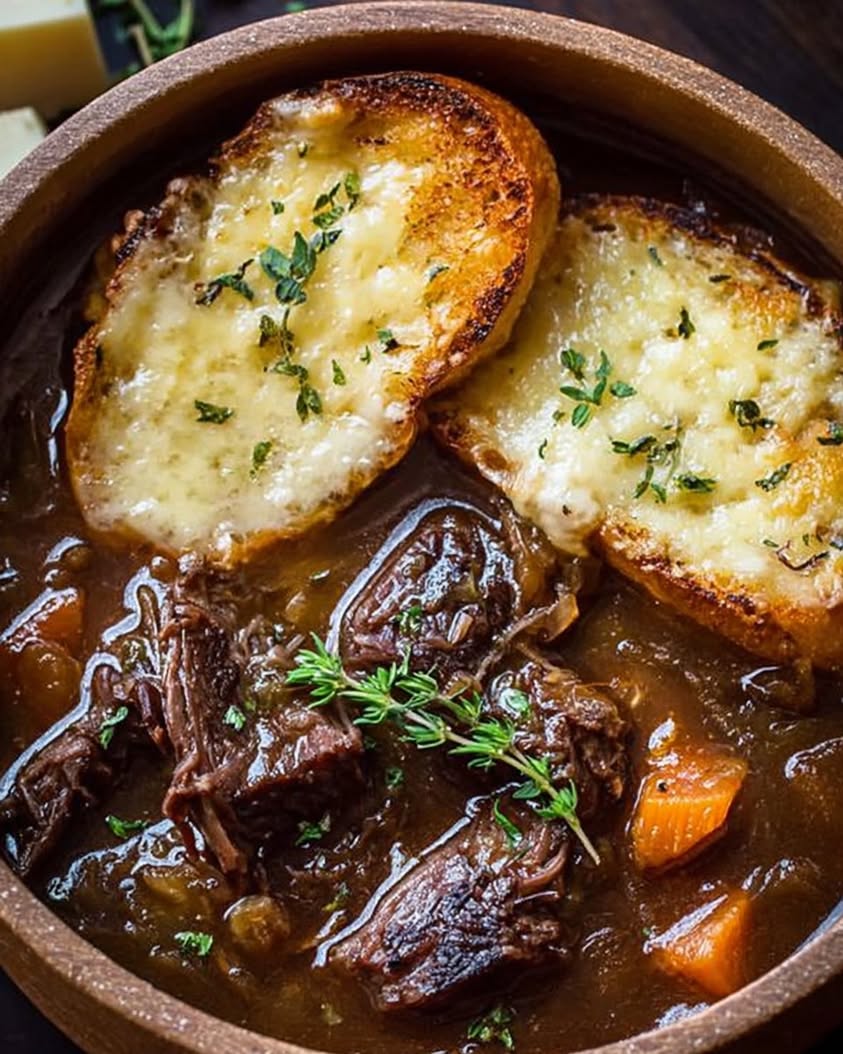
- Visual Appeal: The soup itself is a rich, dark brown color. The golden, bubbly cheese toast sits proudly on top, creating a stunning contrast. It looks rustic, elegant, and deeply appetizing.
- Skill Level Needed: This recipe requires some patience and basic knife skills for slicing onions. However, the actual cooking techniques are straightforward. It is a wonderful project for an intermediate home cook.
- Special Equipment: You will need a large, heavy-bottomed pot or Dutch oven for browning the meat and simmering the soup. An oven-safe broiler pan or ramekins are essential for melting the cheese toast.
Recipe Overview
- Difficulty Level: I rate this recipe as intermediate because of the time commitment and the need to manage multiple steps. You must properly sear the beef and patiently caramelize the onions. These processes are not difficult, but they require attention and care. Rushing either step will compromise the final flavor. If you take your time, you will find the process rewarding and straightforward.
- Category: This dish perfectly fits the main course category for a hearty dinner. It is also a fantastic, impressive appetizer for a special dinner party. You could even serve it as a rich, standalone lunch on a cold day.
- Cuisine: The inspiration comes from classic French cuisine, specifically the iconic French onion soup. We have added a modern twist by incorporating beef short ribs for a heartier, more substantial meal. The use of Gruyère cheese is a staple of the Swiss-French culinary tradition.
- Cost: The primary cost is the beef short ribs, which can be a more expensive cut. However, a little goes a long way. Gruyère cheese is also a premium ingredient. Onions and herbs are very inexpensive. Overall, the cost per serving is reasonable for such a luxurious and filling meal.
- Season: This soup is perfect for fall and winter. It warms you from the inside out on chilly days. The rich, comforting flavors are best enjoyed when the weather turns cold. It also makes a wonderful meal for a cozy holiday gathering.
- Occasion: This soup is ideal for a weekend family dinner, a special date night, or a casual gathering with friends. It is impressive enough for a holiday meal like Christmas or New Year’s Eve. It also makes for amazing leftovers the next day.
Why You Will Love This Recipe
The immediate appeal of this French Onion Short Rib Soup with Cheesy Gruyère Toast (No Wine) lies in its incredible taste and satisfying texture. You get the deep, savory flavor of slow-braised beef that melts in your mouth. The sweet, caramelized onions add a complex, mellow sweetness that perfectly complements the beef. The broth itself becomes a rich, beefy concentrate of all those beautiful flavors. Then, the cheese toast adds a salty, nutty, and wonderfully gooey finish. Every single element works in perfect harmony. It is a symphony of comfort and flavor that you will crave again and again.
Beyond the incredible flavor, this recipe offers fantastic convenience for a make-ahead meal. The soup base actually tastes better the next day after the flavors have had time to meld. You can prepare the soup entirely in advance, even a day or two before you plan to serve it. Then, all you need to do is reheat it, prepare the cheesy toast, and broil it. This makes it a perfect choice for entertaining. You can focus on your guests without being stuck in the kitchen. The hands-off simmering time also frees you up to do other things around the house.
From a nutritional perspective, this soup is surprisingly well-balanced. The beef short ribs provide a generous amount of high-quality protein and essential iron. Onions are packed with antioxidants and prebiotic fiber, which are great for gut health. The broth, especially if made with bone-in short ribs, contains collagen and minerals that support joint health. The Gruyère cheese offers a good source of calcium and protein. While it is a rich dish, you can control the portion size. It is a satisfying meal that provides lasting energy without relying on empty carbohydrates.
The social and entertaining value of this recipe is incredibly high. Imagine bringing a bubbling, cheesy soup to the table. Your guests will be immediately wowed by the presentation and the incredible aroma. It is a dish that invites conversation and a sense of shared indulgence. Everyone loves the moment they break through the cheesy crust to find the rich broth underneath. This recipe is a guaranteed crowd-pleaser. It makes you look like a culinary rockstar without requiring professional-level skills. It is the perfect centerpiece for a cozy, memorable evening.
Finally, this recipe is quite cost-effective and accessible for the incredible meal it delivers. While short ribs can be pricey, you only need two pounds to serve six people. This is because the meat enriches the entire broth, making every bite feel decadent. The other ingredients, like onions, garlic, and fresh herbs, are very affordable. Using high-quality Gruyère is worth the splurge, but you can also find more budget-friendly alternatives. This recipe does not require exotic ingredients or expensive wine. It is a luxurious meal built on simple, humble components that you can find at any grocery store. It proves that you do not need a huge budget to create an unforgettable dining experience.
Historical Background and Cultural Significance
The story of French onion soup dates back centuries, with roots in the ancient Roman empire. They had a similar soup made with onions, broth, and stale bread. The modern version we know and love, however, truly emerged in 18th century France. Legend often credits King Louis XV with its creation. According to the story, he was hungry late at night and only had onions, butter, and champagne on hand. He combined them to invent the first version of this classic soup. Whether this story is true or not, the recipe became a staple among Parisian workers in the bustling market district of Les Halles.
Culturally, French onion soup (soupe à l’oignon) holds a special place in French cuisine. It is considered a humble, working-class dish that has been elevated to a national treasure. For years, it was a common late-night meal for market vendors and laborers who needed a restorative, cheap, and filling meal. It represents the French culinary philosophy of transforming simple ingredients into something sublime. The use of wine and Gruyère cheese, however, is a specific regional touch. The dish is a testament to the power of patience, as the slow caramelization of onions is the very heart of its identity.
The evolution of this recipe, especially in the United States, has seen many creative twists. Home cooks and chefs alike have added beef, mushrooms, and different types of cheese. Our version, the French Onion Short Rib Soup with Cheesy Gruyère Toast (No Wine), is a natural evolution. We take the classic concept and make it more substantial by adding bone-in short ribs. This transforms the soup from a simple broth into a hearty, one-pot meal. We also remove the wine, making the recipe more family-friendly and focusing the flavor purely on the beef and onions. It is a modern answer to the call for deep, comforting flavor without alcohol.
Regional variations of onion soup are fascinating to explore. In some parts of France, you might find it made with white wine or even cider. Others might use a blend of cheeses, like Comté or Emmental. In Switzerland, a similar soup called “Bündner Gerstensuppe” uses barley for extra heft. In the United States, many recipes add a splash of Sherry or Worcestershire sauce for added depth. Our version takes a clear stand by omitting the wine entirely, which is actually a nod to a very traditional, rustic approach. It proves that the core flavors of caramelized onions and beef broth are so powerful that they do not need any alcoholic enhancement to be extraordinary.
Ingredient Deep Dive
Beef Short Ribs are the star of this show. These are a cut from the chuck or plate of the cow, and they are known for their incredible marbling and rich, beefy flavor. When braised slowly, the connective tissue breaks down into gelatin, creating a luxurious, unctuous texture. This is why the meat becomes so tender it falls off the bone. Culturally, short ribs were once considered a tougher, less desirable cut, but modern cooking has elevated them to a delicacy. From a nutritional standpoint, they are an excellent source of protein, iron, zinc, and B vitamins. The bone and cartilage also contribute collagen to your broth, which is great for your skin and joints. When selecting short ribs, look for ones that are thick, well-marbled, and have a deep red color. You want a good ratio of meat to fat. Store them in the coldest part of your refrigerator and use them within a couple of days. You can substitute boneless chuck roast, cut into 2-inch cubes, but the flavor will be slightly less intense. If you want a leaner option, you can use beef oxtails, which also add incredible flavor and gelatin.
Onions are the foundation of this soup, and you will need a lot of them. We use a mix of yellow and sweet onions for the best balance of flavor. Yellow onions have a good, sharp flavor that mellows into a deep, savory sweetness when caramelized. Sweet onions like Vidalia or Walla Walla are higher in sugar and will caramelize faster, adding a more pronounced sweetness. This combination creates a complex, multi-layered onion base. Onions are members of the allium family and have been cultivated for thousands of years, prized for both their culinary and medicinal properties. They are packed with antioxidants, particularly quercetin, which has anti-inflammatory effects. They also provide prebiotic fiber that feeds your gut bacteria. When selecting onions, choose ones that are firm, heavy for their size, and have dry, papery skins. Avoid any that are soft or show signs of sprouting. Store them in a cool, dark, well-ventilated place, never in the refrigerator. The vast quantity of onions is the secret to the soup’s legendary flavor, so do not skimp on this ingredient.
Gruyère Cheese is the classic choice for the gratinée topping. This Swiss cheese is known for its nutty, slightly sweet, and savory flavor that melts beautifully. It forms a golden, bubbly crust that is both chewy and crisp. Its excellent melting properties come from its high fat content and particular protein structure. Culturally, Gruyère has been made in Switzerland since the 12th century. It is a crucial component of many classic dishes, from fondue to Croque Monsieur. Nutritionally, it is a good source of protein, calcium, and phosphorus. You can substitute other alpine-style cheeses like Emmental, Comté, or even a good-quality, low-moisture mozzarella for a similar melt. However, Gruyère provides a truly unique and complex flavor. When buying it, look for a wedge with a smooth, rind-free surface and a pale yellow color. It should have no strong ammonia smell. Store it wrapped in parchment paper and then loosely in plastic in the refrigerator. It will keep for several weeks.
Beef Broth is the liquid backbone of the soup. Using a high-quality, low-sodium beef broth is crucial. The broth must have a deep, robust beef flavor to stand up to the short ribs and a huge amount of onions. Homemade beef broth is always best if you have the time, as it provides a gelatinous, rich base. Store-bought is perfectly fine, but you should avoid the “broth” that is thin and watery. Look for one labeled “beef bone broth” or “beef stock” for better flavor and body. This ingredient is the foundation upon which all other flavors are built. A bad broth will result in a bland soup. When simmering, the broth will reduce and concentrate further, so a strong start is essential. You can also use a combination of beef broth and water to control the saltiness if needed.
Thyme and Bay Leaf are the classic aromatics that define this soup. These herbs add an earthy, subtle floral note that complements the beef and onions perfectly. Thyme, with its tiny, fragrant leaves, has a long history in European cuisine, used for both flavor and preservation. It has antiseptic properties and is a good source of vitamin C and iron. Bay leaves add a more delicate, herbal complexity that you can not quite identify but you would definitely miss if it were gone. They are not typically eaten, so be sure to remove them before serving. Fresh thyme is preferred for its bright flavor, but dried thyme works well too. Use about one teaspoon of dried thyme for every tablespoon of fresh. These herbs are incredibly inexpensive and provide a huge return on flavor investment. They are the little touches that make a soup taste restaurant-quality.
Common Mistakes to Avoid
- Not searing the short ribs properly: This is a critical step. You must achieve a deep, dark brown crust on every side of the meat. If you crowd the pan, the meat will steam instead of sear. Work in batches and be patient. A good sear creates the fond, the browned bits on the bottom of the pot, which is the source of immense flavor for the broth.
- Rushing the caramelization of the onions: This is perhaps the most important rule of all. Caramelizing onions takes at least 45 minutes to an hour. You need to cook them low and slow. High heat will burn them and make them bitter. Stir them occasionally and let them develop a deep, rich, golden-brown color. Do not try to speed this process up.
- Using a poor-quality broth: Your broth is the foundation of the entire dish. A thin, watery, or overly salty broth will ruin the soup. Always use a high-quality, low-sodium beef broth or stock. Homemade is ideal. The broth is where the beef and onion flavors meld, so it must be good.
- Adding too much liquid early: You do not need to submerge the short ribs completely at the start. Adding only enough broth to come about three-quarters of the way up the meat allows the broth to concentrate and the meat to braise properly. You can always add more liquid later if needed.
- Forgetting to skim the fat: Short ribs are fatty, and some fat will render into the soup. If you do not skim it, your soup will be greasy and heavy. Let the soup cool slightly, then use a spoon or a fat separator to remove the excess fat before serving.
- Over-toasting the bread: The bread for the cheesy toast should be sturdy and slightly dried out, but not rock hard. Over-toasting it before adding the cheese will make it difficult to eat. A light toast is enough to prevent it from becoming soggy immediately. The real browning happens under the broiler with the cheese.
- Using the wrong cheese: Do not use pre-shredded cheese. It contains anti-caking agents that prevent it from melting smoothly and beautifully. Always grate your own Gruyère cheese for perfect melts. Also, avoid cheeses that do not have good melting properties, like feta or hard Parmesan.
- Skimping on the cheese: This is a decadent dish. You want a generous layer of cheese on top of the bread. Do not be stingy. The cheese is a major component of the experience. Use enough to create a thick, bubbling, and golden crust.
- Not using oven-safe bowls: To melt the cheese properly, you need to put the bowls under the broiler. You must use bowls that are specifically labeled as oven-safe or broiler-safe. Otherwise, they can crack or shatter. Ceramic or stoneware bowls are best.
- Serving immediately without resting: The soup is piping hot when it comes out from under the broiler. Let it rest for just a minute or two before serving. This allows the temperature to even out and prevents the cheese from sliding off the bread immediately.
Essential Techniques
Searing is the process of browning the surface of the meat over high heat. This is not about cooking the meat through but about creating flavor. When the surface of the meat reaches a high temperature, the Maillard reaction occurs. This chemical reaction between amino acids and sugars creates hundreds of new flavor compounds. It is what gives seared meat its characteristic savory, brown, and complex taste. To master it, pat the short ribs dry with a paper towel. This removes moisture, which would create steam. Then season them generously with salt and pepper. Heat a large pot with a drizzle of oil over medium-high heat until it is shimmering. Add the short ribs in a single layer without crowding. Let them cook for 3-4 minutes without moving them, until they release easily from the pot. Flip them and repeat on all sides. You are looking for a deep, mahogany-brown crust. The visual cue is a beautiful, dark, and crusty surface.
Caramelizing onions is the slow-cooking process that transforms raw, pungent onions into a soft, sweet, and deeply flavorful ingredient. You must work over medium-low heat. The high sugar content in onions will burn easily at high temperatures. Patience is your most important tool. Start by melting butter and a splash of oil in the same pot after searing the beef. The fat from the beef fond is also there. Add all the sliced onions and toss to coat them in the fat. Spread them out in an even layer. Cook them, stirring only every 5 to 10 minutes. You want them to soften and start to color. As they cook, they will release a lot of liquid. This is fine; they are steaming. Once that liquid evaporates, they will begin to brown. The process can take 45 minutes to an hour. You are aiming for a deep, golden-brown color, not black or burnt. The visual cue is a pot full of limp, deeply colored onions that have a jammy, sweet aroma.
Deglazing is a technique for incorporating the flavorful browned bits (fond) left in the pot into the liquid of the dish. After you remove the seared short ribs and the caramelized onions, there will be a layer of intensely flavorful sediment stuck to the bottom of the pot. This is pure gold for your soup’s flavor. To deglaze, you pour a small amount of liquid into the hot pot. We use a splash of the beef broth for this. Then, using a wooden spoon or a spatula, you scrape the bottom of the pot vigorously. The liquid will bubble and steam as it lifts up all that fond. This action dissolves all those delicious browned bits into the liquid. This simple step ensures that no flavor is wasted. The liquid becomes the start of your broth, carrying a concentrated beef and onion essence.
Braising is a combination-cooking method that involves first searing the meat and then cooking it slowly in a covered pot with a small amount of liquid. This is the perfect method for tough cuts of meat like short ribs. The gentle, moist heat of the oven (or stovetop) works wonders on the connective tissue. Collagen, which makes the meat tough, breaks down into gelatin. This process not only tenderizes the meat but also enriches the cooking liquid, making it luscious and velvety. For this soup, you add the seared short ribs back to the pot with the onions and broth. You partially cover the pot and cook it low and slow. The ideal temperature is a gentle simmer, around 180-200F. The visual cue for doneness is when the meat is fork-tender and starts to pull away from the bone easily. Do not rush the braising; it is a slow dance of transformation.
Pro Tips for Perfect French Onion Short Rib Soup with Cheesy Gruyère Toast (No Wine)
For the most incredible sear, make sure your short ribs are completely dry. Pat them down with paper towels before you season them. This step is non-negotiable for achieving a beautiful crust. Moisture is the enemy of browning.
When caramelizing the onions, a pinch of baking soda can speed up the process. It raises the pH level, which encourages browning. However, use it sparingly, about a quarter teaspoon per pound of onions. Too much can make the onions mushy and alter their flavor.
Do not skip the step of toasting the bread. It might seem small, but toasting the bread in the oven until it is dry and lightly golden prevents it from turning into a soggy mess in the soup. It creates a barrier that stays crisp for longer.
For an even richer broth, you can add a spoonful of tomato paste to the pot when you add the onions. It adds a subtle acidity and depth of color. Cook it for a minute before adding the broth to remove the raw tomato flavor. It is a secret weapon for beef dishes.
You must cool the soup completely before refrigerating it. If you put hot soup in the fridge, it can raise the temperature of the entire fridge and create a breeding ground for bacteria. Let it cool on the counter for an hour, then transfer it to the fridge.
The best way to skim fat is to refrigerate the soup overnight. The fat will solidify into a hard layer on top. You can easily lift it off with a spoon. This method is incredibly efficient and leaves you with a perfectly clear, clean-tasting broth.
When broiling the cheese toast, keep a very close eye on it. The cheese can go from perfectly melted and golden to burnt in a matter of seconds. Position the rack about 6 inches from the broiler and watch it constantly starting at the 2-minute mark.
If you do not have oven-safe bowls, you can use a large, oven-safe casserole dish. Ladle all the soup into the dish, place the toasts on top, and cover everything with cheese. Broil it as one big piece. Then, spoon individual portions into bowls.
Variations and Adaptations
Regional Variations: A classic French version uses a splash of Cognac or Sherry. Since we omit wine, you could add a teaspoon of balsamic vinegar or apple cider vinegar at the end for a touch of acidity. In some regions, they add a pinch of nutmeg to the broth. For a Provencal twist, add a few sprigs of rosemary and a strip of orange zest during the braising. This adds a bright, aromatic note that complements the richness.
Seasonal Adaptations: In the fall, when root vegetables are abundant, you can add some diced carrots, parsnips, or celery root to the soup during the last hour of braising. They will become tender and add sweetness and body. In the summer, you can use a lighter version of this soup by using chicken broth instead of beef broth and serving it without the cheese toast. The onion and beef flavor still shines.
Dietary Modifications: To make this soup gluten-free, simply use gluten-free bread for the cheesy toast. Ensure your beef broth is also certified gluten-free. To make it dairy-free, you must skip the cheese toast entirely. Instead, you can top the soup with a dairy-free pesto or a sprinkle of fresh chives. For a low-carb version, simply skip the bread and cheese toast entirely. The soup itself is very low in carbohydrates.
Flavor Variations: For a smoky depth, use smoked paprika or chipotle powder in the initial searing of the beef. For a touch of heat, add a pinch of red pepper flakes or a finely chopped jalapeno with the onions. For an earthy, umami boost, add a few dried porcini mushrooms to the broth as it simmers. They rehydrate and add an incredible savory richness that is hard to beat.
Texture Modifications: If you prefer a smoother texture, you can use an immersion blender to puree a portion of the soup before adding the short ribs back in. This creates a thicker, more velvety base. Alternatively, you can leave it chunky for the hearty texture we love. For a more substantial meal, add a can of drained and rinsed white beans or chickpeas during the last 30 minutes of cooking.
Presentation Alternatives: Instead of one large piece of bread per bowl, you can use smaller croutons. Cut the bread into cubes, toast them, and then place a pile of them on top of the soup and cover with cheese. For an elegant dinner party, you can shred the beef and then strain the broth for a completely clear, refined soup. Serve the shredded beef on the side or incorporate it back into the soup.
Serving and Presentation Guide
The classic plating technique for this soup is essential for drama and practicality. First, ladle the hot soup into individual oven-safe bowls. Fill them about three-quarters full to leave room for the toast. Place a slice of the toasted bread on top of the soup. It will float like a raft. Then, pile a generous amount of shredded Gruyère cheese on top of the bread. You want it to be a thick layer that covers the bread completely and spills over the edges of the bowl slightly. This is what will create that iconic, bubbly crust.
For garnishing, a simple sprinkle of fresh, chopped parsley or chives adds a pop of green color and a fresh, herbal note. A grind of fresh black pepper over the top is a must. For an extra touch of luxury, you can shave a little fresh truffle over the cheese before broiling. It adds an unforgettable earthy aroma. Keep the garnish simple to let the main flavors of the soup and cheese shine through.
Traditional accompaniments are straightforward because this soup is a meal in itself. A simple green salad with a tangy vinaigrette is the perfect counterpoint to the richness of the soup. The acidity of the salad dressing cuts through the fat of the cheese and beef. A side of crusty bread or a baguette is always welcome for dipping. You do not need much else.
A modern serving suggestion is to serve the soup in individual cast-iron mini cocottes. They retain heat beautifully and look stunning on the table. For a fun family-style presentation, you can make one large dish in a cast-iron skillet. Bake it until the cheese is bubbly and then bring the whole skillet to the table. Everyone can serve themselves.
Temperature is critical for success. The soup must be hot, the toast must be warm, and the cheese must be bubbly and golden. Serve it immediately after it comes out from under the broiler. The cheese will start to cool and set quickly. The first bite should be a moment of pure, molten joy. Portion control is easy because this soup is so rich. One standard-sized bowl is a perfect serving. It is filling and satisfying, so you do not need huge portions.
Wine and Beverage Pairing
Since this is a “No Wine” recipe, we focus on non-alcoholic pairings. However, if you choose to serve wine, a full-bodied red is the classic choice. A Côtes du Rhône or a California Zinfandel have enough fruit and body to stand up to the rich beef and cheese. A good Syrah or Malbec also works beautifully. If you prefer white wine, a rich, oaked Chardonnay can provide a nice contrast. Avoid light-bodied wines that will be overwhelmed.
For non-alcoholic alternatives, you have many wonderful options. A rich, deeply brewed iced tea, like a black tea or an Earl Grey, offers a tannic structure that mimics wine. A tangy, sparkling apple cider provides sweetness and acidity that cuts through the richness of the soup. A good-quality, non-alcoholic red wine is also widely available and can pair nicely.
Regarding coffee and tea pairings, a strong, dark-roast coffee is an excellent choice for after the meal. The bitterness of the coffee cleanses the palate. For a tea pairing, a bold, smoky Lapsang Souchong tea has an incredible flavor profile that complements the savory, wood-fire notes of the cheese and beef. A rich, malty Assam tea is another fantastic option.
Temperature considerations are important for these pairings. The soup is served hot, so any cold beverage will provide a welcome temperature contrast. Sparkling beverages, in particular, are wonderful for this. Serve your sparkling cider or non-alcoholic wine well-chilled. For hot tea or coffee, serve it alongside the soup, not during, to prevent diluting the soup’s temperature.
Serving suggestions are simple. Keep the beverage simple and let the soup be the star. Pour the sparkling cider into a nice wine glass. Serve the tea in a ceramic mug. The goal is to provide a beverage that complements the meal without competing. A dry, sparkling beverage is the safest and most versatile choice for this rich, flavorful soup.
Storage and Shelf Life
Proper storage is key to making the most of this wonderful soup. The soup base, without the bread and cheese, stores beautifully. Let it cool completely to room temperature. Then, transfer it to an airtight container. You can leave the short ribs whole or shred the meat and return the bone to the broth for extra flavor. It will last in the refrigerator for 4 to 5 days.
Temperature requirements are straightforward. The soup must be kept at a consistent temperature below 40F (4C) in the refrigerator. If you are storing it for longer than a few days, the freezer is a better option. Do not leave the soup out at room temperature for more than two hours. Bacteria can grow rapidly in the danger zone between 40F and 140F.
For container recommendations, use glass or BPA-free plastic containers with tight-fitting lids. Mason jars are also an excellent option for individual portions. Make sure the container is completely clean and dry before adding the soup. Leave a little headspace at the top of the container to allow for expansion if you are freezing it. Metal containers can sometimes impart a metallic taste if the soup is acidic.
Signs of spoilage are easy to spot. If the soup develops a sour or off odor, discard it. Mold growth on the surface is a clear sign of spoilage. If the texture of the broth becomes slimy or if the beef has an unusual color or smell, it is safest to throw it away. Never taste soup that you suspect might be spoiled.
Reheating instructions are simple. Transfer the desired amount of soup to a saucepan. Heat it over medium-low heat, stirring occasionally, until it is bubbling gently. You can also microwave it in a microwave-safe bowl for 2-3 minutes, stirring halfway through. The soup will taste even better the next day. The best method is to reheat it gently to prevent the beef from becoming tough.
Freezing guidelines are clear. This soup freezes exceptionally well for up to 3 months. Freeze it in individual portions in freezer-safe bags or containers. Laying the bags flat in the freezer saves space and allows for faster thawing. To thaw, place the frozen container in the refrigerator overnight. Reheat as instructed above. Do not freeze the soup with the bread and cheese topping. Those additions are best made fresh when you Print
French Onion Short Rib Soup with Cheesy Gruyère Toast (No Wine)
- Total Time: 2 hours 45 minutes
- Yield: 4
Description
A rich and hearty soup featuring tender short ribs, caramelized onions, and a savory broth, topped with a melted Gruyère toast. This version skips the wine for a family-friendly twist.
Ingredients
- 2 pounds bone-in short ribs
- 2 tablespoons olive oil
- 4 large yellow onions, thinly sliced
- 4 cloves garlic, minced
- 2 tablespoons all-purpose flour
- 4 cups beef broth (low sodium)
- 2 cups water
- 1 teaspoon dried thyme
- 1 bay leaf
- Salt and black pepper to taste
- 4 slices French bread or baguette
- 1 1/2 cups shredded Gruyère cheese
- 2 tablespoons butter (for caramelizing onions)
Instructions
- Preheat oven to 350°F. Season short ribs with salt and pepper. In a large Dutch oven, heat olive oil over medium-high heat and sear short ribs on all sides until browned, about 4-5 minutes per side. Remove and set aside.
- Reduce heat to medium. Add butter and sliced onions. Cook, stirring occasionally, for 20-25 minutes until deeply caramelized. Add garlic and cook for 1 more minute.
- Sprinkle flour over onions and stir for 2 minutes to cook off raw taste. Gradually add beef broth and water, stirring constantly. Add thyme, bay leaf, and return short ribs to the pot.
- Bring to a boil, then cover and transfer to the oven. Braise for 2 hours until short ribs are fall-apart tender. Remove from oven, discard bay leaf, and shred the meat off the bones, discarding bones. Return meat to soup and adjust seasoning.
- For the toast: Preheat broiler. Place bread slices on a baking sheet, top with shredded Gruyère. Broil until cheese is bubbly and golden, about 2-3 minutes.
- Ladle soup into bowls and top each with a cheesy toast. Serve hot.
Notes
You can customize the seasonings to taste. For extra depth, add a splash of Worcestershire sauce or a pinch of sugar to help caramelize the onions.
- Prep Time: 15 minutes
- Cook Time: 2 hours 30 minutes
- Method: Main
- Cuisine: French