The Best French Onion Beef Stew with Cheesy Bread Topping: A Hearty and Indulgent Comfort Food
Welcome to a bowl of pure comfort, where the rich caramelized onions of a classic French onion soup meet the hearty satisfaction of a slow-cooked beef stew. This is not just another dinner recipe; it is an experience, a warm hug on a cold evening, and a showstopper that will earn you endless praise. The aroma of beef, wine, and melted cheese will fill your kitchen with an irresistible invitation, promising a meal that is both deeply familiar and excitingly new. Every single spoonful delivers a complex layering of textures and tastes, starting with the tender shreds of beef and ending with the luscious, cheesy bread topping that defines this dish.
The beauty of this French Onion Beef Stew with Cheesy Bread Topping lies in its ability to transform humble ingredients into a luxurious main course. The process demands patience, but it rewards you with a depth of flavor that simply cannot be rushed. You are building layers one step at a time, from the low and slow caramelization of the onions to the braising of the beef in a savory broth enriched with dry sherry. The final touch is the cheesy bread crown, which bakes into a golden, bubbly crust that you can break through with your spoon. It is a complete meal, a one-pot wonder, and a guaranteed crowd-pleaser that redefines comfort food.
If you have ever craved the soul-warming qualities of French onion soup but wanted something more substantial, this stew is your answer. The beef chuck becomes fork-tender after hours of simmering, and it allows the broth to thicken into a rich, almost gravy-like consistency. The toasted bread, soaked with juices from the stew and covered in melted Gruyère, creates a textural masterpiece that completes the dish. This recipe is designed to become a staple in your home, an adaptable favorite for Sunday suppers, holiday gatherings, or anytime you need a meal that feels like an event. Let us start this incredible culinary journey together.
Quick Recipe Highlights
- Flavor Profile: This stew features a deeply savory, umami-rich base from caramelized onions and beef broth. It is balanced with a touch of sweetness from the onions and a slight tang from the dry sherry, resulting in a complex, robust flavor that is both bold and comforting.
- Texture: You will experience a wonderful contrast of textures. The beef is incredibly tender and falls apart easily, while the onions have softened into the broth. The cheesy bread topping provides a crispy, gooey, and slightly chewy element that makes every bite exciting.
- Aroma: Your kitchen will smell of sweet, earthy caramelized onions, rich beef, and aromatic herbs like thyme and bay leaf. The distinct scent of Gruyère cheese melting under the broiler adds a final, unforgettable note that signals dinner is ready.
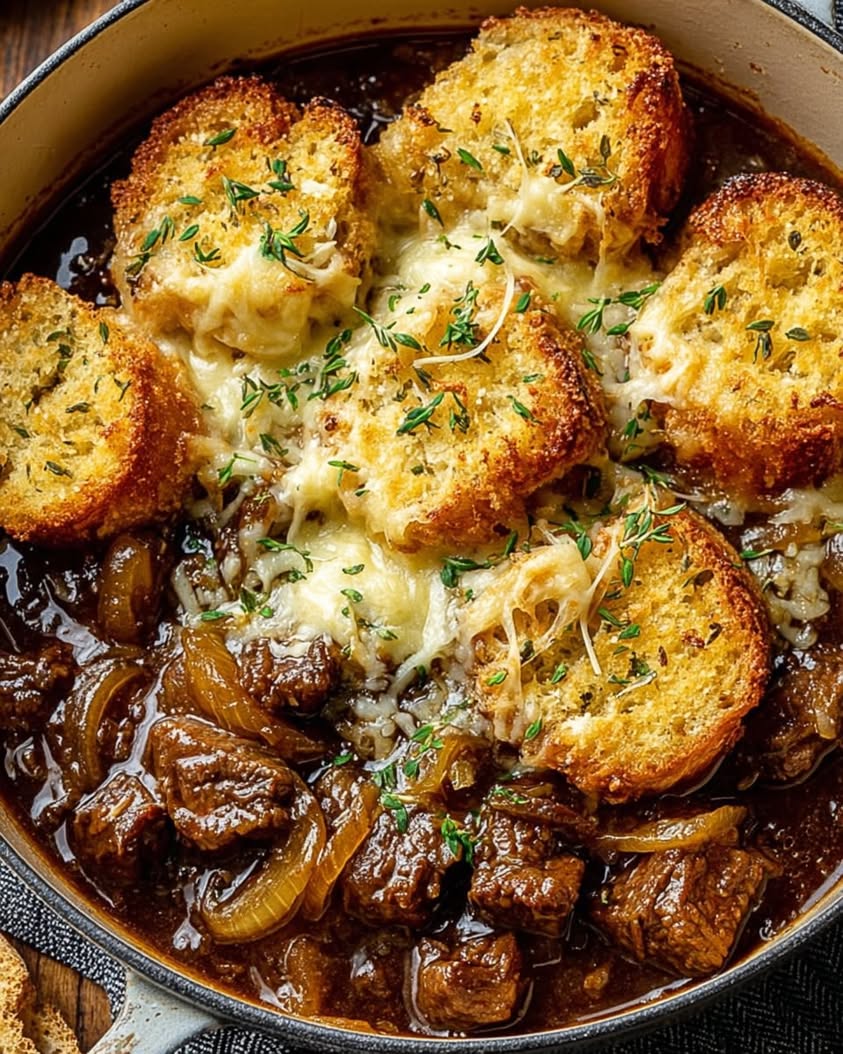
- Visual Appeal: The final dish is a stunning, rustic presentation. The deep mahogany-colored stew contrasts beautifully with the golden-brown cheesy bread topping. When you break through the crust, you reveal a steamy, rich interior that is both inviting and impressive.
- Skill Level Needed: This recipe is beginner-friendly despite its long cooking time. The techniques involved are basic, such as chopping vegetables, browning meat, and caramelizing onions. The most challenging part is simply waiting for the flavors to develop, making it an excellent recipe for building confidence in the kitchen.
- Special Equipment: You will need a large, heavy-bottomed pot such as a Dutch oven for even heat distribution. An oven-safe dish or pot is necessary for the final step of broiling the cheesy bread topping. A sharp knife and a wooden spoon are also essential tools for this recipe.
Recipe Overview
- Difficulty Level: We categorize this French Onion Beef Stew with Cheesy Bread Topping as a medium difficulty because of the preparation time and the multi-step process. The actual techniques are simple, but the waiting times for caramelizing and braising require a bit of planning. You do not need any advanced culinary skills, just a little bit of patience and a good understanding of searing and simmering.
- Category: This dish falls under the categories of stew, comfort food, and one-pot meals. It also perfectly fits into a French-inspired main course. It is hearty enough to be a standalone dinner, which makes it a versatile option for any home cook seeking a satisfying and complete meal without multiple side dishes.
- Cuisine: The foundation of this recipe is deeply rooted in classic French culinary tradition, borrowing the flavors and techniques from the iconic French onion soup. We then combine this with the robust, slow-cooked method of an American beef stew. The result is a unique fusion that respects its European origins while appealing to the American palate for hearty, filling meals.
- Cost: The ingredients for this dish are very affordable, making it an excellent budget-friendly meal. Beef chuck, onions, and carrots are all inexpensive staples. The most expensive ingredient is typically the Gruyère cheese, but you can substitute it with other melting cheeses like Provolone or Mozzarella to keep the cost even lower. A little can go a long way with this homemade recipe.
- Season: This stew is perfect for the fall and winter months when the weather turns cold and hearty, warming meals are essential. The deep, rich flavors are especially comforting on a rainy or snowy evening. However, the caramelized onions and savory broth can be enjoyed any time of year when you crave a deeply satisfying and slow-cooked meal.
- Occasion: This impressive dish is ideal for special occasions like Sunday family dinners, holiday parties, or cozy gatherings with friends. It is a fantastic choice for a cold-weather get-together where you want to serve something memorable. It also makes an excellent, celebratory meal for a quiet night in, proving that you do not need a special day to enjoy the best food.
Why You Will Love This Recipe
The taste and texture combination in this stew is an absolute triumph. The savory depth of the beef broth blends seamlessly with the sweet, jammy onions, creating a foundation that is both rich and complex. The tender beef practically melts in your mouth, while the cheesy bread topping adds a satisfying crunch and gooeyness that elevates the entire dish. Every spoonful is a journey through layers of flavor, from the earthy herbs to the nutty, melted Gruyère. You will love how each component complements the others, creating a harmonious and comforting meal that feels both rustic and luxurious.
From a convenience standpoint, this recipe is surprisingly hands-off for such a complex result. After the initial preparation and browning, the stew mostly cooks unattended on the stove. This gives you plenty of time to prepare a salad, set the table, or simply relax while the flavors meld together. The entire process uses just one main pot, which simplifies cleanup significantly. You can also make the stew base a day ahead of time when you store it in the refrigerator, which makes the final assembly incredibly easy the day you plan to serve it.
Nutritionally, this stew is a powerhouse of protein and essential nutrients. The beef chuck provides high-quality protein, iron, and zinc, which are vital for energy and immune function. The carrots and onions add vitamins and antioxidants that contribute to a balanced meal. By controlling the ingredients at home, you avoid all the hidden preservatives and excess sodium often found in canned stews or restaurant versions. This makes it a healthier alternative that nourishes your body while satisfying your cravings for something hearty and indulgent.
The social and entertaining value of this dish cannot be overstated. When you bring a bubbling pot of this stew to the table, you create a sense of occasion. The act of breaking through the cheesy bread topping is a shared experience that brings people together. It is a conversation starter, a dish that prompts comments and compliments. Whether you are hosting a casual dinner for friends or a family holiday, this stew elevates the meal and makes everyone feel special. It is the kind of food that creates lasting memories around the table.
Finally, this recipe is incredibly cost-effective and accessible. The ingredients are readily available at any grocery store, and the beef chuck is one of the more affordable cuts of meat. By cooking at home, you save a significant amount of money compared to ordering a similar dish at a restaurant. Plus, this recipe yields generous portions that provide excellent leftovers for lunch the next day. The flavors actually deepen overnight, so the leftover stew tastes even better. You get maximum value for minimal expense, which is a winning combination for any home cook.
Historical Background and Cultural Significance
The culinary origins of this dish come from a beautiful marriage of two classic comfort foods. Its roots lie squarely in the French bistro, specifically with the iconic French onion soup, or “soupe à l’oignon,” which has been a staple in Parisian cuisine for centuries. This soup was traditionally considered a peasant food, made from humble ingredients like onions, stale bread, and broth. The addition of melted cheese on top was a later innovation that elevated it to the status of a beloved classic. It represents the French culinary philosophy of transforming simple components into something sublime through patient cooking.
The cultural importance of this dish in American home cooking is significant. It represents a bridge between the refined techniques of European gastronomy and the hearty, filling nature of American comfort food. Over time, home cooks began adapting the flavors of French onion soup into more substantial meals, such as pot roasts and stews. This French Onion Beef Stew with Cheesy Bread Topping is a direct result of that evolution, combining the quintessential flavors of the soup with the satisfying protein of a classic beef stew. It reflects a tradition of culinary innovation and adaptation that is at the very heart of American cooking.
The evolution of this specific recipe has been driven by the desire for convenience without sacrificing flavor. In the past, making a dish like this would require hours of careful tending over a wood-burning stove. Today, we use standard kitchen equipment and clear instructions to achieve the same results. The use of pre-sliced gruyère or a simple baguette has made the process more accessible. Over the past few decades, the internet has enabled home cooks to share this recipe variation globally, leading to countless personal touches and adaptations that continue to refine and perfect it.
Regional variations of this stew can be found across the United States and Europe. In the Midwest, you might find a version that uses a darker beer instead of sherry, adding a slightly bitter and malty note. In the Pacific Northwest, cooks sometimes add a splash of red wine from local vineyards. In France itself, the traditional soupe à l’oignon remains the gold standard, but chefs often add a poached egg or a dash of Cognac for richness. These variations highlight the recipe’s incredible flexibility, allowing it to be adapted to local tastes and available ingredients while maintaining its core identity.
Ingredient Deep Dive
Onions are the undisputed star of this dish, and their cultural significance dates back thousands of years. They were prized in ancient Egypt and Greece for their culinary and medicinal properties, believed to provide strength and vitality. Nutritionally, onions are rich in vitamin C, fiber, and powerful antioxidants, including quercetin, which has anti-inflammatory benefits. When selecting onions for your stew, choose yellow or Spanish onions for their ideal balance of sweetness and sharpness. They should feel firm with tight, papery skins. Store them in a cool, dark, and well-ventilated area for up to a month.
Beef chuck is the perfect cut for this stew because it contains a good amount of connective tissue and marbling. As it slowly braises, the collagen breaks down into gelatin, creating an incredibly tender texture and a rich, silky broth. This cut is also very affordable, making it a smart choice for budget-conscious cooking. When selecting beef chuck, look for pieces with nice marbling throughout, as this ensures the meat will stay moist and tender. You can store fresh beef in the refrigerator for a couple of days, or you can freeze it for up to three months in an airtight package.
Gruyère cheese is the traditional topping for this French Onion Beef Stew with Cheesy Bread Topping, and for good reason. This Swiss cheese is renowned for its excellent melting qualities and its nutty, slightly sweet, and salty flavor. It complements the savory stew beautifully without overpowering it. For the best results, buy a block of Gruyère and shred it yourself, as pre-shredded cheeses often contain anti-caking agents that prevent smooth melting. You can substitute Gruyère with Emmental, Comté, or even a low-moisture Mozzarella for a more economical option. Store any leftover cheese tightly wrapped in the refrigerator.
Dry sherry or a dry white wine adds an essential layer of acidity and complexity to the stew that brightens the rich flavors. The alcohol content burns off during the cooking process, leaving behind a subtle, fruity aroma that balances the savory broth. This ingredient is not just for flavor but also helps deglaze the pot, lifting all the browned bits from the bottom that are full of flavor. If you do not have sherry, you can substitute it with an equal amount of beef broth mixed with a teaspoon of apple cider vinegar. Always choose a dry variety, not a sweet cooking wine, for the most authentic taste.
Herbes de Provence or a simple blend of thyme and bay leaf provides the aromatic backbone for the stew. These herbs infuse the broth with an earthy, floral depth that is quintessentially French. Thyme is woody and slightly minty, while bay leaf adds a subtle tea-like bitterness that rounds out the richness. Fresh herbs are always preferable for the best flavor, though dried herbs work well in a pinch. You should add the dried herbs early in the cooking process to allow them to rehydrate and release their oils fully. Store fresh herbs in the refrigerator wrapped in a damp paper towel.
Common Mistakes to Avoid
- Rushing the caramelization process for the onions is a critical mistake. This step takes a full forty-five minutes to an hour, but it builds the entire flavor foundation of the stew. Cooking them on too high heat will burn them or make them bitter instead of sweet and jammy. You must be patient and stir them frequently over medium-low heat.
- Skipping the browning step for the beef is another common error. You want to develop a deep, dark crust on the meat before it goes into the pot. This browning creates a complex flavor that cannot be replicated by simply boiling the meat. Do not crowd the pot, or the meat will steam instead of sear.
- Using a lean cut of beef like sirloin or round steak will result in a dry, tough stew. These cuts lack the necessary fat and collagen to break down during a long braise. Always choose a tougher, more marbled cut like beef chuck or brisket for the best texture. The cheaper cuts are actually the best for this recipe.
- Overloading the pot with too much liquid is a frequent mistake that yields a watery, thin stew. The broth should just barely cover the beef and onions, not drown them. The stew will naturally thicken as it reduces during cooking. You can always add more liquid later if needed, but you cannot easily remove it.
- Forgetting to season the stew in layers is a simple but impactful mistake. You should add salt and pepper when you brown the meat, when you saute the vegetables, and again before serving. Seasoning each component ensures a well-rounded, deep flavor throughout the entire dish, not just on the surface.
- Pre-shredded cheese for the topping is a mistake that affects both texture and flavor. Pre-shredded cheese is coated with anti-caking agents like starch or cellulose, which prevents it from melting into a smooth, cohesive layer. Always shred your cheese from a block for a perfectly gooey and stretchy crust.
- Adding the bread before the stew is fully cooked can lead to a soggy, unappetizing texture. The bread should be added only for the final baking step so it stays crisp on top while absorbing just enough broth to become tender underneath. This texture contrast is a key part of the experience.
- Skipping the deglazing step is a missed opportunity for flavor. After browning the meat, you pour the sherry or wine into the hot pot and scrape up all the browned bits. These bits, called fond, are packed with concentrated flavor and color that enrich the entire broth. Do not let them go to waste.
- Using sweet cooking wine instead of dry sherry or wine will alter the flavor balance of the stew completely. Sweet wines can make the dish cloying and unpleasantly sugary. Always opt for a dry variety that adds acidity and complexity without extra sugar.
- Not letting the stew rest after cooking is a minor but important oversight. Letting the stew sit for ten or fifteen minutes off the heat allows the flavors to meld and the meat to reabsorb some of the juices. This results in a more cohesive and flavorful dish when you serve it.
Essential Techniques
Mastering the caramelization of onions is the most crucial technique for this recipe. This process is not simply about cooking the onions until they are soft; it is about slowly drawing out their natural sugars until they turn a deep amber brown and become incredibly sweet and jammy. To accomplish this, you must cook them over medium-low heat with a generous amount of butter or oil and a pinch of salt. The salt helps draw out the moisture. Stir them every five to ten minutes to prevent them from sticking or burning. You know they are done when they are a rich, dark caramel color and have reduced to about a quarter of their original volume.
Properly browning the beef is another essential technique that sets the foundation for the stews deep flavor. The goal is to create a thick, flavorful crust on every side of the meat cubes using the Maillard reaction. To do this, pat the beef cubes completely dry with paper towels before seasoning, as moisture will prevent browning. Heat your pot over medium-high heat and add a thin layer of oil. Add the beef in a single layer without overcrowding. Let the meat sear undisturbed for several minutes until it easily releases from the pan, then flip it to sear the other sides. The pot will be covered in delicious browned bits.
Deglazing is the simple but vital step that incorporates those browned bits into your broth. Immediately after removing the seared beef, you pour the sherry or wine into the hot pot. Use a wooden spoon or spatula to scrape all the brown spots from the bottom of the pot, dissolving them into the liquid. This technique is what adds incredible depth of color and a savory, roasted flavor to the stew base. Once the liquid has reduced by half, you proceed with adding the beef broth and other ingredients, ensuring none of that valuable flavor is lost. It makes the difference between a good stew and a great one.
Braising is the slow, moist heat cooking method that transforms a tough cut of beef into fork-tender perfection. After you add all the liquid, you bring the stew to a gentle simmer, not a rolling boil. A boil will cause the meat to become tough and the broth to reduce too quickly. Cover the pot and place it in a low oven or keep it on the stove over very low heat. The ideal temperature is around 300 degrees Fahrenheit. You know the beef is done when it shreds easily with a fork and the broth has thickened slightly. This gentle cooking allows the connective tissue to break down fully.
Broiling the cheesy bread topping is the final technique that creates the signature crust. Once the stew is fully cooked, you must transfer it to a broiler-safe baking dish if your pot is not oven-safe. Top the stew with slices of baguette or crusty bread and then cover them with the shredded Gruyère cheese. Place the dish under a preheated broiler on high heat. Watch it very closely, as cheese can burn quickly. The goal is to achieve a bubbly, golden-brown crust with some dark spots. This usually takes only two to four minutes, and it creates the irresistible, crowning glory of the dish.
Pro Tips for Perfect French Onion Beef Stew
To achieve the most flavorful broth, try using a high-quality, low-sodium beef broth. This allows you to control the salt level yourself. A good broth provides a richer, deeper foundation than water or a cheap, watery stock. You can even make your own bone broth for an unparalleled depth of flavor.
For the most tender beef, do not skip the step of letting the stew cool slightly before serving. After you remove it from the oven, let it rest for at least fifteen minutes off the heat. This allows the meat fibers to relax and reabsorb some of the flavorful broth, making it even more tender and juicy.
If your stew is not thick enough for your liking, make a quick slurry. Mix a tablespoon of cornstarch with two tablespoons of cold water until smooth. Stir this paste into the simmering stew and cook for another minute or two until it thickens. This is a simple fix that avoids any lumps and perfectly adjusts the consistency.
Do not be afraid to experiment with different herbs for a unique flavor profile. Adding a sprig of fresh rosemary along with the thyme can introduce a wonderful piney aroma. A pinch of dried marjoram or a couple of fresh sage leaves can also add an earthy complexity that complements the beef beautifully.
For an extra layer of richness, add a tablespoon of butter to the stew right before serving. Stirring in a cold pat of butter, called “monter au beurre,” adds a glossy sheen and a velvety smooth mouthfeel. This technique is a classic French finishing touch that elevates the entire dish to a new level of decadence.
Always taste and adjust the seasoning right before you add the cheesy bread topping. As the stew reduces and flavors meld, the saltiness can concentrate. You might need to add a pinch more salt or a dash of black pepper to bring all the flavors into perfect balance. This final check ensures a perfectly seasoned stew.
Variations and Adaptations
Regional variations of this stew often involve swapping the dry sherry for a local beer. In many parts of the United States, a dark stout or porter adds a deeply roasted, slightly bitter flavor that pairs wonderfully with the beef and caramelized onions. The beer replaces some of the beef broth, intensifying the overall richness. This adaptation creates a heartier, more robust stew that is especially popular in colder climates. It is a fantastic way to personalize the dish with a local favorite.
Seasonal adaptations can easily incorporate fresh produce from your local market. During the fall, adding diced butternut squash or sweet potatoes provides a lovely sweetness and creamy texture that complements the savory broth. In the spring, you can stir in fresh peas or asparagus tips during the last ten minutes of cooking for a burst of color and freshness. These additions make the stew a versatile choice for any time of year, celebrating the best of each season.
Dietary modifications can make this stew accessible to many more people. To make it gluten-free, ensure your beef broth is certified gluten-free and skip the bread topping. Instead, you can top the stew with a gluten-free biscuit or a layer of mashed potatoes and cheese before broiling. You can also thicken the stew with a slurry of cornstarch and water, which is naturally gluten-free, instead of using a flour-based roux.
Flavor variations can completely transform the character of this dish. For a smoky, southwestern twist, replace the dry sherry with a dark beer and add a teaspoon of smoked paprika and a pinch of chipotle powder to the broth. For a more herby, Provencal version, use a generous amount of herbes de Provence and serve it with a dollop of pesto on top. These small changes create entirely new culinary experiences from the same base recipe.
Texture modifications can cater to different preferences. If you prefer a chunky stew, cut the carrots and onions into larger, more substantial pieces. For a smoother, almost rustic consistency, you can mash half of the softened onions against the side of the pot before adding the broth. You can also remove the beef and shred it before returning it to the pot for a uniform, pull-apart texture throughout the stew.
Presentation alternatives can make this stew feel even more special. Instead of arranging the bread in a single layer on top, you can arrange individual croutons on top of each serving bowl. You can also serve the stew in individual oven-safe ramekins and top each one with a single slice of bread and a generous portion of cheese. This makes for an elegant, individually portioned dish that is perfect for a dinner party.
Serving and Presentation Guide
Plating this stew is all about showcasing its beautiful layers. If you are serving it from a large pot, bring the whole pot to the table for a rustic, family-style presentation. The sight of the bubbling, cheesy crust is very impressive. Use a large, shallow bowl for each serving to allow the stew to spread out a little. This also highlights the contrast between the dark broth, the tender beef, and the golden topping.
Garnishing ideas can enhance both the flavor and the visual appeal of your dish. A sprinkle of fresh, chopped parsley or chives adds a pop of bright green color and a fresh, herbaceous note that cuts through the richness. You can also drizzle a tiny bit of truffle oil over the top for an earthy, luxurious aroma. A few cracks of fresh black pepper right before serving also add a final touch of flavor and texture.
Traditional accompaniments for this stew are simple and complementary. A crisp green salad with a tangy vinaigrette is the perfect side dish, as its acidity will balance the richness of the stew. Crusty bread is also ideal for soaking up any leftover broth. You might also serve it with roasted vegetables like green beans or asparagus for a complete and balanced meal.
Modern serving suggestions can make this a very casual or a very fancy affair. For a casual weeknight dinner, serve it in deep soup bowls with a spoon and a fork. For a sophisticated dinner party, you can present the stew in elegant, individual cast-iron cocottes. The presentation should always match the occasion and the company you are keeping.
Temperature considerations are crucial for the best eating experience. This stew is best served piping hot from the oven. The broth should be steaming, and the cheese topping should be incredibly hot and melted. If you let it sit too long after pulling it from the oven, the cheese will cool and lose its gooeyness. Serve it immediately for the most dramatic and delicious effect.
Portion control tips are helpful for serving a group. A generous serving for a main course is about one and a half cups of the stew and one large slice of the cheesy bread. If you are serving it as a starter, you can use smaller bowls and offer half a slice of bread. This guarantees everyone gets a perfect balance of stew and topping.
Wine and Beverage Pairing
A classic wine pairing for this French Onion Beef Stew with Cheesy Bread Topping is a medium-bodied red wine from France. A Côtes du Rhône or a Cru Beaujolais is an excellent choice, as its fruity and earthy notes complement the savory broth without overwhelming it. The wine’s acidity also helps to cut through the richness of the cheese and beef. A good glass of red is the traditional and perfect companion for this dish.
Non-alcoholic alternatives are just as delicious and satisfying. A rich, full-bodied black tea, such as an English Breakfast or an Earl Grey, provides a similar complexity and warmth. Sparkling water with a splash of cranberry or pomegranate juice offers a refreshing, slightly tart contrast. For a cozy option, a warm mug of apple cider complements the sweet caramelized onions beautifully.
A dark, malty beer is also a fantastic alternative to wine. A brown ale, a dubbel, or a stout can stand up to the intense flavors of the stew. The roasted malt notes in these beers echo the caramelized flavors in the broth and cheese. This pairing is especially popular in cooler months and offers a satisfying, straightforward complement to the meal.
Temperature considerations are key for both the stew and the beverage. The stew should be served steaming hot, while red wine is best served slightly below room temperature. White wine can be served chilled, and beer can be served cool. The contrast between the hot food and the cool beverage is very pleasing, but do not serve the beverage too cold or it will mask the delicate flavors of the dish.
Serving suggestions for your chosen beverage are simple. Pour the wine or beer into the appropriate glass just before serving. For a non-alcoholic option, present it in a nice glass with ice or a slice of citrus. The beverage should be an enhancement to the meal, so offer it before and during the serving of the stew to help cleanse the palate between rich bites.
Storage and Shelf Life
Proper storage methods are essential to keep your leftover stew tasting fresh. Allow the stew to cool completely to room temperature before storing it. You should never put hot food directly into the refrigerator, as it can raise the internal temperature and spoil other foods. Once cooled, transfer the stew to airtight containers. You can also store it in the same Dutch oven if it has a tight-fitting lid.
Temperature requirements are very important for food safety. Store the leftover stew in the refrigerator at a temperature of 40 degrees Fahrenheit or below. The stew will remain fresh and flavorful for up to four days when stored properly. For longer storage, the stew freezes very well, maintaining its quality for up to three months.
Container recommendations can help you maintain the stews quality. Use containers that are specifically designed for food storage and that are airtight. Glass containers are a great choice because they do not absorb odors or stains. Plastic containers work well, but make sure they are BPA-free. You can also use heavy-duty freezer bags for a space-saving storage option.
Signs of spoilage are important to recognize. If the stew develops an off smell, a sour taste, or any visible mold on the surface, you should discard it immediately. You should also look for any slimy texture on the meat or a change in the broth’s color. If you are ever in doubt about the safety of the leftovers, it is always better to throw them away.
Reheating instructions are simple but require a gentle touch. The best way to reheat the stew is on the stovetop over medium-low heat. Add a splash of beef broth or water to loosen the sauce if it has thickened too much in the refrigerator. You can also reheat it in the oven at 300 degrees Fahrenheit for about fifteen to twenty minutes. The microwave works in a pinch, but it can make the meat tough.
Freezing guidelines are straightforward for this dish. The stew freezes exceptionally well, making it a great candidate for meal prep. To freeze it, pour the cooled stew into freezer-safe containers, leaving an inch of headspace to allow for expansion. You can freeze it for up to three months. Thaw it in the refrigerator overnight before reheating it. The cheesy bread topping should be added fresh after thawing.
Make Ahead Strategies
A prep timeline can make serving this stew on a busy day very manageable. You can prepare the stew base completely up to three days in advance. Simply follow the recipe through the braising step, then cool and refrigerate the stew. On the day you plan to serve it, you only need to reheat the stew, add the bread and cheese, and broil it until golden.
Storage between steps involves proper cooling and covering. After you finish the braising step, let the stew cool for about thirty minutes at room temperature. Then, cover the pot with its lid or transfer the stew to a large container and place it in the refrigerator. The flavors will meld and deepen during this time, making the stew even more delicious.
Quality impact assessment shows that this stew actually improves when made ahead of time. The extended resting period allows the flavors to meld together more completely. The beef also becomes even more tender as it sits in its own juices. This is a rare case where make-ahead preparation yields a superior final dish compared to serving it immediately.
Assembly tips are important when you are ready to finish the dish. When you reheat the stew, do so gently over low heat until it is simmering. While it is heating, prepare your bread slices and shred your cheese. Once the stew is hot, ladle it into your oven-safe serving dish, then arrange the bread and cheese on top. This final assembly takes only a few minutes.
Reheating guidelines are crucial for the best texture. Always reheat the stew base until it is bubbling hot before you add the topping. This ensures the stew is thoroughly heated and the bread will have time to soak up some of the broth during the short broiling time. If the stew is cold when you add the bread, the center might stay cold in the oven.
Fresh element additions are best done right before serving. The cheesy bread topping should always be added fresh. You should also add any fresh herbs or a final squeeze of lemon juice at the last minute to preserve their vibrant flavor and color. This maintains the textural integrity of the topping and the freshness of the garnish.
Scaling Instructions
Halving the recipe is a straightforward task. Simply cut all the ingredient quantities in half. You should use a smaller pot, such as a 4-quart Dutch oven, to ensure the liquid properly covers the ingredients. The cooking times will be very similar, though the caramelization of half the onions might take a slightly shorter time. The stew will serve three people generously.
Doubling or tripling the recipe requires a large pot and Print
French Onion Beef Stew with Cheesy Bread Topping
- Total Time: 2 hours 50 minutes
- Yield: 4
Description
A hearty beef stew inspired by classic French onion soup, featuring caramelized onions, tender beef, and a crusty cheesy bread topping.
Ingredients
- 2 lbs beef chuck, cut into 1-inch cubes
- 3 tbsp olive oil, divided
- 4 large yellow onions, thinly sliced
- 3 cloves garlic, minced
- 2 tbsp all-purpose flour
- 4 cups beef broth
- 1 cup dry red wine (like Merlot or Cabernet Sauvignon)
- 2 sprigs fresh thyme
- 2 bay leaves
- 1 tsp salt
- ½ tsp black pepper
- 4 slices French bread or baguette, 1-inch thick
- 1 ½ cups shredded Gruyère or Swiss cheese
- 2 tbsp butter
Instructions
- In a large Dutch oven or heavy pot, heat 2 tbsp olive oil over medium-high heat. Working in batches, sear the beef cubes on all sides until browned (about 3-4 minutes per batch). Transfer to a plate and set aside.
- Reduce heat to medium. Add remaining 1 tbsp olive oil and the sliced onions. Cook, stirring occasionally, for 25–30 minutes, until the onions are deeply caramelized and golden brown. Add the garlic and cook for 1 more minute.
- Sprinkle the flour over the onions and stir for 1 minute. Slowly pour in the beef broth and red wine, scraping up any browned bits from the bottom of the pot.
- Return the beef to the pot along with any juices, and add the thyme sprigs, bay leaves, salt, and pepper. Bring to a boil, then reduce heat to low, cover, and simmer for 1 ½ to 2 hours, until the beef is tender. Remove and discard the thyme sprigs and bay leaves.
- Preheat the broiler. Spoon the stew into oven-safe bowls. Top each bowl with a slice of French bread and a generous sprinkle of shredded cheese (about ⅓ cup per bowl). Place bowls on a baking sheet and broil until the cheese is melted and bubbly, about 2–3 minutes. Serve hot.
- Optional: For extra richness, stir 2 tbsp butter into the stew just before serving, but not necessary.
Notes
You can customize the seasonings to taste. For a deeper flavor, use a dry sherry or Marsala instead of red wine. For a lighter version, use a good quality store-bought beef broth.
- Prep Time: 20 minutes
- Cook Time: 2 hours 30 minutes
- Method: Main
- Cuisine: American