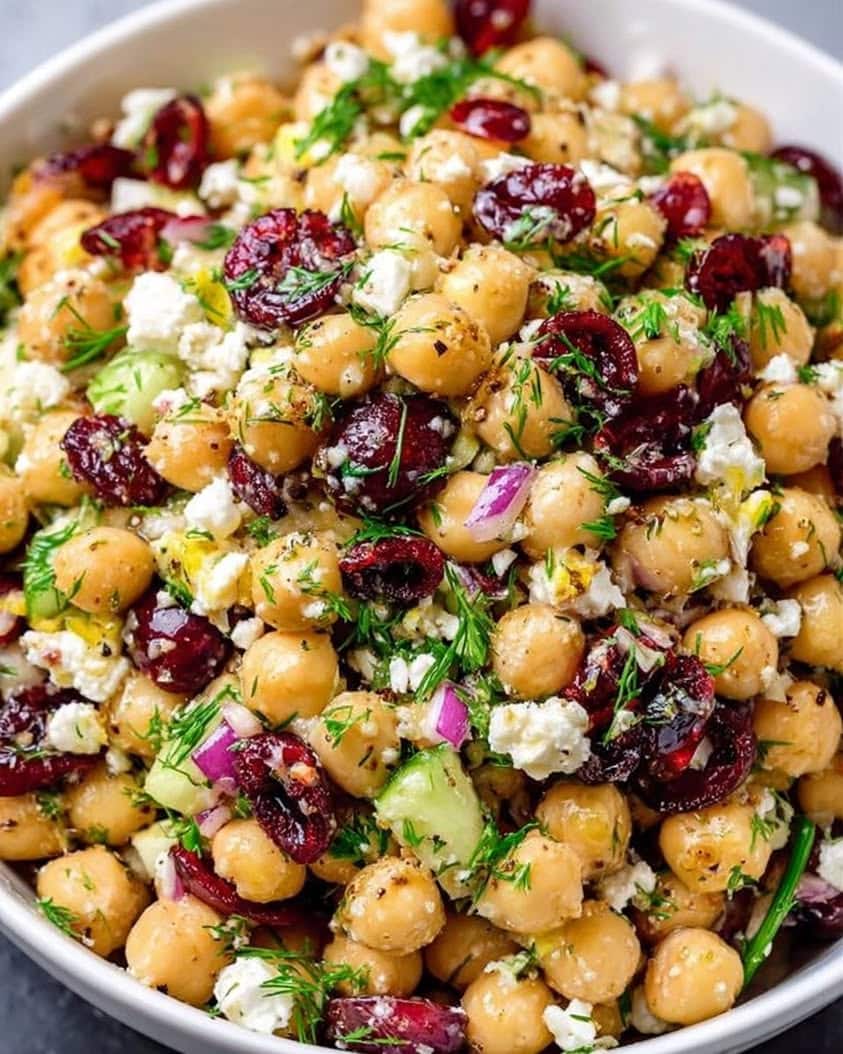
Bright Feta and Cranberry Chickpea Salad with Lemon Vinaigrette: A Flavor-Packed Power Bowl
This vibrant Feta and Cranberry Chickpea Salad with Lemon Vinaigrette is a true celebration of fresh, bold flavors. It combines creamy, salty feta with sweet-tart dried cranberries and hearty chickpeas, all tossed in a zesty, herb-flecked lemon vinaigrette. Moreover, it’s a no-cook recipe that comes together in minutes, making it the ultimate solution for busy weeknights, effortless meal prep, or a stunning potluck contribution. Ultimately, this salad delivers a perfect harmony of textures and tastes in every single bite.
Imagine a dish that is equally satisfying as a light lunch and impressive as a colorful side. This Feta and Cranberry Chickpea Salad with Lemon Vinaigrette achieves exactly that. The base of protein-rich chickpeas makes it substantial, while the pops of cranberry and cucumber provide a refreshing crunch. Additionally, the lemon vinaigrette acts as a bright, unifying agent, tying all the elements together with its tangy punch. Consequently, you get a meal that is nourishing, delicious, and incredibly versatile for any occasion.
Finally, this recipe is a canvas for your personal touch. You can easily adapt it based on what you have in your pantry or your dietary preferences. For instance, swap the herbs, add different vegetables, or use a different cheese. The core formula of the Feta and Cranberry Chickpea Salad with Lemon Vinaigrette remains brilliantly simple and consistently delicious. Therefore, it’s a recipe you’ll find yourself returning to again and again throughout the year.
Quick Recipe Highlights
- Flavor Profile: This salad masterfully balances salty, sweet, tangy, and fresh notes. The creamy, briny feta contrasts beautifully with the sugary chew of cranberries. Meanwhile, the lemon vinaigrette adds a necessary acidic brightness that lifts every other ingredient.
- Texture: You experience a wonderful medley of textures. Creamy chickpeas and feta meet the juicy crunch of cucumber and red onion. Furthermore, the dried cranberries offer a pleasant, chewy contrast that makes each forkful interesting.
- Aroma: The immediate scent is fresh and citrusy from the lemon zest and juice. Upon closer inspection, you’ll detect the earthy fragrance of chickpeas and the sharp, clean aroma of freshly chopped parsley and red onion.
- Visual Appeal: This salad is a feast for the eyes with its vibrant color palette. The white feta and red onion, green herbs, red cranberries, and pale chickpeas create a confetti-like appearance that is instantly inviting and perfect for social media.
- Skill Level Needed: Absolutely beginner-friendly. This recipe requires no cooking, just simple chopping, mixing, and whisking. Essentially, if you can use a knife and a bowl, you can make this impressive Feta and Cranberry Chickpea Salad with Lemon Vinaigrette.
- Special Equipment: None required. A good chef’s knife and cutting board for prepping vegetables are the main tools. You will also need a mixing bowl and a small jar or bowl for whisking the simple lemon vinaigrette dressing.
Recipe Overview
- Difficulty Level: We rate this recipe as “Easy” because it involves zero cooking techniques. The steps are purely assembly-based: chopping vegetables, crumbling cheese, and whisking a straightforward dressing. Anyone, regardless of kitchen experience, can achieve perfect results with minimal effort and time investment.
- Category: This dish is wonderfully multi-category. It functions perfectly as a hearty main course salad, a substantial side dish for grilled meats, or a flavorful picnic and potluck offering. Its flexibility is one of its greatest strengths for weekly meal planning.
- Cuisine: While not tied to one specific tradition, this salad draws inspiration from Mediterranean and Middle Eastern culinary principles. It emphasizes fresh vegetables, legumes, fresh herbs, and simple, citrus-based dressings—hallmarks of those healthy, flavor-forward cuisines.
- Cost: This is an extremely budget-friendly recipe. Canned chickpeas, block feta, and dried cranberries are pantry staples with a long shelf life. Fresh herbs, lemon, and cucumber are inexpensive, especially when in season. Overall, you can make a large, satisfying batch for just a few dollars.
- Season: Truly a year-round champion. It’s light and refreshing for spring and summer picnics. Conversely, its hearty chickpea base and bright flavors can combat the heaviness of winter meals. It’s particularly festive during the fall and winter holidays thanks to the cranberries.
- Occasion: Ideal for quick weekday lunches, healthy meal prep, last-minute dinner sides, and elegant entertaining. Its make-ahead nature and stunning presentation make it a stress-free choice for hosting, from casual barbecues to more formal holiday gatherings.
Why You’ll Love This Recipe
First and foremost, the taste and texture of this Feta and Cranberry Chickpea Salad with Lemon Vinaigrette are utterly addictive. Each component plays a specific role. The chickpeas provide a creamy, substantial base. The feta adds a salty punch. Simultaneously, the cranberries deliver sweet bursts that counteract the saltiness. The cucumber and red onion contribute a crucial, refreshing crunch. Finally, the lemon vinaigrette wraps everything in a tangy, herbaceous cloak that makes the flavors sing together in perfect harmony. You will find it impossible to stop at just one serving.
From a convenience standpoint, this recipe is a lifesaver. It requires no cooking, which means no heating up the kitchen. You can literally assemble it in fifteen minutes flat. Furthermore, it actually tastes better after sitting for a while, as the flavors have time to meld. This makes it the ultimate make-ahead dish for meal prep. Simply store it in the fridge and enjoy ready-to-eat, flavorful lunches all week long with zero additional daily effort.
Nutritionally, this salad is a powerhouse. Chickpeas are an excellent source of plant-based protein and fiber, promoting satiety and digestive health. Feta provides calcium and protein, while the vegetables and lemon juice offer a dose of vitamins and antioxidants. Using olive oil in the vinaigrette contributes heart-healthy monounsaturated fats. Consequently, this dish is not just delicious; it’s a genuinely nourishing choice that fuels your body with quality ingredients.
For social and entertaining value, this salad is a guaranteed crowd-pleaser. Its vibrant colors make it visually stunning on a buffet table. It caters to various dietary preferences, being vegetarian and easily adaptable to vegan or gluten-free needs. Because it can be made in large batches ahead of time, it removes last-minute stress for the host. Your guests will consistently ask for the recipe after trying this bright and flavorful combination.
Finally, its cost-effectiveness and accessibility are major wins. The ingredients are common, affordable, and available at any standard grocery store. You likely have many of them in your pantry right now. There’s no need for expensive, hard-to-find specialty items. This Feta and Cranberry Chickpea Salad with Lemon Vinaigrette proves that eating well doesn’t require a complicated recipe or a hefty grocery bill. It’s accessible, delicious, and smart cooking at its finest.
Historical Background and Cultural Significance
The origin of this specific recipe is modern, born from the contemporary desire for fast, healthy, and globally-inspired meals. However, its individual components have deep and ancient roots. Chickpeas, for instance, are one of the earliest cultivated legumes, with evidence of their use in the Middle East dating back over 7,000 years. They were a staple in ancient Roman, Greek, and Egyptian diets. The practice of combining legumes with herbs, cheese, and a sharp dressing echoes the culinary traditions of the Eastern Mediterranean, where such salads are a fundamental part of the daily table.
Culturally, feta cheese is protected under European law as a product with a designated origin from Greece. Its briny, tangy character has defined Greek salads for centuries. The incorporation of sweet dried fruit, like cranberries, with salty cheese is a flavor pairing seen in various cuisines, from the American Thanksgiving table to Middle Eastern dishes that use apricots or raisins. This recipe, therefore, represents a beautiful fusion of Old World pantry staples with New World ingredients and modern convenience.
The evolution of this recipe follows the trend of “bowl food” and meal-prep culture that gained massive popularity in the 21st century. As people sought balanced, portable, and Instagram-worthy meals, recipes combining a protein base (chickpeas), fresh veggies, a cheese, and a vibrant dressing became ubiquitous. The Feta and Cranberry Chickpea Salad with Lemon Vinaigrette is a perfect example of this evolution—taking timeless ingredients and presenting them in a format that fits today’s lifestyle needs for speed, nutrition, and visual appeal.
Regional variations of this concept are endless. In Greece, you might find a similar salad with chickpeas, red onion, and parsley, but using olives instead of cranberries. In the American South, a black-eyed pea salad might feature a similar role. The use of cranberries nods to North American traditions. This adaptability is key to the recipe’s widespread appeal. Cooks around the world can localize it by swapping in regional cheeses, local dried fruits, or seasonal herbs, making it a truly global citizen in the world of salads.
Ingredient Deep Dive
Chickpeas (Garbanzo Beans): These humble legumes are nutritional champions. They are packed with plant-based protein and fiber, which help regulate blood sugar and promote gut health. Historically, they are a cornerstone of Mediterranean and Middle Eastern diets. For the best texture in your Feta and Cranberry Chickpea Salad with Lemon Vinaigrette, rinse canned chickpeas thoroughly to remove the starchy liquid. If you have time, gently pat them dry with a towel to help the dressing cling better. For a substitute, try canned white beans or lentils.
Feta Cheese: Authentic Greek feta is made from at least 70% sheep’s milk, often blended with goat’s milk, giving it a tangy, crumbly texture. It’s a good source of calcium and probiotics. For the best flavor, buy a block of feta in brine rather than pre-crumbled cheese, which often contains anti-caking agents and lacks moisture. Crumble it yourself just before adding to the salad. For a vegan version, a firm, brined tofu or a commercial vegan feta alternative works well.
Dried Cranberries: These are a modern, American twist. They provide essential sweetness and chewy texture. Opt for unsweetened or fruit-juice-sweetened varieties to avoid added sugars. Their tartness balances the saltiness of the feta perfectly. Historically, other cuisines might use raisins, chopped dried apricots, or barberries. Soaking them in hot water for 5 minutes before adding can plump them up beautifully if you prefer a juicier bite.
Lemon Vinaigrette: This simple dressing is the lifeblood of the salad. Fresh lemon juice is non-negotiable for its bright, clean acidity. Extra virgin olive oil forms the base, providing richness and healthy fats. Dijon mustard isn’t just for flavor; it acts as an emulsifier to help the oil and juice combine. Fresh herbs like parsley or dill add a layer of aromatic complexity. Always whisk the vinaigrette vigorously or shake it in a jar until fully emulsified before dressing the salad.
Common Mistakes to Avoid
- Using Pre-Crumbled Feta: Pre-crumbled feta is often drier and coated in powder to prevent clumping. This powder can make your salad dressing gritty and dull the cheese’s flavor. Always buy a block of feta in brine and crumble it yourself just before adding for maximum creaminess and taste.
- Not Rinsing the Chickpeas: Skipping the rinse leaves a starchy, sometimes metallic-tasting liquid from the can on the beans. This can muddy the flavor of your bright lemon vinaigrette and make the salad seem sludgy. Always drain and rinse canned chickpeas under cold water in a colander.
- Overlooking the Red Onion Soak: Raw red onion can be overpoweringly sharp. If you simply chop and toss it in, its pungency can dominate the other delicate flavors. Soaking the chopped onion in cold water for 10 minutes tames its bite while retaining its crunch and color perfectly.
- Underseasoning the Vinaigrette: A bland dressing makes a bland salad. The vinaigrette needs enough salt and pepper to season the entire bowl of ingredients. Always taste your dressing on a leaf of lettuce or a chickpea before committing. Remember, the feta is salty, so balance is key.
- Adding the Dressing Too Early: If you plan to make the salad hours ahead, add the dressing only 30 minutes before serving. Dressing it too far in advance can cause the cucumbers to weep and the herbs to wilt, resulting in a soggy, less vibrant final product.
- Using Bottled Lemon Juice: The flavor difference between fresh and bottled lemon juice is dramatic. Bottled juice often has preservatives and a flat, sometimes bitter taste. Freshly squeezed lemon juice is essential for the bright, clean acidity that defines this recipe’s character.
- Forgetting to Emulsify the Dressing: Simply dumping oil and lemon juice into the salad will not distribute flavor evenly. The oil will pool. You must whisk the vinaigrette ingredients vigorously or shake them in a sealed jar until the mixture is creamy and unified before tossing.
- Chopping Ingredients Inconsistently: Huge chunks of cucumber next to tiny crumbles of feta create an awkward eating experience. Aim for a uniform, bite-sized dice on all vegetables. This ensures every forkful gets a perfect balance of all the flavors and textures.
Essential Techniques
Emulsifying a Vinaigrette: This is the critical technique for a cohesive dressing. An emulsion is a stable mixture of two liquids that don’t normally combine, like oil and vinegar (or lemon juice). The key is to add the oil very slowly in a thin, steady stream while whisking constantly. The Dijon mustard acts as an emulsifier, its molecules helping to bind the oil and acid. If you add the oil too quickly, the dressing will “break” and separate. A perfectly emulsified vinaigrette will be slightly thickened and creamy, coating the back of a spoon.
Properly Draining and Drying Chickpeas: This step is about texture and dressing adhesion. After rinsing, spread the chickpeas on a clean kitchen towel or several layers of paper towels. Gently pat them dry. Removing excess water prevents the salad from becoming watery. Furthermore, a dry surface allows the vinaigrette to cling to each chickpea instead of sliding off, ensuring every bite is fully flavored. For an extra touch, you can roll them gently in the towel to loosen and remove the thin skins, which results in an even creamier texture.
Mincing Fresh Herbs: The goal is to release maximum flavor without bruising the herbs into a pulp. Gather your washed and dried parsley or dill into a tight bundle. Use a sharp chef’s knife to slice thinly across the bundle. Then, rock the knife back and forth over the pile until you achieve a fine mince. A sharp knife creates clean cuts; a dull one crushes the herbs, causing them to blacken and lose their vibrant flavor and color more quickly in the salad.
Pro Tips for Perfect Feta and Cranberry Chickpea Salad
For the ultimate flavor, let the dressed salad rest for at least 30 minutes before serving. This allows the chickpeas to absorb some of the lemon vinaigrette and the flavors to marry beautifully, resulting in a more cohesive and delicious dish.
Toast your chickpeas for a game-changing twist. Spread rinsed and dried chickpeas on a baking sheet, drizzle with a little oil and spices, and roast at 400°F for 15-20 minutes until slightly crispy. Let them cool before adding to the salad for an incredible depth of flavor and extra crunch.
Massage your kale if using it as a base. If you substitute or add hearty greens like kale, sprinkle them with a pinch of salt and a tiny bit of the lemon juice from your dressing. Then, use your hands to massage the leaves for 1-2 minutes until they darken in color and soften in texture, making them much more palatable.
Create layers of texture by adding a final crunch. Just before serving, sprinkle the top of the salad with something like toasted pine nuts, slivered almonds, or sunflower seeds. This preserves their crunch and adds a nutty flavor dimension that contrasts wonderfully with the creamy components.
Use the salad as a versatile filler. Don’t just eat it from a bowl. Stuff it into pita pockets, spoon it over a bed of mixed greens, or use it as a hearty topping for baked sweet potatoes. Its robust nature makes it perfect for transforming into multiple different meals.
Season in stages. Add a little salt and pepper to the chopped vegetables as you prep them. Then, season the vinaigrette well. Finally, taste the assembled salad and adjust seasoning once more after adding the salty feta. This layered approach ensures perfectly balanced seasoning throughout.
Variations and Adaptations
Regional Variations: Travel your taste buds by swapping ingredients. For a Greek-inspired version, replace cranberries with Kalamata olives and add chopped tomatoes and bell peppers. For a Middle Eastern flair, add a spoonful of za’atar to the dressing and use sumac instead of some lemon zest. An Italian take could include sun-dried tomatoes, fresh basil, and mozzarella pearls instead of feta.
Seasonal Adaptations: Make the most of fresh produce. In summer, add sweet corn kernels and fresh basil. For fall, incorporate roasted cubed butternut squash and swap parsley for sage. In spring, use fresh peas and mint. Winter versions can include roasted Brussels sprout halves or segments of citrus like orange or grapefruit for extra brightness.
Dietary Modifications: This salad is incredibly adaptable. For a vegan Feta and Cranberry Chickpea Salad, use a commercial vegan feta or marinated tofu cubes. To make it gluten-free, simply ensure all packaged ingredients like Dijon mustard are certified GF—it’s naturally gluten-free otherwise. For a lower-carb option, reduce the amount of chickpeas and increase the volume of non-starchy vegetables like cucumber and bell peppers.
Flavor Variations: Change up the dressing profile entirely. Try a tahini-lemon dressing for creaminess, a maple-Dijon vinaigrette for sweetness, or a yogurt-herb dressing for tang. Swap the dried cranberries for chopped dried figs, apricots, or cherries. Use different herbs like mint, cilantro, or tarragon to completely change the aromatic profile of the dish.
Serving and Presentation Guide
Plating is key for visual impact. Instead of dumping the salad in a bowl, use a large, wide platter or shallow bowl. Spoon the salad into the center, then use the back of your spoon to gently create height and texture, allowing the colorful ingredients to peek through. Scatter a few extra herb leaves and a final sprinkle of feta and cranberries on top for a professional, finished look.
Garnishing adds the final touch. A light drizzle of high-quality extra virgin olive oil over the plated salad adds sheen. A few grinds of black pepper, a sprinkle of flaky sea salt, or a dusting of smoked paprika on the white feta creates contrast. Edible flowers or microgreens can elevate the salad for a special occasion.
Consider traditional accompaniments. This salad pairs wonderfully with warm, grilled pita bread or crusty baguette for scooping. For a full Mediterranean meal, serve it alongside grilled chicken skewers, lamb chops, or falafel. It also makes an excellent bed for a piece of simply grilled fish like salmon or cod.
Wine and Beverage Pairing
The bright acidity and salty-sweet flavors of this salad call for wines with good acidity and crispness. A Sauvignon Blanc or Pinot Grigio, with their citrus notes, are classic pairings that won’t clash with the lemon vinaigrette. A dry Rosé, especially from Provence, offers strawberry notes that complement the cranberries beautifully. For a red option, choose a light, chilled red like a Beaujolais or a Pinot Noir, which has enough acidity to stand up to the dish without overpowering it.
For non-alcoholic alternatives, sparkling water with a squeeze of lemon or lime is always refreshing. Iced herbal teas, like mint or hibiscus, work wonderfully. A ginger-based sparking drink can add a nice zing that plays off the salad’s flavors. Avoid overly sweet beverages, as they will compete with the natural sweetness of the cranberries and can make the salad taste less vibrant.
Storage and Shelf Life
Store the undressed salad components (except the feta) in an airtight container in the refrigerator for up to 3 days. Keep the dressing separate in a small jar. The feta is best stored separately in its brine or wrapped tightly to prevent drying out. Combine everything 30 minutes to an hour before serving for the best texture. The fully dressed salad will keep for 1-2 days, but the cucumber will soften and release water, so it’s best consumed fresh.
This salad does not freeze well due to the high water content in the fresh vegetables and the dairy-based cheese. Freezing will cause the ingredients to become mushy and the texture to break down completely upon thawing. For meal prep, the best strategy is to prep all ingredients and store them separately, then assemble individual portions daily or before eating.
Make Ahead Strategies
You can prep nearly every component 2-3 days in advance. Rinse and dry the chickpeas, chop the cucumber and red onion (store the onion in water in the fridge), and make the lemon vinaigrette. Store each in separate containers. Crumble the feta and store it in a small container, perhaps with a drizzle of olive oil to keep it moist. The day you plan to serve, drain the onion, combine all ingredients, toss with dressing, and let it marinate for 30 minutes. This strategy ensures maximum freshness and crunch.
Scaling Instructions
This recipe scales up or down linearly with ease. To halve it, simply divide all ingredient quantities by two. Use a slightly smaller bowl for mixing. To double or triple for a crowd, use a very large mixing bowl or a clean stockpot for tossing. When making a very large batch, consider dressing the salad in two stages to ensure even coating. The prep time will increase slightly with more chopping, but there are no special equipment or timing modifications needed beyond a larger vessel.
Nutritional Deep Dive
This salad is a balanced meal from a macronutrient perspective. The chickpeas provide complex carbohydrates and a significant amount of plant-based protein and fiber, which aids in blood sugar control and promotes long-lasting satiety. The olive oil and feta contribute healthy fats, including monounsaturated fats and some saturated fat. Micronutrient-wise, it’s rich in vitamin C from the lemon and herbs, calcium from the feta, and various antioxidants from the colorful vegetables and cranberries. It’s a heart-healthy, anti-inflammatory choice that supports overall wellness.
Dietary Adaptations
Vegan: Omit the feta cheese. Substitute with cubed, marinated extra-firm tofu or a commercial vegan feta alternative. For the marinade, use a little olive oil, lemon juice, salt, and nutritional yeast to mimic a cheesy, tangy flavor.
Dairy-Free: Follow the vegan adaptation above to remove the feta. Ensure all other ingredients are compliant. The rest of the salad is naturally dairy-free.
Gluten-Free: This recipe is naturally gluten-free. Simply double-check that your Dijon mustard is certified gluten-free, as some brands may use vinegar derived from gluten grains or have cross-contamination risks.
Low-Carb/Keto: Significantly reduce or omit the chickpeas, as they are higher in carbs. Increase the volume of low-carb vegetables like cucumber, bell peppers, and celery. Use only a small handful of cranberries or substitute with a few raspberries. Ensure the dressing uses a keto-friendly sweetener if any sweetness is desired.
Troubleshooting Guide
Salad is too watery: This is likely due to dressing the salad too far in advance or not drying the chickpeas and cucumbers well enough. For future batches, ensure ingredients are dry before combining and add dressing closer to serving. To salvage a watery salad, drain off the excess liquid from the bottom of the bowl and give it a fresh stir.
Flavor is bland: The culprit is almost always underseasoning. Remember to season the dressing aggressively, as it must flavor the entire volume of beans and vegetables. Add more salt and pepper to taste. A splash of extra lemon juice or a pinch of lemon zest can also wake up the flavors instantly.
Onion flavor is too strong: You forgot to soak the red onion. To fix it, quickly remove the onions from the salad and soak them in a bowl of cold water for 10 minutes. Drain and pat dry, then mix them back in. The sharp bite will be noticeably milder.
Recipe Success Stories
Readers consistently report that this Feta and Cranberry Chickpea Salad with Lemon Vinaigrette becomes a weekly staple. Many love its meal-prep versatility, packing it for work lunches that stay fresh and satisfying. Home cooks hosting parties share that it’s always one of the first dishes to disappear from the buffet, with guests asking for the recipe. Several have successfully adapted it for vegan family members using tofu “feta,” reporting that even the non-vegans in the house enjoy that version. The most common feedback is surprise at how such simple ingredients can create something so flavorful and addictive.
Frequently Asked Questions
Can I use fresh cranberries instead of dried? No, fresh cranberries are far too tart and hard to eat raw in this context. Dried cranberries provide the necessary chewy sweetness. If you must use fresh, you would need to cook them down with sugar first to make a relish, which is a different recipe entirely.
What can I use instead of feta cheese? Good alternatives include goat cheese crumbles, cubed halloumi (pan-fried first), ricotta salata, or for a vegan version, marinated tofu cubes or a store-bought vegan feta block.
How long does this salad last in the fridge? The undressed components last 3-4 days. The fully dressed salad is best eaten within 1-2 days, as the cucumber will soften and release water, making it less crisp.
Can I add quinoa or another grain? Absolutely. Adding 1-2 cups of cooked and cooled quinoa, farro, or couscous turns this from a side salad into an even heartier main course grain bowl. Adjust the dressing quantity slightly as the grains will absorb it.
Is this salad healthy? Yes, it is a nutrient-dense meal. It’s high in plant-based protein and fiber from the chickpeas, contains healthy fats from olive oil, and provides vitamins from fresh vegetables and lemon. It’s a balanced, wholesome choice.
Can I make it without onion? Of course. If you dislike red onion, simply omit it. You could add a subtle onion flavor with 1/2 teaspoon of onion powder in the dressing, or add extra crunch with more cucumber or some chopped celery.
My dressing separated after I made it. Is it ruined? Not at all. Vinaigrettes naturally separate when sitting. Just give it a vigorous shake or whisk again right before you pour it over the salad. It will re-emulsify perfectly.
Can I use a different type of bean? Yes. White beans (cannellini or great northern), black beans, or even lentils would work well. The flavor profile will shift slightly, but the concept remains the same: a bean-based salad with cheese, fruit, and a bright dressing.
What’s the best way to transport this salad to a potluck? Transport the undressed salad and the dressing in separate containers. Combine and toss at the potluck location about 30 minutes before serving. This keeps everything crisp and prevents sogginess during travel.
Can I use bottled lemon juice? We strongly recommend fresh lemon juice. Bottled juice has a processed, often metallic or flat taste that will significantly diminish the bright, clean flavor of your vinaigrette. Fresh is essential for the best results.
Additional Resources
If you love the flavors in this Feta and Cranberry Chickpea Salad with Lemon Vinaigrette, explore other Mediterranean-inspired dishes on the blog. Try our Lemon Herb Orzo Salad, our classic Greek Salad with homemade dressing, or our Roasted Vegetable and Quinoa Bowl. For more make-ahead lunch ideas, our Mason Jar Salad guide offers brilliant tips for layered salads that stay fresh. To master vinaigrettes, check out our foundational guide “The Simple Science of Salad Dressings,” which breaks down ratios and techniques for creating your own signature dressings.
PrintFeta and Cranberry Chickpea Salad with Lemon Vinaigrette
- Total Time: 25 minutes
- Yield: 4
Description
A vibrant and protein-packed salad featuring creamy chickpeas, tangy feta, sweet cranberries, and a zesty lemon vinaigrette, perfect for a light lunch or side dish.
Ingredients
- 2 cans (15 oz each) chickpeas, rinsed and drained
- 1 cup crumbled feta cheese
- 1/2 cup dried cranberries
- 1/4 cup chopped fresh parsley
- 1/4 cup extra virgin olive oil
- 3 tablespoons fresh lemon juice
- 1 teaspoon Dijon mustard
- 1 clove garlic, minced
- Salt and black pepper to taste
Instructions
- In a large bowl, combine the chickpeas, feta cheese, cranberries, and parsley.
- In a small bowl, whisk together the olive oil, lemon juice, Dijon mustard, minced garlic, salt, and pepper until well blended.
- Pour the lemon vinaigrette over the chickpea mixture and toss gently to coat all ingredients evenly.
- Let the salad sit for 10 minutes to allow flavors to meld before serving.
Notes
You can customize the seasonings to taste.
- Prep Time: 15 minutes
- Cook Time: 0 minutes
- Method: Side
- Cuisine: Mediterranean