Simple Feta Cranberry Chickpea Salad with Lemon Vinaigrette Recipe: A Burst of Fresh Mediterranean Flavor in Minutes
You know those days when you crave something light, yet deeply satisfying? That is exactly when this Simple Feta Cranberry Chickpea Salad with Lemon Vinaigrette Recipe comes to the rescue. It is a celebration of textures and bright flavors, combining creamy feta, chewy dried cranberries, and hearty chickpeas into a bowl of pure comfort. First, consider the crunch of fresh cucumbers against the softness of the chickpeas. Then, imagine the tangy lemon vinaigrette tying everything together with a zesty finish. This salad is not just food; it is an experience that feels both luxurious and effortless.
The beauty of this Simple Feta Cranberry Chickpea Salad with Lemon Vinaigrette Recipe lies in its simplicity. You do not need to turn on the oven or stand over a hot stove. Instead, you can assemble this vibrant dish in under fifteen minutes. It is perfect for busy weeknights, lazy weekend lunches, or even as a standout side dish at a summer barbecue. Moreover, the ingredients are incredibly forgiving. You can swap in whatever fresh herbs you have on hand or adjust the tanginess of the dressing to your liking. This recipe is a canvas for your culinary creativity.
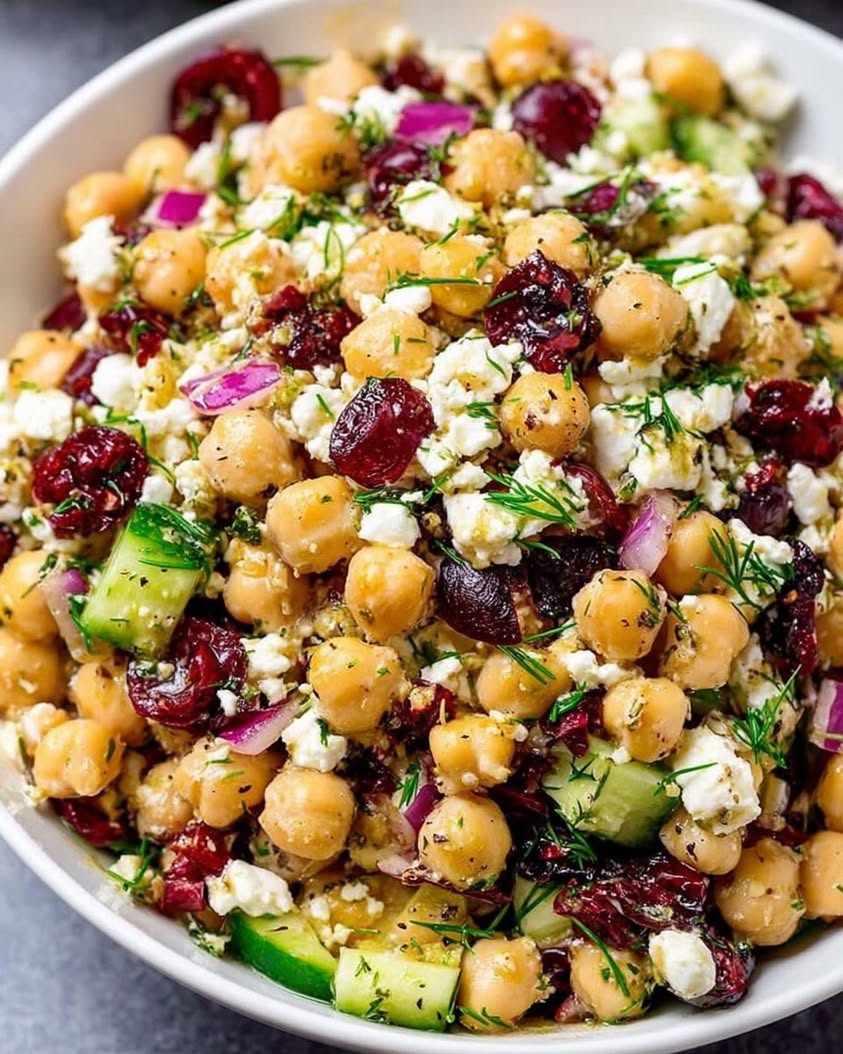
As you prepare this Simple Feta Cranberry Chickpea Salad with Lemon Vinaigrette Recipe, you will notice how the colors pop against each other. The deep green of parsley, the bright red of cranberries, and the pristine white of feta create a visual feast. The aroma is equally inviting, with fresh lemon zest and garlic mingling in the air. Every bite offers a new sensation, from the pop of cranberry sweetness to the salty crumble of feta. It is a dish that invites you to slow down and savor each mouthful. Without a doubt, this salad will become a staple in your meal rotation.
Quick Recipe Highlights
- Flavor Profile: This salad offers a perfect balance of salty, sweet, tangy, and savory notes. The creamy feta provides a rich saltiness, while the dried cranberries add bursts of sweetness. The lemon vinaigrette contributes a bright, acidic punch that wakes up your palate.
- Texture: You will experience a delightful contrast of textures in every bite. Chickpeas offer a tender, buttery bite, while cucumber and red onion provide a satisfying crunch. The feta crumbles melt slightly into the dressing, creating a creamy coating.
- Aroma: The key aromatic notes come from fresh lemon zest and juice, which give off a clean, citrusy scent. Minced garlic adds a pungent, earthy undertone. Fresh parsley brings a grassy, slightly peppery freshness to the overall bouquet.
- Visual Appeal: This salad is a visual stunner with its vibrant color palette. The deep green parsley, bright white feta, ruby red cranberries, and pale green cucumber create an appetizing mosaic. A final drizzle of vinaigrette adds a glossy sheen that makes the ingredients glisten.
- Skill Level Needed: This is a beginner-friendly recipe that requires no special cooking techniques. The most complex step involves whisking together a simple vinaigrette. Anyone with basic knife skills can prepare this dish with ease and confidence.
- Special Equipment: You will need a sharp chef’s knife for chopping vegetables and herbs. A medium mixing bowl is essential for combining the salad ingredients. A small jar or bowl with a whisk is necessary for emulsifying the lemon vinaigrette.
Recipe Overview
- Difficulty Level: We rate this recipe as Easy because it involves no cooking and uses straightforward assembly techniques. The ingredient list is short and familiar, making it accessible to novice cooks. You simply chop, mix, and drizzle. Consequently, this is an excellent recipe for building confidence in the kitchen.
- Category: This dish fits perfectly into multiple meal categories. It works beautifully as a light main course for lunch or a hearty side dish for dinner. You can also serve it as a satisfying appetizer or a portable picnic salad.
- Cuisine: While inspired by Mediterranean culinary traditions, this salad has a modern, global appeal. The combination of chickpeas and lemon dressing nods to Greek and Middle Eastern flavors. The addition of cranberries adds a touch of American flair, creating a fusion that is both familiar and innovative.
- Cost: The ingredients for this salad are remarkably budget-friendly. A can of chickpeas costs around one dollar, and a block of feta cheese is similarly affordable. Dried cranberries and fresh produce are inexpensive staples. Consequently, you can make this entire salad for under ten dollars, feeding four people generously.
- Season: This salad truly shines in the spring and summer months when you crave light, refreshing meals. The bright lemon flavor is particularly welcome on warm days. However, it is also a wonderful way to bring a taste of sunshine to your table during the colder winter months.
- Occasion: This salad is versatile enough for almost any occasion. It is perfect for potlucks, backyard barbecues, and casual family dinners. Its elegant presentation also makes it suitable for holiday brunches or as a refreshing side dish at a festive gathering.
Why You Will Love This Recipe
The first reason you will adore this Simple Feta Cranberry Chickpea Salad with Lemon Vinaigrette Recipe is its incredible taste and texture combination. Each element plays a specific role in creating a harmonious dish. The chickpeas serve as a hearty base that absorbs the zesty dressing beautifully. The dried cranberries provide little pockets of sweetness that surprise you with every bite. Meanwhile, the feta cheese adds a creamy, salty element that balances the acidity of the lemon. The fresh cucumber and red onion bring a refreshing crunch that prevents the salad from feeling heavy. As a result, this salad is both satisfying and light, leaving you feeling energized rather than sluggish.
Convenience is another major advantage of this Simple Feta Cranberry Chickpea Salad with Lemon Vinaigrette Recipe. You can have it on the table in just fifteen minutes, making it a lifesaver on busy days. There is no need to preheat an oven or wait for water to boil. Simply rinse the chickpeas, chop the vegetables, and whisk the dressing. Furthermore, this salad stores beautifully in the refrigerator. You can make it a day ahead and let the flavors meld together for an even more delicious result. This make-ahead capability makes it perfect for meal prep or entertaining guests without stress.
Nutritionally, this recipe is a powerhouse of health benefits. Chickpeas are packed with plant-based protein and fiber, which help keep you full and satisfied. Feta cheese provides calcium and protein, while fresh vegetables offer essential vitamins and antioxidants. The lemon vinaigrette is made with heart-healthy olive oil, which contains beneficial monounsaturated fats. Dried cranberries contribute a dose of antioxidants as well. Therefore, this salad supports digestion, heart health, and overall wellness. It is a guilt-free indulgence that nourishes your body from the inside out.
From a social perspective, this Simple Feta Cranberry Chickpea Salad with Lemon Vinaigrette Recipe is a crowd-pleaser. It appeals to a wide range of dietary preferences, including vegetarians and those following a gluten-free diet. Its bright colors and fresh flavors make it a showstopper on any buffet table. Guests will appreciate the thoughtful combination of ingredients and the homemade dressing. Moreover, you can easily double or triple the recipe for larger gatherings. It is the kind of dish that people ask for seconds of and request the recipe for, making it a true host’s secret weapon.
Finally, this recipe is incredibly cost-effective and accessible. You likely already have many of the ingredients in your pantry or refrigerator. Chickpeas, olive oil, and dried cranberries are affordable staples that store well. Fresh herbs and lemons are also low-cost additions. Therefore, you can create a restaurant-quality salad without breaking the bank. This accessibility means you can enjoy a healthy, delicious meal any day of the week. It proves that you do not need expensive ingredients or complicated techniques to eat well and feel great.
Historical Background and Cultural Significance
The origins of this Simple Feta Cranberry Chickpea Salad with Lemon Vinaigrette Recipe draw from several rich culinary traditions. Chickpeas have been a dietary staple in the Middle East and Mediterranean regions for thousands of years. Archaeological evidence suggests they were cultivated as early as 7500 BCE in Turkey and the Levant. Similarly, feta cheese has deep roots in Greece, where it has been produced for over 6,000 years. The combination of these two ingredients honors ancient foodways that have nourished civilizations for millennia. This salad is a modern interpretation of timeless pairings.
Culturally, this salad represents the beauty of fusion cuisine. The lemon vinaigrette is a classic Greek dressing base, while dried cranberries are a distinctly North American ingredient. Indigenous peoples in North America used cranberries for their medicinal properties and as a natural preservative. By combining these elements, this dish transcends geographic boundaries. It tells a story of how ingredients travel across oceans and adapt to new contexts. This recipe is a testament to the global exchange of food traditions that enriches our modern dinner tables.
The evolution of this Simple Feta Cranberry Chickpea Salad with Lemon Vinaigrette Recipe reflects changing attitudes toward healthy eating. In the past, salads were often simple side dishes of lettuce and dressing. Over time, home cooks and chefs began transforming them into hearty, main-course meals. The addition of protein-rich chickpeas and creamy feta elevates this salad beyond a mere accompaniment. Today, salads like this one represent a shift toward balanced, nutrient-dense eating that does not sacrifice flavor. They embody the principle that healthy food can be delicious and satisfying.
Regional variations of this salad abound across different cultures. In Greece, you might find a version with olives, tomatoes, and oregano instead of cranberries. Moroccan cuisine often features chickpeas with lemon and fresh herbs in a warm salad. In the United States, the addition of dried fruit like cranberries or cherries is a common adaptation. Some versions include walnuts or almonds for extra crunch. Other variations substitute goat cheese for feta or add grilled chicken for more protein. These regional adaptations show the incredible versatility of the basic components and their ability to adapt to local tastes and available ingredients.
Ingredient Deep Dive
Chickpeas, also known as garbanzo beans, are the hearty foundation of this Simple Feta Cranberry Chickpea Salad with Lemon Vinaigrette Recipe. These legumes have been cultivated for over 7,500 years and hold a significant place in Mediterranean, Middle Eastern, and Indian cuisines. They are a symbol of sustenance and hospitality in many cultures. Nutritionally, chickpeas are a fantastic source of plant-based protein, dietary fiber, and complex carbohydrates. They also provide important minerals like iron, magnesium, and zinc. When selecting chickpeas, choose cans labeled BPA-free when possible, or opt for dried chickpeas that require soaking. Canned chickpeas should be rinsed thoroughly to remove excess sodium. Store unused chickpeas in an airtight container in the refrigerator for up to five days. For a substitution, you can use white beans or lentils, though the texture will differ slightly.
Feta cheese brings a distinctive salty, tangy flavor and creamy texture to this salad. Authentic Greek feta is made from sheep’s milk or a mixture of sheep and goat milk. It has been a protected designation of origin product since 2002. Feta is rich in calcium, protein, and beneficial probiotics that support gut health. When selecting feta, look for blocks stored in brine rather than pre-crumbled, as the texture is superior. Store feta cheese in its brine in the refrigerator, where it will keep for several weeks. To substitute, you can use goat cheese, ricotta salata, or even a firm tofu for a dairy-free option. Each alternative will change the flavor profile slightly but still produce delicious results.
Dried cranberries add a sweet and tart burst of flavor that contrasts beautifully with the savory elements. These ruby gems are a modern twist on traditional dried fruits like raisins or currants. Cranberries are native to North America and have been used by Native Americans for centuries for both food and medicine. They are packed with antioxidants, particularly proanthocyanidins, which support urinary tract health. When purchasing dried cranberries, check the label for added sugars and opt for unsweetened varieties when possible. Store them in a cool, dark place in an airtight container for up to six months. You can substitute dried cherries, chopped dried apricots, or golden raisins for a different sweetness profile.
Common Mistakes to Avoid
- One of the most frequent mistakes is not rinsing the canned chickpeas thoroughly. The liquid in the can, known as aquafaba, contains excess sodium and can make your salad taste overly salty. It also affects the texture of the dressing by making it thinner. Always rinse chickpeas in a colander under cool running water for at least thirty seconds.
- Another error is adding the dressing too far in advance. While this salad benefits from some marinating time, adding the dressing more than four hours before serving can cause the vegetables to become soggy. The cucumbers release water, and the feta starts to break down excessively. For best results, dress the salad just before serving or at most two hours ahead.
- Using low-quality olive oil can ruin the flavor of the lemon vinaigrette. The dressing is simple, so the quality of each ingredient matters significantly. A bitter or rancid oil will impart unpleasant flavors to the entire salad. Invest in a good extra virgin olive oil for the best results.
- Chopping ingredients into uneven sizes leads to an inconsistent eating experience. Large chunks of cucumber might overwhelm a small piece of feta. Additionally, uneven pieces prevent the dressing from coating everything evenly. Take the time to cut all ingredients into uniform, bite-sized pieces.
- Forgetting to season the salad properly is a common oversight. Without enough salt and pepper, the flavors can taste flat and one-dimensional. Remember that chickpeas and feta both benefit from a little extra seasoning. Taste the salad after dressing it and adjust the salt and pepper as needed.
- Overdressing the salad is a pitfall that creates a watery, unbalanced dish. You want enough dressing to coat the ingredients without pooling at the bottom of the bowl. Start with half the dressing and add more gradually, tossing gently after each addition.
- Using pre-crumbled feta cheese can lead to a less creamy texture. Pre-crumbled feta often contains anti-caking agents that prevent it from melting into the dressing. It also tends to be drier and less flavorful. Always buy feta in a block and crumble it yourself for the best taste and texture.
- Neglecting to let the salad sit for a few minutes before serving can result in undeveloped flavors. Allowing the salad to rest for ten to fifteen minutes lets the dressing penetrate the chickpeas and soften the onions slightly. This brief rest period significantly enhances the overall taste.
Essential Techniques
The technique of properly emulsifying a vinaigrette is crucial for this Simple Feta Cranberry Chickpea Salad with Lemon Vinaigrette Recipe. Emulsification is the process of combining two liquids that normally do not mix, like oil and vinegar. In this case, you are blending olive oil with lemon juice and vinegar. The key is to slowly drizzle the oil into the acidic mixture while whisking vigorously. This creates a temporary emulsion that coats each ingredient evenly. Without proper emulsification, the dressing will separate and taste oily or acidic in parts. To master this technique, use a bowl with a rounded bottom or a jar with a tight-fitting lid. Whisk in one direction consistently, or shake the jar vigorously for thirty seconds. Visual cues for success include a slightly thickened, opaque dressing that clings to the whisk or spoon.
Another essential technique is properly massaging the dressing into the chickpeas. This step is often overlooked but makes a significant difference in flavor absorption. After adding the vinaigrette to the salad bowl, use a large spoon or your hands to gently fold the ingredients together. Be careful not to crush the chickpeas, but ensure each one is coated in the dressing. Letting the chickpeas sit in the dressing for a few minutes before adding the more delicate ingredients allows them to absorb the flavors deeply. This technique enhances the overall taste of the salad and ensures that every component is well-seasoned. Common pitfalls include over-mixing, which can bruise the herbs, or under-mixing, which leaves some ingredients dry. The visual cue is a uniform sheen across all ingredients.
Pro Tips for Perfect Simple Feta Cranberry Chickpea Salad with Lemon Vinaigrette Recipe
For the best texture, dry the rinsed chickpeas thoroughly using a clean kitchen towel or paper towels. Excess moisture dilutes the dressing and prevents it from clinging properly. This small step makes a noticeable difference in the final dish.
Toast some pine nuts or walnuts in a dry skillet for two to three minutes before adding them to the salad. The warmth brings out their natural oils and adds a delightful nutty crunch that complements the creamy feta perfectly.
Let the minced garlic sit in the lemon juice for five minutes before adding the oil. This step mellows the raw garlic bite and infuses the lemon juice with its flavor. The result is a more balanced, less pungent dressing.
If you have time, slice the red onion and soak it in cold water for ten minutes before adding it to the salad. This simple trick removes much of the sharp, sulfurous bite while retaining the onion’s pleasant crunch and flavor.
Use a vegetable peeler to create thin ribbons of cucumber for a more elegant presentation. The ribbons curl around the other ingredients, catching more dressing and providing a different texture than traditional diced pieces.
Chill the serving bowl in the refrigerator for fifteen minutes before assembling the salad. A cold bowl helps keep the dressing from breaking and maintains the crispness of the vegetables. This is especially helpful on warm days.
Variations and Adaptations
Regional variations of this salad are easy to create by swapping in locally inspired ingredients. For a Greek twist, add kalamata olives, chopped tomatoes, and a sprinkle of dried oregano. This version brings the flavors of a classic Greek salad into the mix. For a Middle Eastern adaptation, consider adding chopped mint, toasted pine nuts, and a drizzle of tahini dressing. The nutty tahini adds creaminess and depth that pairs wonderfully with the chickpeas.
Seasonal adaptations allow you to enjoy this Simple Feta Cranberry Chickpea Salad with Lemon Vinaigrette Recipe all year round. In the spring, add fresh asparagus tips and snap peas for extra crunch. Summer calls for ripe cherry tomatoes, corn kernels, and fresh basil. During autumn, incorporate roasted butternut squash cubes and pomegranate seeds for a warm, earthy flavor. Winter versions can include roasted beets, orange segments, and toasted pecans for a festive touch.
Dietary modifications make this salad accessible to almost everyone. For a vegan version, omit the feta cheese and replace it with marinated tofu cubes or a sprinkle of nutritional yeast. Use a plant-based yogurt in the dressing for extra creaminess. For a low-carb option, reduce the chickpeas by half and add more cucumber, bell peppers, and leafy greens. The lemon vinaigrette works beautifully regardless of dietary restrictions.
Flavor variations can transform this salad into something entirely new. Try adding a teaspoon of honey or maple syrup to the dressing for a sweeter profile. Smoked paprika or cumin added to the dressing gives it a warm, smoky depth. A pinch of red pepper flakes introduces a gentle heat that balances the sweetness of the cranberries. Fresh dill or mint can replace the parsley for a different herbal note.
Texture modifications offer ways to customize the mouthfeel. For a creamier salad, mash half of the chickpeas lightly with a fork before adding the other ingredients. This creates a texture similar to a chickpea salad sandwich filling. For extra crunch, add toasted sunflower seeds, pumpkin seeds, or slivered almonds. For a softer texture, let the salad sit in the refrigerator for an hour before serving, allowing the flavors to meld and the vegetables to soften.
Serving and Presentation Guide
Plating this Simple Feta Cranberry Chickpea Salad with Lemon Vinaigrette Recipe can elevate it from a simple lunch to an elegant dish. For a family-style presentation, serve the salad in a large, shallow bowl that allows the colors to shine. Alternatively, for individual servings, use a ring mold to create a neat, circular tower on each plate. This technique impresses guests and makes portion control easy. Always wipe the edges of the plate clean before serving for a professional look.
Garnishing ideas add the final touch to this beautiful salad. A few extra feta crumbles placed on top create a focal point. A sprinkle of fresh parsley or mint leaves adds a pop of green. Sliced almonds or pine nuts scattered over the surface provide contrast and visual interest. A light drizzle of extra vinaigrette around the plate creates an artistic finish. Edible flowers like nasturtiums or chive blossoms can add an unexpected, elegant flourish.
Temperature considerations are important for the best dining experience. Serve this salad slightly chilled or at room temperature for the most vibrant flavors. If it has been refrigerated, let it sit on the counter for ten minutes before serving. This takes the chill off and allows the olive oil to become fluid again, coating the ingredients more evenly. Never serve this salad straight from the refrigerator, as the cold temperature dulls the flavors.
Wine and Beverage Pairing
Wine pairings for this Simple Feta Cranberry Chickpea Salad with Lemon Vinaigrette Recipe should complement its bright, acidic profile. A crisp Sauvignon Blanc from New Zealand or the Loire Valley is an excellent choice. Its herbaceous notes and high acidity match the lemon vinaigrette beautifully. Alternatively, a dry Assyrtiko from Greece offers mineral undertones that echo the Mediterranean flavors. For white wine lovers, a Vermentino from Italy provides a pleasant bitterness that stands up to the feta’s saltiness.
Non-alcoholic alternatives can be equally satisfying. A sparkling water with a splash of lemon and a sprig of mint refreshes the palate between bites. Iced green tea with a hint of honey offers a subtle sweetness that complements the cranberries. For a more sophisticated option, try a ginger ale or ginger beer. The spiciness of ginger cuts through the richness of the feta and brightens the overall flavor profile.
Temperature considerations for beverages mirror the salad’s serving preference. Serve white wines chilled to around 45 to 50 degrees Fahrenheit. Non-alcoholic drinks should also be well-chilled. Avoid serving heavy red wines, as their tannins clash with the acidic dressing. Rosé wines can work if they are dry and light-bodied, but they are a secondary choice to white wines.
Storage and Shelf Life
Proper storage of this Simple Feta Cranberry Chickpea Salad with Lemon Vinaigrette Recipe is essential for maintaining its quality. If you have leftovers, store them in an airtight container in the refrigerator. The salad will keep well for up to three days, though the texture will change over time. The cucumbers may soften slightly, and the herbs might wilt. To extend freshness, store the dressing separately and add it only when ready to serve again.
Temperature requirements are straightforward. The salad must be kept at or below 40 degrees Fahrenheit to prevent bacterial growth. Never leave it at room temperature for more than two hours. If you are serving it at a picnic or outdoor event, place the bowl on a bed of ice to keep it cold. After serving, promptly return any leftovers to the refrigerator to maintain safety and quality.
Container recommendations matter for preserving texture. Glass containers are ideal because they do not absorb odors and are easy to clean. Avoid using metal bowls, as the acidity of the lemon vinaigrette can react with certain metals, imparting a metallic taste. Plastic containers are acceptable but should be food-grade and BPA-free. Always ensure the lid seals tightly to prevent the salad from drying out or absorbing other refrigerator odors.
Reheating instructions are generally not applicable for this cold salad. However, if you want to enjoy it slightly warm, let it sit at room temperature for twenty minutes before serving. Do not microwave the salad, as this will wilt the vegetables and ruin the texture of the feta. For a warm version, consider serving the chickpeas separately, warmed briefly in a skillet with a little olive oil, then combining them with the remaining cold ingredients.
Make Ahead Strategies
Planning ahead with this Simple Feta Cranberry Chickpea Salad with Lemon Vinaigrette Recipe is simple and rewarding. You can prepare all of the components up to twenty-four hours in advance. Wash and chop the cucumbers, chop the parsley, and dice the red onion. Store each ingredient separately in airtight containers in the refrigerator. The chickpeas can be rinsed and dried and then stored in a bowl covered with plastic wrap. This prep work reduces assembly time to just two minutes.
Storage between steps is critical for preserving quality. Keep the dressing in a separate jar and do not combine it with the salad ingredients until you are ready to serve. The feta cheese should also be kept separate and crumbled only at the last moment. This prevents the feta from becoming too soft and the vegetables from becoming soggy. If you are making the salad a day ahead, consider using a slightly thicker dressing that will not make the ingredients as watery.
Quality impact assessment shows that this salad actually benefits from a short resting period. If you combine the dressing with the chickpeas and onions a few hours before serving, the flavors meld beautifully. However, adding the cucumbers and feta too early will compromise their texture. For the best result, dress the chickpeas and onions two hours ahead, then add the remaining ingredients thirty minutes before serving.
Scaling Instructions
Halving this Simple Feta Cranberry Chickpea Salad with Lemon Vinaigrette Recipe is straightforward. Simply divide all ingredient quantities by half. Use half a can of chickpeas, half a cucumber, and reduce the vinaigrette ingredients proportionally. The only challenge is using half a block of feta cheese, which is easy to store for later use. The dressing recipe halved will make about three tablespoons, which is sufficient for a smaller portion.
Doubling or tripling the recipe for a crowd requires some adjustments. Use a very large mixing bowl to accommodate the increased volume. When scaling the dressing, you may need to use a food processor or blender to emulsify larger quantities effectively. Be careful not to overdress the salad; start with three-quarters of the dressing and add more as needed. The vegetables may need to be added in batches to ensure even coating.
Equipment adjustments for larger batches include using a larger whisk or an immersion blender for the dressing. A large, wide bowl gives you room to toss the ingredients without spilling. For serving, consider using multiple smaller bowls rather than one giant bowl, as this prevents the salad from getting crushed under its own weight. Timing modifications are minimal, but allow extra time for chopping larger quantities of vegetables.
Nutritional Deep Dive
Macro breakdown for one serving of this Simple Feta Cranberry Chickpea Salad with Lemon Vinaigrette Recipe provides approximately 280 to 320 calories. Carbohydrates make up about 35 grams, with a significant portion coming from fiber in the chickpeas and vegetables. Protein content is around 12 grams, primarily from the chickpeas and feta cheese. Fat content is approximately 15 grams, largely from the olive oil in the vinaigrette and the feta. This balance makes the salad a satisfying meal that provides sustained energy.
Micronutrient analysis reveals that this salad is rich in essential vitamins and minerals. It provides a good amount of vitamin C from the lemon juice and fresh vegetables. Vitamin K is abundant from the parsley and cucumber skins. Iron and magnesium are present in chickpeas, supporting energy metabolism and muscle function. Calcium from the feta cheese supports bone health. Antioxidants from the cranberries and olive oil help combat oxidative stress and inflammation in the body.
Health benefits of this recipe extend beyond basic nutrition. The high fiber content promotes digestive regularity and helps maintain stable blood sugar levels. The healthy fats from olive oil support heart health and improve cholesterol profiles. The protein content aids in muscle repair and satiety, making this a great post-workout meal. Furthermore, the combination of ingredients provides a diverse range of phytonutrients that support overall immune function.
Dietary Adaptations
Gluten-free adaptation of this Simple Feta Cranberry Chickpea Salad with Lemon Vinaigrette Recipe is naturally achieved. All of the base ingredients are naturally gluten-free, including chickpeas, vegetables, feta, and olive oil. The only potential concern is cross-contamination if using pre-packaged ingredients. Always check labels on dried cranberries and feta cheese to ensure they are processed in a gluten-free facility. This salad is an excellent choice for those with celiac disease or gluten sensitivity.
Dairy-free adaptation requires replacing the feta cheese. You can use a high-quality dairy-free feta alternative made from cashews or almonds. Alternatively, omit the cheese entirely and add an extra half avocado for creaminess. Another option is to use marinated artichoke hearts for a tangy, briny flavor. The dressing can remain the same, as it contains no dairy products. This adaptation maintains the salad’s vibrant flavor profile.
Vegan adaptation builds on the dairy-free version. Use a vegan feta alternative or simply omit the cheese. Replace the honey in the dressing with maple syrup or agave nectar. Add a tablespoon of nutritional yeast to the dressing for a cheesy, umami flavor. The chickpeas and vegetables provide ample protein and nutrients. This version is completely plant-based and delicious.
Low-carb adaptation reduces the carbohydrate content by cutting back on chickpeas. Use half the amount of chickpeas and increase the cucumber volume significantly. Add more leafy greens like arugula or spinach for bulk. Increase the amount of feta for more protein and fat. The dressing can remain the same, but reduce any added sweeteners. This version keeps the carb count lower while maintaining the essence of the salad.
Troubleshooting Guide
Texture issues often arise from overdressing or letting the salad sit too long. If your salad becomes watery, drain off excess liquid and add a handful of fresh, dry ingredients like extra chickpeas or cucumber. To prevent this in the future, dress the salad closer to serving time and pat vegetables dry before adding them. If the feta becomes too soft, add fresh crumbles on top just before serving.
Flavor balance problems can be corrected easily. If the salad tastes too acidic, add a pinch of sugar or a drizzle of honey to balance the lemon. If it is too salty, add more chickpeas or cucumber to dilute the saltiness. If it tastes flat, add more fresh lemon juice, a crack of black pepper, or a pinch of salt. Tasting as you go is the best way to achieve perfect balance.
Ingredient substitution issues can cause unexpected results. If you use a different vinegar like balsamic instead of white wine vinegar, the dressing will be darker and sweeter. If you substitute dried cherries for cranberries, the flavor will be less tart. Always adjust seasonings when making substitutions and taste frequently. If a substitution fails, you can often rescue the salad by adding more of the original ingredients to dilute the unwanted flavor.
Recipe Success Stories
Community feedback has been overwhelmingly positive for this Simple Feta Cranberry Chickpea Salad with Lemon Vinaigrette Recipe. Many readers have shared that this salad has become their go-to lunch meal prep option. One home cook reported bringing it to a potluck and receiving seven requests for the recipe. Another reader mentioned that her picky teenage son, who usually avoids salads, asked for seconds. These stories highlight the universal appeal of this simple yet flavorful dish.
Variation successes have inspired new versions of the recipe. A reader from California added sliced avocado and cilantro, creating a Southwestern twist. Another from New England substituted dried blueberries for cranberries and added toasted pecans. A third reader used her homemade feta cheese with great success. These adaptations show the versatility of the base recipe. Each variation maintains the core balance while reflecting local tastes and available ingredients.
Frequently Asked Questions
Can I use dried chickpeas instead of canned? Yes, you can use dried chickpeas that have been soaked and cooked. Soak one cup of dried chickpeas overnight, then drain and boil them in fresh water for about one hour until tender. Let them cool completely before using in the salad. Cooked chickpeas will have a firmer texture than canned ones.
How long does this salad stay fresh? The salad will stay fresh in the refrigerator for up to three days. However, the texture of the cucumbers will soften over time, and the herbs may wilt. For the best quality, consume the salad within 24 hours. Store the dressing separately and add it just before serving to extend freshness.
Can I freeze this salad? Freezing is not recommended for this salad. The vegetables contain high water content that will become mushy upon thawing. The feta cheese will also become crumbly and lose its creamy texture. This salad is meant to be enjoyed fresh or within a few days of preparation.
What can I use instead of feta cheese? You can substitute feta with goat cheese, which is tangy and creamy. Ricotta salata is another excellent option, offering a similar salty flavor with a firmer texture. For a dairy-free option, use crumbled tofu that has been marinated in lemon juice and salt.
Is this salad suitable for meal prep? Absolutely, with a few adjustments. Prepare the dressing and store it separately. Chop the vegetables and store them in a container with a paper towel to absorb excess moisture. Rinse and dry the chickpeas. When ready to eat, combine all ingredients and add the dressing.
Can I add protein to this salad? Certainly. Grilled chicken, shrimp, or salmon would complement the flavors beautifully. Canned tuna or sardines are also convenient additions. For a vegetarian protein boost, add hard-boiled eggs or extra chickpeas.
Why is my dressing separating? Print
Feta and Cranberry Chickpea Salad with Lemon Vinaigrette
- Total Time: 15 minutes
- Yield: 4
Description
A bright and refreshing salad packed with protein-rich chickpeas, tangy feta cheese, sweet dried cranberries, and a zesty lemon vinaigrette. Perfect for a light lunch or a side dish.
Ingredients
- 1 can (15 oz) chickpeas, rinsed and drained
- 1/2 cup crumbled feta cheese
- 1/2 cup dried cranberries
- 1/4 cup finely chopped red onion
- 1/4 cup chopped fresh parsley
- 3 tablespoons extra-virgin olive oil
- 2 tablespoons fresh lemon juice
- 1 teaspoon Dijon mustard
- 1/2 teaspoon honey
- Salt and pepper to taste
Instructions
- In a large bowl, combine the chickpeas, feta cheese, cranberries, red onion, and parsley.
- In a small bowl, whisk together the olive oil, lemon juice, Dijon mustard, honey, salt, and pepper until emulsified.
- Pour the vinaigrette over the salad and toss gently to combine.
- Refrigerate for at least 30 minutes to allow flavors to meld. Serve chilled or at room temperature.
Notes
You can customize the seasonings to taste. Add chopped walnuts or toasted almonds for extra crunch.
- Prep Time: 15 minutes
- Cook Time: 0 minutes
- Method: Salad
- Cuisine: Mediterranean