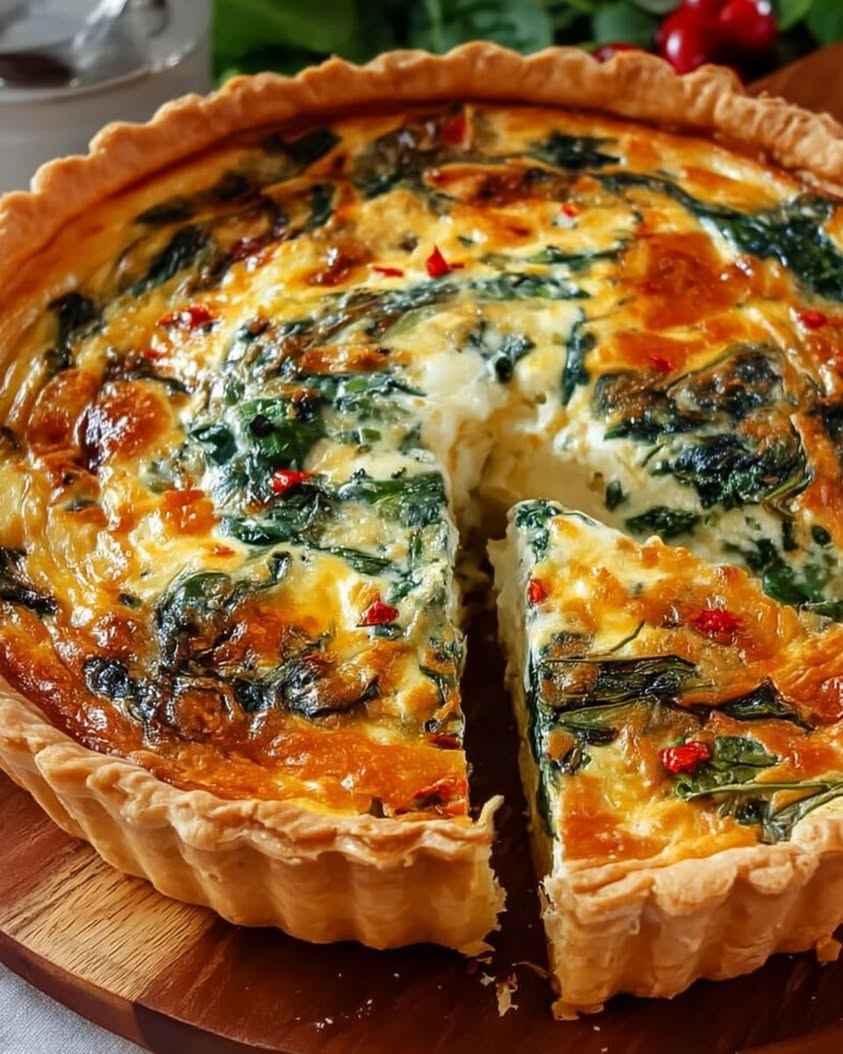
Elegant Ricotta and Spinach Quiche: A Foolproof Brunch Recipe
This Elegant Ricotta and Spinach Quiche is a foolproof brunch recipe that delivers creamy, savory perfection every single time. With its silky custard filling, fresh spinach, and mild ricotta cheese nestled inside a golden, flaky crust, this quiche is a go-to dish for anyone who wants impressive results without the stress. This Elegant Ricotta and Spinach Quiche combines simple pantry staples into a stunning centerpiece that looks and tastes like it came from a French bistro. The beauty of this Elegant Ricotta and Spinach Quiche lies in its forgiving nature, as the ricotta adds moisture and richness that prevents the filling from curdling or becoming rubbery. First, the eggs and cream blend smoothly with the creamy ricotta to create a velvety texture that feels indulgent but remains light.
When you slice into this quiche, the steam rises gently, and the aroma of butter, eggs, and fresh spinach fills the air. Each forkful is a study in contrasts, with the crisp crust crumbling slightly against the tender custard inside. This Elegant Ricotta and Spinach Quiche is perfect for a relaxed Sunday morning with friends or a holiday brunch where you want something special but not overly complicated. The fresh spinach is sautéed until wilted, which concentrates its flavor and removes excess water that could make the quiche soggy. As it bakes, the edges become puffed and golden, while the center retains a slight jiggle that signals perfect doneness. This Elegant Ricotta and Spinach Quiche is also incredibly versatile and works well alongside a fresh fruit salad or a crisp green salad with lemon vinaigrette.
Moreover, this recipe is designed for success because it uses the ricotta as a secret weapon against the common quiche pitfalls of cracking or weeping. The ricotta provides structure without the need for excessive eggs, yielding a custard that is creamy but firm enough to slice cleanly. This Elegant Ricotta and Spinach Quiche is a dish that invites you to slow down and savor the process, from the satisfying roll of the pie dough to the gentle whisking of the filling. You can easily prepare this Elegant Ricotta and Spinach Quiche ahead of time, making it a stress-free choice for entertaining. Serve it warm or at room temperature, and watch as your guests come back for second helpings. This Elegant Ricotta and Spinach Quiche truly is a foolproof brunch recipe that builds confidence in the kitchen.
Quick Recipe Highlights
- Flavor Profile: This quiche offers a delicate balance of savory and creamy flavors. The mild ricotta cheese blends seamlessly with the earthy spinach while a hint of nutmeg adds warmth and depth.
- Texture: The texture is a wonderful contrast between the buttery, flaky crust and the silky, smooth custard filling. The ricotta adds a light, airy quality that makes each bite melt in your mouth.
- Aroma: As it bakes, your kitchen fills with the comforting scent of toasted butter, fresh herbs, and cooked greens. The subtle nutmeg and black pepper add aromatic notes that are both grounding and inviting.
- Visual Appeal: This quiche is a beautiful golden-brown color on top with specks of vibrant green spinach scattered throughout. When sliced, the clean cross-section reveals a creamy, uniform filling nestled in a perfectly crimped crust.
- Skill Level Needed: This recipe is ideal for beginners because it requires no special techniques and is extremely forgiving. The use of ricotta makes the custard stable and less likely to curdle, which builds confidence for novice cooks.
- Special Equipment: You will need a standard 9-inch pie dish or a tart pan with a removable bottom. A sharp chef’s knife for chopping spinach and a sturdy whisk are also essential tools for success.
Recipe Overview
- Difficulty Level: This recipe is rated as easy because it uses straightforward techniques like whisking and sautéing. The custard filling is very forgiving, and the crust can be store-bought or homemade. It is an excellent first quiche for anyone who has never made one before.
- Category: This dish belongs to the quiche and savory tart category, which makes it perfect for breakfast, brunch, or a light dinner. It can also be served as an appetizer in smaller portions or as a main course alongside a salad.
- Cuisine: The recipe is rooted in classic French cuisine, where quiche Lorraine is the most famous variation. This version adds an Italian twist with ricotta cheese and spinach, creating a fusion that feels both rustic and refined. The cooking method remains true to the French tradition of slow baking for a creamy custard.
- Cost: This dish is very economical to prepare. Eggs, milk, and spinach are low-cost ingredients, while ricotta cheese adds a touch of richness without breaking the bank. A whole quiche can serve eight people for roughly the cost of a single restaurant entree.
- Season: This quiche is best enjoyed during the spring and summer months when fresh spinach is at its peak. However, since spinach is available year-round, you can make this recipe in any season. It also works well during the winter holidays when you crave something hearty but not heavy.
- Occasion: This quiche is ideal for Sunday brunch gatherings, Easter celebrations, Mother’s Day, or bridal showers. It is also a wonderful make-ahead meal for busy weeknights or for packing into lunch boxes. The elegant presentation makes it suitable for fancy occasions, while the simple preparation keeps it approachable for casual get-togethers.
Why You Will Love This Recipe
You will love this Elegant Ricotta and Spinach Quiche first and foremost because of its unbelievable taste and texture. The combination of creamy ricotta with fresh spinach creates a custard that is rich, luscious, and deeply satisfying. Each bite delivers a savory punch from the cheese and greens, balanced by the buttery crust that crumbles perfectly. The texture is smooth and velvety, not heavy or eggy, and the ricotta adds a light fluffiness that sets it apart from denser quiches. This Elegant Ricotta and Spinach Quiche is truly a sensory experience from the first bite to the last, and the lingering flavor of nutmeg will make you reach for another slice.
The convenience and preparation benefits of this recipe make it a winner for every cook. You can prep all the ingredients in under fifteen minutes, and the actual cooking time is mostly hands-off while the oven does the work. This Elegant Ricotta and Spinach Quiche can be assembled the night before, stored in the refrigerator, and baked the next morning, which is a game-changer for entertaining. Because it uses ricotta instead of heavy cream, you do not have to worry about the custard breaking or separating. The recipe is also incredibly flexible because you can swap out ingredients or add extras like caramelized onions, mushrooms, or sun-dried tomatoes without affecting the overall texture.
From a nutritional standpoint, this quiche offers a well-rounded meal that is both satisfying and wholesome. Spinach is packed with iron, vitamins A and C, and antioxidants, while eggs provide high-quality protein and healthy fats. The ricotta cheese contributes calcium and additional protein, making this a filling dish that will keep you energized well into the afternoon. This Elegant Ricotta and Spinach Quiche is lower in carbohydrates than many quiches because it relies on a modest single crust. You can easily increase the nutritional value by using whole wheat pie crust or a gluten-free alternative without sacrificing taste.
This recipe also excels in the area of social and entertaining value. Bringing this golden, fragrant quiche to the table instantly elevates any brunch or dinner spread. It is a dish that encourages conversation because guests often marvel at how professional and beautiful it looks. Because it can be served warm or at room temperature, you do not have to worry about timing everything perfectly. This Elegant Ricotta and Spinach Quiche is ideal for potlucks, holiday gatherings, and even casual picnics, where it can be sliced and served on plates. It is also a fantastic dish for teaching younger cooks because the steps are simple and the rewards are immediate.
Cost-effectiveness and accessibility are the final reasons you will make this recipe again and again. All the ingredients are widely available at any grocery store for a very modest total cost. You can feed a large group for the same price as a simple takeout meal, and the leftovers taste just as wonderful the next day. This Elegant Ricotta and Spinach Quiche freezes beautifully, so you can bake two quiches at once and save one for a busy week. The recipe uses standard kitchen tools, and no exotic equipment is required. It is a dependable, delicious, and affordable way to enjoy a restaurant-quality meal at home.
Historical Background and Cultural Significance
The history of quiche begins in the medieval kingdom of Lothringen, which is modern-day Germany. The original quiche Lorraine was an open-faced tart made with a bread dough crust filled with a custard of eggs and cream. The name quiche comes from the German word Kuchen, meaning cake. This humble dish was traditionally eaten by farmers and workers as a hearty breakfast. Over time, the French adopted the recipe and refined it into the elegant dish we know today. The iconic French quiche Lorraine is credited with popularizing quiche on a global scale, specifically during the mid-20th century when French cuisine experienced a surge in worldwide interest.
Cultural significance of quiche extends far beyond its Germanic and French origins. Quiche holds a special place in French cuisine as a versatile meal that can be served at any time of day. In France, quiche is often enjoyed as a lunch item alongside a simple green salad and a glass of wine. It is also a staple of French picnic baskets and is commonly found in boulangeries and cafes. Quiche represents the French philosophy of using simple, high-quality ingredients to create something greater than the sum of its parts. The addition of ricotta and spinach is a modern Italian-French fusion that highlights how culinary traditions evolve when they cross borders.
The evolution of this recipe from traditional quiche Lorraine to the modern ricotta and spinach version illustrates a broader trend in home cooking. As international travel and immigration increased during the 20th century, cooks began experimenting with cross-cultural ingredients. The creamy Italian ricotta cheese offered a lighter alternative to heavy cream, and its mild flavor paired beautifully with the earthy taste of spinach. This particular quiche version gained popularity in the United States during the 1970s and 1980s, when quiches became trendy brunch items. It represented a shift toward lighter, vegetable-forward cooking while still retaining the indulgent comfort of the original.
Regional variations of quiche have appeared all over the world, reflecting local tastes and available ingredients. In the United States, quiche often includes cheddar cheese, bacon, or broccoli, giving it a heartier profile. Spain has its own version called tortilla de patatas, which is a dense egg and potato dish that is quite different from French quiche. In Italy, the similar torta salata is made with a variety of cheeses, vegetables, and sometimes cured meats. This specific Elegant Ricotta and Spinach Quiche represents a perfect marriage between the French technique of custard baking and the Italian preference for fresh cheeses and greens. It remains a beloved recipe because it honors tradition while embracing innovation.
Ingredient Deep Dive
The ricotta cheese is the star ingredient in this quiche, and it is important to choose the right type. Ricotta has ancient roots stretching back to the Roman Empire, where it was originally made from the whey left over after producing other cheeses. This fresh cheese has a creamy, slightly grainy texture that melts beautifully into the custard without making it greasy. Nutritional benefits of ricotta include high levels of calcium, protein, and vitamin A, which support bone health and immune function. When selecting ricotta at the store, look for brands that are made with whole milk for the best flavor and creamiest texture. Avoid low-fat versions because they contain stabilizers that can make the custard watery and less stable. Store ricotta in its original container in the refrigerator, and use it within seven days of opening for optimal freshness. If you cannot find ricotta, you can substitute cottage cheese that has been blended until smooth, or use mascarpone for a richer texture.
Spinach is the second key component of this recipe, and it brings both color and vital nutrients to the quiche. Spinach originated in ancient Persia and spread to Europe and Asia through trade routes, eventually becoming one of the most versatile leafy greens. From a nutritional standpoint, spinach is a powerhouse of iron, folate, magnesium, and vitamins C and K. For the best results, select fresh spinach leaves that are deep green and crisp, not wilted or yellowed. Baby spinach works perfectly because it is tender and requires minimal chopping. You can also use frozen spinach, but you must thaw it completely and squeeze out every drop of excess moisture to prevent a watery quiche. Store fresh spinach in a sealed plastic bag in the refrigerator crisper drawer, and use it within three to five days. If you need a substitute, Swiss chard or kale can be used, but you should remove the tough stems and cook the leaves until tender.
The eggs in this recipe are the backbone that holds the quiche together, providing structure and richness. Eggs are a universal ingredient in cuisines around the world, symbolizing fertility and new life in many cultures. Nutritionally, eggs are one of the most complete protein sources available, containing all nine essential amino acids. They also provide choline, which supports brain health, and lutein, which is beneficial for eye health. Use large eggs at room temperature for the smoothest custard, as cold eggs can shock the mixture and create lumps. To test an egg for freshness, place it in a bowl of water: a fresh egg will sink, while an older egg will float. Store eggs in their original carton inside the refrigerator, not in the door, to maintain a consistent temperature. If you need to avoid eggs, you can try a mixture of silken tofu and cornstarch as a replacement, though the texture will be slightly different.
The pie crust is the vessel that holds everything together, and its quality directly affects the final dish. A buttery, flaky crust is traditional for quiches because it provides a satisfying contrast to the soft custard. You can use a store-bought deep-dish pie crust for convenience, but making your own crust allows you to control the flakiness. The primary ingredients are flour, butter, salt, and ice water, and the key to a flaky crust is keeping the butter cold and not overworking the dough. Store-bought crusts typically have a shorter shelf life, so check the expiration date before purchasing. Homemade crust can be stored in the freezer for up to three months. For a gluten-free alternative, use a gluten-free flour blend that contains xanthan gum, and add a tablespoon of apple cider vinegar to improve the texture.
The cream in the recipe provides the liquid base for the custard and adds richness and depth. Heavy cream or half-and-half works best because it creates a luxurious mouthfeel and helps the quiche set properly. Cream has been used in cooking for centuries in Europe, particularly in French and Italian cuisines. From a nutritional perspective, cream is high in fat, so you should use it in moderation if you are watching your calorie intake. Choose cream that is fresh and has no added stabilizers for the best result. Store cream in the coldest part of the refrigerator, and use it before the date on the package. You can substitute whole milk or a combination of milk and Greek yogurt for a lighter version, though the texture will be slightly less creamy.
Common Mistakes to Avoid
- Using frozen spinach without draining it properly is a very common mistake that results in a soggy quiche. After thawing frozen spinach, you must squeeze it firmly in a clean kitchen towel or paper towels to remove all the water. Even a small amount of leftover moisture can cause the custard to weep during baking.
- Overmixing the custard filling incorporates too much air and can cause the quiche to puff up excessively in the oven. This puffing often leads to cracks on the surface when the quiche cools and deflates. Whisk the eggs and cream just until they are combined, and avoid using an electric mixer.
- Baking the quiche at too high a temperature is a frequent error that leads to a rubbery texture and a burnt crust. The custard should be baked at a moderate 350 degrees Fahrenheit to ensure it sets gently. High heat causes the eggs to tighten too quickly and squeeze out moisture.
- Not blind baking the crust before adding the filling is a mistake that results in a soggy bottom crust. Blind baking means baking the crust partially or fully before adding the custard filling. This technique creates a barrier that prevents the liquid custard from soaking into the dough.
- Using a pie dish that is too shallow will cause the filling to overflow as it bakes. The quiche filling expands slightly during cooking, so you need a deep dish that is at least 1.5 inches deep. A standard 9-inch pie plate usually works well for this recipe.
- Adding the filling while the crust is still warm from blind baking can affect the texture of the custard. Allow the crust to cool completely before pouring in the filling, because a hot crust can cause the eggs to start cooking too early. This leads to an inconsistent texture with pockets of cooked egg.
- Skipping the nutmeg is a common oversight that diminishes the flavor profile of the quiche. Nutmeg is a classic spice that complements the eggs and spinach perfectly, adding subtle warmth and depth. Grate fresh nutmeg directly into the custard for the most vibrant flavor.
- Cutting into the quiche before it has had time to rest is a mistake that causes the slices to fall apart. After baking, the quiche needs at least 10 minutes to set and stabilize. This resting period allows the custard to firm up and makes slicing much easier.
- Using low-fat or fat-free ricotta cheese can make the quiche gummy and less flavorful. Full-fat ricotta provides the necessary creaminess and moisture to create a silky custard. The fat content also helps bind the ingredients together and prevents the quiche from drying out.
- Overcooking the quiche is one of the most common errors that yields a dry and rubbery final dish. The quiche is done when the center still jiggles slightly when you gently shake the pie dish. It will continue to cook from residual heat after you remove it from the oven.
Essential Techniques
Blind baking the crust is an essential technique that prevents your quiche from having a soggy bottom. This process involves partially baking the pie crust before adding any filling to create a dry, cooked barrier. To master this technique, line your raw crust with parchment paper and fill it with pie weights or dried beans. Bake the crust at 375 degrees Fahrenheit for 15 minutes, then remove the weights and paper and bake for another 5 minutes. The crust should be pale golden and dry to the touch. A common pitfall is skipping the second baking step after removing the weights, which leaves the crust undercooked. The visual cue for success is a crust that looks matte and has no wet spots on the surface.
Properly sweating the spinach is a crucial step that removes excess moisture and concentrates the flavor. Sweating means cooking the spinach over medium heat in a small amount of butter or oil until it wilts and releases its water. You must continue cooking until the pan is dry and no liquid pools at the bottom. This technique is important because any moisture left in the spinach will leak into the custard and create a watery quiche. To master it, cook the spinach in batches if necessary and press it against the pan with a spatula to encourage evaporation. The visual cue for success is when the spinach reduces significantly in volume and looks dark green and cohesive.
Whisking the custard properly is a fundamental skill that affects the final texture of the quiche. The custard is a mixture of eggs, cream, ricotta, and seasonings that must be emulsified gently. To master this technique, crack the eggs into a large bowl and whisk them just until the yolks and whites are combined. Add the cream and ricotta and continue whisking in a circular motion until the mixture is smooth and uniform. A common pitfall is overwhisking, which incorporates too much air and causes the quiche to puff and crack. The visual cue for success is a custard that is homogenous in color and has no streaks of egg white visible.
Testing for doneness is the final critical technique that ensures your quiche is baked perfectly. The quiche is ready when the center is just set but still jiggles slightly when you wiggle the pan. To test, gently tap the side of the pie dish and observe the movement of the center. It should wobble like gelatin, not slosh like liquid. A common pitfall is waiting until the center is completely firm, which results in an overcooked quiche. The visual cue for success is when the edges of the quiche are puffed and golden brown, while the center is slightly domed and paler in color. After removing it from the oven, let the quiche rest for at least 10 minutes to finish setting.
Pro Tips for Perfect Elegant Ricotta and Spinach Quiche
Use room temperature ingredients for the smoothest custard. Cold eggs and cream can cause the ricotta to seize or the mixture to separate. Take your eggs, cream, and ricotta out of the refrigerator about 30 minutes before you start cooking.
Grate fresh nutmeg directly into the custard for the best flavor. Pre-ground nutmeg loses its aromatic oils quickly and tastes flat compared to freshly grated. Start with a generous pinch and add more to taste.
Do not skip the step of seasoning the custard with a generous pinch of salt and black pepper. The eggs and ricotta are mild, so they need adequate seasoning to bring out their flavors. Taste the custard before pouring it into the crust, but do not swallow the raw egg.
For an extra flaky crust, brush the edges with an egg wash made from one beaten egg and a tablespoon of water. This wash gives the crust a beautiful golden sheen and helps it brown evenly. Apply it just before you place the quiche in the oven.
If you are short on time, use a high-quality store-bought crust and still blind bake it for the best results. The blind baking step is non-negotiable for a crisp bottom, even with a store-bought crust. This simple step makes a huge difference in the final texture.
Let the quiche cool for at least 20 minutes after baking to allow the custard to set completely. Cutting into a hot quiche will result in runny slices that collapse. Patience during this resting period ensures clean, beautiful slices.
To reheat leftover quiche, place slices on a baking sheet in a 300 degree Fahrenheit oven for about 10 minutes. Reheating in the microwave makes the crust soggy and the custard rubbery. The oven method restores the flaky texture of the crust.
Variations and Adaptations
Regional variations of this quiche can be found in different parts of Italy, where ricotta is a staple ingredient. In Sicily, for example, cooks add anchovies and capers to the ricotta filling for a salty, briny twist. Tuscans might incorporate leftover roasted vegetables like zucchini and bell peppers, while Northern Italians add fontina cheese for extra richness. This particular adaptation allows you to travel the Italian peninsula through your taste buds, using regional ingredients that pair well with the creamy base. You can also try a French variation that replaces the spinach with sauteed leeks and a pinch of tarragon for a more delicate flavor profile.
Seasonal adaptations allow you to make this recipe year-round with whatever greens are freshest. In the spring, replace spinach with fresh asparagus that has been blanched and chopped, or use young Swiss chard with colorful stems. During the summer, try sun-dried tomatoes, fresh basil, and sauteed zucchini instead of spinach for a Mediterranean vibe. In the fall, roasted butternut squash, caramelized onions, and sage make a hearty and comforting filling. Winter versions can feature sauteed kale, mushrooms, and a touch of smoked paprika for warmth. These seasonal swaps keep the recipe exciting and aligned with the freshest produce available.
Dietary modifications are easy to implement without sacrificing flavor. For a gluten-free version, use a gluten-free pie crust and ensure your baking powder is certified gluten-free. To make this quiche dairy-free, substitute full-fat coconut cream for the heavy cream and use a plant-based ricotta made from almonds or cashews. For a low-carb option, skip the crust entirely and bake the custard in a well-greased quiche dish, creating a crustless quiche that is naturally lower in carbohydrates. Each of these adaptations maintains the creamy texture and savory flavor that make this quiche so popular.
Flavor variations are limited only by your imagination and pantry. Add a handful of crumbled feta or goat cheese to the custard for a tangy, salty punch. Stir in some cooked, crumbled breakfast sausage or turkey sausage for a heartier meal. For a smoky flavor, add roasted red peppers and a pinch of smoked paprika to the filling. Fresh herbs like dill, chives, or parsley can be folded in at the end for brightness. These variations allow you to customize the quiche to suit any palate or occasion.
Serving and Presentation Guide
Plating techniques for this quiche are simple but effective when you focus on clean slices and garnishes. Use a sharp, thin-bladed knife to cut clean wedges, wiping the blade between each cut. Place each slice on a warm plate, showing off the layers of golden crust and creamy filling. For an elegant touch, use a fish spatula to lift each slice and slide it onto the plate without disturbing the custard. A small, simple leaf of fresh parsley or a sprinkle of red pepper flakes on the plate adds a pop of color that draws the eye to the quiche.
Garnishing ideas can elevate the dish from simple to stunning without much effort. A light dusting of freshly grated Parmesan cheese over the top of the quiche adds both color and umami flavor. A few microgreens or baby arugula leaves placed on the side of the plate provide a fresh, peppery contrast to the rich custard. For a more decadent touch, drizzle a little balsamic glaze around the plate in a decorative swirl. Edible flowers, such as pansies or nasturtiums, are a beautiful addition for spring and summer brunches.
Temperature considerations are important because this quiche can be served in multiple ways. It is wonderful when served warm from the oven, about 20 minutes after baking, when the crust is still crisp and the custard is gently warm. It also tastes excellent at room temperature, which makes it perfect for outdoor gatherings or buffet-style meals. Avoid serving it straight from the refrigerator because the cold temperature dulls the flavors and makes the texture seem firm and less creamy. Let the quiche sit at room temperature for at least 30 minutes before serving if it has been refrigerated.
Wine and Beverage Pairing
Wine pairings for this quiche should complement its creamy, savory profile without overpowering it. A crisp Sauvignon Blanc from New Zealand or Sancerre from France works well because its bright acidity cuts through the richness of the custard. A dry, unoaked Chardonnay is also a good choice, as its subtle apple and citrus notes pair nicely with the spinach and ricotta. For white wine lovers, a Pinot Grigio from Italy provides a clean, mineral finish that cleanses the palate between bites. These wines are widely available and affordable, making them easy to source for your next brunch.
Non-alcoholic alternatives are equally satisfying and can be just as sophisticated. A sparkling water with a splash of grapefruit juice and a sprig of rosemary offers a refreshing contrast to the quiche. A tall glass of iced black tea with lemon and a touch of honey is another classic pairing that complements the savory custard. For a warm option, a mug of chamomile tea with a dash of honey and a cinnamon stick provides a soothing, aromatic pairing. These drinks are easy to prepare and can be served in elegant glassware to match the quiche.
Coffee is a traditional and beloved pairing for quiche, especially during brunch hours. A medium roast coffee with balanced acidity and a smooth finish will not overpower the delicate flavors of the custard. A latte made with oat milk provides a creamy texture that echoes the richness of the quiche. For a more adventurous pairing, try a spicy chai latte with its warming notes of cardamom, ginger, and cinnamon. Serve coffee or tea in ceramic mugs to keep the temperature consistent, and offer sugar or honey on the side for customization.
Storage and Shelf Life
Storage methods for this quiche are straightforward, but following them properly ensures the best quality. The quiche should be cooled completely before wrapping it in plastic wrap or aluminum foil. Place it in an airtight container to protect it from absorbing odors in the refrigerator. The quiche will stay fresh for up to four days when stored properly in the refrigerator. Do not leave the quiche at room temperature for longer than two hours, as the dairy content can promote bacterial growth.
Temperature requirements are important for maintaining the texture and safety of the quiche. The refrigerator should be set to 40 degrees Fahrenheit or below for optimal storage. If you freeze the quiche, the temperature should be 0 degrees Fahrenheit to preserve the texture of the custard. The quiche can safely sit at room temperature for up to two hours during serving, but any leftovers should be returned to the refrigerator promptly. Always reheat the quiche to an internal temperature of 165 degrees Fahrenheit for safe consumption.
Container recommendations focus on keeping the quiche protected from moisture and odors. Use a large, shallow container with a tight-fitting lid for whole quiches. For slices, use smaller containers with dividers to prevent the quiche pieces from sliding into each other. Avoid storing the quiche in containers that are not airtight, as the custard can dry out quickly. Glass or BPA-free plastic containers are ideal choices for both short-term and long-term storage in the refrigerator or freezer.
Signs of spoilage are easy to spot if you know what to look for. The first sign is a sour or off smell coming from the quiche, which indicates that the dairy has turned. You may also see visible mold growth, which can appear as fuzzy green or white spots on the surface. The texture of the custard may become watery or separated, and the crust may become soft or slimy. If you notice any of these signs, it is best to discard the quiche immediately to avoid foodborne illness.
Reheating instructions are critical for restoring the quiche to its near-original state. The best method is to place slices on a baking sheet in a preheated 300 degree Fahrenheit oven for 10 to 12 minutes. This gentle heat warms the custard without drying it out and re-crisps the crust. Avoid using the microwave because it makes the crust rubbery and the custard weepy. If you are reheating a whole quiche, cover it loosely with aluminum foil for the first 15 minutes, then remove the foil to crisp the top for the last 5 minutes.
Freezing guidelines allow you to prepare this quiche well in advance for future meals. The quiche freezes best when baked first, then cooled completely and wrapped tightly in plastic wrap and a layer of aluminum foil. It can be frozen for up to three months without significant quality loss. To thaw, transfer the frozen quiche to the refrigerator and let it defrost overnight. Then, reheat it in the oven as directed to restore the crisp texture of the crust.
Make Ahead Strategies
Prep timeline is an essential part of making this quiche a weeknight or entertaining success. You can prepare all the components up to two days in advance, which reduces stress on the day of serving. The pie crust can be made and kept in the refrigerator for up to three days, or frozen for up to three months. The spinach can be washed, chopped, and stored in a sealed bag in the refrigerator for up to two days. The ricotta cheese and eggs can also be pre-measured and stored together in a bowl covered with plastic wrap. This strategy allows you to assemble the quiche in under ten minutes on the day you plan to serve it.
Storage between steps requires attention to food safety and quality. The blanched crust should be stored in the pie dish covered with plastic wrap at room temperature if you are using it the same day. If you are using it the next day, place it in the refrigerator to keep the butter from softening. The spinach should be stored separately from the custard mixture to prevent it from releasing moisture into the eggs. All other prepared ingredients should be covered and stored in the refrigerator until assembly.
Quality impact assessment is necessary to ensure that make-ahead preparation does not compromise the final dish. The crust may become slightly softer the longer it sits, but blind baking helps mitigate this issue. The custard mixture can be refrigerated for up to 24 hours, though you should whisk it gently before pouring to recombine any settled ingredients. The spinach may lose some vibrancy, but it will still taste delicious after baking. Overall, the quiche prepared with make-ahead strategies tastes almost identical to one made fresh, making this a reliable method for busy cooks.
Assembly tips for make-ahead quiches include keeping the components separate until the last minute. Do not pour the custard into the crust until you are ready to bake, as the liquid can seep into the crust and make it soggy. If you plan to bake the quiche the next day, prepare the crust and filling separately and combine them just before baking. This approach preserves the crisp texture of the crust and ensures the custard sets evenly. You can also assemble the entire quiche and store it in the refrigerator for up to 12 hours before baking, but add 5 to 10 minutes to the baking time to account for the cold filling.
Scaling Instructions
Halving the recipe is straightforward if you are cooking for a smaller group. Use a single large egg instead of two, and reduce the cream and ricotta by half. The baking time will decrease slightly because the quiche is thinner, so start checking for doneness about 5 minutes earlier. Use a smaller 6-inch pie dish to maintain the proper ratio of filling to crust. The overall flavor and texture remain excellent with this halved version, making it perfect for a romantic breakfast or a single dinner serving.
Doubling or tripling the recipe requires some adjustments to equipment and timing. Use two separate 9-inch pie dishes rather than one larger dish, because a single large dish will not cook Print
Elegant Ricotta and Spinach Quiche
- Total Time: 45 minutes
- Yield: 6
Description
A creamy, elegant quiche with rich ricotta and fresh spinach, perfect for brunch or a light dinner.
Ingredients
- 1 9-inch pie crust (store-bought or homemade)
- 2 tablespoons olive oil
- 1 small onion, finely chopped
- 3 cloves garlic, minced
- 5 ounces fresh spinach
- 6 large eggs
- 1 cup whole milk ricotta cheese
- 1/2 cup heavy cream
- 1/2 cup grated Parmesan cheese
- 1/2 teaspoon salt
- 1/4 teaspoon black pepper
- 1/4 teaspoon nutmeg
Instructions
- Preheat oven to 375°F (190°C). Place the pie crust in a 9-inch pie dish and crimp edges. Line with parchment paper and fill with pie weights or dried beans. Bake for 10 minutes, then remove weights and parchment and bake for another 5 minutes until lightly golden. Set aside.
- In a large skillet, heat olive oil over medium heat. Add onion and cook until translucent, about 5 minutes. Add garlic and cook for 1 minute more.
- Add spinach to the skillet and cook until wilted, about 2-3 minutes. Remove from heat, drain any excess liquid, and let cool slightly.
- In a large bowl, whisk together eggs, ricotta cheese, heavy cream, Parmesan, salt, pepper, and nutmeg until smooth.
- Stir the spinach mixture into the egg mixture until well combined.
- Pour the filling into the pre-baked crust. Smooth the top with a spatula.
- Bake for 30-35 minutes, or until the center is set and the top is lightly golden. A knife inserted into the center should come out clean.
- Let the quiche cool for at least 10 minutes before slicing. Serve warm or at room temperature.
Notes
You can customize the seasonings to taste. For a gluten-free version, use a gluten-free pie crust. Leftovers can be refrigerated for up to 3 days.
- Prep Time: 15 minutes
- Cook Time: 30 minutes
- Method: Main
- Cuisine: French