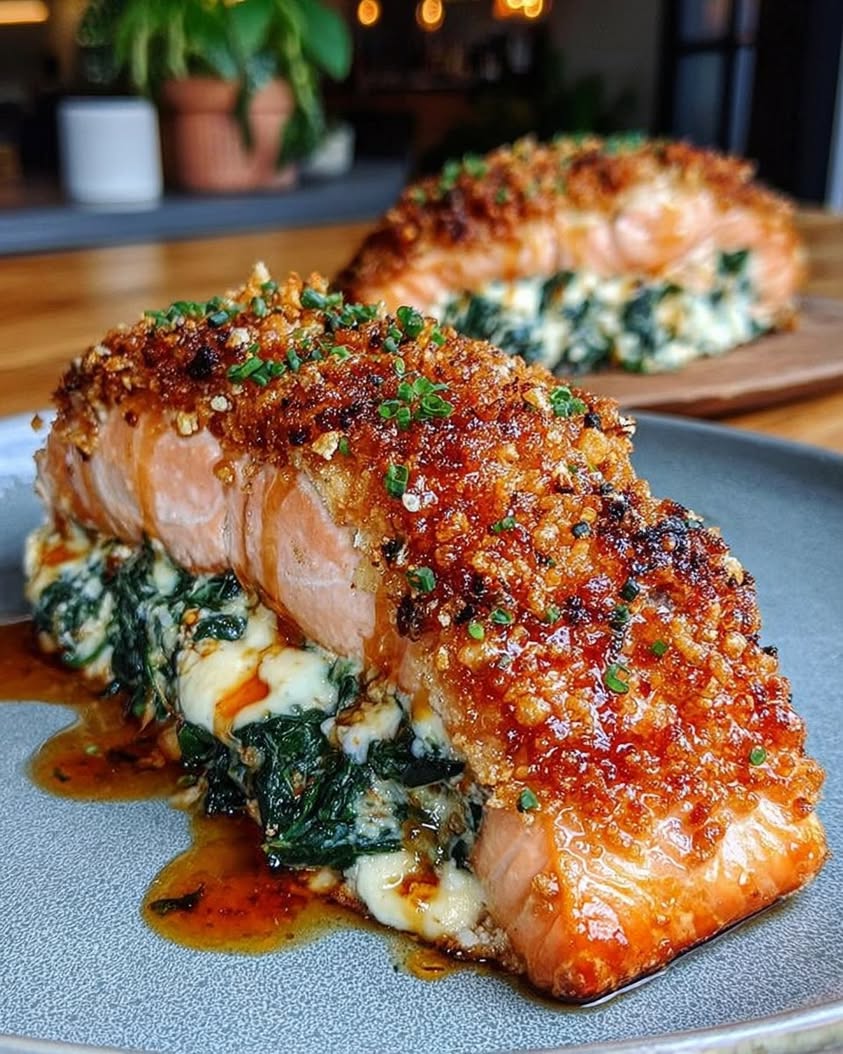
Crispy Stuffed Salmon with Spinach, Whipped Feta and Golden Hot Honey Crust
Imagine cutting into a perfectly seared piece of salmon only to reveal a vibrant green center of creamy whipped feta and tender spinach. The Crispy Stuffed Salmon with Spinach, Whipped Feta and Golden Hot Honey Crust is a restaurant-quality dish that feels luxurious yet is surprisingly simple to prepare at home. The combination of savory salmon, tangy feta filling, and a sweet-spicy honey crust creates a flavor experience that will impress your dinner guests and elevate your weeknight meals. The golden crust shatters with each bite, giving way to the creamy interior and flaky fish.
This Crispy Stuffed Salmon with Spinach, Whipped Feta and Golden Hot Honey Crust recipe brings together textures and flavors that complement each other beautifully. The salmon fillets are butterflied and stuffed with a rich mixture of wilted spinach and whipped feta cheese. After searing to create a crispy exterior, the salmon gets finished with a glaze of hot honey that caramelizes under the broiler. The result is a dish with a beautiful golden crust that contrasts with the tender fish and creamy filling. You will love how quickly it comes together for a dinner that looks and tastes like it took hours of effort.
Whether you are looking for a special occasion meal or simply want to treat yourself to something extraordinary, this Crispy Stuffed Salmon with Spinach, Whipped Feta and Golden Hot Honey Crust delivers on every level. The whipped feta adds a light and airy texture to the stuffing, while the spinach contributes a subtle earthiness. The hot honey crust provides a finishing touch that balances sweetness with a gentle heat. Every element works in harmony to create a dish that feels both indulgent and balanced, making it a go-to recipe for anyone who loves bold flavors and beautiful presentations.
Quick Recipe Highlights
- Flavor Profile: The flavor is a dynamic interplay of savory salmon, tangy whipped feta, earthy spinach, and sweet-spicy honey. The saltiness of the feta cuts through the richness of the fish, while the hot honey adds a lingering warmth that keeps each bite exciting. The golden crust provides a touch of caramelization that enhances the overall sweetness.
- Texture: This dish offers a wonderful contrast of textures. You get the crispy, slightly crunchy exterior from the seared and broiled crust, followed by the tender, flaky texture of the salmon. Inside, the whipped feta and spinach filling is creamy and smooth, providing a soft counterpoint to the firm fish.
- Aroma: As the salmon sears, a rich, savory aroma fills the kitchen. The whipped feta releases a tangy, milky scent, while the spinach adds a fresh, vegetal note. When the hot honey hits the hot pan, it creates a sweet and slightly spicy fragrance that is simply intoxicating.
- Visual Appeal: The visual presentation is stunning. The salmon has a deep golden-brown crust with glossy caramelized edges. When you cut into it, you reveal a bright green center from the spinach and feta, creating a beautiful color contrast against the pink fish. A drizzle of extra hot honey over the top adds a final touch of elegance.
- Skill Level Needed: This recipe is perfect for home cooks with some basic experience. Butterflying the salmon requires a little knife work, but it is easy to learn. Managing the searing and broiling steps is straightforward, so you can feel confident creating this impressive dish without advanced culinary training.
- Special Equipment: You will need a sharp chef’s knife for butterflying the salmon, a food processor or blender for whipping the feta, a large oven-safe skillet for searing, and a sheet pan or baking dish. A kitchen thermometer is helpful for checking the salmon’s internal temperature.
Recipe Overview
- Difficulty Level: The recipe earns a medium difficulty rating primarily because of the butterflying technique. Cutting the salmon fillets open without slicing all the way through requires a steady hand and attention. However, if you have basic knife skills, this step is very manageable. The rest of the process involves simple mixing and cooking techniques that are easy to follow.
- Category: This dish fits perfectly into the main course category for dinner. It is substantial enough to be a complete meal on its own, but it also pairs wonderfully with side dishes like roasted vegetables, rice pilaf, or a fresh green salad. You could even serve it as a showstopping centerpiece for a dinner party.
- Cuisine: This recipe draws inspiration from Mediterranean flavors, particularly in its use of feta cheese, spinach, and olive oil. The whipped feta technique is popular in Greek cuisine, while the use of honey as a glaze can be seen across many culinary traditions. The hot honey adds a modern twist that bridges sweet and savory profiles.
- Cost: The ingredients for this Crispy Stuffed Salmon with Spinach, Whipped Feta and Golden Hot Honey Crust are moderately priced. Salmon fillets are the most significant expense, but they are widely available at grocery stores. Feta cheese and spinach are very affordable, and you likely already have honey and spices at home. Overall, the cost is comparable to a nice restaurant meal but for a fraction of the price.
- Season: This dish shines year-round, but it is especially perfect for spring and summer. Fresh spinach is abundant during these seasons, and the bright, fresh flavors feel light and refreshing. That said, the comforting richness of the salmon makes it a welcome meal during the cooler months, too.
- Occasion: The Crispy Stuffed Salmon with Spinach, Whipped Feta and Golden Hot Honey Crust is ideal for special occasions like anniversaries, birthdays, holiday dinners, and date nights at home. It also works beautifully for impressing guests at a dinner party. With minimal fuss, you can serve a dish that looks and tastes like it came from a fine dining restaurant.
Why You Will Love This Recipe
The taste and texture of this dish are genuinely unforgettable. The crispy, golden crust provides a satisfying crunch that gives way to the delicate, flaky salmon underneath. Meanwhile, the whipped feta and spinach filling adds a burst of creamy, tangy flavor that perfectly balances the richness of the fish. Every bite offers a new sensation, from the sweet heat of the honey to the savory depth of the seared salmon. The combination is so compelling that you will find yourself craving this meal again and again.
Convenience is another major reason to love this recipe. The preparation time is only 20 minutes, and the cooking time is under half an hour. The steps are straightforward: you make the filling, butterfly the salmon, stuff it, sear it, and glaze it. There is no complicated technique or long list of hard-to-find ingredients. This means you can create an impressive, restaurant-quality dinner on a busy weeknight without spending hours in the kitchen. The recipe is designed to be efficient and rewarding.
From a nutritional perspective, this dish is a fantastic choice. Salmon is packed with omega-3 fatty acids, which are excellent for heart and brain health. Spinach provides a wealth of vitamins and minerals, including iron, vitamin K, and antioxidants. Feta cheese offers protein and calcium, while the honey provides a natural source of sweetness. This meal is high in protein and healthy fats, making it satisfying and nourishing. You can feel good about serving something so delicious and wholesome to your family.
Social and entertaining value is high with this recipe. When you bring this golden, glossy salmon to the table, your guests will be impressed. The presentation is stunning, and the flavors are sophisticated enough to appeal to a wide range of palates. It is a dish that encourages conversation and admiration. Plus, because it is relatively simple to make, you can spend more time with your guests and less time stressing in the kitchen. It is the perfect balance of showmanship and ease.
Cost-effectiveness and accessibility are final key points. Salmon is often more affordable than other premium proteins like beef tenderloin or lamb. The remaining ingredients are pantry staples or inexpensive items found at any grocery store. The recipe does not require any exotic components or expensive kitchen gadgets. You are essentially getting a high-end dining experience for a fraction of the cost. This makes the Crispy Stuffed Salmon with Spinach, Whipped Feta and Golden Hot Honey Crust a smart choice for anyone who appreciates great food without breaking the bank.
Historical Background and Cultural Significance
The combination of fish with cheese has deep roots in Mediterranean cuisine. In Greece, for example, feta cheese has been produced for thousands of years, and it is often used in baked dishes with fish and vegetables. The tradition of stuffing fish with flavorful fillings is also ancient, dating back to Roman times when cooks would create elaborate stuffed dishes for feasts. This recipe draws on that long history, combining the classic pairing of spinach and feta with the more modern technique of whipped feta for a lighter, creamier texture.
Spinach and feta together form a beloved flavor duo that appears in many cultural dishes, from Greek spanakopita to Turkish borek. The spinach provides a mild, earthy base, while the tangy feta adds a salty punch. This combination has become popular worldwide because it is both delicious and versatile. In this recipe, the stuffed salmon incorporates this classic pairing into a new context, creating a dish that feels both familiar and innovative.
The use of honey as a glaze has similarly ancient origins. Honey has been used as a sweetener and preservative for millennia, and it has a long history in Middle Eastern and Mediterranean cooking. Hot honey, however, is a more recent innovation. It emerged in the United States in the last few decades, pioneered by chefs who wanted to add a spicy kick to the natural sweetness of honey. The Crispy Stuffed Salmon with Spinach, Whipped Feta and Golden Hot Honey Crust adapts this trendy ingredient into a savory dish, proving its versatility beyond pizza and fried chicken.
Regional variations of this concept exist around the world. In the Mediterranean, you might find fish baked with a crust of herbs and breadcrumbs. In North America, blackened salmon is a popular preparation. This recipe combines elements from different traditions to create something new. The crispy crust technique is similar to pan-searing, a method beloved in French cuisine. The honey glaze has roots in Asian cooking, where sweet and savory sauces are common. This fusion of techniques and flavors represents the best of modern home cooking.
Ingredient Deep Dive
Salmon is the star of this dish, and it carries significant cultural weight. Salmon has been a vital food source for indigenous peoples in the Pacific Northwest for thousands of years. It is celebrated in Norse mythology and appears in traditional dishes across Scandinavia, Scotland, and Japan. Nutritionally, salmon is one of the best sources of omega-3 fatty acids, which are crucial for reducing inflammation and supporting heart health. When selecting salmon, look for fillets that are bright in color, have a firm texture, and smell fresh like the ocean. Avoid any fish that smells overly fishy or has dull, discolored flesh. Store fresh salmon in the coldest part of your refrigerator and use it within one to two days. If you need a substitution, you can use arctic char or trout, but the flavor and texture will be slightly different.
Feta cheese is a key component of the filling. It originates from Greece, where it is made from sheep’s milk or a mixture of sheep and goat milk. Feta has a tangy, salty flavor that comes from the brining process. Nutritionally, feta is lower in fat than many other cheeses and provides a good amount of calcium and protein. When buying feta, look for blocks that are stored in brine, as they have a better texture and flavor than pre-crumbled varieties. Store feta in its brine in the refrigerator, where it can last for several weeks. For a substitution, you can use goat cheese or ricotta salata, but they will alter the flavor profile slightly.
Spinach adds both color and nutrition to the stuffing. Spinach is native to Persia, and it spread through Europe and Asia over centuries. It is packed with vitamins A, C, and K, as well as iron and antioxidants. For this recipe, fresh spinach is essential because it wilts down quickly and provides a tender texture. Look for spinach leaves that are deep green and crisp, with no signs of yellowing or wilting. Store fresh spinach in a sealed bag in the refrigerator with a paper towel to absorb moisture. You can substitute frozen spinach for fresh, but be sure to thaw it completely and squeeze out all excess water before using it. The texture will be slightly different, but it works in a pinch.
Hot honey is the finishing touch that makes this recipe special. It combines the natural sweetness of honey with the heat of chili peppers. Hot honey can be purchased at most grocery stores, but it is also easy to make at home by steeping honey with dried chili flakes over low heat. The sweetness of the honey caramelizes under the broiler, creating a glossy, golden crust. The heat level is gentle enough to not overwhelm the other flavors. If you do not have hot honey, you can mix regular honey with a pinch of cayenne pepper or red pepper flakes. Adjust the amount to your personal tolerance for spice.
Common Mistakes to Avoid
- Overcooking the salmon is a frequent error. Salmon is best when cooked to an internal temperature of 125 to 130 degrees Fahrenheit for medium doneness. If you cook it beyond 140 degrees, it becomes dry and tough. Use a meat thermometer to check the thickest part of the fillet.
- Not drying the salmon properly before searing can prevent the crust from forming. Pat the salmon fillets dry with paper towels before seasoning. Any moisture on the surface will create steam instead of a golden sear.
- Butterflying the salmon too deeply can cause it to split into two separate pieces. Make sure to leave a hinge of flesh along one edge so the salmon can be opened like a book. If it does separate, you can still stuff it and secure it with toothpicks.
- Using pre-crumbled feta cheese instead of block feta leads to a less creamy texture. Pre-crumbled feta is often coated with cellulose to prevent clumping, which makes it harder to whip into a smooth consistency. Always buy block feta for the best results.
- Overfilling the salmon with the spinach and feta mixture can cause the stuffing to spill out during cooking. Fill the cavity generously, but do not pack it so full that it bulges out. A little stuffing can escape, but too much will create a mess.
- Skipping the step of wilting the spinach results in a watery filling. Raw spinach releases a lot of moisture as it cooks, which can make the filling soggy. Always cook the spinach first and drain it well before combining it with the feta.
- Using too much hot honey can make the crust overly sweet and sticky. A thin, even layer is all you need to create a beautiful glaze. You can always add more at the end for extra heat and sweetness.
- Not preheating the skillet properly leads to uneven searing. Make sure the oil is shimmering hot before you add the salmon. If the pan is not hot enough, the salmon will stick and the crust will not develop the right color.
- Forgetting to let the salmon rest after cooking can cause the juices to run out when you cut into it. Let the salmon rest for about 5 minutes after it comes out of the oven. This allows the juices to redistribute and keeps the fish moist.
- Ignoring the broiler can result in a less dramatic crust. The broiler is crucial for caramelizing the hot honey and creating that golden finish. Keep a close eye on it, as the honey can burn quickly.
Essential Techniques
Butterflying the salmon is the first essential technique. This involves cutting the salmon fillet horizontally, almost all the way through, so it opens like a book. To do this, place the fillet skin-side down on a cutting board. Using a sharp chef’s knife, make a long cut along the thickest side of the fillet, stopping about half an inch from the opposite edge. This creates a pocket for the stuffing. The key is to keep the knife parallel to the cutting board and maintain an even thickness. If you cut too deeply, the fillet will separate. Practice on a less expensive piece of fish if you are unsure. The visual cue for success is a fillet that opens flat but stays connected along one edge.
Whipping the feta cheese creates a light and airy texture that is much more pleasant than crumbled feta. To whip feta, place the block feta in a food processor with a splash of olive oil and a little lemon juice. Process until the mixture is smooth and creamy, scraping down the sides as needed. The olive oil helps to loosen the cheese and create a spreadable consistency. If the mixture is too thick, add a little more olive oil. The result should be as smooth as cream cheese but with a tangy flavor. This technique is important because it allows the feta to blend seamlessly with the spinach, creating a cohesive filling that does not separate during cooking.
Wilting spinach correctly prevents excess moisture in the stuffing. Start by heating a large skillet over medium heat with a little olive oil. Add the fresh spinach in batches, stirring constantly. The spinach will wilt down quickly, reducing in volume significantly. Once all the spinach is wilted, transfer it to a colander and press out as much liquid as possible. You can also wrap it in a clean kitchen towel and squeeze it firmly. This step is crucial because water from the spinach can make the filling watery and prevent the salmon from cooking properly. The visual cue is spinach that is dark green, tender, and completely dry to the touch.
Searing the salmon creates the crispy crust that gives the dish its name. Heat a large oven-safe skillet over medium-high heat with a generous amount of olive oil. When the oil is shimmering, place the stuffed salmon fillets skin-side down in the pan. Do not overcrowd the pan. Let the salmon sear undisturbed for 3 to 4 minutes until the skin is golden and crispy. Then, carefully flip the fillets using a spatula. Sear the other side for another 2 minutes. The visual cue is a deep golden-brown color on both sides. This step builds flavor through the Maillard reaction and creates a barrier that keeps the fish moist during the final oven cooking.
Pro Tips for Perfect Crispy Stuffed Salmon
Always bring the salmon fillets to room temperature before cooking. Cold salmon cooks unevenly, with the outside overcooking before the inside is done. Let the fillets sit on the counter for about 15 minutes after you stuff them.
Use a fish spatula for flipping the salmon. A fish spatula is thin and flexible, making it easier to slide under the delicate fillets without breaking them. It also allows you to lift the salmon without disturbing the stuffing.
Season the inside of the salmon pocket before adding the filling. A light sprinkle of salt and pepper inside the cavity enhances the overall flavor of the dish. Do not forget this step, as the interior can be bland otherwise.
Toothpicks are your best friend for keeping the stuffing secure. If the salmon pocket does not close naturally, insert a couple of toothpicks along the seam to hold it together during cooking. Remove them before serving.
Toast some pine nuts or slivered almonds to sprinkle over the finished dish. The extra crunch and nutty flavor complement the honey glaze beautifully. It also adds a professional touch to the presentation.
Do not skip the lemon juice. A squeeze of fresh lemon juice over the finished salmon brightens all the flavors and cuts through the richness. It also balances the sweetness of the hot honey perfectly.
Monitor the internal temperature closely. Salmon is best when it reaches 125 to 130 degrees Fahrenheit in the center. Use an instant-read thermometer to check the thickest part of the fillet without touching the stuffing.
Let the salmon rest for at least 5 minutes before serving. This step is often overlooked, but it makes a huge difference. The resting time allows the fish to retain its juices, resulting in a more moist and flavorful piece of salmon.
Variations and Adaptations
Regional variations of stuffed salmon are abundant across culinary traditions. In the Pacific Northwest, you might find salmon stuffed with wild mushrooms and herbs like dill and chives. In the Mediterranean, sun-dried tomatoes and olives are popular additions. This recipe’s core idea of a creamy, tangy filling can be adapted with different ingredients to reflect your own tastes or cultural background. Try adding chopped artichoke hearts or roasted red peppers to the spinach and feta mixture for a different flavor profile.
Seasonal adaptations can make this dish feel fresh all year long. In the summer, you can replace spinach with fresh basil or arugula for a peppery kick. In the fall, consider adding finely chopped kale and roasted butternut squash to the filling. Winter calls for heartier greens like Swiss chard, while spring is perfect for incorporating fresh herbs like mint and parsley. The honey glaze can also be adjusted by infusing it with seasonal spices like cinnamon or cardamom.
Dietary modifications are possible with a few thoughtful swaps. For a dairy-free version, replace the feta cheese with a dairy-free alternative made from cashews or almonds. You can also use a vegan cream cheese in place of the whipped feta. The spinach filling will still work perfectly. For a gluten-free version, ensure that any prepared hot honey you use is certified gluten-free, as some brands may contain additives. The recipe is naturally gluten-free otherwise.
Flavor variations can transform the entire character of the dish. For a more Mediterranean approach, add chopped Kalamata olives and a sprinkle of oregano to the feta filling. For a spicy version, increase the amount of chili in the hot honey or add a pinch of cayenne to the spinach mixture. A smoky variation can be achieved by using smoked paprika in the seasoning and a chipotle-infused honey glaze. The possibilities are endless, so feel free to experiment with your favorite flavors.
Texture modifications offer different eating experiences. If you prefer a crunchier crust, you can coat the outside of the salmon with panko breadcrumbs before searing. This creates an even more pronounced crispy exterior. Alternatively, you can skip the searing step entirely and bake the stuffed salmon in the oven for a more tender, steamed texture. The honey glaze can be applied before baking for a different kind of caramelization.
Presentation alternatives can make the dish suitable for different occasions. For a family-style meal, serve the whole stuffed salmon fillet on a large platter with the honey glaze drizzled over the top. For individual servings, slice the salmon into portions before plating. You can also serve the salmon on a bed of creamy polenta or mashed potatoes for a more substantial meal. A sprinkle of fresh herbs like dill or chives adds a final touch of color and flavor.
Serving and Presentation Guide
Plating techniques for this Crispy Stuffed Salmon with Spinach, Whipped Feta and Golden Hot Honey Crust should emphasize the beautiful contrast of colors. Start by placing a small bed of something green, like arugula or sautéed green beans, on the plate. Lay the salmon fillet on top, slightly angled for visual interest. The golden crust should face upward to show off its caramelized appearance. You can also cut the salmon in half to reveal the bright green center, creating a dramatic presentation that will impress your guests.
Garnishing ideas can elevate the dish further. A light drizzle of extra hot honey over the top adds shine and a final pop of flavor. Sprinkle with fresh dill or parsley for a burst of green that contrasts with the golden crust. Some toasted sesame seeds or crushed red pepper flakes can add texture and color. A lemon wedge on the side is both decorative and functional, allowing diners to add a splash of acidity to their taste.
Traditional accompaniments for stuffed salmon often include roasted vegetables or a simple grain. Rice pilaf, quinoa, or orzo pasta are excellent choices that absorb the honey glaze and feta juices. For a lighter meal, serve it with a fresh Greek salad with tomatoes, cucumbers, and olives. Roasted asparagus or broccoli are wonderful options that complement the flavors without overpowering the main dish.
Modern serving suggestions can make this dish even more exciting. Try serving the salmon on top of a creamy, lemon-herb risotto for a truly decadent meal. You can also pair it with sweet potato mash for a comforting, earthy side. For a low-carb option, serve it over a bed of zucchini noodles or cauliflower rice. The possibilities are endless, and each side dish will bring out different aspects of the salmon’s flavor profile.
Temperature considerations are important for the best dining experience. The salmon should be served warm, not piping hot, to allow the flavors to meld. Let it rest for a few minutes after cooking to reach the ideal serving temperature. The whipped feta filling should be creamy and slightly warm, while the golden crust should remain crisp. If you are serving the salmon as part of a buffet, keep it warm on a low-temperature warming tray, but be careful not to overcook it further.
Portion control tips will help you serve the right amount. A typical serving is one stuffed salmon fillet per person, which is about 6 to 8 ounces. If you have larger appetites, you can serve two smaller fillets. For a lighter meal, you can serve half a fillet with a generous portion of vegetables and grains. Keep in mind that the filling adds extra volume, so a single fillet is quite satisfying.
Wine and Beverage Pairing
Wine pairings for this dish are delightful and varied. A crisp, unoaked Chardonnay is a classic choice, as its acidity cuts through the richness of the salmon and feta. The subtle fruit notes of green apple and pear complement the honey glaze without overpowering it. Another excellent option is a Pinot Grigio, which is light-bodied and refreshing. Its citrusy flavor profile works well with the tangy feta and the sweetness of the honey. For red wine lovers, a light-bodied Pinot Noir is a wonderful match. Its earthy notes and low tannins do not clash with the fish, and its red fruit flavors harmonize with the honey’s sweetness.
Non-alcoholic alternatives are equally satisfying. A sparkling water with a squeeze of lemon or lime provides a refreshing, palate-cleansing contrast to the rich dish. A cucumber-infused sparkling water adds a crisp, cooling note that balances the spicy honey. For something with more flavor, try a hibiscus iced tea, which has a tart, floral character that echoes the tanginess of the feta. A ginger beer is another great option, as its spiciness complements the hot honey while its sweetness mirrors the glaze. These choices ensure everyone can enjoy a perfect beverage alongside their meal.
Coffee and tea pairings are less traditional but can be wonderful for a special occasion. A light-roasted coffee with floral and citrus notes, such as an Ethiopian Yirgacheffe, pairs nicely with the rich salmon and tangy feta. The coffee’s acidity cuts through the fat, while its floral notes echo the honey. For tea, a jasmine green tea is a delicate choice that does not overpower the dish. Its light, aromatic flavor is a lovely complement. As for temperature considerations, all beverages should be served chilled or at room temperature to contrast with the warm salmon. Avoid ice-cold drinks that can numb your taste buds.
Serving suggestions for beverages can enhance the overall experience. Pour the wine or drink of choice into elegant glasses and serve it alongside the plated meal. A small wine or beverage pairing card on the table can be a nice touch for dinner parties, helping guests choose their preferred option. For a more casual setting, a pitcher of infused water or iced tea is a practical and beautiful way to serve drinks. The goal is to create a cohesive dining experience where each element supports and elevates the others.
Storage and Shelf Life
Proper storage methods are essential to maintain the quality of leftover Crispy Stuffed Salmon with Spinach, Whipped Feta and Golden Hot Honey Crust. Allow the salmon to cool to room temperature before storing it. Then, place it in an airtight container or wrap it tightly with plastic wrap and aluminum foil. Refrigerate the leftovers within two hours of cooking to prevent bacterial growth. The salmon will stay fresh for up to three days when stored properly. The whipped feta filling may absorb some moisture from the salmon over time, so the texture may change slightly upon reheating.
Temperature requirements are crucial for food safety. Keep the leftovers at a constant temperature of 40 degrees Fahrenheit or below in the refrigerator. A refrigerator thermometer can help you monitor this. If you have a large batch, consider dividing it into smaller portions to cool faster and reheat more evenly. Never leave the salmon at room temperature for more than two hours. When transporting leftovers, use a cooler with ice packs to maintain a safe temperature. The golden crust will lose some of its crispiness after refrigeration, but careful reheating can help restore it.
Container recommendations can affect the quality of the leftovers. Glass containers with locking lids are ideal because they are airtight and do not absorb odors. Avoid using plastic wrap alone, as it does not provide an airtight seal. If you use aluminum foil, make sure it is wrapped tightly around the fish. You can also place the salmon in a resealable plastic bag with the air squeezed out. The key is to minimize exposure to air, which can cause the salmon to dry out and the flavors to degrade. Label the container with the date so you know when it was stored.
Signs of spoilage to watch for include a sour or unpleasant odor, a slimy texture, or any discoloration. If the salmon smells overly fishy or ammonia-like, it has gone bad and should be discarded. The whipped feta filling may develop a watery separation, which is normal, but if it smells off, do not risk it. Always trust your senses. When in doubt, throw it out. Food safety is more important than saving a few dollars. To avoid waste, plan your meals so you can finish the leftovers within the recommended time frame.
Reheating instructions can help restore some of the original texture. The best method is to reheat the salmon in a preheated oven at 300 degrees Fahrenheit for about 10 to 15 minutes. Place the salmon on a baking sheet lined with parchment paper to prevent sticking. This gentle heat helps the fish warm through without drying out. You can also reheat it in a skillet over medium-low heat with a little olive oil, but you risk overcooking the outside. The microwave is not recommended, as it can make the salmon rubbery and cause the honey glaze to become sticky and unappetizing.
Freezing guidelines are useful if you want to keep the salmon for longer. Cooked stuffed salmon can be frozen for up to two months. Wrap the cooled salmon tightly in plastic wrap, then in a layer of aluminum foil, and place it in a freezer-safe bag. To thaw, transfer it to the refrigerator overnight. Reheat it in the oven as described above. However, note that the texture of the whipped feta and the crispiness of the crust will degrade significantly after freezing. The dish is best enjoyed fresh, so freezing is only recommended if you have leftover parts or are planning ahead for a busy week.
Make Ahead Strategies
A prep timeline is very useful for this recipe. You can make the whipped feta and wilted spinach filling up to two days in advance. Combine them and store the mixture in an airtight container in the refrigerator. When you are ready to cook, simply stuff the salmon and proceed with the recipe. This step alone saves about 15 minutes of active prep time on the day of serving. You can also butterfly the salmon fillets a day ahead and store them in the refrigerator, covered with plastic wrap. Just pat them dry again before stuffing.
Storage between steps is straightforward. The whipped feta and spinach mixture can be stored in a bowl covered with plastic wrap or in an airtight container. The butterflied salmon fillets should be placed on a plate, covered with plastic wrap, and kept in the coldest part of the refrigerator. Do not combine the two until you are ready to cook, as the moisture from the spinach mixture can make the salmon soggy over time. Keep all ingredients separate until the final assembly. This approach ensures the best quality when you cook.
Quality impact assessment is important to consider. Making the filling ahead of time actually improves the flavor, as the feta and spinach have more time to meld. The salmon, however, is best when stuffed and cooked fresh. If you stuff the salmon more than a few hours before cooking, the filling can begin to seep into the fish, affecting its texture. For the best results, stuff the salmon just before you are ready to sear it. The crust should always be applied fresh, as the hot honey glaze does not hold up well to refrigeration.
Assembly tips can save time on a busy day. Set up your workstation with all the ingredients and tools before you start. Have the butterflied salmon on a cutting board, the filling in a bowl, and a clean paper towel ready. Stuff the salmon and secure it with toothpicks if needed. Then, season the outside and have your hot honey nearby. This mise en place approach reduces stress and ensures you do not forget any steps. If you are entertaining, you can assemble the salmon up to an hour before cooking and keep it in the refrigerator, uncovered, to let the skin dry out for a better sear.
Reheating guidelines are not typically needed for this dish since it is best served fresh. However, if you are making parts ahead, the filling can be reheated gently on the stovetop or in the microwave before stuffing. Do not reheat the salmon itself until you are ready to serve. The hot honey glaze should be applied at the very end to maintain its shine and texture. Planning these steps carefully allows you to enjoy a freshly cooked meal with minimal last-minute effort.
Fresh element additions can make the dish feel more vibrant when served. If you are making the filling ahead, consider adding Print
Crispy Stuffed Salmon with Spinach, Whipped Feta & Golden Hot Honey Crust
- Total Time: 30 minutes
- Yield: 4
Description
A show-stopping salmon dish with creamy whipped feta and wilted spinach stuffing, topped with a crispy golden hot honey crust. Perfect for a flavorful weeknight dinner or impressive entertaining.
Ingredients
- 4 (6-ounce) salmon fillets, skin on
- 4 ounces feta cheese, crumbled
- 2 tablespoons cream cheese, softened
- 1 teaspoon lemon zest
- Salt and freshly ground black pepper, to taste
- 2 cups fresh spinach leaves
- 1 tablespoon olive oil
- 1/2 cup panko breadcrumbs
- 3 tablespoons honey
- 2 tablespoons unsalted butter, melted
- 1 teaspoon red pepper flakes (or to taste)
- 1 clove garlic, minced
Instructions
- Preheat oven to 400°F (200°C). Line a baking sheet with parchment paper.
- Make the whipped feta: In a small food processor, combine feta, cream cheese, lemon zest, and a pinch of pepper. Process until smooth and creamy. Set aside.
- Prepare the spinach: In a skillet over medium heat, add olive oil and spinach. Cook, stirring, until wilted, about 2 minutes. Drain any excess liquid and season with salt and pepper.
- Stuff the salmon: Using a sharp knife, cut a pocket lengthwise into the side of each salmon fillet. Carefully fill each pocket with about 1 tablespoon of the whipped feta, then top with a portion of the wilted spinach. Press gently to close.
- Make the hot honey crust: In a small bowl, stir together panko, honey, melted butter, red pepper flakes, and minced garlic. Mix until breadcrumbs are evenly coated.
- Assemble and bake: Place stuffed salmon fillets on the prepared baking sheet, skin-side down. Divide the panko mixture evenly over the top of each fillet, pressing lightly to adhere.
- Bake until salmon is cooked through and crust is golden and crispy, 12–15 minutes depending on thickness. Serve immediately.
Notes
You can customize the seasonings to taste. For less heat, reduce red pepper flakes or omit. For extra crunch, broil the salmon for the last 1–2 minutes.
- Prep Time: 15 minutes
- Cook Time: 15 minutes
- Method: Main
- Cuisine: American