Creamy Ground Beef Orzo: A One-Pan Weeknight Wonder
Imagine a dish that delivers the ultimate comfort of a hearty pasta bake and the ease of a simple skillet dinner. This creamy ground beef orzo recipe does exactly that. It combines savory ground beef with tender orzo pasta, all simmered in a rich, velvety tomato and cream sauce. Consequently, you get a complete, satisfying meal from a single pan with minimal cleanup. The aroma of garlic, herbs, and browning beef will fill your kitchen, promising a dinner that feels far more special than the effort required.
This one-pan wonder is the answer to busy weeknights when you crave something deeply comforting yet uncomplicated. The orzo cooks directly in the flavorful sauce, absorbing all the delicious juices from the beef, tomatoes, and broth. As a result, every bite is packed with cohesive flavor. Moreover, the final stir of cream and Parmesan cheese creates a luxurious texture that coats each grain of pasta perfectly. This creamy ground beef orzo is a guaranteed crowd-pleaser for both adults and kids, offering a familiar, cheesy comfort with a sophisticated edge.
Ultimately, this recipe is a masterclass in efficient, flavorful cooking. It transforms a handful of pantry staples into a restaurant-worthy meal in about thirty minutes. The process is straightforward: brown the beef, sauté the aromatics, then let the orzo simmer to perfection. Therefore, even novice cooks can achieve fantastic results. This creamy ground beef orzo is more than just dinner; it’s a reliable, delicious solution that will earn a permanent spot in your regular meal rotation.
Quick Recipe Highlights
- Flavor Profile: This dish features a robust, savory base from the ground beef, perfectly balanced with the sweet acidity of tomato paste and diced tomatoes. Furthermore, garlic, onion, and Italian herbs build aromatic layers, while the Parmesan and cream add a rich, salty, and luxurious finish.
- Texture: You will enjoy a delightful contrast between the tender, slightly chewy orzo pasta and the fine, savory crumble of ground beef. The sauce itself is velvety and clinging, coating every component without being overly heavy or greasy.
- Aroma: While cooking, the scent of browning beef and sautéing garlic and onion creates an irresistible savory foundation. Subsequently, the simmering tomatoes and herbs release a warm, inviting fragrance that promises classic Italian-inspired comfort.
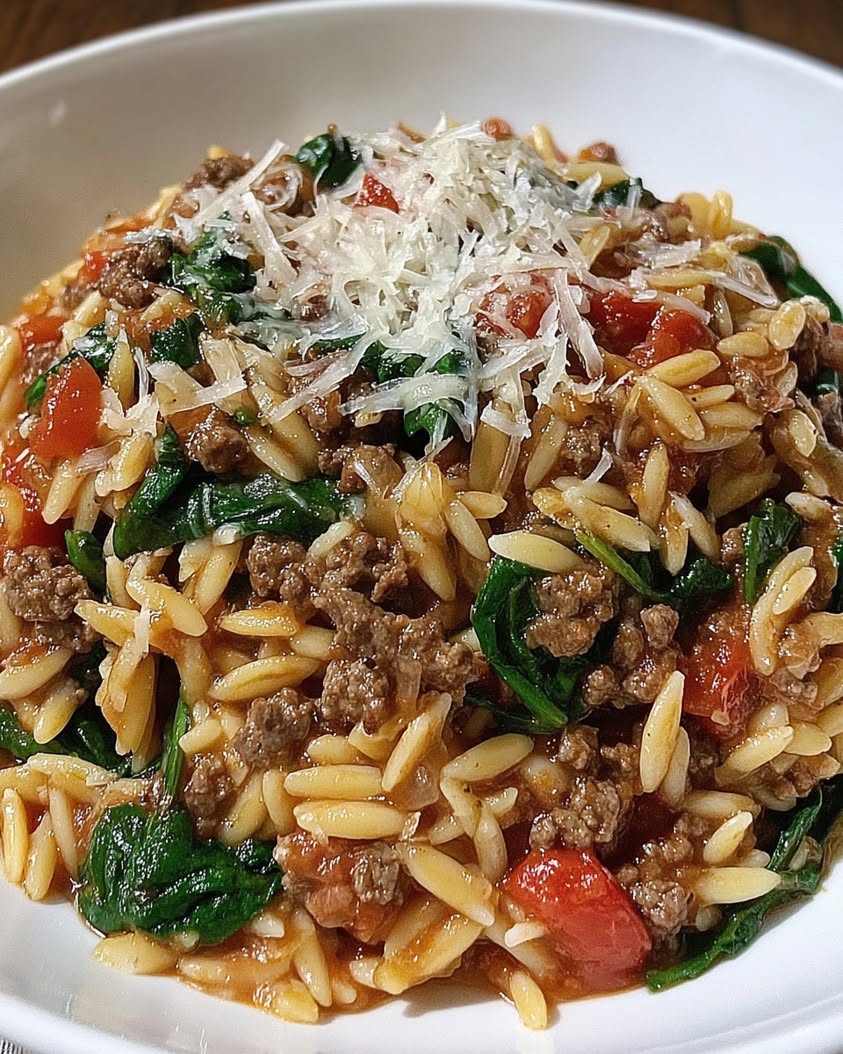
- Visual Appeal: The final dish presents a beautiful, rustic look with a rich, creamy orange-red sauce studded with browned beef and flecks of green herbs. It looks hearty and indulgent, especially when garnished with fresh parsley and extra Parmesan.
- Skill Level Needed: This recipe is ideal for beginner to intermediate home cooks. It requires fundamental skills like browning meat and simmering a one-pan sauce. Importantly, no advanced techniques are needed, making it very accessible.
- Special Equipment: You only need one large skillet or sauté pan with a lid. A standard 10 or 12-inch skillet works perfectly. No special pots, pans, or appliances are required, which simplifies both cooking and cleanup.
Recipe Overview
- Difficulty Level: We rate this creamy ground beef orzo as easy. The steps are sequential and simple: brown, sauté, simmer. There is no tricky timing or complex layering. However, managing the simmer to cook the orzo perfectly requires a bit of attention, hence it’s not purely “beginner” but well within most home cooks’ capabilities.
- Category: This dish falls squarely into the main course category. It is a complete protein-and-carb meal in one. Additionally, it can be considered a comfort food staple, a weeknight dinner solution, and a one-pan wonder, eliminating the need for multiple side dishes.
- Cuisine: The recipe draws strong inspiration from Italian-American cuisine, using ingredients like tomato, garlic, Parmesan, and Italian seasoning. However, it is a modern, streamlined fusion dish designed for convenience, rather than a traditional recipe from a specific Italian region.
- Cost: This is a very budget-friendly meal. Ground beef and orzo are typically inexpensive proteins and starches. Canned tomatoes, broth, and basic dairy are pantry staples. Therefore, you can create a restaurant-style meal for a family at a fraction of the cost of dining out.
- Season: This creamy ground beef orzo is truly an all-season dish. It provides warmth and comfort in fall and winter. Conversely, its relatively quick cook time makes it suitable for spring and summer evenings when you don’t want to heat the kitchen for hours.
- Occasion: It is perfect for casual weeknight family dinners, informal potlucks, or meal prep for lunches. While not overly fancy, it is impressive enough for a relaxed weekend gathering with friends. It is the ultimate “no-fuss, big-flavor” occasion meal.
Why You’ll Love This Recipe
First and foremost, the taste and texture of this creamy ground beef orzo are utterly irresistible. The savory, umami-rich beef pairs seamlessly with the creamy, tomato-infused sauce. Each forkful delivers a perfect harmony of tender pasta, rich sauce, and hearty meat. The Parmesan cheese adds a salty, nutty depth that elevates the entire dish. Consequently, every bite is satisfying and complex, hitting all the right notes of comfort and flavor that make you want to go back for seconds.
From a convenience standpoint, this recipe is a weeknight hero. It all comes together in one single pan, meaning you have minimal dishes to wash afterward. The active prep time is short, and the simmering time is mostly hands-off. Therefore, you can multitask by preparing a simple side salad or setting the table. This efficiency makes it possible to get a wholesome, home-cooked meal on the table even on the busiest of evenings, reducing stress and kitchen chaos.
Nutritionally, this dish offers a good balance. Ground beef provides essential protein, iron, and B vitamins. Orzo, a form of pasta, supplies carbohydrates for energy. Using a lean ground beef can reduce saturated fat content. You can also boost the vegetable content by adding spinach, mushrooms, or zucchini during the simmer. As a result, you can easily adapt this creamy ground beef orzo to meet various dietary preferences while keeping it a filling and satisfying complete meal.
For social and entertaining value, this recipe scales beautifully. You can easily double it to feed a crowd for a game day gathering or a casual dinner party. It is a universally appealing dish that pleases both adults and children. Moreover, its comforting, familiar nature makes it a great choice for bringing to a friend or neighbor. It travels well and reheats beautifully, solidifying its status as a perfect communal food.
Finally, its cost-effectiveness and accessibility are major wins. The ingredients are common, affordable, and available at any standard grocery store. You likely have many of them in your pantry right now. This accessibility means you can whip up a impressive meal without a special shopping trip. Ultimately, this creamy ground beef orzo delivers maximum flavor and satisfaction for a minimal investment of time, money, and effort.
Historical Background and Cultural Significance
The story of this dish is less about ancient tradition and more about modern culinary ingenuity. Orzo itself, which means “barley” in Italian, is a rice-shaped pasta that has been a staple in Greek and Italian cuisines for centuries, often used in soups and salads. The concept of cooking pasta directly in a sauce, however, is a technique that gained popularity for its efficiency and flavor concentration. This method, known as “pasta risottata” in Italy, forms the foundational technique for our creamy ground beef orzo.
Culturally, the dish represents a fusion of Italian pasta traditions with the American preference for hearty, all-in-one skillet meals. Ground beef became a cornerstone of American home cooking in the 20th century due to its affordability and versatility. Combining it with pasta and a creamy tomato sauce creates a hybrid that feels both familiar and slightly elevated. Therefore, this recipe sits at the crossroads of convenience food and comfort food, a testament to evolving home cooking trends.
The evolution of the recipe follows the trend towards simpler, faster weeknight cooking without sacrificing depth of flavor. As home cooks sought ways to minimize cleanup and time spent in the kitchen, one-pan meals like this surged in popularity. The addition of cream and Parmesan to a tomato-based sauce is a classic Italian-American touch, adding richness and luxury to a simple dish. This evolution reflects a desire for restaurant-quality creaminess in a quick, home-cooked format.
Regional variations of this concept abound. In different areas, you might find it made with ground turkey or sausage instead of beef. Some versions incorporate different herbs, like oregano or basil, or add a splash of red wine for depth. The creamy element might come from cream cheese, mascarpone, or even a roux-based béchamel. This adaptability is key to the dish’s widespread appeal. Consequently, the creamy ground beef orzo recipe we share today is a specific, tested iteration of a broader, beloved culinary idea.
Ingredient Deep Dive
Ground Beef (90/10 lean): This protein forms the savory foundation of the dish. Culturally, ground beef is a versatile staple in many cuisines, from American burgers to Italian Bolognese. Nutritionally, it’s an excellent source of complete protein, iron, zinc, and B12. For best results, choose a 90/10 lean-to-fat ratio; it provides enough fat for flavor without making the sauce greasy. Store it in the coldest part of your fridge and use within 1-2 days of purchase, or freeze for longer storage. For substitutions, ground turkey, chicken, or pork work well, or use plant-based crumbles for a vegetarian version.
Orzo Pasta: Orzo is a small, rice-shaped pasta that originates from Italy. Its unique shape allows it to cook quickly and absorb flavors beautifully, making it ideal for one-pan dishes and soups. It is primarily a carbohydrate, providing energy. When selecting orzo, standard semolina-based is perfect. You can also find whole wheat orzo for added fiber. Store dry orzo in a cool, dry pantry. There is no direct 1:1 substitute, but you could use other small pasta like ditalini or even arborio rice, though cooking times will vary significantly.
Diced Tomatoes & Tomato Paste: These ingredients provide the essential tomatoey acidity and sweetness. Tomatoes are central to Mediterranean cuisines and were historically spread worldwide after the Columbian Exchange. They are rich in lycopene, an antioxidant. Use good-quality canned diced tomatoes for consistent flavor year-round. Double-concentrated tomato paste adds intense depth; look for it in tubes for easy storage. For substitutions, crushed tomatoes can replace diced for a smoother sauce, and tomato sauce can work in a pinch, though you may need to adjust liquid levels.
Heavy Cream & Parmesan Cheese: This duo creates the signature creamy, luxurious texture and rich flavor. Dairy has long been used to add richness to pasta dishes across Europe. Heavy cream provides fat for a velvety mouthfeel, while Parmesan (Parmigiano-Reggiano is ideal) adds salty, umami complexity. Nutritionally, they contribute calcium and fat. For storage, keep cream refrigerated and grate Parmesan fresh for the best flavor and melt. To substitute, half-and-half can replace cream but may not thicken as much, and Pecorino Romano makes a sharper, saltier alternative to Parmesan.
Common Mistakes to Avoid
- Not Browning the Beef Properly: Simply graying the meat is not enough. You must cook it until well-browned and crumbled. This Maillard reaction creates foundational flavor. If you skip this step, your creamy ground beef orzo will taste flat and one-dimensional.
- Overcrowding the Pan: Adding too much beef at once steams it instead of browning it. Cook in batches if necessary. This ensures each piece gets proper contact with the hot pan for optimal caramelization and texture.
- Using Old, Dried-Out Parmesan: Pre-grated cheese often contains anti-caking agents that prevent it from melting smoothly. Always grate your Parmesan fresh from a block. Consequently, you will get a creamier sauce and far superior flavor.
- Adding the Orzo Dry Without Toasting: After adding the orzo to the pan, stir it for a minute in the fats. This light toasting enhances its nutty flavor and helps it absorb the sauce better later, preventing a gummy texture.
- Incorrect Liquid Ratio: Adding too much broth will make the dish soupy; too little will leave the orzo undercooked. Follow the measurements closely. The orzo should be just submerged before simmering with the lid on.
- Stirring Too Frequently During Simmer: Once you add the broth and cover the pan, resist the urge to stir. Let the orzo cook undisturbed to allow even absorption and prevent it from becoming mushy. Stir only at the end to incorporate the cream.
- Adding Dairy Too Early: Cream and Parmesan should always be stirred in at the very end, off the heat. Adding them during the simmer can cause the sauce to break or the cheese to become stringy and clumpy.
- Skipping the Rest Time: After adding the cream and cheese, let the dish sit for 5 minutes. This allows the sauce to thicken slightly and the flavors to meld together perfectly, resulting in a creamier final product.
Essential Techniques
Proper Meat Browning: This is the most critical technique for building flavor. Heat your pan until hot before adding the beef. Then, break it into small crumbles but avoid constantly stirring. Let it sit undisturbed for a minute or two to develop a brown crust. This Maillard reaction creates hundreds of new flavor compounds. The common pitfall is moving the meat too much, which lowers the pan temperature and leads to steaming. Visual cues for success include deep brown bits on the meat and fond (browned bits) stuck to the pan bottom.
Deglazing: After browning the beef and sautéing aromatics, you will add tomato paste and broth. Scraping the bottom of the pan with your spoon to loosen the fond is deglazing. This step is vital because it dissolves those flavorful browned bits back into the sauce. If you skip it, you leave immense flavor behind. The technique is simple: add liquid and use a wooden spoon to scrape vigorously. Success is visible when the liquid darkens and all the stuck-on bits are incorporated.
Pasta Absorption Cooking: Cooking the orzo directly in the sauce is different from boiling it in water. The starch released from the orzo thickens the surrounding liquid, creating a cohesive, creamy sauce. The key is to maintain a gentle simmer with the lid on. A rolling boil can cook the exterior too quickly while leaving the center hard. The visual cue for doneness is tender orzo and most of the liquid absorbed, but the mixture should still look moist, not dry.
Finishing with Dairy: Adding cold cream and cheese at the end, off the heat, is a finishing technique that prevents curdling. The residual heat is enough to melt the Parmesan and warm the cream without causing them to separate. Stir vigorously to emulsify them into the sauce. This technique ensures a luxuriously smooth and velvety texture. If the sauce seems too thick, you can stir in a splash of extra broth or cream to reach your desired consistency.
Pro Tips for Perfect Creamy Ground Beef Orzo
First, use a wooden spoon for stirring. It is gentle on your pan’s surface and effective at scraping up the fond without damaging non-stick coatings.
Second, let your ground beef come close to room temperature for 10-15 minutes before cooking. This promotes more even browning compared to cooking it straight from the fridge.
Third, if you have it, use homemade or low-sodium beef broth. This allows you to control the final salt level of the dish, especially since Parmesan adds saltiness.
Fourth, for a deeper flavor, add a splash of red wine or dry sherry after sautéing the garlic and before adding the tomato paste. Let it reduce by half.
Fifth, if you want to add greens like spinach or kale, stir them in during the last 2 minutes of simmering. They will wilt perfectly in the residual heat.
Sixth, for a thicker sauce, let the finished dish rest for 5-10 minutes with the lid on. The orzo will continue to absorb liquid and the sauce will tighten up beautifully.
Seventh, always taste and adjust seasoning at the very end, after adding the Parmesan. You may need an extra pinch of salt, a crack of black pepper, or a sprinkle of fresh herbs.
Eighth, garnish with something fresh. Chopped parsley, basil, or a light drizzle of good olive oil adds a bright contrast to the rich, creamy dish.
Variations and Adaptations
Regional Variations: For a Greek twist, use ground lamb instead of beef, add a pinch of cinnamon and oregano, and finish with crumbled feta instead of Parmesan. An Italian-American version might include sweet Italian sausage mixed with the beef and a generous handful of fresh basil. A Tex-Mex adaptation could use taco seasoning, black beans, corn, and pepper jack cheese, topped with cilantro and avocado.
Seasonal Adaptations: In spring, add fresh peas and asparagus tips during the last few minutes of cooking. For summer, incorporate diced zucchini and yellow squash with the onions. In autumn, stir in roasted cubed butternut squash and sage. Winter calls for heartier additions like mushrooms and a dash of Worcestershire sauce for extra depth against the cold.
Dietary Modifications: For a gluten-free creamy ground beef orzo, use certified gluten-free orzo or substitute with a similar-sized rice. To make it dairy-free, replace the heavy cream with full-fat coconut milk and use a nutritional yeast or vegan Parmesan alternative. For a lower-carb option, replace the orzo with cauliflower rice added in the last 5 minutes of cooking.
Flavor Variations: Amp up the umami with a tablespoon of soy sauce or Worcestershire mixed into the broth. For a smoky note, use fire-roasted diced tomatoes. Add heat with red pepper flakes while sautéing the garlic, or stir in a dollop of harissa paste with the tomato paste. For an herbal lift, use herbes de Provence instead of Italian seasoning.
Texture Modifications: For a smoother, more uniform sauce, use an immersion blender very briefly on the diced tomatoes before adding the orzo. For extra texture, top the finished dish with buttery toasted breadcrumbs or crispy fried onions. To make it soupier, simply add an extra 1/2 to 1 cup of broth at the end for a stew-like consistency.
Presentation Alternatives: Serve it family-style in the skillet for a rustic feel. For individual portions, use a ring mold to create a neat cylinder on the plate. You can also layer it in a baking dish, top with mozzarella, and broil for a few minutes to create a baked pasta casserole version.
Serving and Presentation Guide
Plating Techniques: For a casual family meal, serve the creamy ground beef orzo directly from the skillet at the table. For more formal plating, use a large spoon to twirl a portion onto a warm plate, creating a slight mound. Wipe the rim of the plate clean for a polished look. If serving in bowls, ensure they are wide and shallow to showcase the dish’s texture and colors.
Garnishing Ideas: A simple sprinkle of freshly chopped Italian parsley or basil adds color and freshness. A final dusting of grated Parmesan or Pecorino Romano is essential. For a touch of luxury, drizzle with a high-quality extra virgin olive oil or a balsamic glaze. A few cracks of black pepper or a pinch of red pepper flakes can also add visual and flavor contrast.
Traditional Accompaniments: In the spirit of a complete Italian meal, start with a simple green salad dressed with a sharp vinaigrette to cut the richness. A side of garlic bread or crusty baguette is perfect for soaking up any remaining sauce. For vegetables, roasted broccoli, asparagus, or a simple sautéed green like spinach or Swiss chard pair wonderfully.
Modern Serving Suggestions: Consider serving the orzo in individual cast iron mini skillets for a trendy, restaurant-style presentation. For a lunch bowl, portion the orzo over a bed of fresh arugula, which will wilt slightly from the heat. You can also use it as a hearty filling for stuffed bell peppers or large portobello mushroom caps.
Temperature Considerations: This dish is best served immediately while hot and creamy. However, it also holds its temperature well for family-style serving. If it sits and thickens, have a small pitcher of warm broth or cream on the side to loosen it to the desired consistency. Avoid letting it sit uncovered for long, as a skin can form on the surface.
Portion Control Tips: This recipe yields about four generous servings. To stretch it to six, simply serve it with a larger side salad and bread. For smaller appetites, it can easily serve five. Using a kitchen scale to divide the finished dish evenly ensures everyone gets a fair share of the delicious creamy ground beef orzo.
Wine and Beverage Pairing
Wine Pairings: The rich, savory, and creamy nature of this dish calls for wines with good acidity to cut through the fat. A medium-bodied Italian red like Chianti Classico or Barbera works beautifully, as their bright cherry notes and acidity balance the tomato and cream. Alternatively, a fuller-bodied white like an oaked Chardonnay can complement the creaminess. For a versatile choice, a dry Rosé from Provence offers refreshing acidity and red fruit flavors that won’t overpower the meal.
Non-Alcoholic Alternatives: Sparkling water with a squeeze of lemon or lime provides a clean, palate-cleansing effervescence. For something more flavorful, try a tart cherry or pomegranate spritzer. Iced herbal tea, such as mint or hibiscus, offers a refreshing contrast. A rich, non-alcoholic ginger beer can also stand up to the robust flavors of the creamy ground beef orzo.
Coffee and Tea Pairings: After the meal, a dark roast coffee with low acidity can be a satisfying end, as its bitterness contrasts the dish’s richness. For tea, consider an Earl Grey; its bergamot citrus notes are refreshing, or a simple peppermint tea to aid digestion. Avoid overly sweet or milky beverages that might clash with the creamy sauce.
Temperature Considerations: Serve red wines slightly below room temperature, around 60-65°F. White wines and Rosé should be well-chilled, around 45-50°F. Non-alcoholic sparkling drinks are best served ice-cold. The contrast between a cool beverage and the warm, comforting orzo is part of the enjoyable experience.
Serving Suggestions: Always offer water on the table alongside any other beverage. If serving wine, consider decanting the red for 30 minutes before dinner to allow it to open up. Provide appropriate glassware to enhance the tasting experience. Ultimately, the best pairing is one that you and your guests enjoy, so don’t be afraid to experiment.
Storage and Shelf Life
Storage Methods: Allow the creamy ground beef orzo to cool completely to room temperature before storing. Do not leave it out for more than two hours. Transfer it to an airtight container. You can store it in one large container or divide it into individual portions for easy grab-and-go lunches.
Temperature Requirements: Refrigerate the stored orzo promptly. It must be kept at or below 40°F (4°C) to prevent bacterial growth. Never store it in the pot it was cooked in, as the residual heat can keep the center of the mass in the “danger zone” for too long.
Container Recommendations: Glass containers with tight-sealing lids are ideal because they don’t absorb odors and allow you to see the contents. Alternatively, BPA-free plastic containers work well. If using plastic bags, ensure they are designed for freezer storage if you plan to freeze the dish.
Signs of Spoilage: Before eating leftovers, check for an off or sour smell, which is the first sign of spoilage. Visually, look for mold or significant discoloration. If the texture has become excessively slimy or the sauce has separated irreversibly, it’s best to discard it. When in doubt, throw it out.
Reheating Instructions: Reheat gently to prevent the sauce from breaking. The best method is on the stovetop over medium-low heat with a splash of broth, milk, or water added to loosen the sauce. Stir frequently until heated through. You can also use a microwave: place in a microwave-safe dish, cover loosely, and heat in 60-second intervals, stirring between each, until hot.
Freezing Guidelines: This dish freezes reasonably well. Cool completely, then portion into freezer-safe bags or containers, leaving about an inch of headspace for expansion. Label with the date. It will keep for up to 3 months. Thaw overnight in the refrigerator before reheating. Note that the dairy may separate slightly upon thawing, but vigorous stirring during reheating will usually re-emulsify the sauce.
Make Ahead Strategies
Prep Timeline: You can prep components 1-2 days in advance. Brown the ground beef and sauté the onion and garlic. Let this mixture cool, then store it covered in the refrigerator. Measure out your dry spices, orzo, and canned goods. Grate your Parmesan cheese. Having everything ready turns the final cooking process into a simple 15-minute assembly and simmer.
Storage Between Steps: Store the pre-cooked beef and onion mixture in an airtight container in the fridge. Keep the dairy (cream, Parmesan) separate and cold. Store the dry orzo and canned tomatoes at room temperature. This staged prep prevents texture degradation and maintains the freshness of each component until you’re ready to cook.
Quality Impact Assessment: Pre-browning the beef has minimal negative impact and can even deepen flavors as they meld. However, avoid cooking the orzo ahead of time, as it will continue to absorb liquid and become mushy upon reheating. The fresh addition of cream and cheese at the end is non-negotiable for the best texture and flavor.
Assembly Tips: When ready to cook, start by reheating the beef mixture in your skillet. Then proceed with the recipe from the step where you add the tomato paste and spices. The process will be significantly faster since the browning step is already done.
Reheating Guidelines: If you fully cook the dish a day ahead, reheat it gently on the stovetop with added liquid. The orzo will absorb more liquid overnight, so you’ll likely need to add a 1/4 to 1/2 cup of broth or cream when reheating to restore the creamy consistency.
Fresh Element Additions: Even with make-ahead components, always add the cream and Parmesan at the very end of the reheating process, off the heat. Also, garnish with fresh herbs just before serving to maintain their vibrant color and flavor, which can wilt if added too early.
Scaling Instructions
Halving the Recipe: To serve two, simply divide all ingredient quantities by two. Use a medium skillet (8-10 inches) instead of a large one. The cook times will remain roughly the same, though you may need slightly less simmering time since the volume is smaller. Keep a close eye on the liquid level to ensure the orzo cooks evenly without burning.
Doubling or Tripling: For a crowd, double or triple the ingredients. Crucially, you will need a very large, deep skillet, a Dutch oven, or even a wide pot. You may need to brown the beef in batches to avoid steaming. The simmering time may increase by a few minutes because of the larger volume. Stir gently but thoroughly when combining to ensure even distribution of ingredients.
Equipment Adjustments: Scaling up requires proportional increases in pan size. A 5-quart Dutch oven is excellent for a doubled recipe. Ensure your stirring utensil is large enough to reach the bottom of the deep pot. When scaling down, a smaller pan ensures the sauce reduces properly and coats the orzo effectively.
Timing Modifications: While prep time scales linearly, active cook time does not increase dramatically. Browning meat in batches adds time. The simmering time for the orzo may be extended by 3-5 minutes for a doubled batch. Always rely on the visual cue of tender pasta and absorbed liquid rather than a strict timer.
Storage Considerations: A larger batch means more leftovers. Plan your storage containers in advance. Consider freezing portions of a large batch immediately after cooking for future easy meals. Label everything clearly with the date and contents.
Nutritional Deep Dive
Macro Breakdown: A serving of this creamy ground beef orzo provides a balance of macronutrients. The ground beef and Parmesan offer high-quality protein essential for muscle repair. The orzo is a carbohydrate source, providing energy. The heavy cream and beef fat contribute dietary fats, which aid in nutrient absorption and satiety. Using lean beef (90/10) optimizes the protein-to-fat ratio, making it a satisfying yet not overly heavy meal.
Micronutrient Analysis: This dish is a good source of several key micronutrients. Ground beef is rich in heme iron, which is easily absorbed, and zinc, which supports immune function. Tomatoes provide vitamin C, potassium, and the antioxidant lycopene. Dairy contributes calcium and vitamin D (if fortified). The garlic and onions offer allicin and other beneficial plant compounds.
Health Benefits: When prepared with lean beef and mindful portions, this meal supports sustained energy levels from its complex carb and protein combo. The lycopene in cooked tomatoes is linked to heart health. The iron content helps prevent anemia. The comforting nature of the dish can also support mental well-being by providing a satisfying, home-cooked meal.
Dietary Considerations: This is not a low-calorie or low-carb dish. Those monitoring sodium should use low-sodium broth and be mindful of the salt in the Parmesan. For gluten-free needs, use certified GF orzo. The dish contains dairy, so it is not suitable for those with lactose intolerance or a milk allergy without modifications.
Portion Analysis: One serving is approximately 1.5 to 2 cups, which is a substantial main course. Pairing it with a large side salad increases volume and nutrients without significantly adding calories, helping with satiety and weight management. Listening to your hunger cues and stopping when comfortably full is key.
Weight Management Tips: To make this dish more weight-conscious, use 93% lean ground beef or ground turkey, reduce the heavy cream by half and replace with broth, and increase the proportion of vegetables (like adding spinach or mushrooms). Be mindful of the portion size of the orzo itself, as pasta is calorie-dense.
Dietary Adaptations
Gluten-Free: Replace regular orzo with a certified gluten-free orzo pasta made from rice, corn, or quinoa flour. Ensure all other ingredients, like broth and tomato paste, are certified gluten-free, as some brands may contain hidden gluten. The cooking method and times will be identical to the original recipe.
Dairy-Free: Omit the heavy cream and Parmesan. For creaminess, use full-fat canned coconut milk or a plain, unsweetened dairy-free creamer. For cheesy flavor, stir in 2-3 tablespoons of nutritional yeast at the end. A dollop of dairy-free cream cheese can also add richness and body to the sauce.
Vegan: Use a plant-based ground “beef” crumble or cooked lentils. Sauté it with the onions and garlic. Use vegetable broth. For the creamy element, blend 1/2 cup of raw cashews with 1 cup of water until smooth, then stir it in at the end, or use a vegan cream alternative. Finish with vegan Parmesan.
Low-Carb/Keto: Omit the orzo entirely. Increase the ground beef by 1/2 pound. After making the sauce, stir in 3 cups of cauliflower rice and simmer for 5-7 minutes until tender. The sauce will thicken from the natural starches in the tomatoes. Ensure any tomato product used is without added sugar.
Paleo: Similar to keto, replace the orzo with cauliflower rice. Use ghee or avocado oil instead of butter for sautéing. Omit the dairy; instead, create richness by stirring in 1/4 cup of coconut cream at the end. Use coconut aminos instead of Worcestershire if included.
Low-FODMAP: Use garlic-infused oil instead of fresh garlic to impart flavor without the fructans. Use only the green parts of scallions instead of onion. Ensure the tomato paste and diced tomatoes do not contain garlic or onion powder. Omit the heavy cream or use a lactose-free cream.
Troubleshooting Guide
Texture Issues (Mushy Orzo): If your orzo turned to mush, you likely simmered it too long, stirred it too much, or used too much liquid. Next time, strictly follow the simmer time, avoid stirring once covered, and measure liquids accurately. For salvaging, you can repurpose it as a thick filling for stuffed peppers or mix it with an egg and breadcrumbs to make patties.