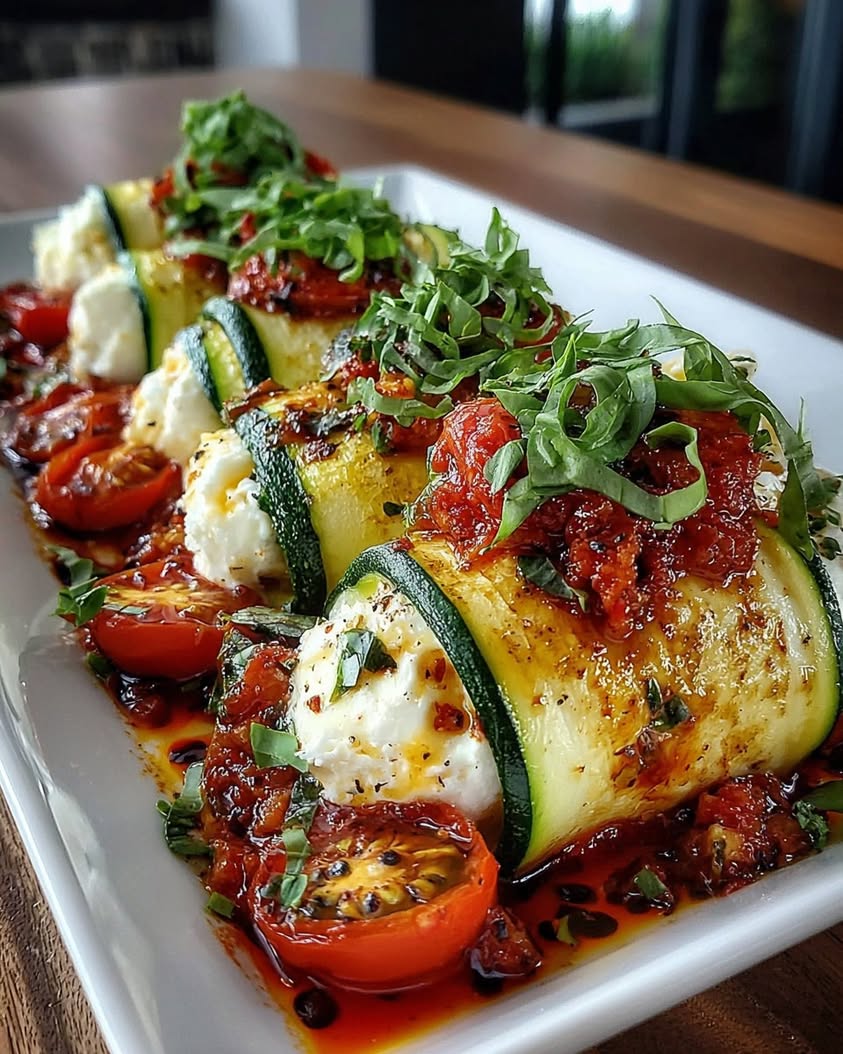
Creamy Burrata Stuffed Zucchini Rolls with Tomato Glaze: The Perfect Summer Appetizer
Imagine a dish where the silky richness of burrata meets the fresh crunch of garden zucchini, all enveloped in a sweet and tangy tomato glaze. That is exactly what you get with Creamy Burrata Stuffed Zucchini Rolls with Tomato Glaze. These elegant rolls are surprisingly simple to prepare, yet they look like they came straight from a fine Italian trattoria. The contrast of warm, tender zucchini against the cool, creamy center creates an unforgettable eating experience every time.
When you slice into one of these rolls, the burrata spills out gently, mixing with the glossy tomato glaze on the plate. Each bite delivers a burst of summer flavor, from the herb-flecked filling to the caramelized sweetness of the slow-roasted tomatoes. This recipe transforms humble ingredients into a showstopper, making it perfect for dinner parties or quiet weeknight indulgences. The combination of textures and temperatures keeps your palate engaged from the first forkful to the last.
What makes Creamy Burrata Stuffed Zucchini Rolls with Tomato Glaze so special is how the components work in harmony. The zucchini provides a mild, slightly nutty base that never overpowers the burrata. The tomato glaze adds acidity and sweetness, cutting through the richness of the cheese beautifully. Fresh basil or mint ties everything together, adding a pop of color and a refreshing finish. This is a dish that celebrates simplicity without sacrificing flavor.
Quick Recipe Highlights
- Flavor Profile: The recipe balances creamy, savory burrata with a sweet-tart tomato glaze. Earthy notes from the zucchini complement the richness, while fresh herbs add brightness.
- Texture: You get a soft, tender zucchini exterior that yields to a luscious, oozy burrata filling. The tomato glaze provides a slightly sticky, smooth finish that coats everything perfectly.
- Aroma: Roasting zucchini fills your kitchen with a warm, vegetal fragrance. The garlic and herbs in the glaze release heady notes, while the burrata offers a subtle milky sweetness when warm.
- Visual Appeal: Bright green zucchini stripes contrast beautifully with the deep red tomato glaze. The white burrata center peeks out from each roll, making for an appetizing presentation on any plate.
- Skill Level Needed: This dish requires basic knife skills for slicing zucchini and rolling. The sauce is simple to simmer, so even confident beginners can succeed with attention to detail.
- Special Equipment: You need a mandoline or sharp chef’s knife for even zucchini slices. A small saucepan for the glaze and a baking dish for roasting are also essential tools here.
Recipe Overview
- Difficulty Level: I rate this Creamy Burrata Stuffed Zucchini Rolls with Tomato Glaze as moderate because of the rolling technique. Slicing zucchini evenly and rolling them without tearing requires a steady hand. However, the steps are straightforward, and practice makes the process much easier over time.
- Category: This recipe fits perfectly as an appetizer or a light main course. It also works beautifully as a side dish for grilled meats or fish. You can serve it warm or at room temperature, making it versatile for buffets.
- Cuisine: The dish draws from Italian culinary traditions, especially from Puglia where burrata originates. The tomato glaze echoes classic southern Italian sauces, while the zucchini preparation reflects summer cucina povera. It is a modern take on stuffed vegetable dishes found across the Mediterranean.
- Cost: Depending on your location, burrata can be a pricier cheese, but you only need one ball for this recipe. Zucchini and tomatoes are affordable, especially in summer. Overall, the cost is moderate, offering restaurant-quality results at home.
- Season: Zucchini peaks in summer, which is when this dish truly shines. The tomatoes are also at their sweetest, making the glaze extra flavorful. You can make it year-round with greenhouse vegetables, but summer offers the best quality.
- Occasion: These rolls are ideal for summer parties, holiday gatherings, or romantic dinners. They impress guests without requiring hours in the kitchen. You can also prepare components ahead, making entertaining less stressful.
Why You’ll Love This Recipe
The taste and texture of Creamy Burrata Stuffed Zucchini Rolls with Tomato Glaze are absolutely addictive. The warm zucchini softens just enough to hold its shape, while the burrata stays cool and creamy inside. As you bite through, the cheese mixes with the tangy glaze, creating a luxurious mouthfeel. The combination of savory, sweet, and tangy flavors keeps every bite interesting. Moreover, the fresh herbs add a bright, aromatic note that lifts the entire dish.
Convenience is a major advantage of this recipe, as it comes together quickly with minimal fuss. You can prep the zucchini and glaze in under thirty minutes, then simply assemble and bake. The hands-on time is short, which means you can focus on other dishes or your guests. Also, these rolls hold up well after baking, so you can make them a bit ahead. This flexibility makes them a go-to for busy home cooks who still want impressive results.
Nutritionally, this recipe offers a balanced profile with plenty of vegetables and protein. Zucchini is low in calories but high in vitamins A and C, plus fiber for digestion. Burrata provides calcium and protein, though it is richer than mozzarella. The tomato glaze adds lycopene, an antioxidant linked to heart health. Therefore, you can enjoy a satisfying dish without feeling overly heavy or guilty.
For social gatherings, Creamy Burrata Stuffed Zucchini Rolls with Tomato Glaze always wows guests. The presentation is elegant, with bright colors and a drizzle of glossy sauce. People love the surprise of the creamy center when they cut into the roll. It is a conversation starter that feels special but not overly complicated. Serving these rolls makes you look like a skilled host without the stress of complex techniques.
Cost-effectiveness is another reason to love this recipe, as it uses affordable seasonal produce. A single ball of burrata stretches across multiple servings, making it economical. The ingredients are accessible at any grocery store, so you do not need specialty shops. Additionally, the dish is naturally low-carb and gluten-free, appealing to many dietary preferences. You get a luxurious appetizer without breaking your budget or your diet.
Historical Background and Cultural Significance
Burrata originated in the Murgia region of Apulia, southern Italy, in the early twentieth century. Dairy farmers created it as a way to use up mozzarella scraps and cream. They stretched the curds into a pouch, then filled it with soft stracciatella and fresh cream. This invention prevented waste while creating a luxurious new cheese. Today, burrata is celebrated worldwide for its rich, buttery texture and delicate flavor.
Culturally, burrata represents Italian ingenuity and the importance of seasonal eating. In Puglia, it is often served simply with bread, olive oil, and tomatoes. The cheese is a symbol of hospitality, appearing at family meals and festive occasions. Pairing it with zucchini pays homage to the region’s abundant summer gardens. This recipe honors that tradition while adding a modern twist with the tomato glaze.
The evolution of stuffed zucchini dishes crosses many Mediterranean cuisines, from Greek kolokithakia to Provencal farcis. Italian cooks have long filled zucchini with rice, herbs, and cheese. This Creamy Burrata Stuffed Zucchini Rolls with Tomato Glaze updates that classic concept by using a soft, spreadable cheese. The technique of rolling the zucchini adds elegance and allows the filling to shine. It is a contemporary interpretation of a rustic, home-cooked favorite.
Regional variations of stuffed zucchini exist throughout Italy, each reflecting local ingredients. In Liguria, cooks use pesto and pine nuts, while Sicilians add capers and anchovies. This version with burrata and tomato glaze is especially popular in modern Italian-American cuisine. It combines the creamy cheese from the south with a sweet-savory sauce reminiscent of northern condiments. The result is a fusion that respects tradition while embracing innovation.
Ingredient Deep Dive
Burrata is the star of this dish, originating from the Italian word “burro,” meaning butter. This fresh cheese is made from cow’s milk mozzarella and cream, giving it a decadent texture. It is high in protein and calcium, though it is also higher in fat than mozzarella. When selecting burrata, look for a firm outer pouch that gives slightly when pressed. The cheese should be stored in its brine and used within a few days of purchase. For a substitute, you can use fresh mozzarella pearls mixed with a splash of heavy cream.
Zucchini, also called courgette, is the perfect vehicle for stuffing. It belongs to the summer squash family and is native to the Americas, though it is central to Italian cooking. Zucchini is low in calories and carbs, rich in vitamin C, potassium, and antioxidants. Choose small to medium zucchini that are firm and free of blemishes for the best texture. Store them in the refrigerator crisper drawer for up to a week. If zucchini is too seedy, use yellow squash as a substitute, though it will be slightly sweeter.
Tomatoes are the base of the glaze and should be ripe and flavorful. San Marzano or Roma tomatoes work best because they are meaty and low in seeds. Tomatoes are packed with lycopene, which supports heart health and reduces inflammation. Look for tomatoes that are deep red and fragrant, with firm flesh but a slight give. Store them at room temperature away from direct sunlight; never refrigerate ripe tomatoes. Canned San Marzanos are excellent alternatives when fresh tomatoes are out of season.
Fresh basil is not just a garnish but a key flavor component. This herb is native to India but has become a staple of Italian cuisine. Basil contains essential oils that provide anti-inflammatory and antibacterial benefits. Choose basil leaves that are vibrant green without any dark spots or wilting. Store basil like a bouquet, with stems in water and a plastic bag over the leaves. If basil is unavailable, use fresh mint or parsley for a different but complementary flavor profile.
Common Mistakes to Avoid
- Overcooking the zucchini slices before rolling them can make them too soft and breakable. You want them just tender enough to roll without cracking, so blanch or grill them briefly.
- Using too much burrata filling causes the rolls to burst open during baking. A teaspoon per roll is enough; you can always add more if you prefer a larger filling.
- Not salting the zucchini slices to draw out excess moisture leads to watery rolls. Let them sit with salt for ten minutes, then pat them dry before filling.
- Submerging the rolls completely in tomato glaze makes them soggy. Instead, spoon the glaze over the top after baking or serve it on the side.
- Forgetting to secure the rolls with a toothpick can cause them to unroll during cooking. A simple wooden pick keeps everything in place until serving.
- Using low-quality tomatoes for the glaze results in a flat, acidic sauce. Opt for ripe, sweet tomatoes or good canned San Marzanos for the best depth of flavor.
- Skipping the fresh herbs at the end reduces the dish’s brightness. Always add a sprinkle of basil or mint just before serving to lift the flavors.
- Overbaking the rolls dries out the zucchini and makes the burrata tough. Bake just until the zucchini is warm and the cheese is slightly melted, about 10-12 minutes.
- Not draining the burrata before using it adds excess liquid to the rolls. Gently squeeze the burrata over a bowl to remove any brine before stuffing.
- Rolling the zucchini too tightly compresses the filling and makes it hard to eat. Aim for a snug but gentle roll that allows the burrata to peek out.
Essential Techniques
Blanching the zucchini slices is crucial for achieving the perfect tender-yet-flexible texture. Bring a pot of salted water to a boil and submerge the slices for about 60 seconds. Immediately transfer them to an ice bath to stop the cooking process. This technique softens the zucchini just enough to roll without breaking. Pat them dry thoroughly before assembling to avoid watery rolls. Over-blanching leads to mush, so set a timer and stick to it.
Mastering the rolling technique is key for beautiful Creamy Burrata Stuffed Zucchini Rolls with Tomato Glaze. Place a slice of blanched zucchini flat on a clean surface. Spread a small amount of burrata near one end, then gently fold the end over the filling. Roll the zucchini away from you, keeping it tight but not crushing the cheese. Secure the roll with a toothpick inserted horizontally through the center. With practice, you will develop a feel for the right pressure.
Creating the tomato glaze requires patience and a watchful eye. Start by sautéing garlic in olive oil until fragrant, then add diced tomatoes or passata. Simmer the mixture over low heat, stirring occasionally, until it thickens and reduces by half. This process concentrates the natural sugars and acidity, creating a balanced sauce. Season with salt, pepper, and a pinch of sugar if the tomatoes are very tart. The glaze should coat the back of a spoon before you remove it from the heat.
Assembling the dish properly ensures even cooking and beautiful presentation. Arrange the zucchini rolls in a single layer in a lightly oiled baking dish. Drizzle a small amount of olive oil over the rolls, but wait to add the glaze. Bake at 375 degrees Fahrenheit until the rolls are heated through and the cheese is just beginning to soften. Spoon the tomato glaze over the rolls after baking to preserve its fresh flavor. Garnish with torn basil or mint leaves right before serving.
Pro Tips for Perfect Creamy Burrata Stuffed Zucchini Rolls with Tomato Glaze
Select zucchini that are uniform in thickness so the slices cook evenly across all rolls. If some pieces are thicker, blanch them for an extra ten seconds. Thin slices at the ends can be set aside for another use or chopped into the glaze.
Use a mandoline slicer set to an eighth of an inch for perfectly consistent zucchini strips. This tool speeds up prep and ensures professional-looking results. Always use the guard to protect your fingers from the sharp blade.
Let the burrata come to room temperature before stuffing for a creamier texture. Cold burrata can be firm and may not spread as easily inside the rolls. Let it sit out for about fifteen minutes before you begin assembly.
Make extra tomato glaze and store it in the refrigerator for up to a week. It is fantastic on pasta, grilled chicken, or eggs for a quick flavor boost. The glaze also freezes well, so you can have it ready for future batches.
Toast a handful of pine nuts and sprinkle them over the finished rolls for added crunch. The nutty flavor complements the creamy burrata and sweet tomato glaze beautifully. You can also use sliced almonds or crushed walnuts if pine nuts are not available.
Serve these rolls on a large platter with extra glaze drizzled around them for a dramatic presentation. Add a few fresh basil leaves and edible flowers for an elegant touch. The colors will pop against a white or dark serving dish.
If you are preparing these for a party, assemble the rolls up to four hours ahead and refrigerate. Add the glaze just before baking to prevent sogginess. Increase the baking time by a few minutes if the rolls are cold from the fridge.
Use a serrated knife to slice the rolls in half if you prefer smaller, bite-sized appetizers. This works especially well for cocktail parties where guests are standing. Secure each half with a separate toothpick for easy grabbing.
Variations and Adaptations
Regional variations of stuffed zucchini appear across the Mediterranean, each with distinct flavors. In Greece, cooks use feta cheese, dill, and lemon zest for a tangy filling. Turkish versions often include rice, currants, and pine nuts for a sweet-savory bite. French farcis incorporate breadcrumbs, garlic, and herbes de Provence for a rustic touch. You can adapt this recipe by swapping the burrata for any of these fillings based on your preference.
Seasonal adaptations allow you to enjoy this dish year-round with local produce. In spring, try using yellow squash or pattypan squash instead of zucchini. Autumn calls for roasted butternut squash slices as the wrapper, with sage and brown butter. Winter versions can use roasted eggplant slices, which are meaty and hold up well. Each season brings unique flavors that change the character of the dish completely.
Dietary modifications are straightforward for this recipe, as it is already gluten-free and low-carb. For a dairy-free version, substitute the burrata with a cashew-based ricotta or soft tofu blended with nutritional yeast. Vegan options can use a homemade almond ricotta with lemon juice and garlic. The tomato glaze remains naturally vegan, so you only need to adjust the filling. These alternatives still deliver a creamy, satisfying result.
Flavor variations can transform the profile from Italian to Mediterranean or even Asian. Add a teaspoon of harissa to the tomato glaze for a spicy North African twist. Use miso paste in the glaze for an umami-rich Japanese version. Replace basil with cilantro and mint for a Southeast Asian vibe. The possibilities are endless, so feel free to experiment with your favorite flavor combinations.
Texture modifications can make the dish crunchier or softer depending on your mood. Add a layer of panko breadcrumbs to the filling for a crispy contrast. Alternatively, cook the zucchini rolls in a skillet with a lid to steam them for a very tender texture. You can also grill the zucchini slices instead of blanching them for a smoky flavor. Each method offers a different mouthfeel while keeping the core concept intact.
Presentation alternatives let you serve this recipe in creative ways. For a deconstructed version, layer all components on a plate and let guests build their own rolls. You can also cut the finished rolls into pinwheels and serve them on skewers for appetizers. Another idea is to serve the rolls over a bed of arugula dressed with lemon vinaigrette. The options are limited only by your imagination.
Serving and Presentation Guide
Plating these rolls on a large white platter allows the colors to stand out beautifully. Arrange the rolls in a circular pattern with the seam side down for stability. Drizzle the tomato glaze in a zigzag across the top rather than pooling it underneath. This technique ensures each roll gets a balanced amount of sauce. Keep the garnish simple to maintain the dish’s elegance.
Garnishing ideas include fresh basil leaves, microgreens, or edible flowers like nasturtiums. A sprinkle of flaky sea salt and cracked black pepper adds texture and visual contrast. You can also add a drizzle of high-quality extra virgin olive oil right before serving. Small dollops of pesto or balsamic reduction around the plate add professional flair. Remember that garnishes should enhance, not overwhelm, the main ingredient.
Traditional accompaniments for this dish include crusty bread or garlic toast to soak up the glaze. A simple green salad with lemon vinaigrette balances the richness of the burrata. Grilled or roasted vegetables make a colorful side that complements the rolls. For a heartier meal, serve them alongside pasta with a light tomato sauce. These pairings ensure a complete and satisfying dining experience.
Modern serving suggestions involve plating individual portions on small wooden boards or slate tiles. This rustic presentation works well for casual dinner parties or outdoor gatherings. You can also serve the rolls as appetizers on a large platter with toothpicks for easy grabbing. For a brunch setting, pair them with poached eggs and arugula. Adapt the presentation to match your event’s style and formality.
Temperature considerations are important for the best eating experience. Serve the rolls warm but not piping hot, as burrata becomes too runny when overheated. Let them rest for two to three minutes after baking to stabilize the cheese. Room temperature rolls are also delicious, especially on hot summer days. Avoid serving them cold, as the texture becomes dense and less enjoyable.
Portion control tips help you serve the right amount for your guests. Plan for two to three rolls per person as a main course for adults. As an appetizer, one to two rolls per person is sufficient before a larger meal. For children, half a roll is often enough given the rich filling. Adjust portion sizes based on the other dishes you are serving alongside.
Wine and Beverage Pairing
For wine pairings, a crisp Italian white wine like Vermentino or Falanghina complements the creamy burrata perfectly. These wines offer citrus and mineral notes that cut through the richness of the cheese. A light-bodied red like Bardolino or fruity Dolcetto also works well with the tomato glaze. The tannins are soft enough not to overpower the delicate zucchini. Serve white wines chilled and reds at cool room temperature for the best experience.
Non-alcoholic alternatives include sparkling water with a squeeze of lemon or elderflower cordial. A chilled cucumber and mint lemonade refreshes the palate between bites of the rich rolls. Unsweetened iced tea with a hint of peach or basil pairs beautifully with the dish. These options keep the meal light and prevent the alcohol from competing with the flavors. Always offer a non-alcoholic option for designated drivers or abstaining guests.
For coffee or tea pairings, consider a light roast coffee with floral notes after the meal. Earl Grey tea with its bergamot aroma complements the citrus in the tomato glaze. A chamomile or mint tea works well for a caffeine-free option that soothes digestion. Serve these beverages after the main course to cleanse the palate. Avoid strongly flavored teas that might clash with the subtle zucchini and burrata.
Temperature considerations for beverages are essential for balancing the warm rolls. Serve white wine and sparkling water well-chilled to contrast with the warm dish. Red wine should be slightly cool, around 55 to 60 degrees Fahrenheit, to maintain its freshness. Tea and coffee should be hot but not scalding to avoid overwhelming the senses. The goal is to have the beverage complement, not compete with, the food’s temperature.
Serving suggestions for beverages include using stemless wine glasses for a casual modern look. A small pitcher of infused water with cucumber and mint makes a beautiful table centerpiece. Provide glassware that is appropriate for the drink, and consider using reusable straws for cocktails. Ensure guests can easily reach their drinks without crowding the dinner plate. Thoughtful beverage service enhances the overall dining experience.
Storage and Shelf Life
Storing leftover Creamy Burrata Stuffed Zucchini Rolls with Tomato Glaze requires careful handling to preserve quality. Place any uneaten rolls in an airtight container with a tight-fitting lid. Layer them gently so they do not squish together or break apart. Store the container in the refrigerator where the temperature is consistently below 40 degrees Fahrenheit. For best quality, consume the leftovers within two to three days of preparation.
Temperature requirements are strict because burrata is a fresh cheese that spoils quickly. Do not leave the rolls at room temperature for more than two hours total. If you are serving them at a party, keep the platter on ice or replenish it frequently. The tomato glaze can stay at room temperature longer, but it is safer to refrigerate everything together. Always err on the side of caution with dairy-based dishes.
Container recommendations include glass or BPA-free plastic containers that are not too large. Excess air in the container can cause the zucchini to dry out and the glaze to separate. You can also use a shallow dish covered tightly with plastic wrap. If you need to stack the rolls, place a piece of parchment paper between the layers. Proper container choice keeps the texture and flavor intact.
Signs of spoilage include a sour smell coming from the burrata, which indicates bacterial growth. The zucchini might become slimy or develop a dark, mushy texture if it is going bad. The tomato glaze should not form mold or bubbles, which are signs of fermentation. If you notice any of these changes, discard the entire dish immediately. Consuming spoiled dairy can cause foodborne illness, so it is not worth the risk.
Reheating instructions are important to avoid drying out the rolls or melting the cheese too much. The best method is to reheat them in a 350 degree Fahrenheit oven for about five to seven minutes. You can also use a microwave on medium power for 30-second intervals, but this can make the zucchini rubbery. Add a splash of water or extra glaze before reheating to restore moisture. Serve immediately after reheating for the best texture.
Freezing guidelines apply mainly to the tomato glaze rather than the assembled rolls. The burrata does not freeze well because its texture becomes grainy and watery upon thawing. You can freeze the cooked zucchini strips separately for up to three months. The tomato glaze can be frozen in an airtight container for up to three months as well. Thaw the glaze in the refrigerator overnight and reheat gently before using with fresh ingredients.
Make Ahead Strategies
Prep timeline for Creamy Burrata Stuffed Zucchini Rolls with Tomato Glaze can start up to one day in advance. Begin by blanching and cooling the zucchini slices, then pat them dry thoroughly. Prepare the tomato glaze and let it cool completely before storing both components separately. You can also drain and portion the burrata into small pieces for easy assembly later. Keep everything covered in the refrigerator until you are ready to roll.
Storage between steps requires keeping components in separate containers to maintain optimal texture. The zucchini slices should be layered with parchment paper to prevent sticking. The glaze can sit in a jar with a tight lid to preserve its flavor. Do not combine the burrata with the zucchini until assembly, as the moisture transfer can make the rolls soggy. This separation ensures each element stays fresh and ready for final preparation.
Quality impact assessment shows that make-ahead preparation maintains most of the dish’s integrity. The zucchini may soften slightly more than when freshly prepared, but it still holds up well. The glaze actually deepens in flavor after a day in the refrigerator. The only compromise is the burrata, which is best when used fresh. For the best results, assemble the rolls no more than four hours before baking.
Assembly tips for make-ahead success include working quickly and efficiently once you start. Lay out all prepared components on a clean work surface for easy access. Roll the zucchini as you normally would, securing each with a toothpick. Arrange the rolls in the baking dish and cover tightly with plastic wrap. Store them in the refrigerator and add the glaze just before baking to prevent sogginess.
Reheating guidelines for make-ahead rolls differ slightly from freshly made ones. If the rolls are fully assembled and chilled, bake for 15 to 18 minutes at 375 degrees Fahrenheit. You may need to cover the dish with foil for the first ten minutes to ensure even heating. Remove the foil for the final minutes to allow the edges to caramelize slightly. Always check that the center is warm before serving.
Fresh element additions can revive make-ahead rolls and make them taste freshly prepared. Toss a handful of fresh basil or mint leaves over the rolls right after baking. A final drizzle of high-quality olive oil and a sprinkle of flaky salt adds brightness. You can also add a squeeze of lemon juice over the glaze to wake up the flavors. These small touches make a big difference in the final dish.
Scaling Instructions
Halving the recipe for a smaller gathering or a romantic dinner is straightforward. Use one medium zucchini instead of two, and adjust the glaze ingredients by cutting them in half. You will need about half a ball of burrata, which can be tricky to divide evenly. Simply cut the burrata ball in half with a sharp knife, then store the other half for another use. Cooking time remains the same since the rolls are the same size.
Doubling or tripling the recipe for larger parties requires some planning and extra equipment. You will need a larger baking dish or two dishes to avoid overcrowding the rolls. The glaze can be multiplied easily, but you may need to simmer it slightly longer to achieve the right consistency. Use multiple skillets or a large pot to blanch the zucchini in batches. Ensure the zucchini slices do not overlap in the ice bath to cool them quickly.
Equipment adjustments for scaled versions include using sheet pans instead of baking dishes. A rimmed baking sheet lined with parchment paper allows for even heat distribution. For tripling the recipe, you might need to use two ovens or bake the dishes one after another. If you are short on prep space, prepare the components in stages. A large cutting board and multiple mixing bowls become essential for smooth workflow.
Timing modifications for larger batches include adding a few extra minutes for blanching the zucchini. The water temperature drops when you add many slices, so bring it back to a rolling boil before adding more. Baking time may increase by two to three minutes for a full pan of rolls. Always check for doneness by testing the temperature of the center rolls. Adjustments are small but crucial for consistent results.
Storage considerations for scaled recipes revolve around having enough refrigerator space. Cooked zucchini slices can be stored in bags or containers with paper towels to absorb moisture. The glaze keeps well in jars for up to a week, so you can make it well ahead. Assembled rolls must be stored in a single layer or with parchment paper between layers. Plan your refrigerator space before you start cooking to avoid last-minute scrambling.
Nutritional Deep Dive
Macro breakdown for one serving of Creamy Burrata Stuffed Zucchini Rolls with Tomato Glaze shows a balanced profile. Each serving contains approximately 180 to 200 calories, depending on the amount of olive oil used. Carbohydrates are low, around 8 to 10 grams from the zucchini and tomatoes. Protein comes from the burrata, providing about 10 to 12 grams per serving. Fat content is around 14 grams, mostly from the burrata and olive oil.
Micronutrient analysis reveals that this dish is rich in several important vitamins and minerals. Zucchini provides significant amounts of vitamin A, crucial for eye health and immune function. The tomatoes in the glaze contribute vitamin C, which supports collagen production and iron absorption. Burrata offers calcium for bone health and phosphorus for energy metabolism. You also get potassium from the zucchini, which helps regulate blood pressure.
Health benefits of this recipe include its anti-inflammatory properties from the olive oil and tomatoes. The lycopene in the tomato glaze is a powerful antioxidant that may reduce heart disease risk. Zucchini is high in water and fiber, aiding digestion and promoting feelings of fullness. The moderate protein content helps stabilize blood sugar levels when eaten as part of a balanced meal. This dish fits well into a Mediterranean-style eating pattern.
Dietary considerations for this recipe are generally positive, but some people need to adjust portions. The dish is naturally gluten-free and grain-free, making it suitable for many restrictive diets. It is also low in carbohydrates, which works for low-carb and keto plans. However, it is not vegan or dairy-free due to the burrata. People with lactose intolerance may need to limit their portion size or use a lactose-free substitute.
Portion analysis suggests that two to three rolls as a main course is appropriate for most adults. For weight management, starting with a salad can help fill you up before eating the richer rolls. The dish is satisfying enough to prevent overeating, especially when served with vegetables. If you are tracking macros, weigh the rolls after baking for the most accurate nutritional data. Consistency in portion size helps you enjoy the dish without guilt.
Weight management tips include using less olive oil in the glaze and for drizzling. You can also serve the rolls over a bed of leafy greens to add volume without many calories. The zucchini itself is very low in calories, so you can increase the vegetable ratio by making more rolls. If you are cutting calories, use part-skim mozzarella mixed with a small amount of cream instead of full burrata. Small adjustments keep the flavor high while lowering the calorie load.
Dietary Adaptations
For a gluten-free adaptation, this recipe naturally meets the requirement because no wheat products are used. The zucchini and tomato glaze are both gluten-free ingredients. However, always check that your store-bought tomato passata or canned tomatoes are certified gluten-free. Cross-contamination can occur in some facilities, so read labels carefully. Serve the rolls with rice crackers or gluten-free bread if you want an accompaniment.
Dairy-free adaptations require replacing the burrata with a creamy, non-dairy alternative. A cashew-based ricotta is a popular choice, as it mimics the texture of fresh cheese. You can also use firm silken tofu blended with lemon juice and nutritional yeast for a savory profile. The tomato glaze is naturally dairy-free, so you only need to adjust the filling. These substitutes keep the dish creamy and satisfying for those avoiding dairy.
Vegan adaptations take the dairy-free version one step further by ensuring all ingredients are plant-based. Use the cashew ricotta or tofu filling mentioned above, and omit any honey from the glaze. The dish is already inherently vegan except for the cheese, so the swap is straightforward. Garnish with fresh herbs and drizzle with a high-quality balsamic reduction for extra flavor. This version is surprisingly rich and can please even non-vegans at your table.
Low-carb adaptations are easy since zucchini is already very low in carbohydrates. The burrata is also low in carbs, with less than one gram per serving. The main source of carbs is the tomatoes in the glaze, which add natural sugars. To reduce carbs further, use a smaller amount of glaze or make it with sugar-free tomato puree. This dish Print
Creamy Burrata Stuffed Zucchini Rolls with Tomato Glaze
- Total Time: 45 minutes
- Yield: 4
Description
Tender zucchini slices are rolled around a creamy burrata and herb filling, then baked with a sweet and tangy tomato glaze. A delightful appetizer or light main course.
Ingredients
- 4 medium zucchini, sliced lengthwise into 1/4-inch thick strips
- 1 tablespoon olive oil, plus more for brushing
- Salt and freshly ground black pepper
- 8 ounces burrata cheese, drained and torn into pieces
- 2 tablespoons chopped fresh basil
- 1 tablespoon chopped fresh parsley
- 1 clove garlic, minced
- 1/4 cup grated Parmesan cheese
- 1/2 cup tomato glaze (store-bought or homemade: 1/4 cup tomato paste, 2 tablespoons honey, 1 tablespoon balsamic vinegar, 1/4 teaspoon red pepper flakes, 2 tablespoons water)
- Fresh basil leaves for garnish (optional)
Instructions
- Preheat the oven to 375°F (190°C). Lightly brush a baking dish with olive oil.
- Lay the zucchini strips on a paper towel-lined surface. Lightly salt both sides and let rest for 10 minutes to draw out excess moisture. Pat dry.
- Brush both sides of each zucchini strip with olive oil and season with a pinch of salt and pepper.
- In a small bowl, combine the torn burrata, chopped basil, parsley, minced garlic, and grated Parmesan. Gently mix until just combined.
- Place a generous spoonful (about 1 heaping tablespoon) of the burrata mixture at one end of a zucchini strip. Roll up tightly and place seam-side down in the prepared baking dish. Repeat with remaining strips and filling.
- In a separate small bowl, whisk together the tomato glaze ingredients (tomato paste, honey, balsamic vinegar, red pepper flakes, and water) if making homemade. Spoon the glaze evenly over the zucchini rolls.
- Bake for 20–25 minutes, until the zucchini is tender and the glaze is bubbly and slightly caramelized.
- Remove from oven and let rest for 5 minutes. Garnish with fresh basil leaves before serving.
Notes
You can customize the seasonings to taste.
- Prep Time: 20 minutes
- Cook Time: 25 minutes
- Method: Appetizer
- Cuisine: Italian-American