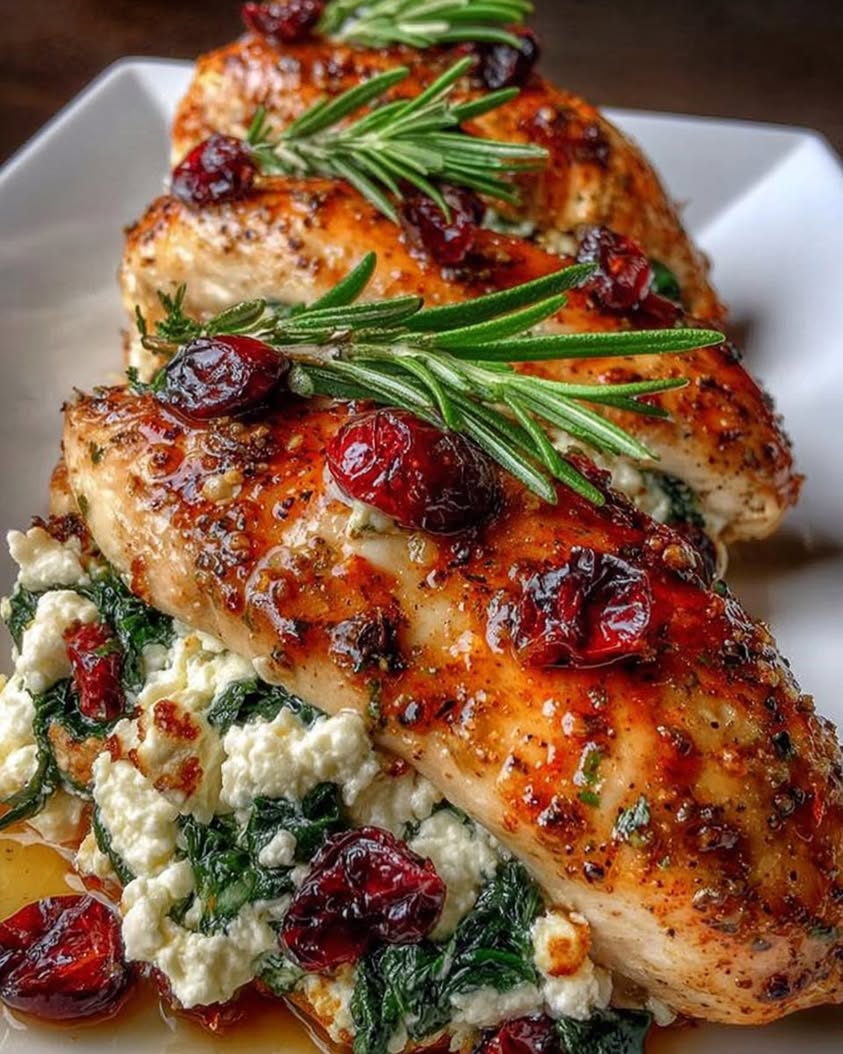
Easy Cranberry Spinach Stuffed Chicken Breasts with Goat Cheese: A Festive Weeknight Dinner
This Easy Cranberry Spinach Stuffed Chicken Breasts with Goat Cheese recipe brings restaurant-quality flavor right into your home kitchen. Imagine a perfectly seared chicken breast, golden brown on the outside, then sliced open to reveal a vibrant, creamy filling filled with tangy goat cheese, sweet dried cranberries, and tender fresh spinach. It is a meal that feels luxurious but comes together in just 40 minutes from start to finish. You will find that this dish checks every box for a satisfying dinner, whether you are cooking for your family or trying to impress dinner guests on a special occasion.
The combination of ingredients in this stuffed chicken recipe creates a beautiful contrast of tastes and textures. The creamy goat cheese provides a rich, tangy base that pairs wonderfully with the sweet, chewy cranberries. Meanwhile, the fresh spinach adds a subtle earthiness and a pop of green color. Each bite offers a different experience, from the savory, juicy chicken to the warm, slightly melted filling. This easy stuffed chicken breast recipe is a wonderful way to incorporate more greens and healthy protein into your diet without sacrificing any flavor or appeal.
What truly makes this recipe shine is its simplicity and reliability. Even if you are new to cooking stuffed chicken, the step-by-step process is straightforward and almost foolproof. You do not need any special culinary skills or hard-to-find ingredients. In fact, most of the items, like boneless skinless chicken breasts, goat cheese, dried cranberries, and fresh spinach, are available at any local grocery store. Furthermore, you can easily customize the filling to suit your taste preferences or what you have on hand. This recipe serves as a wonderful foundation for creating many delicious variations of stuffed chicken breasts.
Quick Recipe Highlights
- Flavor Profile: The dish delivers a fantastic balance of savory, tangy, and sweet notes. The goat cheese offers a distinct tanginess that cuts through the rich chicken, while the dried cranberries provide bursts of sweetness. A hint of garlic and fresh herbs rounds out the overall taste beautifully.
- Texture: You get a wonderful interplay of textures here. The chicken breast develops a crispy, golden-brown crust on the outside while staying incredibly moist and tender on the inside. The filling itself is creamy from the goat cheese, with occasional chewy bits from the cranberries and soft bites of cooked spinach.
- Aroma: As the chicken cooks, your kitchen will fill with a mouthwatering aroma. You will smell the savory scent of seared chicken, the slight tanginess of the warming goat cheese, and the sweet, fruity notes of the cranberries. A final sprinkle of fresh thyme or rosemary adds an aromatic, earthy fragrance that is simply irresistible.
- Visual Appeal: This dish is a showstopper on the plate. You see a beautifully seared, golden-brown chicken breast. When you slice into it, you reveal a stunning spiral of green spinach, white goat cheese, and ruby-red cranberries. The colorful presentation makes it look like you spent hours in the kitchen.
- Skill Level Needed: This recipe is perfect for beginner and intermediate cooks alike. The techniques involved, such as butterflying a chicken breast, making a simple filling, and searing the chicken, are all easy to learn. With clear instructions, you can achieve a professional-looking result on your first try.
- Special Equipment: You only need basic kitchen tools for this recipe. A sharp knife is crucial for butterflying the chicken. You will also need a large, oven-safe skillet, preferably cast iron or stainless steel, for searing and finishing the dish. Toothpicks or kitchen twine will help secure the stuffed chicken rolls.
Recipe Overview
- Difficulty Level: This is an easy recipe because the techniques are simple to master. Butterflying a chicken breast requires only a steady hand and a sharp knife, and mixing the filling is just combining a few ingredients. The cooking process involves a quick sear on the stovetop and a short bake in the oven, with no complicated steps or precise temperature management required. Any home cook can confidently make this Easy Cranberry Spinach Stuffed Chicken Breasts with Goat Cheese.
- Category: This dish fits perfectly as a main course for dinner. It is elegant enough for a holiday table or a romantic date night dinner at home, yet simple enough for a busy weeknight meal. It pairs wonderfully with simple sides like roasted vegetables, a fresh green salad, or creamy mashed potatoes.
- Cuisine: While the technique of stuffing chicken is found in many cultures, this specific flavor profile draws from modern American cuisine. It takes inspiration from classic combinations like spinach and artichoke dip or a festive fall salad. The use of goat cheese and dried cranberries reflects a trend toward combining creamy, tangy cheeses with sweet, tart fruits in savory dishes.
- Cost: This is a relatively affordable recipe to prepare. Boneless, skinless chicken breasts are a cost-effective protein option, particularly when bought in bulk or on sale. Goat cheese, dried cranberries, and fresh spinach are all moderately priced and widely available. You likely already have most of the pantry seasonings on hand, keeping your overall grocery bill low for a dish that feels much more expensive.
- Season: This stuffed chicken is particularly perfect for the fall and winter months. The sweet and tart cranberries evoke feelings of the holiday season, while the hearty chicken and creamy filling provide comforting warmth. However, because fresh spinach is available year-round, you can absolutely enjoy this recipe anytime you crave a delicious and satisfying meal.
- Occasion: You can serve this for a regular family dinner or bring it out for special celebrations. It makes a fantastic main course for Thanksgiving, Christmas, or New Year’s Eve when you want something festive but not too heavy. It also works beautifully for dinner parties, as it looks impressive but is surprisingly easy to prepare for a crowd.
Why You Will Love This Recipe
The taste and texture appeal of these stuffed chicken breasts is simply undeniable. You get an incredible contrast in every single bite. The initial crunch from the seared exterior gives way to incredibly tender, juicy chicken. Then you hit the creamy, tangy goat cheese filling, which is perfectly punctuated by the sweet, chewy dried cranberries. The spinach is softened and adds a lovely, subtle grassy note that ties everything together. It is a flavor combination that is both familiar and exciting, satisfying your craving for something comforting yet gourmet. You will find yourself looking for excuses to make this dish again and again.
When it comes to convenience and preparation benefits, this recipe is a true winner. The active prep time is only about 15 minutes, which is incredibly manageable for a meal that looks so elaborate. You can mix the filling in one bowl while you butterfly the chicken on a cutting board. After a quick sear on the stove, the oven does the rest of the work. This means you have about 20 minutes of hands-off time to prepare a side dish, set the table, or simply relax. The cleanup is also minimal, as you only use a single skillet and a few bowls. It is an efficient way to create a show-stopping dinner without spending your entire evening in the kitchen.
From a nutritional standpoint, this recipe offers several advantages. Chicken breast is a fantastic source of lean protein, which is essential for building muscle and keeping you feeling full and satisfied. The spinach adds a powerful dose of vitamins A, C, and K, along with iron and fiber. Goat cheese, while rich, is often easier to digest than cow’s milk cheese and provides calcium and protein. The dried cranberries offer a natural sweetness and are a source of antioxidants. This meal is well-balanced and aligns with a health-conscious lifestyle, proving that you can eat deliciously and nutritiously at the same time.
For social and entertaining value, this dish is an absolute star. When you bring a platter of these stuffed chicken breasts to the table, your guests will be genuinely impressed. The beautiful sliced presentation with the colorful filling creates an instant “wow” factor. Because the recipe is so easy, you can actually enjoy your own party instead of being stuck in the kitchen. You can prepare the chicken up to a day in advance, store it in the refrigerator, and simply pop it in the oven when your guests arrive. It allows you to be a gracious host while serving a meal that tastes like it came from a high-end restaurant.
Finally, the cost-effectiveness and accessibility of the ingredients make this a practical recipe for any budget. You are using common, non-exotic items that are easy to find. You can often find boneless, skinless chicken breasts on sale, which makes this a very economical protein choice. A small log of goat cheese is inexpensive and goes a long way in providing flavor. Dried cranberries and fresh spinach are pantry and fridge staples that cost very little. You can create a luxurious, satisfying dinner without any expensive cuts of meat or specialty ingredients, making this an excellent value for your money and your time.
Historical Background and Cultural Significance
The concept of stuffing meat with flavorful fillings is a culinary practice that dates back centuries. Ancient Romans were known to stuff various birds and meats with mixtures of nuts, fruits, herbs, and spices. This technique was a way to add flavor and moisture to the meat, as well as to use up leftover ingredients. Over time, this method spread across Europe and evolved in different cultures. In America, stuffed chicken dishes became popular in the mid-20th century, often featuring simple bread-based stuffings. This evolution shows a long-standing human desire to transform simple proteins into more complex and satisfying meals.
In modern American cuisine, the chicken breast has become a culinary canvas for creativity. As home cooks looked for ways to make lean, boneless chicken breasts more exciting, the practice of stuffing them with delicious fillings became a staple. The combination of spinach and cheese is a classic pairing, famously seen in dishes like spanakopita and Florentine-style entrees. The addition of dried cranberries reflects the American predilection for combining sweet and savory flavors, a trend that has become increasingly popular in everything from salads to grain bowls. This specific recipe is a beautiful example of that trend, blending comfort food with contemporary tastes.
The cultural significance of this dish lies in its versatility and its ability to bridge the gap between everyday cooking and special occasion dining. It represents a modern, ingredient-driven approach to cooking where flavor combinations are prioritized over complex techniques. This recipe is often passed around as a “go-to” for potlucks, family gatherings, and holiday meals because it is reliable and always receives compliments. It has become a part of the American culinary canon for home cooks who want to serve something that feels both special and approachable. It connects us to the tradition of making something beautiful and delicious from simple, wholesome ingredients.
Regional variations of stuffed chicken breasts are abundant across the country. In the South, you might find them stuffed with cheddar, bacon, and jalapenos. On the West Coast, sun-dried tomatoes, artichoke hearts, and feta cheese are popular fillings. In the Northeast, apple and gouda or cranberry and brie are common combinations. This recipe with goat cheese, spinach, and cranberries has a rustic, autumnal feel that is popular in many regions, particularly in the fall. These variations show how the basic technique can be adapted to reflect local ingredients, seasonal produce, and personal taste preferences, making the stuffed chicken breast a truly national dish.
Ingredient Deep Dive
Goat cheese is the star of the filling in this recipe, providing a creamy, tangy base that pairs perfectly with the other ingredients. Its history can be traced back thousands of years to the Middle East and Mediterranean regions, where goats were domesticated early on. Goat cheese is prized for its distinct, slightly acidic flavor profile that is less heavy than cow’s milk cheese. Nutritionally, it is lower in calories and fat than many other cheeses but high in protein and calcium. It also contains probiotics that are beneficial for gut health. When selecting goat cheese for this recipe, look for a log that feels firm but has a slight give when pressed near the center. It should be white and moist, without any signs of drying or discoloration. Store it tightly wrapped in the refrigerator and use it before the expiration date for the best flavor. If you do not have goat cheese, you can easily substitute it with cream cheese for a milder taste or feta cheese for a saltier, crumblier texture.
Dried cranberries bring a sweet, tart, and chewy element that perfectly balances the savory and tangy notes of the dish. Cranberries are native to North America and were an important food source for Native Americans, who used them for food, medicine, and dye. Commercially, most cranberries are grown in Wisconsin, Massachusetts, and New Jersey. Nutritionally, dried cranberries are a good source of fiber and antioxidants, particularly proanthocyanidins, which are known for supporting urinary tract health. When buying dried cranberries, check the label for added sugars, as many brands add significant amounts. Look for ones that are plump and moist, not hard or shriveled. You can store them in a cool, dark pantry for several months or in the refrigerator for longer freshness. If you need a substitute, dried cherries offer a similar sweet-tart profile, or you can use golden raisins for a sweeter, milder flavor. Chopped dried apricots would also work well.
Fresh spinach is the green component that adds color, moisture, and a mild earthy flavor to the filling. Spinach originated in ancient Persia and eventually spread to Europe and then the Americas. It is one of the most nutrient-dense foods you can eat, packed with vitamins A, C, and K, as well as iron, magnesium, and folate. The iron in spinach is best absorbed when paired with the vitamin C from the cranberries or a squeeze of lemon juice. When selecting fresh spinach, choose leaves that are deep green, crisp, and free from yellowing or slimy spots. Baby spinach is the best choice for this recipe because it is tender and wilts quickly. Store unwashed spinach in a sealed bag or container with a paper towel in the refrigerator to absorb excess moisture. It is best used within a few days. For a substitution, you could use chopped kale, which is a bit tougher and will require a longer wilt time, or arugula for a peppery kick. Swiss chard would also work as a substitute.
Boneless, skinless chicken breasts are the main protein and the vessel for the delicious filling. Chicken is the most consumed meat in the United States, valued for its mild flavor, versatility, and affordability. Nutritionally, it is an excellent source of high-quality lean protein, which is crucial for muscle repair, enzyme production, and overall health. It is also a good source of B vitamins, particularly niacin and B6. When buying chicken breasts, look for ones that are uniformly thick, about 6 to 8 ounces each, as this helps them cook evenly. Avoid packages with excess liquid or any off-odors. Store raw chicken in the coldest part of your refrigerator and cook it within two days, or freeze it for up to three months. If you prefer a different protein, you can easily use boneless, skinless chicken thighs for a juicier, more flavorful result, though the cooking time will need to be slightly increased. Thinly sliced turkey breast cutlets would also be a great alternative.
Garlic and herbs are the aromatic foundation of this recipe. Garlic has been used for thousands of years not only as a flavoring agent but also for its medicinal properties. It contains allicin, a compound linked to numerous health benefits, including immune support and reduced blood pressure. Fresh garlic cloves are far superior to pre-minced garlic in jars for flavor and aroma. Choose bulbs that are firm with tight, unbroken skin. Store them in a cool, dark, and dry place. Fresh thyme or rosemary adds a beautiful fragrant, woodsy note that pairs wonderfully with chicken and goat cheese. If you do not have fresh herbs, you can use half the amount of dried herbs, but the flavor will be less vibrant. For the oil, a good quality olive oil is best for searing because it has a medium-high smoke point and a pleasant fruity flavor.
Common Mistakes to Avoid
- One of the most common mistakes is not pounding the chicken breasts to an even thickness after butterflying them. If you skip this step, the chicken will cook unevenly, with the thick center remaining undercooked while the thinner edges become dry and tough.
- Overfilling the chicken breast is another frequent error. It is tempting to add a generous amount of filling, but too much will squeeze out during cooking. A modest, well-packed log of filling in the center is all you need for a perfect result.
- Failing to properly seal the stuffed chicken is a crucial oversight. If you do not secure the edges with toothpicks or kitchen twine, the filling will leak out into the pan during searing and baking, creating a mess and leaving you with a less flavorful chicken breast.
- Using cold chicken breasts directly from the refrigerator is a mistake. Cold chicken will seize up in the hot pan and can lead to uneven cooking. Let the stuffed chicken rest at room temperature for about 15 minutes before searing.
- Searing the chicken over too low of heat is a common problem. The pan needs to be hot enough to create a golden-brown crust quickly. If the heat is too low, the chicken will slowly steam instead of sear, resulting in a pale, unappealing exterior.
- Overcooking the chicken is the biggest fear for many cooks. A perfectly cooked chicken breast is juicy and tender. Overcooking leads to dry, stringy meat. Use an instant-read thermometer to check for doneness and remove the chicken from the oven at 160 degrees Fahrenheit.
- Not letting the chicken rest after baking is a step that gets skipped too often. If you slice into the chicken immediately, all the delicious juices will run out onto the cutting board, leaving your chicken dry. A five-minute rest period allows the juices to redistribute.
- Another mistake is using a non-stick skillet for the sear. While non-stick pans are useful, they do not create as deep of a crust as a stainless steel or cast iron skillet. Those pans get hotter and create a better fond for a richer final flavor.
Essential Techniques
Butterflying the chicken breast is the first crucial technique to master. This involves cutting the chicken horizontally so it opens like a book, creating a larger, thinner surface for the filling. To do this, place your hand flat on top of the chicken breast to steady it. Using a sharp chef’s knife, carefully slice into the thickest side of the breast, cutting almost all the way through to the other side but leaving a hinge. You should be able to open the breast flat. If any part is thicker than half an inch, you can gently pound it with a meat mallet or rolling pin between two sheets of plastic wrap. This ensures that the chicken will cook evenly and that you have a wide, flat surface to roll up the filling.
The technique of searing the stuffed chicken creates the flavorful crust that makes this dish so appealing. Searing is a dry-heat cooking method that browns the surface of the food through the Maillard reaction, which creates thousands of new flavor compounds. To achieve a perfect sear, you need a heavy-bottomed skillet, like cast iron or stainless steel. Heat the pan over medium-high heat with a tablespoon of olive oil until it is shimmering. Carefully place the stuffed chicken breasts, seam-side down, into the hot pan. Do not overcrowd the pan; cook in batches if necessary. Let the chicken cook undisturbed for 3-4 minutes per side until a deep golden-brown crust forms. This crust locks in the juices and adds an incredible depth of flavor to the final dish.
Properly securing the stuffed chicken is vital to keeping the filling contained. After you have layered the filling onto the flattened chicken breast, you need to roll it up tightly, starting from one short end and tucking in the sides as you go. Once you have a neat log, you must secure it with toothpicks or kitchen twine. If using toothpicks, insert them at an angle along the seam at one-inch intervals. If using twine, tie a piece around the center and another piece near each end. This prevents the roll from unravelling during cooking and ensures that the filling stays inside the chicken. It is a simple step that makes a significant difference in the final presentation and texture.
Finally, mastering the internal temperature of the chicken is the key to a juicy result. An instant-read thermometer is your best friend for this task. The USDA recommends cooking chicken to an internal temperature of 165 degrees Fahrenheit, but you can achieve a juicier result with a technique called carry-over cooking. Cook the chicken until the thermometer inserted into the thickest part of the roll reads 155 to 160 degrees Fahrenheit. Then, remove the pan from the oven and let the chicken rest for 5 to 10 minutes. During this rest, the internal temperature will continue to rise by about 5 degrees, reaching the safe zone naturally without overcooking the meat. This is a professional technique that guarantees perfectly cooked, juicy chicken every time.
Pro Tips for Perfect Easy Cranberry Spinach Stuffed Chicken Breasts with Goat Cheese
Always use room temperature goat cheese for the filling. Cold goat cheese is too firm to mix evenly and will not blend as smoothly with the other ingredients. Let it sit on the counter for 15 minutes before you start. This simple step results in a much creamier and more cohesive filling.
Do not skip the step of wilting the spinach before adding it to the filling. Raw spinach releases a lot of water, which can make the filling watery and cause it to leak out of the chicken. Quickly saute the spinach in a pan with a little bit of oil or just steam it in the microwave until it wilts, then squeeze out the excess moisture.
Season the chicken breast generously on both sides with salt and pepper before adding the filling. Chicken breast is lean and can taste bland without proper seasoning. Seasoning the exterior ensures that every bite is flavorful, not just the filling. Remember that the goat cheese is already salty, so be careful not to over-salt the filling itself.
Use a meat thermometer to guarantee perfect doneness every time. Guessing by color or time is unreliable for chicken breast. Insert the thermometer probe into the thickest part of the roll, avoiding the filling. This small investment in a kitchen tool will eliminate the guesswork and prevent dry, overcooked chicken for good.
Let the stuffed chicken breasts rest in the pan for a few minutes after they come out of the oven before you slice them. This allows the juices to redistribute throughout the meat and makes for a much more tender and moist final product. Cutting into them immediately will result in a dry chicken and a messy puddle on your plate.
For an extra touch of flavor, consider deglazing the pan after searing the chicken. After you remove the seared chicken, add a splash of chicken broth or white wine to the hot pan. Scrape up the browned bits from the bottom, let the liquid reduce slightly, and then pour this flavorful sauce over the finished chicken breasts before serving.
When serving, slice the chicken on a bias for a more elegant presentation. A sharp, non-serrated knife is best for this. Clean slices through the roll will show off the beautiful spiral of green, white, and red filling. You can also cut the roll in half for smaller portion sizes.
Variations and Adaptations
Regional variations can entirely change the character of this dish. For a taste of the Southwest, substitute the goat cheese with pepper jack cheese, the cranberries with diced jalapenos, and add some corn and black beans to the filling. For a classic Italian-inspired version, use provolone cheese, sun-dried tomatoes, and fresh basil. A New England-style adaptation might use apple slices, sharp cheddar cheese, and a touch of maple syrup in the filling. Each regional twist offers a new flavor adventure while maintaining the same easy stuffed chicken technique.
Seasonal adaptations allow you to enjoy this recipe year-round. In the spring, swap the dried cranberries for thawed frozen cherries and use fresh mint instead of thyme. In the summer, use fresh blueberries and basil, and serve the chicken cold on top of a large green salad. In the fall, keep the cranberries but add some diced fresh apple to the filling for extra crunch. In the winter, try using chopped dried figs or dates for a richer, deeper sweetness that pairs well with the creamy goat cheese.
Dietary modifications are easy to implement for this recipe. For a dairy-free version, you can use a dairy-free cream cheese alternative or a blend of nutritional yeast and soft tofu to replace the goat cheese. For a gluten-free adaptation, you are already good to go as long as you ensure your seasonings are certified gluten-free. To lower the fat content, you can use reduced-fat cream cheese instead of goat cheese, though the flavor will be milder. The spinach and cranberries are naturally low in fat and high in nutrients.
Flavor variations are endless with this stuffing base. You can add a tablespoon of Dijon mustard or honey to the goat cheese mixture for a different flavor profile. Chopped toasted nuts, such as walnuts or pecans, add a wonderful crunch and are a classic pairing with cranberries and goat cheese. A sprinkle of red pepper flakes will give the filling a subtle kick of heat that contrasts nicely with the sweet and tangy elements. Fresh herbs like thyme, rosemary, or sage all complement the main flavors.
Texture modifications can change the mouthfeel of the dish. For a smoother filling, you can blend the goat cheese with the spinach in a food processor until it is completely uniform. For a chunkier filling, chop the spinach roughly and leave the cranberries whole. You can also add a layer of prosciutto or pancetta around the chicken before rolling it up to add a salty, crispy exterior when seared. Each texture choice offers a different eating experience.
Presentation alternatives can elevate the dish for different occasions. Instead of slicing the chicken, you can serve the whole roll as a main course portion. You can also slice the cooked roll into medallions and fan them out on a plate for a beautiful, restaurant-style presentation. For a family-style meal, arrange the sliced chicken on a large platter and drizzle the pan sauce over the top. Garnish with fresh herbs and extra dried cranberries for a pop of color.
Serving and Presentation Guide
Plating techniques for this dish can transform it from a simple dinner into a work of art. Start by placing a small bed of your chosen side dish, such as creamy polenta or sauteed wild rice, in the center of the plate. Then, carefully place one or two sliced stuffed chicken breasts on top, leaning them against each other or fanning out the medallions. This creates height and visual interest. You can then spoon a small amount of pan sauce around the chicken, not over it, to keep the seared crust visible and crispy. The goal is to create a clean, intentional presentation that highlights the beautiful filling.
Garnishing ideas can add a final touch of freshness and color. A simple sprinkle of fresh, chopped parsley or chives adds a vibrant green contrast. A few extra dried cranberries scattered on the plate echo the flavors of the filling and add a touch of sweetness. A light dusting of flaky sea salt, like Maldon, just before serving adds a satisfying crunch and a burst of salinity. A sprig of fresh thyme or rosemary placed on top of the chicken adds an aromatic and visually appealing finishing touch.
Traditional accompaniments for this stuffed chicken are classic, comforting sides. Mashed potatoes are a perfect choice because they soak up the pan sauce beautifully. Roasted vegetables like asparagus, green beans, or Brussels sprouts add a healthy and colorful element to the plate. A simple side salad with a bright vinaigrette can cut through the richness of the goat cheese and provide a fresh, crisp contrast. These classic pairings ensure a balanced and satisfying meal.
Modern serving suggestions can keep things fresh and exciting. You could serve the sliced chicken over a bed of arugula with a lemon vinaigrette for a lighter, low-carb meal. Another idea is to slice the chicken and serve it in a warm tortilla wrap with lettuce, tomato, and a drizzle of balsamic glaze for a fantastic lunch. You can also cut the chicken into smaller pieces and serve them as an appetizer on skewers for a party. The versatility of this dish makes it suitable for almost any meal format.
Temperature considerations are important for the best experience. The chicken should be served hot or warm, not cold, to ensure the goat cheese filling is still soft and creamy. If you are preparing the dish in advance, reheat it in a low oven, around 300 degrees Fahrenheit, until it is just warmed through. Avoid using a microwave, as it can make the chicken rubbery and the filling explode. The side dishes should also be served hot to create a cohesive and satisfying dining experience.
Portion control tips can help you serve the right amount for your guests. A single stuffed chicken breast, made from a standard six to eight ounce breast, is a generous and satisfying portion for one person. If you are serving a particularly large crowd or if your guests have smaller appetites, you can cut each cooked roll in half before serving. This creates two smaller portions that still look beautiful on the plate. For a buffet, you may want to slice the chicken into medallions so guests can take smaller portions of several dishes.
Wine and Beverage Pairing
Wine pairings for this savory and tangy dish are quite versatile. A crisp, unoaked Chardonnay is a classic and excellent choice. Its bright acidity will cut through the creaminess of the goat cheese, while its subtle fruit notes will complement the sweetness of the cranberries. Alternatively, a dry Riesling or a Sauvignon Blanc would also work wonderfully. The herbal notes in a Sauvignon Blanc can enhance the fresh spinach and thyme in the recipe. For red wine lovers, a light-bodied Pinot Noir is the perfect match. Its delicate red fruit flavors and earthy undertones will not overpower the delicate chicken but will beautifully complement the entire dish.
Non-alcoholic alternatives are equally satisfying. A sparkling water with a splash of cranberry juice and a squeeze of fresh lime mimics the flavors of the dish itself and provides a festive, palate-cleansing option. A good-quality sparkling apple cider also makes a fantastic pairing, as its sweetness and acidity mirror and balance the cranberries. For an herbal touch, try an iced tea infused with fresh thyme or rosemary. The botanicals will echo the herbs used in the stuffing and provide a refreshing, savory note that pairs beautifully with the rich chicken.
If you are considering coffee or tea pairings, a light-bodied black tea like Darjeeling or a Genmaicha green tea would be lovely. The slightly tannic and floral notes of the Darjeeling can balance the fat in the goat cheese. The toasty, grassy notes of Genmaicha complement the earthiness of the spinach. For coffee, a light to medium roast with bright acidity would be best, as heavy, dark roasts can overwhelm the delicate flavors of the chicken and filling. These are more unusual pairings but can be delightful for a brunch or afternoon meal.
Temperature considerations are key for beverage service. White wines and non-alcoholic drinks should be served well-chilled, around 45 to 50 degrees Fahrenheit, to provide a refreshing contrast to the warm, rich chicken. The Pinot Noir, if chosen, should be served slightly chilled, around 55 degrees Fahrenheit, which prevents the alcohol from dominating the delicate flavors. Tea and coffee should be served hot but not scalding, so the drinker can fully taste the intricate notes that will harmonize with the dish. Proper serving temperature elevates the entire dining experience.
Serving suggestions for the beverage can enhance the meal’s presentation. For a dinner party, you could create a signature cocktail that uses cranberry juice, vodka, and a sprig of rosemary. This ties the entire menu together visually and thematically. When serving wine, consider the glassware. A standard white wine glass will allow the aromas of a Chardonnay or Riesling to concentrate. A larger Burgundy glass is ideal for Pinot Noir to let it breathe. These small details show your guests that you have put thought into the entire dining experience.
Storage and Shelf Life
Proper storage methods are essential for maintaining the quality of your leftover stuffed chicken. First, allow the cooked chicken to cool completely at room temperature, but do not leave it out for more than two hours. Once cooled, place the leftover chicken breasts in an airtight container. You can either store them whole or slice them first. It is best to store the chicken separately from any side dishes or sauces to prevent the chicken from becoming soggy. Properly stored, the chicken will maintain its best quality for up to four days in the refrigerator.
Temperature requirements are critical for food safety. Your refrigerator should be set at or below 40 degrees Fahrenheit. Bacteria can grow rapidly in the danger zone between 40 and 140 degrees Fahrenheit, so cooling the chicken quickly and storing it at the correct temperature is crucial. When you are ready to reheat the leftovers, it is also important to ensure they are heated to an internal temperature of 165 degrees Fahrenheit to kill any potential bacteria. A food thermometer is the most reliable tool to check this.
Container recommendations can make a difference in the quality of your leftovers. Glass containers with tight-fitting lids are an excellent choice because they are non-porous and do not absorb odors or flavors. They also allow you to reheat the food directly in the container in the microwave or oven. If you use plastic containers, make sure they are BPA-free and designed for food storage. Avoid using aluminum foil for long-term storage as it can react with the acidic cranberries and affect the flavor. Vacuum sealing is an excellent option for freezer storage.
Signs of spoilage are easy to identify if you know what Print
Cranberry & Spinach Stuffed Chicken Breasts with Goat Cheese
- Total Time: 45 minutes
- Yield: 4
Description
Juicy chicken breasts stuffed with a savory-sweet mixture of fresh spinach, tangy goat cheese, and dried cranberries, then baked to golden perfection. A festive and elegant main dish that’s surprisingly easy to prepare.
Ingredients
- 4 boneless, skinless chicken breasts (about 6 oz each)
- 2 tablespoons olive oil, divided
- 3 cups fresh spinach, chopped
- 1/2 cup dried cranberries
- 4 ounces goat cheese, softened
- 1/4 cup grated Parmesan cheese
- 1 clove garlic, minced
- 1/2 teaspoon salt
- 1/4 teaspoon black pepper
- 1/2 teaspoon dried thyme
- 1/4 cup chicken broth
Instructions
- Preheat oven to 375°F (190°C).
- In a skillet, heat 1 tablespoon olive oil over medium heat. Add spinach and garlic; cook until spinach is wilted, about 2-3 minutes. Remove from heat and let cool slightly.
- In a bowl, combine the cooked spinach, dried cranberries, goat cheese, Parmesan cheese, salt, pepper, and thyme. Mix until well combined.
- Using a sharp knife, cut a horizontal slit into the side of each chicken breast to create a pocket, being careful not to cut all the way through.
- Divide the spinach-cranberry mixture evenly among the chicken breasts, stuffing it into the pockets. Secure the openings with toothpicks if needed.
- Season the outside of the chicken breasts with additional salt and pepper. In the same skillet, heat remaining 1 tablespoon olive oil over medium-high heat. Sear the chicken breasts for 2-3 minutes per side until golden brown.
- Transfer the chicken breasts to a baking dish. Pour chicken broth into the bottom of the dish. Bake for 20-25 minutes, or until the internal temperature reaches 165°F (74°C) and the juices run clear.
- Let the chicken rest for 5 minutes before removing toothpicks and serving. Spoon pan juices over the top if desired.
Notes
You can customize the seasonings to taste. For a sweeter filling, add a tablespoon of honey or maple syrup to the stuffing mixture. Leftovers keep well in the refrigerator for up to 3 days.
- Prep Time: 15 minutes
- Cook Time: 30 minutes
- Method: Main
- Cuisine: American