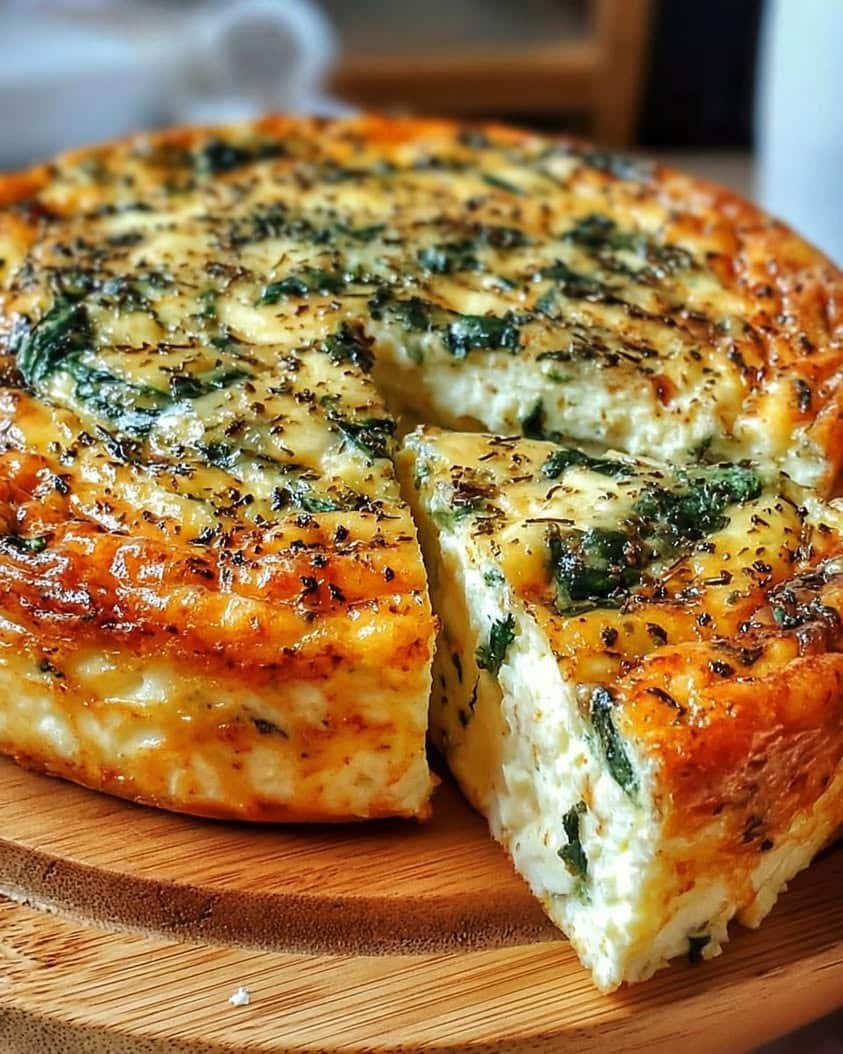
Cottage Cheese and Spinach Crustless Quiche: A High-Protein Breakfast You Will Crave
This Cottage Cheese and Spinach Crustless Quiche delivers everything you want in a high-protein breakfast without the fuss of making a pastry shell. Imagine a golden, tender egg bake studded with bright green spinach and creamy pockets of cottage cheese, all baked into one satisfying dish. Because you skip the crust entirely, the filling takes center stage, and the prep work drops to almost nothing. Therefore, this recipe fits beautifully into busy weekday mornings, relaxed weekend brunches, and meal-prep Sundays alike.
The flavor story here is simple yet rich. Sharp cheddar and salty Parmesan layer onto the mild tang of cottage cheese, while sautéed onion and garlic add a savory backbone. Meanwhile, a pinch of nutmeg rounds out the custard and gives it a subtle warmth that you will notice but cannot quite name. As the quiche bakes, your kitchen fills with the comforting aroma of butter, herbs, and toasted cheese. Consequently, this Cottage Cheese and Spinach Crustless Quiche earns a permanent spot in your regular rotation.
Beyond taste, this dish shines because it works hard for you. Each slice packs a serious protein punch from eggs and cottage cheese, so you stay full through the morning. In addition, spinach adds iron, folate, and fiber without any heavy effort. You can serve it warm from the oven, at room temperature on a buffet, or chilled straight from the fridge. In short, this Cottage Cheese and Spinach Crustless Quiche adapts to your schedule instead of demanding one.
Quick Recipe Highlights
- Flavor Profile: Expect a savory, mildly tangy custard with nutty Parmesan, sharp cheddar, and sweet sautéed onion. A hint of nutmeg and black pepper adds gentle warmth. The spinach brings an earthy freshness that balances the richness of the dairy.
- Texture: The center stays soft and creamy thanks to the cottage cheese, while the edges turn golden and slightly firm. Small curds melt into the custard and create delightful little pockets. Overall, the bite is tender rather than rubbery.
- Aroma: As it bakes, butter and garlic mingle with toasted cheese and fresh greens. The scent signals comfort food without heaviness. Even picky eaters wander into the kitchen to ask what is cooking.
- Visual Appeal: A golden top with flecks of green spinach and melted cheese makes this quiche look impressive. Serve it in the baking dish or slice it onto a platter for a clean presentation. A scattering of fresh herbs adds a final pop of color.
- Skill Level Needed: This recipe suits beginners completely. If you can whisk eggs and sauté onions, you can make this dish. There is no dough to roll, no blind baking, and no tricky folding technique.
- Special Equipment: You need a 9-inch pie dish or a similar baking dish, a large skillet, and a mixing bowl. A whisk and a spatula cover the rest. Nothing specialized or expensive is required.
Recipe Overview
- Difficulty Level: We rate this recipe easy because the steps involve basic whisking, sautéing, and baking. You do not need pastry experience or advanced knife skills. The main thing to watch is the bake time, and a simple jiggle test tells you when the quiche is done. Even first-time cooks succeed on the first attempt.
- Category: This dish works as a breakfast, brunch centerpiece, or light lunch. You can also serve it as a protein-rich dinner alongside a salad. Because it reheats well, it doubles as a meal-prep staple for the week.
- Cuisine: The quiche originates in French culinary tradition, specifically the Lorraine region, though the crustless style is a modern adaptation. American home cooks embraced the crustless version for its convenience and lower carb count. This recipe keeps the French custard spirit while adding cottage cheese, an American fridge staple. The result blends old-world technique with everyday practicality.
- Cost: A full quiche costs roughly eight to ten dollars to make, depending on dairy prices in your area. Eggs, cottage cheese, and spinach are budget-friendly ingredients. Consequently, each serving lands around one dollar and fifty cents, which beats most breakfast options you can buy.
- Season: This quiche works year-round, but it peaks in spring when fresh spinach arrives at farmers markets. In winter, frozen spinach performs beautifully and keeps costs down. The dish also suits summer brunches because it tastes great at room temperature.
- Occasion: Serve it for holiday brunches, baby showers, or casual family breakfasts. It travels well to potlucks and holds up on a buffet for hours. Weeknight dinners also benefit when you need something quick and satisfying.
Why You Will Love This Recipe
First, the taste and texture win people over immediately. The custard bakes into a soft, creamy center with golden edges, and the cottage cheese creates little pockets of richness. Spinach adds an earthy note that keeps each bite from feeling heavy. Because there is no crust, the filling flavors come through with full clarity. Even people who claim they dislike cottage cheese finish their slice and ask for the recipe.
Second, convenience sets this dish apart. You need fifteen minutes of hands-on work, and the oven handles the rest. There is no dough to chill, roll, or blind bake, which removes the most common quiche frustration. Cleanup stays minimal because you use one skillet and one baking dish. On a hectic morning, that simplicity matters more than almost anything else.
Third, the nutritional profile makes this a standout high-protein breakfast. Eggs and cottage cheese deliver complete protein, while spinach contributes iron, folate, and vitamin K. Compared to a crusted quiche, this version cuts carbohydrates and calories without sacrificing satisfaction. As a result, you get a breakfast that supports steady energy through the morning instead of a sugar crash at ten o’clock.
Fourth, this dish shines socially. It looks impressive on a brunch table, and guests can serve themselves without fuss. You can bake it ahead and set it out at room temperature, which frees you to enjoy your own gathering. Picky eaters appreciate the mild flavor, and adventurous eaters can add hot sauce or herbs. Therefore, it pleases a crowd with almost no effort.
Finally, the cost-effectiveness keeps this recipe in heavy rotation. The ingredients are pantry and fridge staples that rarely break the budget. Cottage cheese often costs less than specialty cheeses, yet it adds creaminess and protein. Spinach, whether fresh or frozen, remains one of the most affordable greens available. Altogether, this Cottage Cheese and Spinach Crustless Quiche proves that healthy eating does not require expensive ingredients.
Historical Background and Cultural Significance
The quiche began in the Lorraine region of France, where cooks baked egg custards in pastry shells centuries ago. The classic quiche Lorraine paired eggs, cream, and bacon, and it became a staple of French home cooking. Over time, the dish spread across Europe and eventually crossed the Atlantic. French technique met American ingredient availability, and the quiche became a beloved brunch item in the United States during the mid-twentieth century.
Cottage cheese holds its own place in American food history. Home cooks embraced it as a budget-friendly protein source during the early 1900s, and it appeared in everything from salads to baked goods. When health trends shifted toward high-protein, low-carb eating, cottage cheese returned to popularity. Pairing it with eggs in a crustless quiche feels like a natural evolution. Consequently, this recipe reflects both French tradition and American practicality.
The crustless quiche itself gained traction as home cooks looked for lower-carb alternatives. Removing the pastry shell cuts carbohydrates and prep time at once. Meanwhile, the filling stays true to the custard tradition that makes quiche famous. Food writers and bloggers popularized the crustless style throughout the 2000s, and it now appears in countless kitchens. Therefore, this Cottage Cheese and Spinach Crustless Quiche stands on a foundation built over generations.
Regional variations exist across many cultures, from Italian frittatas to Middle Eastern egg dishes. Each tradition bakes eggs with local ingredients, and each one values simplicity and nourishment. This recipe borrows that global spirit while keeping a French name. Whether you call it a quiche, a bake, or a frittata, the concept remains the same. In short, home cooks everywhere understand the appeal of eggs, greens, and cheese baked together.
Ingredient Deep Dive
Cottage cheese serves as the heart of this recipe, and its history stretches back thousands of years to early dairy farming. Cultures across Europe and the Middle East made fresh cheeses long before refrigeration existed. Today, cottage cheese earns praise for its high protein content and versatility. When you shop, choose small-curd cottage cheese for the creamiest texture, and check the label for simple ingredients. Store it in the coldest part of your fridge and use it within a week of opening. If you need a substitute, ricotta works well, and Greek yogurt makes a tangy alternative.
From a nutrition standpoint, cottage cheese delivers casein protein, which digests slowly and keeps you full. It also provides calcium and B vitamins. Many brands add salt, so taste before you season the custard. Low-fat and full-fat versions both work, though full-fat creates a richer result. Therefore, pick the version that matches your dietary goals without overthinking it.
Spinach brings color, nutrients, and earthy flavor to the quiche. This leafy green originated in Persia and traveled along trade routes into Europe and beyond. Today it ranks among the most versatile vegetables in the kitchen. Choose bright, crisp leaves with no yellowing when you buy fresh spinach. Wash it well because grit hides in the stems, and store it dry in a sealed container. Frozen spinach works beautifully as a substitute; just squeeze out the excess water first.
Nutritionally, spinach supplies iron, folate, vitamin K, and fiber. These nutrients support energy and overall health, which makes the greens a smart addition to breakfast. Cooking shrinks the leaves dramatically, so do not worry when a big pile wilts in the pan. The flavor mellows as it cooks, and picky eaters barely notice it in the finished quiche.
Eggs bind the custard and provide structure, and they carry cultural weight in nearly every cuisine. They represent renewal and hospitality in many traditions, and they anchor breakfast tables worldwide. Choose fresh eggs with clean shells, and store them in the refrigerator. Check the carton date, and crack each egg into a small bowl before adding it to the mix. For substitutes, flax eggs work in a pinch, though the texture changes slightly.
Sharp cheddar and Parmesan add depth and a savory finish. Cheddar originated in England and now appears in kitchens everywhere, while Parmesan carries centuries of Italian tradition. Buy blocks and grate them yourself for better melt and flavor. Keep hard cheeses wrapped in the fridge, and grate them fresh for the best result. If you prefer, Gruyere or Swiss make excellent substitutes.
Common Mistakes to Avoid
- Using wet spinach without draining it properly: Excess water turns the custard soupy and prevents it from setting. Squeeze fresh wilted spinach in a clean towel, and press frozen spinach until nearly dry. This single step protects the texture of the entire dish.
- Skipping the sauté step for onions: Raw onions stay crunchy and sharp inside the baked custard. Cooking them first softens the bite and unlocks sweetness. Therefore, take the extra five minutes and sauté until translucent.
- Overbaking the quiche: An overbaked custard turns rubbery and weepy. Pull the dish when the center still jiggles slightly, then let carryover heat finish the job. A thermometer reading of 160 degrees confirms doneness.
- Under-seasoning the custard: Eggs absorb salt quietly, so a bland mixture stays bland. Season the cottage cheese mixture generously and taste before baking. Remember that cheese adds salt too, so balance rather than dump.
- Whisking too vigorously: Too much air creates bubbles that puff and then collapse, leaving an uneven surface. Whisk gently until the eggs just combine. A few small bubbles are fine.
- Using a dish that is too small: An overcrowded baking dish forces a longer bake and risks overflow. Choose a 9-inch pie dish or an 8-by-8 baking dish. The custard needs room to set evenly.
- Adding cold dairy straight from the fridge: Cold cottage cheese can seize and create uneven curds. Let it sit at room temperature for ten minutes while you prep. This small habit improves the final texture.
- Forgetting to grease the dish: Even nonstick surfaces grab baked egg. Butter or spray the dish thoroughly, including the corners. Cleanup becomes far easier when you take this step.
- Overloading the fillings: Too much spinach or cheese tips the balance away from the custard. Follow the quantities in the recipe, and resist the urge to pile more in. Balance makes the quiche work.
- Slicing too soon: A hot quiche falls apart on the plate. Rest it for at least ten minutes so the custard firms up. This patience pays off with clean, beautiful slices.
Essential Techniques
Mastering the sauté technique matters because it builds the flavor base for the entire quiche. Heat butter over medium heat until it foams, then add the onion and cook until translucent, about five minutes. Stir occasionally so the pieces soften evenly without browning too fast. Add garlic last because it burns quickly and turns bitter. Visual cues help here: the onions should look glossy and smell sweet when they are ready.
The whisking method decides your custard texture. Crack eggs into a bowl and whisk gently until yolks and whites just combine. Over-whisking introduces air, which causes puffing and cracking during the bake. Instead, stir in the cottage cheese, milk, and seasonings with a spatula until smooth. You want a uniform mixture with minimal foam, and this gentle approach delivers it.
Proper spinach handling protects the custard from excess moisture. Wilt fresh spinach in the same skillet after the onions, and cook just until it collapses. Transfer it to a clean kitchen towel and squeeze firmly. Frozen spinach requires the same treatment because thawing releases a surprising amount of water. This step matters because wet greens sink and create soggy pockets.
The water bath technique is optional but useful for a silkier custard. Place the baking dish inside a larger pan and add hot water halfway up the sides. The water buffers the heat and prevents curdling at the edges. This method adds a few minutes to the bake and a little more cleanup. However, if you want restaurant-quality creaminess, it is worth trying at least once.
The jiggle test remains the most reliable doneness check for any custard bake. Gently shake the dish; the center should wobble slightly like set gelatin. If the whole surface sloshes, it needs more time. If nothing moves, it is likely overbaked. Trust the wobble, and remember that resting time finishes the cooking process.
Pro Tips for Perfect Cottage Cheese and Spinach Crustless Quiche
Use small-curd cottage cheese and drain it briefly if it looks watery. A quick strain removes excess whey and keeps the custard from weeping. Full-fat cottage cheese gives the richest result, though low-fat works fine. Your choice depends on how indulgent you want the final dish.
Grate your own cheese for better melt and bolder flavor. Pre-shredded cheese contains anti-caking agents that resist melting. A block of cheddar and a wedge of Parmesan take only minutes to grate. The difference shows in both texture and taste.
Season the custard in layers rather than all at once. Add salt to the onions, pepper to the eggs, and a pinch of nutmeg to the dairy mixture. Layered seasoning distributes flavor evenly. Taste the raw mixture before baking, since that is your only chance to adjust.
Let the baked quiche rest for at least ten minutes before slicing. The custard continues to set as it cools, and the slices come out clean. This rest also makes the dish easier to handle. If you plan to serve it warm, tent it loosely with foil to hold heat.
Grease the dish generously, including the corners and sides. Baked egg grabs onto every surface, and a well-greased dish releases cleanly. Use butter for flavor or a neutral spray for convenience. Either way, do not skip this step.
Add fresh herbs after baking rather than before for the brightest flavor. Chopped chives, dill, or parsley stirred into the custard fade during the bake. Instead, scatter them over the top just before serving. The color and aroma stay vivid this way.
Bake on the middle rack and rotate the dish halfway through. Even ovens run hot in spots, and rotation ensures uniform browning. Set a timer for the halfway mark so you do not forget. This small habit prevents one side from overbaking.
Variations and Adaptations
Regional variations let you travel with flavor while keeping the base recipe intact. A Greek version adds feta, dill, and chopped olives for a briny finish. An Italian spin uses mozzarella, basil, and sun-dried tomatoes. Meanwhile, a Southwestern take brings pepper jack, cumin, and diced green chiles. Each variation swaps cheese and seasonings while keeping the egg and cottage cheese base steady, so you can explore confidently.
Seasonal adaptations keep the dish fresh all year. In spring, fold in fresh peas, asparagus tips, or ramps. Summer welcomes tomatoes, zucchini, and fresh basil. Fall brings roasted squash and sage, while winter suits mushrooms and thyme. The custard base stays constant, and the add-ins shift with the market, so you never get bored.
Dietary modifications cover most eating styles with small tweaks. Use lactose-free cottage cheese and hard aged cheeses for a low-lactose version. Swap in dairy-free cheese and unsweetened plant milk for a dairy-free take, though the texture will differ slightly. For a vegan option, use silken tofu blended with plant milk and nutritional yeast as the custard base. Each modification keeps the spirit of the dish alive.
Flavor variations range from smoky to spicy. Add smoked paprika and bacon for a campfire profile. Stir in harissa or chili crisp for heat lovers. A curry powder version with peas and cumin feels warming and new. Because the base stays mild, it welcomes almost any seasoning direction you choose.
Texture modifications let you adjust the bite. Add diced bell peppers for crunch or a handful of cooked quinoa for heartiness. Crumbled bacon or sausage adds chew and richness. On the other hand, keeping it simple with just spinach and cheese delivers the silkiest result. Pick your texture based on the meal you have in mind.
Presentation alternatives expand your serving options. Bake the mixture in muffin tins for individual portions, which works great for parties and lunchboxes. Use a cast-iron skillet for a rustic table presentation. Mini quiches also freeze beautifully, so consider making a double batch.
Serving and Presentation Guide
Plating starts with a clean slice. Run a thin knife around the edge of the dish, then cut straight down with a chef’s knife. Wipe the blade between cuts for crisp edges. Serve on individual plates with a small side salad for color contrast. A white plate makes the golden top and green flecks stand out beautifully.
Garnishing ideas range from simple to festive. Chopped chives, dill, or parsley add fresh color and a light onion note. A drizzle of olive oil or a small dollop of sour cream adds richness. For brunch, top each slice with a few microgreens. For a heartier look, add a pinch of flaky sea salt and cracked pepper.
Traditional accompaniments include a green salad with a bright vinaigrette, roasted potatoes, or a crusty loaf of bread. The acidity of the dressing balances the rich custard. Roasted vegetables round out the plate for dinner. Meanwhile, fresh fruit adds a sweet counterpoint for brunch tables.
Modern serving suggestions lean lighter and faster. Pair the quiche with a yogurt herb sauce, or serve it over a bed of dressed arugula. A side of quick-pickled onions adds tang and crunch. These options keep the meal fresh and contemporary without extra effort.
Temperature considerations matter more than you might think. This quiche tastes best warm or at room temperature, and the flavors deepen as it cools. Cold slices work well for lunchboxes and picnics. Avoid serving it piping hot because the custard needs a moment to firm up.
Portion control stays simple because the quiche cuts into six to eight slices. For brunch, plan one slice per person alongside sides. For a main dish, two slices satisfy most appetites. Store leftovers in single portions so you can grab them quickly during the week.
Wine and Beverage Pairing
Wine pairings should match the richness of the custard without overwhelming the spinach. A dry white such as Sauvignon Blanc cuts through the dairy with bright acidity. Chardonnay brings a buttery note that complements the cheese. For a festive brunch, a dry sparkling wine works beautifully. Serve whites well chilled, around 45 to 50 degrees, for the crispest contrast.
Non-alcoholic alternatives keep the table lively. Sparkling water with lemon and herbs feels refreshing between bites. An iced tea with orange slices offers gentle tannins that balance the cream. Alcohol-free sparkling wine adds celebration without the alcohol. Choose something bright and slightly acidic to refresh the palate.
Coffee and tea pairings deserve attention at brunch. A medium-roast coffee brings nutty notes that echo the Parmesan. Green tea offers a clean, grassy counterpoint to the spinach. For a cozy winter morning, black tea with milk mirrors the creaminess of the dish. Serve hot beverages alongside rather than before the meal.
Temperature matters for all beverages. Serve chilled drinks properly cold and hot drinks genuinely hot. In summer, add ice generously to water and tea. In winter, warm the mugs before pouring. These details make the meal feel intentional.
Serving suggestions tie the drinks to the occasion. Set sparkling water in a pitcher with cucumber and mint for a spa-like brunch. Offer coffee in a carafe so guests can help themselves. A small wine list on a card adds polish to a holiday table. Simple touches elevate the whole experience.
Storage and Shelf Life
Storage methods determine how long your quiche stays fresh. Cool leftovers within two hours of baking, then transfer slices to airtight containers. Store them in the refrigerator, where they keep for up to four days. Separate layers with parchment paper if you stack slices. Proper cooling prevents condensation and keeps the texture intact.
Temperature requirements are simple: keep the quiche refrigerated at 40 degrees or below. Never leave it at room temperature for more than two hours, especially in warm weather. For buffets, set the dish over ice or use a warming tray. Food safety matters with egg dishes, so stay attentive.
Container recommendations focus on airtight and shallow. Glass containers with locking lids work well and do not stain. Shallow containers cool faster and protect the custard from cracking. Avoid plastic wrap directly on the surface, which can create sogginess. Label containers with the date so you can track freshness.
Signs of spoilage include sour smells, sliminess, and discoloration. If the surface looks watery and smells off, discard it. Mold appears as fuzzy patches, and it means the whole dish should go. Trust your senses, and when in doubt, throw it out.
Reheating instructions keep leftovers tasting fresh. Warm slices in a 350-degree oven for ten minutes, or microwave in short bursts. A covered skillet over low heat also works well. Avoid overheating because the custard toughens quickly. Reheat only what you plan to eat.
Freezing guidelines make big batches practical. Wrap individual slices tightly and freeze for up to two months. Thaw overnight in the refrigerator before reheating. The texture holds up reasonably well, though fresh is always best. Therefore, freeze portions rather than the whole dish.
Make Ahead Strategies
The prep timeline starts the night before baking. Sauté onions, wilt spinach, and grate cheese in advance. Store each component separately in the fridge so flavors stay distinct. In the morning, whisk the custard and assemble everything in minutes. This approach turns a sixty-minute recipe into a quick morning bake.
Storage between steps protects quality at every stage. Keep cooked vegetables in sealed containers for up to three days. Grated cheese stays fresh in an airtight bag for a week. The custard mixture itself holds overnight, though it may separate slightly. Whisk gently before baking if it does.
Quality impact stays low when you prep smartly. Pre-cut vegetables may release slightly more water, so drain them well. Grated cheese loses a bit of flavor over time, so grate close to baking day when possible. Overall, advanced prep saves time without harming the finished dish.
Assembly tips make the final bake smooth. Butter the dish ahead and store it covered. Layer ingredients in the order the recipe directs so the spinach stays suspended. Pour the custard last, and tap the dish gently to release air bubbles. Then bake according to the recipe.
Reheating guidelines for made-ahead quiches mirror standard leftovers. Warm at 350 degrees for ten to fifteen minutes. Cover with foil if the top browns too quickly. Individual slices reheat faster, so adjust times accordingly.
Fresh element additions restore liveliness to reheated quiche. Scatter fresh herbs on top just before serving. Add a squeeze of lemon or a spoon of salsa for brightness. These small touches make leftovers taste like new.
Scaling Instructions
Halving the recipe works smoothly for smaller households. Use a 6-inch baking dish or a small skillet and reduce the bake time to about thirty minutes. Keep the same oven temperature so the custard sets consistently. Watch the jiggle test closely because smaller volumes bake faster. The leftovers disappear quickly anyway.
Doubling or tripling the recipe suits gatherings and meal prep. Use two pie dishes rather than one deep dish because deep custards bake unevenly. Extend the bake time by ten to fifteen minutes and rotate the dishes halfway through. If your oven struggles with two dishes, bake in batches for even results.
Equipment adjustments matter when scaling. Larger batches need bigger skillets for sautéing and larger bowls for whisking. A stand mixer with a paddle attachment speeds up the custard mixing. For party-size batches, chafing dishes keep the quiche warm during serving.
Timing modifications keep scaled batches safe and even. Two dishes in one oven slow the bake slightly, so check at the early end of the range. Rotate racks halfway through for uniform browning. Rest time stays the same regardless of batch size.
Storage considerations grow with the batch. Plan for extra containers and fridge space. Label everything with dates so you can track freshness. Freeze portions you will not eat within four days.
Nutritional Deep Dive
The macro breakdown favors protein and healthy fat over carbohydrates. Each slice delivers roughly fifteen grams of protein, mostly from eggs and cottage cheese. Fat content depends on your dairy choices, and carbs stay low because there is no crust. This balance supports steady energy and satiety. For exact numbers, use a nutrition calculator with your specific ingredients.
Micronutrient analysis reveals plenty of hidden value. Spinach contributes iron, folate, vitamin K, and vitamin A. Eggs add choline, B12, and selenium, while dairy provides calcium. These nutrients support bone health, energy metabolism, and brain function. As a result, the dish delivers far more than empty calories.
Health benefits extend beyond the numbers. High-protein breakfasts help curb mid-morning snacking and support muscle maintenance. The low-carb profile suits many dietary approaches, from general health plans to keto. Greens add fiber and antioxidants. Altogether, this quiche earns its place in a healthy routine.
Dietary considerations require small awareness. Sodium can run high with cheese and cottage cheese, so choose low-sodium versions if needed. Those with lactose sensitivity should choose lactose-free dairy. Everyone else can enjoy the dish as written with confidence.
Portion analysis helps with mindful eating. A sixth of the dish makes a satisfying breakfast portion for most adults. Pair it with fruit or a salad for a complete meal. Larger appetites can double up without guilt because the ingredients are wholesome.
Weight management tips focus on balance. Pair each slice with fiber-rich vegetables to boost volume and satisfaction. Use low-fat cottage cheese and cheese to trim calories if that fits your goals. Meanwhile, full-fat versions keep you full longer with fewer total calories later.
Dietary Adaptations
Gluten-free eaters already have it easy because this quiche contains no flour or crust. Double-check your cheese and dairy labels, since some processed products hide gluten. Choose plain cottage cheese and natural cheeses. With those checks, the recipe fits gluten-free diets fully.
Dairy-free modifications require a full swap. Use tofu or plant-based yogurt for the cottage cheese and dairy-free shredded cheese. Unsweetened plant milk replaces the milk, and the custard bakes similarly. Expect a slightly different texture, and taste for seasoning because dairy-free cheese varies in salt.
Vegan versions need a bigger shift. Blend silken tofu with plant milk, nutritional yeast, turmeric, and salt to mimic the egg custard. Sauté the vegetables as directed and bake until set. The result tastes different but delivers a satisfying, protein-rich bake. Nutritional yeast adds a cheesy note that vegans appreciate.
Low-carb and keto audiences can enjoy the recipe as written because the carb count stays naturally low. Spinach and cheese carry minimal carbs, and eggs bring none. Serve with extra greens or avocado to keep the meal ketogenic. Check labels on dairy if you track closely.
Paleo eaters should choose full-fat dairy or skip it entirely. Some paleo frameworks allow aged cheese but not cottage cheese, so check your personal rules. Use a dairy-free custard base with plenty of eggs and vegetables. The recipe adapts without losing its core identity.
Low-FODMAP diets call for careful onion and garlic choices. Replace the onion with the green tops of scallions and use garlic-infused oil for flavor. Spinach sits safely in low-FODMAP lists at reasonable portions. These swaps keep the meal comfortable for sensitive stomachs.
Troubleshooting Guide
Texture issues usually trace back to moisture or heat. A watery quiche means the spinach was not drained enough or the cottage cheese held too much whey. Strain and squeeze the ingredients before mixing. A rubbery quiche means overbaking, so pull it at the first jiggle and let it rest.
Flavor balance problems respond to tasting and layering. If the quiche tastes bland, it probably needs more salt or a sharper cheese. If it tastes too salty, balance with a splash of milk or extra spinach. A too-eggy taste fades when you add herbs and a pinch of nutmeg.
Temperature problems include uneven browning and underbaked centers. Ovens run hot or cold, so use an oven thermometer to confirm your setting. Rotate the dish halfway through the bake. If the top browns too fast, tent it with foil while the center finishes.
Equipment challenges show up with glass versus metal dishes. Glass bakes slower and browns less, while metal heats faster and can overbrown the edges. Adjust the bake time slightly for your dish material. A thermometer helps you confirm the center reaches 160 degrees.
Ingredient substitutions change the outcome in predictable ways. Ricotta makes a denser quiche, while Greek yogurt adds tang and moisture. Frozen spinach works if you squeeze it thoroughly. Each swap is safe when you adjust for moisture and seasoning.
Timing concerns often involve the rest period. Cutting too soon causes a runny slice, so wait ten minutes at minimum. If you need to hold the quiche longer, cover it and keep it warm. Patience makes the difference between a pretty slice and a puddle.
Recipe Success Stories
Community feedback consistently highlights how easy the recipe feels for new cooks. Readers tell us they made it for holiday brunches and received requests for the recipe before the plates cleared. Many mention that cottage cheese skeptics became converts after one bite. These stories remind us why simple recipes win hearts.
Variation successes range from spicy to Mediterranean. One reader added smoked salmon and dill for a bagel-inspired version, and it became a family favorite. Another used goat cheese and roasted red peppers for an elegant dinner. The base recipe welcomes experiments, which keeps it fresh for everyone.
Adaptation stories show how flexible the dish can be. Parents report hiding extra vegetables in the custard and watching kids eat them without complaint. Meal-preppers describe baking a batch on Sunday and enjoying breakfast all week. These adaptations prove the recipe works for real life.
Reader suggestions have improved the recipe over time. Several readers recommend a water bath for the creamiest custard, and we now mention it in the techniques section. Others suggest muffin-tin baking for grab-and-go portions. We love when the community shapes the instructions.
Photography tips help readers capture the golden result. Shoot the quiche near a window with natural light. Use a white plate to make the green and gold colors pop. Add a linen napkin and a fork for a cozy styling touch. Remember to wipe the plate edges before clicking.
Frequently Asked Questions
Can I make this Cottage Cheese and Spinach Crustless Quiche ahead of time?
Yes, and it works beautifully for meal prep. Bake the quiche, cool it
Print
Cottage Cheese & Spinach Crustless Quiche
- Total Time: 45 minutes
- Yield: 4
Description
A light and fluffy crustless quiche packed with protein-rich cottage cheese and nutritious spinach. Perfect for a healthy breakfast, brunch, or light dinner.
Ingredients
- 6 large eggs
- 1 cup cottage cheese
- 1 cup fresh spinach, chopped
- 1/2 cup shredded cheese (such as cheddar or mozzarella)
- 1/4 cup milk
- 1/4 teaspoon salt
- 1/8 teaspoon black pepper
- 1/4 teaspoon garlic powder (optional)
- Cooking spray or butter for greasing
Instructions
- Preheat oven to 350°F (175°C). Grease a 9-inch pie dish with cooking spray or butter.
- In a large bowl, whisk together eggs, cottage cheese, milk, salt, pepper, and garlic powder until well combined.
- Stir in chopped spinach and shredded cheese.
- Pour mixture into prepared pie dish and spread evenly.
- Bake for 30-35 minutes, or until set and lightly golden on top. A knife inserted in center should come out clean.
- Let cool for 5 minutes before slicing and serving.
Notes
You can customize the seasonings to taste.
- Prep Time: 15 minutes
- Cook Time: 30 minutes
- Method: Main
- Cuisine: American