Easy Chicken Ricotta Meatballs with Creamy Spinach Alfredo Sauce: A Comfort Food Masterpiece
Welcome to a recipe that will transform your weeknight dinner routine. These Easy Chicken Ricotta Meatballs with Creamy Spinach Alfredo Sauce are a true game changer. You get the tenderness of ricotta-infused chicken meatballs paired with a silky, rich sauce that coats every bite. The combination is simply irresistible, and it all comes together in under an hour. This dish is a perfect example of how simple ingredients can create something truly spectacular. The flavors are comforting, familiar, yet elevated enough to impress guests. Each bite delivers a creamy, savory experience that feels like a warm hug. Whether you are cooking for your family or hosting a dinner party, this recipe is a reliable star. The process is straightforward, but the result tastes like you spent hours in the kitchen. You will love how the ricotta keeps the meatballs moist and tender. The spinach adds a subtle earthiness that balances the richness of the Alfredo sauce. It is a balanced dish that satisfies deep cravings.
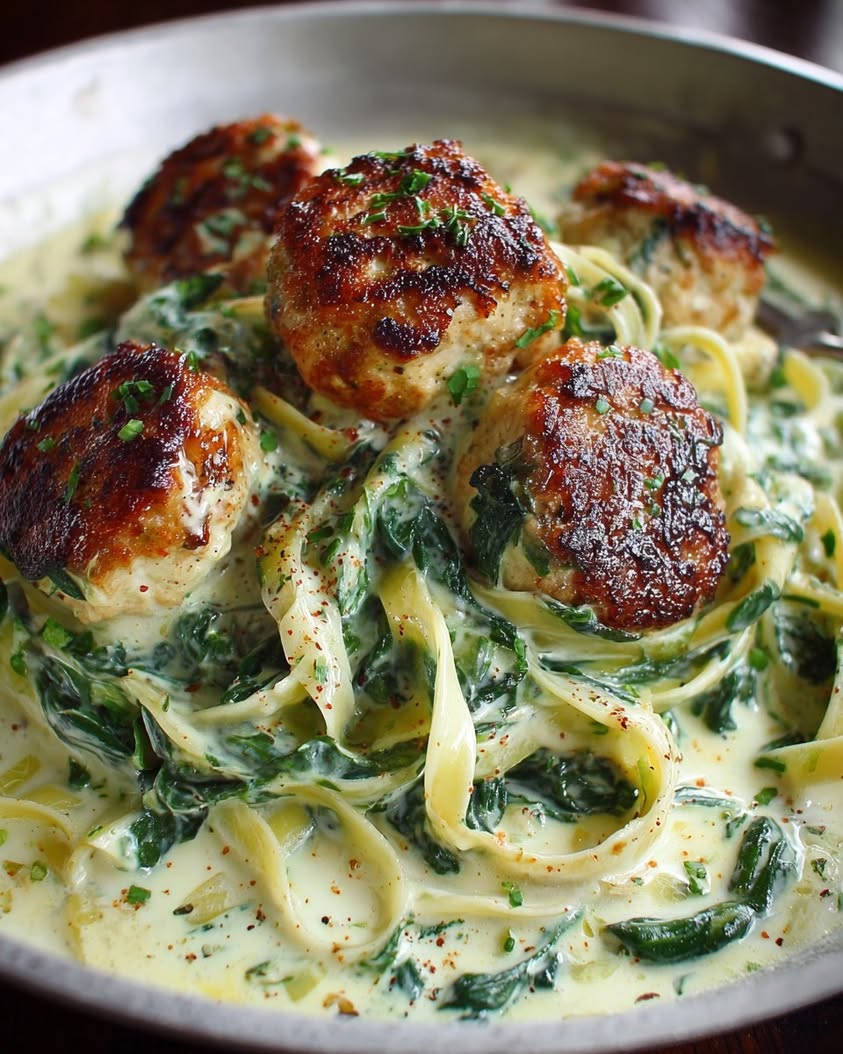
The Easy Chicken Ricotta Meatballs with Creamy Spinach Alfredo Sauce is more than just a meal. It is an experience that begins with the aroma of garlic and herbs hitting the pan. The meatballs sizzle and brown, creating a crust that locks in moisture. As you build the sauce, the cream and Parmesan melt together into a velvety dream. You fold in fresh spinach, watching it wilt and integrate into the sauce. The final assembly is a beautiful sight. The golden meatballs resting in the green-speckled cream sauce is visually stunning. This recipe is forgiving, which makes it perfect for cooks of all skill levels. You can adjust the seasoning, add more spinach, or swap out the pasta for zucchini noodles. The versatility is a huge part of its appeal. It is a dish that adapts to your pantry and your preferences. You will find yourself coming back to this recipe again and again. It is a keeper, a staple, and a true comfort food champion. Let us dive into what makes this recipe so special.
Quick Recipe Highlights
- Flavor Profile: The flavor profile is a harmonious blend of savory, creamy, and subtly earthy notes. The chicken meatballs are seasoned with garlic, onion powder, and herbs, which provide a classic savory base. The ricotta introduces a mild, milky sweetness that keeps the meatballs tender. The Alfredo sauce is rich with heavy cream, butter, and Parmesan cheese, delivering a luxurious mouthfeel. The spinach adds a fresh, slightly bitter counterpoint that lightens the overall dish. The combination is deeply satisfying and never feels heavy.
- Texture: The texture journey in this dish is truly delightful. The meatballs are exceptionally tender and moist, thanks to the ricotta and a careful baking process. They have a slight crust from the oven that gives way to a soft interior. The Alfredo sauce is silky and smooth, coating each meatball perfectly. The spinach provides a gentle, tender bite that adds variety. The overall mouthfeel is creamy and comforting, with no dry or rubbery elements. Every forkful offers a pleasing contrast between the firm meatballs and the luscious sauce.
- Aroma: The aromatic profile of this dish is incredibly inviting. The first notes you will notice are the fragrant garlic and onion as they soften in the pan. The herbs, such as oregano and basil, release their earthy, slightly sweet scents. As the cream and Parmesan begin to simmer, a nutty, rich aroma fills the kitchen. The spinach adds a fresh, grassy note that rounds out the bouquet. The combination of these aromas signals a comforting and hearty meal. Your family will be drawn to the kitchen before you even call them to the table.
- Visual Appeal: The visual presentation of this dish is restaurant-worthy. The meatballs are a beautiful golden brown, with slight variations in color that suggest a perfect crust. They rest in a creamy sauce that is a pale, inviting ivory color. The spinach is interspersed throughout, creating vibrant green flecks that contrast nicely. A final dusting of parsley and a sprinkle of red pepper flakes add pops of color and texture. Served over a bed of fettuccine or with crusty bread, it makes for a stunning plate. The colors are appetizing and wholesome.
- Skill Level Needed: This recipe is classified as easy, but it offers opportunities for learning. You need basic skills like mixing, forming meatballs, and building a simple pan sauce. No advanced techniques like tempering eggs or making a roux from scratch are required. The recipe is forgiving, so even a beginner can achieve excellent results. The steps are straightforward and clearly laid out. With a little patience and attention to detail, anyone can master this dish. It is a confidence-boosting recipe for novice cooks.
- Special Equipment: You will need a few standard kitchen tools to make this recipe. A large mixing bowl is essential for combining the meatball ingredients. A baking sheet lined with parchment paper is needed for baking the meatballs. A large, deep skillet or Dutch oven is perfect for making the sauce and finishing the dish. A wooden spoon or silicone spatula is useful for stirring. A microplane or fine grater is ideal for fresh Parmesan cheese. You may also want a measuring cup and spoons for precise ingredient amounts.
Recipe Overview
- Difficulty Level: The difficulty level is easy, primarily because the techniques are fundamental. There is no deep frying, no complicated sauce emulsions, and no precise temperature control needed. The meatballs are baked rather than pan-fried, which reduces the risk of burning. The sauce is a simple reduction that comes together quickly. The main challenge is ensuring the meatballs are evenly seasoned and not overmixed. Overmixing can lead to tough meatballs, but it is a mistake easily avoided. With clear instructions, this dish is accessible to anyone who can follow a recipe.
- Category: This recipe falls perfectly into the main course category. It is hearty enough to stand alone as the centerpiece of a dinner. It pairs wonderfully with pasta, rice, or a simple side salad. It also works well as a part of a larger Italian-themed meal, alongside appetizers like bruschetta or antipasti. The dish is substantial and satisfying, making it ideal for a weeknight dinner or a casual weekend gathering. It is also a great option for meal prepping, as the meatballs and sauce reheat beautifully.
- Cuisine: The cuisine is inspired by Italian-American comfort food traditions. The chicken meatballs are a lighter take on the classic beef or pork version, and the ricotta is a nod to traditional Italian cooking. The spinach Alfredo sauce is a modern, creamy adaptation that has become a staple in American households. The use of garlic, Parmesan, and herbs roots the dish in Mediterranean flavors. The combination of meatballs in a creamy sauce is a beloved concept that has evolved in the United States. This recipe honors those traditions while offering a fresh, approachable twist.
- Cost: The cost of this recipe is relatively low and very budget-friendly. Ground chicken is often less expensive than beef or pork. Ricotta cheese and heavy cream are affordable dairy staples. Spinach is a low-cost green vegetable. Parmesan cheese can be pricier, but a little goes a long way. Pantry staples like garlic, onion, and dried herbs add minimal cost. Overall, you can feed a family of six for under 0, making it an excellent value. It is a cost-effective way to enjoy a restaurant-quality meal at home.
- Season: This dish is perfect for fall and winter, when you crave warm, comforting meals. The richness of the Alfredo sauce and the heartiness of the meatballs are ideal for colder months. However, it is versatile enough to be enjoyed year-round. In the spring, you can add fresh herbs like basil or chives. In the summer, you can serve it with a fresh tomato salad or grilled vegetables. The creamy sauce and tender meatballs provide a constant source of comfort, regardless of the season. It is a true four-season recipe.
- Occasion: This recipe is suitable for a wide range of occasions. It is a fantastic weeknight dinner when you need something quick, easy, and satisfying. It also shines at casual dinner parties, as it looks and tastes impressive without requiring intense labor. It is a great option for potlucks or family gatherings, as it travels well. You can make it for a romantic dinner at home, paired with a nice wine. It is also a wonderful dish to prepare for new parents or neighbors in need of a comforting meal. Its universal appeal makes it a go-to for any event.
Why You’ll Love This Recipe
The taste and texture of these meatballs are the primary reasons to love this recipe. The ricotta cheese is the secret ingredient that keeps the chicken incredibly moist and tender. Unlike traditional meatballs that can sometimes be dry, these have a soft, almost melt-in-your-mouth quality. The savory seasoning blend of garlic powder, onion powder, and dried herbs provides a classic, familiar flavor. The Alfredo sauce is the perfect partner, offering a rich, creamy, and slightly nutty flavor from the Parmesan. The spinach adds a layer of freshness and color that balances the richness beautifully. Every single bite is a harmonious blend of tender meatballs and luscious sauce. It is a combination that satisfies your cravings for comfort food without feeling overly heavy or greasy. The flavor profile is both simple and elegant.
The convenience and preparation benefits make this recipe a lifesaver for busy cooks. The entire dish comes together in about 50 minutes, which is very manageable for a weeknight. The meatballs are baked, not fried, which means less mess and less active time at the stove. You can easily prepare the meatballs and chop the spinach ahead of time. The sauce comes together in one pan, so cleanup is minimal. This is a one-pan wonder after the meatballs are baked. The recipe is also very forgiving; you can adjust seasonings, add more cheese, or use frozen spinach in a pinch. The simplicity of the steps allows you to focus on other tasks. It is a reliable recipe that never fails.
The nutritional advantages of this dish are another big plus. Using ground chicken instead of beef or pork significantly reduces the fat and calorie content. The ricotta adds protein and calcium without making the dish too heavy. Spinach is packed with vitamins A, C, and K, as well as iron and fiber. The Alfredo sauce, while rich, is made with real cream and Parmesan, providing a good source of protein and fat. This meal offers a balanced macronutrient profile, combining protein from the meat and cheese, fat from the cream, and carbohydrates from your choice of pasta or bread. It is a satisfying meal that provides sustained energy. You can feel good about serving it to your family.
The social and entertaining value of this recipe is high. It looks and tastes like a dish from a restaurant, which means it is sure to impress guests. The platter of golden meatballs in a creamy sauce is a showstopper on any dining table. It is a dish that sparks conversation and compliments. You can easily double the recipe to feed a crowd, and it holds well on a buffet. The portions are generous, and the flavors are universally appealing. Whether it is a casual dinner with friends or a holiday gathering, this dish fits the bill. It is a recipe that earns you the title of a great host without the stress of complex culinary techniques.
Finally, the cost-effectiveness and accessibility of ingredients are major selling points. All the ingredients are available at any standard grocery store. There are no exotic items or expensive cuts of meat required. Ground chicken, ricotta, spinach, and cream are all affordable and commonly used. This makes the recipe accessible to a wide range of budgets. It is a fantastic way to elevate everyday ingredients into something special. You are not sacrificing flavor for cost. Instead, you are maximizing the potential of simple, wholesome foods. This recipe proves that delicious, impressive meals do not have to break the bank.
Historical Background and Cultural Significance
The origin of this specific dish is rooted in the Italian-American culinary tradition. The concept of meatballs, or polpette, has deep roots in Italian cuisine. However, the large, saucy meatball served over pasta is a distinctly American innovation. Italian immigrants in the early 20th century adapted their traditional recipes to use more readily available and affordable ingredients in the United States. Ground meats like beef, pork, and veal were common. The addition of ricotta to meatballs, while not traditional in every region, is a clever way to add moisture and tenderness. This recipe represents a fusion of these old-world techniques with new-world convenience. The creamy spinach Alfredo sauce is a modern American addition.
Cultural importance is found in the role of meatballs as a symbol of family and home. In many Italian-American households, Sunday dinners often revolve around a large pot of meatballs simmering in tomato sauce. This dish evokes those same feelings of comfort, family, and togetherness. It is a meal that is often shared and loved. The use of chicken instead of beef or pork reflects a modern shift toward lighter, healthier eating without sacrificing tradition. The dish has become a staple in many homes because it is adaptable and beloved. It is a testament to the ongoing evolution of comfort food.
The evolution of this recipe showcases the creativity of home cooks over generations. The initial concept of meatballs in a cream sauce likely evolved from dishes like Chicken Florentine or Alfredo pasta. Chefs and home cooks began experimenting by combining these elements. The result is a dish that is greater than the sum of its parts. The baking method for the meatballs replaced pan-frying as a healthier, less messy alternative. The addition of spinach provides a nutritional boost and a visual contrast. This recipe is a living example of culinary evolution, moving from simple ingredients to a cohesive, modern meal. It represents the best of American home cooking.
Regional variations of this dish can be found across the country, reflecting local tastes. In the Northeast, you might find a heavier focus on garlic and Romano cheese. In the South, cooks might add a pinch of cayenne or a splash of hot sauce for heat. On the West Coast, the dish might be lightened with almond milk or nutritional yeast for a dairy-free version. Some regions serve it over pasta, while others prefer polenta, rice, or even crusty bread for dipping. The versatility of the base recipe allows for infinite customization. This adaptability ensures that the recipe remains relevant and loved in diverse kitchens. It is a testament to the power of a good foundational recipe.
Ingredient Deep Dive
Ground chicken is the star protein of this dish. It has a long history in American cuisine, often used as a lighter alternative to red meat. Nutritionally, it is an excellent source of lean protein, essential for muscle repair and growth. It also provides B vitamins like niacin and B6, which support metabolism. When selecting ground chicken, look for packages that are firm and cold, with no off-putting odor. The color should be a pale pink, without any gray or green tinges. For storage, keep it in the coldest part of your refrigerator and use it within one to two days of purchase. You can also freeze it for up to three months, tightly wrapped. For substitutions, ground turkey works perfectly, and ground pork will provide a richer flavor. You can also use a mix of ground chicken and ground pork for a more complex taste.
Ricotta cheese is the hero ingredient that ensures moist meatballs. It is a fresh, unaged cheese with roots in Italian cuisine, often used in lasagna and cannoli. Nutritionally, it is packed with protein and calcium, but it is lower in fat and sodium compared to many other cheeses. It also contains whey protein, which is easily digestible. When shopping for ricotta, look for a brand that is creamy and not watery. The texture should be smooth and spreadable. Whole milk ricotta will provide the best flavor and creaminess. For storage, keep it refrigerated and use it by the date on the container. Once opened, it should be used within a week. For substitutions, cottage cheese can work if you blend it smooth. Mascarpone is a richer alternative, and silken tofu works for a dairy-free option.
Heavy cream is the foundation of the luscious Alfredo sauce. It has been a staple in European cooking for centuries, prized for its richness and ability to thicken sauces. Nutritionally, it is high in fat and calories, but it also provides fat-soluble vitamins like A, D, and E. It is best used in moderation. When choosing heavy cream, look for cartons that are cold and have a recent date. It should have a thick, pourable consistency and a clean, milky smell. For storage, keep it in the back of the fridge where it is coldest, and use it within a week of opening. For substitutions, half-and-half will reduce the richness, while a mixture of milk and butter can work. Coconut cream is a good dairy-free alternative, though it will impart a subtle coconut flavor.
Fresh spinach adds color, nutrition, and a mild flavor to the sauce. It is a versatile leafy green with roots in Persia, but it is now grown worldwide. Nutritionally, spinach is a powerhouse of vitamins A, C, and K, as well as iron, calcium, and fiber. It is low in calories, making it a perfect addition to a rich sauce. When buying fresh spinach, look for vibrant, crisp leaves with no wilting or yellowing. Avoid any bags with excess moisture, which can speed up spoilage. For storage, keep it in the refrigerator in its original bag, and use it within three to five days. You can also freeze it for cooking, but it will be less firm. For substitutions, kale or Swiss chard can be used for a heartier texture. Frozen spinach is also a convenient option, just be sure to thaw and squeeze out excess water.
Parmesan cheese is essential for the signature savory, nutty flavor of Alfredo sauce. It is a hard, aged cheese originating from Italy, specifically the Reggiano region. Nutritionally, it is high in protein and calcium, and it is also a good source of phosphorus. Its intense flavor means you can use less to achieve a big impact. When selecting Parmesan, look for a wedge with a hard, crumbly texture and a rich, nutty aroma. Avoid pre-shredded cheese, as it often contains cellulose and has less flavor. For storage, wrap the wedge in wax paper or parchment paper, then loosely in plastic wrap, and keep it in the fridge. It will last for weeks. For substitutions, Pecorino Romano is a saltier, sheep’s milk alternative. Grana Padano is similar but slightly milder. Nutritional yeast is a good vegan substitute, though the flavor will be different.
Common Mistakes to Avoid
- Overmixing the meatball mixture is a classic mistake. When you combine the ingredients, be gentle and mix only until everything is incorporated. Overworking the ground chicken can lead to tough, dense meatballs. The protein fibers tighten up, resulting in a rubbery texture. You should stop mixing as soon as you see no more dry patches of breadcrumbs.
- Skipping the resting time for the meatball mixture is another error. After you mix the ingredients, let the mixture sit for about 10 minutes. This allows the breadcrumbs to absorb the moisture from the eggs and ricotta. This step is crucial for binding the meatballs together. Without it, the meatballs might fall apart during cooking.
- Using pre-shredded Parmesan cheese is a common shortcut that affects the sauce texture. Pre-shredded cheese is coated with anti-caking agents that prevent it from melting smoothly. This can lead to a grainy or clumpy Alfredo sauce. Always opt for a block of Parmesan and grate it fresh for a silky, luxurious result.
- Not seasoning the water for the sauce or the meatballs adequately can leave the dish bland. Meatballs and cream sauces need a generous amount of salt to draw out their full flavor. Taste your mixture before forming the meatballs. Season the cream sauce with salt and pepper as it simmers. Underseasoning is the number one reason a home-cooked dish falls flat.
- Cooking the meatballs at too high a temperature can cause them to burn on the outside before cooking through. The recipe suggests a moderate oven temperature like 400 degrees Fahrenheit. This allows them to brown nicely and cook evenly. If the oven is too hot, the outside will dry out and the inside will remain raw.
- Adding all the spinach at once to the sauce can create a watery mess. Fresh spinach releases a lot of water as it wilts. Add it in handfuls, allowing each batch to wilt slightly before adding more. This helps manage the moisture content and prevents the sauce from becoming thin. The spinach should just be wilted, not swimming in its own liquid.
- Forgetting to taste and adjust the sauce at the end is a missed opportunity. The flavors of the sauce can change as it simmers. The cream might need more salt, a pinch of nutmeg, or a dash of black pepper. Always taste and adjust before adding the meatballs to the pan. This final step elevates the dish from good to great.
- Using low-fat or skim milk in the Alfredo sauce instead of heavy cream will lead to a thin, broken sauce. The fat content in heavy cream is essential for stability and richness. Low-fat alternatives may curdle or separate when heated. Stick with heavy cream for the best results, or use a combination of butter and half-and-half if necessary.
Essential Techniques
Forming the meatballs is a foundational technique that affects the final texture. The goal is to create uniform balls that will cook evenly. Using a cookie scoop or measuring spoon ensures each meatball is the same size. With slightly moistened hands, roll the mixture gently into balls. Do not pack them too tightly, as this will make them dense. A light touch is key, allowing the meatballs to remain tender and airy. Place them on the prepared baking sheet with a small space between them for even browning. This step is simple but crucial for a professional result.
Baking the meatballs is a healthier, less hands-on method than pan-frying. It allows you to cook a large batch at once without constant attention. The key is to use a parchment-lined baking sheet for easy cleanup. The moderate oven temperature allows the meatballs to brown slowly and cook through thoroughly. You do not need to flip them during baking. They will develop a nice crust on the bottom and the sides. The internal temperature should reach 165 degrees Fahrenheit when checked with a meat thermometer. This method ensures a consistent, reliable result every time.
Building the Alfredo sauce from scratch is a simple technique but requires attention. The process begins by melting butter in a skillet over medium heat. You then add minced garlic and cook it only for a minute, until fragrant. You must be careful not to burn the garlic, as it will turn bitter. Next, you pour in the heavy cream and bring it to a gentle simmer. This is where you add the freshly grated Parmesan, whisking constantly. The cheese needs to melt fully into the cream, creating a smooth emulsion. The final step is to season it with salt, pepper, and a pinch of nutmeg for depth. The sauce should coat the back of a spoon.
Wilt the spinach into the sauce correctly to maintain its texture and color. Start by adding the spinach in large handfuls, not all at once. Use tongs or a wooden spoon to toss the leaves in the hot sauce. The residual heat is usually enough to wilt them within a minute. You want the spinach to be bright green and just softened. Overcooking the spinach will make it mushy and dull in color. The goal is to integrate it fully into the sauce while preserving its identity. This adds a beautiful visual element and a fresh taste.
Pro Tips for Perfect Easy Chicken Ricotta Meatballs with Creamy Spinach Alfredo Sauce
Use a light hand when mixing the meatball ingredients for the best texture. Overworking the mixture results in tough meatballs. Mix with a fork or your fingers until everything is just barely combined. You should still see some small flecks of ricotta. This ensures the meatballs stay tender and moist after baking.
Grate your own Parmesan cheese from a block for a smoother, more flavorful sauce. Pre-shredded cheese contains starch that prevents melting. Freshly grated cheese melts into a velvety, luscious sauce. The difference in texture and taste is night and day. It is a small step with a massive payoff.
Add a pinch of nutmeg to the Alfredo sauce for a subtle, warming flavor. Nutmeg is a classic pairing with cream and spinach. It lifts the sauce and adds a layer of complexity. Use a microplane to grate just a tiny bit directly into the pan. Be careful not to add too much, as it can be overpowering.
For a richer meatball, substitute half of the breadcrumbs with additional ricotta or Parmesan. This will add more moisture and a deeper savory flavor. The meatballs become even more tender and decadent. You may need to let the mixture rest a bit longer to allow the breadcrumbs to absorb the extra moisture.
Deglaze the pan with a splash of white wine before adding the cream for extra flavor. After browning the garlic, pour in a quarter cup of dry white wine. Let it simmer for a minute or two until reduced by half. This step lifts the browned bits from the pan and adds a bright, acidic note that balances the richness of the cream.
Taste and adjust the seasoning of the sauce just before serving. The flavors can mellow or intensify as the sauce simmers. Add a final pinch of salt, a few cracks of black pepper, or a squeeze of lemon juice. This final adjustment ensures the dish is perfectly balanced and vibrant.
Variations and Adaptations
Regional variations of this dish are fun to explore. In the Northeast, you might see this served with a side of broccoli rabe or a crisp Caesar salad. In the South, cooks might add a pinch of cayenne pepper or smoked paprika to the meatballs for a subtle heat. In California, you could add sun-dried tomatoes or artichoke hearts to the sauce. Each region puts its own spin on the base recipe, reflecting local tastes and available ingredients. These adaptations keep the dish exciting and new every time you make it.
Seasonal adaptations are another way to keep this recipe fresh. In the spring, swap the spinach for fresh arugula or add a handful of peas to the sauce. In the summer, you can incorporate fresh basil or cherry tomatoes. In the fall, consider adding a pinch of nutmeg or some roasted butternut squash puree to the sauce. In the winter, a dash of truffle oil or some sautéed mushrooms can add deep, earthy flavors. Simply adjust the herbs and vegetables to match the season, and the dish will feel brand new.
Dietary modifications are straightforward for this recipe. For a gluten-free version, use gluten-free breadcrumbs or almond flour in the meatballs, and serve with gluten-free pasta. For a dairy-free adaptation, use a dairy-free cream alternative like coconut cream or cashew cream. Substitute the ricotta with soaked and blended cashews or silken tofu. Use nutritional yeast in place of Parmesan cheese. The results will be slightly different but still delicious. The base recipe is flexible enough to accommodate many dietary needs.
Flavor variations allow you to tailor the dish to your personal preferences. You can add a teaspoon of Italian seasoning to the meatball mixture for a more herby taste. For a spicy kick, add a pinch of red pepper flakes to the sauce or a dash of hot sauce. You can also incorporate fresh herbs like thyme, rosemary, or sage into the meatballs. A squeeze of lemon juice at the end brightens the whole dish. The possibilities are endless, so do not be afraid to experiment and make the recipe your own.
Serving and Presentation Guide
Plating techniques can elevate this dish from homey to elegant. For a classic presentation, serve the meatballs and sauce over a bed of fettuccine or pappardelle. Twirl the pasta into a nest in the center of the bowl. Place several meatballs on top and spoon extra sauce over them. This creates a beautiful, cohesive plate. Alternatively, serve the meatballs in a shallow bowl with the sauce pooled around them, and crusty bread on the side for dipping. The bread soaks up the extra sauce, which is always a crowd-pleaser.
Garnishing ideas add the final touch of polish. A sprinkle of freshly chopped parsley adds a pop of green and freshness. A few shavings of additional Parmesan cheese on top adds a salty, nutty accent. A light dusting of red pepper flakes adds a hint of color and heat. A drizzle of high-quality extra virgin olive oil just before serving adds a beautiful sheen. These small details make the dish look restaurant-quality.
Traditional accompaniments for this dish are simple and classic. A side of garlic bread or breadsticks is perfect for mopping up the sauce. A crisp green salad with a lemon vinaigrette provides a light, acidic contrast to the richness. Roasted vegetables like asparagus or broccoli are also excellent choices. The leftovers are fantastic the next day, making it a meal that keeps on giving. The versatility of the accompaniments ensures that the dish can be adapted to any meal plan.
Wine and Beverage Pairing
Wine pairings are a wonderful way to enhance the dining experience. A crisp, unoaked Chardonnay is an excellent choice because its acidity cuts through the richness of the Alfredo sauce. A Pinot Grigio offers a light, floral note that pairs nicely with the chicken and spinach. For red wine lovers, a light-bodied Pinot Noir works surprisingly well, as its earthy tones complement the mushrooms and spinach. A cool-climate Barbera also has enough acidity to balance the cream. The key is to choose a wine with good acidity to match the creamy sauce.
Non-alcoholic alternatives are also worth considering. A sparkling water with a squeeze of lemon or lime is a refreshing palate cleanser. A chilled bottle of San Pellegrino or Perrier offers elegance. A craft ginger ale or kombucha can add a pleasant, tangy flavor. For a more complex option, a non-alcoholic red or white wine alternative can be found at many grocery stores. The goal is to have a drink that refreshes the palate and complements the meal.
Storage and Shelf Life
Proper storage is essential for maintaining the quality of leftovers. Store the meatballs and sauce separately in airtight containers. The sauce can be stored in a glass jar or a plastic container. The meatballs should be placed in a single layer or in a container with parchment paper between layers. They can be stored in the refrigerator for up to four days. The sauce will last for about the same amount of time. Make sure the meatballs and sauce are cooled completely before sealing the containers to prevent condensation.
Reheating instructions are important to preserve the texture. For best results, reheat the meatballs and sauce together in a skillet over medium-low heat. Add a splash of milk or cream to the sauce to restore its creaminess. Stir gently and heat until the meatballs are warmed through. You can also reheat them in the oven at 350 degrees Fahrenheit for about 15 minutes. The microwave is the least preferred method because it can make the meatballs tough and the sauce watery. Always reheat gently to avoid breaking the sauce.
Make Ahead Strategies
Make ahead strategies are perfect for busy schedules. You can prepare the meatball mixture up to 24 hours in advance. Simply mix all the ingredients, cover the bowl, and refrigerate. When you are ready to cook, form the meatballs and bake them as directed. The sauce can also be made a day ahead. Prepare the sauce, let it cool, and store it in the refrigerator. Reheat it gently on the stove before adding the meatballs. This breaks the work into manageable steps for a stress-free meal.
Assembly tips for serving day are straightforward. If both the meatballs and sauce are made ahead, they will already be cooked. On serving day, simply reheat the sauce in a large skillet. Add the meatballs and let them simmer in the sauce for about 10 minutes. This allows the flavors to meld beautifully. Cook your pasta or prepare your side dish while the meatballs are simmering. The final assembly takes only minutes, making it perfect for dinner parties or a quick family meal.
Scaling Instructions
Halving the recipe is simple and works well. If you only need to serve two or three people, cut all ingredient quantities in half. Use a smaller baking sheet so the meatballs are not too spread out. The cooking time for the meatballs will remain roughly the same, but check for doneness a few minutes earlier. The sauce can be made in a smaller skillet. The flavor balance will remain perfect for a smaller batch.
Doubling or tripling the recipe is also easy, but you need to adjust your equipment. Use a larger baking sheet or two baking sheets to avoid overcrowding. The meatballs will need to be baked in batches or on two racks in the oven. You will need a large Dutch oven or pot to accommodate the doubled sauce. The cooking time for the meatballs might increase slightly because of the larger volume. The sauce might need a bit more time to come to a simmer. The recipe scales very well for large gatherings.
Nutritional Deep Dive
One serving of this dish provides a balanced macronutrient breakdown. It is high in protein from the chicken, ricotta, and Parmesan. The fat content is moderate, primarily from the cream and cheese. The carbohydrates come mainly from the breadcrumbs in the meatballs and the pasta you choose to serve. This dish is not low in calories, but it provides substantial energy and satiety. It is a good choice for a post-workout meal or a hearty dinner that will keep you full for hours.
Micronutrient analysis shows this dish is a good source of several key vitamins and minerals. The spinach provides a significant amount of vitamin A, vitamin C, and vitamin K. It also contains iron and calcium. The chicken and dairy provide B vitamins, particularly niacin and B12, which are important for energy metabolism. The Parmesan cheese adds a considerable amount of calcium. This is a nutrient-dense meal that supports overall health.
Dietary Adaptations
For a gluten Print
Chicken Ricotta Meatballs with Spinach Alfredo Sauce
- Total Time: 45 minutes
- Yield: 4
Description
Tender chicken meatballs infused with ricotta cheese, served in a creamy spinach Alfredo sauce. A comforting and flavorful dish perfect for pasta or as a standalone main course.
Ingredients
- 1 lb ground chicken
- 1/2 cup ricotta cheese
- 1/2 cup breadcrumbs
- 1/4 cup grated Parmesan cheese
- 1 large egg
- 2 cloves garlic, minced
- 1 teaspoon dried oregano
- 1/2 teaspoon salt
- 1/4 teaspoon black pepper
- 2 tablespoons olive oil
- 2 tablespoons butter
- 1 cup heavy cream
- 1/2 cup chicken broth
- 1 cup fresh spinach, chopped
- 1/2 cup grated Parmesan cheese (for sauce)
- Fresh parsley for garnish
Instructions
- In a large bowl, combine ground chicken, ricotta cheese, breadcrumbs, 1/4 cup Parmesan, egg, minced garlic, oregano, salt, and pepper. Mix until well combined.
- Form the mixture into 1.5-inch meatballs (about 20-24 meatballs).
- Heat olive oil in a large skillet over medium-high heat. Add meatballs and cook until browned on all sides, about 8-10 minutes. Remove meatballs and set aside.
- In the same skillet, melt butter over medium heat. Add heavy cream and chicken broth, stirring to combine. Bring to a gentle simmer.
- Add chopped spinach and cook until wilted, about 2-3 minutes. Stir in 1/2 cup Parmesan cheese until melted and smooth.
- Return meatballs to the skillet, coat with sauce, and simmer for 5-7 minutes until meatballs are cooked through and sauce thickens.
- Garnish with fresh parsley and serve over pasta or with crusty bread.
Notes
You can customize the seasonings to taste. For a lighter version, use half-and-half instead of heavy cream.
- Prep Time: 15 minutes
- Cook Time: 30 minutes
- Method: Main
- Cuisine: Italian-American